
This IT Strategy framework is created by former McKinsey, BCG, Deloitte, EY, and Capgemini consultants. It breaks down a 4-phase approach to creating an IT Strategic Plan used by full service consulting firms.
Editor Summary
30-slide PowerPoint IT Strategy framework created by former McKinsey, BCG, Deloitte, EY, and Capgemini consultants, presenting a 4-phase approach to develop an IT strategic plan.
Read moreIncludes an IT strategy framework template, portfolio of IT systems and services, governance model, resource allocation model, and an IT capabilities matrix, plus 10 sample deliverable slides. Targeted at CIOs, IT Directors, business leaders, IT project managers, and strategy consultants. Sold as a digital download on Flevy with immediate digital download.
Use this framework when an organization needs to develop or refresh an IT strategy, align IT capabilities with evolving business objectives, or run workshops on governance and sourcing.
CIOs mapping IT investments to business goals and prioritizing projects using the resource allocation model.
IT Directors assessing current and future-state capabilities with the IT capabilities matrix.
Business leaders defining which IT capabilities to source internally versus externally and documenting sourcing strategies.
Strategy consultants running the IT Strategy Development & Refinement workshops (Phases 2–3).
The 4-phase, accelerated and iterative methodology mirrors the phased, iterative consulting approach used at McKinsey and BCG.
The key drivers of Information Technology (IT) or Management Information Systems (MIS) value are an organization's IT mindset and its ability to execute. Today’s best practices show that IT value can be maximized when enterprise IT investments are aligned with business goals and IT execution is well managed.
It is critical to develop a cohesive, well planned IT Strategy to maximize value we can drive through our IT systems and IT capabilities.
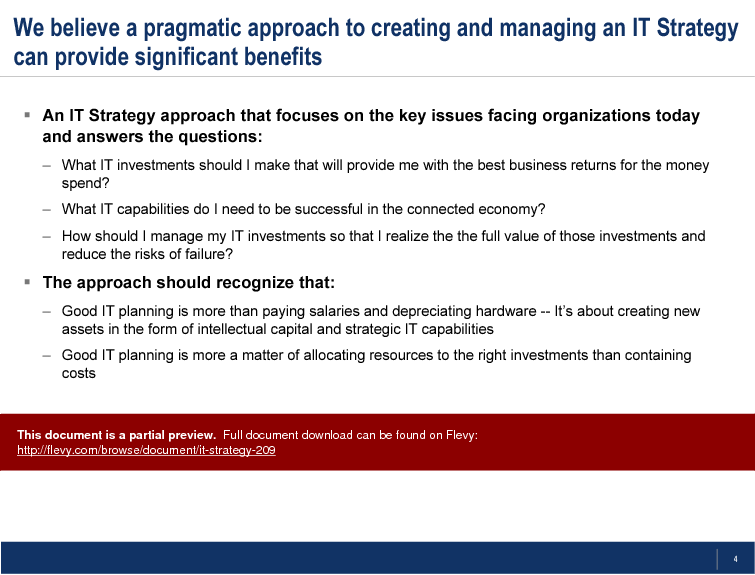
An effective IT Strategy approach should focus on the key issues facing organizations today and answer 3 key questions:
• What IT investments should I make that will provide me with the best business returns for the money spend?
• What IT capabilities do I need to be successful in the connected economy?
• How should I manage my IT investments so that I realize the full value of those investments and reduce the risks of failure?
The approach to IT Strategy should recognize that:
• Good IT planning is more than paying salaries and depreciating hardware. It's about creating new assets in the form of intellectual capital and strategic IT capabilities.
• Good IT planning is more a matter of allocating resources to the right investments than containing costs.
This 30-slide PowerPoint presentation provides a detailed discussion on how to develop an IT Strategy. Specific concepts this IT Strategy PPT discusses includes IT strategy frameworks, critical success factors, detailed project approach and organizational structure, sample deliverables, and more.
It also breaks down a 4-phase approach to creating an Information Technology strategic plan:
Phase 1. Project Initiation
Phase 2. IT Strategy Development & Information Gathering
Phase 3. IT Strategy Refinement Workshop
Phase 4. Documentation and Next Steps
The IT Strategy Development process is accelerated, phased, and iterative.
This is a fully editable, customizable PowerPoint presentation, so you can utilize this document as an IT Strategy template PPT. Also, there are 10 sample IT Strategy deliverable slides included, which you can re-purpose for your own business presentation needs.
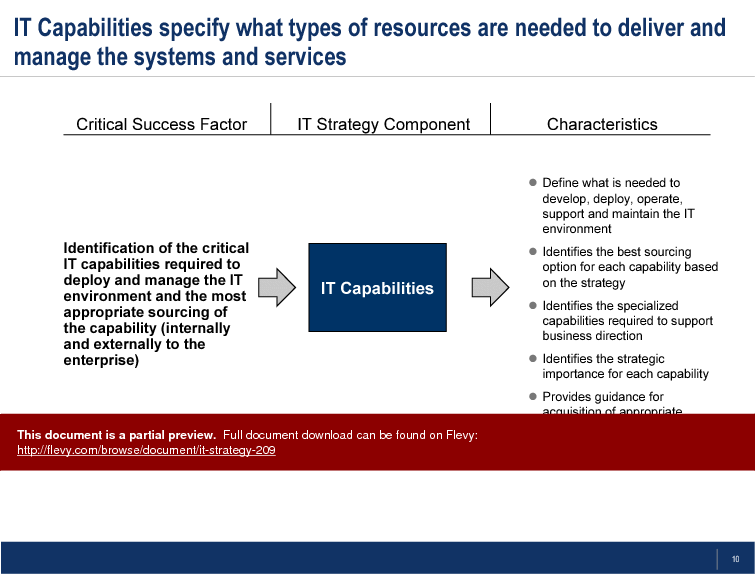
This presentation emphasizes the identification of critical IT capabilities and the best sourcing options to support business direction. It also details the strategic importance of each IT system and service, ensuring alignment with competitive differentiators.
Got a question about the product? Email us at support@flevy.com or ask the author directly by using the "Ask the Author a Question" form. If you cannot view the preview above this document description, go here to view the large preview instead.
MARCUS OVERVIEW
This synopsis was written by Marcus [?] based on the analysis of the full 30-slide presentation.
Executive Summary
This IT Strategy framework is a comprehensive guide designed to assist organizations in developing and managing their IT strategies effectively. Crafted by former consultants from top firms like McKinsey, BCG, and Deloitte, this document provides a structured approach to aligning IT investments with business goals. It enables leaders to identify critical IT capabilities, establish governance models, and optimize resource allocation. With this framework, executives can ensure that IT initiatives deliver maximum value and support strategic business objectives.
Who This Is For and When to Use
• CIOs and IT Directors responsible for aligning IT with business strategy
• Business leaders seeking to integrate technology into operational planning
• IT project managers overseeing the execution of IT initiatives
• Strategy consultants advising organizations on IT investments
Best-fit moments to use this deck:
• During the development of a new IT strategy or refresh of an existing one
• When aligning IT capabilities with evolving business objectives
• For workshops aimed at refining IT governance and sourcing strategies
Learning Objectives
• Define the relationship between IT strategy and business goals
• Identify key IT capabilities necessary for competitive advantage
• Develop a structured IT operating model that supports governance
• Create a portfolio of IT systems and services aligned with business needs
• Establish a framework for resource allocation and investment prioritization
• Implement a continuous IT strategy development process
Table of Contents
• Introduction to IT Strategy (page 2)
• Key Drivers of IT Value (page 3)
• Provide IT Capabilities Framework (page 4)
• Elements of an IT Strategy (page 6)
• IT Operating Model Overview (page 11)
• Critical Success Factors for IT Strategy (page 8)
• IT Systems and Services Portfolio (page 9)
• IT Capabilities and Sourcing Strategies (page 10)
• IT Strategy Development Process (page 14)
• Sample Deliverables (page 20)
• IT Governance Structure (page 26)
• Current and Future State IT Capabilities (page 30)
Primary Topics Covered
• IT Strategy Framework - A structured approach to developing IT strategies that align with business objectives and drive value.
• Key Drivers of IT Value - Factors influencing the effectiveness of IT investments, including organizational mindset and execution capabilities.
• Provide IT Capabilities - The overarching process for managing IT systems and services to meet business needs.
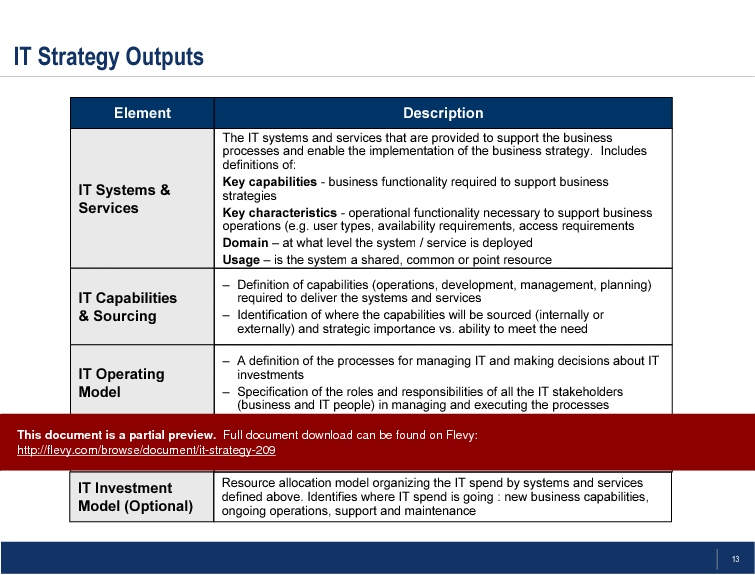
• IT Operating Model - A governance framework that defines roles, responsibilities, and decision-making processes for IT management.
• Critical Success Factors - Essential elements that contribute to the successful development and execution of IT strategies.
• IT Systems and Services Portfolio - A comprehensive overview of IT systems that support business processes and strategies.
• IT Capabilities and Sourcing - Identification of necessary IT capabilities and sourcing strategies to optimize resource allocation.
Deliverables, Templates, and Tools
• IT strategy framework template for aligning IT with business goals
• Portfolio of IT systems and services for tracking capabilities and investments
• Governance model outlining roles and responsibilities for IT management
• Resource allocation model to guide IT spending decisions
• Sample deliverables for documenting enterprise business strategies
• IT capabilities matrix for assessing current and future state requirements
Slide Highlights
• Overview of the IT Strategy framework illustrating the alignment with business objectives
• Key drivers of IT value slide emphasizing the importance of organizational mindset
• Provide IT Capabilities framework detailing the process for managing IT assets
• Elements of an IT Strategy slide outlining critical components for decision-making
• IT Operating Model slide showcasing governance structures and roles
Potential Workshop Agenda
IT Strategy Kickoff (90 minutes)
• Introduce the IT strategy framework and objectives
• Discuss key drivers of IT value and organizational mindset
• Identify participants and establish roles
IT Capabilities Workshop (120 minutes)
• Review current IT capabilities and identify gaps
• Define sourcing strategies for critical IT capabilities
• Develop an action plan for capability enhancement
Governance Model Session (90 minutes)
• Outline roles and responsibilities for IT management
• Discuss decision-making processes and governance structures
• Finalize the governance model for implementation
Customization Guidance
• Tailor the IT strategy framework to align with specific business objectives and industry requirements
• Adjust the governance model to reflect organizational structure and decision-making processes
• Modify the IT capabilities matrix to include unique internal and external sourcing strategies
Secondary Topics Covered
• The interplay between business strategy and IT investments
• Techniques for continuous IT strategy development and refinement
• Best practices for aligning IT initiatives with business objectives
• Methods for assessing and managing IT risks and opportunities
Topic FAQ
What are the main phases in an IT strategy development process?
A common structured approach breaks IT strategy development into 4 phases: Project Initiation; IT Strategy Development & Information Gathering; IT Strategy Refinement Workshop; and Documentation and Next Steps. The model in this category emphasizes an accelerated, phased, iterative process across 4 phases.
What elements should an IT operating model include?
An IT operating model typically defines governance structures, roles and responsibilities, and decision-making processes to guide IT management. The operating model in this topic is used to align IT management with business objectives and clarify accountability through governance structures, roles, and decision processes.
How do I identify which IT capabilities are critical for competitive advantage?
Identify capabilities by mapping business priorities to IT systems and services, assessing current versus future-state capability gaps, and ranking capabilities by strategic importance. Practitioners often use an IT capabilities matrix to document current and future requirements and prioritize critical capabilities using that matrix.
What should I consider when defining sourcing strategies for IT capabilities?
Consider which capabilities are core to business differentiation versus commodity, internal capability gaps, and cost or risk trade-offs when deciding internal development or external sourcing. The IT Strategy approach in this category explicitly addresses identification of critical IT capabilities and associated sourcing strategies.
What should I look for when buying an IT strategy template for my organization?
Look for templates that align IT investments with business goals, include governance model guidance, offer a resource allocation mechanism, and provide an IT capabilities assessment tool. A suitable template in this category includes an IT strategy framework, governance model, resource allocation model, and an IT capabilities matrix.
How much practical reuse do pre-built IT strategy templates provide versus building from scratch?
Pre-built templates provide re-usable artifacts such as governance models, resource allocation approaches, and sample deliverables that can be tailored to an organization, reducing initial development time. For example, some templates include 10 sample IT strategy deliverable slides for repurposing.
I need to refresh our IT strategy after business objectives changed — what steps should I follow?
Follow an iterative phased approach: initiate the project to set scope and stakeholders, gather information and develop strategy options, run a refinement workshop to align decisions and sourcing, then document the finalized strategy and next steps. This mirrors Phase 1 through Phase 4.
How can I structure a workshop to align IT capabilities and sourcing decisions?
A focused workshop agenda would review current IT capabilities, identify capability gaps, evaluate sourcing options for critical capabilities, and develop an action plan for capability enhancement. A sample agenda in this topic includes an IT Capabilities Workshop lasting around 120 minutes.
Document FAQ
These are questions addressed within this presentation.
What is the purpose of the IT Strategy framework?
The IT Strategy framework provides a structured approach to aligning IT investments with business objectives, ensuring that IT initiatives deliver maximum value.
Who should use this document?
This document is intended for CIOs, IT Directors, business leaders, and consultants involved in IT strategy development and execution.
How can this framework improve IT value?
By aligning IT investments with business goals and establishing effective governance, organizations can maximize the return on IT investments and minimize risks.
What are the key components of an IT operating model?
The IT operating model includes governance structures, roles and responsibilities, and decision-making processes that guide IT management.
How does the framework address sourcing strategies?
The framework identifies critical IT capabilities and outlines sourcing strategies to optimize resource allocation, ensuring that the right capabilities are developed internally or sourced externally.
What deliverables can be expected from using this framework?
Users can expect templates for IT strategy development, governance models, resource allocation models, and sample deliverables for documenting business strategies.
How often should the IT strategy be updated?
The IT strategy should be viewed as a continuous process, requiring regular updates to align with changing business objectives and technology trends.
What role does organizational mindset play in IT value?
An organization's IT mindset influences its ability to execute IT strategies effectively, impacting the overall value derived from IT investments.
Glossary
• IT Strategy - A structured plan that aligns IT investments with business objectives.
• IT Operating Model - A governance framework defining roles and responsibilities for IT management.
• IT Capabilities - Skills and resources required to deliver and manage IT systems and services.
• Sourcing Strategies - Approaches for acquiring IT capabilities, either internally or externally.
• Governance Model - A framework outlining decision-making processes and accountability in IT management.
• Portfolio of IT Systems - A comprehensive overview of IT systems supporting business processes.
• Business Strategy - The overarching plan that guides an organization's direction and objectives.
• Technology Trends - Emerging technologies that impact business operations and strategy.
• Critical Success Factors - Essential elements that contribute to the successful execution of IT strategies.
• Resource Allocation Model - A framework for guiding IT spending decisions based on business priorities.
• Continuous Strategy Development - An iterative process for refining IT strategies in response to changing business needs.
• IT Mindset - The organizational attitude towards IT investments and their alignment with business goals.
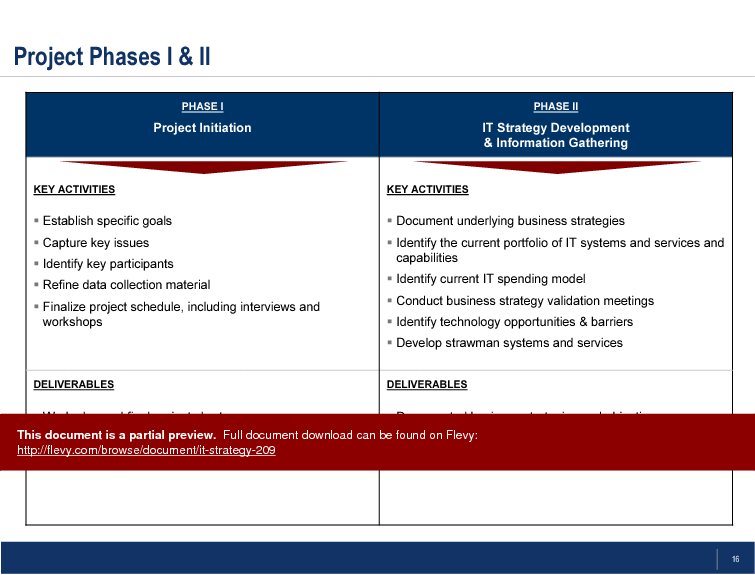
This PPT slide outlines a structured approach to developing an IT strategy over 4 phases within a ten-week timeline. Phase I, Project Initiation, focuses on preparing project materials and establishing a project team. Phase II, spanning weeks 2 to 5, involves IT strategy development, information gathering, and aligning IT enablers with business strategy. Phase III, the IT Strategy Refinement Workshop, occurs in weeks 6 to 8, allowing for updates based on stakeholder feedback to validate the strategy. Finally, Phase IV, covering weeks 9 to 10, emphasizes documentation of the finalized IT strategy and implementation implications. This structured approach ensures each phase builds on the previous one, facilitating a comprehensive development process.
This framework illustrates the relationship between IT strategy development and business drivers. "Strategic Intent & Business Objectives" forms the foundation for business strategies, including product, operational, marketing, and regulatory strategies, influenced by external perspectives and internal structures. Changes in the external business landscape, such as product offerings and marketplace dynamics, and internal modifications, including business processes and governance, drive adjustments in IT strategy. Key elements of IT strategy affected by these changes include IT systems and services, the IT operating model, IT capabilities, and IT principles. This cohesive approach ensures IT strategy aligns with evolving business needs, enabling organizations to leverage technology effectively to support strategic objectives.
This PPT slide provides an overview of an IT systems and services model for specialty retailers, categorizing essential applications into 5 areas: Information Management Repositories, Merchandising Apps, Supply Chain Apps, Store Management & Operations Apps, and Corporate Support Apps. Information Management Repositories include critical data such as Product, Customer, Vendor, and Store Information, supporting data-driven decision-making. Merchandising Apps facilitate purchasing, pricing, and inventory management, optimizing inventory turnover. Supply Chain Apps manage logistics and inventory forecasting, including distribution and warehouse management systems. Store Management & Operations Apps enhance in-store processes with systems like Point of Sale and Customer Loyalty Management. Corporate Support Apps cover human resources, financial management, and reporting, ensuring compliance with regulations. These interconnected systems create a cohesive IT strategy that streamlines retail operations and enhances customer engagement.

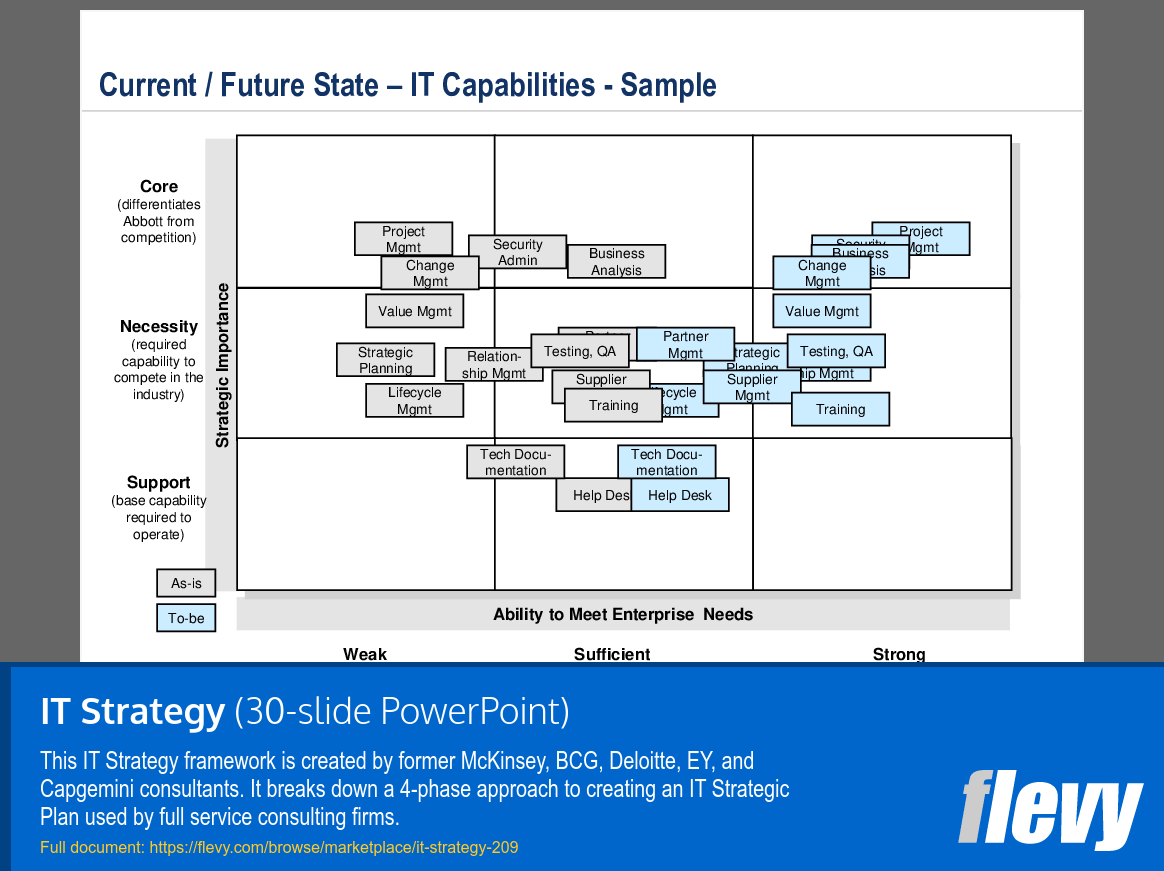
This PPT slide outlines a strategic framework for assessing IT capabilities, categorized into Core, Necessity, and Support areas. The vertical axis represents strategic importance, while the horizontal axis measures the ability to meet enterprise needs. Core capabilities, such as Project Management, Security Administration, and Business Analysis, differentiate the organization from competitors. Necessity capabilities, including Strategic Planning, Relationship Management, and Lifecycle Management, are essential for effective competition. Support capabilities, like Tech Documentation and Help Desk services, are foundational for daily operations. The framework suggests prioritizing enhancements in core capabilities while developing necessary and support capabilities, providing a roadmap for IT investment aligned with business objectives. This approach helps organizations identify gaps in IT capabilities and strategize for future demands.
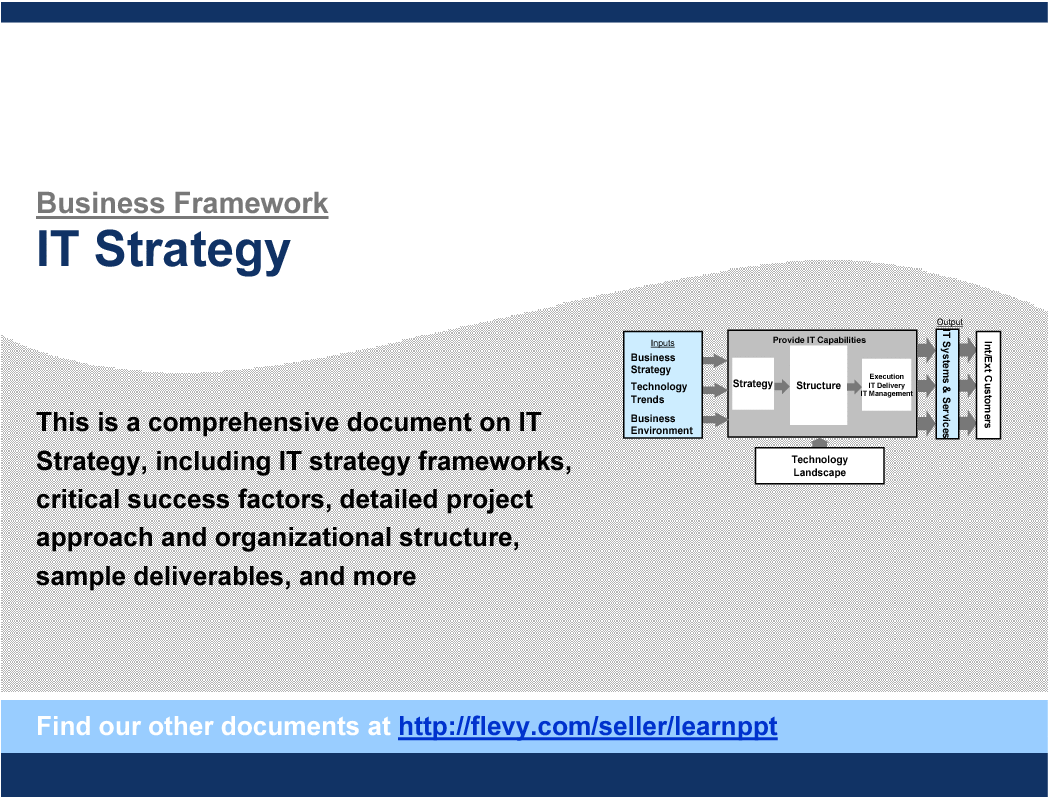
This PPT slide outlines a framework for managing IT capabilities within an enterprise, emphasizing 3 core components: Strategy, Structure, and Execution. Strategy guides IT initiatives, influenced by Business Strategy, Technology Trends, and the Business Environment. Structure defines roadmaps supporting strategic objectives, incorporating Technology, Application, and Information architectures. Execution involves IT Delivery and IT Management, ensuring effective implementation of planned initiatives. The output includes IT Systems and Services for internal and external customers. Additionally, the Technology Landscape represents available technological capabilities, essential for leveraging existing technologies to meet strategic objectives. This structured approach enhances IT capabilities and aligns initiatives with business goals.
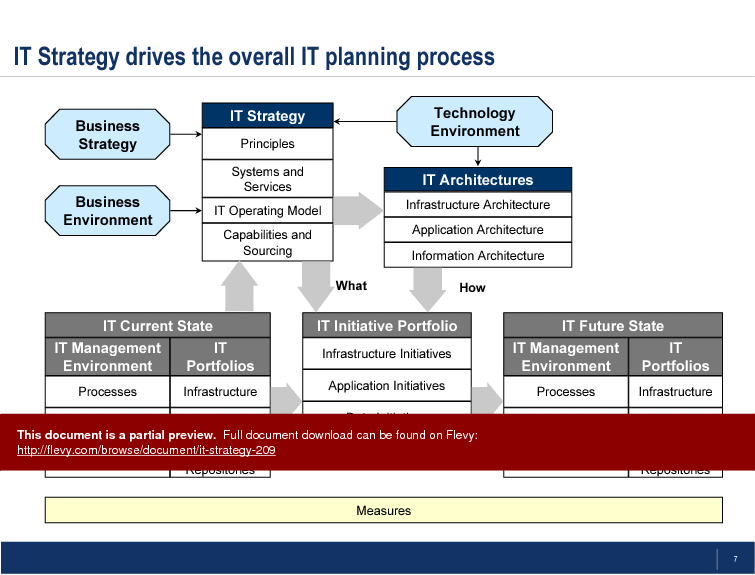
This PPT slide outlines a structured approach to IT strategy within the business context, emphasizing the relationship between business strategy, business environment, and IT strategy. IT strategy is central to IT planning, encompassing principles, systems, services, the IT operating model, and capabilities. It informs the technology environment and IT architectures, including infrastructure, application, and information architecture, defining the "what" and "how" of IT initiatives. The current state of IT management and portfolios is highlighted, focusing on processes, tools, resources, and their alignment with infrastructure and applications. The IT initiative portfolio details specific initiatives across infrastructure, applications, and data, aiding organizations in prioritizing IT efforts. Finally, the desired IT future state underscores the need for alignment between IT management and overall business strategy. This framework guides organizations in refining their IT strategy to be responsive to the evolving technology landscape.
This PPT slide illustrates the relationship between IT mindset and execution capabilities using a two-dimensional framework. The vertical axis represents "Mindset," ranging from "Tactical" to "Business Aligned," while the horizontal axis depicts "Execution." Effective IT value hinges on aligning IT investments with business objectives. Organizations with a tactical mindset may struggle to maximize IT value, whereas those with a business-aligned mindset are likely to achieve better outcomes. The upward arrow labeled "Goal" indicates a trajectory toward enhanced IT value, emphasizing that a proactive mindset is essential for successful execution. A shift in mindset, combined with disciplined execution, can significantly improve IT investment effectiveness.
This PPT slide outlines a framework for developing an IT strategy aligned with business objectives and IT investment decisions. Central to this framework is the IT Strategy, interconnected with IT Systems & Services, IT Capabilities, and the IT Operating Model. It emphasizes integrating IT with overall business strategy to support organizational goals. The role of the ecosystem is highlighted, suggesting leveraging IT capabilities and technology-enabled business capabilities as a decision-making framework. This integration leads to an Integrated Business & Technology Plan, essential for streamlining IT investments. The rules of engagement for decision-making indicate a coordinated approach to managing complex interactions, focusing on skills and capabilities that enhance operational efficiency through effective sourcing strategies.
Source: Best Practices in MIS PowerPoint Slides: IT Strategy PowerPoint (PPT) Presentation Slide Deck, LearnPPT Consulting
This IT Strategy framework is created by former McKinsey, BCG, Deloitte, EY, and Capgemini consultants. It breaks down a 4-phase approach to creating an IT Strategic Plan used by full service consulting firms.
We are a team of management consultants trained by top tier global consulting firms (including McKinsey, BCG, Deloitte, EY, Capgemini) with a collective experience of several decades. We specialize in business frameworks based on real-life consulting engagements.
We have served 100s of clients that range from Fortune 500 companies to tech startups to
... [read more] $1B+ private companies.
Utilize our consulting frameworks to apply structured thinking & analysis to address your business challenges, uncover strategic insights, and implement workable solutions. Our PowerPoint presentations follow traditional consulting slide design formats, starting with a clear slide headline. Easily customize and repurpose our slides for your own business presentations.
Beyond business frameworks & methodologies, we also offer PowerPoint templates and other business templates. Our templates are professionally designed and have been used in thousands of deliverables & work products across hundreds of clients.
The average daily rate of a McKinsey consultant is $6,625 (not including expenses). The average price of a Flevy document is $65.
Trusted by over 10,000+ Client Organizations
Since 2012, we have provided business templates to over 10,000 businesses and organizations of all sizes, from startups and small businesses to the Fortune 100, in over 130 countries.
Read Customer Testimonials
"The wide selection of frameworks is very useful to me as an independent consultant. In fact, it rivals what I had at my disposal at Big 4 Consulting firms in terms of efficacy and organization."
– Julia T., Consulting Firm Owner (Former Manager at Deloitte and Capgemini)
"As a niche strategic consulting firm, Flevy and FlevyPro frameworks and documents are an on-going reference to help us structure our findings and recommendations to our clients as well as improve their clarity, strength, and visual power. For us, it is an invaluable resource to increase our impact and value."
– David Coloma, Consulting Area Manager at Cynertia Consulting
"I have found Flevy to be an amazing resource and library of useful presentations for lean sigma, change management and so many other topics. This has reduced the time I need to spend on preparing for my performance consultation. The library is easily accessible and updates are regularly provided. A wealth of great information."
– Cynthia Howard RN, PhD, Executive Coach at Ei Leadership
"Flevy is our 'go to' resource for management material, at an affordable cost. The Flevy library is comprehensive and the content deep, and typically provides a great foundation for us to further develop and tailor our own service offer."
– Chris McCann, Founder at Resilient.World
"I like your product. I'm frequently designing PowerPoint presentations for my company and your product has given me so many great ideas on the use of charts, layouts, tools, and frameworks. I really think the templates are a valuable asset to the job."
– Roberto Fuentes Martinez, Senior Executive Director at Technology Transformation Advisory
"FlevyPro provides business frameworks from many of the global giants in management consulting that allow you to provide best in class solutions for your clients."
– David Harris, Managing Director at Futures Strategy
"As a consulting firm, we had been creating subject matter training materials for our people and found the excellent materials on Flevy, which saved us 100's of hours of re-creating what already exists on the Flevy materials we purchased."
– Michael Evans, Managing Director at Newport LLC
"As an Independent Management Consultant, I find Flevy to add great value as a source of best practices, templates and information on new trends. Flevy has matured and the quality and quantity of the library is excellent. Lastly the price charged is reasonable, creating a win-win value for
the customer, Flevy and the various authors. This is truly a service that benefits the consulting industry and associated clients. Thanks for providing this service.
Download our FREE Digital Transformation Templates
Download our free compilation of 50+ Digital Transformation slides and templates. DX concepts covered include Digital Leadership, Digital Maturity, Digital Value Chain, Customer Experience, Customer Journey, RPA, etc.