
 Click main image to view in full screen.
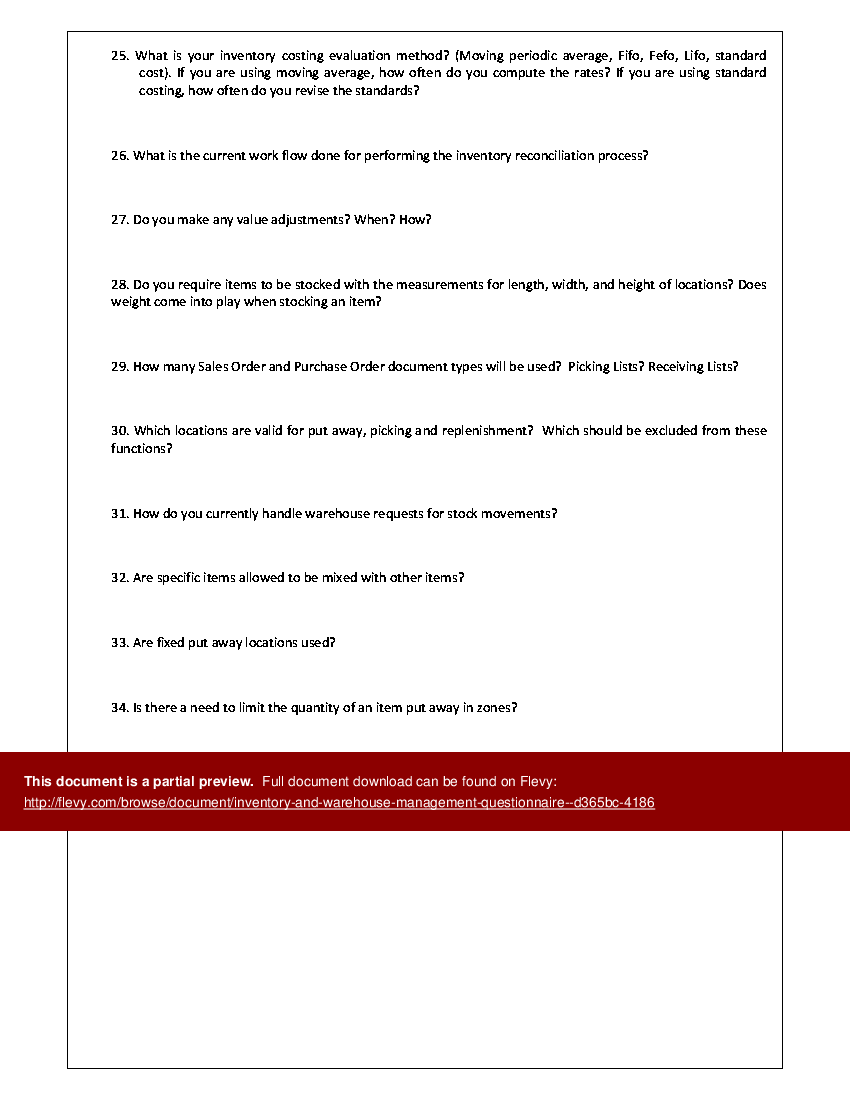
Inventory & Warehouse Management Questionnaire - D365BC – PDF
PDF document 4 Pages


BENEFITS OF THIS DOWNLOADABLE PDF DOCUMENT
- Provide an Understanding for the initial Analysis Phase.
- Provide an Answer for the questions mentioned in this document.
- Assess the answers of the questions and moving to the design phase
INVENTORY MANAGEMENT PDF DESCRIPTION
These questions assess the ERP Consultant to gather Inventory & Warehouse Management requirements on customer organization. The applicant's answer will indicate their Inventory & Warehouse Management knowledge and information. This information is vital because ERP Consultants must be able to gather the requirements needed to be able to design their processes on the ERP Application, so they will assess whether they will use the standard application, make Workarounds or design customization in their ERP system.
The reason for this question is to determine the fundamental knowledge of financial information. The answer explains the candidate's basic understanding of Inventory & Warehouse Management Knowledge. It is important to initiate the Analysis phase or ERP Projects with this questionnaire as a step toward going into detailed analysis.
This document is the kick-stone for the beginning of the analysis phase conducted by the ERP Consultant when starting a project, as it is the vital stage to make a better understanding of the "AS-IS" Analysis Phase, therefore they should create "To-Be" document according to this step.
Got a question about the product? Email us at support@flevy.com or ask the author directly by using the "Ask the Author a Question" form. If you cannot view the preview above this document description, go here to view the large preview instead.
TOPIC FAQ
What topics should an ERP Inventory & Warehouse Management requirements questionnaire cover?
A questionnaire should capture inventory and warehouse process details, relevant financial information, and requirements that indicate whether standard application functionality is adequate or whether workarounds or customization are needed. These inputs support initial AS‑IS analysis and inform the eventual To‑Be document for the Analysis phase.How does a requirements questionnaire help during the ERP analysis phase?
The questionnaire structures stakeholder responses to reveal current inventory and warehouse processes, financial controls, and consultant knowledge. Answers guide decisions on configuring the standard ERP application versus designing workarounds or customizations and provide the foundational inputs for the Analysis phase.When should a consultant perform AS‑IS documentation for inventory and warehouse management?
AS‑IS documentation should be performed at the start of the Analysis phase to establish current processes and financial handling of inventory. This baseline enables creation of a To‑Be document and clarifies whether standard application features, workarounds, or customization are required.How can I tell from interview answers whether customization will be required?
Interview answers that describe requirements outside expected standard ERP workflows, or that require unique financial handling not supported by out‑of‑the‑box functionality, indicate a potential need for workarounds or customization rather than relying solely on the standard application.What should I look for when buying an inventory & warehouse requirements template for an ERP project?
Choose a template that focuses on capturing AS‑IS processes, assesses consultant and stakeholder knowledge, and explicitly links questions to decisions about standard application, workarounds, or customization. Flevy's Inventory & Warehouse Management Questionnaire - D365BC is a 4‑page PDF aimed at initiating the Analysis phase.What value does purchasing a ready questionnaire bring versus building one from scratch?
A ready questionnaire accelerates the start of analysis by providing a prestructured way to assess consultant knowledge and gather inventory and financial requirements, helping teams move directly to detailed analysis and To‑Be design using a 4‑page questionnaire.I’m starting an ERP project—what is the immediate next step for inventory requirements gathering?
Begin with structured requirement collection to assess current inventory and warehouse processes, capture financial treatment of inventory, and determine whether the standard ERP application will suffice. This initiates the Analysis phase and sets up creation of the To‑Be document.After collecting questionnaire responses, how should I use them to design processes?
Use the responses to map AS‑IS workflows, identify gaps versus standard ERP behavior, and then draft To‑Be process designs that reflect whether to configure the standard application, apply workarounds, or commission customization; this work occurs during the Analysis phase.Source: Best Practices in Inventory Management, Warehouse Management PDF: Inventory & Warehouse Management Questionnaire - D365BC PDF (PDF) Document, Ahmed M. Rafik




























