Lean - Inventory Analysis   55-slide PPT PowerPoint presentation slide deck (PPTX)
$29.99

Lean - Inventory Analysis (55-slide PPT PowerPoint presentation slide deck (PPTX)) Preview Image
Log in to unlock full preview.
Lean - Inventory Analysis (55-slide PPT PowerPoint presentation slide deck (PPTX)) Preview Image
Arrow   Click main image to view in full screen.

Lean - Inventory Analysis (PowerPoint PPTX Slide Deck)

PowerPoint (PPTX) 55 Slides

$29.99

Add to Cart


Immediate download
Fully editable PowerPoint
Free lifetime updates

BENEFITS OF THIS POWERPOINT DOCUMENT

  1. This will help to reduce inventory from present level.
  2. Provide detail of activity step by step.
  3. This documents can be modified or change as per business requirement.

INVENTORY MANAGEMENT PPT DESCRIPTION

Editor Summary Lean Inventory Analysis is a 55-slide PowerPoint (PPTX) by Nishil Josh that presents frameworks and calculation models for inventory management, covering replenishment, buffer stocks, demand variability, risk assessment, and carrying costs. Read more

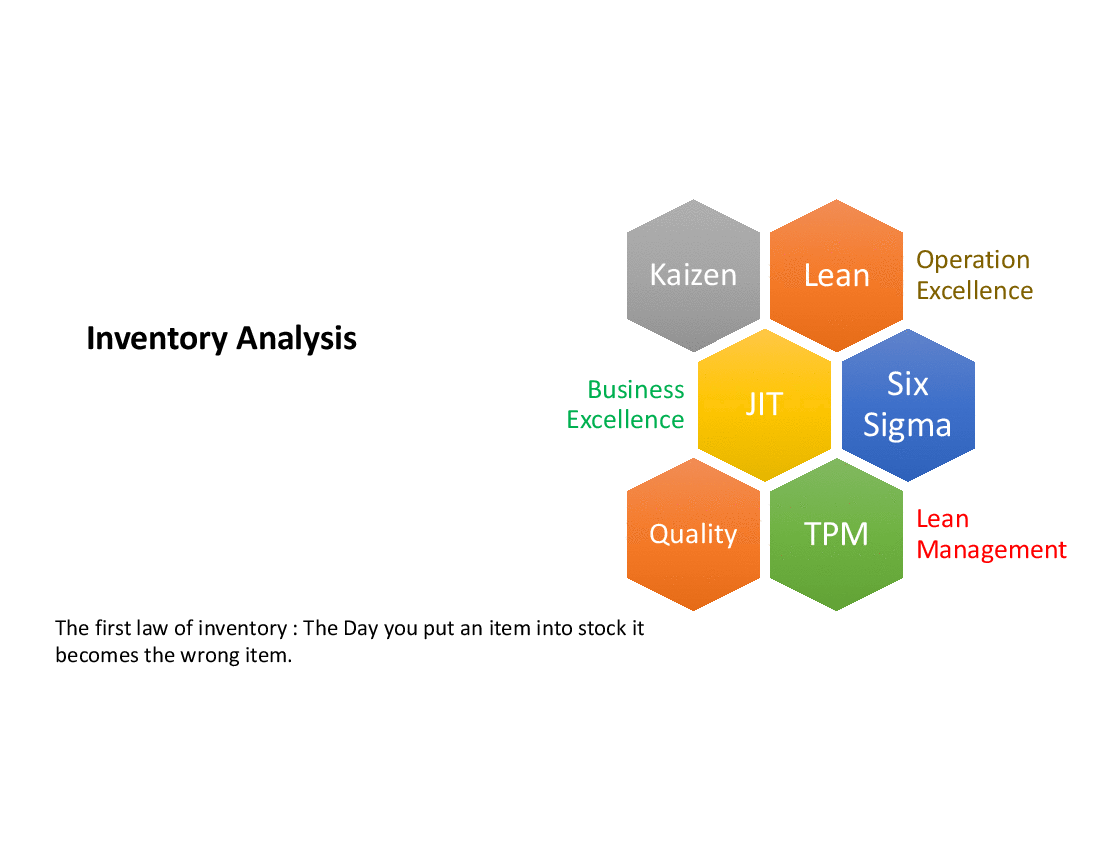
The first law of inventory : The Day you put an item into stock it becomes the wrong item.
This presentation is prepared to assist during Cash flow improvement assignment while performaing Inventory Analysis, This is step by step analysis and understanding of Process in detail.
This can also be used as training material for Projects team.
This document content following
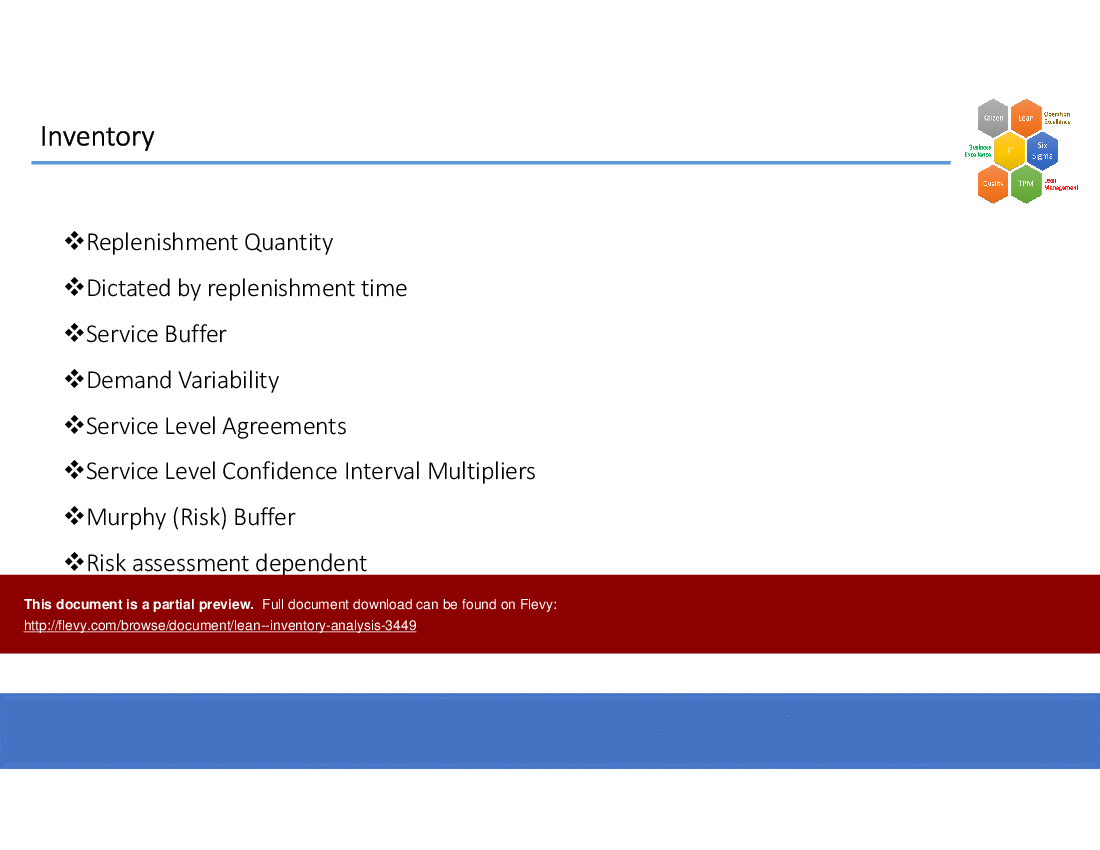
Replenishment Quantity
Dictated by replenishment time
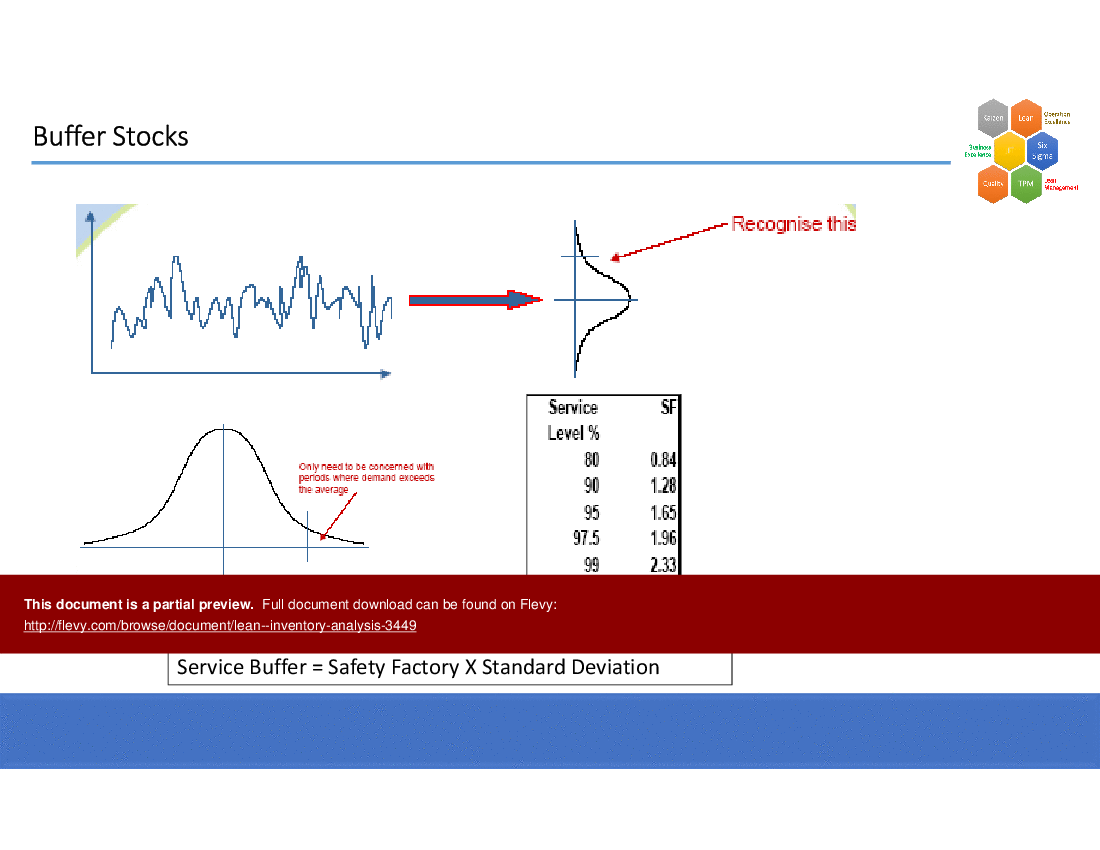
Service Buffer
Demand Variability
Service Level Agreements
Service Level Confidence Interval Multipliers
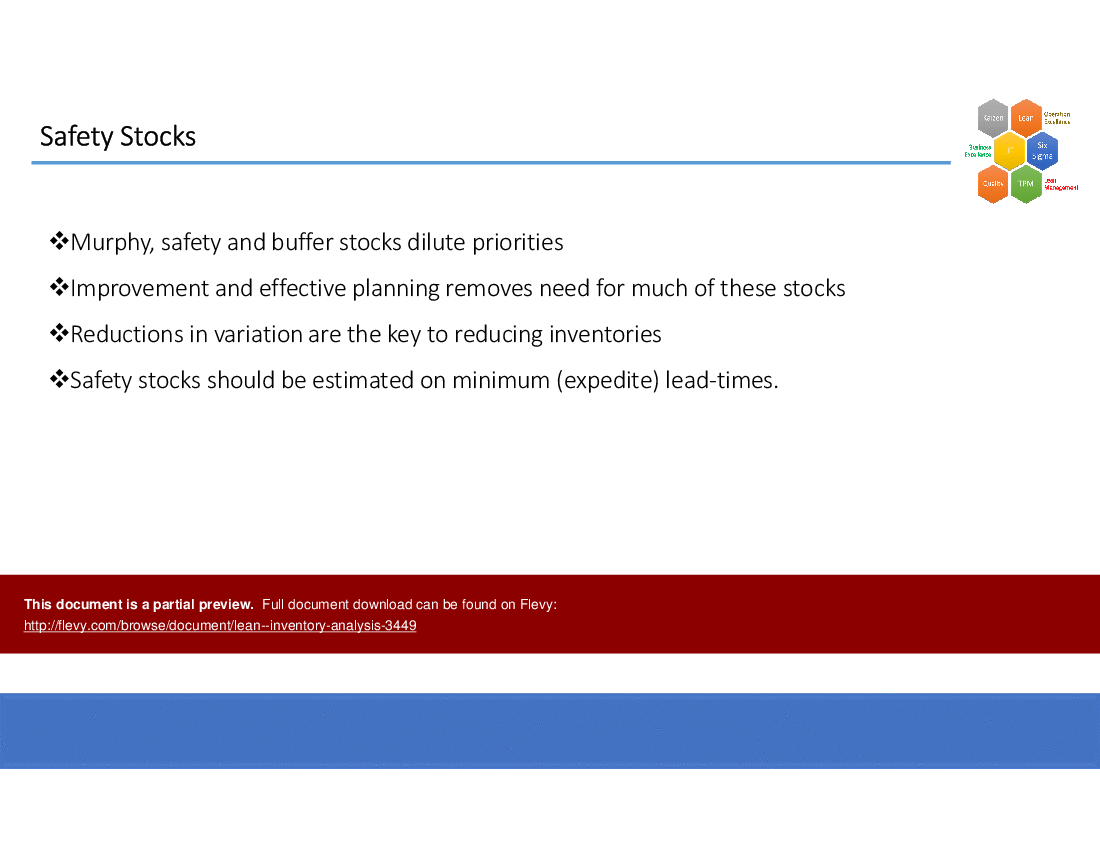
Murphy (Risk) Buffer
Risk assessment dependent

Got a question about the product? Email us at support@flevy.com or ask the author directly by using the "Ask the Author a Question" form. If you cannot view the preview above this document description, go here to view the large preview instead.

MARCUS OVERVIEW

This synopsis was written by Marcus [?] based on the analysis of the full 55-slide presentation.


Executive Summary
The Lean Inventory Analysis PPT offers a structured approach to inventory management, focusing on critical aspects such as replenishment, buffer stock, demand variability, and risk assessment. This presentation equips corporate executives and consultants with the tools to optimize inventory levels, reduce carrying costs, and enhance operational efficiency. By implementing the frameworks outlined in this deck, organizations can effectively manage their inventory, minimize waste, and improve service levels, ultimately leading to enhanced business performance.

Who This Is For and When to Use
•  Supply Chain Managers responsible for inventory optimization and management
•  Operations Executives focused on lean methodologies and efficiency improvements
•  Inventory Analysts tasked with analyzing and forecasting inventory needs
•  Consultants aiding organizations in implementing lean inventory practices

Best-fit moments to use this deck:
•  During inventory management strategy sessions to align on best practices
•  When conducting training workshops on lean inventory principles
•  In project kick-offs aimed at inventory reduction initiatives
•  For quarterly reviews of inventory performance and optimization strategies

Learning Objectives
•  Define key inventory management concepts such as replenishment and buffer stocks
•  Build effective inventory management frameworks that incorporate lean principles
•  Establish service level agreements that align inventory levels with customer demand
•  Analyze demand variability and its impact on inventory requirements
•  Implement risk assessment techniques to mitigate inventory-related challenges
•  Optimize inventory carrying costs through strategic planning and management

Table of Contents
•  Introduction to Lean Inventory Management (page 2)
•  Understanding Inventory Carrying Costs (page 5)
•  Factors Influencing Inventory Levels (page 8)
•  Replenishment Strategies (page 12)
•  Service Policies and Buffer Stocks (page 15)
•  Safety Stock Calculations (page 18)
•  Inventory Analysis Tools (page 22)
•  Economic Order Quantity (EOQ) (page 27)
•  Inventory Reduction Techniques (page 30)
•  Implementing a Lean Inventory Optimization Project (page 35)

Primary Topics Covered
•  Inventory Carrying Costs - Detailed examination of costs associated with holding inventory, including working capital and warehousing expenses.
•  Replenishment Strategies - Frameworks for determining optimal replenishment quantities based on demand and supply variability.
•  Service Level Agreements - Guidelines for establishing product-specific service levels to meet customer expectations.
•  Buffer Stocks - Analysis of safety and Murphy buffer stocks to mitigate risks associated with demand and supply fluctuations.
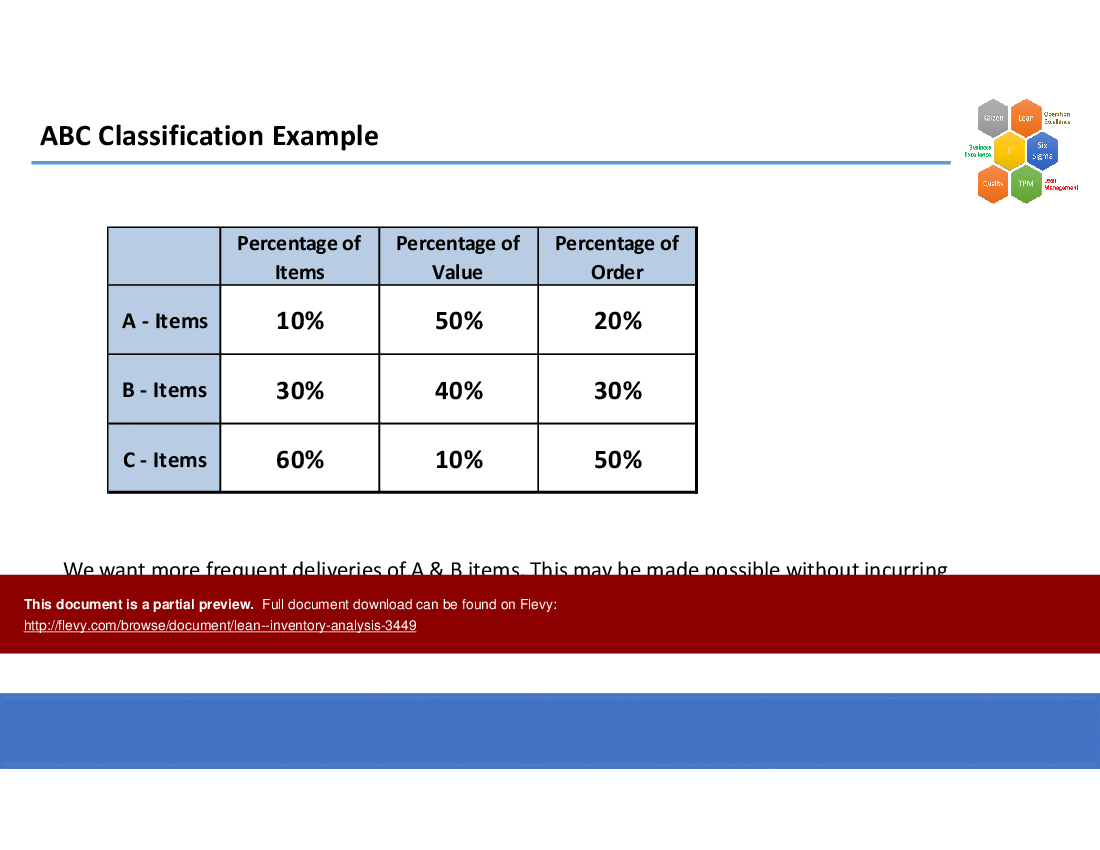
•  Inventory Analysis Tools - Overview of essential tools such as ABC classification and PQ analysis for effective inventory management.
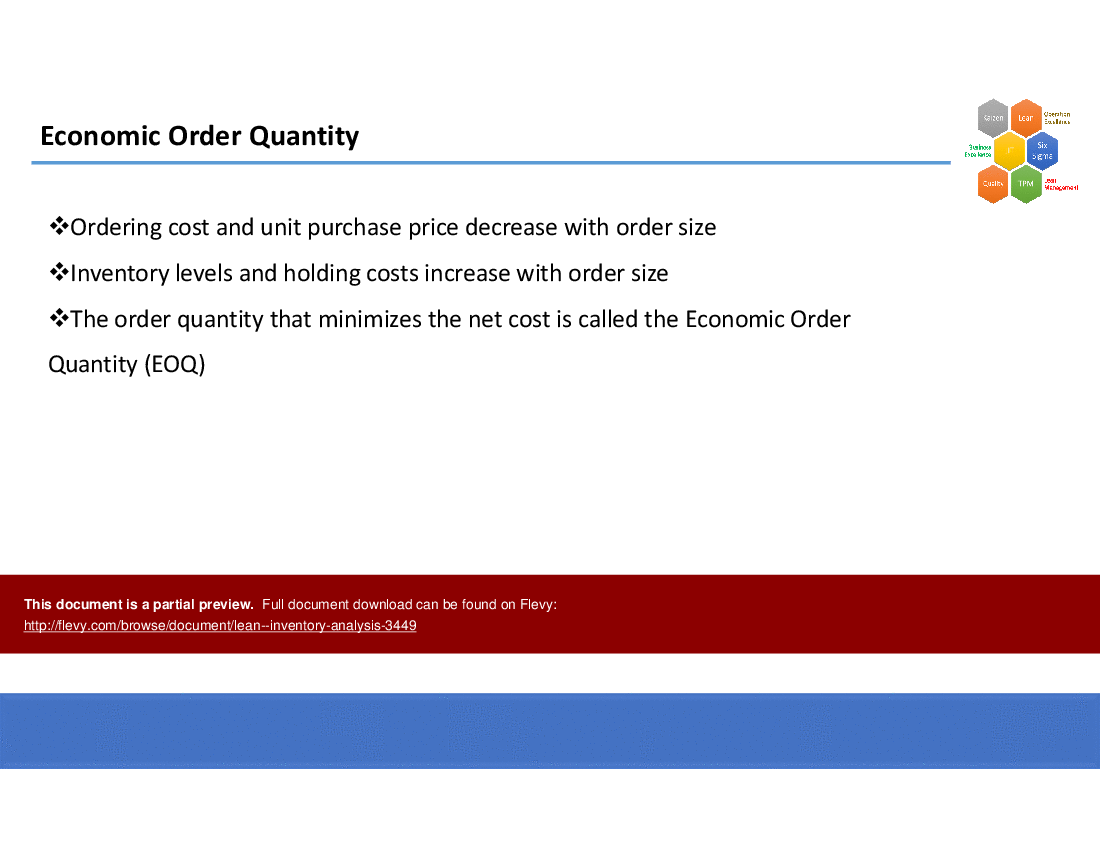
•  Economic Order Quantity (EOQ) - Calculation methods for determining the most cost-effective order quantity to minimize total inventory costs.

Deliverables, Templates, and Tools
•  Replenishment quantity calculation template for immediate demand response
•  Service level agreement framework tailored to customer requirements
•  Safety stock calculation model based on demand variability
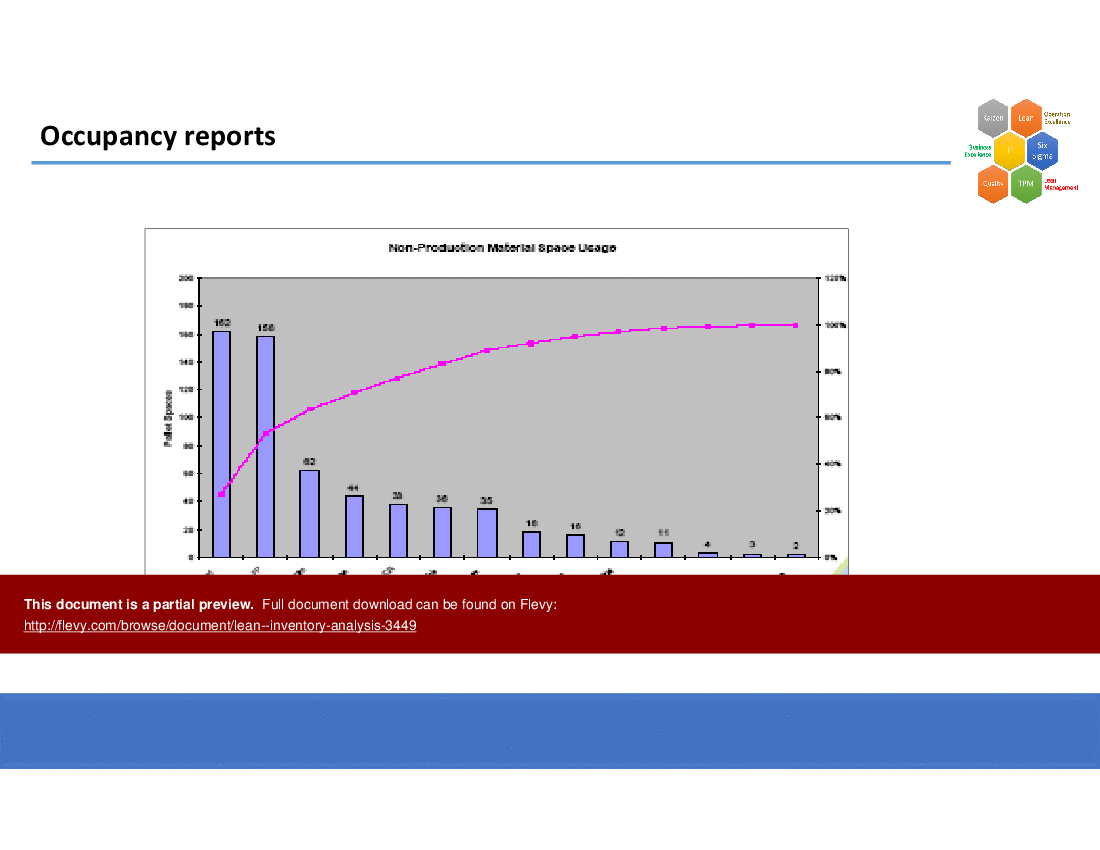
•  Inventory analysis tools including ABC classification and aged stock reports
•  Economic Order Quantity (EOQ) calculation template for cost optimization
•  Inventory efficiency measures report to track performance metrics

Slide Highlights
•  Visual representation of the first law of inventory emphasizing the importance of timely stock management
•  Detailed breakdown of inventory carrying costs with graphical data for clarity
•  Flowchart illustrating the replenishment cycle and its impact on inventory levels
•  Graphical analysis of buffer stocks and their role in managing service levels
•  Case studies demonstrating successful inventory reduction techniques in various industries

Potential Workshop Agenda
Lean Inventory Management Overview (60 minutes)
•  Introduce lean principles and their application to inventory management
•  Discuss the importance of reducing inventory carrying costs

Replenishment Strategies and Safety Stocks (90 minutes)
•  Analyze replenishment quantity calculations and service level agreements
•  Workshop on safety stock determination and buffer stock management

Inventory Analysis Tools and Techniques (60 minutes)
•  Explore essential inventory analysis tools such as ABC classification
•  Hands-on session for calculating Economic Order Quantity (EOQ)

Customization Guidance
•  Tailor the replenishment quantity calculations to reflect specific supplier delivery times and processing capabilities
•  Adjust service level agreements to align with unique customer demands and expectations
•  Modify safety stock calculations based on historical demand data and variability assessments

Secondary Topics Covered
•  Impact of demand variability on inventory management
•  Techniques for reducing inventory through lean practices
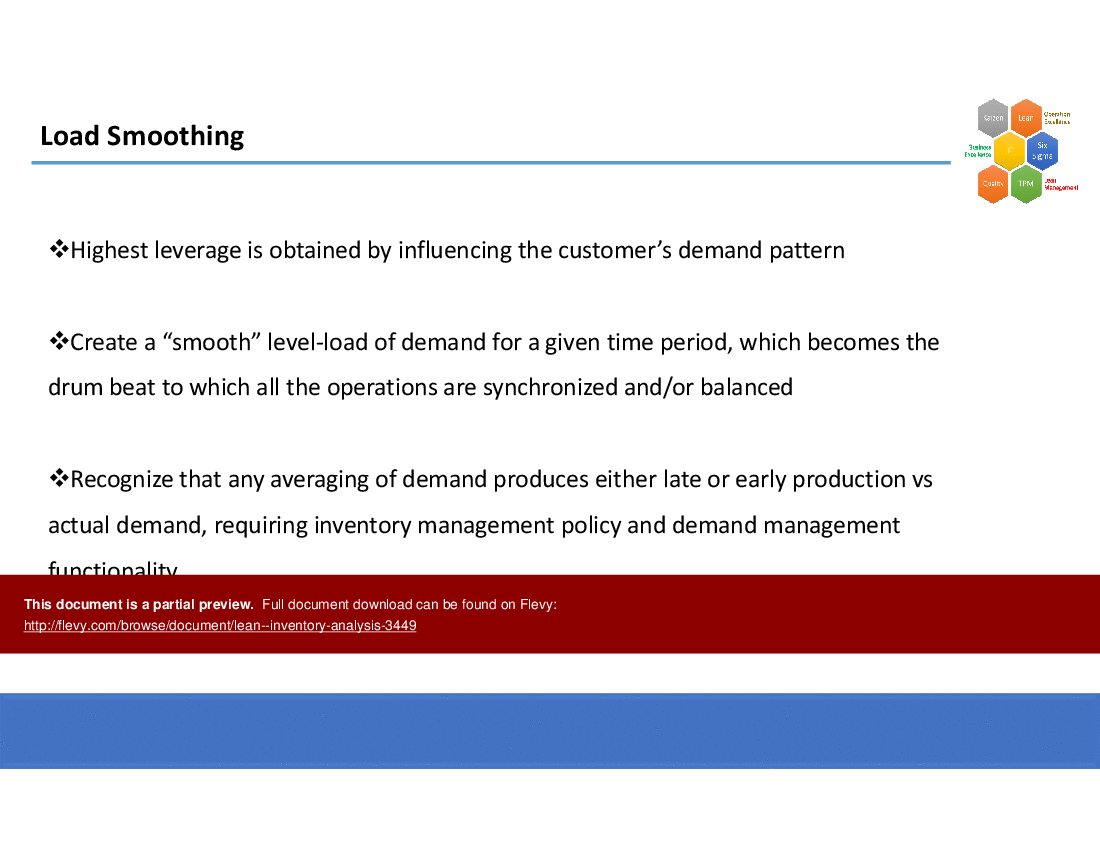
•  Importance of load smoothing in inventory optimization
•  Strategies for managing obsolescence and scrap in inventory

Topic FAQ

What costs are typically included when calculating inventory carrying cost?

Inventory carrying cost commonly includes capital tied up in inventory, warehousing and storage expenses, insurance, obsolescence risk, and handling. The Lean Inventory Analysis deck explicitly breaks down carrying costs into working capital and warehousing-related expenses, making working capital and warehousing expenses concrete components.

How can I calculate safety stock for variable demand?

The provided safety stock formula uses average demand, demand variability, a safety factor, and expedite time: Safety Stock = (Average Demand + (Standard Deviation * Safety Factor)) * Expedite Time. The formula and a safety stock calculation model are described in the deck, with the explicit safety stock calculation model.

What is Economic Order Quantity (EOQ) and why use it?

EOQ is the order quantity that minimizes total inventory costs by balancing ordering costs against holding costs. Using an EOQ calculation helps determine cost-effective lot sizes and reorder points; the Flevy product includes an EOQ calculation template to support this analysis, namely the EOQ calculation template.

Which tools help identify high-value or slow-moving inventory?

Common tools are ABC classification to segment inventory by value and usage, PQ analysis for purchase-quality insights, and aged stock reports to spot slow-moving items. Flevy’s Lean Inventory Analysis includes ABC classification, PQ analysis guidance, and aged-stock report templates, with ABC classification highlighted.

What should I prioritize when buying an inventory analysis deck or template?

Prioritize inclusion of calculation models and templates you’ll use: replenishment quantity calculators, safety stock models, EOQ templates, ABC classification, customization guidance, and a workshop agenda. The Lean Inventory Analysis lists these deliverables, including a safety stock calculation model.

How should I set SKU-level service levels across different products?

Set service levels based on observed customer demand patterns, historical fill rates, and acceptable stockout risk. Translate those decisions into product-specific service level agreements and confidence intervals; the deck provides a service level agreement framework to document those choices, specifically the service level agreement framework.

I have a three-month mandate to reduce inventory—what sequence of analyses is practical?

Start with ABC classification and aged-stock analysis to identify targets, quantify carrying costs, tune replenishment quantities and EOQ, and adjust safety and Murphy buffers based on demand variability. The deck outlines inventory reduction techniques and an implementation roadmap for lean inventory optimization, including inventory reduction techniques.

How does demand variability change my inventory requirements?

Higher demand variability increases required safety stock and buffer levels to maintain service, and it makes standard deviation and safety-factor inputs more influential in calculations. Use statistical measures to size buffers; the deck uses standard deviation and a safety factor within its safety stock formula, specifically the safety stock formula using standard deviation and safety factor.
Document FAQ
These are questions addressed within this presentation.

What is the first law of inventory?
The first law of inventory states that the day an item is put into stock, it becomes the wrong item, emphasizing the need for timely inventory management.

How can I calculate safety stock?
Safety stock can be calculated using the formula: Safety Stock = (Average Demand + (Standard Deviation * Safety Factor)) * Expedite Time.

What are the key components of a service buffer?
A service buffer consists of inventory maintained to shield against fluctuations in customer demand and production variations.

What tools can help with inventory analysis?
Essential tools include ABC classification, PQ analysis, and aged stock reports, which help in categorizing and managing inventory effectively.

How does Economic Order Quantity (EOQ) work?
EOQ is the order quantity that minimizes total inventory costs by balancing ordering costs and holding costs.

What are some techniques for reducing inventory?
Techniques include eliminating surplus inventory, standardizing parts, and implementing just-in-time (JIT) practices.

How do I determine the appropriate service level for my inventory?
Service levels should be based on customer demand patterns, historical data, and the acceptable risk of stockouts.

What is the role of buffer stocks in inventory management?
Buffer stocks protect against variations in supply and demand, ensuring that production and service levels are maintained.

Glossary
•  Buffer Stock - Inventory maintained to protect against demand variability.
•  Economic Order Quantity (EOQ) - The optimal order quantity that minimizes total inventory costs.
•  Service Level Agreement - A contract defining the expected service levels for inventory fulfillment.
•  Safety Stock - Extra inventory held to mitigate the risk of stockouts.
•  Replenishment Quantity - The amount of inventory needed to meet immediate demand.
•  ABC Classification - A method for categorizing inventory based on value and usage.
•  Days Forward Cover - A report indicating how many days inventory will last based on current usage.
•  Load Smoothing - Techniques used to level out demand to optimize inventory management.
•  Murphy Buffer - Additional stock kept to protect against unforeseen events.
•  Inventory Carrying Cost - Total cost associated with holding inventory, including storage and capital costs.
•  Demand Variability - Fluctuations in customer demand that impact inventory levels.
•  Just-In-Time (JIT) - Inventory strategy aimed at reducing holding costs by receiving goods only as needed.
•  Replenishment Cycle - The process of restocking inventory based on consumption rates.
•  Service Buffer - Inventory held to meet immediate demand during fluctuations.
•  Safety Factor - A multiplier used in safety stock calculations to account for variability.
•  Inventory Efficiency Measures - Metrics used to evaluate the effectiveness of inventory management practices.
•  Aged Stock - Inventory that has not been sold or used within a specified time frame.
•  Obsolescence - The process of inventory becoming outdated or unsellable.
•  Standard Deviation - A statistical measure used to assess demand variability.
•  Pareto Analysis - A technique for identifying the most significant factors in a dataset, often used in inventory management.
•  Load (Demand * Cycle Time) - A calculation used to determine the capacity needed to meet demand.

Source: Best Practices in Inventory Management PowerPoint Slides: Lean - Inventory Analysis PowerPoint (PPTX) Presentation Slide Deck, Nishil Josh


$29.99

Add to Cart
  

ABOUT THE AUTHOR

Author: Nishil Josh
Additional documents from author: 23

I am a Business Excellence Professional with over 25 years of experience in Manufacturing Operations, Quality Assurance & Improvement, and Resource Management across various industry sectors. Throughout my career, I have specialized in managing production activities, optimizing processes, and implementing best practices to enhance operational efficiency and productivity.

My expertise includes ... [read more]

Ask the Author a Question

You must be logged in to contact the author.

Click here to log in Click here register

Did you know?
The average daily rate of a McKinsey consultant is $6,625 (not including expenses). The average price of a Flevy document is $65.


Trusted by over 10,000+ Client Organizations
Since 2012, we have provided business templates to over 10,000 businesses and organizations of all sizes, from startups and small businesses to the Fortune 100, in over 130 countries.
AT&T GE Cisco Intel IBM Coke Dell Toyota HP Nike Samsung Microsoft Astrazeneca JP Morgan KPMG Walgreens Walmart 3M Kaiser Oracle SAP Google E&Y Volvo Bosch Merck Fedex Shell Amgen Eli Lilly Roche AIG Abbott Amazon PwC T-Mobile Broadcom Bayer Pearson Titleist ConEd Pfizer NTT Data Schwab


Read Customer Testimonials

 
"My FlevyPro subscription provides me with the most popular frameworks and decks in demand in today’s market. They not only augment my existing consulting and coaching offerings and delivery, but also keep me abreast of the latest trends, inspire new products and service offerings for my practice, and educate me "

– Bill Branson, Founder at Strategic Business Architects
 
"If you are looking for great resources to save time with your business presentations, Flevy is truly a value-added resource. Flevy has done all the work for you and we will continue to utilize Flevy as a source to extract up-to-date information and data for our virtual and onsite presentations!"

– Debbi Saffo, President at The NiKhar Group
 
"Last Sunday morning, I was diligently working on an important presentation for a client and found myself in need of additional content and suitable templates for various types of graphics. Flevy.com proved to be a treasure trove for both content and design at a reasonable price, considering the time I "

– M. E., Chief Commercial Officer, International Logistics Service Provider
 
"I have used FlevyPro for several business applications. It is a great complement to working with expensive consultants. The quality and effectiveness of the tools are of the highest standards."

– Moritz Bernhoerster, Global Sourcing Director at Fortune 500
 
"As a consultant requiring up to date and professional material that will be of value and use to my clients, I find Flevy a very reliable resource.

The variety and quality of material available through Flevy offers a very useful and commanding source for information. Using Flevy saves me time, enhances my expertise and ends up being a good decision."

– Dennis Gershowitz, Principal at DG Associates
 
"As an Independent Management Consultant, I find Flevy to add great value as a source of best practices, templates and information on new trends. Flevy has matured and the quality and quantity of the library is excellent. Lastly the price charged is reasonable, creating a win-win value for "

– Jim Schoen, Principal at FRC Group
 
"I like your product. I'm frequently designing PowerPoint presentations for my company and your product has given me so many great ideas on the use of charts, layouts, tools, and frameworks. I really think the templates are a valuable asset to the job."

– Roberto Fuentes Martinez, Senior Executive Director at Technology Transformation Advisory
 
"FlevyPro has been a brilliant resource for me, as an independent growth consultant, to access a vast knowledge bank of presentations to support my work with clients. In terms of RoI, the value I received from the very first presentation I downloaded paid for my subscription many times over! The "

– Roderick Cameron, Founding Partner at SGFE Ltd


Customers Also Bought These Documents


Customers Also Like These Documents

Explore Related Management Topics

5S
KPI


Your Recently Viewed Documents
Receive our FREE presentation on Operational Excellence

This 50-slide presentation provides a high-level introduction to the 4 Building Blocks of Operational Excellence. Achieving OpEx requires the implementation of a Business Execution System that integrates these 4 building blocks.