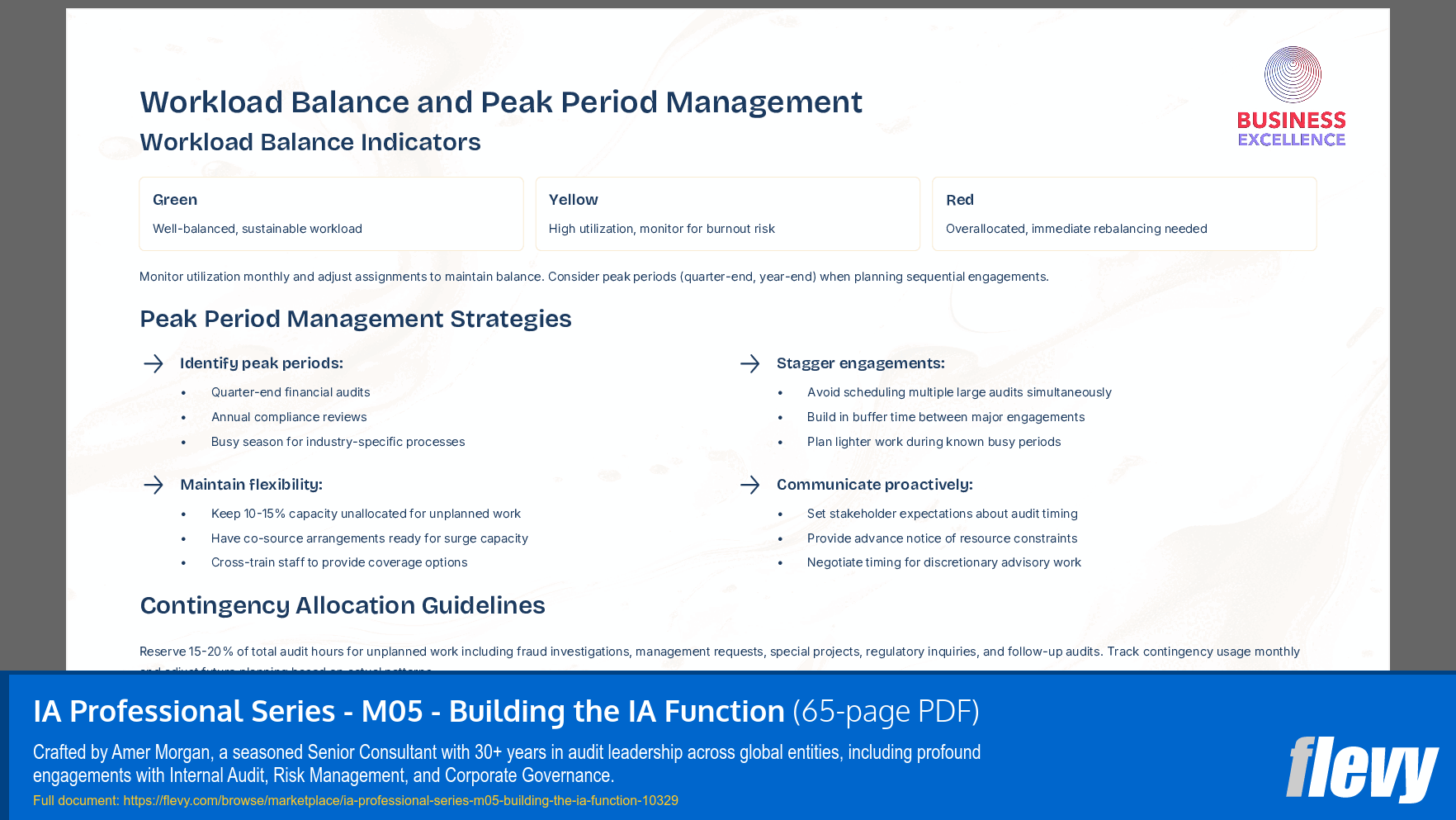

 Click main image to view in full screen. Unlock all 14 preview images:
Internal Audit M05: Building the Audit Function – PowerPoint PPTX Template
PowerPoint (PPTX) 65 Slides


VIDEO DEMO
BENEFITS OF THIS DOWNLOADABLE POWERPOINT DOCUMENT
- Complete GIAS 2024-compliant charter template and reporting structure evaluation framework that protects your audit function's independence while establishing clear authority with board approval.
- Formula-driven resource calculation models and zero-based budgeting templates that justify staffing needs and budget requirements with industry benchmarks--no more defending numbers based on gut feel.
- From charter to job descriptions to committee protocols, every critical function-building document is ready to customize and use--saving months of development time and ensuring professional standards throughout.
AUDIT MANAGEMENT PPT TEMPLATE DESCRIPTION
Transform Your Internal Audit Function from Setup to Excellence
Building an effective internal audit function requires more than good intentions—it demands systematic planning, clear governance frameworks, and strategic resource allocation. This comprehensive 65-slide presentation provides Chief Audit Executives, aspiring CAEs, and audit leaders with the complete toolkit to establish, structure, and strengthen internal audit functions that deliver value and maintain independence.
Why This Module Matters
Your internal audit function's structure determines its effectiveness. A poorly designed function struggles with independence issues, resource constraints, unclear authority, and weak stakeholder relationships. A well-structured function operates with confidence, delivers impact, and maintains the trust of the board and management.
This module addresses the critical decisions every audit leader faces: How do I write a charter that protects our independence? Where should internal audit report? How many auditors do we need? Should we outsource or build in-house? How do I structure my team and justify my budget? What's the right relationship with the audit committee?
Comprehensive Coverage Aligned with GIAS 2024
This presentation is fully aligned with the Global Internal Audit Standards (GIAS 2024), ensuring your function meets the latest professional requirements while implementing best practices proven across industries.
What You'll Learn and Implement:
1. Charter Development Mastery
GIAS 2024-compliant charter template ready for customization
Section-by-section writing guide with sample language
Required charter elements with implementation guidance
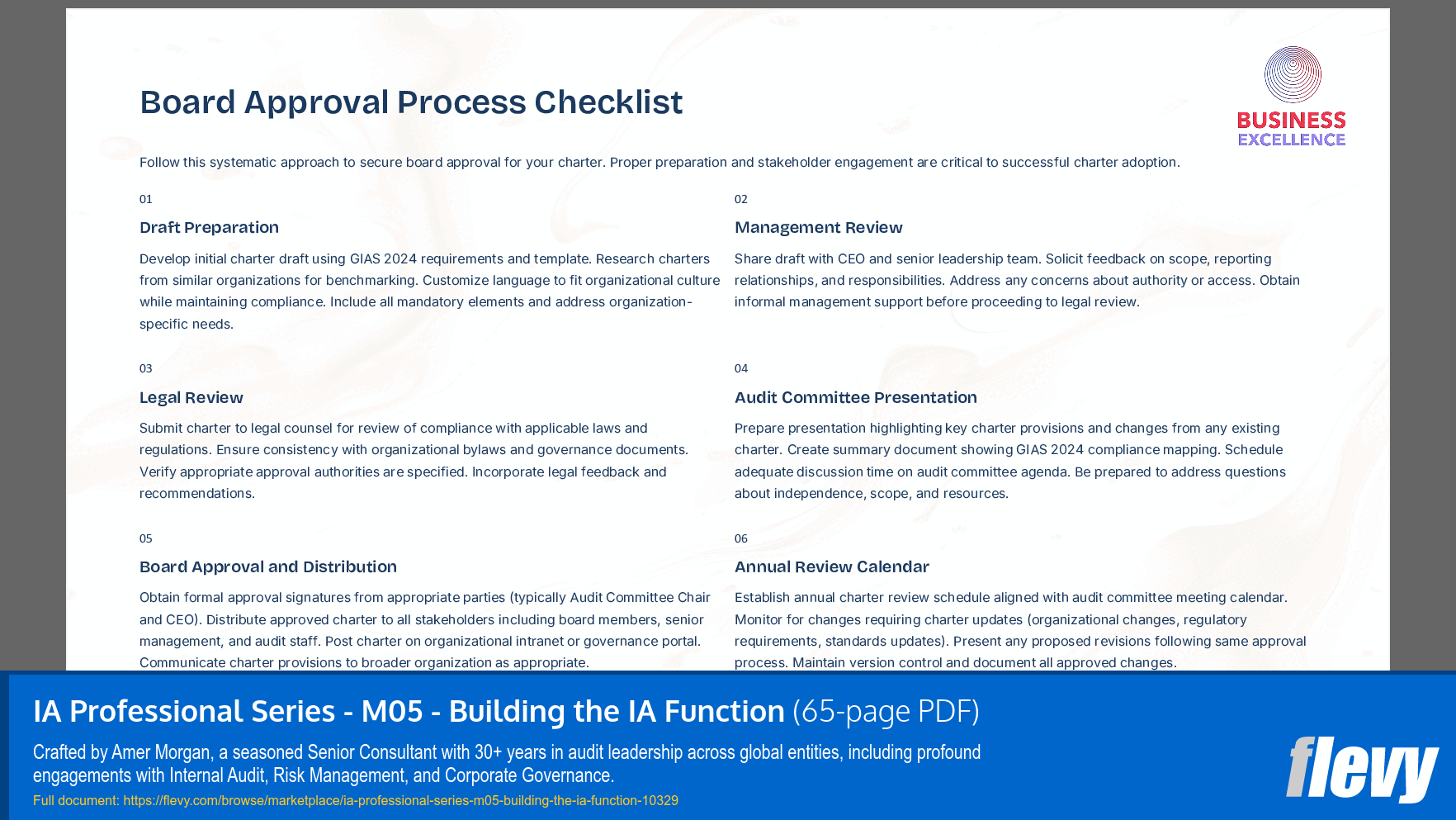
Board approval process checklist with timeline
Annual charter review procedures
2. Organizational Positioning Strategy
Reporting line options analysis with pros/cons of each structure
Functional vs. administrative reporting best practices
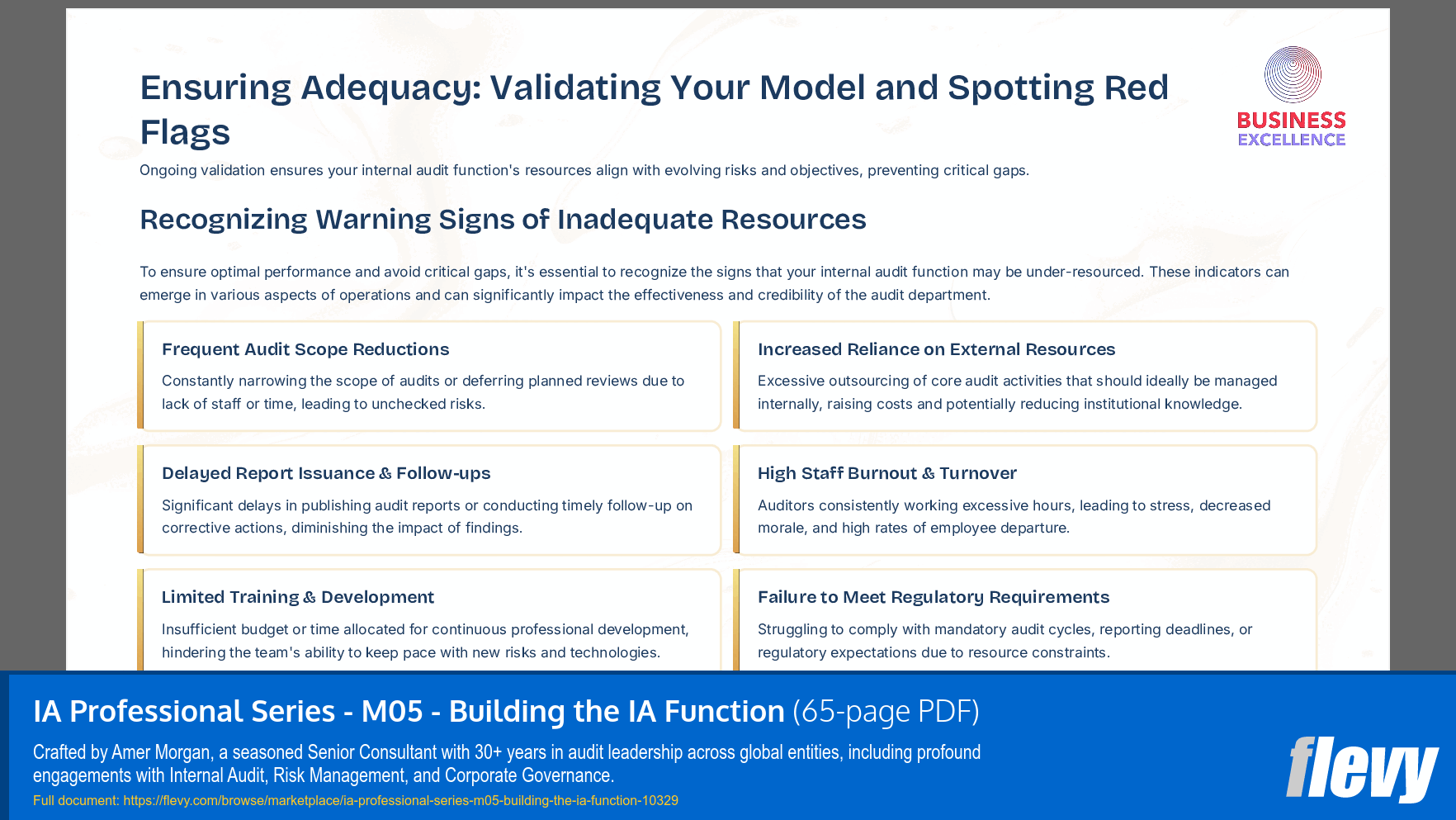
Independence assessment criteria and red flag identification
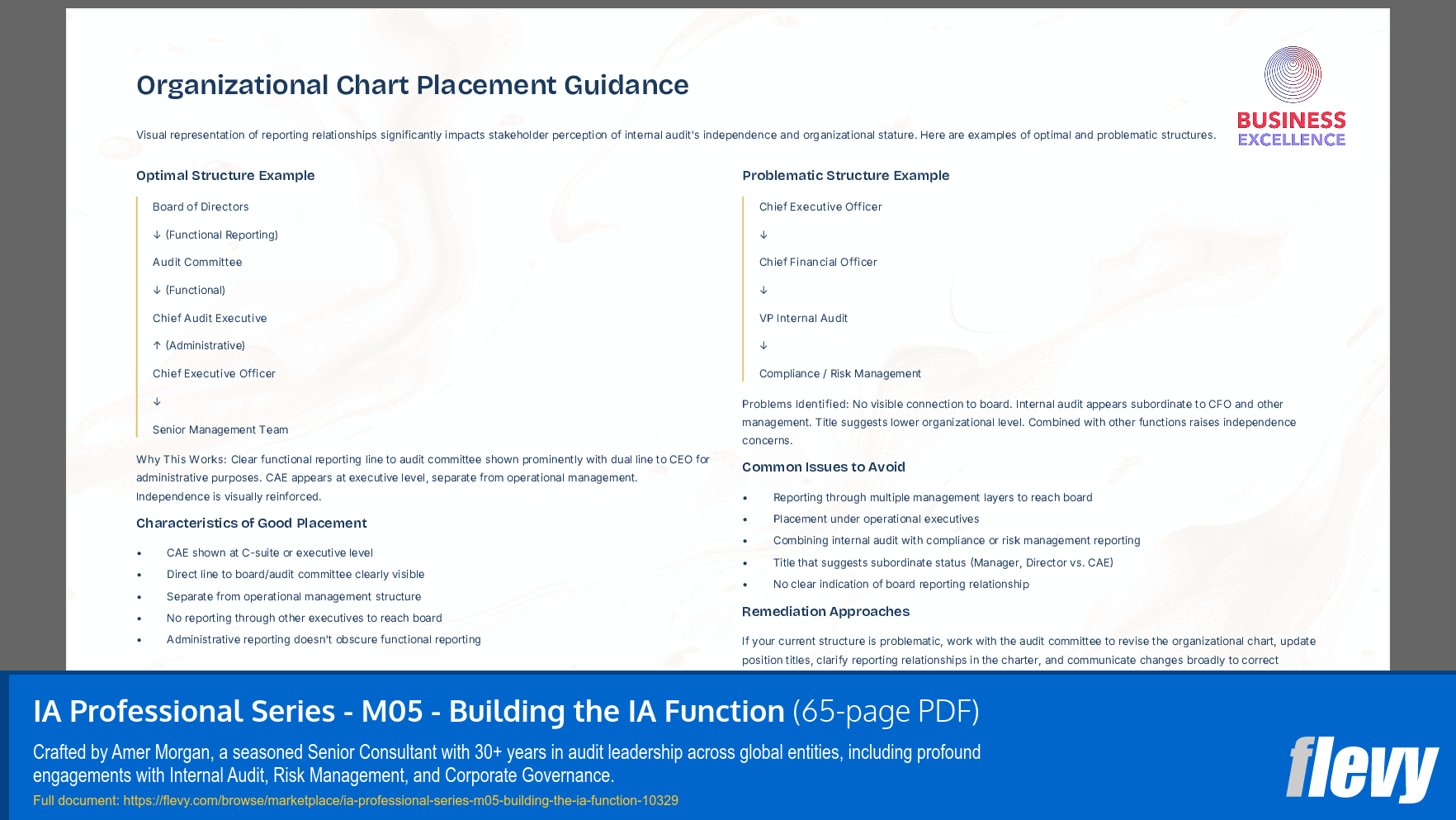
Organizational chart placement guidance with examples
Stakeholder communication templates for positioning announcements
3. Resource Planning Methodology
Audit hours calculation model with formulas and examples
Industry benchmarking data and validation techniques
Staff competency mapping tool and gap analysis
Workload distribution templates for balanced utilization
Resource utilization tracking and variance analysis procedures
4. Sourcing Model Decision Framework
Comprehensive comparison: In-house, Outsourced, Co-sourced, and Hybrid models
Weighted evaluation matrix for sourcing decisions
Vendor selection criteria checklist with scoring system
Co-source agreement template with key provisions
Co-sourcing relationship management best practices
Common challenges and solutions for each sourcing model
5. Team Structure and Role Design
Complete job description templates from Staff Auditor through CAE
Career ladder framework showing progression paths
Role-specific performance evaluation criteria with behavioral indicators
Competency requirements by level
Succession planning guidance
6. Budget Development Excellence
Zero-based budgeting template with category breakdowns
Personnel cost calculations including benefits and overhead
Professional development, technology, and operational expense planning
Budget efficiency metrics and benchmarking comparisons
Cost per audit hour calculations and industry standards
Variance analysis procedures with action triggers
Reforecasting guidance and audit committee reporting protocols
7. Audit Committee Relationship Protocols
Meeting preparation excellence checklist
Annual reporting calendar template aligned with governance cycles
Executive session procedures and best practices
CAE performance evaluation guidelines
Committee communication templates for various scenarios
Building committee confidence strategies
Who Should Use This Module: This presentation is essential for:
Chief Audit Executives establishing or restructuring their function
Aspiring CAEs preparing for leadership roles
Audit Directors and Managers involved in function design
New CAEs navigating their first 90 days
Audit leaders conducting function assessments
Organizations establishing internal audit for the first time
Board members and audit committee members seeking to understand internal audit structure
Consultants advising on internal audit function development
Module Structure and Learning Flow:
The 65-slide presentation follows a logical progression from foundational documentation through operational implementation:
Foundation (Slides 1-15): Charter development and organizational positioning
Resources (Slides 16-26): Quantifying and planning audit resources
Sourcing (Slides 27-39): Evaluating and implementing sourcing models
Team Design (Slides 40-48): Structuring teams and defining roles
Financial Planning (Slides 49-58): Budget development and management
Governance (Slides 59-64): Audit committee relationship excellence
Integration (Slide 65): Summary and implementation roadmap
Real-World Application:
Every concept is accompanied by practical examples, templates, and tools you can implement immediately. The module includes actual charter language, completed calculation examples, filled-in templates, and sample communications that demonstrate best practices in action.
Key Differentiators:
GIAS 2024 Alignment: Every framework and template reflects the latest global standards
Formula-Driven Approach: Mathematical models for resource calculations remove guesswork
Complete Templates: Ready-to-use documents that require only customization
Decision Frameworks: Structured matrices and checklists for complex decisions
Benchmark Data: Industry standards and metrics for validation
Risk Awareness: Identification of red flags and common pitfalls
Progressive Complexity: Builds from basics to sophisticated implementation
Implementation Support:
The module includes not just what to do, but how to do it:
Step-by-step implementation sequences
Stakeholder communication templates
Change management guidance
Timing and sequencing recommendations
Success metrics and validation procedures
Professional Development Value:
This module supports multiple learning objectives:
Understand GIAS 2024 requirements for function structure
Master the technical skills of resource planning and budgeting
Develop strategic thinking about organizational design
Build confidence in stakeholder relationship management
Enhance decision-making capabilities for sourcing and staffing
Part of a Comprehensive Series:
Building and Structuring the Internal Audit Function is Module 5 in the 18-module Internal Audit Professional Series. While each module stands alone, they collectively provide a complete curriculum from foundational knowledge through advanced practice.
Previous Modules in Series:
Module 1: Introduction to Internal Audit
Module 2: Internal Audit Standards and Ethics (GIAS 2024)
Module 3: Governance, Risk, and Control Framework
Module 4: Risk Assessment and Audit Planning
Coming Next:
Module 6: The Audit Process – From Planning to Reporting
Module 7: Audit Evidence and Documentation
And 11 additional specialized modules
Quality Assurance:
Content developed by Senior Consultant with 30+ years of internal audit leadership experience. Every template, framework, and recommendation reflects proven practices from diverse organizational settings and industries. Technical accuracy verified against GIAS 2024 and leading practice guidelines.
Immediate Application Potential:
Download this module today and you can immediately:
Draft or update your internal audit charter
Calculate your required audit staffing levels
Evaluate your current reporting structure
Assess sourcing options with quantifiable criteria
Build a zero-based budget with clear justifications
Prepare for your next audit committee meeting with confidence
Format and Accessibility:
65 professionally designed slides
Fully editable PowerPoint format
Print-ready templates
High-resolution graphics and diagrams
Consistent formatting for easy navigation
Clear visual hierarchy
Comprehensive speaker notes
Investment in Excellence:
At $49, this module delivers exceptional value compared to:
External consulting fees ($5,000-$25,000 for similar scope)
Professional training programs ($2,000-$5,000 for equivalent content)
Membership organization courses ($500-$1,500 per topic)
Satisfaction Guarantee:
If this module doesn't provide immediate, practical value to your internal audit function, contact us for a full refund. We're confident you'll find this an indispensable resource for function development and leadership.
Download Now and Start Building:
Transform your internal audit function from adequate to excellent. Download now and gain immediate access to all templates, tools, and frameworks. Your path to a well-structured, properly resourced, and highly effective internal audit function starts here.
KEY CONCEPTS COVERED
GIAS 2024 Compliance Framework
Mandatory charter elements and requirements
Standards conformance and quality assurance
Independence and objectivity requirements
Functional and administrative reporting definitions
Charter Development Excellence
Purpose and mission statements
Authority and scope definition
Responsibility delineation
Board approval processes
Organizational Positioning Strategy
Functional reporting to board/audit committee
Administrative reporting options and implications
Dual reporting protocol design
Independence protection mechanisms
Resource Planning Methodology
Audit hours calculation formulas
Industry benchmarking and validation
Competency mapping and gap analysis
Workload distribution optimization
Sourcing Model Evaluation
In-house, outsourced, co-sourced, and hybrid models
Weighted decision matrices
Vendor selection and management
Contract negotiation strategies
Team Structure Design
Job descriptions and role definitions
Career progression frameworks
Performance evaluation criteria
Competency-based staffing
Budget Development Process
Zero-based budgeting methodology
Cost category analysis and justification
Variance analysis and reporting
Reforecasting procedures
Audit Committee Relationships
Meeting preparation and execution
Annual reporting calendar planning
Executive session protocols
CAE performance evaluation
KEY TAKEAWAYS
Participants who engage with this module will be able to:
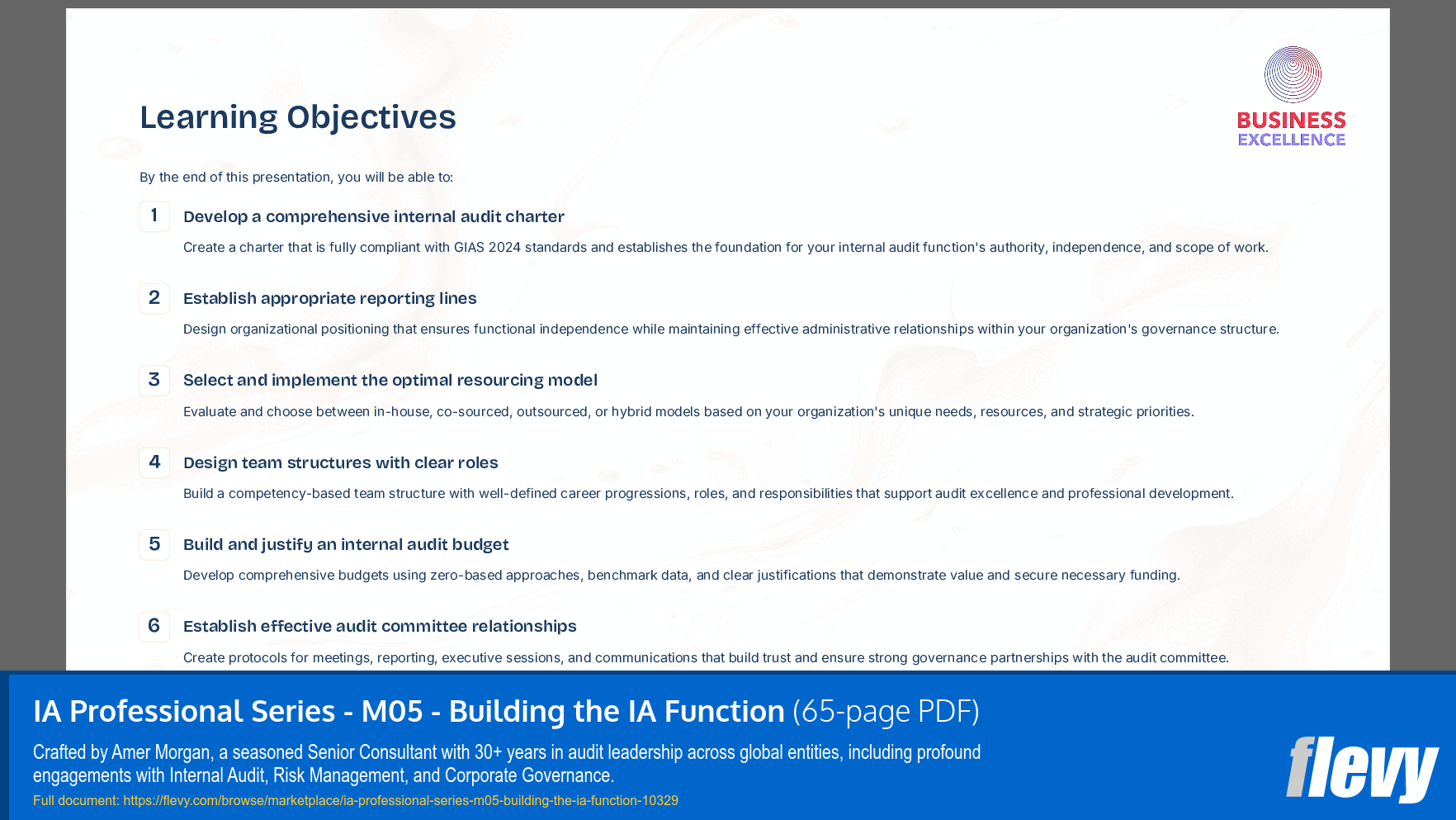
Develop a GIAS 2024-Compliant Charter
Write comprehensive charter language covering all mandatory elements
Customize charter provisions for organizational context
Navigate board approval process successfully
Establish annual charter review procedures
Establish Optimal Reporting Relationships
Design organizational positioning that ensures independence
Evaluate and select appropriate administrative reporting lines
Implement dual reporting protocols effectively
Communicate reporting structure to stakeholders
Calculate and Justify Resource Requirements
Apply formulas to determine required audit hours and FTEs
Validate calculations using industry benchmarks
Map competencies and identify capability gaps
Distribute workload efficiently across team
Select the Optimal Sourcing Model
Evaluate in-house, outsourced, co-sourced options systematically
Apply weighted criteria to sourcing decisions
Select and manage co-source vendors effectively
Navigate common co-sourcing challenges
Structure Teams for Success
Define clear roles from staff auditor through CAE
Create career progression pathways
Establish competency-based performance criteria
Plan for succession and capability development
Build and Defend Audit Budgets
Develop zero-based budgets with clear justifications
Calculate cost per audit hour and compare to benchmarks
Analyze and explain budget variances
Present budget requests effectively to stakeholders
Cultivate Strong Audit Committee Relationships
Prepare for and execute effective committee meetings
Plan annual reporting calendar aligned with governance cycles
Navigate executive sessions professionally
Build and maintain committee confidence
Implement Function Improvements
Assess current function against best practices
Identify priorities for structure enhancement
Develop implementation roadmaps
Monitor and measure improvement progress
PREVIEW SLIDES
Slide 1: Title Slide
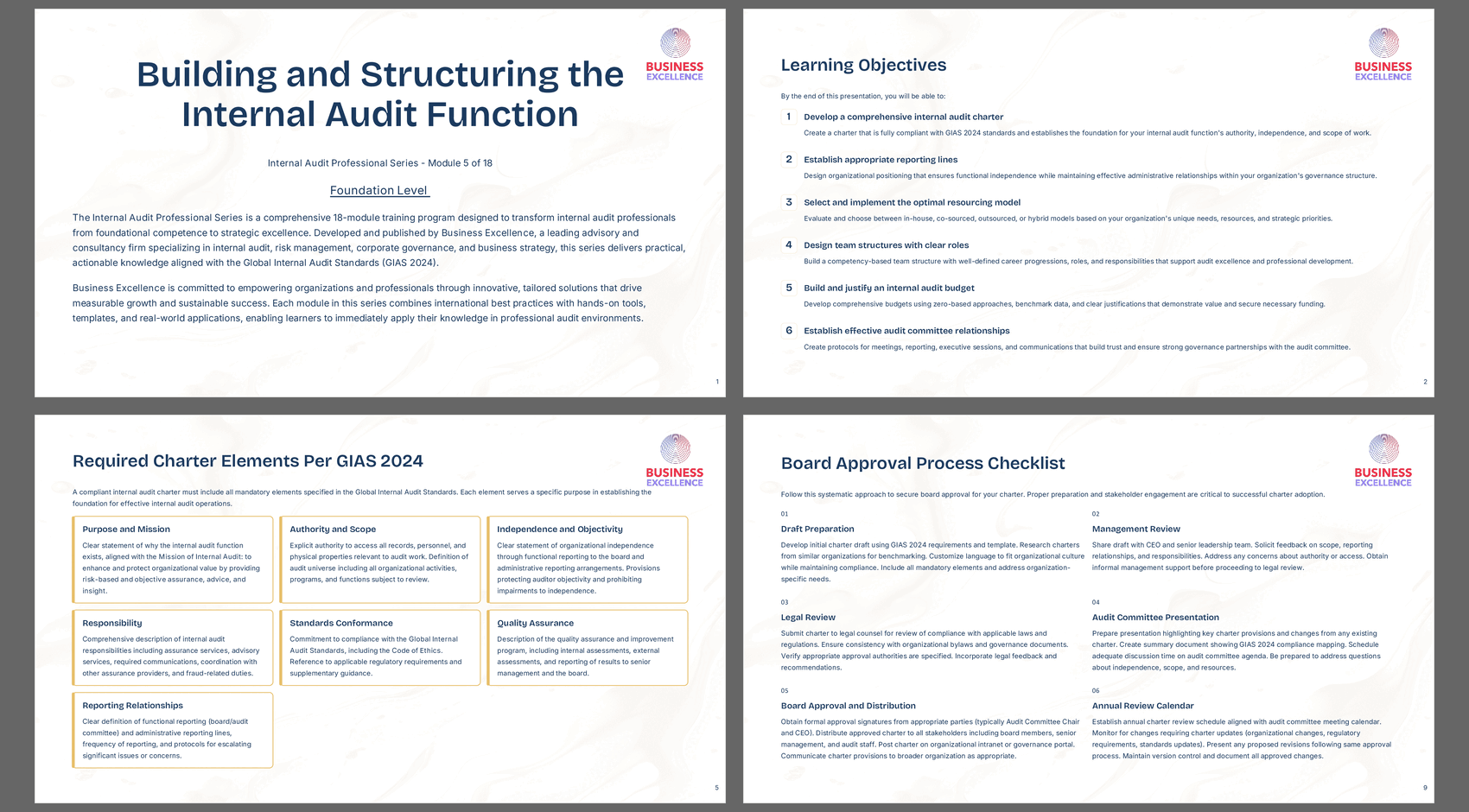
Building and Structuring the Internal Audit Function – The complete framework for establishing, structuring, and strengthening your internal audit function with GIAS 2024 compliance, systematic resource planning, and governance excellence.
Slide 4: The Charter – Why It Matters
Understanding the critical importance of the internal audit charter as your function's foundation document – exploring GIAS 2024 requirements, consequences of inadequate charters, and stakeholder expectations.
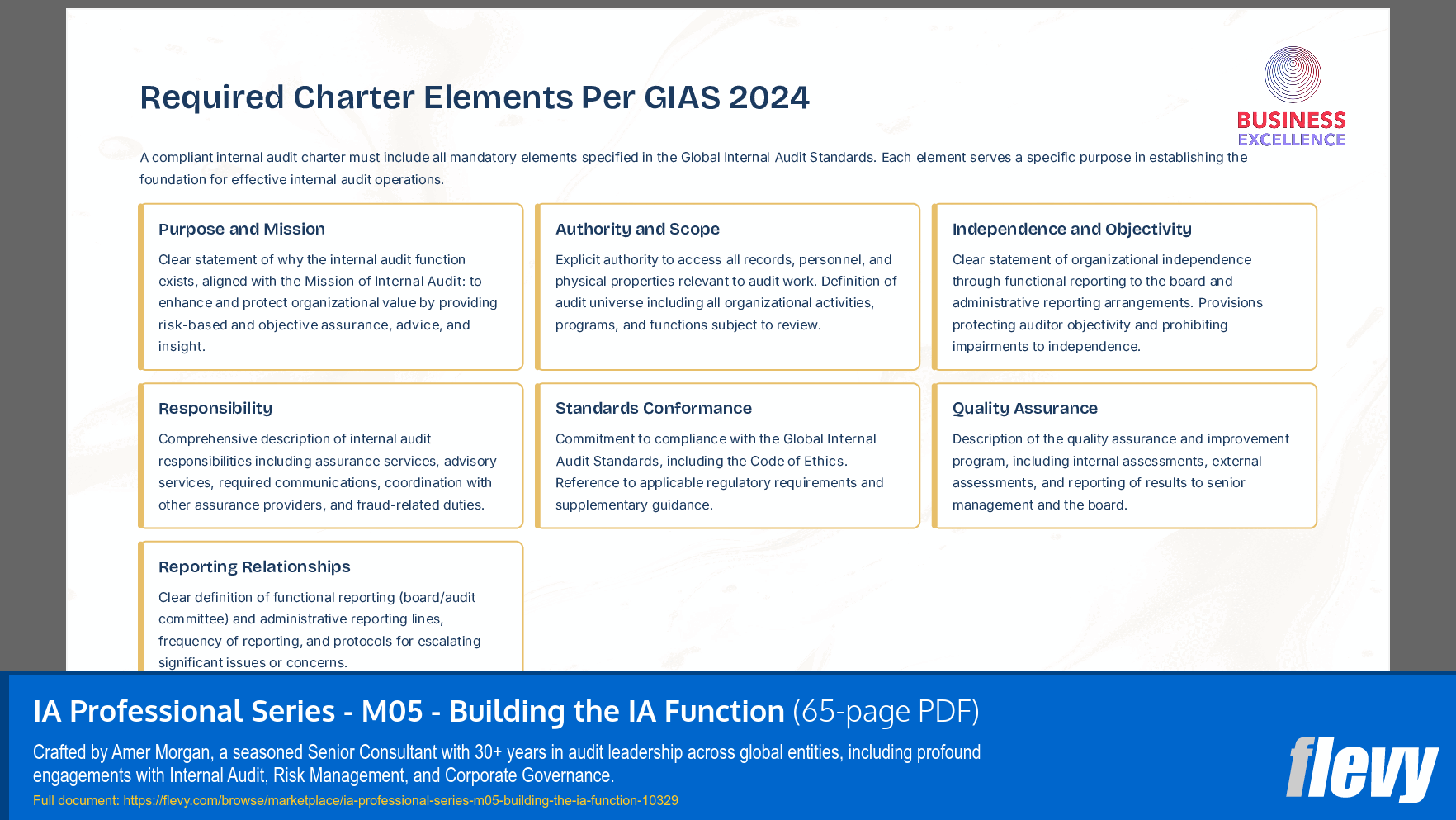
Slide 5: Required Charter Elements Per GIAS 2024
Comprehensive breakdown of seven mandatory charter elements: Purpose and Mission, Authority and Scope, Independence and Objectivity, Responsibility, Standards Conformance, Quality Assurance, and Reporting Relationships – with detailed implementation guidance for each.
Slide 8: GIAS 2024-Compliant Charter Template
Complete, ready-to-customize charter template incorporating all mandatory elements with placeholders for organizational customization – providing the foundation for board-approved authority and independence.
Slide 11: Reporting Line Options Analysis
Detailed comparison matrix of functional and administrative reporting options – analyzing advantages, disadvantages, and implications of reporting to board/audit committee, CEO, CFO, or other executives.
Slide 13: Reporting Line Evaluation Criteria
Comprehensive checklist for assessing reporting structure adequacy across four dimensions: Functional Reporting to Board, Administrative Reporting Appropriateness, Dual Reporting Protocol Clarity, and Independence Protection Adequacy.
Slide 17: Audit Hours Calculation Model
Formula-driven approach to determining required audit resources – systematic methodology for calculating staffing needs based on audit universe size, risk levels, coverage targets, and operational factors.
Slide 28: Sourcing Model Comparison
Side-by-side analysis of In-House, Outsourced, Co-Sourced, and Hybrid models – examining characteristics, optimal use cases, cost implications, and risk considerations for each approach.
Slide 30: Evaluation Matrix for Sourcing Decisions
Weighted decision matrix for evaluating sourcing models across nine critical criteria including independence, quality control, cost efficiency, flexibility, knowledge retention, and risk management.
Slide 35: Co-Source Agreement Template
Complete co-source agreement template covering scope of services, roles and responsibilities, staffing requirements, deliverables, quality standards, fees, confidentiality, and termination provisions.
Slide 41: Job Description Templates
Comprehensive job description library from Staff Auditor through Chief Audit Executive – defining responsibilities, qualifications, competencies, and performance expectations for each level.
Slide 45: Career Ladder Framework
Clear career progression framework showing advancement paths from entry-level through executive leadership – defining time requirements, experience expectations, and competency development for each career stage.
Slide 50: Zero-Based Budgeting Template
Detailed budget template starting from zero – systematically justifying personnel costs, professional development, technology investments, external resources, and operational expenses with calculation formulas and assumptions.
Slide 55: Cost Category Breakdown and Justification
Comprehensive analysis of budget categories with benchmark ranges, justification strategies, and red flag indicators – helping CAEs defend budget requests with data and demonstrate fiscal responsibility.
Slide 63: Annual Reporting Calendar Template
Strategic calendar aligning audit committee reporting with governance cycles – planning information flows, meeting agendas, and communication timing throughout the fiscal year for maximum effectiveness.
TARGET AUDIENCE
Primary Users:
Chief Audit Executives (current and aspiring)
Internal Audit Directors and Managers
Audit leaders establishing new functions
CAEs restructuring existing functions
Secondary Users:
Board members and Audit Committee members
Risk Management professionals
Compliance Officers
External auditors advising clients
Consultants specializing in internal audit
Corporate governance professionals
Experience Levels:
New CAEs (0-2 years in role)
Experienced audit leaders seeking improvement
Audit professionals preparing for CAE roles
Board members seeking to understand internal audit structure
Organizational Context:
Organizations establishing internal audit for first time
Companies expanding existing audit functions
Entities responding to regulatory requirements
Organizations recovering from audit function failures
Companies benchmarking against best practices
IMPLEMENTATION DIFFICULTY
Complexity Level: Intermediate to Advanced
Why This Rating:
Requires strategic thinking and organizational understanding
Involves stakeholder management and change leadership
Demands financial acumen and resource planning skills
Needs board-level communication capabilities
Requires balancing competing priorities and constraints
Prerequisites:
Basic understanding of internal audit principles
Familiarity with organizational governance structures
General knowledge of budget development
Awareness of GIAS 2024 or similar standards (covered in Module 2)
Implementation Timeline:
Charter development and approval: 2-3 months
Reporting structure changes: 1-3 months
Resource planning and staffing: 3-6 months
Budget development: 1-2 months
Team structure implementation: 6-12 months
Full function implementation: 12-18 months
Required Resources:
Executive sponsorship (CEO/Board commitment)
Access to benchmark data and industry standards
Budget authority for staffing and resources
Time for stakeholder consultation and board approval
Support from HR for role design and recruitment
Success Factors:
Strong executive and board support
Clear communication of changes and rationale
Phased implementation approach
Regular progress monitoring
Flexibility to adapt to organizational context
Common Challenges:
Resistance to charter authority provisions
Budget constraints limiting ideal staffing
Organizational politics around reporting lines
Limited availability of qualified staff
Time pressures for rapid implementation
Support Mechanisms:
All templates are fully editable and customizable
Examples show completed implementation
Decision frameworks provide structure for complex choices
Checklists ensure comprehensive consideration
Red flags help anticipate and avoid problems
FILE INFORMATION
Document Type: Microsoft PowerPoint Presentation (.pptx)
Number of Slides: 65 slides
File Size: Approximately 8-10 MB
Software Requirements:
Microsoft PowerPoint 2016 or later (Windows/Mac)
PowerPoint Online
Google Slides (with conversion)
Apple Keynote (with conversion)
Content Structure:
Title and introduction slides: 2
Section 1 (Charter Development): 12 slides
Section 2 (Organizational Positioning): 14 slides
Section 3 (Resource Planning): 10 slides
Section 4 (Sourcing Models): 12 slides
Section 5 (Team Structure): 9 slides
Section 6 (Budget Development): 10 slides
Section 7 (Audit Committee): 6 slides
Summary and takeaways: 1 slide
Design Elements:
Professional corporate template design
Consistent color scheme (Navy blue #1B3A5F, Gold accents #C9A227)
High-quality diagrams and flowcharts
Data visualization charts and graphs
Icon-based visual communication
Branded footer with Business Excellence details
Editability:
All text is fully editable
All templates can be customized
Colors and fonts can be modified
Graphics can be replaced or updated
Layouts can be adjusted
Content can be added or removed
Print Optimization:
Templates designed for 8.5" x 11" printing
High-resolution graphics (300 DPI)
Print-friendly color schemes
Clear margins for binding
Page numbers on all slides
Templates Included as Separate Elements:
GIAS 2024-Compliant Charter Template
Reporting Evaluation Checklist
Audit Hours Calculation Model
Competency Mapping Matrix
Sourcing Evaluation Matrix
Vendor Selection Scorecard
Co-Source Agreement Template
Job Description Library (5 templates)
Career Ladder Framework
Zero-Based Budget Template
Variance Analysis Tool
Committee Meeting Checklist
Annual Reporting Calendar
Executive Session Agenda
Additional Resources:
Comprehensive speaker notes on each slide
Implementation guidance embedded in slides
Reference citations to GIAS 2024 standards
Benchmark data sources indicated
Updates and Maintenance:
Content reflects GIAS 2024 (current as of 2025)
Templates remain relevant for 3-5 years
Structure frameworks are timeless
Best practices proven across industries
CALL TO ACTION
Ready to Build Your Function Excellence?
Download Building and Structuring the Internal Audit Function now and gain immediate access to:
✓ GIAS 2024-compliant charter template ready for board approval
✓ Resource planning formulas that eliminate guesswork
✓ Complete sourcing evaluation framework
✓ Job description library for your entire team
✓ Zero-based budget template with justifications
✓ Audit committee relationship protocols
Part of the Internal Audit Professional Series – 18 Modules Transforming Audit Professionals from Foundation to Excellence
Developed by: Amer, Senior Consultant – Business Excellence
Current Module: 5 of 18 – Foundation Level
Series Status: Modules 1-5 available now | Modules 6-18 coming soon
© 2025 Business Excellence. All rights reserved.
Got a question about the product? Email us at support@flevy.com or ask the author directly by using the "Ask the Author a Question" form. If you cannot view the preview above this document description, go here to view the large preview instead.
Source: Best Practices in Audit Management PowerPoint Slides: Internal Audit M05: Building the Audit Function PowerPoint (PPTX) Presentation Slide Deck, Amer Morgan
ABOUT THE AUTHOR

Amer Morgan is the founder of Business Excellence, Audit Consultant and Governance Advisor with over 30 years of practice in internal audit, enterprise risk management, and corporate governance across Qatar, Egypt, the UAE, and the USA. He currently leads the internal audit function for a sovereign-wealth-fund-owned food security group in Doha, with responsibility for board-level assurance across ... [read more]
Ask the Author a Question
You must be logged in to contact the author.