
This product (Guide to Competitive Assessment) is a 122-slide PPT PowerPoint presentation slide deck (PPT), which you can download immediately upon purchase.
This guide is developed to provide a structured approach for conducting a high quality competitive analysis. It provides a detailed approach and methodology for competitor assessment in five key topic areas:
• Business/Portolio Overview.
• Management & People.
• Product/Service & Technology.
• Cost Structure & Operations.
• Marketing & Sales.
The competitor and information analysis is divided into several steps:
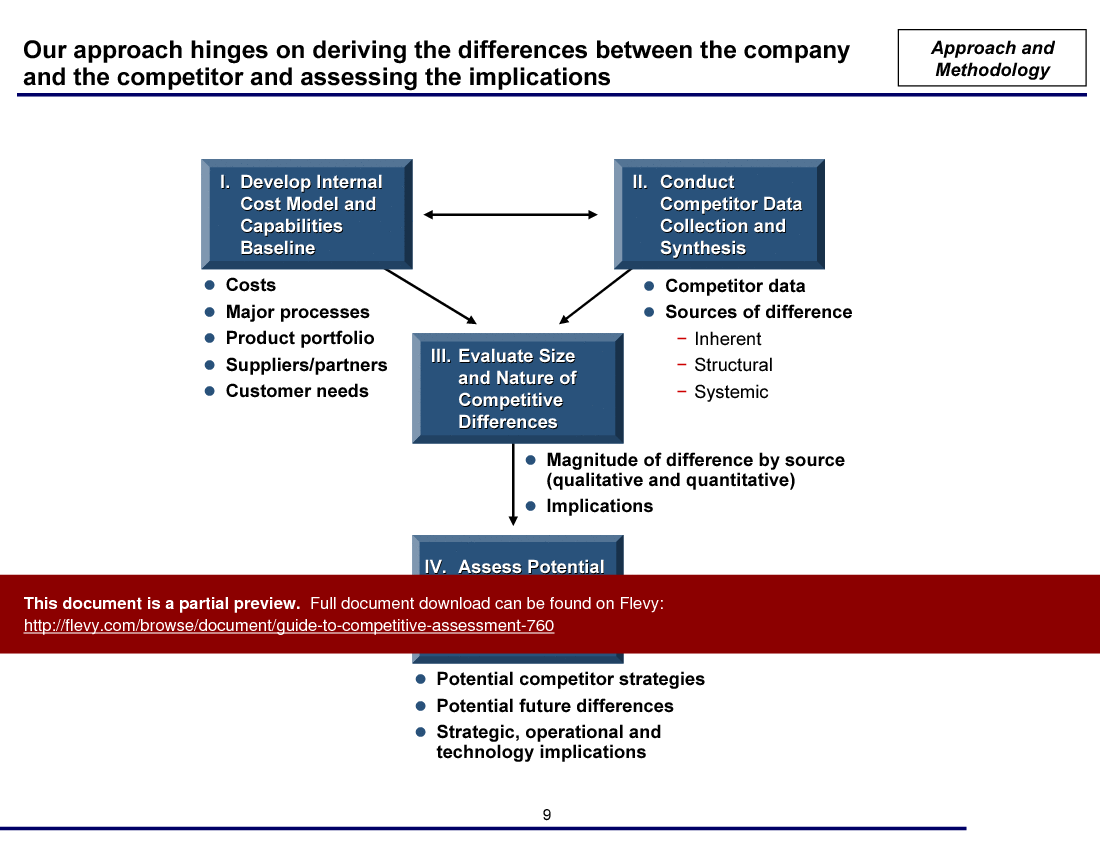
• Develop internal cost model and capability baseline.
• Conduct competitor data collection and synthesis.
• Evaluate size and nature of competitive differences.
• Assess potential competitor strategies and implications.
Each steps contain detail description of activities, examples, and tools used. The document also includes an interview guide for the user to jump-start the process.
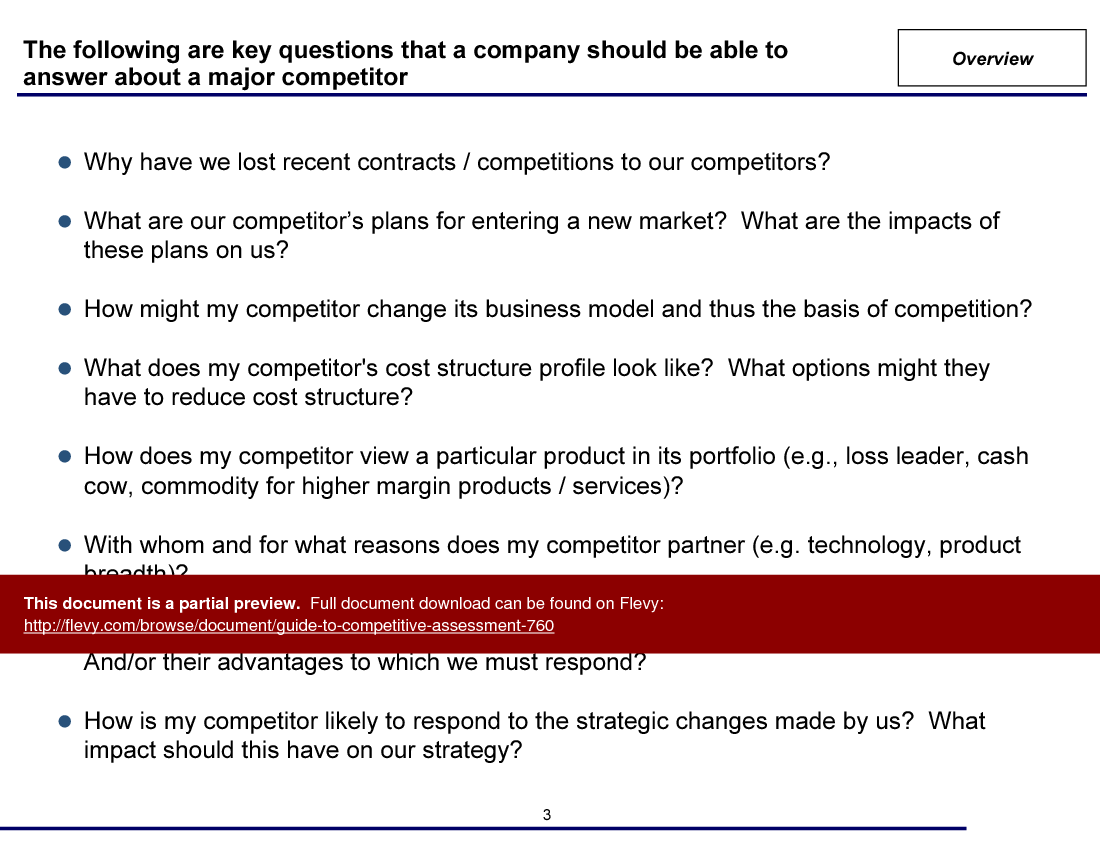
This guide goes beyond just theoretical frameworks by providing practical insights and real-world examples. It includes detailed questions that companies should be able to answer about their competitors, such as understanding why recent contracts were lost or how competitors plan to enter new markets. These questions are designed to provoke critical thinking and strategic planning.
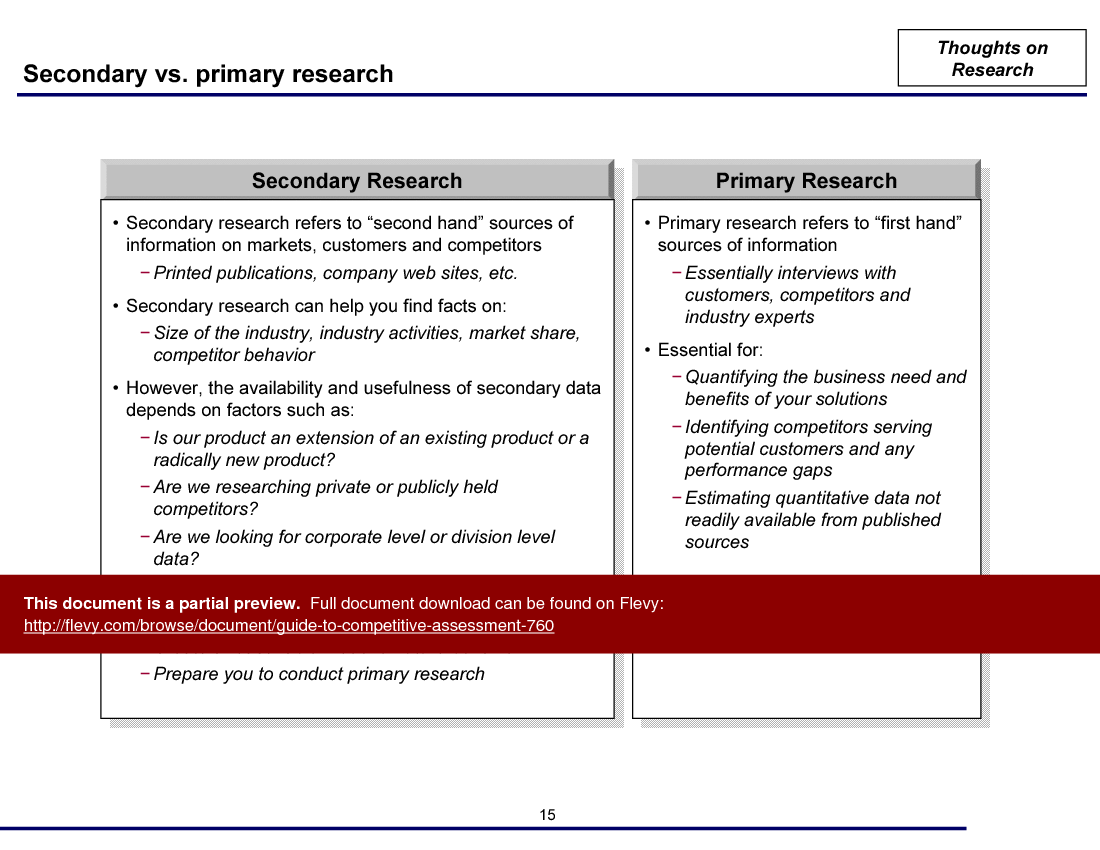
Another key feature of this guide is its focus on both secondary and primary research. It outlines the importance of using various sources of information, from printed publications to direct interviews with industry experts and competitors. This dual approach ensures a comprehensive understanding of the competitive landscape, enabling more informed decision-making.
The guide also emphasizes the importance of qualitative and quantitative comparisons. It provides methodologies for evaluating the size and nature of competitive differences, considering factors like cost structure and operational efficiency. This balanced approach helps in building a robust competitive strategy, tailored to the unique challenges and opportunities of your industry.
Got a question about the product? Email us at support@flevy.com or ask the author directly by using the "Ask the Author a Question" form. If you cannot view the preview above this document description, go here to view the large preview instead.
MARCUS OVERVIEW
This synopsis was written by Marcus [?] based on the analysis of the full 122-slide presentation.
Executive Summary
The "Guide to Conducting a Competitive Assessment" is a comprehensive presentation designed to equip corporate executives and consultants with the tools necessary for effective competitor analysis. This McKinsey, Bain, or BCG-quality guide offers a structured approach to identify competitive strengths and weaknesses, analyze market positioning, and synthesize actionable intelligence. Users will learn to develop internal cost models, conduct thorough competitor data collection, and evaluate strategic implications, ultimately allowing for informed decision-making and enhanced competitive positioning.
Who This Is For and When to Use
• Corporate executives focused on strategic planning and market positioning
• Business analysts tasked with competitor benchmarking and performance evaluation
• Consultants assisting clients in understanding competitive landscapes
• Marketing teams looking to refine strategies based on competitor insights
Best-fit moments to use this deck:
• During strategic planning sessions to identify competitive threats and opportunities
• When preparing for market entry or product launch to understand competitor dynamics
• In post-acquisition scenarios to assess integration challenges and competitive positioning
Learning Objectives
• Define key components of a competitive assessment framework
• Build an internal cost model to establish a baseline for comparison
• Conduct thorough competitor data collection and synthesis
• Evaluate the size and nature of competitive differences quantitatively and qualitatively
• Assess potential competitor strategies and their implications for your organization
• Develop actionable insights for strategic decision-making
Table of Contents
• Overview (page 1)
• Approach and Methodology (page 7)
• Thoughts on Research (page 13)
• Competitor Information and Analysis (page 17)
• Develop Internal Cost Model and Capabilities Baseline (page 27)
• Conduct Competitor Data Collection and Synthesis (page 35)
• Evaluate Size and Nature of Competitive Differences (page 81)
• Assess Potential Competitor Strategies and Key Implications (page 91)
• Interviewing Skills & Interview Guide (page 99)
Primary Topics Covered
• Overview - An introduction to the competitive assessment process, emphasizing its importance in strategic planning.
• Approach and Methodology - A structured framework for conducting competitor analysis, including qualitative and quantitative methods.
• Competitor Data Collection - Techniques for gathering competitor information, including primary and secondary research methods.
• Cost Structure Analysis - Insights into developing internal cost models for benchmarking against competitors.
• Competitive Differences Evaluation - Methods for assessing the size and nature of competitive advantages and disadvantages.
• Strategic Implications - Guidance on interpreting competitive data to inform strategic decisions.
Deliverables, Templates, and Tools
• Internal cost model template for baseline comparison
• Competitor data collection framework for structured analysis
• Interview guide for gathering qualitative insights from key stakeholders
• Synthesis templates for translating data into actionable intelligence
• Strategic options analysis model for evaluating competitor strategies
Slide Highlights
• Overview of the competitive assessment process, outlining key components and methodologies
• Detailed framework for competitor data collection, emphasizing both qualitative and quantitative approaches
• Visual representation of competitive differences, showcasing potential advantages and disadvantages
• Interview guide structure, providing a roadmap for effective stakeholder engagement
• Case studies illustrating successful application of competitive assessment methodologies
Potential Workshop Agenda
Kickoff Session (60 minutes)
• Introduce the competitive assessment framework and objectives
• Discuss the importance of competitor analysis in strategic planning
Data Collection Workshop (90 minutes)
• Review primary and secondary research methods
• Develop a plan for gathering competitor data
Analysis and Synthesis Session (90 minutes)
• Evaluate collected data against internal benchmarks
• Discuss implications of competitive differences on strategic options
Customization Guidance
• Tailor the internal cost model to reflect specific industry metrics and benchmarks
• Adjust the competitor data collection framework to focus on relevant market segments
• Modify the interview guide to include questions specific to your organization’s strategic priorities
Secondary Topics Covered
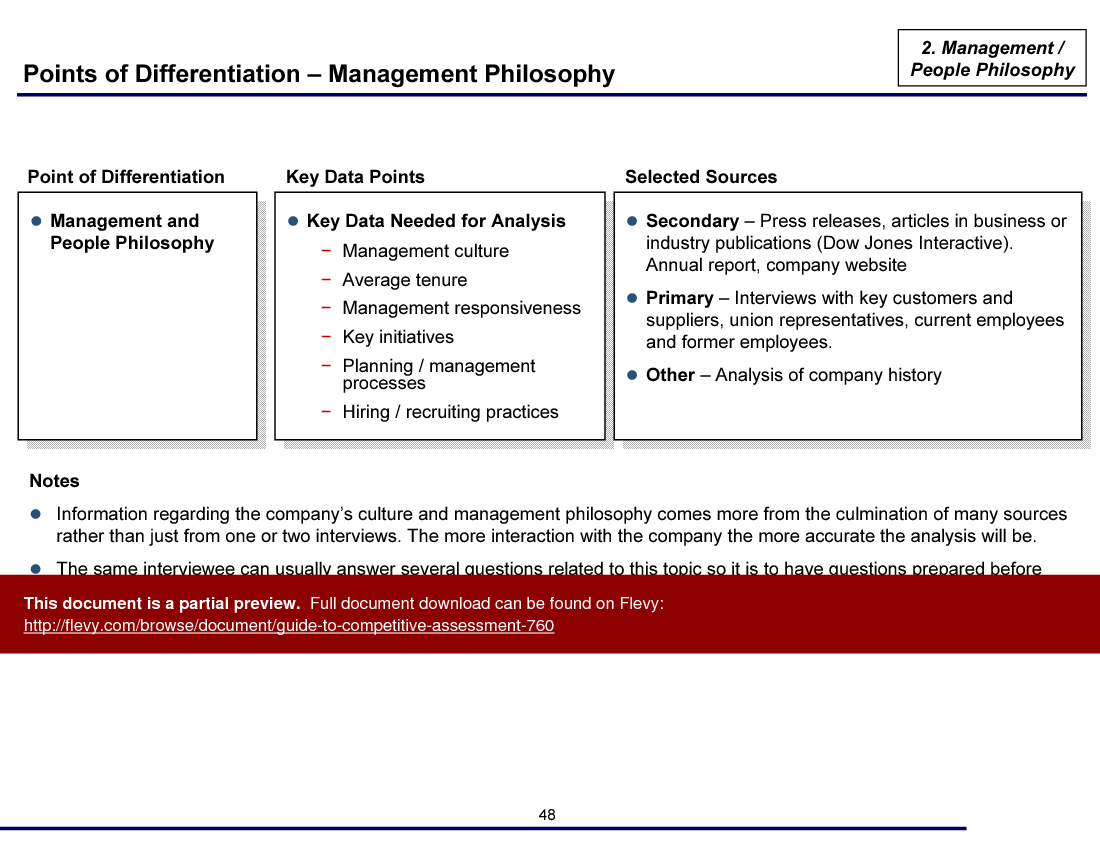
• Management philosophies of competitors
• Product and technology differentiation strategies
• Marketing approaches and customer engagement tactics
• Cost structure and operational efficiencies
• Supplier management and partnership dynamics
FAQ What is the primary goal of a competitive assessment?
The primary goal is to understand competitors' strengths, weaknesses, and strategies to inform your own strategic decisions.
How can I effectively gather competitor data?
Utilize a combination of primary research (interviews, surveys) and secondary research (industry reports, competitor websites) to gather comprehensive insights.
What should be included in the internal cost model?
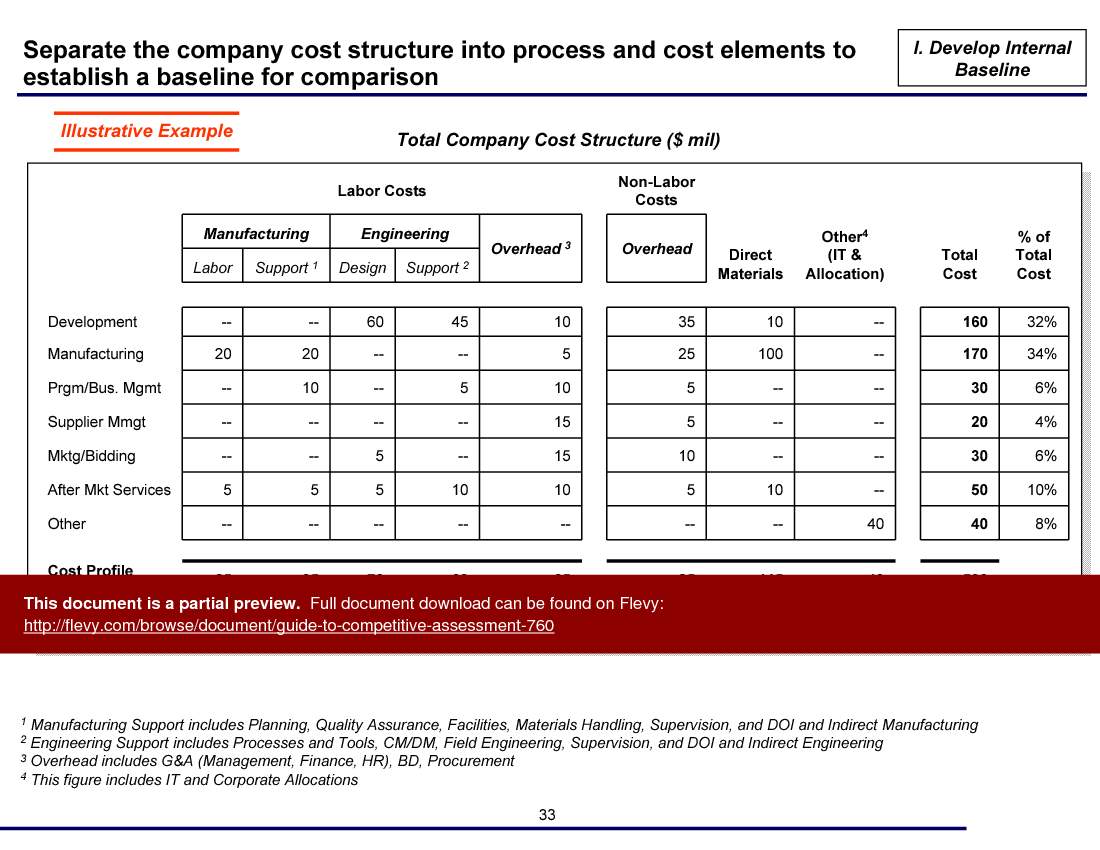
The internal cost model should encompass labor costs, overhead, direct materials, and any other relevant cost drivers specific to your organization.
How do I evaluate the size and nature of competitive differences?
Assess both qualitative and quantitative data, comparing your organization’s metrics against those of competitors to identify areas of advantage or disadvantage.
What are some common pitfalls in conducting a competitive assessment?
Common pitfalls include relying too heavily on secondary data, failing to validate findings through primary research, and not clearly defining the scope of analysis.
How often should competitive assessments be conducted?
Competitive assessments should be ongoing, with formal reviews conducted at least annually or in response to significant market changes.
What types of questions should I ask during competitor interviews?
Focus on strategic areas such as market positioning, product differentiation, pricing strategies, and operational efficiencies.
What is the importance of synthesizing data collected during the assessment?
Synthesizing data transforms raw information into actionable insights, enabling informed decision-making and strategic planning.
Glossary
• Competitive Assessment - A systematic evaluation of competitors to understand their strengths and weaknesses.
• Internal Cost Model - A framework for analyzing and benchmarking an organization's cost structure.
• Primary Research - First-hand data collected through interviews, surveys, or direct observations.
• Secondary Research - Data gathered from existing sources such as reports, articles, and competitor websites.
• Yield - The percentage of output that meets quality standards in manufacturing processes.
• Market Positioning - The strategy used to differentiate a product or service in the marketplace.
• Strategic Implications - The potential effects of competitive analysis findings on an organization's strategy.
• Qualitative Analysis - Assessment based on non-numerical data, focusing on understanding underlying motivations and behaviors.
• Quantitative Analysis - Assessment based on numerical data, focusing on measurable outcomes and statistics.
• Cost Structure - The various costs incurred by an organization in the production of goods or services.
• Supplier Management - The process of managing and optimizing relationships with suppliers to enhance efficiency and reduce costs.
• Co-development - Collaborative efforts between companies to develop new products or technologies.
This slide identifies competitor weaknesses to uncover strategic opportunities for the company. Key weaknesses include Company X's reluctance to engage in supply agreements, suggesting potential for formal partnerships. A competitor's lack of systems integration presents an opportunity to bundle offerings and enhance product breadth. Limited market segment-specific products and absence of international operations allow the company to target underserved international markets. Additionally, past customer dissatisfaction with key product elements indicates potential to attract disgruntled customers. Finally, unfavorable pricing practices of a competitor may alienate customer segment B, creating an opportunity for the company to implement more favorable pricing strategies. By leveraging these weaknesses, the company can enhance its market position.
This slide presents a comparative yield analysis between Company X and Company Y. Company X has a 50% initial yield, leading to a cumulative yield of 94% after 3 rework cycles, with 6% classified as scrap. In contrast, Company Y starts with a 70% initial yield, achieving a cumulative yield of 96% after 2 rework cycles and only 4% scrap material. The analysis highlights the impact of initial yield rates on overall efficiency and waste reduction, indicating that marginal improvements in initial yields can significantly enhance cumulative outcomes. These metrics guide strategic decisions around process improvements and technology investments to boost initial yields and overall competitiveness.
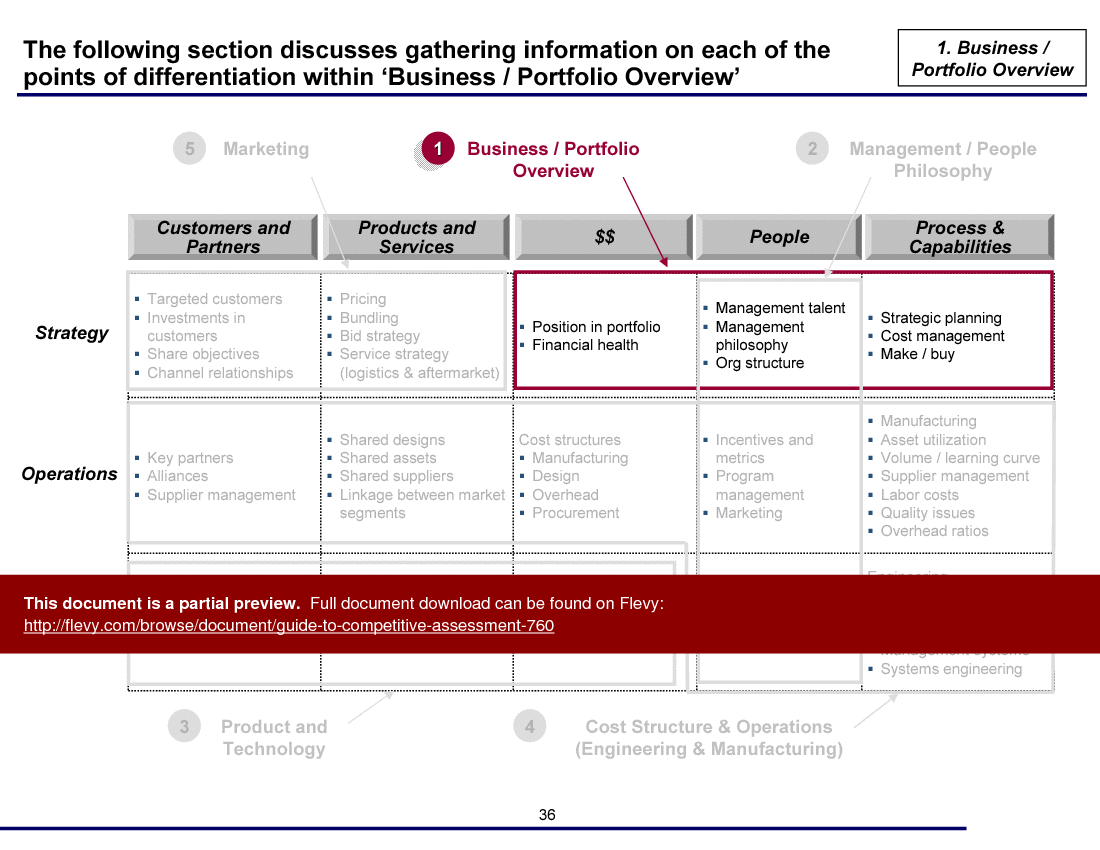
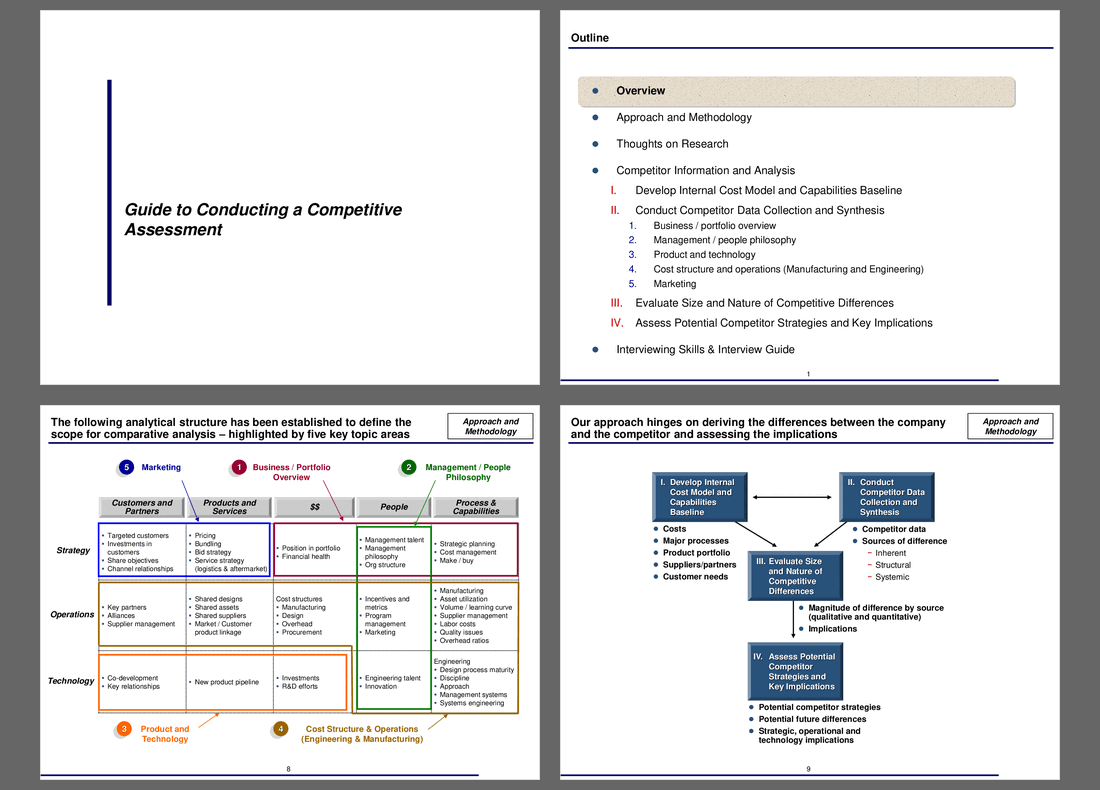
This slide presents a structured analytical framework for comparative analysis across 5 key areas: Strategy, Operations, Technology, People, and Process & Capabilities. The Strategy section focuses on targeted customers, investments in customer relationships, and alignment of objectives, emphasizing market connection and customer needs. Operations highlight partnerships and supplier management, showcasing the importance of collaboration for operational efficiency and cost reduction. The Technology segment discusses co-development and key relationships, indicating that innovation requires external partnerships to enhance product pipelines and R&D. The People section addresses management talent and organizational structure, underscoring human resources' role in business success. Finally, the Process & Capabilities area outlines essential operational metrics, including strategic planning and cost management, ensuring adaptability to changing market conditions.
This slide outlines a structured approach to competitive assessment, comprising 4 key components. The first component involves developing an internal cost model and capabilities baseline by analyzing costs, processes, product portfolios, suppliers, partners, and customer needs. The second component focuses on collecting and synthesizing competitor data, identifying sources of difference as inherent, structural, and systemic. The third component evaluates the size and nature of competitive differences, assessing their implications for strategic positioning and operational effectiveness. The final component analyzes potential competitor strategies and future differences, enabling proactive responses. This comprehensive framework ensures decision-makers understand their competitive standing and necessary strategic actions for market positioning.
This slide outlines critical considerations for assessing operational synergies across market segments. The first section, "Linkage between market segments," explores interdependencies between segments A and B, focusing on potential benefits and risks. The second area, "Shared design," examines the integration of engineering and product design processes, emphasizing alignment in quality and cost management. The third section, "Shared assets," investigates operational efficiencies and synergies from utilizing shared resources, leading to cost savings. Lastly, "Shared suppliers" addresses procurement strategies, questioning the benefits of consolidating purchases across segments for operational efficiency. This framework encourages a comprehensive analysis of design, assets, and supplier relationships to drive value across segments.
This slide outlines a framework for assessing differentiation in Product and Technology across 4 categories: Strategy, Operations, Technology, and People. The Strategy category focuses on customer relationships, pricing strategies, and service logistics, emphasizing alignment of investments with targeted customers. Operations highlights the importance of partnerships and supplier management, where shared designs enhance efficiency. The Technology section discusses co-development and key relationships, such as with DARPA, to foster innovation. The People category addresses management talent and organizational structure, indicating their critical role in differentiation success. Metrics and incentives are vital for aligning team efforts with strategic goals. Investments and R&D efforts signal a commitment to continuous improvement and innovation, essential for new product development and market responsiveness.
This slide presents a framework for aligning data requirements with potential data sources for efficient information gathering. It categorizes data needs, including headcount demographics, organizational structure, management incentives, and financial performance. Each requirement is matched with relevant sources, such as internal documents, stock analysts, industry experts, and competitor newsletters, indicated by check marks for quick identification. For instance, financial performance can be sourced from annual and financial reports. This mapping of data needs to sources streamlines the research process, enabling informed decision-making based on accurate information and emphasizing the importance of thorough research in strategic planning and operational execution.
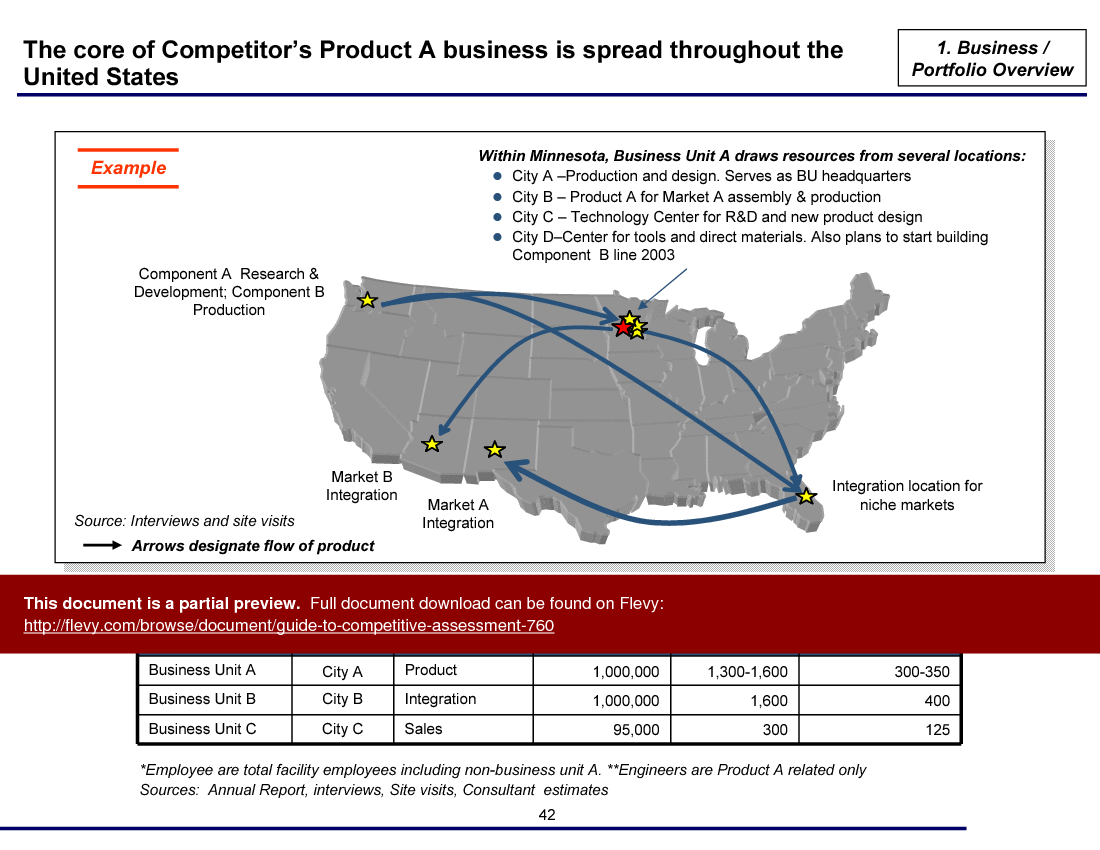
This slide provides an overview of a competitor's Product A operations across the United States, highlighting the geographical distribution of business units. Key cities involved in production, research and development, and integration are marked on the map. In Minnesota, City A serves as the headquarters for production and design, City B handles assembly for Market A, City C focuses on R&D and new product design, and City D is set to build a new component line. A summary table details competitor facilities, including locations, functions, and employee metrics, revealing significant operational scale, such as Business Unit A in City A with 1,000,000 square feet and 1,300 to 1,600 employees. This operational framework provides insights into the competitor's strengths and weaknesses, informing strategic decisions on resource allocation and market positioning.
The slide illustrates varying levels of effort across a project timeline in competitive assessment. The vertical axis represents "Level of Effort" from low to high, while the horizontal axis shows "Time" progression. Initially, the focus is on developing an internal cost and capabilities baseline, which is essential for subsequent analyses. In the middle phase, effort shifts to competitor data collection and synthesis, requiring significant resources due to the complexity of analyzing competitive data. As the project concludes, the focus transitions to evaluating competitive differences and accessing competitor strategies. Despite a decrease in effort, synthesizing gathered data remains crucial. Balancing internal and external research is vital, as external research requires high effort initially and continues to influence the project until completion.
This slide outlines a structured approach for analyzing competitive differences using qualitative and quantitative metrics across 5 key business performance segments. Key questions guide the analysis, focusing on identifying differences between a baseline and competitors, and areas where competitors may have advantages or disadvantages. A plotted line chart illustrates potential differences in competitive standing over the next 36 months, comparing the percentage of competitive advantage against time under various scenarios. Annotations clarify implications, such as the widening gap if a competitor improves while the company does not, and the complex dynamics when both entities enhance their performance. This analysis aids decision-makers in visualizing market positioning shifts and informs strategic planning, resource allocation, and risk management.
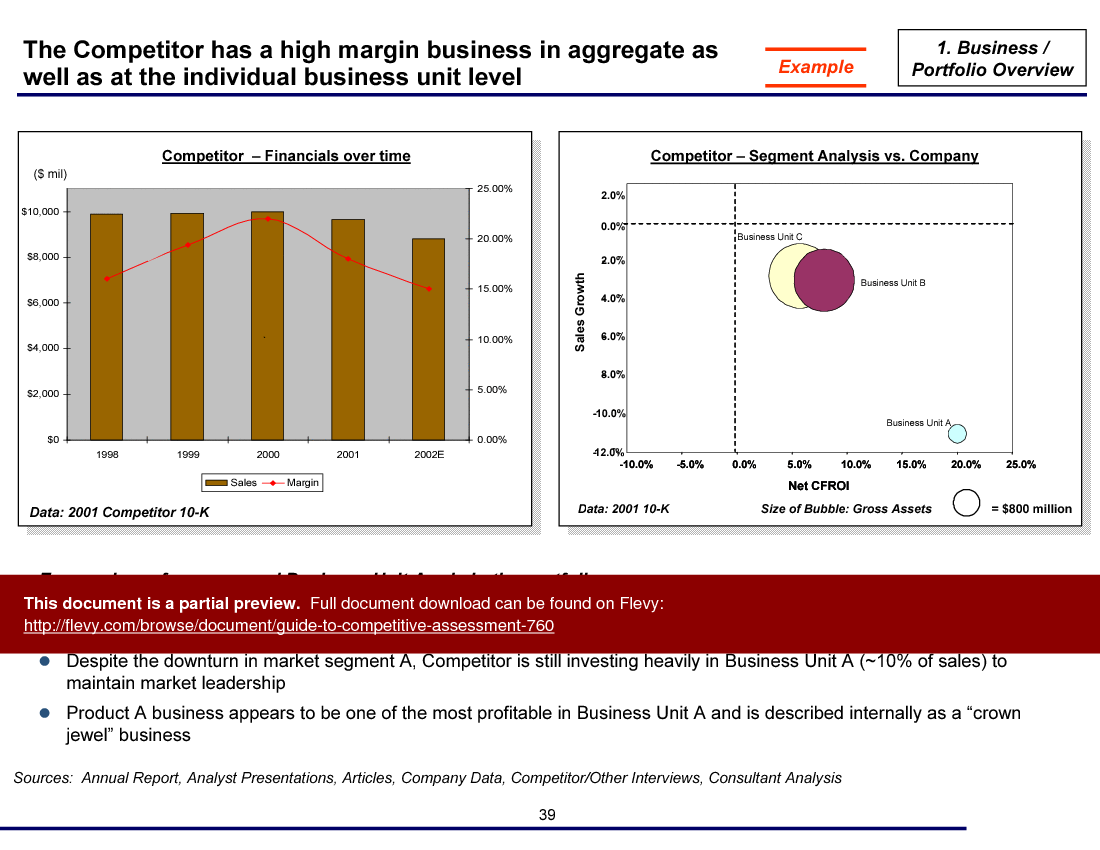
The slide provides a financial overview of a competitor, highlighting aggregate and individual business unit performance. A bar graph illustrates sales trends from 1998 to projected figures for 2002, with sales between $8 billion and $10 billion and margins above 15%, indicating effective cost management. A segment analysis plots business units against sales growth and net cash flow return on investment (CFROI). Business Unit A shows strong performance in growth and return metrics, while Business Unit C may be underperforming. The size of the bubbles represents gross asset size. Despite a decline in overall sales and profitability, margins remain robust, with Business Unit A maintaining market leadership. Continued investment in this unit suggests a long-term strategic focus, with Product A identified as a "crown jewel" reinforcing targeted investments in high-performing areas for substantial returns.
This slide analyzes campus recruiting plans across 16 universities, focusing on the distribution of skill sets in engineering and business functions. It details total recruitment numbers and role breakdowns including Engineering/R&D, Finance/Accounting, Operations/Manufacturing, IT, Business Development/Sales, Human Resources/Communications, and Management. For example, University A has 10 recruits with diverse functional distribution, while University B emphasizes specific areas. The slide categorizes recruits by degrees—undergraduate, MBA, and other graduate degrees—providing insights into educational backgrounds that inform hiring strategies. A total of 138 positions are filled, with 54 in engineering and 76 in business roles, indicating a strong emphasis on business skills aligned with industry demands. This data aids organizations in refining recruitment strategies to match market trends and skill requirements.
This slide outlines key points of differentiation in engineering, focusing on "Design Process Maturity" and "Discipline." "Design Process Maturity" emphasizes hardware and software design re-use tendencies, questioning the preference for standard versus customized components, which affects efficiency and cost. It also assesses design variants to evaluate flexibility and adaptability. The "Discipline" section addresses the maturity of the Integrated Product Development (IPD) process, highlighting the definition and management of product requirements to align engineering with market needs. Risk management insights reveal the robustness of engineering processes, while the evaluation of engineering tools underscores their impact on productivity and innovation. Engaging with former and current employees, as well as vendors, provides qualitative insights into engineering practices for improvement.
This slide outlines essential tips and pitfalls for conducting primary research through competitor interviews. Key strategies include prioritizing questions to gather critical information early, maintaining flexibility to adapt questions, and demonstrating persistence while knowing when to move on from uncooperative interviewees. Asking sensitive questions can yield unexpected insights, and understanding interviewee interests helps guide discussions. Common pitfalls include rushing into sensitive topics, being unprepared, and getting sidetracked by unrelated details. Specific guidance for competitor interviews emphasizes preparing targeted questions, adapting dynamically based on conversation flow, and selectively engaging lower-level personnel to gather diverse perspectives without overwhelming the process.
Source: Best Practices in Competitive Analysis PowerPoint Slides: Guide to Competitive Assessment PowerPoint (PPT) Presentation Slide Deck, Documents & Files
The average daily rate of a McKinsey consultant is $6,625 (not including expenses). The average price of a Flevy document is $65.
Trusted by over 10,000+ Client Organizations
Since 2012, we have provided best practices to over 10,000 businesses and organizations of all sizes, from startups and small businesses to the Fortune 100, in over 130 countries.

"Flevy.com has proven to be an invaluable resource library to our Independent Management Consultancy, supporting and enabling us to better serve our enterprise clients.
The value derived from our [FlevyPro] subscription in terms of the business it has helped to gain far exceeds the investment made, making a subscription a no-brainer for any growing consultancy – or in-house strategy team."
– Dean Carlton, Chief Transformation Officer, Global Village Transformations Pty Ltd.
"As a small business owner, the resource material available from FlevyPro has proven to be invaluable. The ability to search for material on demand based our project events and client requirements was great for me and proved very beneficial to my clients. Importantly, being able to easily edit and tailor
the material for specific purposes helped us to make presentations, knowledge sharing, and toolkit development, which formed part of the overall program collateral. While FlevyPro contains resource material that any consultancy, project or delivery firm must have, it is an essential part of a small firm or independent consultant's toolbox.
"
– Michael Duff, Managing Director at Change Strategy (UK)
"My FlevyPro subscription provides me with the most popular frameworks and decks in demand in today’s market. They not only augment my existing consulting and coaching offerings and delivery, but also keep me abreast of the latest trends, inspire new products and service offerings for my practice, and educate me
in a fraction of the time and money of other solutions. I strongly recommend FlevyPro to any consultant serious about success.
"
– Bill Branson, Founder at Strategic Business Architects
"As a consultant requiring up to date and professional material that will be of value and use to my clients, I find Flevy a very reliable resource.
The variety and quality of material available through Flevy offers a very useful and commanding source for information. Using Flevy saves me time, enhances my expertise and ends up being a good decision."
– Dennis Gershowitz, Principal at DG Associates
"Flevy is our 'go to' resource for management material, at an affordable cost. The Flevy library is comprehensive and the content deep, and typically provides a great foundation for us to further develop and tailor our own service offer."
– Chris McCann, Founder at Resilient.World
"I have used FlevyPro for several business applications. It is a great complement to working with expensive consultants. The quality and effectiveness of the tools are of the highest standards."
– Moritz Bernhoerster, Global Sourcing Director at Fortune 500
"One of the great discoveries that I have made for my business is the Flevy library of training materials.
As a Lean Transformation Expert, I am always making presentations to clients on a variety of topics: Training, Transformation, Total Productive Maintenance, Culture, Coaching, Tools, Leadership Behavior, etc. Flevy
It is well worth the money to purchase these presentations. Sure, I have the knowledge and information to make my point. It is another thing to create a presentation that captures what I want to say. Flevy has saved me countless hours of preparation time that is much better spent with implementation that will actually save money for my clients.
"
– Ed Kemmerling, Senior Lean Transformation Expert at PMG
"I like your product. I'm frequently designing PowerPoint presentations for my company and your product has given me so many great ideas on the use of charts, layouts, tools, and frameworks. I really think the templates are a valuable asset to the job."
– Roberto Fuentes Martinez, Senior Executive Director at Technology Transformation Advisory
Download our free compilation of 50+ Strategy & Transformation slides and templates. Frameworks include McKinsey 7-S, Balanced Scorecard, Disruptive Innovation, BCG Curve, and many more.