
This framework is developed by a team of former McKinsey and Big 4 consultants. The presentation follows the headline-body-bumper slide format used by global consulting firms.
Editor Summary
Five Pillars of Agile Organizations is a 30-slide PowerPoint presentation by LearnPPT Consulting that explains 5 foundational pillars—Strategy, Structure, Process, People, and Technology—and how strategic mind shifts, core agile practices, a defined "North Star" shared purpose, flat structures, rapid iteration/experimentation, and technology integration enable agility.
Read moreThe deck includes slide templates and strategic frameworks for reuse. Intended for management consultants, corporate executives, and HR leaders driving agile transformation. Sold as a digital download on Flevy with immediate access.
Use this presentation when a traditional, siloed organization needs to adopt agile ways of working — for example during digital transformation, efforts to speed decision cycles, or programs to empower teams and accelerate innovation.
Management consultants mapping a transformation roadmap and defining a shared "North Star" to align strategy and resources.
HR leaders redesigning reporting lines and accountability to create flatter structures that support faster decisions.
Transformation leads designing processes for rapid iteration and experimentation across teams.
CIOs evaluating technology integration and next-generation tools to support end-to-end agility.
The five-pillar structure mirrors common organizational transformation consulting practice by addressing Strategy, Structure, Process, People, and Technology together.
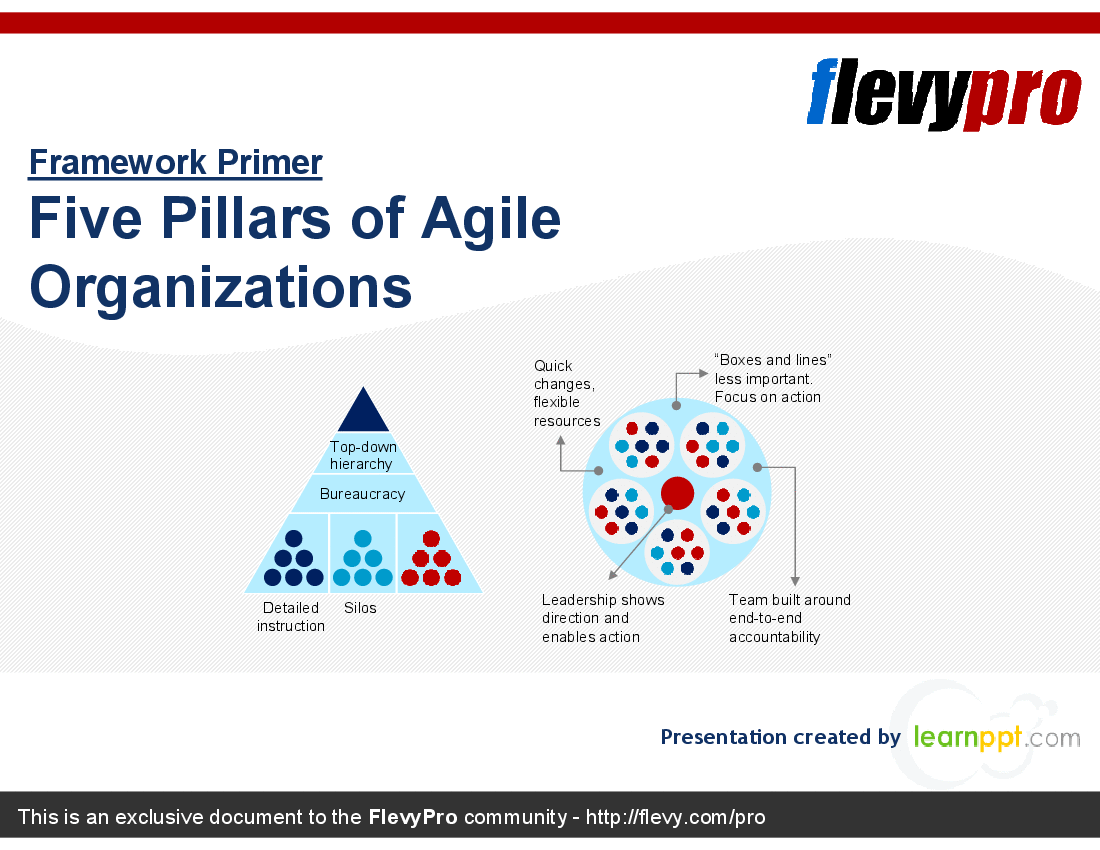
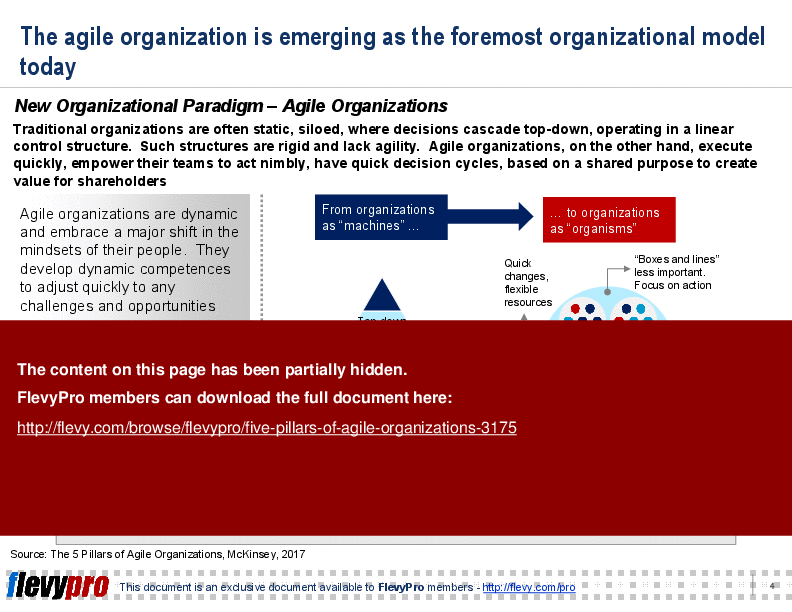
Traditional organizations are often static, siloed, and comprised of a bureaucratic rigid hierarchical structure where control and decisions flow top-down. Such structures are strong but lack agility.
Agile organizations, on the other hand, execute quickly, empower their teams to act nimbly, have quick decision cycles, based on a shared purpose to create value for shareholders.
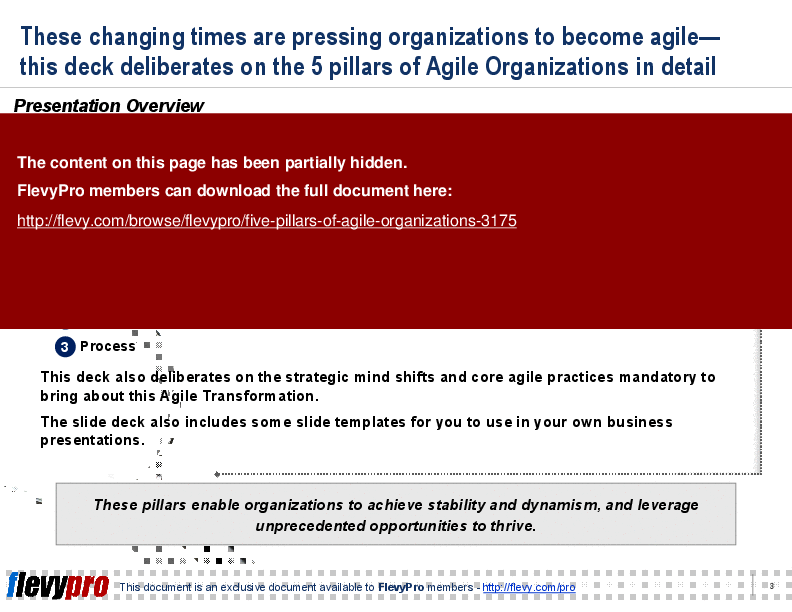
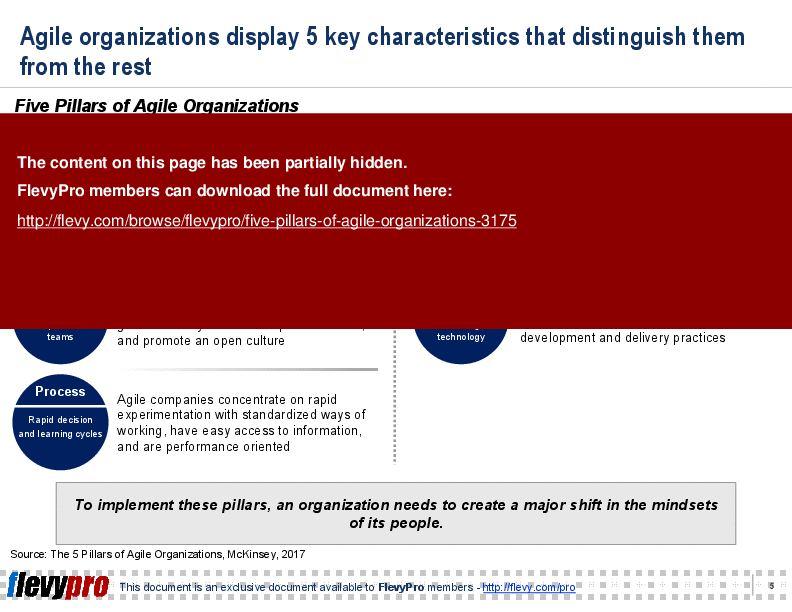
This presentation describes how traditional organizations can become agile by understanding and incorporating the 5 foundational pillars of Agile organizations:
1. Strategy
2. Structure
3. Process
4. People
5. Technology
This deck also deliberates on the strategic mind shifts and core agile practices mandatory to bring about this Agile Transformation.
The slide deck also includes some slide templates for you to use in your own business presentations.
This presentation dives deep into the five pillars essential for transforming traditional organizations into agile powerhouses. It provides a comprehensive overview of how to establish a shared purpose and vision, known as the "North Star," to guide decision-making and resource allocation. The PPT emphasizes the importance of a well-defined flat structure that supports rapid decision-making and fosters a culture of accountability.
Agile organizations leverage rapid iteration and experimentation to drive innovation and maintain a competitive edge. This deck outlines the core agile practices that enable teams to adapt quickly to changing market conditions and customer needs. It also highlights the role of technology in enabling agility, from next-generation tools to seamless integration across the organization.
The presentation includes actionable templates and strategic frameworks to help you implement these agile principles in your organization. By adopting these practices, your organization can achieve greater flexibility, faster decision cycles, and a more engaged workforce, ultimately driving superior value for shareholders.
What are the core pillars I should consider when moving from a traditional to an agile organization?
The core pillars to consider are Strategy, Structure, Process, People, and Technology; these 5 areas collectively guide changes to decision-making, ways of working, and enabling tools. The Five Pillars of Agile Organizations presentation organizes change around these 5 pillars.
How do I define a "North Star" for an agile transformation?
A "North Star" is a shared purpose and vision used to guide decision-making and resource allocation; it helps align teams on priorities and trade-offs during transformation. The Five Pillars of Agile Organizations presentation describes establishing a North Star to guide choices.
Which agile practices are emphasized to increase speed and adaptability?
The presentation emphasizes rapid iteration and experimentation, quicker decision cycles, and empowering teams to act nimbly as core practices that enable adaptation to changing market and customer needs. These practices are highlighted as central to agility.
What should I look for when buying an agile transformation slide deck or toolkit?
Look for coverage across Strategy, Structure, Process, People, and Technology, plus concrete templates you can reuse in stakeholder presentations and guidance on required mindset shifts. The product includes slide templates and strategic frameworks.
How should I decide between buying templates and hiring external consultants for an agile program?
Consider whether you need ready-to-use materials for planning and communication versus hands-on implementation support; a template pack like this is delivered as a 30-slide PowerPoint useful for planning and presentations when internal capability suffices.
After rapid growth we need faster decisions—what organizational changes help achieve that?
Shifting toward flatter structures, clarifying accountability, and streamlining processes that support rapid iteration can shorten decision cycles and empower teams; the deck highlights flat structures and process changes to support faster decisions.
What role does technology play in enabling organizational agility?
Technology enables agility through next-generation tools and seamless integration across the organization, which support faster information flow, iteration, and coordination among teams; the presentation discusses technology integration as an enabling pillar.
How do I address the cultural or mindset shifts required for agile ways of working?
Addressing culture involves deliberate strategic mind shifts and reinforcement of core agile practices—such as decentralizing decision rights and encouraging experimentation—so teams adopt new behaviors; the deck deliberates on strategic mind shifts and core agile practices.
This PPT slide outlines the "People Pillar" in agile organizations, emphasizing a people-centric approach. Leaders must evolve from traditional control-based styles to empowering employees, fostering ownership and confidence in contributing to the organization's mission. An agile culture prioritizes employee engagement and collaborative value creation, enhancing individual capabilities through strong processes and supportive community. Key agile practices include Cohesive Community, Shared and Servant Leadership, Entrepreneurial Drive, and Role Mobility, forming a holistic framework for employee development. Investing in these areas cultivates an agile workforce capable of responding to challenges and driving innovation, reinforcing the philosophy that prioritizing people enhances organizational capability and responsiveness.
Agile organizations require a stable top-level hierarchy alongside a flexible network of empowered teams. This structure fosters autonomy and accountability, essential for team engagement and innovation. Leaders must identify and nurture these networks, balancing business and social elements to enhance alignment, responsibility, and teamwork. Core agile practices include a well-defined flat structure, accountable roles, and hands-on governance, ensuring clarity and responsibility within teams. Collaboration is vital, supported by robust communities of practice and active partnerships. An open culture promoting transparency and trust is necessary, alongside creating a secure environment where teams feel supported and valued.
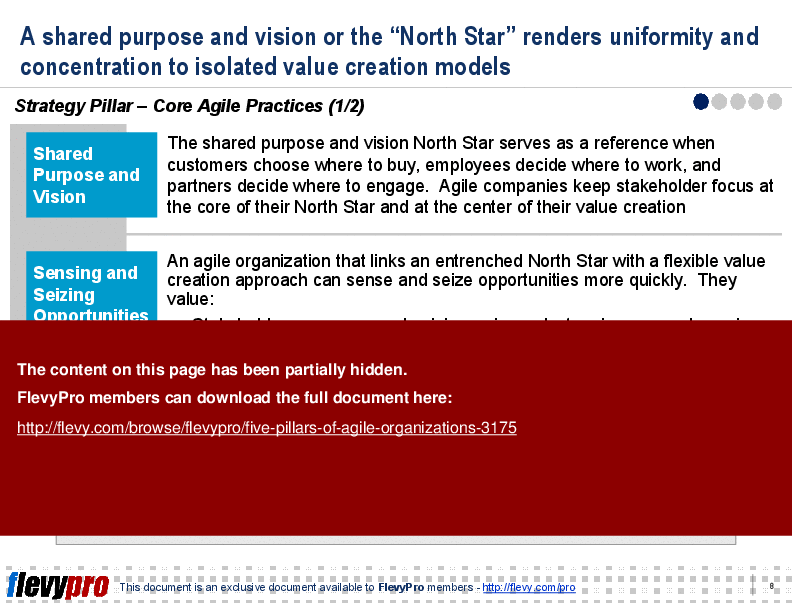
The foundational strategy pillar for agile organizations centers on establishing a shared purpose and vision, known as the "North Star," essential for consistency across value creation models. Organizations must transition from a scarcity mentality, focused on competition, to recognizing abundant opportunities through collaboration with stakeholders, including employees, customers, and investors. A deep customer focus and commitment to addressing needs throughout the customer lifecycle are vital. Agile organizations create value for a broader range of stakeholders, designing flexible systems that integrate external partners into the value creation process. Core agile practices include Shared Purpose and Vision, Sensing and Seizing Opportunities, Flexible Resource Allocation, and Actionable Strategic Guidance, fostering employee investment and driving better outcomes.
Source: Best Practices in Organizational Design, Agile, Agile Management PowerPoint Slides: Five Pillars of Agile Organizations PowerPoint (PPT) Presentation Slide Deck, LearnPPT Consulting
This framework is developed by a team of former McKinsey and Big 4 consultants. The presentation follows the headline-body-bumper slide format used by global consulting firms.
For $10.00 more, you can download this document plus 2 more FlevyPro documents. That's just $13 each.
ABOUT FLEVYPRO
This document is part of the FlevyPro Library, a curated knowledge base of documents for our FlevyPro subscribers.

FlevyPro is a subscription service for on-demand business frameworks and analysis tools. FlevyPro subscribers receive access to an exclusive library of curated business documents—business framework primers, presentation templates, Lean Six Sigma tools, and more—among other exclusive benefits.
The average daily rate of a McKinsey consultant is $6,625 (not including expenses). The average price of a Flevy document is $65.
Trusted by over 10,000+ Client Organizations
Since 2012, we have provided business templates to over 10,000 businesses and organizations of all sizes, from startups and small businesses to the Fortune 100, in over 130 countries.
"Last Sunday morning, I was diligently working on an important presentation for a client and found myself in need of additional content and suitable templates for various types of graphics. Flevy.com proved to be a treasure trove for both content and design at a reasonable price, considering the time I
saved. I encountered a download issue during the ordering process. However, a quick email to Flevy's support team, even on a Sunday (!!!), resulted in assistance within less than an hour, allowing me to download the content I needed. Fantastic job, Flevy! I give 5 stars for both content/price and customer service. Thank you!
"
– M. E., Chief Commercial Officer, International Logistics Service Provider
"I have used Flevy services for a number of years and have never, ever been disappointed. As a matter of fact, David and his team continue, time after time, to impress me with their willingness to assist and in the real sense of the word. I have concluded in fact
that it is not at all just a repository of documents/resources but, in the way that David and his team manage the firm, it is like dealing with consultants always ready to assist, advise and direct you to what you really need, and they always get it right.
I am an international hospitality accomplished senior executive who has worked and lived during the past 35 years in 23 countries in 5 continents and I can humbly say that I know what customer service is, trust me.
Aside from the great and professional service that Flevy's team provide, their wide variety of material is of utmost great quality, professionally put together and most current.
Well done Flevy, keep up the great work and I look forward to continue working with you in the future and to recommend you to a variety of colleagues around the world.
"
– Roberto Pelliccia, Senior Executive in International Hospitality
"FlevyPro provides business frameworks from many of the global giants in management consulting that allow you to provide best in class solutions for your clients."
– David Harris, Managing Director at Futures Strategy
"As a consultant requiring up to date and professional material that will be of value and use to my clients, I find Flevy a very reliable resource.
The variety and quality of material available through Flevy offers a very useful and commanding source for information. Using Flevy saves me time, enhances my expertise and ends up being a good decision."
– Dennis Gershowitz, Principal at DG Associates
"The wide selection of frameworks is very useful to me as an independent consultant. In fact, it rivals what I had at my disposal at Big 4 Consulting firms in terms of efficacy and organization."
– Julia T., Consulting Firm Owner (Former Manager at Deloitte and Capgemini)
"I have used FlevyPro for several business applications. It is a great complement to working with expensive consultants. The quality and effectiveness of the tools are of the highest standards."
– Moritz Bernhoerster, Global Sourcing Director at Fortune 500
"As a small business owner, the resource material available from FlevyPro has proven to be invaluable. The ability to search for material on demand based our project events and client requirements was great for me and proved very beneficial to my clients. Importantly, being able to easily edit and tailor
the material for specific purposes helped us to make presentations, knowledge sharing, and toolkit development, which formed part of the overall program collateral. While FlevyPro contains resource material that any consultancy, project or delivery firm must have, it is an essential part of a small firm or independent consultant's toolbox.
"
– Michael Duff, Managing Director at Change Strategy (UK)
"I like your product. I'm frequently designing PowerPoint presentations for my company and your product has given me so many great ideas on the use of charts, layouts, tools, and frameworks. I really think the templates are a valuable asset to the job."
– Roberto Fuentes Martinez, Senior Executive Director at Technology Transformation Advisory
Download our free compilation of 50+ slides and templates on Organizational Design, Change Management, and Corporate Culture. Methodologies include ADKAR, Burke-Litwin Change Model, McKinsey 7-S, Competing Values Framework, etc.