
Customer Journey Map Comprehensive Guide and Templates
Detailed Step-by-Step Instructions for Developing a Journey Map
Examples and Resources
CUSTOMER JOURNEY PPT DESCRIPTION
Editor Summary
Customer Journey Mapping - Guide & Templates is a 67-slide PowerPoint guide (with supplemental PPTX) by CustCore Consulting that provides step-by-step instructions and reusable templates for creating customer journey maps.
Read moreIncludes a Customer Journey Map template, Empathy Map, Touchpoint Analysis framework, Metrics Dashboard, Improvement Opportunity checklist, and Workshop Facilitation guide. Target users include customer experience managers, marketing teams, product development teams, business analysts, corporate executives, integration leaders, and consultants. Sold as a digital download on Flevy with immediate digital download.
Use this guide when organizations need to visualize customer experiences during product/service design, customer experience research, cross-functional alignment workshops, or strategy sessions to improve satisfaction.
Customer Experience Managers mapping end-to-end touchpoints and evaluating customer emotions to prioritize Moments That Matter using an Empathy Map and Touchpoint Analysis framework.
Marketing Teams designing engagement flows and measuring campaign impact with journey-based metrics such as NPS, CSAT, and CES.
Product Development Teams translating journey insights into feature requirements during the design phase using journey templates.
Business Analysts identifying process improvement opportunities and tracking outcomes via a Metrics Dashboard.
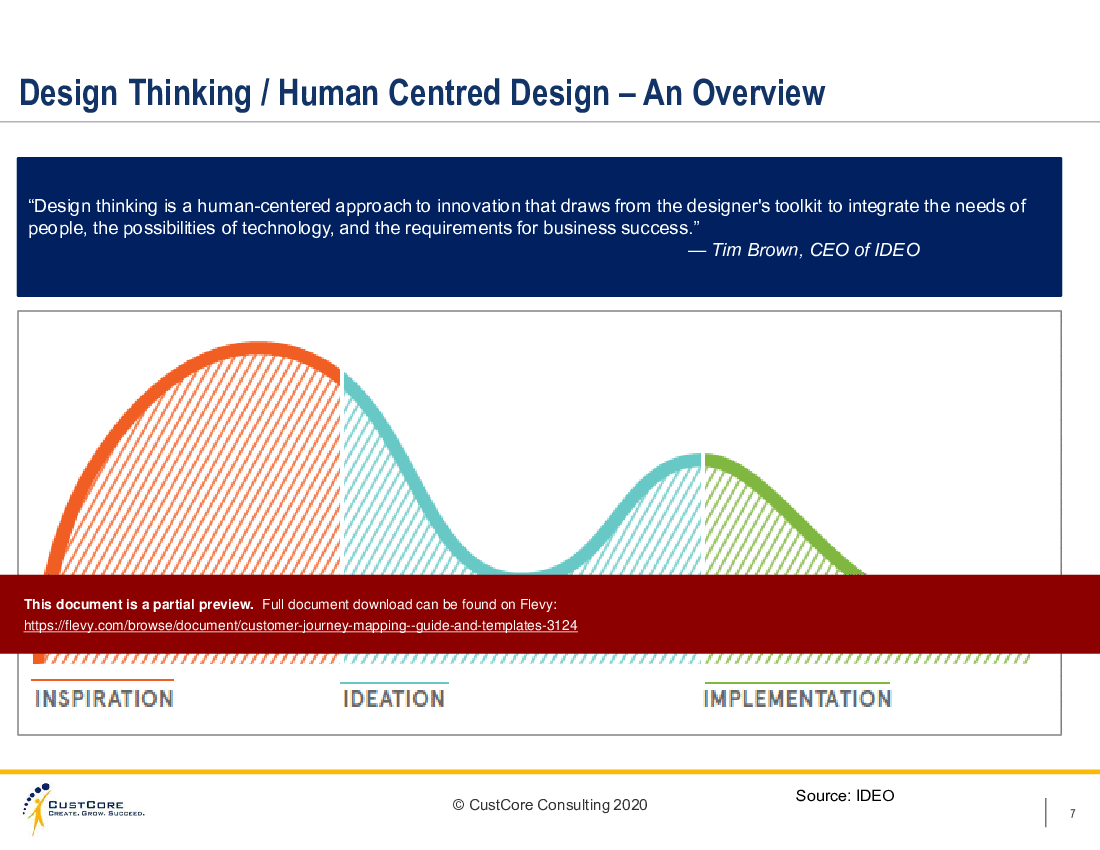
The guideās stepwise approach follows Design Thinking and Human-Centered Design phases: Inspiration, Ideation, and Implementation.
This Guide will take you through step-by-step detailed instructions to help you create a Customer Journey Map – a visual representation of the experience that customers have with your organisation, product or service.
The step-by-step guide includes a comprehensive outline and templates for use in developing your journey map(s) as well as detailed tips and details on each component in the journey map.
As an added bonus, the Guide comes with a set of Templates which you can utilise to set you down the path of creating your Journey Maps quickly and easily.
Utilising Customer Journey Maps is a great way to understand the experiences of your customer, design experiences which they value, and deliver outcomes customers truly want. Utilised properly, these Journey Maps will drive significant business success will into the future.
This PPT delves into the intricacies of Experience Design, emphasizing the importance of creating meaningful and impactful customer interactions. It provides an overview of Design Thinking and Human-Centered Design, illustrating how these methodologies can drive innovation and align with business goals. The guide outlines the phases of Inspiration, Ideation, and Implementation, ensuring a thorough understanding of each stage.
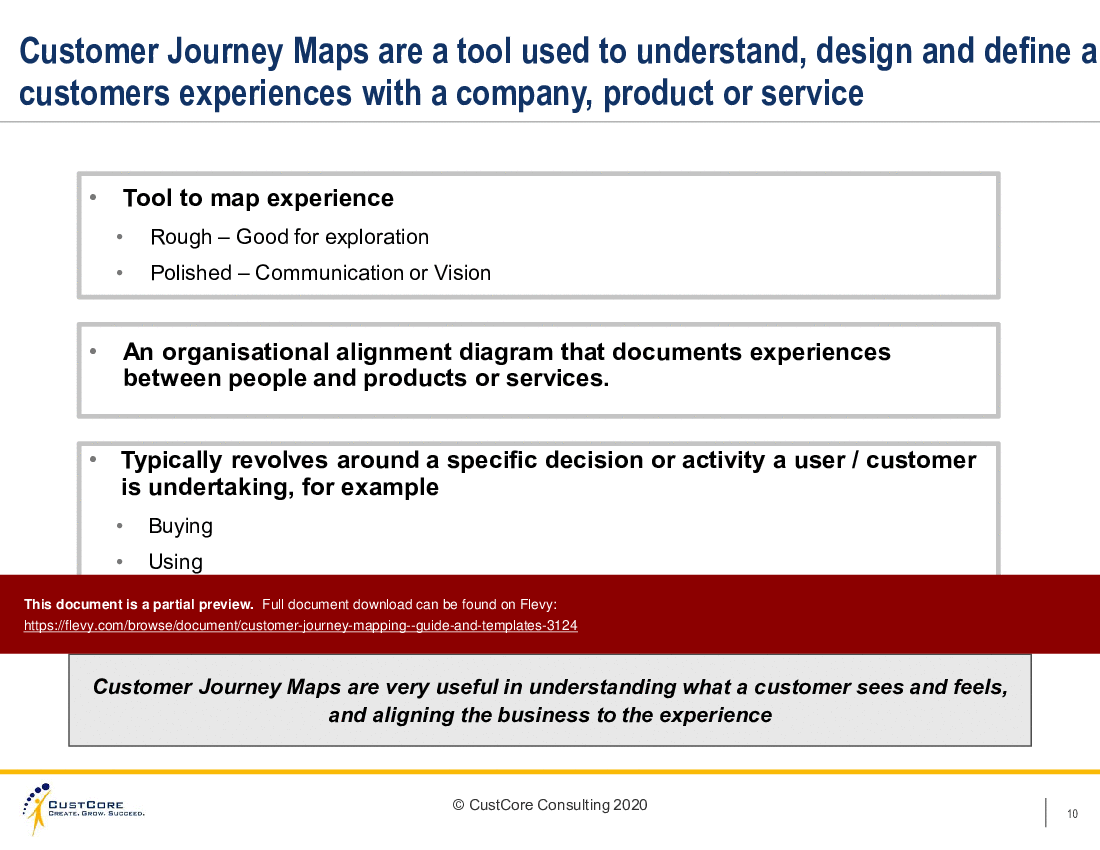
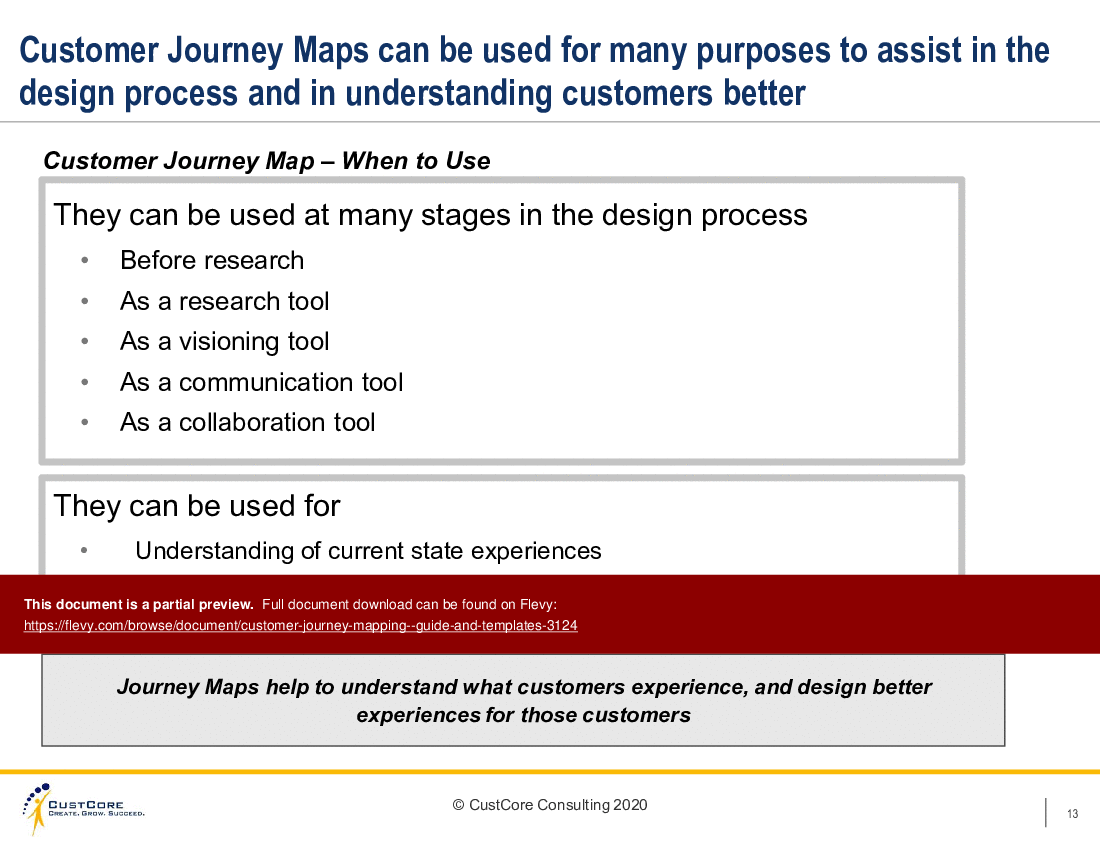
Customer Journey Maps are presented as versatile tools that can be used at various stages of the design process. They serve multiple purposes, from research and visioning to communication and collaboration. The document highlights the significance of mapping out customer experiences to gain insights and improve alignment between organizational goals and customer needs.
The guide also includes practical templates and examples, such as the 5 Whys Template and Moments That Matter framework. These tools help identify critical touchpoints and emotional drivers that influence customer perceptions. By focusing on these elements, businesses can design better experiences and achieve higher customer satisfaction and loyalty.
Got a question about the product? Email us at support@flevy.com or ask the author directly by using the "Ask the Author a Question" form. If you cannot view the preview above this document description, go here to view the large preview instead.
MARCUS OVERVIEW
This synopsis was written by Marcus [?] based on the analysis of the full 67-slide presentation.
Executive Summary
The "Customer Journey Mapping - Guide & Templates" presentation offers a comprehensive framework for understanding and enhancing customer experiences through effective journey mapping. This guide equips corporate executives, integration leaders, and consultants with the tools to visualize and analyze customer interactions, identify pain points, and create actionable strategies for improvement. By leveraging templates and detailed examples, users can effectively map customer journeys, ensuring alignment between organizational goals and customer needs.
Who This Is For and When to Use
• Customer Experience Managers focusing on optimizing customer interactions
• Marketing Teams aiming to enhance customer engagement strategies
• Product Development Teams seeking insights into user needs
• Business Analysts tasked with identifying process improvements
Best-fit moments to use this deck:
• During the design phase of new products or services
• When conducting customer experience research
• For workshops aimed at aligning teams on customer-centric strategies
• In strategy sessions focused on improving customer satisfaction
Learning Objectives
• Define the key components of a customer journey map
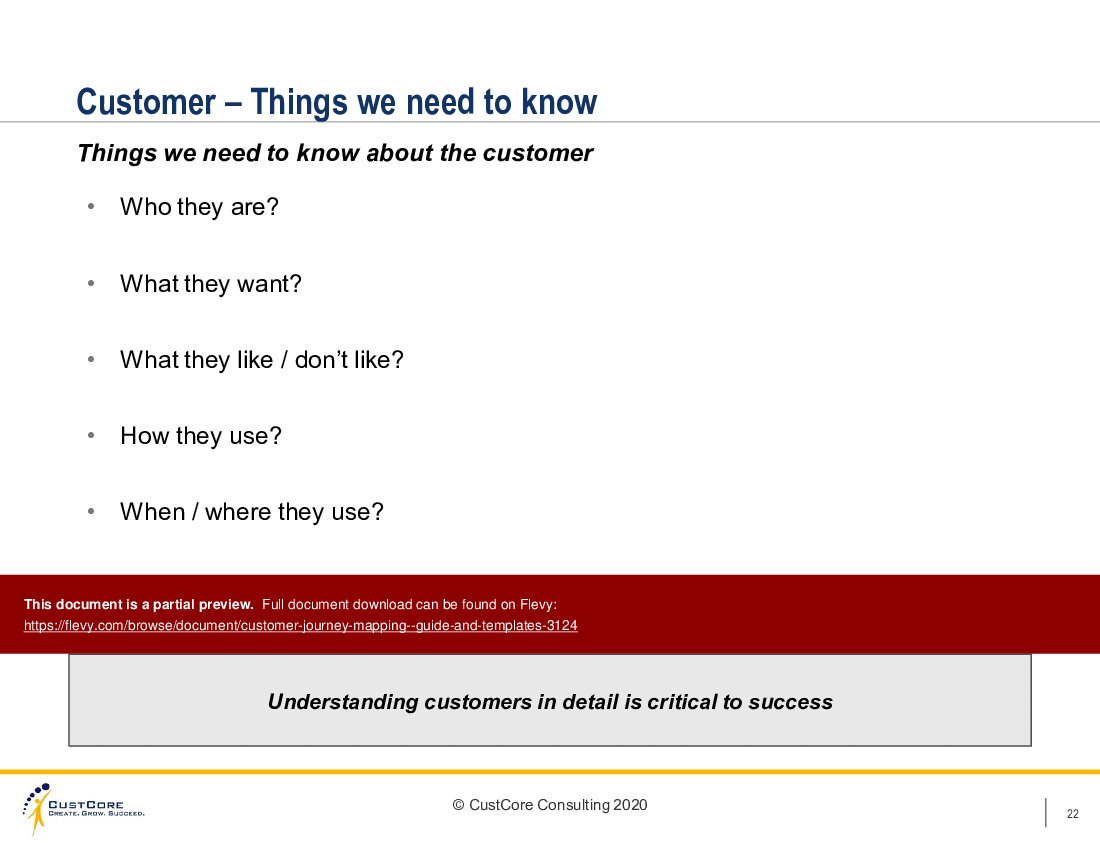
• Identify customer needs at each stage of the journey
• Analyze touchpoints to improve customer interactions
• Evaluate customer emotions and thoughts throughout the journey
• Develop metrics to assess journey effectiveness
• Identify improvement opportunities based on journey insights
Primary Topics Covered
• Experience Design - Focuses on creating customer-centric experiences that align with business goals.
• Customer Journey Maps - Visual tools that outline customer interactions with a brand, product, or service.
• Touchpoints - Key interactions that customers have with a brand, crucial for understanding the customer experience.
• Customer Emotions - Insights into how emotions influence customer perceptions and loyalty.
• Metrics - Tools for measuring the effectiveness of customer journeys and identifying areas for improvement.
• Improvement Opportunities - Strategies for enhancing customer experiences based on journey insights.
Deliverables, Templates, and Tools
• Customer Journey Map template for visualizing customer interactions
• Empathy Map for understanding customer perspectives
• Touchpoint analysis framework for identifying key interactions
• Metrics dashboard for tracking customer experience performance
• Improvement opportunity checklist for actionable insights
• Workshop facilitation guide for collaborative journey mapping sessions
Slide Highlights
• Overview of Experience Design principles and their impact on customer satisfaction
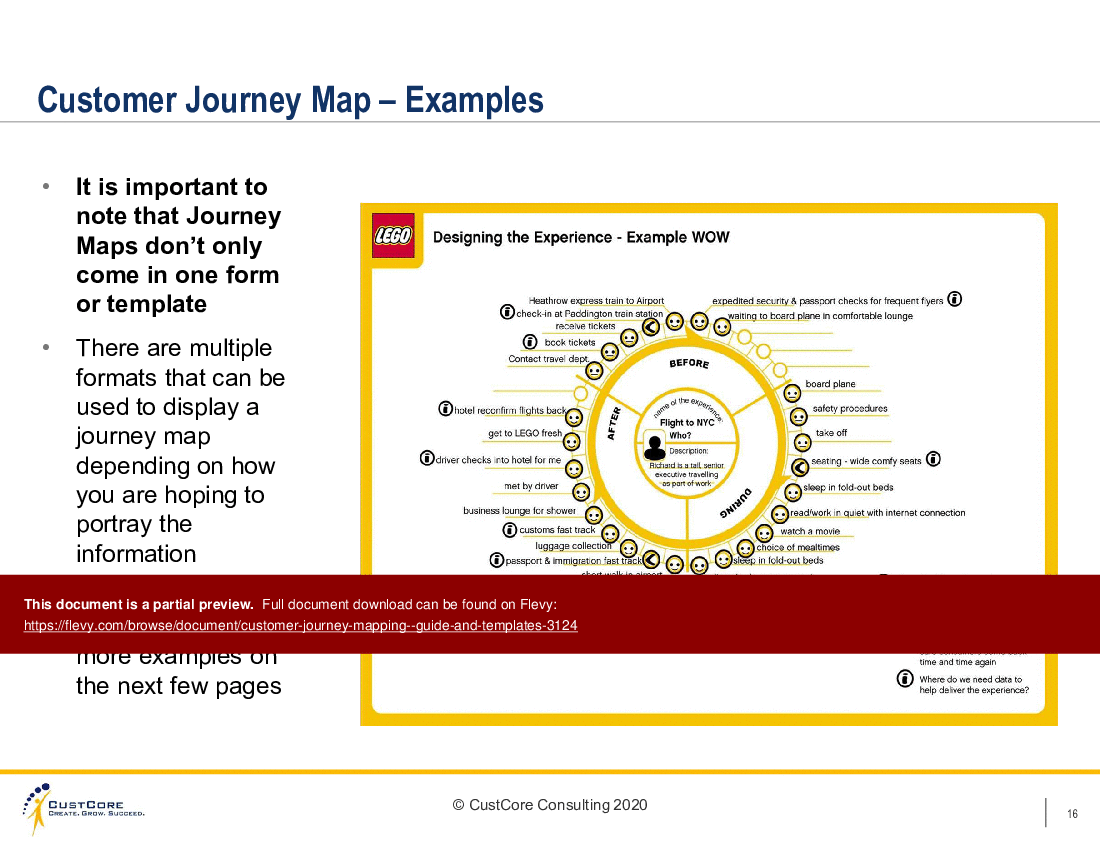
• Detailed examples of customer journey maps illustrating various formats and components
• Insights on customer emotions and their role in shaping experiences
• Framework for identifying Moments That Matter in the customer journey
• Metrics for assessing customer journey effectiveness and tracking improvements
Potential Workshop Agenda
Customer Journey Mapping Workshop (90ā120 minutes)
• Introduction to customer journey mapping concepts
• Breakout sessions for mapping customer journeys
• Group discussions on identifying touchpoints and customer emotions
• Presentation of findings and collaborative improvement brainstorming
Customization Guidance
• Adapt templates to reflect specific customer personas and scenarios
• Incorporate organizational terminology and metrics relevant to your business
• Tailor touchpoint analysis to align with customer interaction channels used
• Update improvement opportunities based on real-time customer feedback
Secondary Topics Covered
• The role of empathy in understanding customer experiences
• Techniques for effective customer research and data collection
• Strategies for aligning cross-functional teams around customer insights
• Best practices for implementing journey mapping in organizational processes
Topic FAQ
What are the main phases of a customer journey mapping process?
A common journey mapping process follows the Design Thinking-derived phases described in the guide: Inspiration (research and discovery), Ideation (synthesis and solution generation), and Implementation (pilots and roll-out). These 3 phases structure activities from initial customer research through implementation and follow-up during the Implementation phase.
How do I map touchpoints across multiple channels effectively?
Start by identifying the customer persona and listing every channel interaction, then apply a touchpoint analysis framework to score impact and frequency. Use an Empathy Map alongside the touchpoint inventory to capture needs and emotions at each interaction, producing a consolidated Touchpoint Analysis framework output.
How should I capture and analyze customer emotions within a journey map?
Record customer emotions at each journey stage and highlight Moments That Matter where emotions most influence decisions, then apply techniques like the 5 Whys to probe root causes. The guide specifically documents how to evaluate emotions and identify Moments That Matter using an Empathy Map and 5 Whys Template.
Which metrics are appropriate for measuring journey effectiveness?
The guide recommends common CX metrics to assess journey performance, including Net Promoter Score (NPS), Customer Satisfaction (CSAT), and Customer Effort Score (CES). These metrics help quantify satisfaction, loyalty, and ease of interactions for each mapped touchpoint, with results tracked in a Metrics Dashboard.
What should I look for when selecting a customer journey mapping toolkit?
Look for ready-to-use templates, an empathy mapping tool, a touchpoint analysis framework, a metrics dashboard, an improvement checklist, and a workshop facilitation guide to accelerate adoption. The Customer Journey Mapping - Guide & Templates includes these core deliverables, notably a Metrics Dashboard.
How can I justify purchasing journey mapping templates to stakeholders?
Argue that structured journey mapping provides repeatable outputs for research, alignment, and improvement, enabling measurable gains in customer satisfaction and loyalty. The guide links journey analysis to improved outcomes and includes templates and tools designed to drive better Customer Satisfaction (CSAT) and Net Promoter Score (NPS).
I need to redesign onboarding for a new productāwhat practical steps should I follow?
Identify the target customer persona, outline onboarding steps, map onboarding touchpoints, record customer emotions and needs at each step, and prioritize improvements using the Touchpoint Analysis and Moments That Matter frameworks. The guide provides a Customer Journey Map template to document and iterate the onboarding flow.
How do I run a short workshop to align teams on customer experience priorities?
Use a structured agenda with a brief introduction, breakout sessions for mapping journeys, group discussion to identify touchpoints and emotions, and final presentations to capture improvement ideas. The product includes a sample Customer Journey Mapping Workshop agenda designed for a 90ā120 minute session.
After a merger, how can journey mapping help integrate customer experiences?
Map current-state journeys for each legacy brand, identify gaps and duplicated or missing touchpoints, align cross-functional owners, and prioritize harmonization using touchpoint analysis and improvement checklists. The guideās Workshop Facilitation guide and Touchpoint Analysis framework support integration planning and alignment.
Document FAQ
These are questions addressed within this presentation.
What is a Customer Journey Map?
A Customer Journey Map is a visual representation of the steps a customer takes when interacting with a company, product, or service, highlighting their needs, emotions, and touchpoints.
Why are Customer Journey Maps important?
They help organizations understand customer experiences, identify pain points, and align business strategies with customer needs, ultimately improving satisfaction and loyalty.
How do I create a Customer Journey Map?
Start by identifying the customer persona, outline the key steps in their journey, map out touchpoints, and analyze customer emotions and needs at each stage.
What are touchpoints?
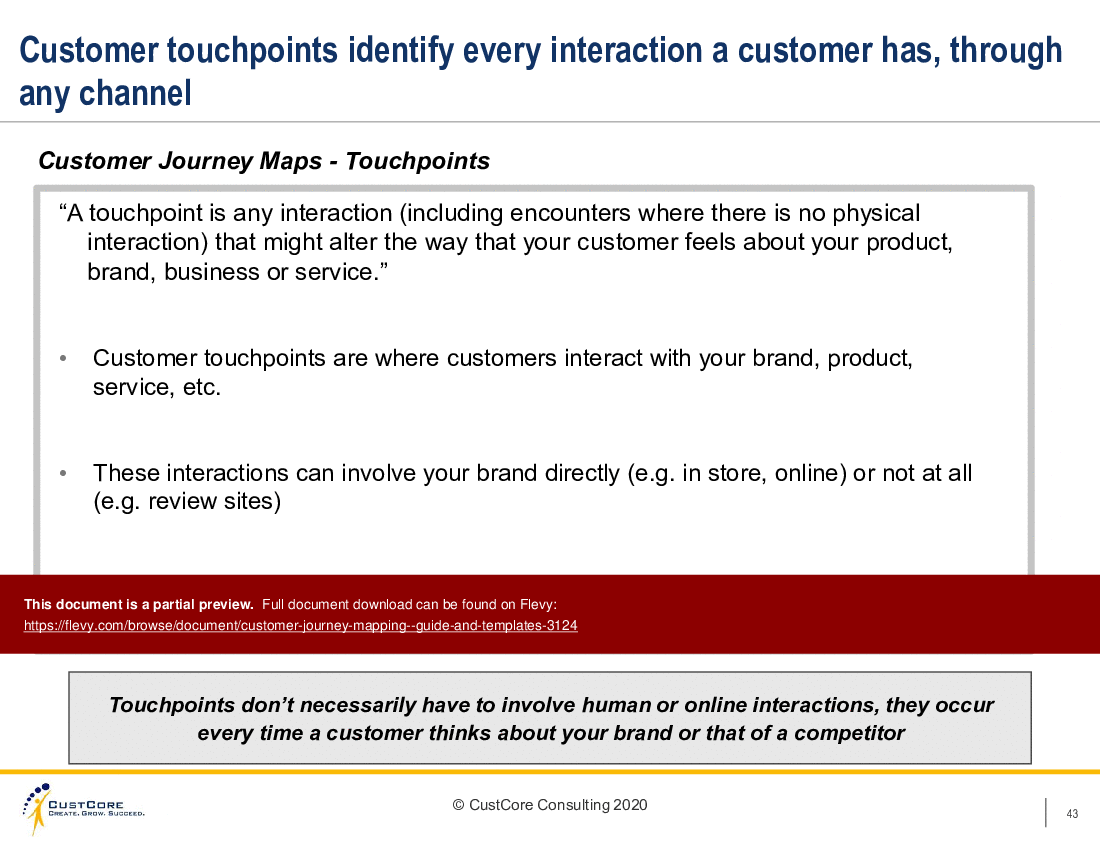
Touchpoints are any interactions a customer has with a brand, whether direct or indirect, that can influence their perception and experience.
How can I measure the effectiveness of a Customer Journey Map?
Use metrics such as Net Promoter Score, Customer Satisfaction, and Customer Effort Score to evaluate how well the journey meets customer expectations.
What are Moments That Matter?
Moments That Matter are critical touchpoints in the customer journey that significantly impact customer decision-making and emotional responses.
How can I identify improvement opportunities in the customer journey?
Analyze customer feedback, identify pain points during key touchpoints, and leverage insights from customer emotions to suggest actionable improvements.
What tools can assist in Customer Journey Mapping?
Utilize templates, empathy maps, and analytics dashboards to facilitate the mapping process and track performance metrics effectively.
Glossary
• Customer Journey Map - A visual representation of the customer experience across various touchpoints.
• Touchpoint - Any interaction a customer has with a brand or service.
• Customer Persona - A semi-fictional character representing a segment of your target audience.
• Moments That Matter - Key interactions that significantly influence customer perceptions and decisions.
• Metrics - Quantitative measures used to assess customer experience performance.
• Empathy Map - A tool for understanding customer perspectives and emotions.
• Improvement Opportunities - Areas identified for enhancing customer experiences based on journey insights.
• Experience Design - The process of creating meaningful interactions between customers and brands.
• Customer Emotions - Feelings that influence customer perceptions and loyalty.
• Net Promoter Score (NPS) - A metric used to gauge customer loyalty and satisfaction.
• Customer Satisfaction (CSAT) - A measure of how products and services meet customer expectations.
• Customer Effort Score (CES) - A metric assessing the ease of customer interactions with a brand.
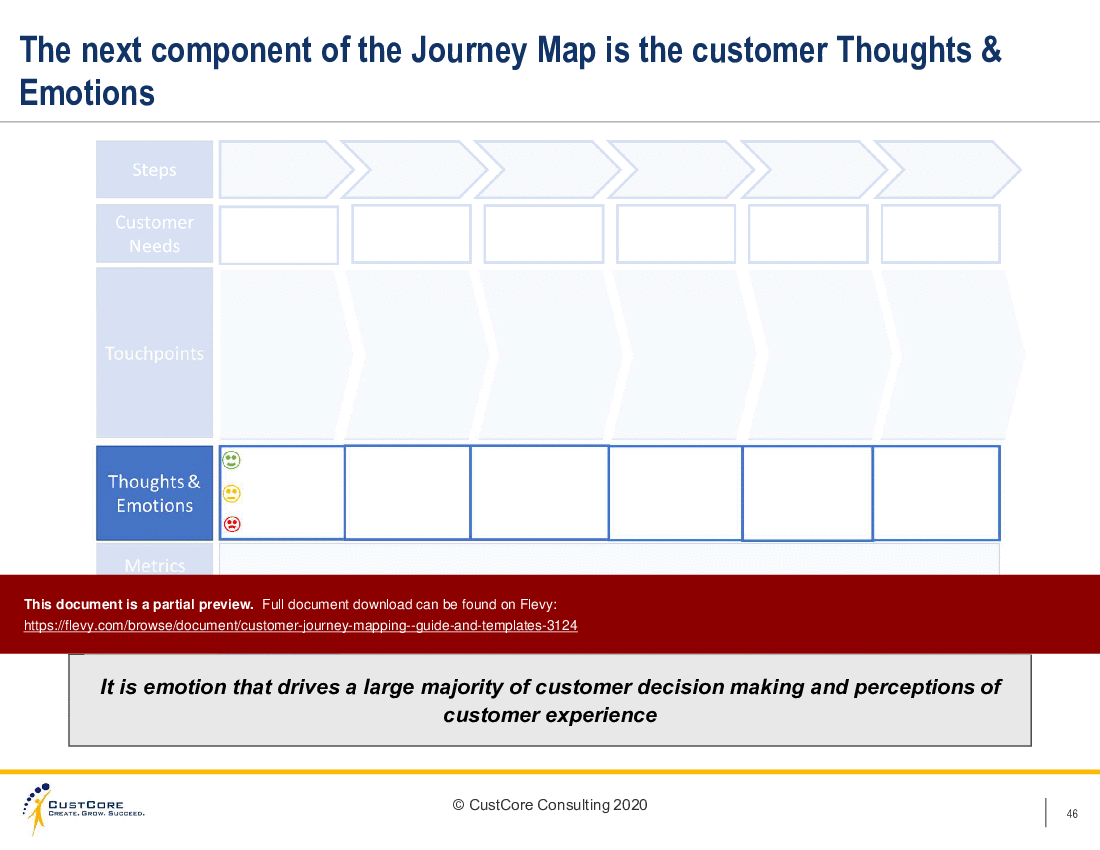
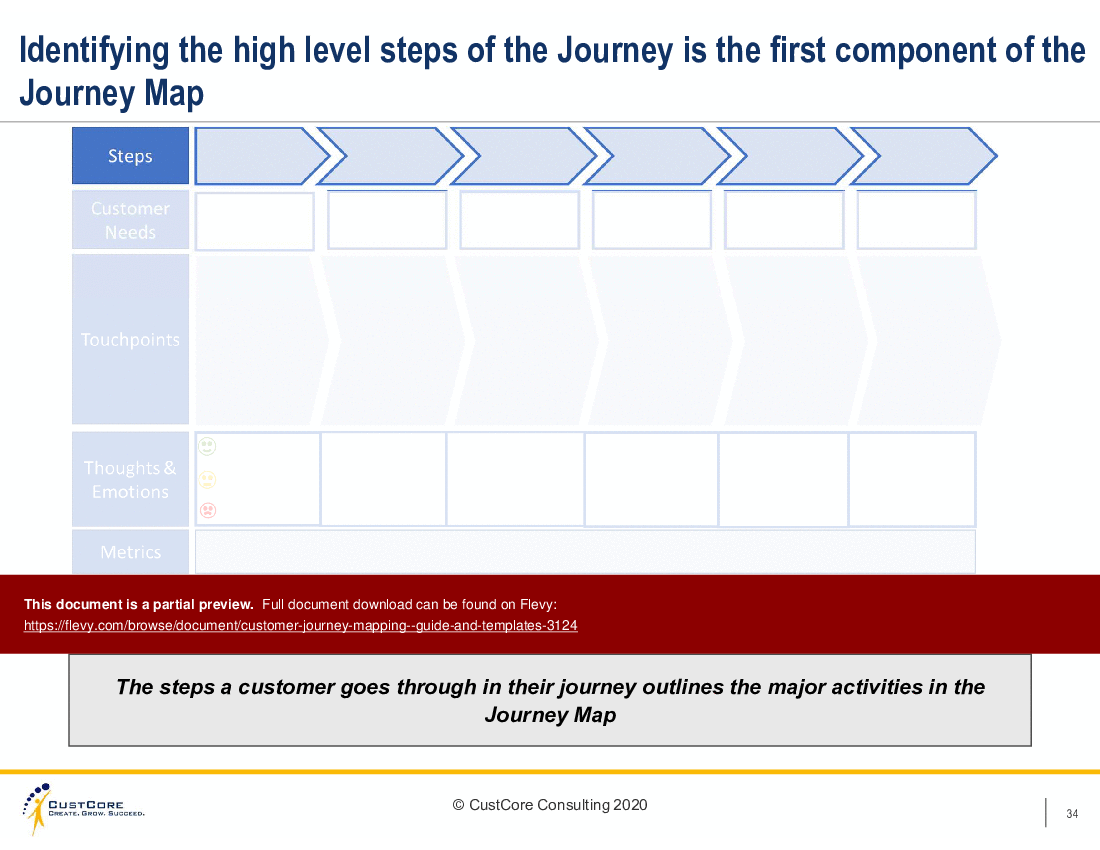
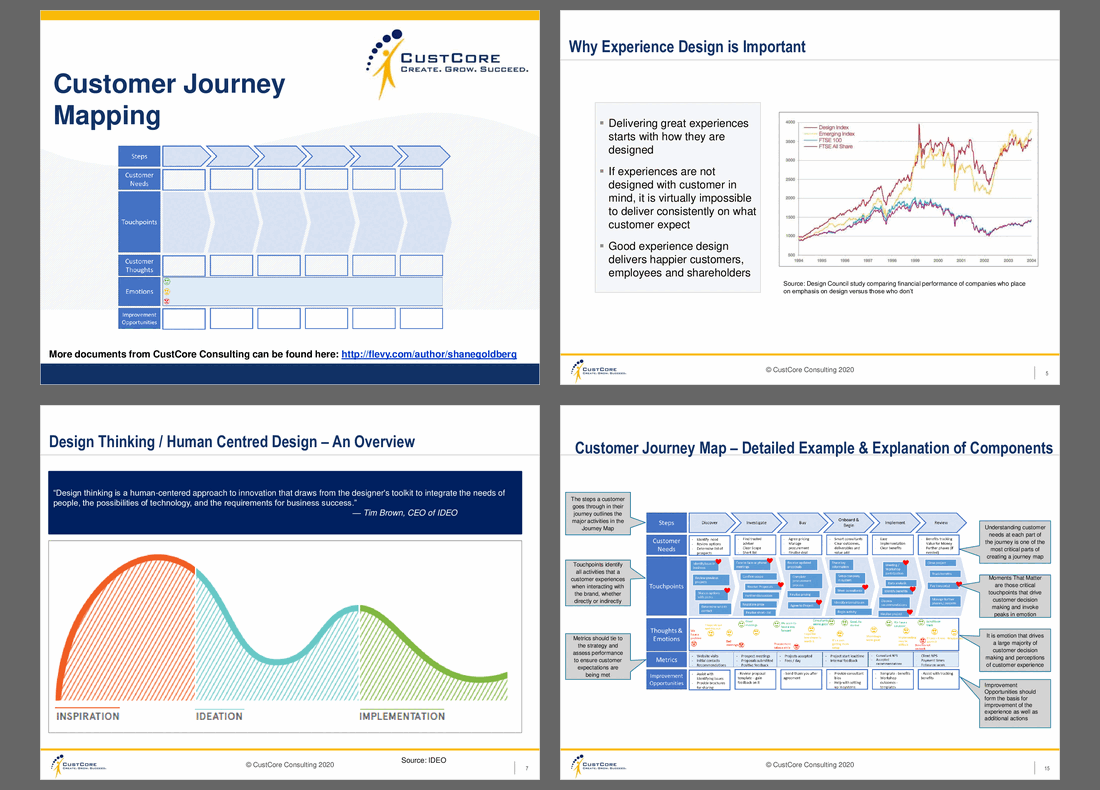
This PPT slide provides an overview of a Customer Journey Map, outlining stages: Discover, Investigate, Buy, Onboard & Design, Implement, and Review. Each stage addresses customer needs, touchpoints, thoughts and emotions, metrics, and improvement opportunities. Identifying customer requirements at each stage is essential for tailoring the customer experience. Touchpoints represent all brand interactions, shaping overall customer experience. The Thoughts & Emotions segment highlights the emotional responses influencing decision-making. Metrics are critical for assessing performance against customer expectations, providing a quantitative basis for evaluation. Insights from the journey map inform strategies for enhancing customer experience and driving engagement, emphasizing the importance of understanding customer journeys to identify key touchpoints and emotional triggers that affect satisfaction and loyalty.
Customer emotions play a crucial role in shaping perceptions and loyalty, with research from CEB and Forrester indicating that emotions influence customer loyalty twice as much as other factors. Organizations must prioritize emotional engagement in their strategies. A pie chart distinguishes between "How a Customer Feels (Perceived Effort)" and "What A Customer Does (Actual Effort)," highlighting that customers' perceptions of their effort can differ from the actual effort expended. Managing customer emotions is essential when developing a customer journey map, as it emphasizes the importance of addressing both tangible elements and the emotional journey in customer experience. Integrating emotional insights can enhance customer engagement and retention.
Experience design is essential for delivering exceptional customer experiences. Intentional design is crucial, as businesses must proactively craft experiences rather than reactively responding to customer needs. A customer-centric design approach directly correlates with operational effectiveness, ensuring consistent delivery on customer expectations. Good experience design benefits not only customer satisfaction, but also enhances employee morale and shareholder value. Financial performance data shows that companies prioritizing designāreflected in indices like the Design Index and FTSE 100āoutperform those that do not. This evidence reinforces the necessity of integrating experience design into corporate strategy for long-term success in a competitive market.
This PPT slide outlines the customer journey mapping process through a structured workshop format lasting from half a day to 2 days. Key preparation steps include identifying user personas, determining the focus on current or future states, and creating a physical space for the journey map. Engaging customers directly enhances mapping accuracy. During the workshop, participants are divided into teams to focus on individual personas, ensuring comprehensive coverage. Draft activity steps must be shared and confirmed for alignment. The mapping process documents all touchpoints along the timeline, visually representing issues and opportunities for improvement, leading to actionable insights for enhancing customer experiences. This collaborative approach fosters effective customer engagement strategies.
This PPT slide outlines the design thinking process, focusing on its human-centered approach to innovation. The process is divided into 3 phases: Inspiration, Ideation, and Implementation. The Inspiration phase features a rising curve, indicating creativity and exploration through user insights and problem understanding. The Ideation phase peaks with high levels of brainstorming and idea generation, where teams synthesize insights into potential solutions. In the Implementation phase, the curve stabilizes, emphasizing execution, prototyping, testing, and scaling solutions. Challenges are addressed through a structured approach. Tim Brown's quote highlights the integration of user needs, technological possibilities, and business requirements, making this framework essential for sustainable innovation.
This PPT slide outlines the relationship between customer expectations, ease of interaction, and emotional connection in driving customer loyalty. Customer loyalty is positioned vertically, while customer expectations are illustrated horizontally, intersecting with effectiveness and effort. Higher effectiveness correlates with increased loyalty, while minimal effort is essential for meeting expectations. Organizations must prioritize effective interactions that require minimal effort to avoid dissatisfaction and disloyalty. Once foundational elements are established, companies should focus on fostering emotional connections, which significantly drive loyalty and advocacy. This dual approach is essential for cultivating long-term loyalty and advocacy in a competitive marketplace.
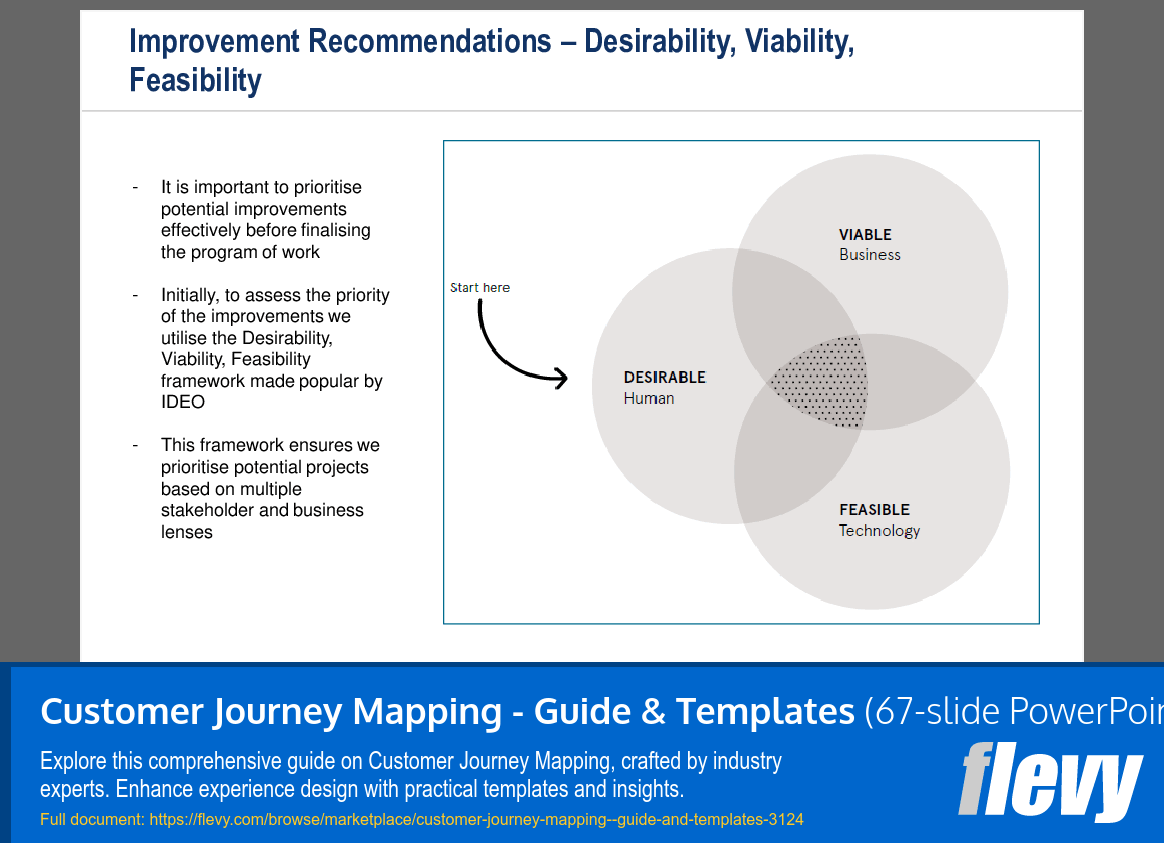
This PPT slide outlines a structured approach to project prioritization using the Desirability, Viability, and Feasibility framework, popularized by IDEO. The framework is visually represented through a Venn diagram, illustrating the intersection of 3 critical elements: Desirable (Human), Viable (Business), and Feasible (Technology). Successful projects require a balance among these areas. The process begins at the "Start here" point, guiding stakeholders through a systematic evaluation of potential projects. This multi-faceted approach ensures project prioritization considers multiple stakeholder perspectives and aligns improvements with organizational goals and user needs, leading to more effective outcomes.
The Empathy Map is a strategic tool for understanding target customers, centered around a customer persona and divided into 6 key sections. The first section, "WHO are we empathizing with?", identifies the specific customer persona, essential for tailoring strategies. "What do we want them to DO?" focuses on desired customer actions, aligning behavior with business objectives. The next sections explore customer experiences: "What do they THINK and FEEL?" addresses emotional drivers and pain points; "What do they SEE?" examines their environment; "What do they HEAR?" captures external influences; and "What do they SAY?" reveals expressed opinions. The final section, "What do they DO?", analyzes actual customer behaviors, providing insights into interactions with products or services. This holistic approach enhances customer experience and refines marketing strategies by understanding the customer journey from multiple perspectives.
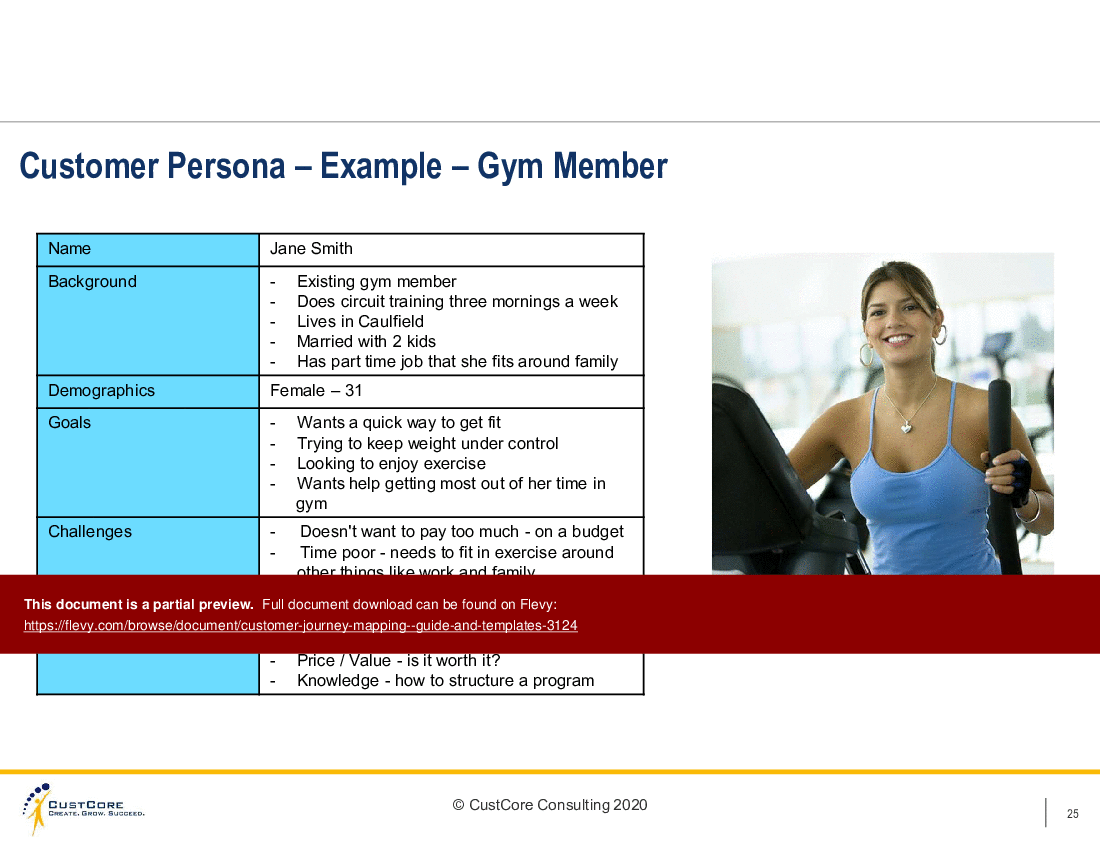
This PPT slide details a customer persona for Jane Smith, a 31-year-old female gym member from Caulfield. She engages in circuit training 3 mornings a week, balancing a part-time job and family life with 2 children. Jane's primary fitness goals include efficient weight maintenance, enjoyment of exercise, and maximizing gym time. Her challenges involve financial constraints, time limitations, and intimidation from experienced gym-goers. Common objections include concerns about service value and uncertainty in structuring workouts. This persona aids in tailoring marketing strategies and service offerings to meet the needs of similar customers, enhancing targeted communication and program development for improved satisfaction and retention.
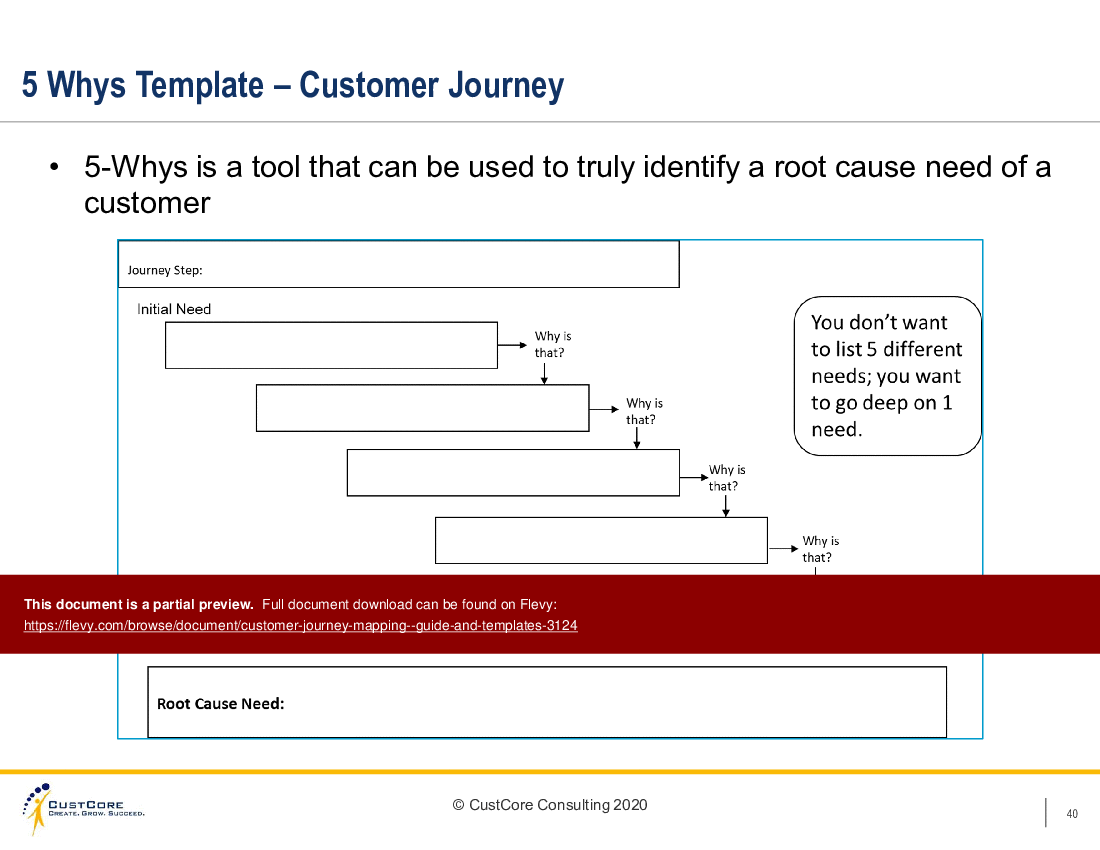
This PPT slide presents a framework for the 5-Whys technique in customer journey mapping, focusing on identifying the root cause of a customer's need. The 5-Whys tool helps organizations explore a single need deeply, rather than listing multiple needs, leading to more effective solutions. The process begins with an "Initial Need" and branches into layers of inquiry, prompting further questioning until the "Root Cause Need" is identified. This method clarifies customer motivations and aligns business strategies with genuine customer requirements. By applying the 5-Whys technique, organizations can foster a culture of inquiry, enhancing customer engagement and improving service offerings, ultimately driving better decision-making and strategic alignment.
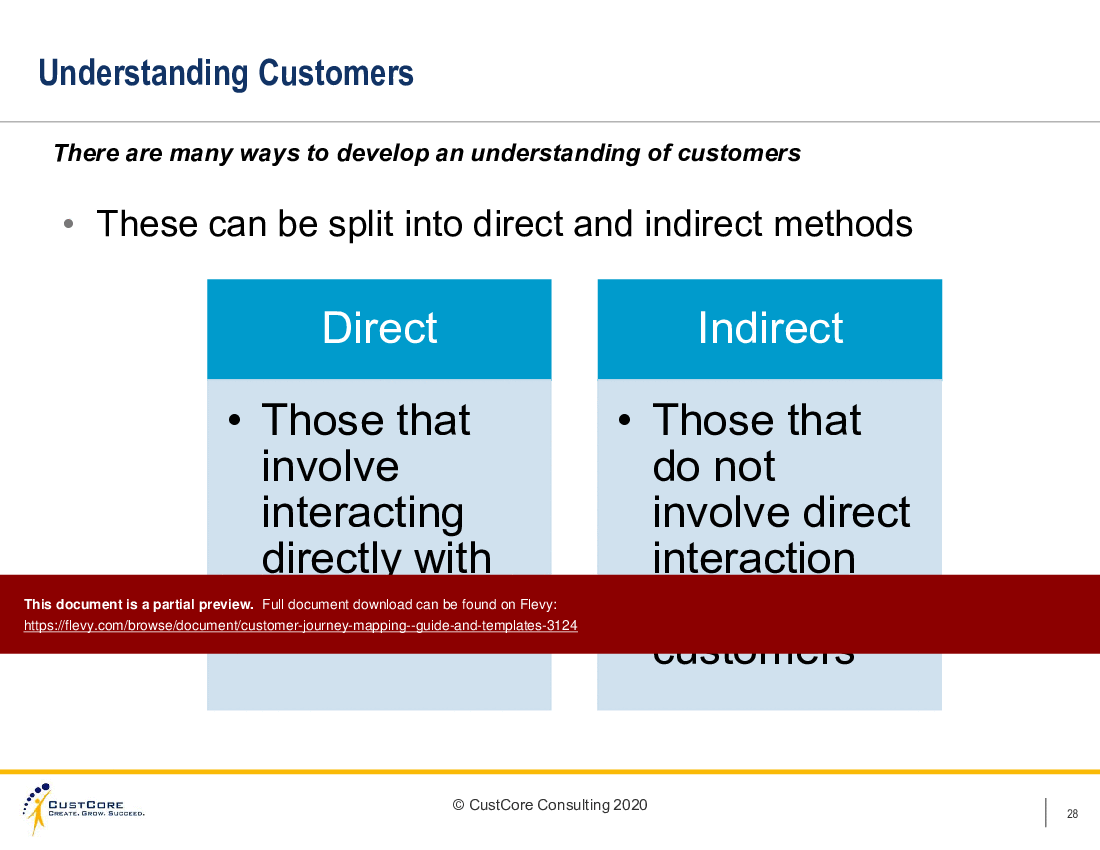
This PPT slide outlines 3 methodologies for gathering customer insights: surveys, focus groups and interviews, and ethnographic analysis. Surveys provide a quantitative approach to capturing a broad range of customer opinions, enabling organizations to analyze trends in sentiment. Focus groups and interviews offer qualitative insights, revealing nuances in customer experience that surveys may overlook. Ethnographic analysis involves researchers engaging directly with customers in their environments, yielding profound insights into their wants and challenges. Collectively, these methods create a multi-faceted understanding of customer needs, informing strategic decisions and enhancing customer satisfaction.
This PPT slide outlines critical components of the customer experience, focusing on "Moments that Matter." These pivotal interactions shape customer perceptions and influence overall experiences with a brand. The "Key Decision" phase highlights significant choices customers make regarding products or services, impacting the customer relationship. "Comparison" addresses the evaluation of offerings against competitors, affecting customer perception and choice. "Emotional Extreme" captures customer emotions during their journey, where highs and lows can decisively influence brand perception. "First Use / Interaction" emphasizes the lasting impact of initial experiences with a product or service. These moments significantly affect customer perception across all touchpoints, guiding organizations to enhance customer experiences, satisfaction, and loyalty.
This PPT slide explores the relationship between customer expectations and loyalty, positioning customer loyalty vertically and customer expectations horizontally with high effectiveness and minimal effort. Customers expect seamless interactions, making it essential to address fundamental aspects of customer experience before emotional engagement. Neglecting these basics increases the risk of dissatisfaction and disloyalty. Once foundational expectations are met, fostering emotional connections becomes crucial for loyalty and advocacy. This emotional engagement is vital for building lasting customer relationships. Organizations must prioritize operational efficiency alongside emotional resonance to enhance customer loyalty, leading to stronger advocacy and improved business outcomes.
This PPT slide outlines a structured approach to improvement across 3 dimensions: people, processes, and systems. The "People" section emphasizes human capital with recommendations like "Accountability," "More Stringent Recruitment," and "Succession Planning," highlighting the importance of engagement and open communication. The "Process" section focuses on clearly defined processes and effective communication tools, with recommendations for a "Clear picture of how everything fits" and "Defined processes for internal comms," aligning operational workflows with strategic objectives. The "System" section introduces technological enhancements, including a "System for quick, easy insights" and a "Central repository for selling tools," underscoring the need for integrated systems that enhance customer engagement. Addressing people, processes, and systems in tandem offers comprehensive solutions for organizational growth and efficiency.
CustCore Consulting is a boutique consultancy firm which helps businesses unlock hidden growth through a focus on significantly improving end-to-end customer and employee experience.
Whilst each project is different, our clients can typically expect results which show
• Vastly Increased customer satisfaction and advocacy
• Growth in new sales and customer
... [read more] retention
• Significant improvements to the bottom line
• Increased productivity and streamlined operations
Since 2012, we have provided business templates to over 10,000 businesses and organizations of all sizes, from startups and small businesses to the Fortune 100, in over 130 countries.
Read Customer Testimonials
"I have used FlevyPro for several business applications. It is a great complement to working with expensive consultants. The quality and effectiveness of the tools are of the highest standards."
– Moritz Bernhoerster, Global Sourcing Director at Fortune 500
"The wide selection of frameworks is very useful to me as an independent consultant. In fact, it rivals what I had at my disposal at Big 4 Consulting firms in terms of efficacy and organization."
– Julia T., Consulting Firm Owner (Former Manager at Deloitte and Capgemini)
"I have used Flevy services for a number of years and have never, ever been disappointed. As a matter of fact, David and his team continue, time after time, to impress me with their willingness to assist and in the real sense of the word. I have concluded in fact
that it is not at all just a repository of documents/resources but, in the way that David and his team manage the firm, it is like dealing with consultants always ready to assist, advise and direct you to what you really need, and they always get it right.
I am an international hospitality accomplished senior executive who has worked and lived during the past 35 years in 23 countries in 5 continents and I can humbly say that I know what customer service is, trust me.
Aside from the great and professional service that Flevy's team provide, their wide variety of material is of utmost great quality, professionally put together and most current.
Well done Flevy, keep up the great work and I look forward to continue working with you in the future and to recommend you to a variety of colleagues around the world.
"
– Roberto Pelliccia, Senior Executive in International Hospitality
"As a consulting firm, we had been creating subject matter training materials for our people and found the excellent materials on Flevy, which saved us 100's of hours of re-creating what already exists on the Flevy materials we purchased."
– Michael Evans, Managing Director at Newport LLC
"As a small business owner, the resource material available from FlevyPro has proven to be invaluable. The ability to search for material on demand based our project events and client requirements was great for me and proved very beneficial to my clients. Importantly, being able to easily edit and tailor
the material for specific purposes helped us to make presentations, knowledge sharing, and toolkit development, which formed part of the overall program collateral. While FlevyPro contains resource material that any consultancy, project or delivery firm must have, it is an essential part of a small firm or independent consultant's toolbox.
"
– Michael Duff, Managing Director at Change Strategy (UK)
"FlevyPro provides business frameworks from many of the global giants in management consulting that allow you to provide best in class solutions for your clients."
– David Harris, Managing Director at Futures Strategy
"Flevy is our 'go to' resource for management material, at an affordable cost. The Flevy library is comprehensive and the content deep, and typically provides a great foundation for us to further develop and tailor our own service offer."
– Chris McCann, Founder at Resilient.World
"Flevy.com has proven to be an invaluable resource library to our Independent Management Consultancy, supporting and enabling us to better serve our enterprise clients.

The value derived from our [FlevyPro] subscription in terms of the business it has helped to gain far exceeds the investment made, making a subscription a no-brainer for any growing consultancy – or in-house strategy team."

– Dean Carlton, Chief Transformation Officer, Global Village Transformations Pty Ltd.
Save with Bundles
This document is available as part of the following discounted bundle(s):
Download our FREE Digital Transformation Templates
Download our free compilation of 50+ Digital Transformation slides and templates. DX concepts covered include Digital Leadership, Digital Maturity, Digital Value Chain, Customer Experience, Customer Journey, RPA, etc.
Download our FREE Digital Transformation Templates
Get Our FREE Product.
Download our free compilation of 50+ Digital Transformation slides and templates. DX concepts covered include Digital Leadership, Digital Maturity, Digital Value Chain, Customer Experience, Customer Journey, RPA, etc.