
 Click main image to view in full screen.
Integrated Project Finance Model – Excel XLSX
Excel (XLSX)


BENEFITS OF THIS DOWNLOADABLE EXCEL DOCUMENT
- The template creates a financial model for your individual project finance initiative
- The model is suitable for any type of business / industry
- Includes all necessary data needed to forecast a project's financial and operating activities
CONSTRUCTION EXCEL DESCRIPTION
Fully editable Excel-Workbook for your projcet finance initative
/////////////////////////////////////////////////////////////////////////////////////////////////////////////////////////////////////////////////////////
Project finance is a specialized form of financing that is widely utilized in the realm of infrastructure and large-scale projects. It involves the meticulous structuring and management of financial resources for complex ventures, such as power plants, transportation systems, and real estate developments. Project finance typically involves multiple stakeholders, including banks, private equity firms, governments, and project sponsors, who work collaboratively to fund and execute these capital-intensive undertakings.
One of the defining features of project finance is the emphasis on the project's cash flows and assets as the primary source of repayment for the financing. This is in contrast to traditional corporate finance, where the creditworthiness of the borrowing entity is the primary consideration. Project finance transactions often rely on the use of various financial instruments, such as debt and equity, to optimize the capital structure and manage risks associated with the project's lifecycle.
The process of securing project finance is intricate and requires a comprehensive assessment of the project's financial viability, including detailed financial projections, risk assessments, and legal documentation. Additionally, thorough due diligence is conducted by lenders to assess the creditworthiness of the project sponsors and evaluate the project's underlying assets, market conditions, and regulatory environment.
Project finance is also characterized by the use of complex legal arrangements, including long-term contracts, concessions, and off-take agreements, to allocate risks and responsibilities among the parties involved. These contractual arrangements play a crucial role in mitigating risks, such as construction delays, cost overruns, and revenue shortfalls, that are inherent in large-scale projects.
Furthermore, project finance often requires the establishment of special-purpose entities (SPEs) to ring-fence the project's assets and liabilities from those of the sponsors or lenders. These SPEs are carefully structured to minimize tax implications and maximize operational efficiencies, while also providing a legal framework for the project's governance and decision-making.
The successful implementation of project finance can yield numerous benefits. It enables the efficient mobilization of capital from diverse sources, allowing projects to proceed that might otherwise be financially infeasible. It also facilitates risk-sharing among multiple stakeholders, reducing the exposure of any single party to excessive risk. Additionally, project finance promotes economic development by stimulating investment, creating jobs, and improving infrastructure, which can have a positive impact on local communities and economies.
/////////////////////////////////////////////////////////////////////////////////////////////////////////////////////////////////////////////////////////
Content:
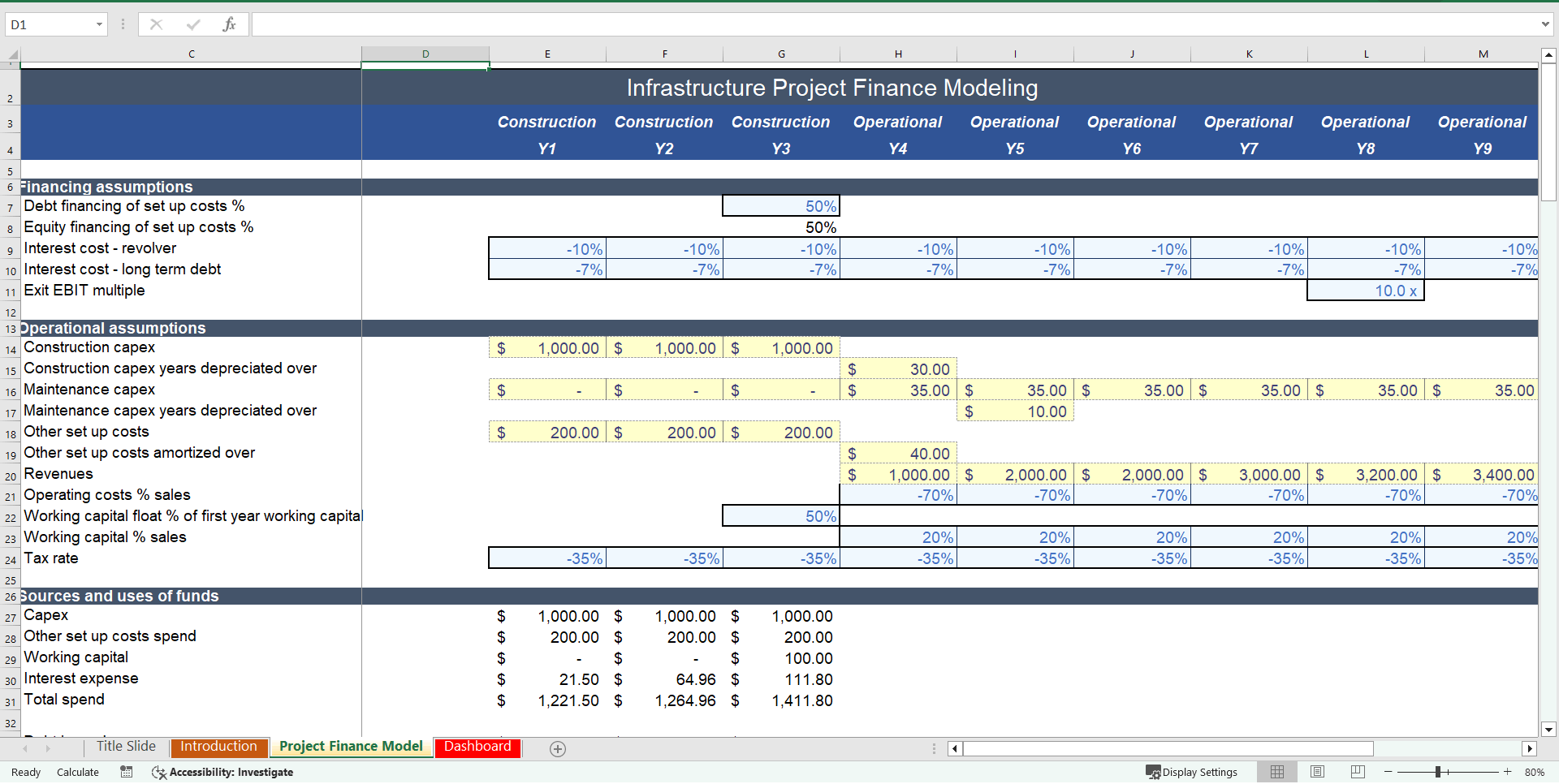
• Financing assumptions
• Sources and uses of funds
• PP&E
• Capitalized set up costs
• Income statement
• Other balance sheet calculations
• Balance Sheet
• Cash flow statement
• Financing and interest calculation
• Return on equaity holders
• Capex
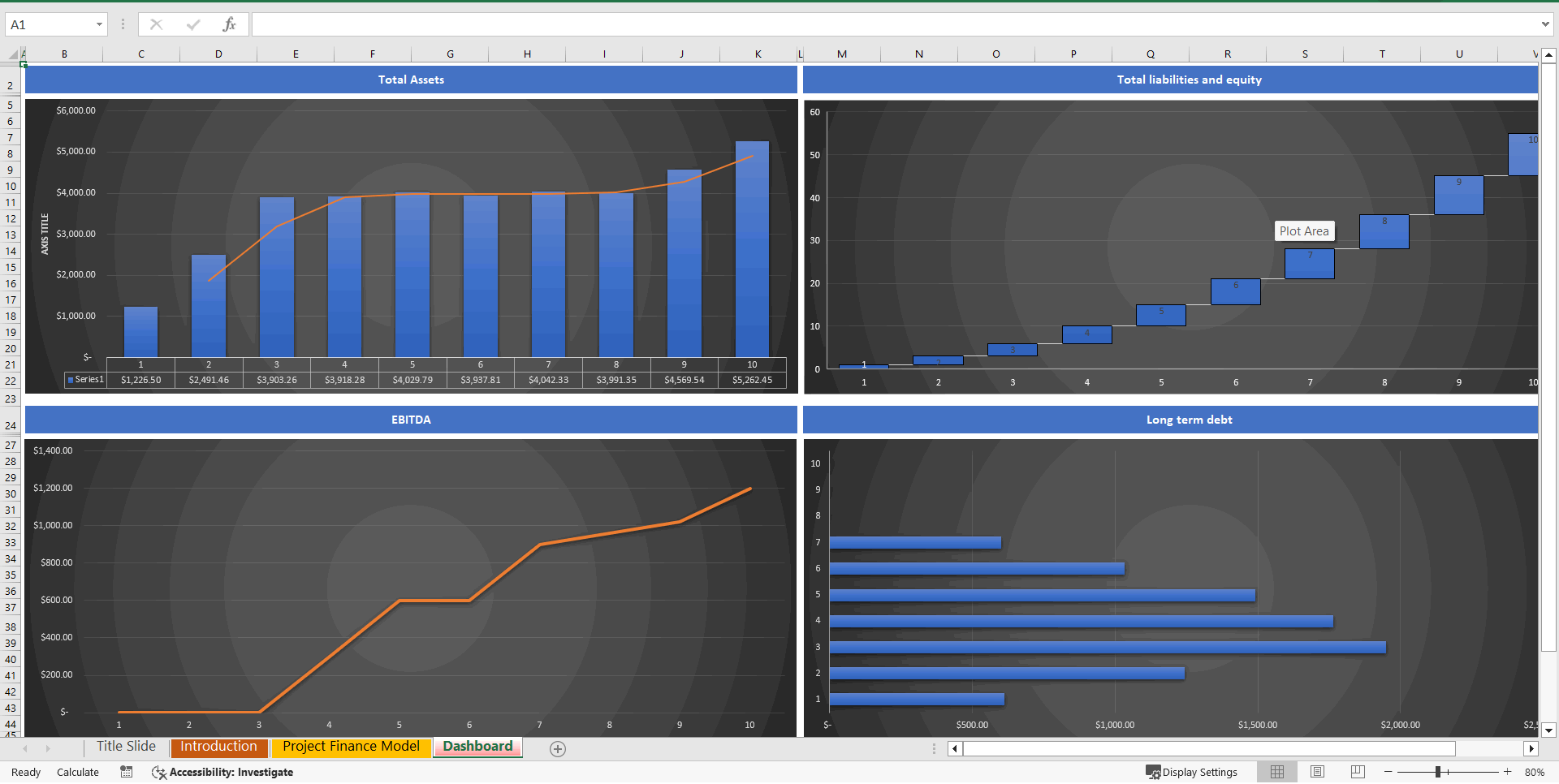
• EBITDA and EBIT
/////////////////////////////////////////////////////////////////////////////////////////////////////////////////////////////////////////////////////////
Key Words:
DCF Model Example, Financial Analysis, Financial Management, Financial Modeling, Financial Ratio Analysis, Financial Ratios Calculator, Financial Ratios Template, Financial Statement Analysis, Financing, M&A , M&A (Mergers & Acquisitions)
NOTE:Our digital products are sold on an "as is" basis, making returns and refunds unavailable post-download. Please preview and inquire before purchasing. Please contact us before purchasing if you have any questions! This policy aligns with the standard Flevy Terms of Usage.
Got a question about the product? Email us at support@flevy.com or ask the author directly by using the "Ask the Author a Question" form. If you cannot view the preview above this document description, go here to view the large preview instead.
TOPIC FAQ
What core statements and schedules should a project finance model produce for lender review?
A project finance model should produce integrated projections of the income statement, balance sheet, and cash flow statement, plus supporting schedules such as PP&E, capitalized setup costs, capex, and financing/interest calculations. Flevy's Integrated Project Finance Model includes these outputs to support lender review and analysis of cash flows, debt service, and assets.How does modeling in project finance prioritize cash flows differently from corporate finance models?
Project finance modeling prioritizes the project's standalone cash flows and project assets as the primary repayment source, rather than sponsor creditworthiness. Models emphasize cash-flow waterfalls, debt service coverage, and asset-backed repayment assumptions, using project cash flows and assets as the core repayment basis.What legal and structural elements should a project finance model reflect for accurate risk allocation?
A model should reflect structures that ring-fence project assets and liabilities—typically special-purpose entities (SPEs)—and incorporate effects of long-term contracts, concessions, and off-take agreements on revenue and risk allocation. These elements affect tax, governance, and creditor protection and should be represented in schedules for contractual cash flows and asset treatment, such as SPE structure.Which financing calculations are essential to test different capital structures within a project model?
Essential calculations include debt sizing and amortization schedules, interest accrual and capitalized interest during construction, sources and uses of funds, and return metrics for equity holders. Flevy's Integrated Project Finance Model explicitly lists financing and interest calculation, sources and uses, and return on equity holders as core modules to test capital structures.What should I check before buying an off-the-shelf project finance Excel template on a tight budget?
Verify the file format is editable (XLSX), confirm the template includes income statement, balance sheet, cash flow, sources and uses, financing calculations, PP&E, and capex schedules, and review the seller’s refund policy since digital products are sold "as is." Flevy's Integrated Project Finance Model is a fully editable Excel workbook and follows an "as is" sales policy.Which cost and revenue line items are typically modeled for infrastructure projects like power plants?
Typical items include capitalized setup costs, capex and PP&E schedules, operating revenues tied to long-term offtake or concession contracts, operating expenses that feed to EBITDA and EBIT, and financing costs. These feed into the income statement, balance sheet, and cash flow statement and should be modeled as capitalized setup costs and capex.How should I model equity returns under alternative debt structures for a project?
Use integrated cash-flow projections to run scenario analysis on debt sizing, interest schedules, and amortization; calculate post-financing cash available to equity and resulting return metrics. Focus on financing and interest calculations alongside the cash flow statement to quantify impacts on return on equity holders; Flevy's model lists return on equity holders explicitly.How can I ensure an off-the-shelf model meets typical lender due diligence requirements?
Cross-check that the model delivers detailed financial projections, a sources-and-uses schedule, PP&E and capex schedules, financing and interest calculations, and sensitivity scenarios for construction and revenue risk. Ensure legal-structure items like SPEs and contract cash flows are represented—start by confirming the presence of a sources and uses of funds schedule.Source: Best Practices in Construction, Project Finance, Integrated Financial Model Excel: Integrated Project Finance Model Excel (XLSX) Spreadsheet, SB Consulting
ABOUT THE AUTHOR

SB Consulting is dedicated to empowering businesses to communicate their ideas with impact. This consulting firm specializes in teaching organizations how to create effective corporate and management presentations. With training from top-tier global consulting firms, including McKinsey, BCG, and Porsche Consulting, extensive expertise in presentation design and ... [read more]
Ask the Author a Question
You must be logged in to contact the author.




























