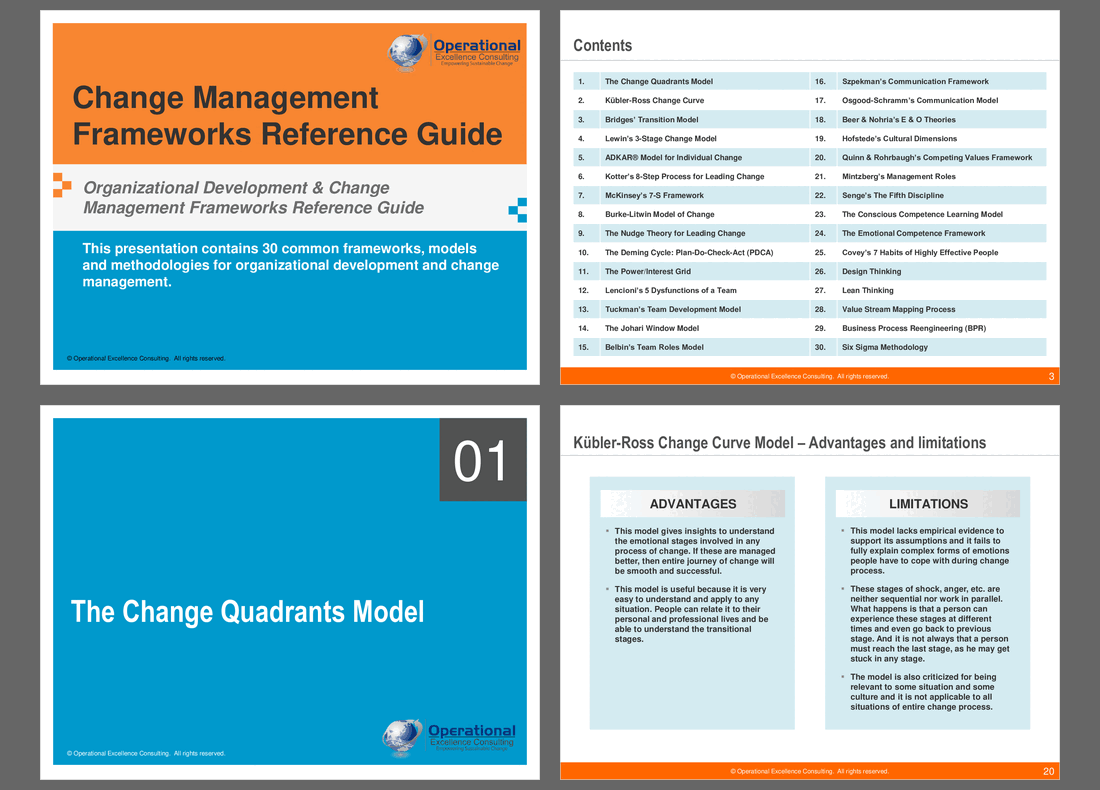

This comprehensive presentation covers 30 common frameworks, models and methodologies for organizational development and change management.

A detailed summary is provided for each change management framework.
The frameworks in this deck span across the key domains of organizational change. They include: leading change, stakeholder management and communication, management roles, team development, cross-cultural collaboration, skills development, emotional competence, personal effectiveness and last but not least common process improvement approaches.
INCLUDED FRAMEWORKS & METHODOLOGIES
1. The Change Quadrants Model
2. The Kubler-Ross Change Curve
3. Bridges' Transition Model
4. Lewin's 3-Stage Change Model
5. ADKAR Model for Individual Change
6. Kotter's 8-Step Process for Leading Change
7. McKinsey's 7-S Framework
8. Burke-Litwin Model of Change
9. The Nudge Theory for Leading Change
10. The Deming Cycle: Plan-Do-Check-Act (PDCA)
11. The Power/Interest Grid for Stakeholder Prioritization
12. Lencioni's 5 Dysfunctions of a Team
13. Tuckman's Team Development Model
14. The Johari Window Model
15. Belbin's Team Roles Model
16. Szpekman's Communication Framework
17. Osgood-Schramm's Communication Model
18. Beer & Nohria's E & O Theories
19. Hofstede's Cultural Dimensions
20. Quinn & Rohrbaugh's Competing Values Framework
21. Mintzberg's Management Roles
22. Senge's The Fifth Discipline
23. The Conscious Competence Learning Model
24. The Emotional Competence Framework
25. Covey's 7 Habits of Highly Effective People
26. Design Thinking
27. Lean Thinking
28. Value Stream Mapping Process
29. Business Process Reengineering (BPR)
30. Six Sigma Methodology
These frameworks and templates are used in many organizational transformation consulting firms. With this comprehensive document in your back pocket, you can find a way to address just about any change management challenge that can arise in your organization.
The level of detail varies by framework, depending on the nature of the model. Examples and templates are provided.
This guide includes practical templates and visual aids to facilitate understanding and application. It is an essential tool for driving successful organizational change initiatives.
Got a question about the product? Email us at support@flevy.com or ask the author directly by using the "Ask the Author a Question" form. If you cannot view the preview above this document description, go here to view the large preview instead.
Executive Summary
The Change Management Frameworks Reference Guide is an essential resource for corporate executives, integration leaders, and consultants seeking to navigate the complexities of organizational change. This comprehensive presentation, developed by Operational Excellence Consulting, encapsulates 30 proven frameworks, models, and methodologies for effective change management. It empowers leaders to implement structured change initiatives by leveraging established models such as ADKAR, Kotter’s 8 Steps, and Lewin’s Change Model. By utilizing these frameworks, organizations can enhance their ability to adapt, innovate, and thrive in an ever-evolving business landscape.
Who This Is For and When to Use
• Corporate executives overseeing change initiatives
• Change management consultants advising organizations
• Integration leaders managing mergers or transformations
• HR professionals facilitating organizational development
Best-fit moments to use this deck:
• During organizational restructuring or transformation projects
• When implementing new business strategies or processes
• In training sessions for change management teams
• To facilitate workshops on stakeholder engagement and communication
Learning Objectives
• Define key change management frameworks and their applications
• Build a structured approach to implementing change initiatives
• Establish effective communication strategies for stakeholder engagement
• Identify and mitigate resistance to change within organizations
• Develop a comprehensive change management plan using best practices
Table of Contents
• The Change Quadrants Model (page 5)
• Kübler-Ross Change Curve (page 13)
• Bridges’ Transition Model (page 23)
• Lewin’s 3-Stage Change Model (page 34)
• ADKAR® Model for Individual Change (page 43)
• Kotter’s 8-Step Process for Leading Change (page 56)
• McKinsey’s 7-S Framework (page 67)
• Burke-Litwin Model of Change (page 92)
• The Nudge Theory for Leading Change (page 103)
• The Deming Cycle: Plan-Do-Check-Act (page 114)
• Power/Interest Grid (page 124)
• Lencioni’s 5 Dysfunctions of a Team (page 131)
• Tuckman’s Team Development Model (page 157)
• The Johari Window Model (page 172)
• Belbin’s Team Roles Model (page 184)
• Szpekman’s Communication Framework (page 192)
• Osgood-Schramm’s Communication Model (page 201)
• Beer & Nohria’s E & O Theories (page 211)
• Hofstede’s Cultural Dimensions (page 217)
• Quinn & Rohrbaugh’s Competing Values Framework (page 232)
• Mintzberg’s Management Roles (page 237)
• Senge’s The Fifth Discipline (page 249)
• The Conscious Competence Learning Model (page 258)
• The Emotional Competence Framework (page 270)
• Covey’s 7 Habits of Highly Effective People (page 285)
• Design Thinking (page 299)
• Lean Thinking (page 322)
• Value Stream Mapping (page 345)
• Business Process Reengineering (BPR) (page 369)
• Six Sigma Methodology (page 383)
Primary Topics Covered
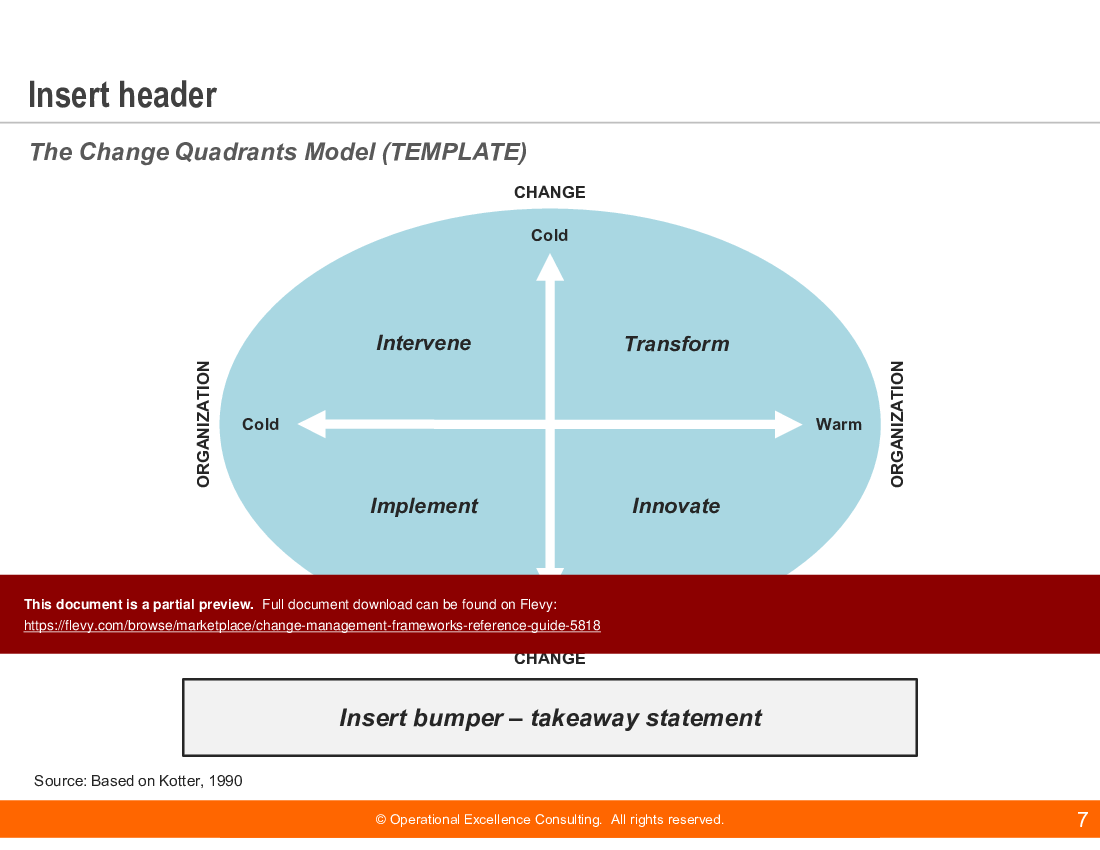
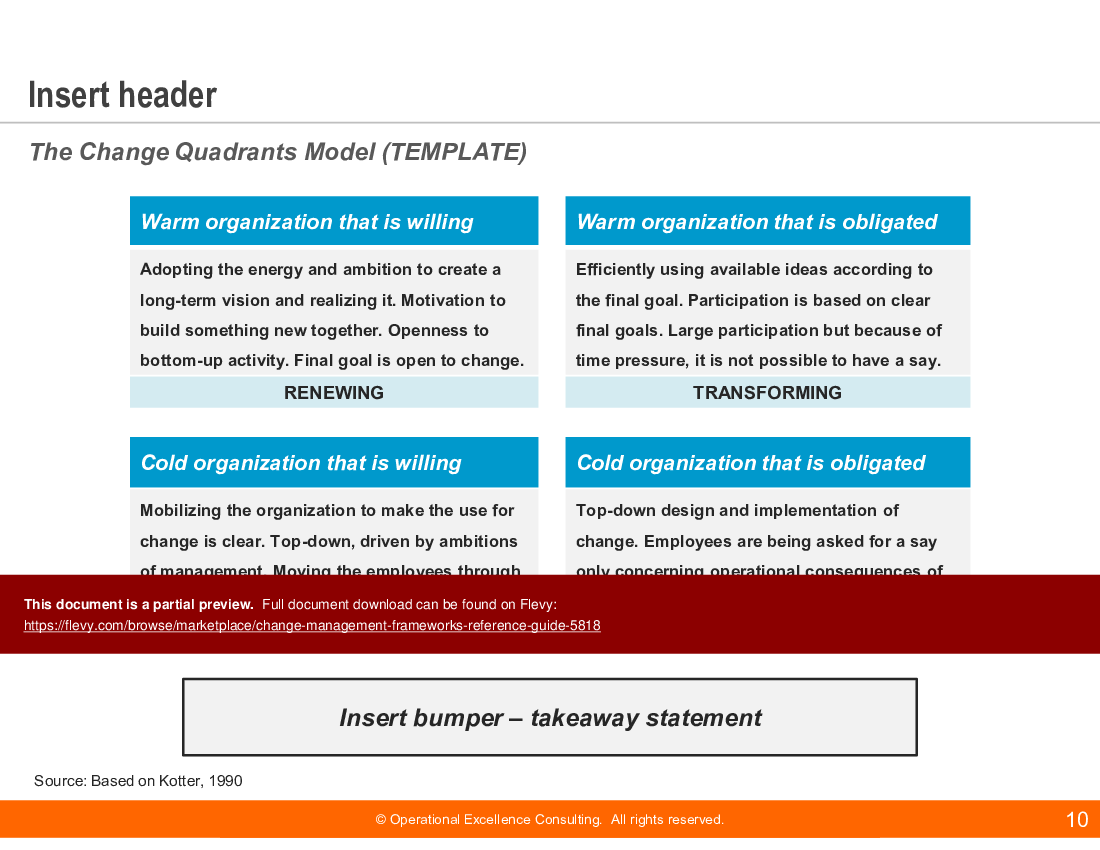
• The Change Quadrants Model - A framework for determining appropriate change strategies based on organizational warmth and motivation.
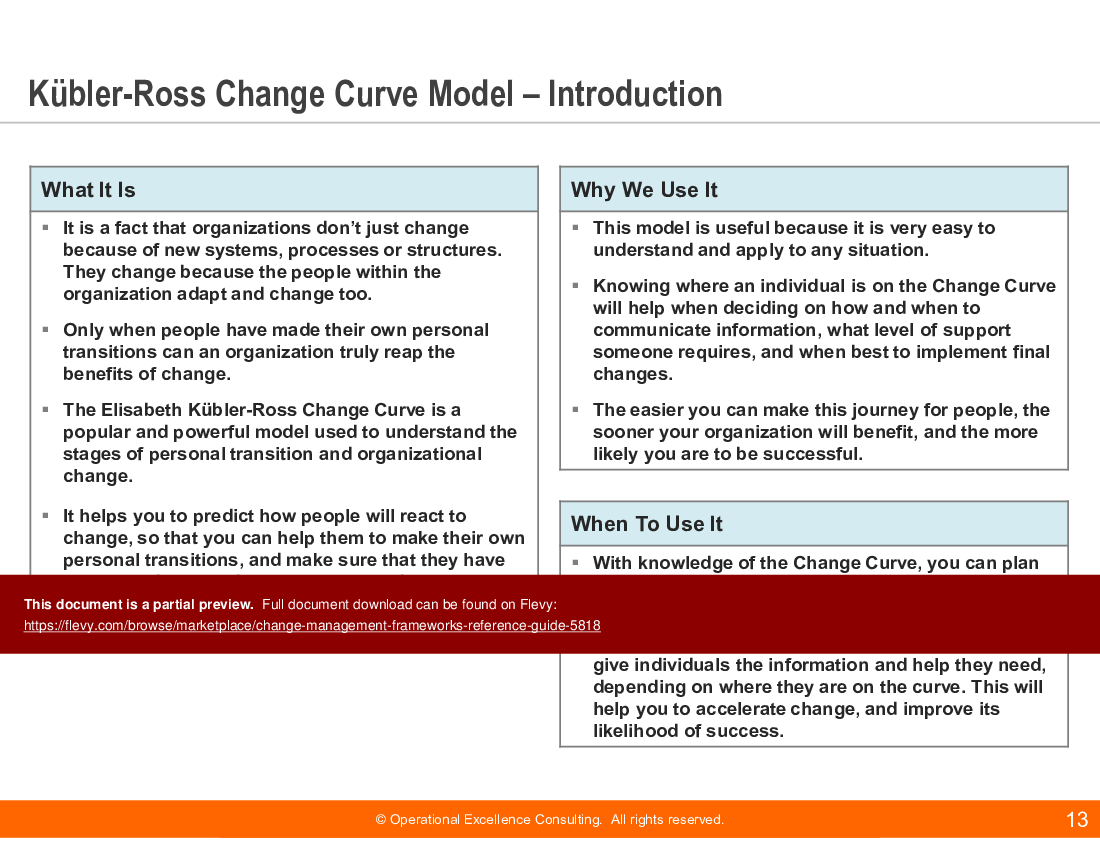
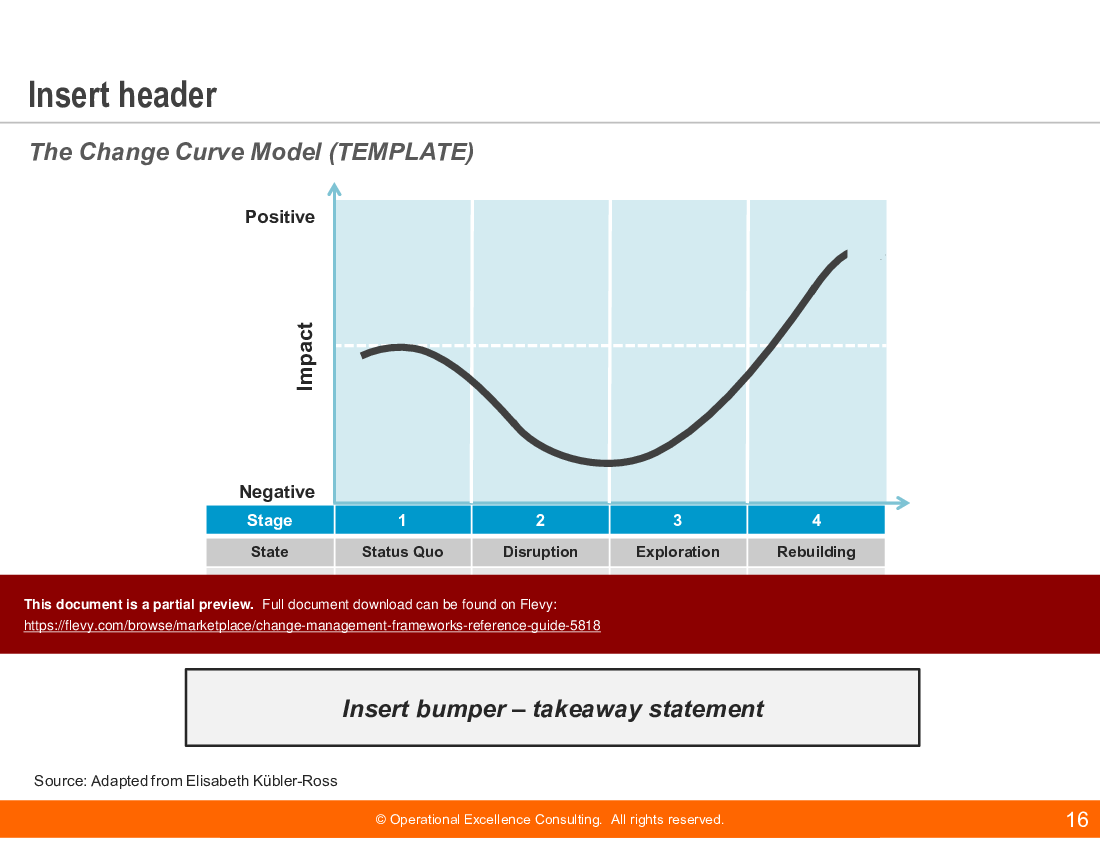
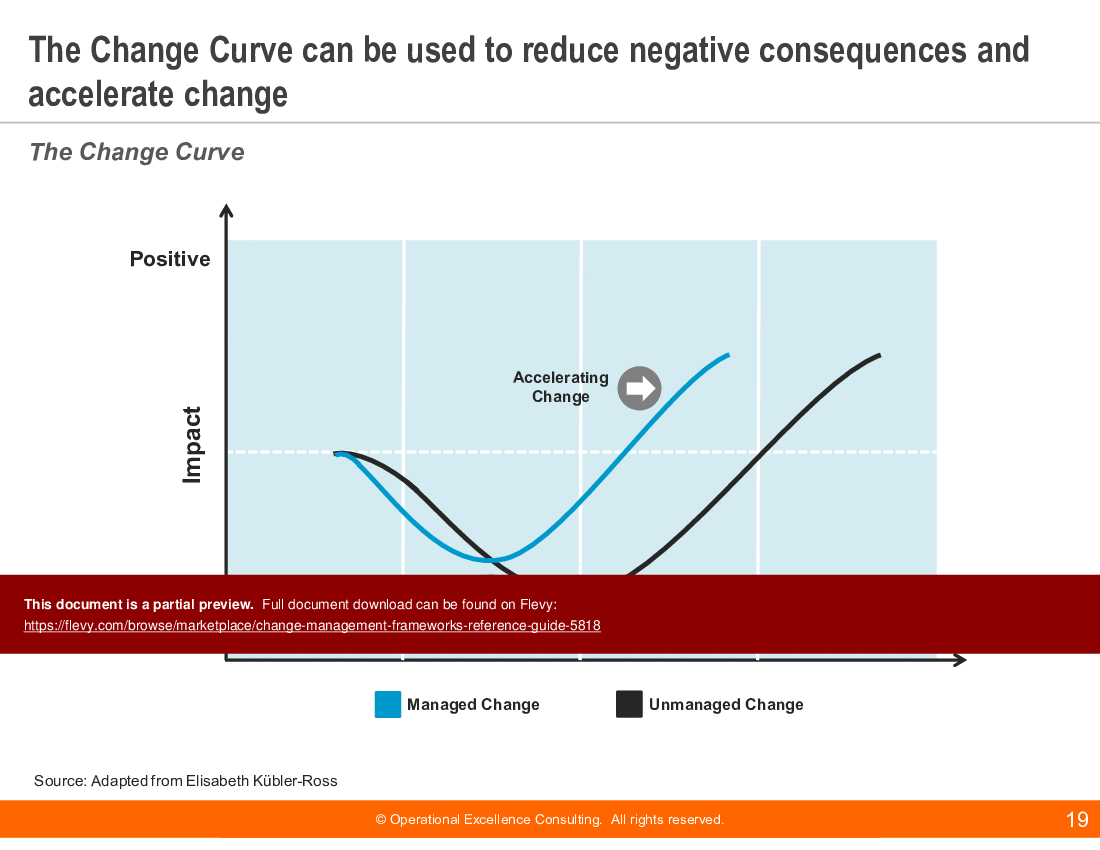
• Kübler-Ross Change Curve - A model illustrating the emotional stages individuals experience during change.
• Bridges’ Transition Model - A guide for understanding personal transitions during organizational change.
• Lewin’s 3-Stage Change Model - A structured approach for managing change through unfreezing, changing, and refreezing.
• ADKAR® Model - A framework focusing on individual change and the necessary outcomes for successful transformation.
• Kotter’s 8-Step Process - A systematic approach for leading change initiatives effectively.
• McKinsey’s 7-S Framework - A tool for assessing organizational alignment and effectiveness.
• Burke-Litwin Model of Change - A model addressing transformational and transactional changes in organizations.
• The Nudge Theory - A behavioral approach to managing change by subtly influencing decision-making.
• The Deming Cycle - A continuous improvement model emphasizing iterative problem-solving.
Deliverables, Templates, and Tools
• Change management framework templates for various models
• Communication plans for stakeholder engagement
• Assessment tools for measuring change readiness
• Training materials for implementing change initiatives
• Evaluation metrics for tracking change effectiveness
Slide Highlights
• Overview of the Change Quadrants Model, illustrating 4 change strategies based on organizational and motivational factors.
• The Kübler-Ross Change Curve, depicting the emotional journey individuals undergo during change.
• Key principles of the ADKAR® Model, emphasizing individual awareness, desire, knowledge, ability, and reinforcement.
• Kotter’s 8-Step Process, detailing the phases necessary for successful change implementation.
Potential Workshop Agenda
Change Management Frameworks Overview (90 minutes)
• Introduction to change management frameworks
• Discussion of key models and their applications
• Group activity: Identifying relevant frameworks for current initiatives
Stakeholder Engagement Strategies (60 minutes)
• Overview of communication frameworks
• Role-playing exercises for stakeholder interaction
• Developing a stakeholder communication plan
Implementation Planning Session (120 minutes)
• Breakout groups to create change management plans
• Presenting and refining plans based on feedback
• Establishing metrics for success and monitoring
Customization Guidance
• Tailor templates to reflect specific organizational terminology and processes.
• Adjust case studies and examples to align with industry-specific challenges.
• Incorporate organizational goals and objectives into the change management framework.
Secondary Topics Covered
• The Nudge Theory for behavioral change
• Hofstede’s Cultural Dimensions for international change management
• Lean Thinking principles for process improvement
• Six Sigma methodologies for quality enhancement
FAQ
What is the Change Quadrants Model?
The Change Quadrants Model categorizes change strategies based on the warmth of the organization and the motivation for change, helping leaders choose the most effective approach.
How can the Kübler-Ross Change Curve be applied in organizations?
This model helps leaders understand the emotional responses of employees during change, allowing for tailored communication and support strategies.
What are the key components of the ADKAR® Model?
The ADKAR® Model focuses on 5 outcomes: Awareness, Desire, Knowledge, Ability, and Reinforcement, essential for individual change success.
How does Kotter’s 8-Step Process facilitate change?
Kotter’s model provides a structured approach to leading change, ensuring that organizations create urgency, build coalitions, and sustain change efforts effectively.
What is the significance of the McKinsey 7-S Framework?
This framework assesses organizational alignment across 7 elements, ensuring that all aspects of the organization support successful change initiatives.
How can organizations benefit from the Nudge Theory?
The Nudge Theory encourages positive behavioral change through subtle influences, making it easier for employees to adopt new practices without direct enforcement.
What role does the Deming Cycle play in continuous improvement?
The Deming Cycle (PDCA) provides a systematic approach to process improvement, emphasizing planning, execution, evaluation, and adjustment.
How can the Emotional Competence Framework enhance team dynamics?
By developing emotional intelligence, team members can improve communication, collaboration, and overall effectiveness in achieving organizational goals.
Glossary
• Change Management - The process of guiding individuals and organizations through change.
• Stakeholder - An individual or group with an interest in the outcome of a project or initiative.
• ADKAR - A change management model focusing on individual outcomes.
• Lean Thinking - A methodology aimed at reducing waste and improving efficiency.
• Six Sigma - A data-driven approach to improving quality by eliminating defects.
• Value Stream Mapping - A visual tool for analyzing and improving the flow of materials and information.
• Emotional Intelligence - The ability to recognize and manage one’s own emotions and the emotions of others.
• Organizational Culture - The shared values, beliefs, and behaviors within an organization.
• Process Reengineering - The radical redesign of business processes to achieve significant improvements.
• Stakeholder Engagement - The process of involving individuals or groups in decision-making and change initiatives.
• Communication Plan - A strategic outline for how information will be shared with stakeholders.
• Feedback Loop - A system for gathering information on the effectiveness of a change initiative.
Source: Best Practices in Change Management PowerPoint Slides: Change Management Frameworks Reference Guide PowerPoint (PPTX) Presentation Slide Deck, Operational Excellence Consulting
This document is available as part of the following discounted bundle(s):
Save %!
Business Frameworks Reference Guide
This bundle contains 4 total documents. See all the documents to the right.
|
Download our FREE Organization, Change, & Culture, Templates
Download our free compilation of 50+ slides and templates on Organizational Design, Change Management, and Corporate Culture. Methodologies include ADKAR, Burke-Litwin Change Model, McKinsey 7-S, Competing Values Framework, etc. |