
This toolkit was created by ex-McKinsey, Deloitte and BCG Strategy Consultants. It includes 300 PowerPoint slides, 32 Excel sheets, 10 Word pages, and 31 minutes of video training.
Includes 300 PowerPoint slides, 32 Excel sheets, 10 Word pages, and 31 minutes of video training.
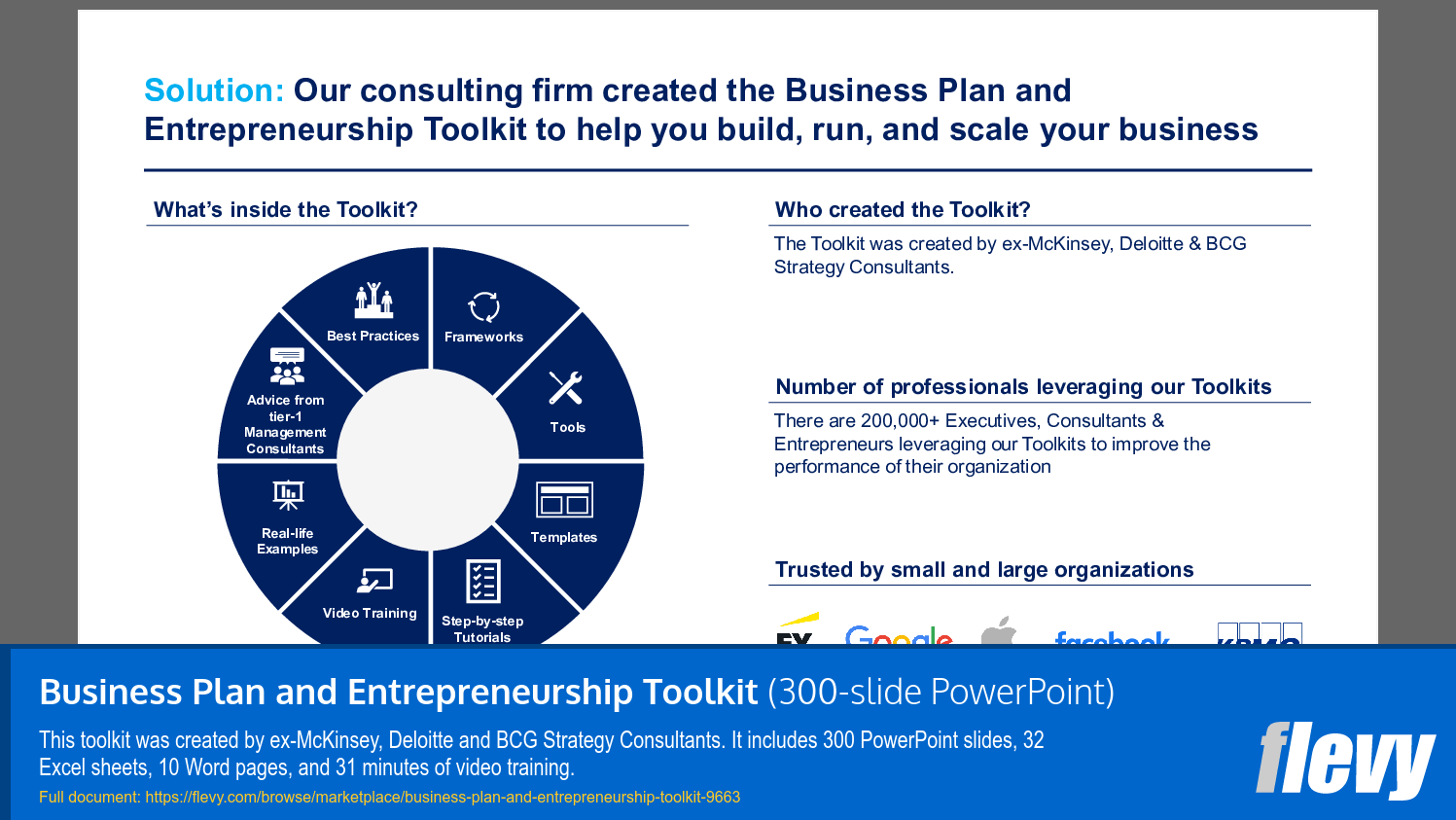
Includes frameworks, tools, templates, tutorials, real-life examples, best practices, and video training.
Build, run, and scale your own business with our practical 8-phase approach.
BUSINESS PLAN WRITING PPT TEMPLATE DESCRIPTION
Editor Summary
Business Plan and Entrepreneurship Toolkit is a 300-slide PowerPoint framework bundled with 32 Excel sheets, 10 Word pages, and 31 minutes of video training, developed by ex‑McKinsey, Deloitte, and BCG consultants.
Read moreIt implements an 8‑phase entrepreneurship approach: idea generation, business-model definition (10 components), hypothesis validation, business-plan development, implementation with KPI dashboards, valuation and fundraising (DCF, precedent, comparable analysis, cap table, term-sheet items), financial analysis, and stakeholder engagement. Available on Flevy with immediate digital download.
Use this toolkit when a team needs to move a business from idea to investor-ready plan—covering validation, planning, financials, and stakeholder engagement.
Founders prioritizing business ideas using an idea-generator and idea-prioritization exercises to select the highest-potential concept.
Product leads defining the business model by mapping key partners, activities, resources, value propositions, channels, segments, and critical assumptions.
Finance leads building investor materials: three-statement models, DCF and comparable valuations, and a cap table for fundraising.
Strategy consultants preparing market and competitor analysis and KPI dashboards for execution tracking.
The toolkit’s structured 8‑phase methodology mirrors hypothesis-driven planning and validation methods used in McKinsey and BCG strategy work.
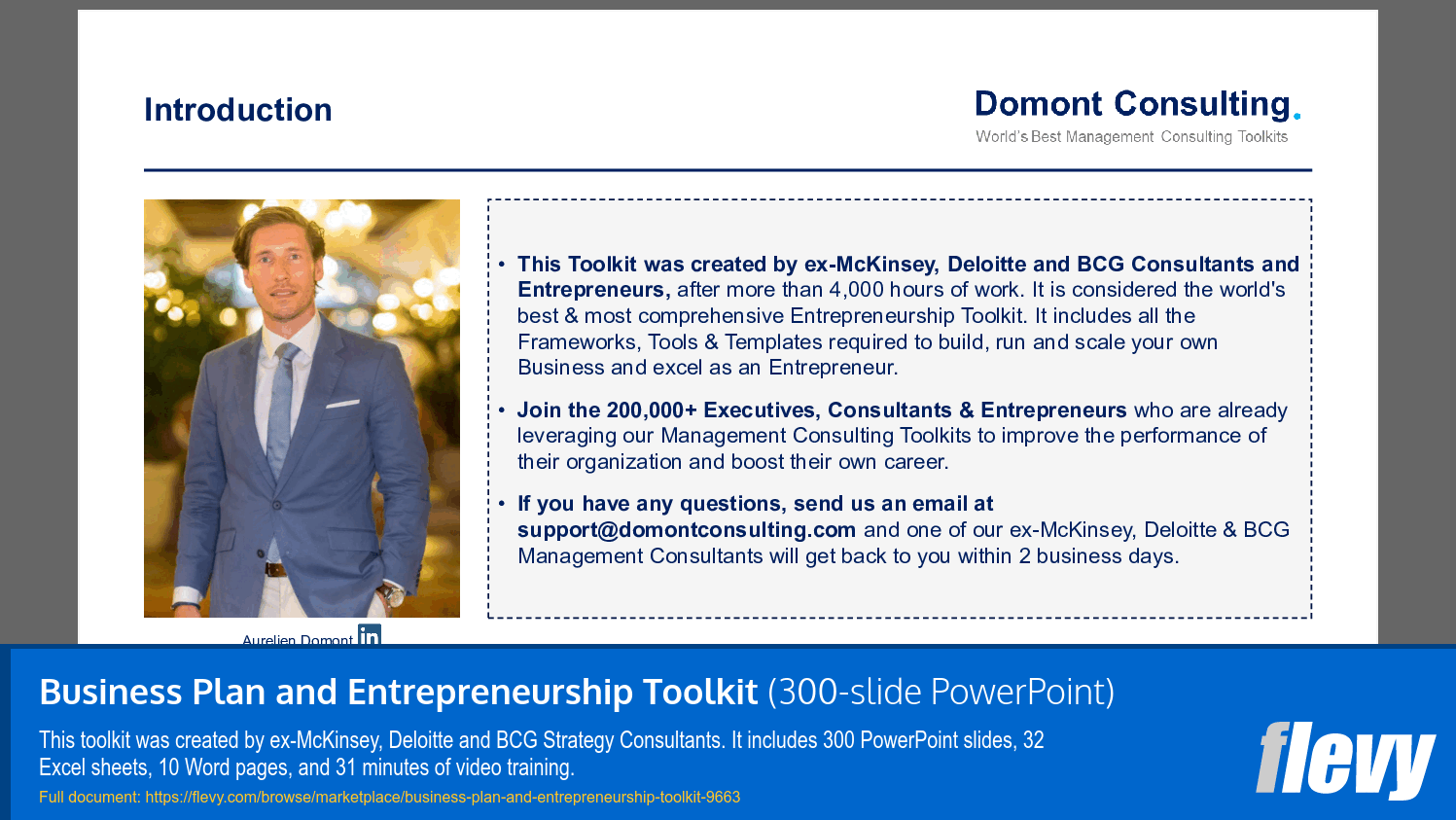
This Toolkit was created by ex-McKinsey, Deloitte and BCG Consultants and Entrepreneurs, after more than 4,000 hours of work. It is considered the world's best & most comprehensive Entrepreneurship Toolkit. It includes all the Frameworks, Tools & Templates required to build, run and scale your own Business and excel as an Entrepreneur.
The Toolkit includes: 300 PowerPoint slides, 32 Excel sheets, 10 Word pages, and 31 minutes of video training.
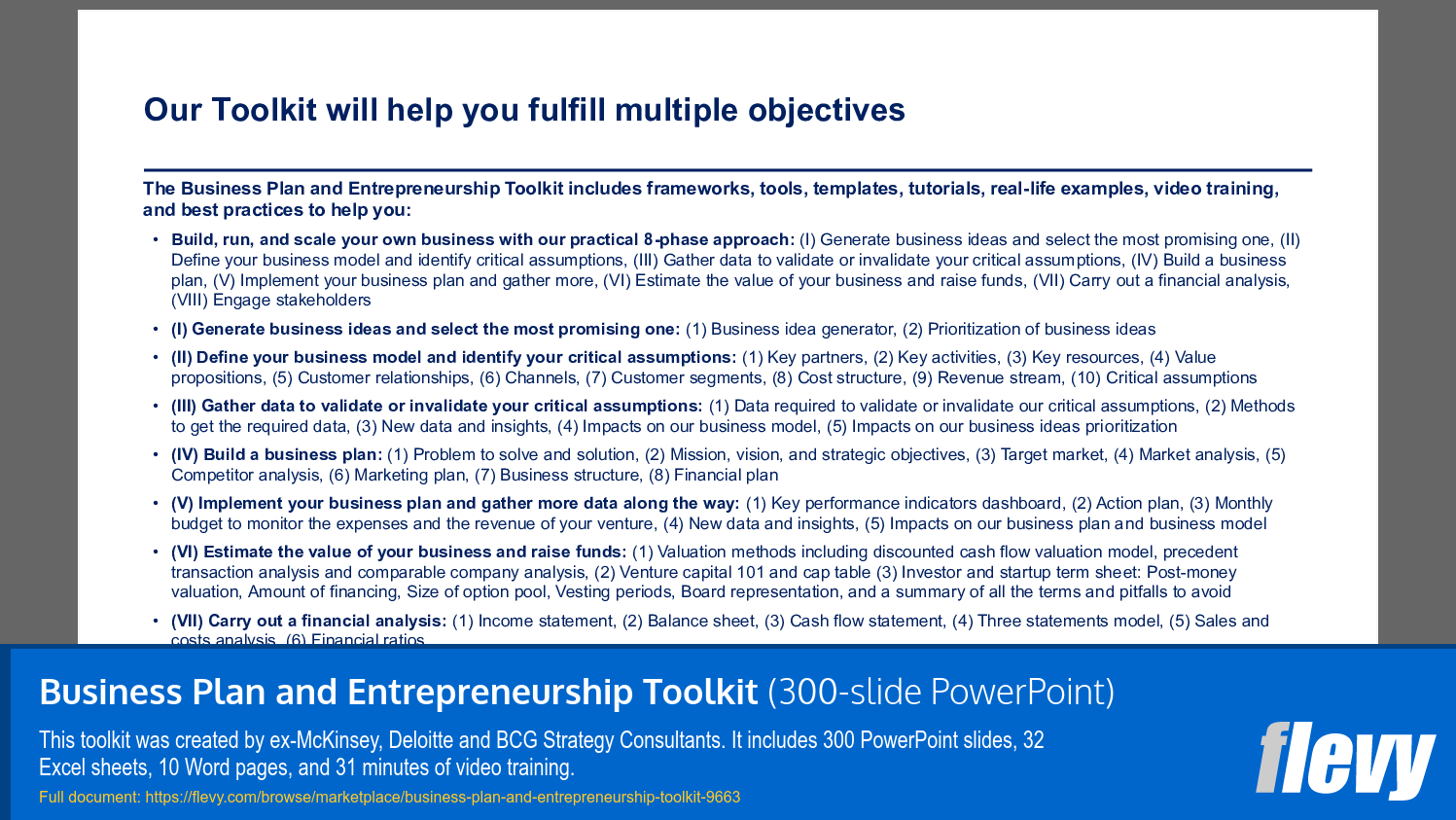
This Toolkit includes frameworks, tools, templates, tutorials, real-life examples, best practices, and video training to help you:
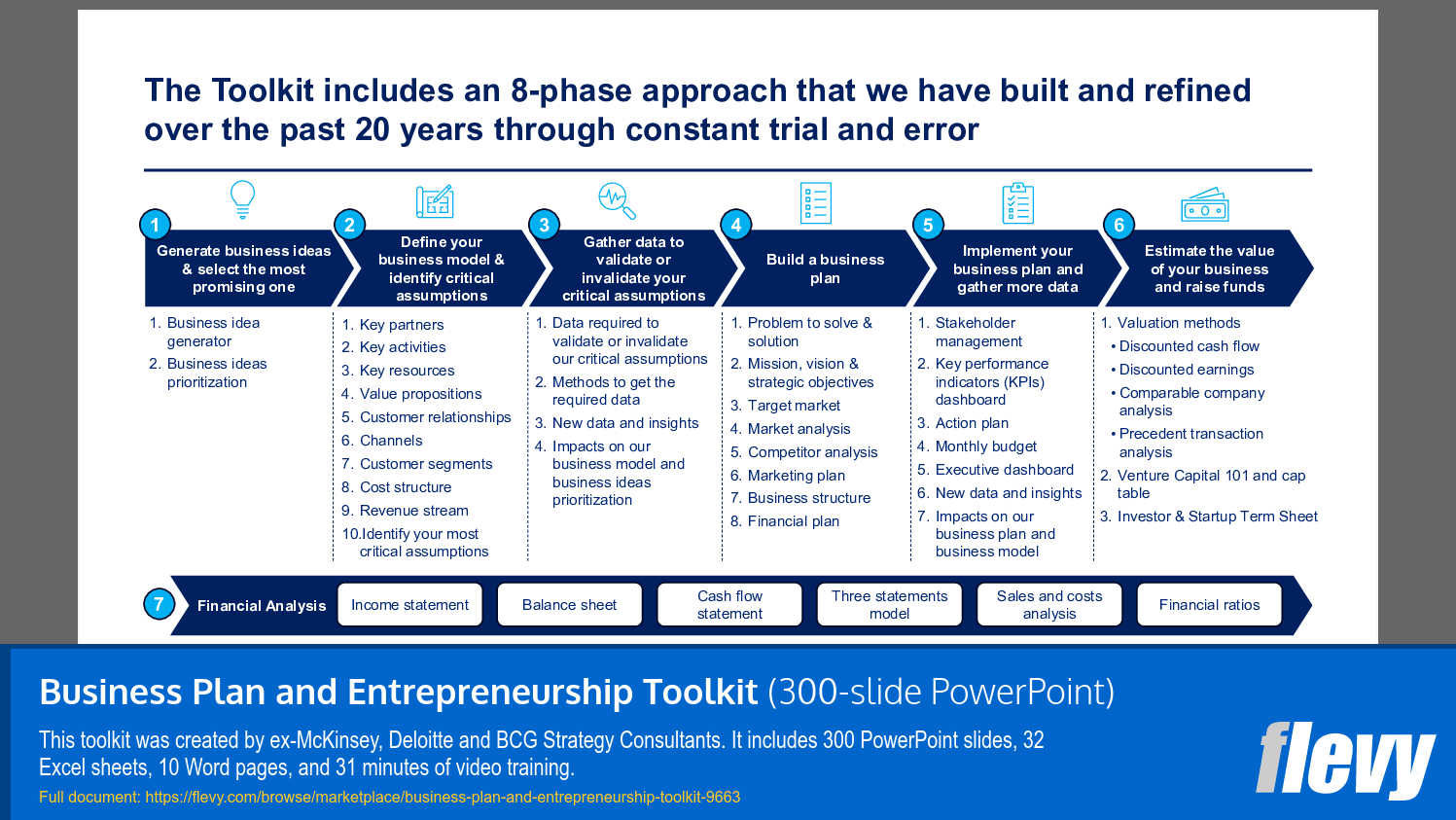
• Build, run, and scale your own business with our practical 8-phase approach: (I) Generate business ideas and select the most promising one, (II) Define your business model and identify critical assumptions, (III) Gather data to validate or invalidate your critical assumptions, (IV) Build a business plan, (V) Implement your business plan and gather more, (VI) Estimate the value of your business and raise funds, (VII) Carry out a financial analysis, (VIII) Engage stakeholders
• (I) Generate business ideas and select the most promising one: (1) Business idea generator, (2) Prioritization of business ideas
• (II) Define your business model and identify your critical assumptions: (1) Key partners, (2) Key activities, (3) Key resources, (4) Value propositions, (5) Customer relationships, (6) Channels, (7) Customer segments, (8) Cost structure, (9) Revenue stream, (10) Critical assumptions
• (III) Gather data to validate or invalidate your critical assumptions: (1) Data required to validate or invalidate our critical assumptions, (2) Methods to get the required data, (3) New data and insights, (4) Impacts on our business model, (5) Impacts on our business ideas prioritization
• (IV) Build a business plan: (1) Problem to solve and solution, (2) Mission, vision, and strategic objectives, (3) Target market, (4) Market analysis, (5) Competitor analysis, (6) Marketing plan, (7) Business structure, (8) Financial plan
• (V) Implement your business plan and gather more data along the way: (1) Key performance indicators dashboard, (2) Action plan, (3) Monthly budget to monitor the expenses and the revenue of your venture, (4) New data and insights, (5) Impacts on our business plan and business model
• (VI) Estimate the value of your business and raise funds: (1) Valuation methods including discounted cash flow valuation model, precedent transaction analysis and comparable company analysis, (2) Venture capital 101 and cap table (3) Investor and startup term sheet: Post-money valuation, Amount of financing, Size of option pool, Vesting periods, Board representation, and a summary of all the terms and pitfalls to avoid
• (VII) Carry out a financial analysis: (1) Income statement, (2) Balance sheet, (3) Cash flow statement, (4) Three statements model, (5) Sales and costs analysis, (6) Financial ratios
• (VIII) Engage your stakeholders effectively: (1) Stakeholder analysis, (2) Stakeholder engagement strategy, (3) Stakeholder engagement detailed plan
Got a question about the product? Email us at support@flevy.com or ask the author directly by using the "Ask the Author a Question" form. If you cannot view the preview above this document description, go here to view the large preview instead.
TOPIC FAQ
What are the typical phases of building and scaling a new business?
A structured entrepreneurship lifecycle can be framed in eight phases: (I) idea generation and selection, (II) business-model definition with critical assumptions, (III) data collection to validate assumptions, (IV) business-plan construction, (V) implementation and iterative data gathering, (VI) valuation and fundraising, (VII) financial analysis, and (VIII) stakeholder engagement — an 8-phase approach.
What components should a business model framework explicitly cover?
A complete business-model framework should cover key partners, key activities, key resources, value propositions, customer relationships, channels, customer segments, cost structure, revenue streams, and the venture’s critical assumptions — a set of 10 components.
How do you validate critical assumptions for a startup in practice?
Validation follows a five-step process: identify the data needed to test assumptions, select methods to collect that data, gather new data and insights, assess impacts on the business model, and update idea prioritization and plans accordingly — a five-step validation cycle.
What should be included in an investor-ready fundraising pack?
A fundraising pack typically includes valuation analyses (discounted cash flow, precedent transactions, comparable companies), a cap table and ownership plan, and a summary of term‑sheet items and pitfalls to address (post-money valuation, financing amount, option pool, vesting, board representation). Flevy’s Business Plan and Entrepreneurship Toolkit contains templates for valuation methods and cap-table work.
How much content and format variety do entrepreneurship toolkits usually provide?
Toolkits intended to support end-to-end planning bundle slide decks, spreadsheets, document templates, and training media. For example, Flevy’s Business Plan and Entrepreneurship Toolkit contains 300 PowerPoint slides, 32 Excel sheets, 10 Word pages, and 31 minutes of video training as packaged deliverables.
Which financial statements and analyses are essential inside a business plan?
Essential financial components include an income statement, a balance sheet, a cash flow statement, and an integrated three-statement model, supported by sales and cost analyses and financial ratios to assess performance and valuation — including the income statement, balance sheet, and cash flow statement.
How should founders approach stakeholder engagement during early growth?
Founders should perform a stakeholder analysis to identify interests and influence, develop a stakeholder engagement strategy, and create a detailed engagement plan that sequences communications, responsibilities, and milestones — using stakeholder analysis and an engagement strategy.
Can non-consultants use a consulting-grade entrepreneurship toolkit effectively?
Yes; the toolkit was created by ex‑McKinsey, Deloitte, and BCG consultants alongside entrepreneurs to guide building, running, and scaling a venture, packaging frameworks, templates, financial models, and training suited for founders and small teams. It was developed by ex‑McKinsey, Deloitte, and BCG consultants.
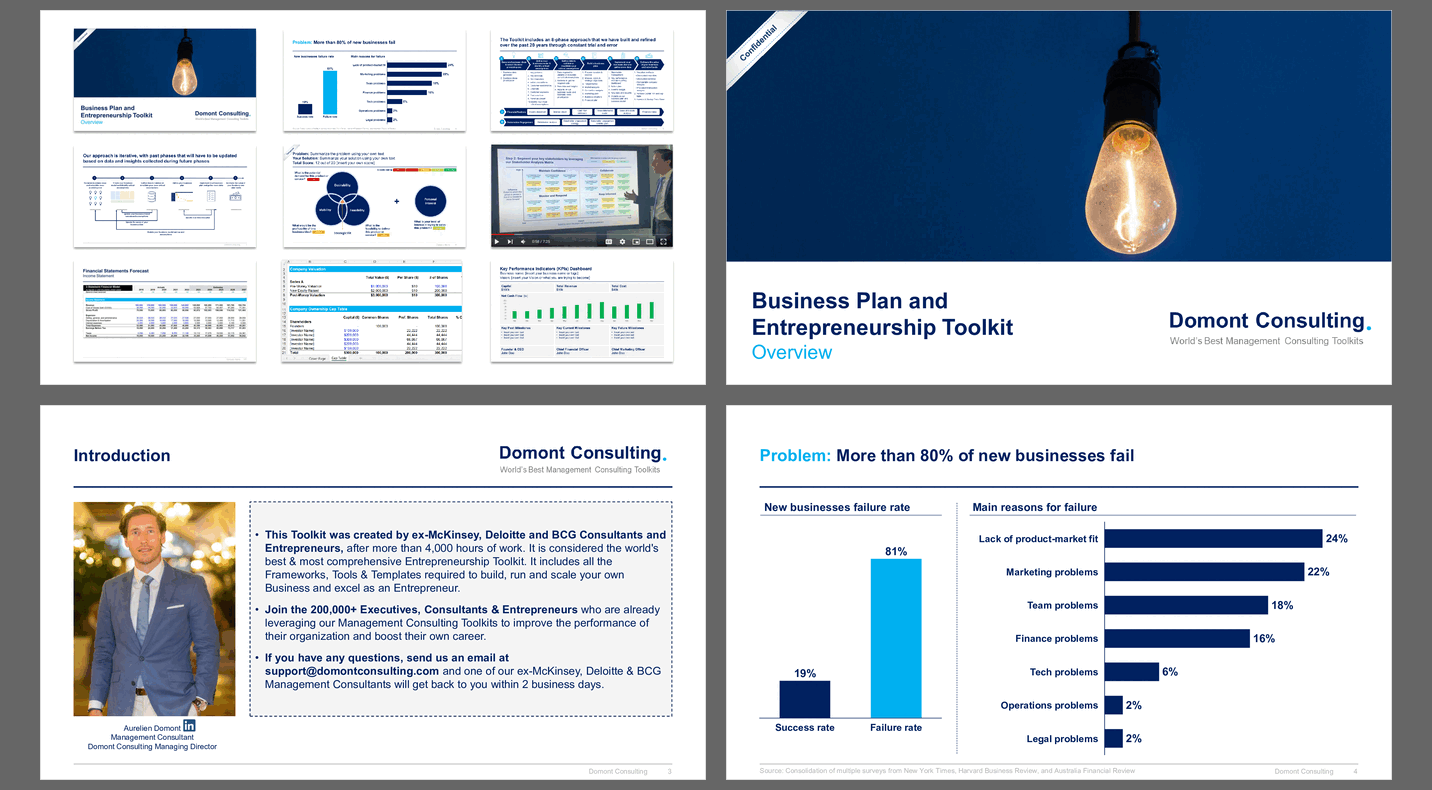
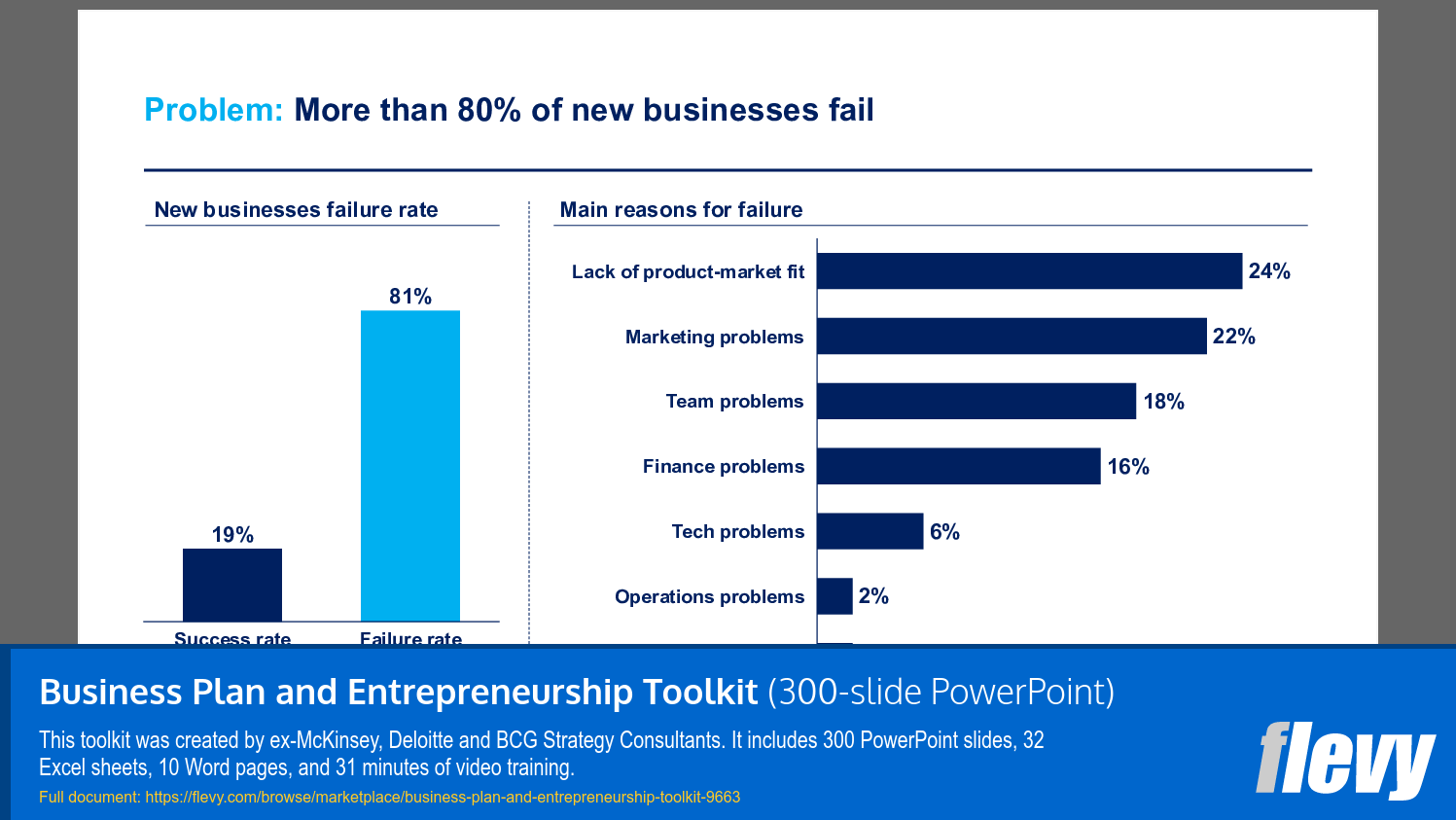
Over 80% of startups fail, with 81% not succeeding and only 19% achieving success. The primary reasons for failure include lack of product-market fit (24%), marketing problems (22%), team issues (18%), financial problems (16%), tech challenges (6%), and operational issues (2%). This distribution indicates that most failures arise from strategic misalignments and execution gaps rather than technical deficiencies. The data highlights the necessity of rigorous market validation and robust go-to-market strategies before scaling, along with strong leadership and financial discipline. Addressing product-market fit and marketing challenges could significantly improve startup survival rates.
This PPT slide template outlines an 8-phase methodology for developing a comprehensive business plan, refined over 20 years. The process begins with generating and selecting viable business ideas, followed by defining the business model, which includes identifying key partners, activities, resources, value propositions, customer relationships, and channels. The third phase focuses on data gathering to validate assumptions, emphasizing data requirements, collection methods, and insights. Building the plan involves solving core problems, defining the strategic mission and vision, analyzing the target market, and assessing competitors. The fifth phase emphasizes implementation by engaging stakeholders, setting KPIs, and creating performance dashboards. The process also includes estimating business value and raising funds through valuation methods and cash flow analysis. The final steps cover detailed financial analysis—income statements, balance sheets, cash flow statements, and ratios—to ensure financial viability. Continuous data collection and analysis are crucial for strategic validation and financial rigor.

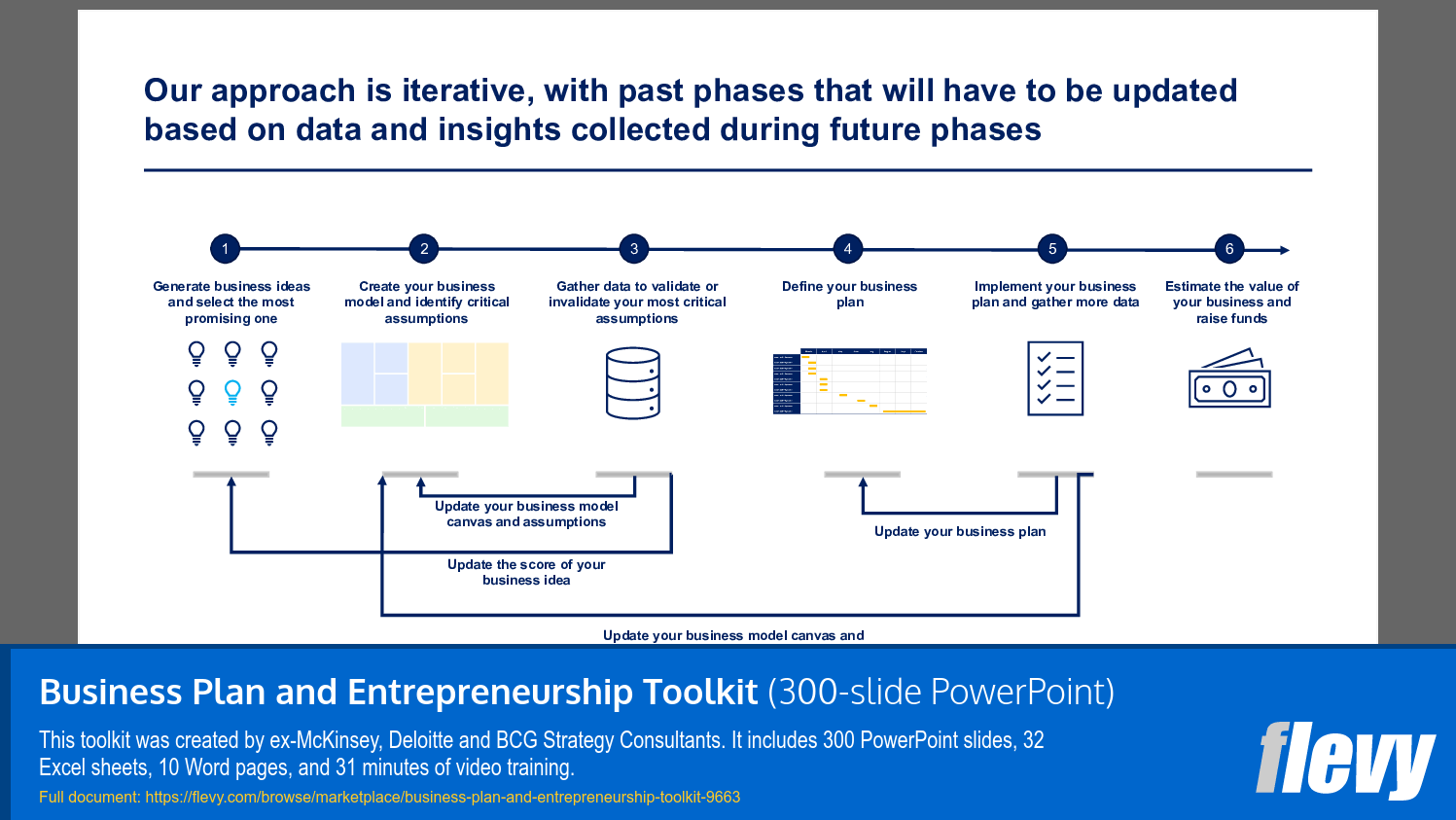
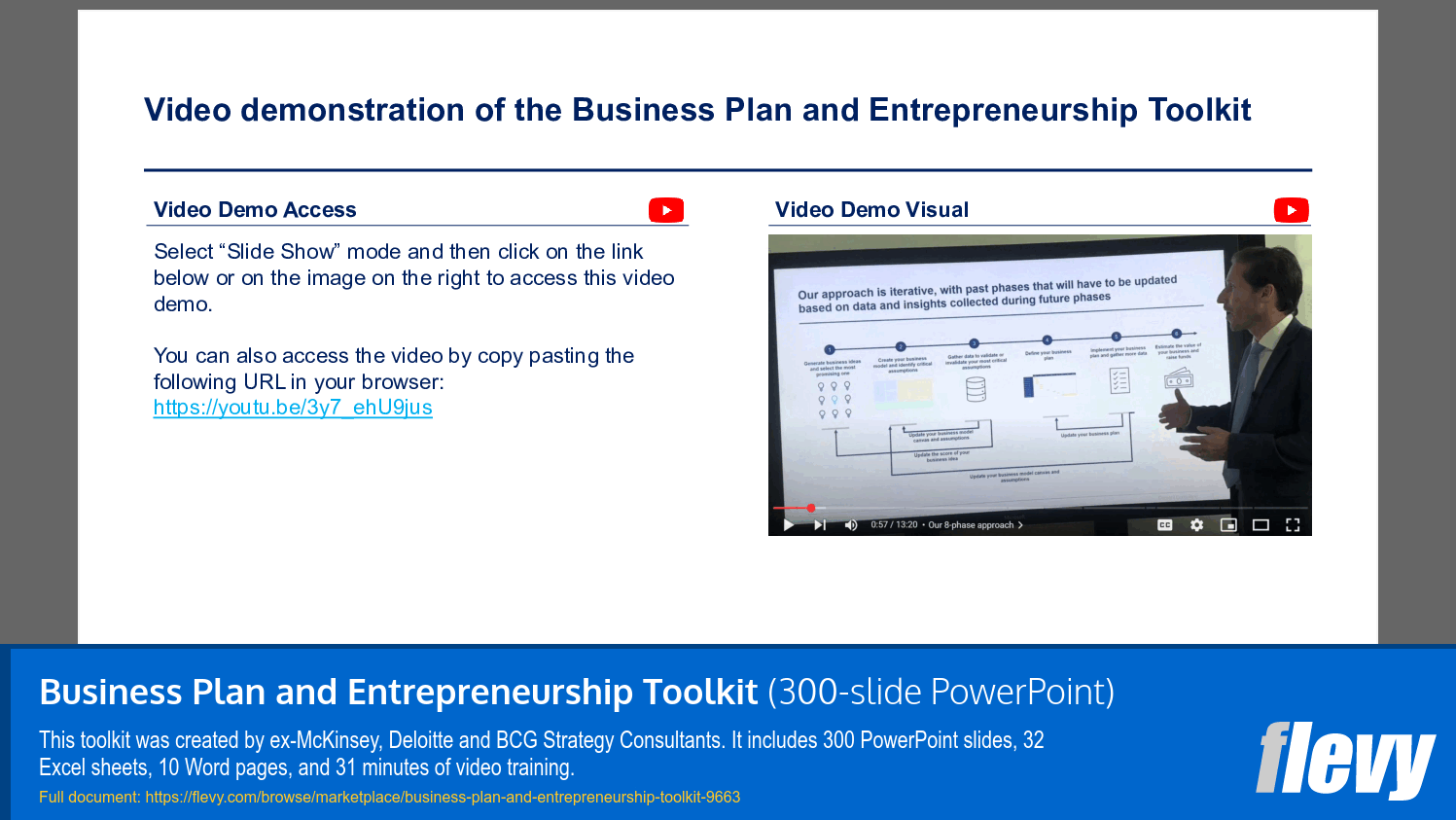
This PPT slide template outlines an iterative approach to business plan development, emphasizing continuous data collection and insights updating. The process begins with generating multiple business ideas and selecting the most promising one. It involves creating a business model and identifying critical assumptions, which are validated through data gathering. The third phase focuses on testing these assumptions, with results feeding back into the business model. Following validation, the plan defines the business strategy using visual tools like Gantt charts. The fifth phase implements the business plan and gathers additional data for refinement. The final step estimates business value and considers fundraising options. This dynamic process highlights the importance of agility and data-driven decision-making, encouraging executives to view their strategy as a living document that evolves with insights gathered at each stage.

Source: Best Practices in Business Plan Writing, Entrepreneurship PowerPoint Slides: Business Plan and Entrepreneurship Toolkit PowerPoint (PPTX) Presentation Slide Deck, Domont Consulting
This toolkit was created by ex-McKinsey, Deloitte and BCG Strategy Consultants. It includes 300 PowerPoint slides, 32 Excel sheets, 10 Word pages, and 31 minutes of video training.
Improve the Growth & Efficiency of your Organization and become a Subject Matter Expert. Leverage Toolkits created by ex-McKinsey, Deloitte & BCG Management Consultants and JP Morgan Investment Bankers.
Domont Consulting is trusted by 200,000+ executives, consultants and entrepreneurs from small & large organizations.
Domont Consulting is a global management consulting firm providing
... [read more] Management Consulting Toolkits & Services in 180+ countries.
Domont Consulting was founded by Aurelien Domont, who is a well-known ex-Deloitte Management Consultant with 20+ years of experience helping companies improve their performance. He is also a Linkedin Influencer, with 35,000+ Executives, Consultants & Entrepreneurs following him.
The average daily rate of a McKinsey consultant is $6,625 (not including expenses). The average price of a Flevy document is $65.
Trusted by over 10,000+ Client Organizations
Since 2012, we have provided business templates to over 10,000 businesses and organizations of all sizes, from startups and small businesses to the Fortune 100, in over 130 countries.
"My FlevyPro subscription provides me with the most popular frameworks and decks in demand in today’s market. They not only augment my existing consulting and coaching offerings and delivery, but also keep me abreast of the latest trends, inspire new products and service offerings for my practice, and educate me
in a fraction of the time and money of other solutions. I strongly recommend FlevyPro to any consultant serious about success.
"
– Bill Branson, Founder at Strategic Business Architects
"Flevy is our 'go to' resource for management material, at an affordable cost. The Flevy library is comprehensive and the content deep, and typically provides a great foundation for us to further develop and tailor our own service offer."
– Chris McCann, Founder at Resilient.World
"As a consulting firm, we had been creating subject matter training materials for our people and found the excellent materials on Flevy, which saved us 100's of hours of re-creating what already exists on the Flevy materials we purchased."
– Michael Evans, Managing Director at Newport LLC
"[Flevy] produces some great work that has been/continues to be of immense help not only to myself, but as I seek to provide professional services to my clients, it gives me a large "tool box" of resources that are critical to provide them with the quality of service and outcomes they are expecting."
– Royston Knowles, Executive with 50+ Years of Board Level Experience
"I have used Flevy services for a number of years and have never, ever been disappointed. As a matter of fact, David and his team continue, time after time, to impress me with their willingness to assist and in the real sense of the word. I have concluded in fact
that it is not at all just a repository of documents/resources but, in the way that David and his team manage the firm, it is like dealing with consultants always ready to assist, advise and direct you to what you really need, and they always get it right.
I am an international hospitality accomplished senior executive who has worked and lived during the past 35 years in 23 countries in 5 continents and I can humbly say that I know what customer service is, trust me.
Aside from the great and professional service that Flevy's team provide, their wide variety of material is of utmost great quality, professionally put together and most current.
Well done Flevy, keep up the great work and I look forward to continue working with you in the future and to recommend you to a variety of colleagues around the world.
"
– Roberto Pelliccia, Senior Executive in International Hospitality
"If you are looking for great resources to save time with your business presentations, Flevy is truly a value-added resource. Flevy has done all the work for you and we will continue to utilize Flevy as a source to extract up-to-date information and data for our virtual and onsite presentations!"
– Debbi Saffo, President at The NiKhar Group
"As a small business owner, the resource material available from FlevyPro has proven to be invaluable. The ability to search for material on demand based our project events and client requirements was great for me and proved very beneficial to my clients. Importantly, being able to easily edit and tailor
the material for specific purposes helped us to make presentations, knowledge sharing, and toolkit development, which formed part of the overall program collateral. While FlevyPro contains resource material that any consultancy, project or delivery firm must have, it is an essential part of a small firm or independent consultant's toolbox.
"
– Michael Duff, Managing Director at Change Strategy (UK)
"Flevy is now a part of my business routine. I visit Flevy at least 3 times each month.
Flevy has become my preferred learning source, because what it provides is practical, current, and useful in this era where the business world is being rewritten.
many challenges and there is the need to make the right decisions in a short time, with so much scattered information, we are fortunate to have Flevy. Flevy investigates, selects, and puts at our disposal the best of the best to help us be successful in our work.
Download our free compilation of 50+ Strategy & Transformation slides and templates. Frameworks include McKinsey 7-S, Balanced Scorecard, Disruptive Innovation, BCG Curve, and many more.