
 Click main image to view in full screen. Unlock all 17 preview images:
Business Plan and Entrepreneurship Toolkit – PowerPoint PPTX Template
PowerPoint (PPTX) + Zip archive file (ZIP) 300 Slides


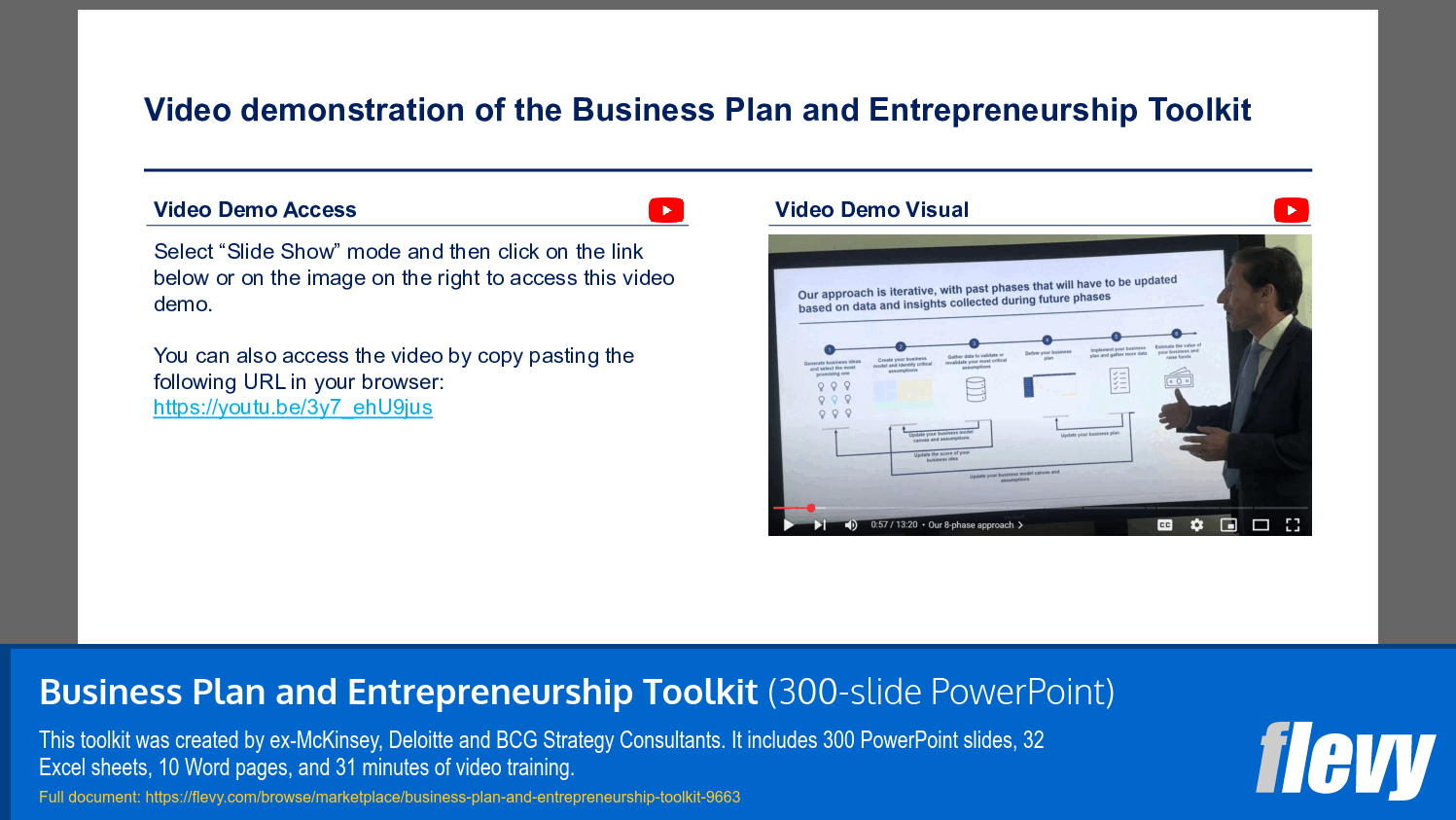
VIDEO DEMO
BENEFITS OF THIS DOWNLOADABLE POWERPOINT DOCUMENT
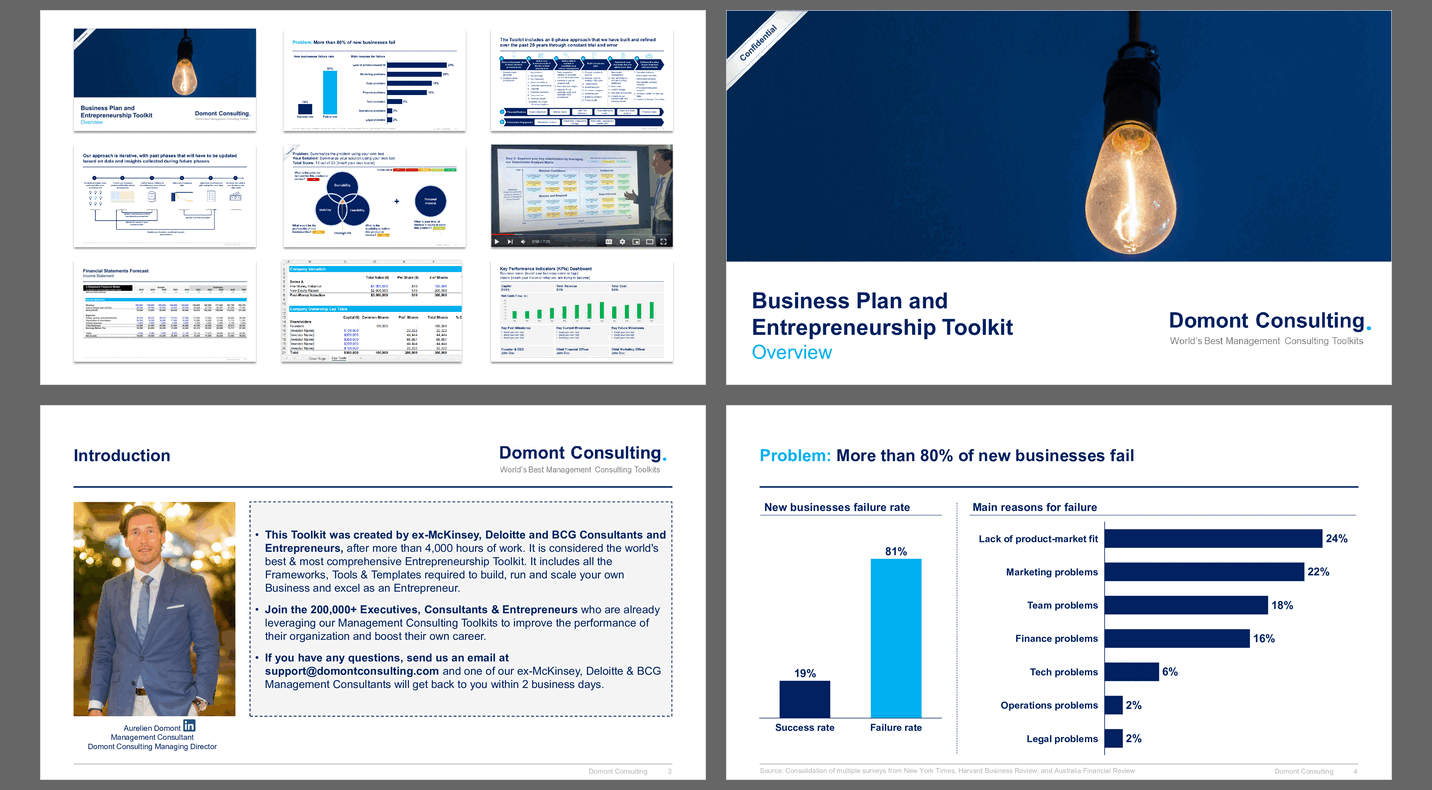
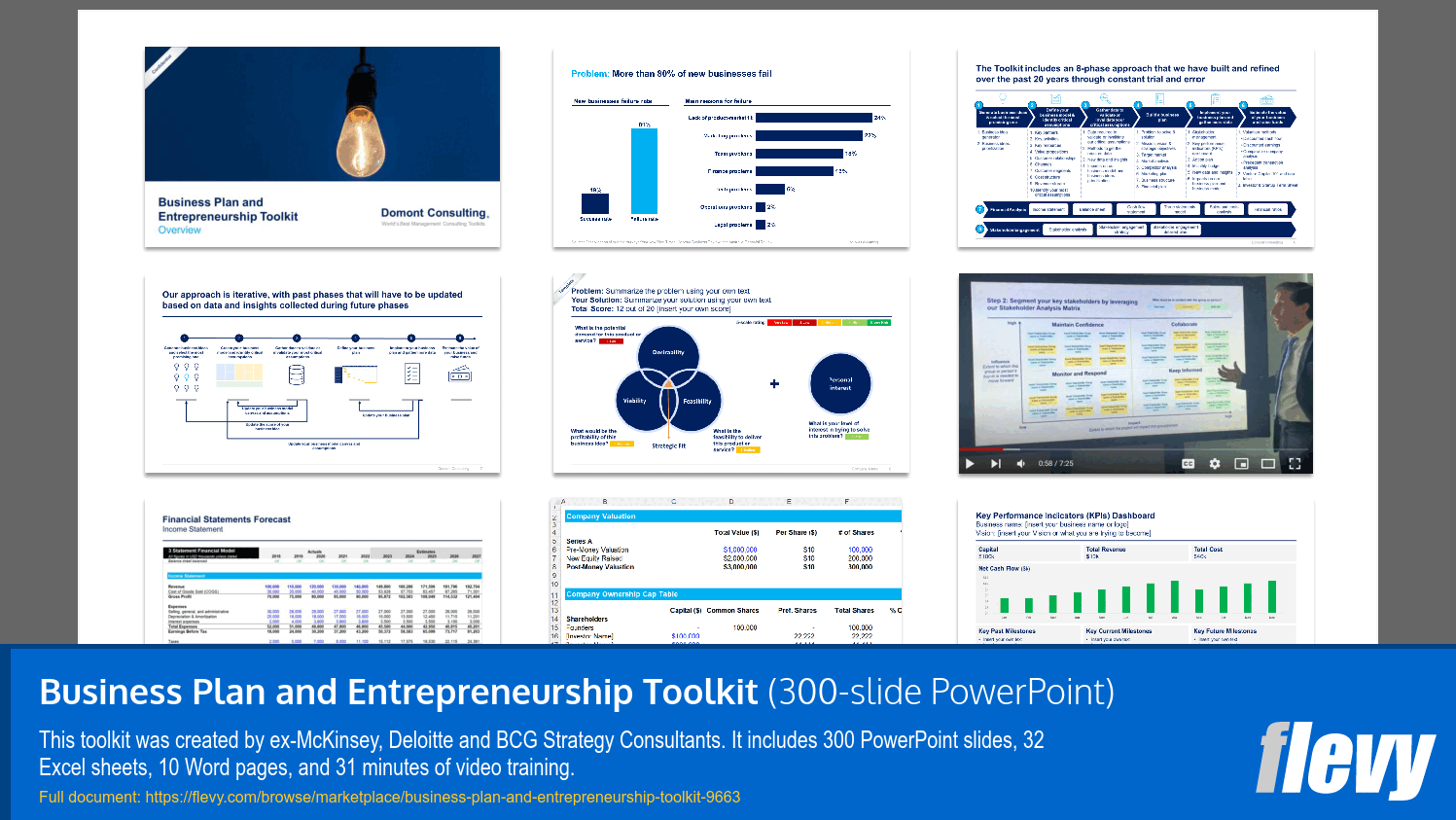
- Includes 300 PowerPoint slides, 32 Excel sheets, 10 Word pages, and 31 minutes of video training.
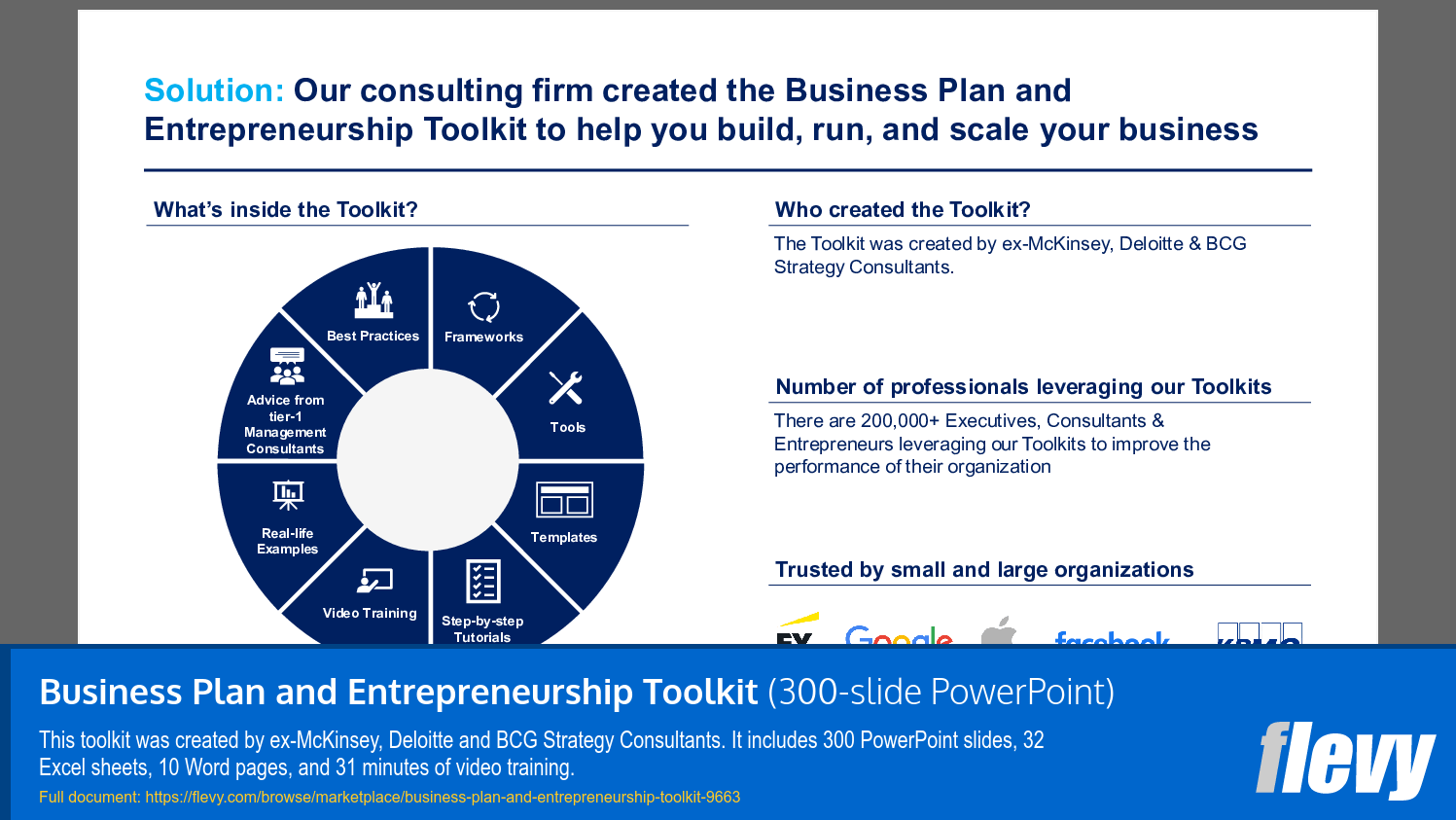
- Includes frameworks, tools, templates, tutorials, real-life examples, best practices, and video training.
- Build, run, and scale your own business with our practical 8-phase approach.
BUSINESS PLAN WRITING PPT TEMPLATE DESCRIPTION
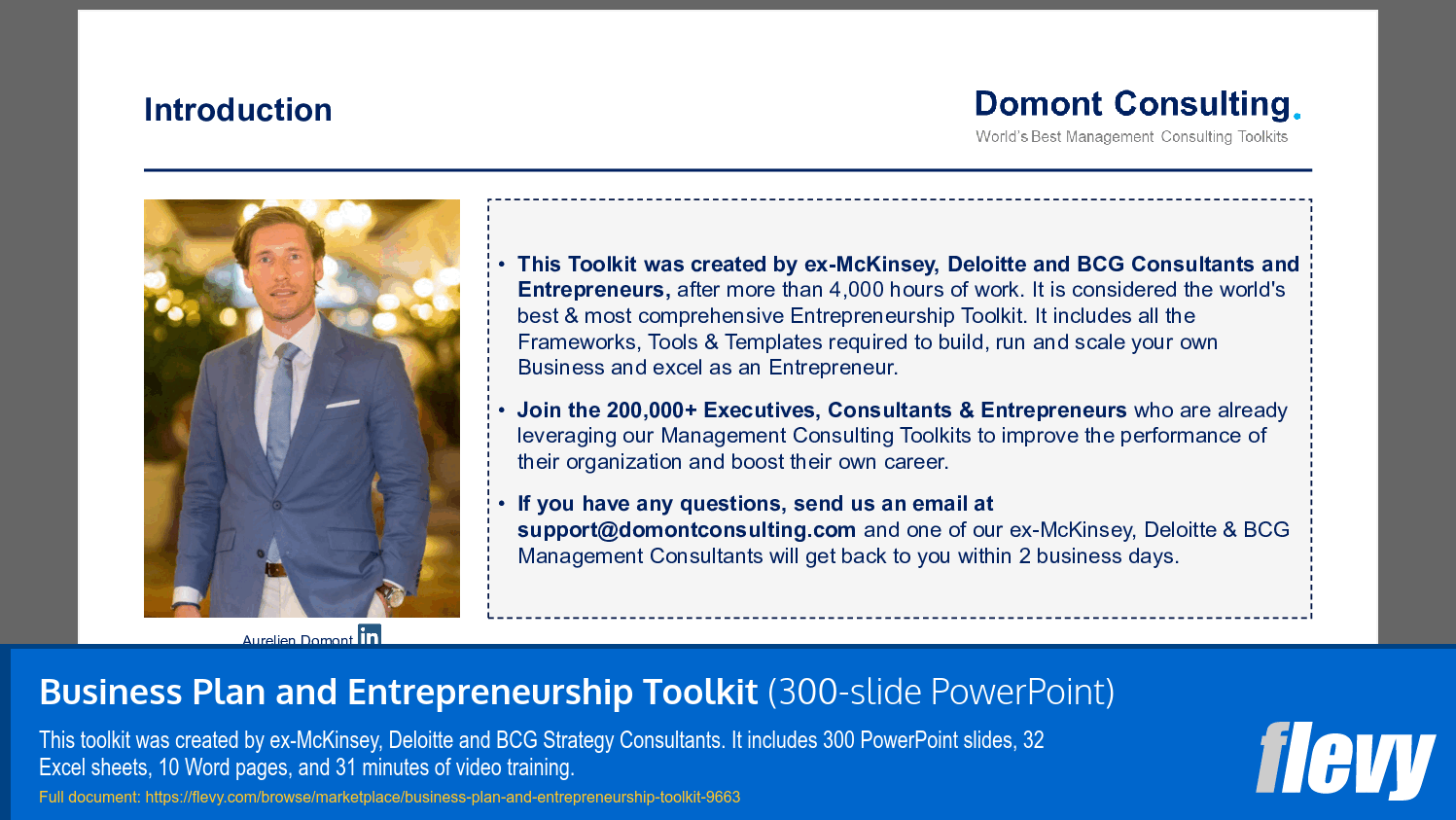
This Toolkit was created by ex-McKinsey, Deloitte and BCG Consultants and Entrepreneurs, after more than 4,000 hours of work. It is considered the world's best & most comprehensive Entrepreneurship Toolkit. It includes all the Frameworks, Tools & Templates required to build, run and scale your own Business and excel as an Entrepreneur.
The Toolkit includes: 300 PowerPoint slides, 32 Excel sheets, 10 Word pages, and 31 minutes of video training.
This Toolkit includes frameworks, tools, templates, tutorials, real-life examples, best practices, and video training to help you:
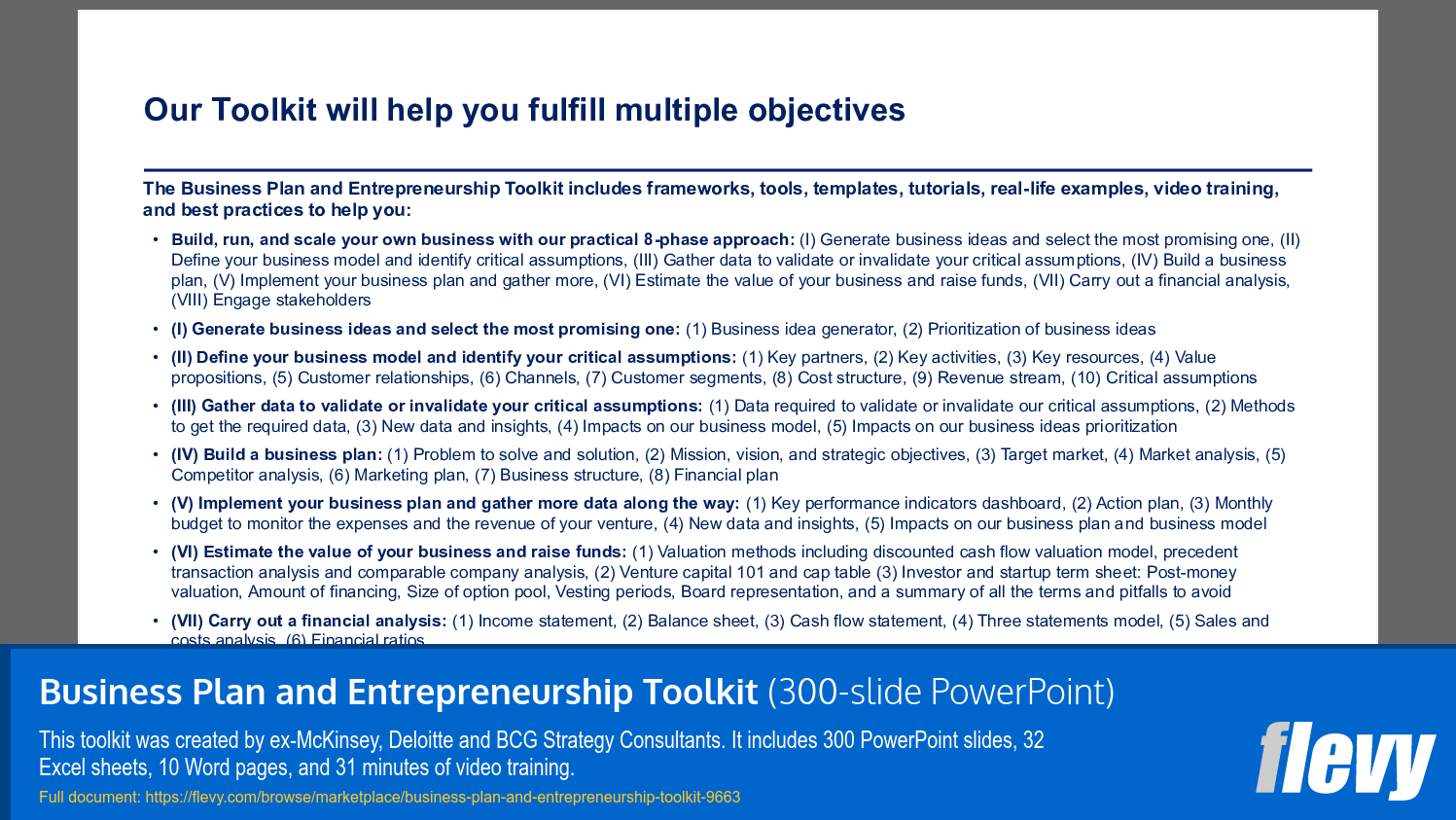
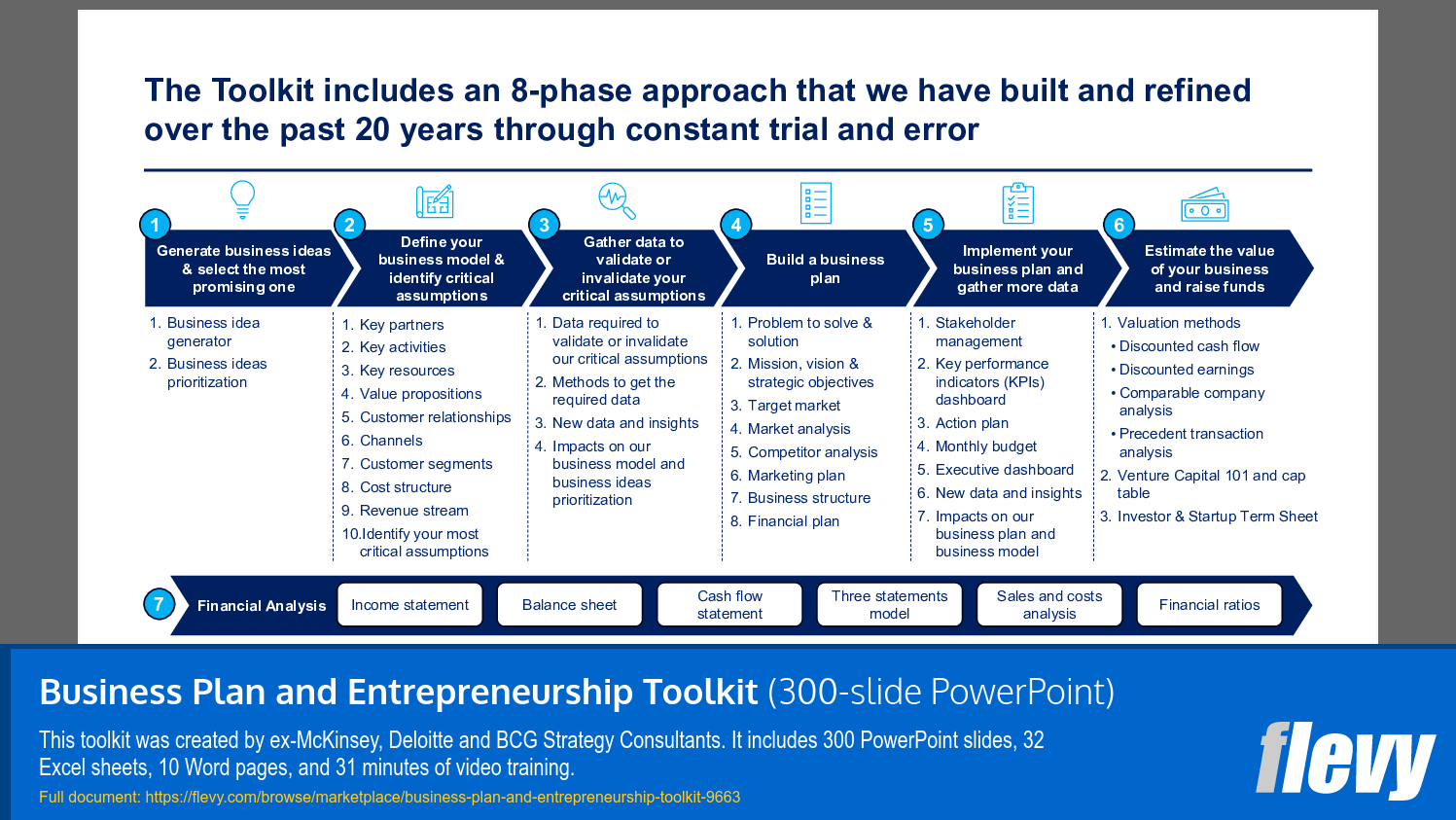
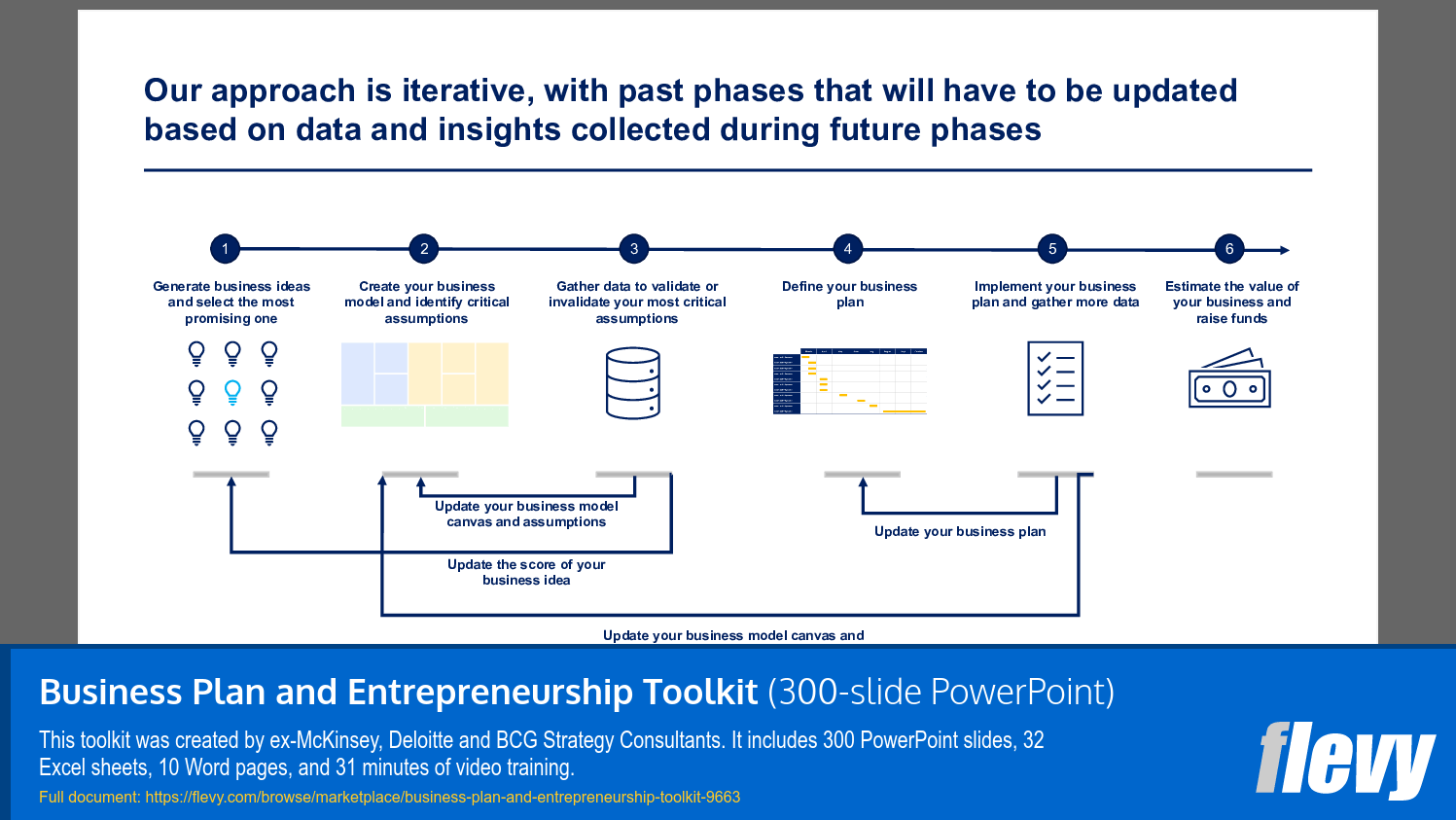
• Build, run, and scale your own business with our practical 8-phase approach: (I) Generate business ideas and select the most promising one, (II) Define your business model and identify critical assumptions, (III) Gather data to validate or invalidate your critical assumptions, (IV) Build a business plan, (V) Implement your business plan and gather more, (VI) Estimate the value of your business and raise funds, (VII) Carry out a financial analysis, (VIII) Engage stakeholders
• (I) Generate business ideas and select the most promising one: (1) Business idea generator, (2) Prioritization of business ideas
• (II) Define your business model and identify your critical assumptions: (1) Key partners, (2) Key activities, (3) Key resources, (4) Value propositions, (5) Customer relationships, (6) Channels, (7) Customer segments, (8) Cost structure, (9) Revenue stream, (10) Critical assumptions
• (III) Gather data to validate or invalidate your critical assumptions: (1) Data required to validate or invalidate our critical assumptions, (2) Methods to get the required data, (3) New data and insights, (4) Impacts on our business model, (5) Impacts on our business ideas prioritization
• (IV) Build a business plan: (1) Problem to solve and solution, (2) Mission, vision, and strategic objectives, (3) Target market, (4) Market analysis, (5) Competitor analysis, (6) Marketing plan, (7) Business structure, (8) Financial plan
• (V) Implement your business plan and gather more data along the way: (1) Key performance indicators dashboard, (2) Action plan, (3) Monthly budget to monitor the expenses and the revenue of your venture, (4) New data and insights, (5) Impacts on our business plan and business model
• (VI) Estimate the value of your business and raise funds: (1) Valuation methods including discounted cash flow valuation model, precedent transaction analysis and comparable company analysis, (2) Venture capital 101 and cap table (3) Investor and startup term sheet: Post-money valuation, Amount of financing, Size of option pool, Vesting periods, Board representation, and a summary of all the terms and pitfalls to avoid
• (VII) Carry out a financial analysis: (1) Income statement, (2) Balance sheet, (3) Cash flow statement, (4) Three statements model, (5) Sales and costs analysis, (6) Financial ratios
• (VIII) Engage your stakeholders effectively: (1) Stakeholder analysis, (2) Stakeholder engagement strategy, (3) Stakeholder engagement detailed plan
Got a question about the product? Email us at support@flevy.com or ask the author directly by using the "Ask the Author a Question" form. If you cannot view the preview above this document description, go here to view the large preview instead.
TOPIC FAQ
What are the typical phases of building and scaling a new business?
A structured entrepreneurship lifecycle can be framed in eight phases: (I) idea generation and selection, (II) business-model definition with critical assumptions, (III) data collection to validate assumptions, (IV) business-plan construction, (V) implementation and iterative data gathering, (VI) valuation and fundraising, (VII) financial analysis, and (VIII) stakeholder engagement — an 8-phase approach.What components should a business model framework explicitly cover?
A complete business-model framework should cover key partners, key activities, key resources, value propositions, customer relationships, channels, customer segments, cost structure, revenue streams, and the venture’s critical assumptions — a set of 10 components.How do you validate critical assumptions for a startup in practice?
Validation follows a five-step process: identify the data needed to test assumptions, select methods to collect that data, gather new data and insights, assess impacts on the business model, and update idea prioritization and plans accordingly — a five-step validation cycle.What should be included in an investor-ready fundraising pack?
A fundraising pack typically includes valuation analyses (discounted cash flow, precedent transactions, comparable companies), a cap table and ownership plan, and a summary of term‑sheet items and pitfalls to address (post-money valuation, financing amount, option pool, vesting, board representation). Flevy’s Business Plan and Entrepreneurship Toolkit contains templates for valuation methods and cap-table work.How much content and format variety do entrepreneurship toolkits usually provide?
Toolkits intended to support end-to-end planning bundle slide decks, spreadsheets, document templates, and training media. For example, Flevy’s Business Plan and Entrepreneurship Toolkit contains 300 PowerPoint slides, 32 Excel sheets, 10 Word pages, and 31 minutes of video training as packaged deliverables.Which financial statements and analyses are essential inside a business plan?
Essential financial components include an income statement, a balance sheet, a cash flow statement, and an integrated three-statement model, supported by sales and cost analyses and financial ratios to assess performance and valuation — including the income statement, balance sheet, and cash flow statement.How should founders approach stakeholder engagement during early growth?
Founders should perform a stakeholder analysis to identify interests and influence, develop a stakeholder engagement strategy, and create a detailed engagement plan that sequences communications, responsibilities, and milestones — using stakeholder analysis and an engagement strategy.Can non-consultants use a consulting-grade entrepreneurship toolkit effectively?
Yes; the toolkit was created by ex‑McKinsey, Deloitte, and BCG consultants alongside entrepreneurs to guide building, running, and scaling a venture, packaging frameworks, templates, financial models, and training suited for founders and small teams. It was developed by ex‑McKinsey, Deloitte, and BCG consultants.BUSINESS PLAN WRITING PPT TEMPLATES
Source: Best Practices in Business Plan Writing, Entrepreneurship PowerPoint Slides: Business Plan and Entrepreneurship Toolkit PowerPoint (PPTX) Presentation Slide Deck, Domont Consulting
ABOUT THE AUTHOR

Improve the Growth & Efficiency of your Organization and become a Subject Matter Expert. Leverage Toolkits created by ex-McKinsey, Deloitte & BCG Management Consultants and JP Morgan Investment Bankers.
Domont Consulting is trusted by 200,000+ executives, consultants and entrepreneurs from small & large organizations.
Domont Consulting is a global management consulting firm providing
... [read more]
Ask the Author a Question
You must be logged in to contact the author.




























