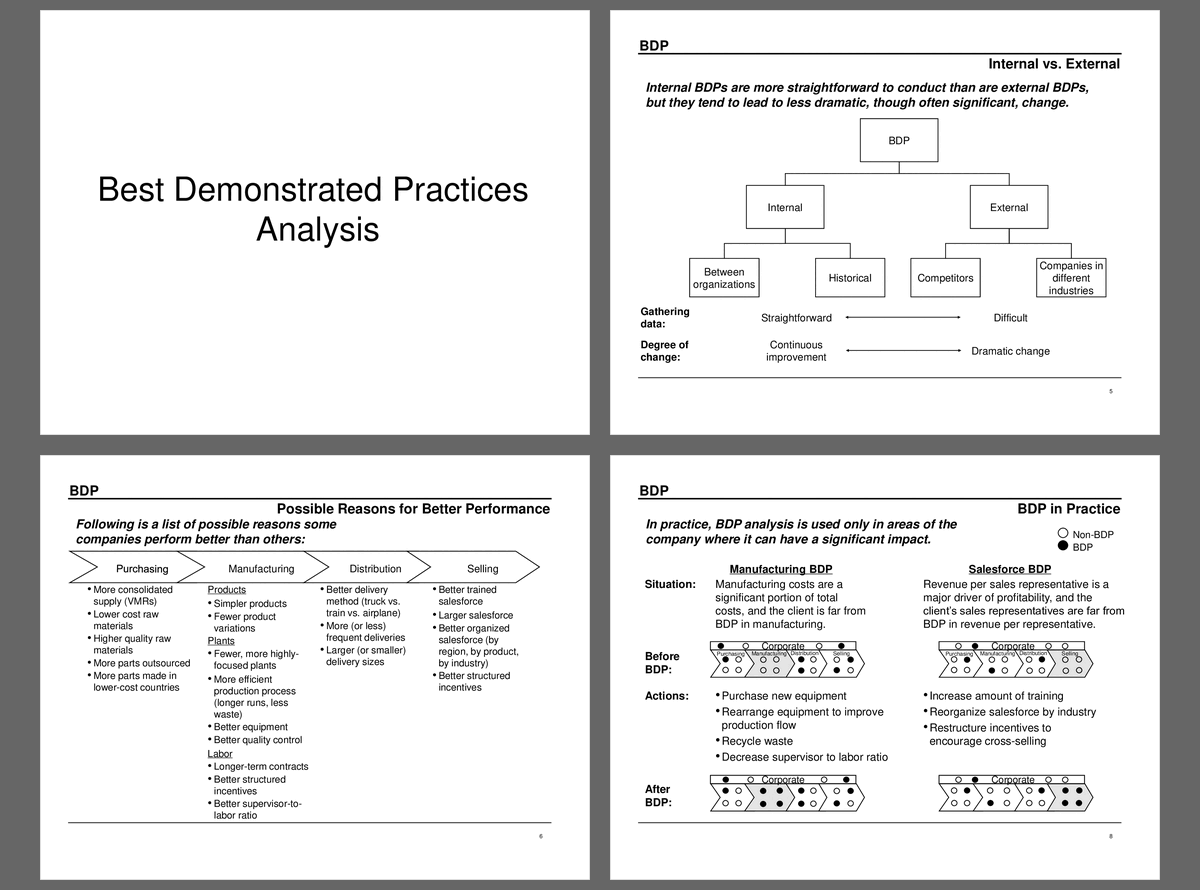
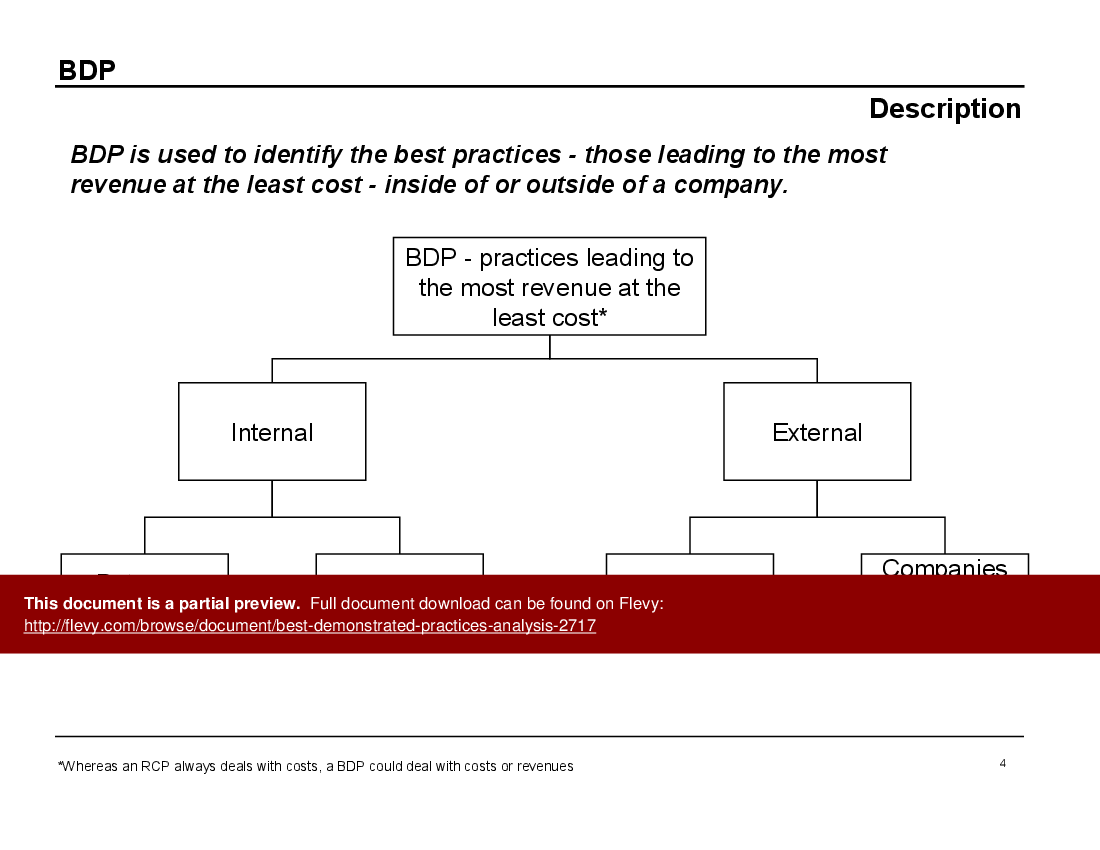
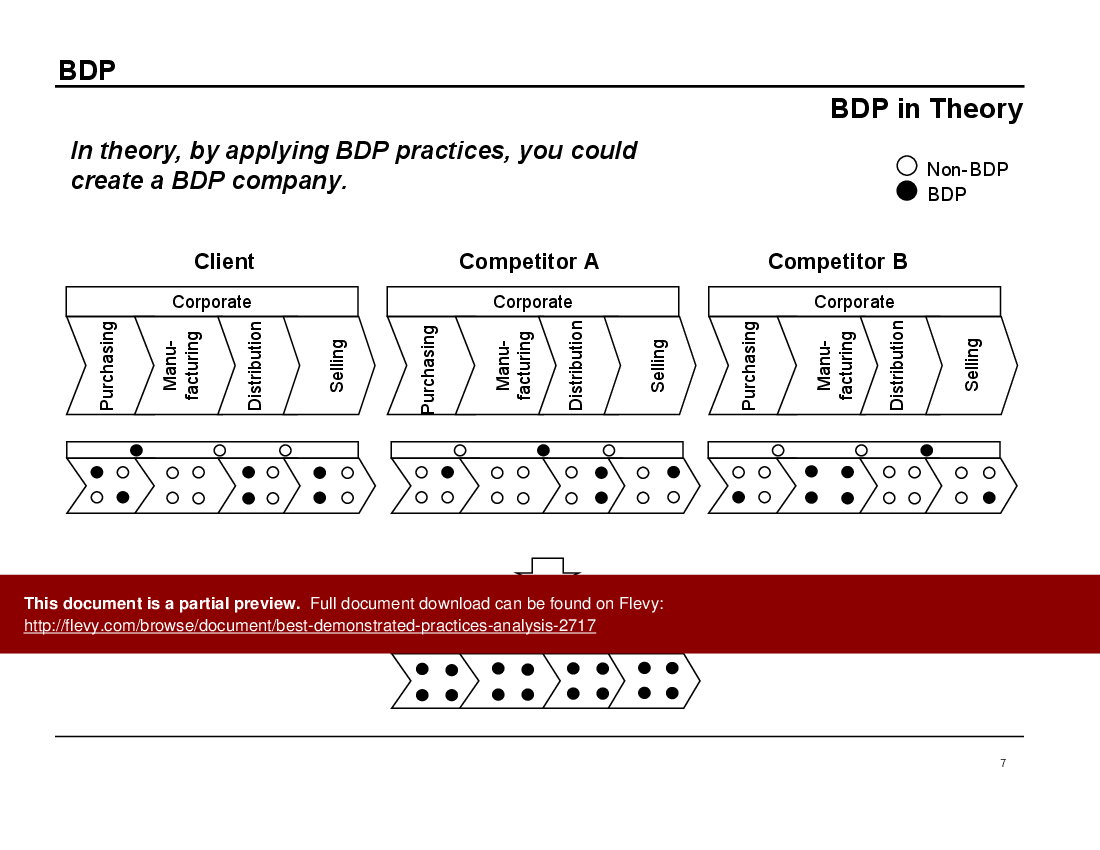
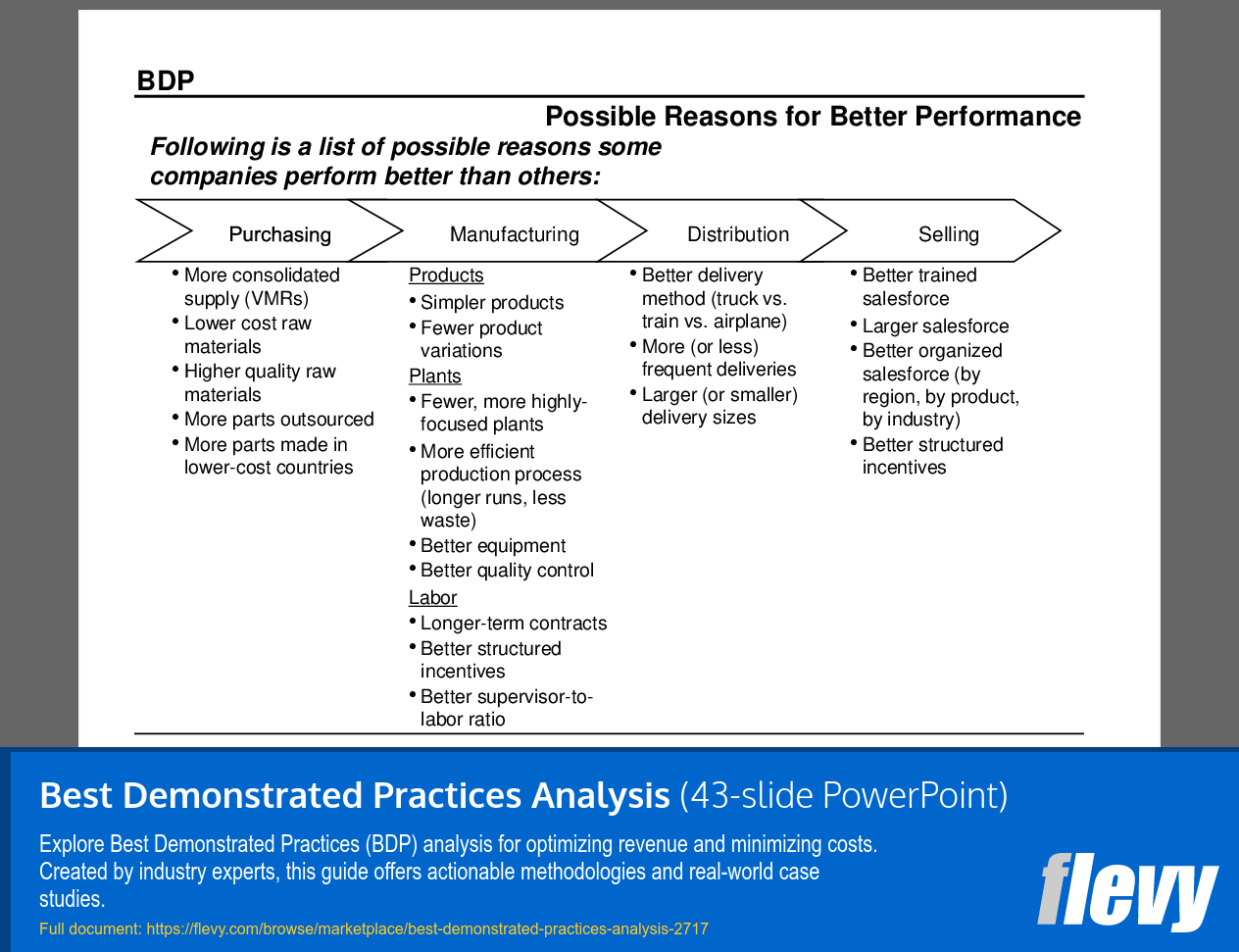

BDP is used to identify the best practices – those leading to the most revenue at the least cost – inside of or outside of a company. Internal BDPs are more straightforward to conduct than are external BDPs, but they tend to lead to less dramatic, though often significant, change.
This document delves into the practical application of Best Demonstrated Practices (BDP) across various organizational processes. By examining both internal and external BDPs, it offers a comprehensive approach to identifying and implementing practices that maximize revenue while minimizing costs. The document outlines a step-by-step methodology for conducting a BDP analysis, ensuring that organizations can systematically identify and adopt the most effective practices.
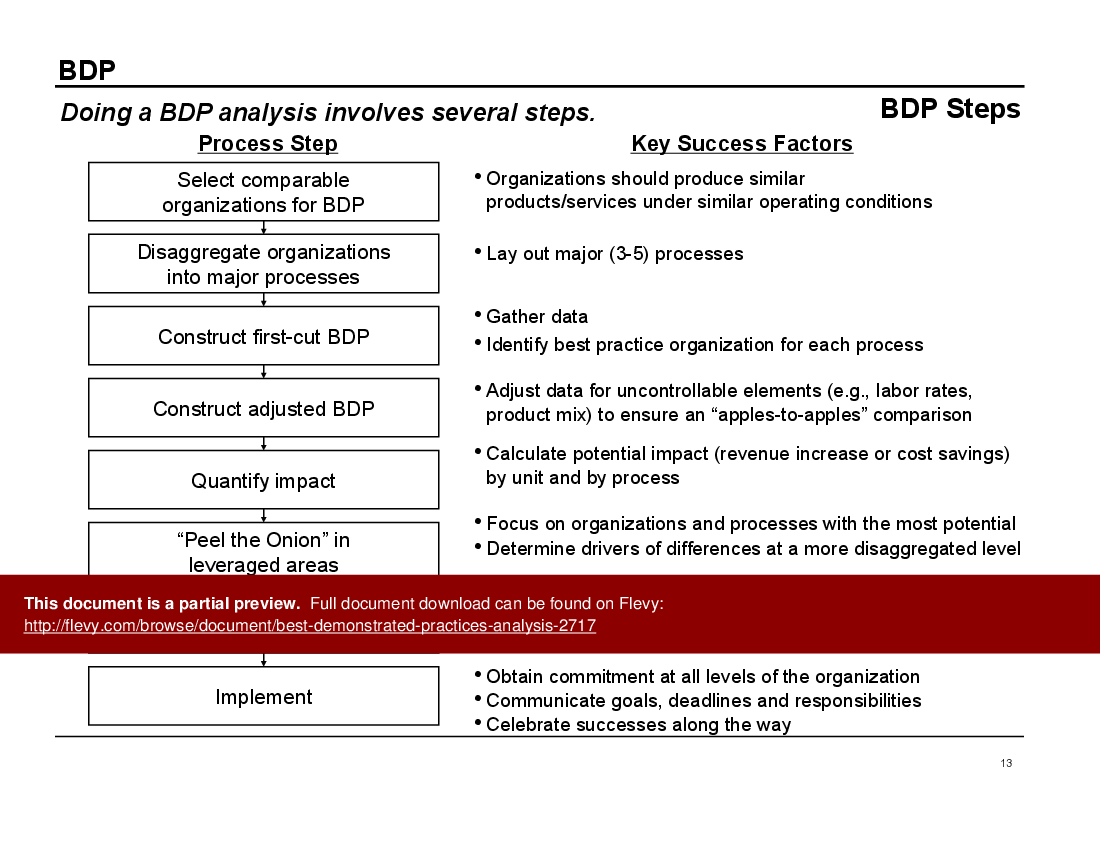
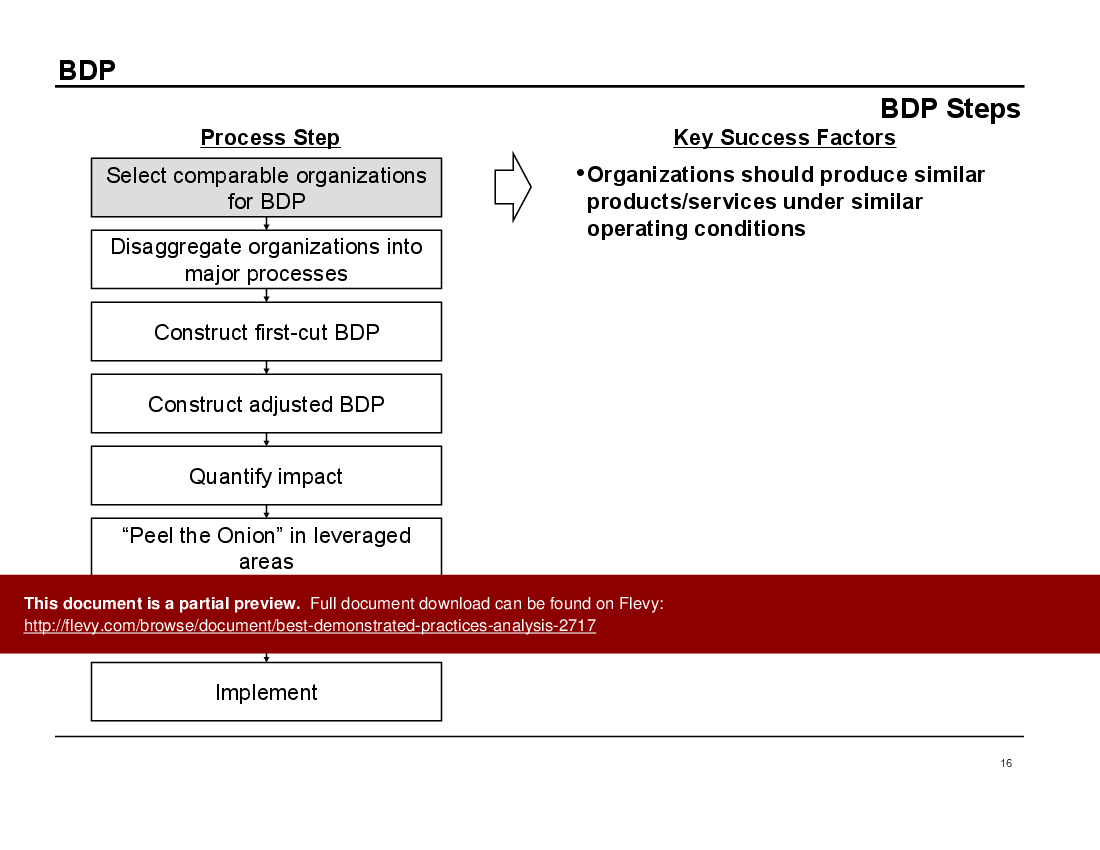
The analysis begins with selecting comparable organizations and disaggregating them into major processes. This granular approach allows for a detailed comparison and identification of best practices. The document also emphasizes the importance of adjusting data for uncontrollable elements, ensuring an apples-to-apples comparison. This meticulous approach helps in quantifying the potential impact of adopting BDPs, whether in terms of cost savings or revenue increase.
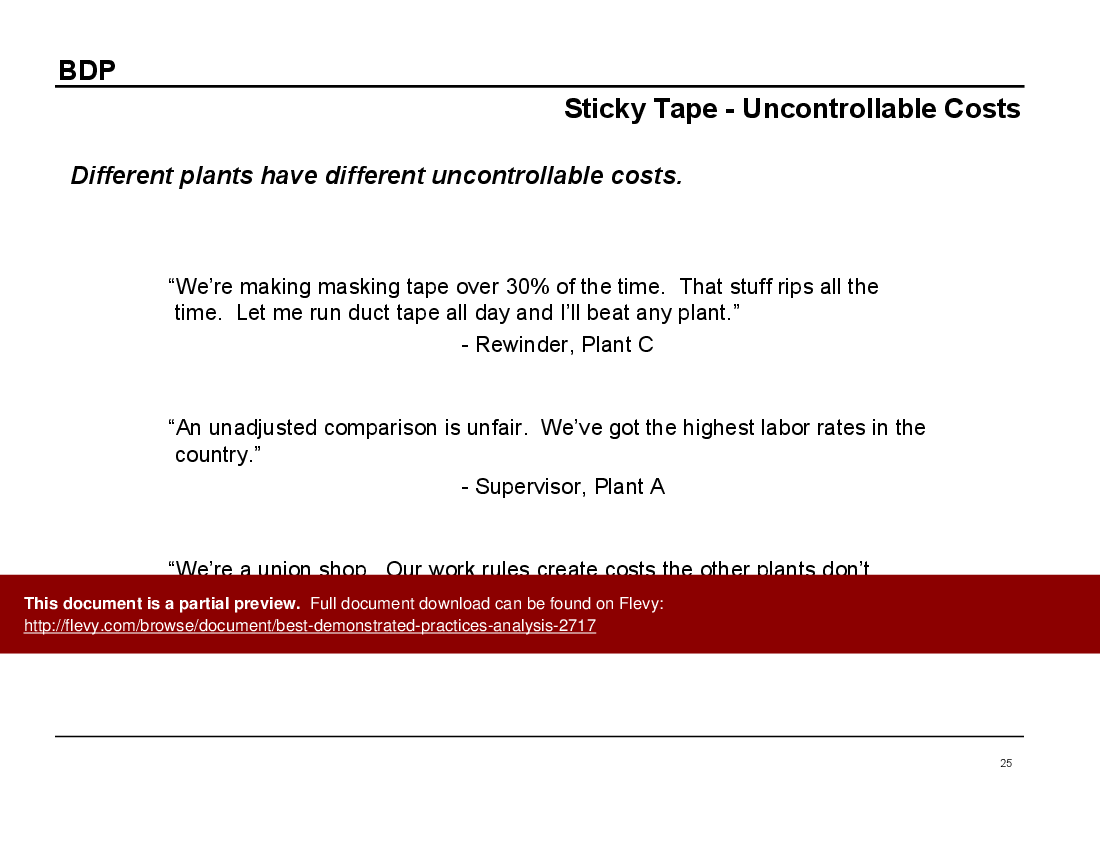
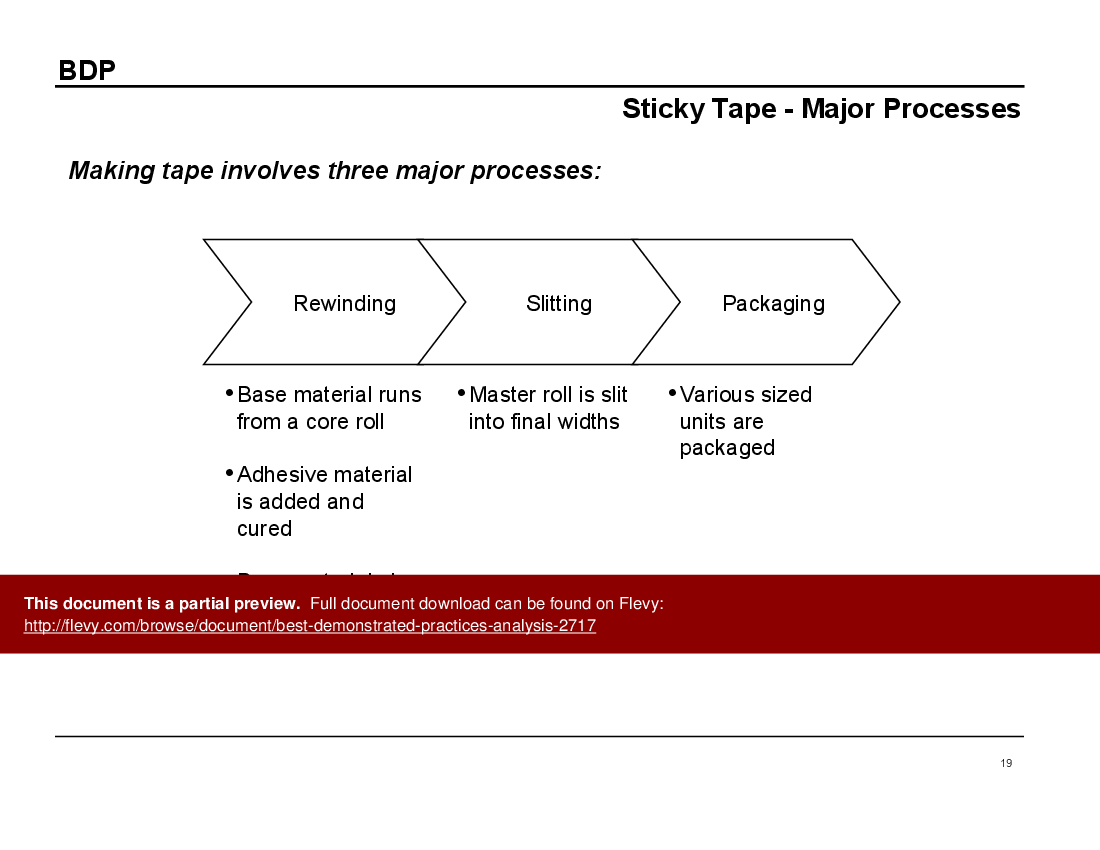
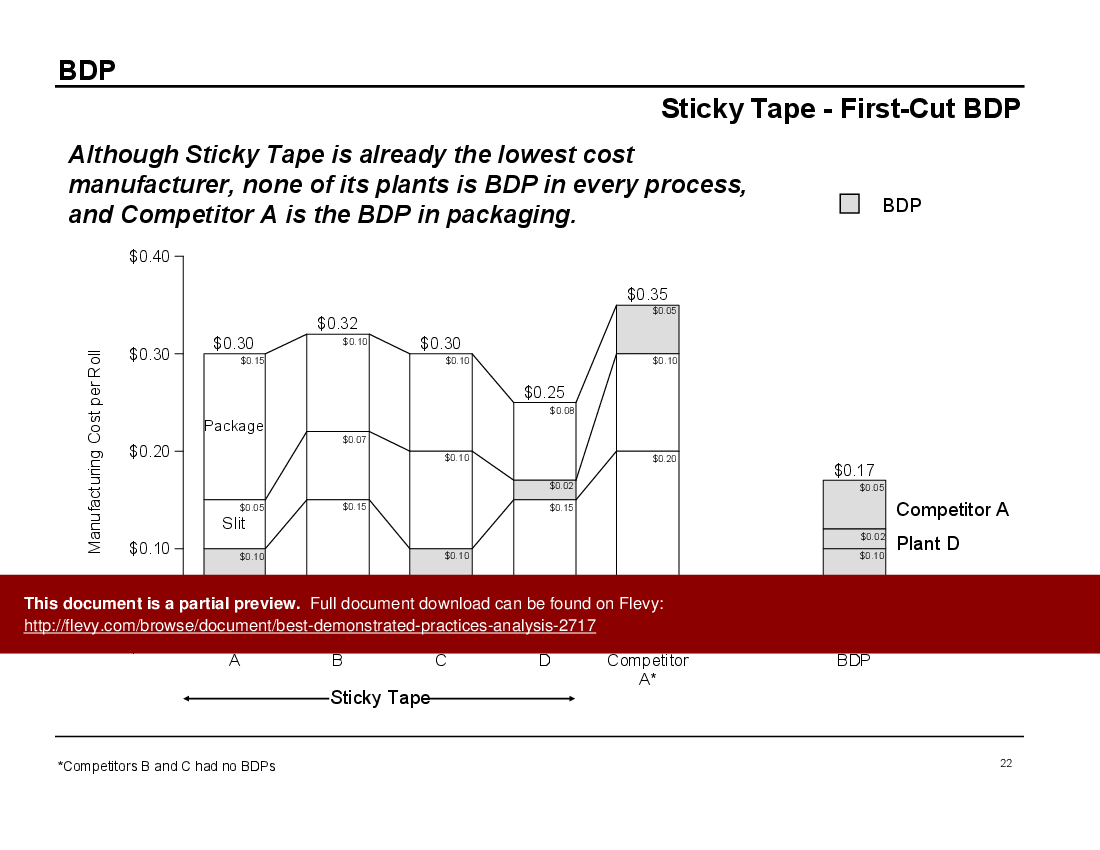
The document provides a real-world example involving a sticky tape manufacturer, illustrating how BDPs can lead to significant cost savings. By focusing on specific processes like rewinding, slitting, and packaging, the case study demonstrates the tangible benefits of BDP implementation. The analysis also highlights the importance of considering uncontrollable costs and adjusting comparisons accordingly to ensure fairness and accuracy.
The document includes a priority matrix to help organizations focus on areas with the greatest potential benefits. It also provides an action plan template, outlining steps, impact, timing, and responsibilities. This practical tool ensures that organizations can effectively implement BDPs and track their progress, leading to sustained improvements in performance and cost-efficiency.
Got a question about the product? Email us at support@flevy.com or ask the author directly by using the "Ask the Author a Question" form. If you cannot view the preview above this document description, go here to view the large preview instead.
Executive Summary
The Best Demonstrated Practices (BDP) Analysis presentation is a consulting-grade resource designed to help organizations optimize revenue and minimize costs through the identification and application of best practices. This document, created by industry experts, provides a structured methodology for analyzing internal and external practices that lead to superior performance. By leveraging BDP, corporate executives and consultants can pinpoint areas for improvement, implement actionable strategies, and achieve measurable results, all while maintaining a focus on existing strengths.
Who This Is For and When to Use
• Corporate executives seeking to enhance operational efficiency and profitability
• Integration leaders focused on identifying best practices across departments
• Consultants tasked with conducting performance analyses for clients
• Operations teams looking to implement continuous improvement strategies
Best-fit moments to use this deck:
• During strategic planning sessions to align on performance improvement initiatives
• When analyzing operational performance against competitors or industry benchmarks
• In workshops aimed at fostering a culture of continuous improvement within teams
Learning Objectives
• Define the BDP concept and its relevance to cost and revenue optimization
• Identify internal and external best practices applicable to specific organizational contexts
• Construct actionable plans based on BDP findings to drive operational improvements
• Quantify the potential impact of BDP implementation on revenue and cost savings
• Develop a framework for continuous learning and adaptation of best practices
• Foster commitment across all organizational levels to support BDP initiatives
Table of Contents
• The Best Demonstrated Practices (BDP) Concept (page 2)
• Applications (page 11)
• BDP Steps (page 13)
• Client Example (page 15)
• Key Takeaways (page 41)
Primary Topics Covered
• BDP Concept - BDP focuses on identifying practices that yield the highest revenue at the lowest cost, both internally and externally.
• Internal vs. External BDPs - Internal BDPs are easier to implement, but may lead to less dramatic changes compared to external BDPs, which involve benchmarking against competitors.
• BDP Steps - The analysis follows a structured process including selecting comparable organizations, disaggregating processes, and quantifying impacts.
• Applications of BDP - Real-world examples demonstrate how BDP has been successfully applied across various industries to achieve significant cost reductions.
• Key Success Factors - Understanding client operations, focusing on leveraged areas, and ensuring organizational commitment are critical for successful BDP implementation.
• Potential Savings - BDP analysis can reveal substantial potential savings, as illustrated by case studies such as the Sticky Tape example.
Deliverables, Templates, and Tools
• BDP analysis framework template for structured implementation
• Action plan template to outline responsibilities and timelines
• Cost comparison models for assessing potential savings
• Performance tracking tools to measure BDP impact over time
• Communication plans to ensure stakeholder engagement and commitment
Slide Highlights
• Overview of BDP concept and its significance in operational performance
• Comparative analysis of internal and external BDPs with visual data representation
• Case study of Sticky Tape showcasing actionable insights and potential savings
• Step-by-step guide on conducting BDP analysis, emphasizing key success factors
• Priority matrix to identify high-impact areas for immediate focus
Potential Workshop Agenda
• Introduction to BDP (30 minutes)
• Overview of BDP Steps and Methodology (60 minutes)
• Case Study Discussion: Sticky Tape (45 minutes)
• Group Activity: Identifying BDP Opportunities (90 minutes)
• Action Planning Session (60 minutes)
Customization Guidance
• Tailor the BDP framework to align with specific organizational processes and goals
• Adjust the action plan template to reflect unique timelines and responsibilities
• Incorporate industry-specific benchmarks for more relevant external comparisons
• Modify communication strategies to fit the organizational culture and stakeholder preferences
Secondary Topics Covered
• Continuous improvement methodologies related to BDP
• Data collection techniques for effective BDP analysis
• Change management strategies to support BDP implementation
• Metrics for evaluating BDP success and sustainability
FAQ
What is the Best Demonstrated Practices (BDP) concept?
BDP focuses on identifying practices that yield the highest revenue at the lowest cost, allowing organizations to benchmark against both internal and external standards.
How can BDP be applied in different industries?
BDP can be tailored to any industry by analyzing specific operational processes and comparing them against relevant competitors or industry leaders.
What are the key steps in conducting a BDP analysis?
The key steps include selecting comparable organizations, disaggregating processes, constructing BDP models, quantifying impacts, and developing an action plan.
What types of organizations benefit most from BDP?
Organizations looking to optimize costs and enhance revenue through best practices, particularly those facing competitive pressures or operational inefficiencies.
How does BDP differ from traditional cost-cutting measures?
BDP emphasizes identifying and implementing best practices rather than simply reducing costs, focusing on sustainable performance improvements.
What are the potential savings from implementing BDP?
Potential savings vary by organization and industry, but can be substantial, as demonstrated in case studies where companies achieved significant cost reductions.
How can commitment be fostered across the organization for BDP initiatives?
By clearly communicating goals, celebrating successes, and involving all levels of management in the process, organizations can build a culture of commitment to BDP.
What metrics should be used to evaluate BDP effectiveness?
Metrics may include cost savings, revenue growth, operational efficiency improvements, and employee engagement levels related to BDP initiatives.
Glossary
• Best Demonstrated Practices (BDP) - Practices leading to the most revenue at the least cost.
• Internal BDP - Best practices identified within an organization.
• External BDP - Best practices identified by comparing against competitors or different industries.
• Cost Savings - Reduction in expenses achieved through BDP implementation.
• Action Plan - A structured outline detailing steps, responsibilities, and timelines for BDP execution.
• Continuous Improvement - Ongoing efforts to enhance products, services, or processes.
• Benchmarking - Comparing business processes and performance metrics to industry bests.
• Stakeholder Engagement - Involvement of all parties affected by BDP initiatives.
• Performance Metrics - Standards used to measure the effectiveness of BDP implementation.
• Operational Efficiency - The ability to deliver products or services in the most cost-effective manner.
• Quantifiable Impact - Measurable results achieved through BDP practices.
• Commitment - The dedication of all organizational levels to support BDP initiatives.
• Data Collection - The process of gathering information necessary for BDP analysis.
• Change Management - Strategies to manage the transition and implementation of BDP.
• Leveraged Areas - Specific processes or functions within an organization that can yield significant improvements.
• Cost Structure - The various costs associated with running a business, including fixed and variable costs.
• Revenue Optimization - Strategies aimed at increasing income while minimizing costs.
• Process Disaggregation - Breaking down processes into smaller components for detailed analysis.
• Actionable Insights - Practical recommendations derived from BDP analysis that can be implemented.
• Client Engagement - The involvement of clients in the BDP process to ensure alignment and commitment.
• Operational Benchmarking - Evaluating performance against industry standards to identify areas for improvement.
Source: Best Practices in Best Practices PowerPoint Slides: Best Demonstrated Practices Analysis PowerPoint (PPT) Presentation Slide Deck, Documents & Files
|
Download our FREE Strategy & Transformation Framework Templates
Download our free compilation of 50+ Strategy & Transformation slides and templates. Frameworks include McKinsey 7-S, Balanced Scorecard, Disruptive Innovation, BCG Curve, and many more. |