
Editor Summary
Best Demonstrated Practices Analysis is a 43-slide PowerPoint presentation outlining a structured methodology to identify practices that maximize revenue at minimal cost.
Read moreIncludes deliverables and tools: BDP analysis framework template, action plan template, cost comparison models, performance tracking tools, and communication plans. Target users include corporate executives, integration leaders, consultants, and operations teams. Used for strategic planning, benchmarking, and continuous improvement initiatives. Sold as a digital download on Flevy.
Use this presentation when an organization needs to identify high-impact operational practices to improve margin, align stakeholders, or standardize processes across teams or after integration.
Corporate executives conducting strategic planning sessions to prioritize performance improvement initiatives and quantify potential revenue or cost impact.
Integration leaders comparing department practices to select transferable procedures during post-merger integration.
Consultants running performance analyses to construct action plans and savings models for clients.
Operations teams designing continuous improvement initiatives and tracking implementation impact.
The methodology’s stepwise approach—selecting comparable organizations, disaggregating processes, quantifying impacts, and building an action plan—mirrors standard consulting analysis practices.
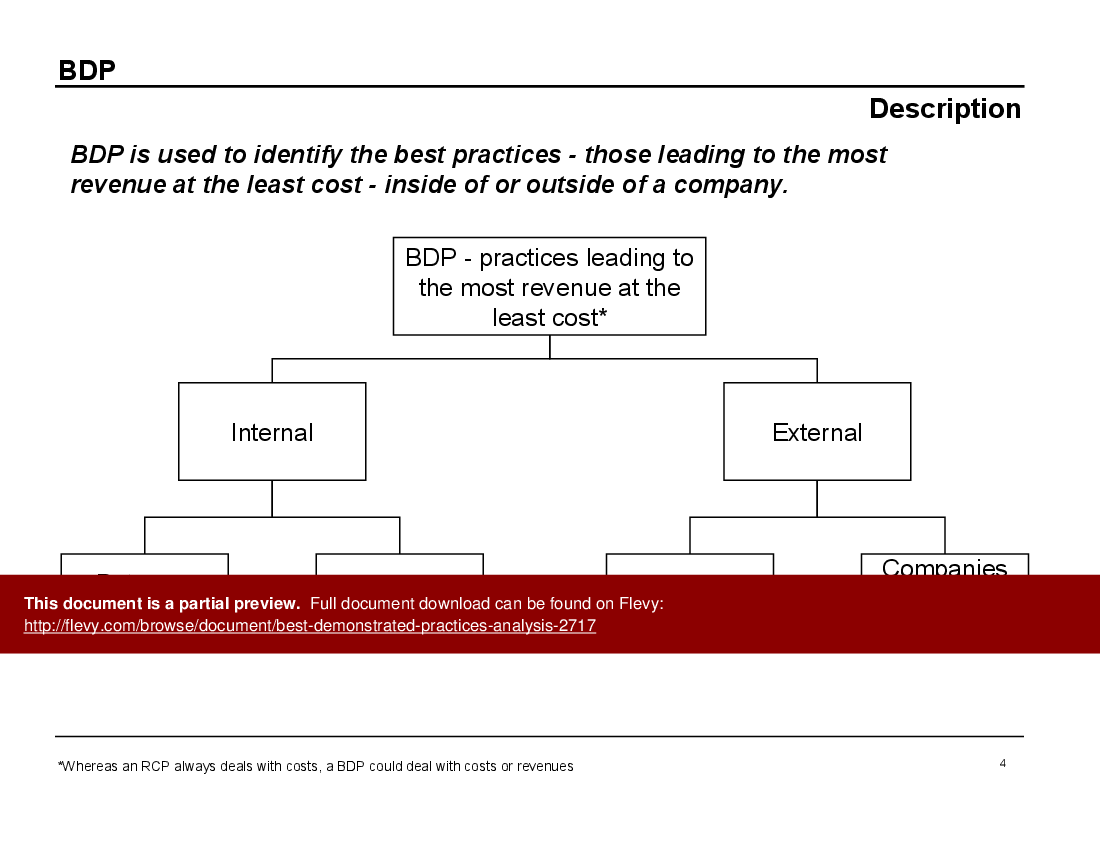
BDP is used to identify the best practices – those leading to the most revenue at the least cost – inside of or outside of a company. Internal BDPs are more straightforward to conduct than are external BDPs, but they tend to lead to less dramatic, though often significant, change.
This document delves into the practical application of Best Demonstrated Practices (BDP) across various organizational processes. By examining both internal and external BDPs, it offers a comprehensive approach to identifying and implementing practices that maximize revenue while minimizing costs. The document outlines a step-by-step methodology for conducting a BDP analysis, ensuring that organizations can systematically identify and adopt the most effective practices.
The analysis begins with selecting comparable organizations and disaggregating them into major processes. This granular approach allows for a detailed comparison and identification of best practices. The document also emphasizes the importance of adjusting data for uncontrollable elements, ensuring an apples-to-apples comparison. This meticulous approach helps in quantifying the potential impact of adopting BDPs, whether in terms of cost savings or revenue increase.
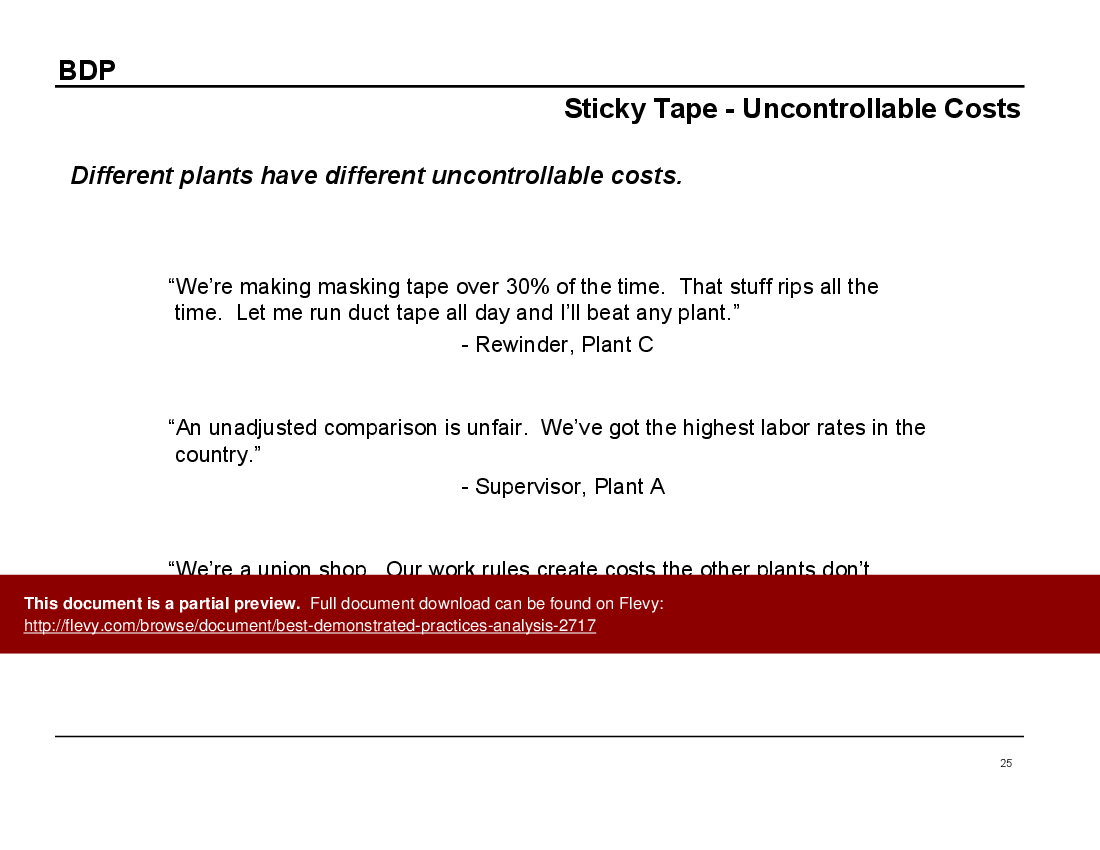
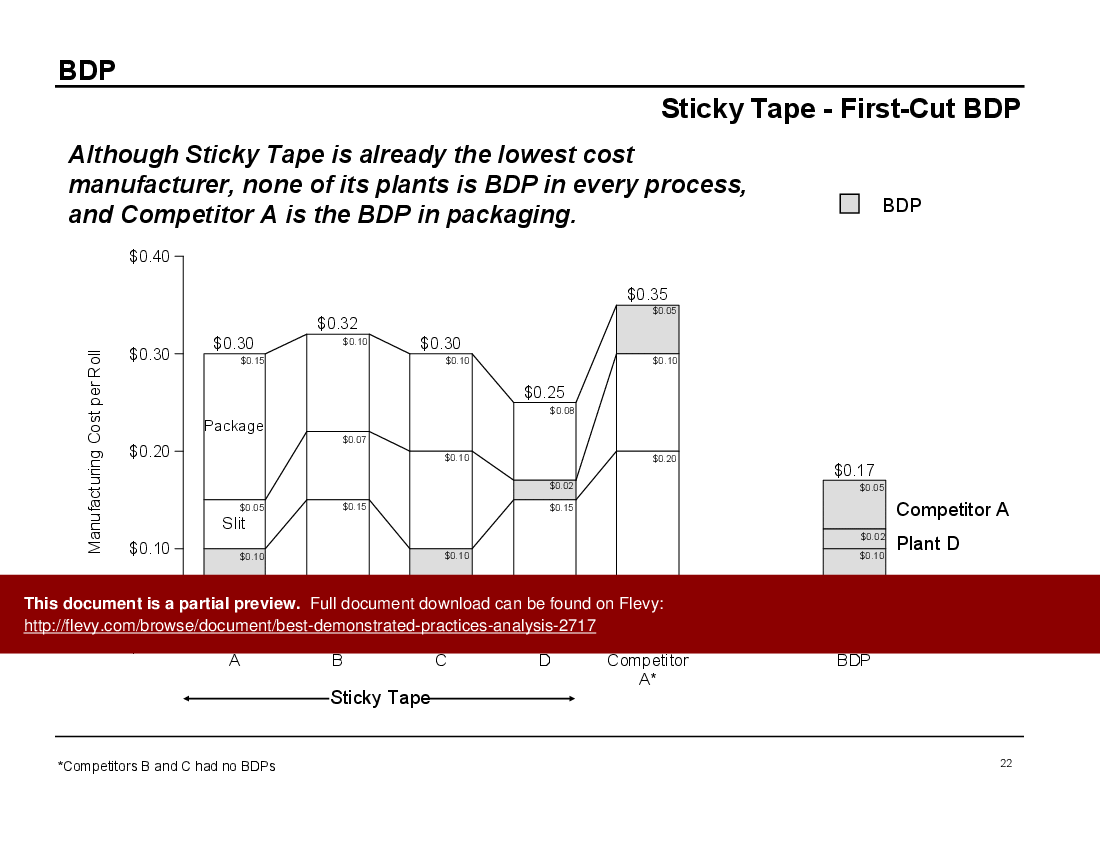
The document provides a real-world example involving a sticky tape manufacturer, illustrating how BDPs can lead to significant cost savings. By focusing on specific processes like rewinding, slitting, and packaging, the case study demonstrates the tangible benefits of BDP implementation. The analysis also highlights the importance of considering uncontrollable costs and adjusting comparisons accordingly to ensure fairness and accuracy.
The document includes a priority matrix to help organizations focus on areas with the greatest potential benefits. It also provides an action plan template, outlining steps, impact, timing, and responsibilities. This practical tool ensures that organizations can effectively implement BDPs and track their progress, leading to sustained improvements in performance and cost-efficiency.
Got a question about the product? Email us at support@flevy.com or ask the author directly by using the "Ask the Author a Question" form. If you cannot view the preview above this document description, go here to view the large preview instead.
MARCUS OVERVIEW
This synopsis was written by Marcus [?] based on the analysis of the full 43-slide presentation.
Executive Summary
The Best Demonstrated Practices (BDP) Analysis presentation is a consulting-grade resource designed to help organizations optimize revenue and minimize costs through the identification and application of best practices. This document, created by industry experts, provides a structured methodology for analyzing internal and external practices that lead to superior performance. By leveraging BDP, corporate executives and consultants can pinpoint areas for improvement, implement actionable strategies, and achieve measurable results, all while maintaining a focus on existing strengths.
Who This Is For and When to Use
• Corporate executives seeking to enhance operational efficiency and profitability
• Integration leaders focused on identifying best practices across departments
• Consultants tasked with conducting performance analyses for clients
• Operations teams looking to implement continuous improvement strategies
Best-fit moments to use this deck:
• During strategic planning sessions to align on performance improvement initiatives
• When analyzing operational performance against competitors or industry benchmarks
• In workshops aimed at fostering a culture of continuous improvement within teams
Learning Objectives
• Define the BDP concept and its relevance to cost and revenue optimization
• Identify internal and external best practices applicable to specific organizational contexts
• Construct actionable plans based on BDP findings to drive operational improvements
• Quantify the potential impact of BDP implementation on revenue and cost savings
• Develop a framework for continuous learning and adaptation of best practices
• Foster commitment across all organizational levels to support BDP initiatives
Table of Contents
• The Best Demonstrated Practices (BDP) Concept (page 2)
• Applications (page 11)
• BDP Steps (page 13)
• Client Example (page 15)
• Key Takeaways (page 41)
Primary Topics Covered
• BDP Concept - BDP focuses on identifying practices that yield the highest revenue at the lowest cost, both internally and externally.
• Internal vs. External BDPs - Internal BDPs are easier to implement, but may lead to less dramatic changes compared to external BDPs, which involve benchmarking against competitors.
• BDP Steps - The analysis follows a structured process including selecting comparable organizations, disaggregating processes, and quantifying impacts.
• Applications of BDP - Real-world examples demonstrate how BDP has been successfully applied across various industries to achieve significant cost reductions.
• Key Success Factors - Understanding client operations, focusing on leveraged areas, and ensuring organizational commitment are critical for successful BDP implementation.
• Potential Savings - BDP analysis can reveal substantial potential savings, as illustrated by case studies such as the Sticky Tape example.
Deliverables, Templates, and Tools
• BDP analysis framework template for structured implementation
• Action plan template to outline responsibilities and timelines
• Cost comparison models for assessing potential savings
• Performance tracking tools to measure BDP impact over time
• Communication plans to ensure stakeholder engagement and commitment
Slide Highlights
• Overview of BDP concept and its significance in operational performance
• Comparative analysis of internal and external BDPs with visual data representation
• Case study of Sticky Tape showcasing actionable insights and potential savings
• Step-by-step guide on conducting BDP analysis, emphasizing key success factors
• Priority matrix to identify high-impact areas for immediate focus
Potential Workshop Agenda
• Introduction to BDP (30 minutes)
• Overview of BDP Steps and Methodology (60 minutes)
• Case Study Discussion: Sticky Tape (45 minutes)
• Group Activity: Identifying BDP Opportunities (90 minutes)
• Action Planning Session (60 minutes)
Customization Guidance
• Tailor the BDP framework to align with specific organizational processes and goals
• Adjust the action plan template to reflect unique timelines and responsibilities
• Incorporate industry-specific benchmarks for more relevant external comparisons
• Modify communication strategies to fit the organizational culture and stakeholder preferences
Secondary Topics Covered
• Continuous improvement methodologies related to BDP
• Data collection techniques for effective BDP analysis
• Change management strategies to support BDP implementation
• Metrics for evaluating BDP success and sustainability
Topic FAQ
What are the core steps in a Best Demonstrated Practices (BDP) analysis?
A BDP analysis follows a structured sequence: select comparable organizations, disaggregate processes into component activities, construct BDP models, quantify the impacts of best practices, and develop an action plan to implement changes. These are presented as the primary BDP Steps in the toolkit and comprise 5 core steps.
How do internal and external BDPs differ, and when should I choose one over the other?
Internal BDPs identify best practices already present within your organization and are generally easier to implement, but tend to produce less dramatic change. External BDPs benchmark against competitors or other industries and can yield larger improvements, but require more extensive comparison and adjustment; choose internal BDPs for quicker wins.
What metrics should I track to measure the effectiveness of BDP implementation?
Track quantifiable outcomes tied to the BDP objective such as cost savings, revenue growth, improvements in operational efficiency, and employee engagement related to the initiative. These metrics align with the document’s guidance on evaluating BDP effectiveness using performance metrics like cost savings and revenue growth.
How should I adjust data to ensure fair external benchmarking in a BDP study?
Adjust comparisons for uncontrollable elements and contextual differences to achieve an apples-to-apples comparison; this involves normalizing for factors outside operational control so benchmarked performance reflects comparable conditions. The author guidance emphasizes adjusting data for uncontrollable elements for fair benchmarking.
What features should I look for when purchasing a best-practices analysis toolkit?
Prioritize toolkits that include a structured analysis framework, action plan templates with responsibilities and timelines, cost comparison models, performance tracking tools, and customization guidance to align with your processes. The Best Demonstrated Practices Analysis slide deck explicitly lists these deliverables, including an action plan template.
How much time and what team composition are typical for a BDP workshop?
A typical workshop can range from a half-day to a full day depending on scope; the provided sample agenda totals about 4.75 hours and includes sessions for introduction, methodology, case discussion, group identification of BDP opportunities, and action planning, implying a cross-functional participant list.
Can BDP approaches produce measurable cost savings, and how are results demonstrated?
BDP analyses can reveal substantial potential savings by identifying higher-performing practices and quantifying their impact; the presentation cites case studies where companies achieved significant cost reductions, with the Sticky Tape example used to demonstrate quantified savings and impacts.
How does process disaggregation work for benchmarking a manufacturing operation?
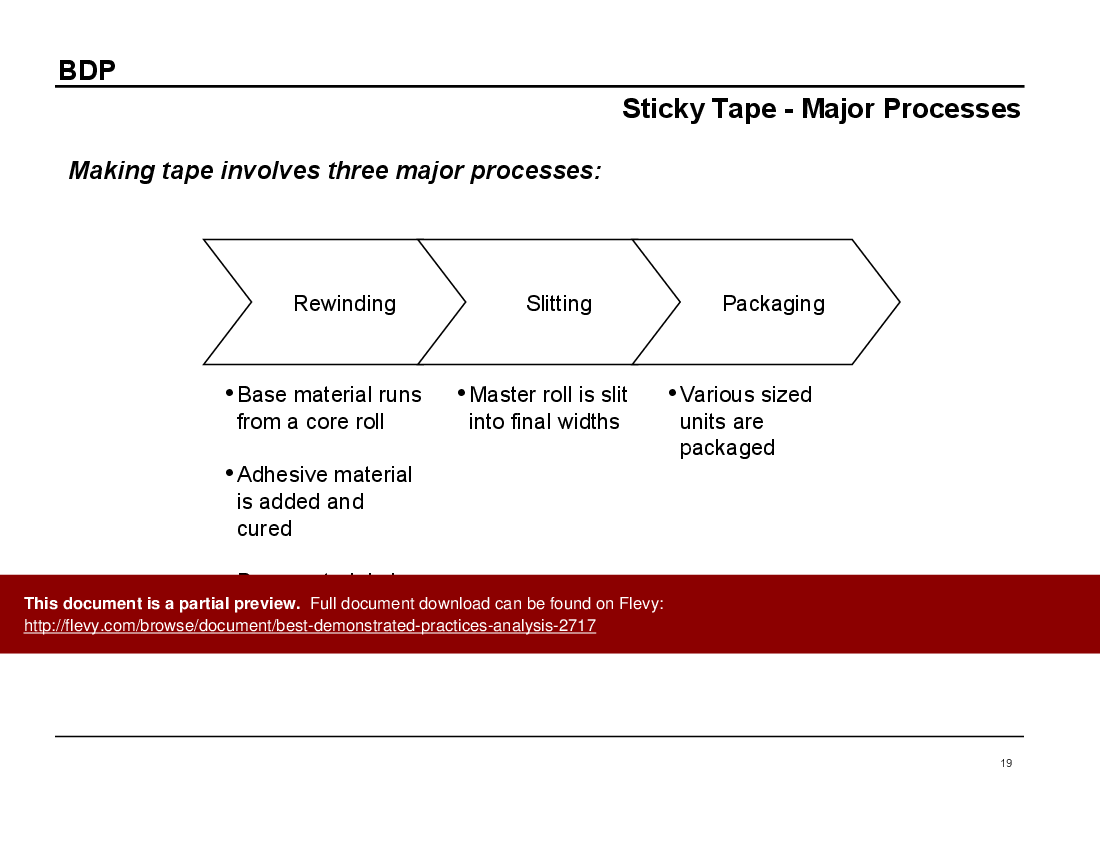
Process disaggregation breaks the end-to-end operation into major subprocesses for detailed comparison—identify individual activities, compare performance at the subprocess level, and quantify impact of adopting superior practices. The author example disaggregated manufacturing into subprocesses such as rewinding, slitting, and packaging.
Document FAQ
These are questions addressed within this presentation.
What is the Best Demonstrated Practices (BDP) concept?
BDP focuses on identifying practices that yield the highest revenue at the lowest cost, allowing organizations to benchmark against both internal and external standards.
How can BDP be applied in different industries?
BDP can be tailored to any industry by analyzing specific operational processes and comparing them against relevant competitors or industry leaders.
What are the key steps in conducting a BDP analysis?
The key steps include selecting comparable organizations, disaggregating processes, constructing BDP models, quantifying impacts, and developing an action plan.
What types of organizations benefit most from BDP?
Organizations looking to optimize costs and enhance revenue through best practices, particularly those facing competitive pressures or operational inefficiencies.
How does BDP differ from traditional cost-cutting measures?
BDP emphasizes identifying and implementing best practices rather than simply reducing costs, focusing on sustainable performance improvements.
What are the potential savings from implementing BDP?
Potential savings vary by organization and industry, but can be substantial, as demonstrated in case studies where companies achieved significant cost reductions.
How can commitment be fostered across the organization for BDP initiatives?
By clearly communicating goals, celebrating successes, and involving all levels of management in the process, organizations can build a culture of commitment to BDP.
What metrics should be used to evaluate BDP effectiveness?
Metrics may include cost savings, revenue growth, operational efficiency improvements, and employee engagement levels related to BDP initiatives.
Glossary
• Best Demonstrated Practices (BDP) - Practices leading to the most revenue at the least cost.
• Internal BDP - Best practices identified within an organization.
• External BDP - Best practices identified by comparing against competitors or different industries.
• Cost Savings - Reduction in expenses achieved through BDP implementation.
• Action Plan - A structured outline detailing steps, responsibilities, and timelines for BDP execution.
• Continuous Improvement - Ongoing efforts to enhance products, services, or processes.
• Benchmarking - Comparing business processes and performance metrics to industry bests.
• Stakeholder Engagement - Involvement of all parties affected by BDP initiatives.
• Performance Metrics - Standards used to measure the effectiveness of BDP implementation.
• Operational Efficiency - The ability to deliver products or services in the most cost-effective manner.
• Quantifiable Impact - Measurable results achieved through BDP practices.
• Commitment - The dedication of all organizational levels to support BDP initiatives.
• Data Collection - The process of gathering information necessary for BDP analysis.
• Change Management - Strategies to manage the transition and implementation of BDP.
• Leveraged Areas - Specific processes or functions within an organization that can yield significant improvements.
• Cost Structure - The various costs associated with running a business, including fixed and variable costs.
• Revenue Optimization - Strategies aimed at increasing income while minimizing costs.
• Process Disaggregation - Breaking down processes into smaller components for detailed analysis.
• Actionable Insights - Practical recommendations derived from BDP analysis that can be implemented.
• Client Engagement - The involvement of clients in the BDP process to ensure alignment and commitment.
• Operational Benchmarking - Evaluating performance against industry standards to identify areas for improvement.
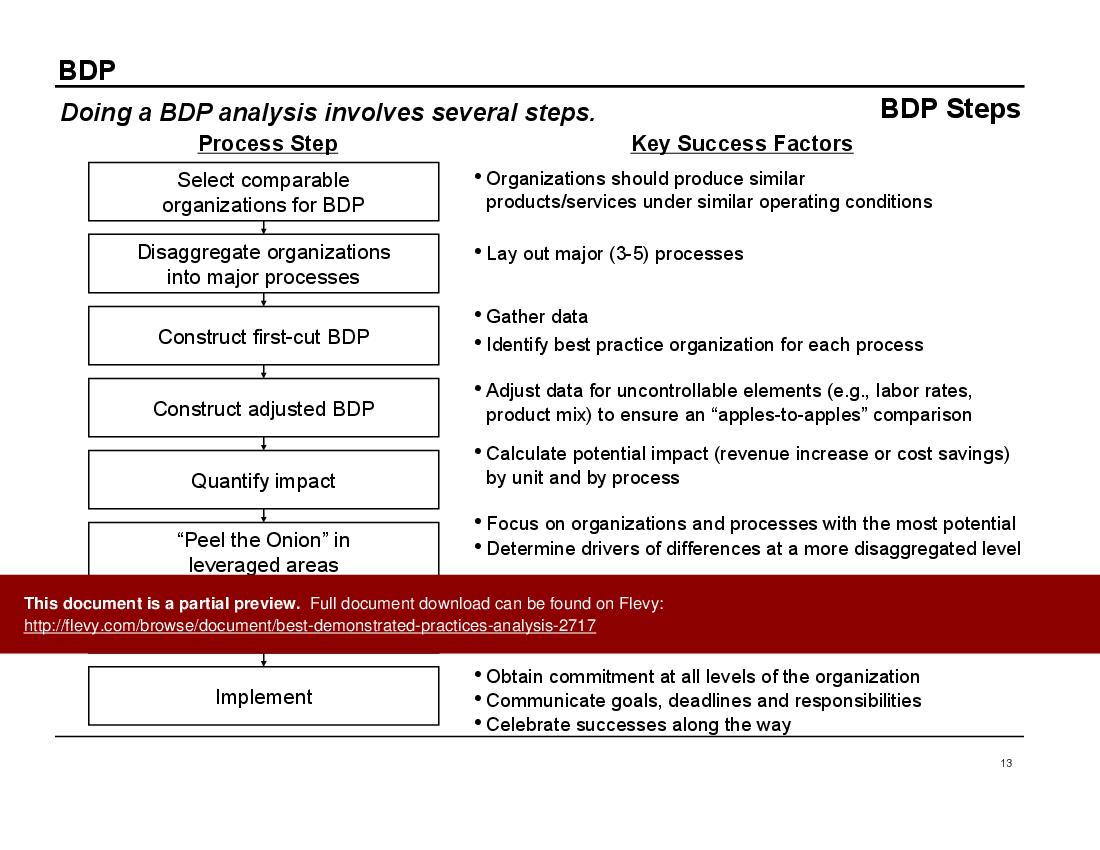
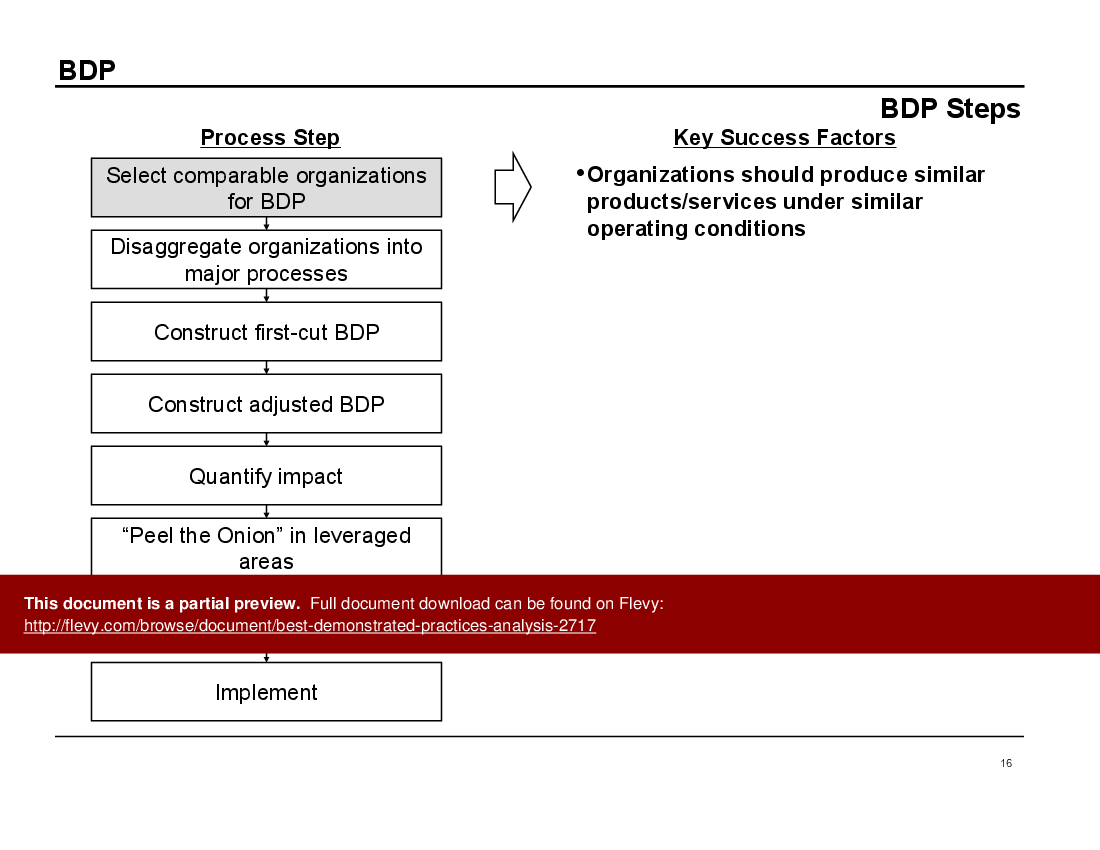
This PPT slide outlines the Best Demonstrated Practices (BDP) analysis process, starting with selecting comparable organizations that produce similar products or services under comparable conditions. Disaggregating these organizations into major processes is essential for identifying best practices. The initial construction of a first-cut BDP allows for an assessment of practices, followed by an adjusted BDP that accounts for uncontrollable elements like labor rates to maintain valid comparisons. Quantifying the impact translates findings into potential revenue increases or cost savings, aiding in prioritizing improvement areas. The "Peel the Onion" approach focuses on high-impact areas. Developing an action plan with specific targets, schedules, and responsibilities engages the organization in the BDP initiative. Implementation is crucial, as effective communication and celebrating successes foster a culture of continuous improvement.
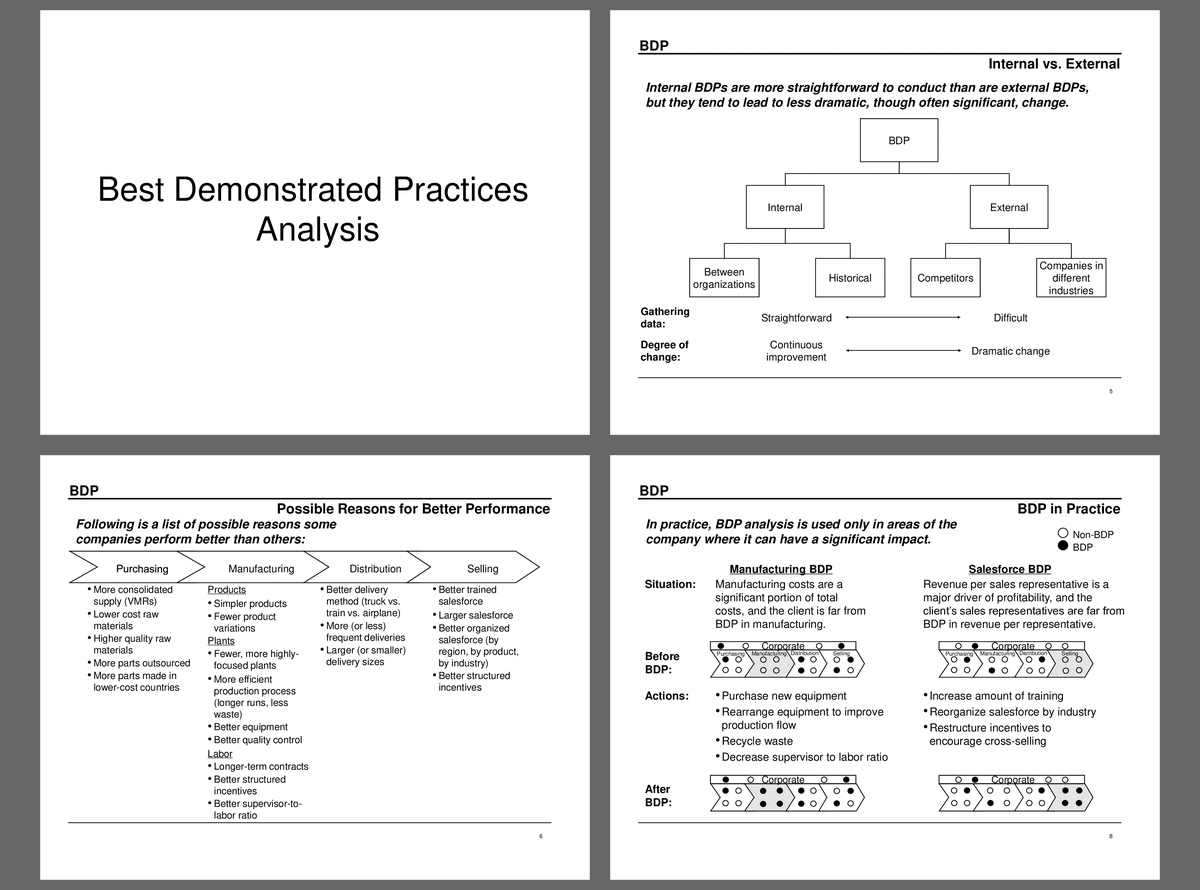
This PPT slide analyzes Internal versus External Best Demonstrated Practices (BDPs). Internal BDPs are easier to implement, but yield less dramatic changes, focusing on refining existing practices through straightforward data gathering from "Between organizations" and "Historical" subcategories. In contrast, External BDPs, which include "Competitors" and "Companies in different industries," require more effort and resources for data collection, resulting in more substantial strategic shifts. The visual representation highlights the trade-offs between Internal and External BDPs, emphasizing the complexities and potential impacts associated with each analysis type. Understanding these differences aids in decision-making and strategic planning.
This PPT slide analyzes potential savings from sticky tape usage across production plants, highlighting best practices that can yield an average savings of $0.08 per roll, totaling $5.6 million annually. Savings per roll vary by process, with slitting in Plant B achieving the highest savings of $0.13, while rewinding in Plant D shows the lowest at $0.03. Total potential savings are categorized by plant and process, with Plants C and D both indicating maximum savings of $5.6 million. This analysis identifies significant savings opportunities through process optimization, enabling organizations to reduce costs associated with sticky tape usage effectively.
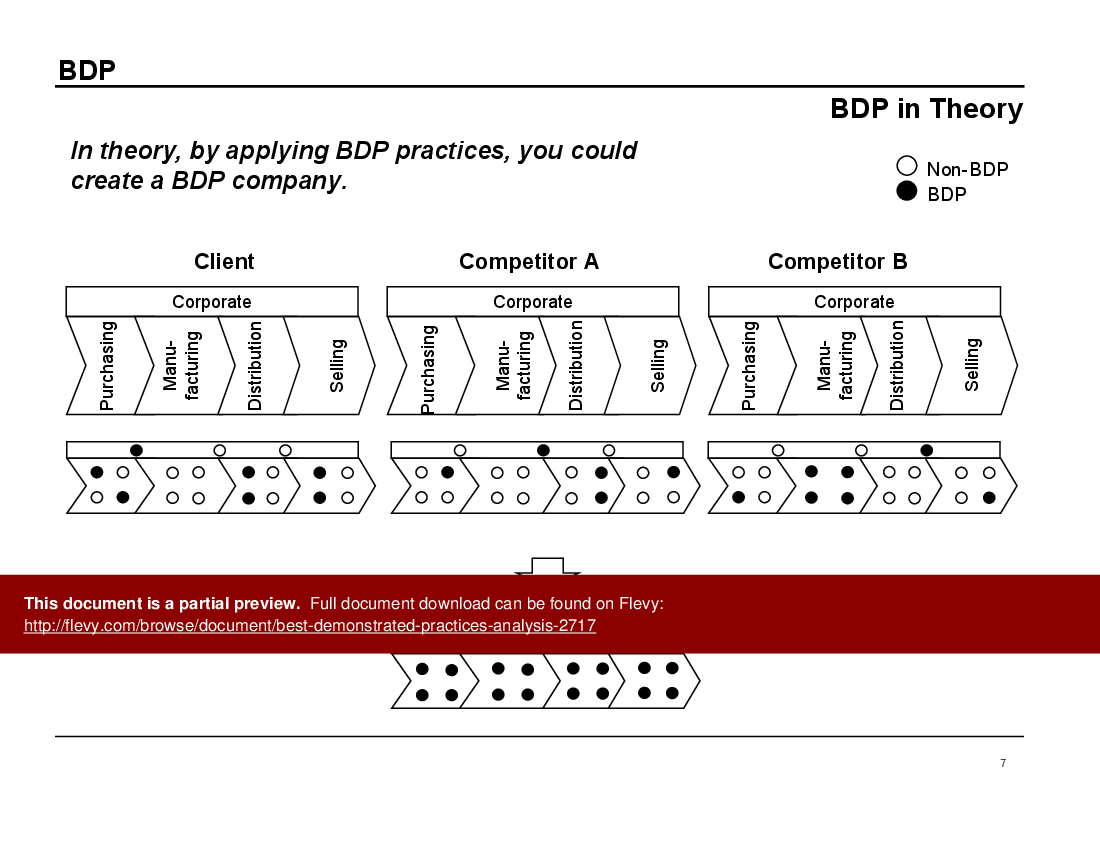
This PPT slide provides an overview of Best Demonstrated Practices (BDP) analysis in manufacturing and sales. In manufacturing, BDP addresses high manufacturing costs, necessitating improvements through actions like purchasing new equipment, optimizing production flow, recycling waste, and adjusting supervisor-to-labor ratios. Post-BDP implementation shows a shift towards optimal practices. In sales, revenue per sales representative is vital for profitability, with current performance below BDP standards. Pre-BDP actions include enhanced training, industry-based salesforce reorganization, and incentive restructuring for cross-selling. These steps aim to improve sales effectiveness and align with industry needs, indicating a transition towards better practices post-BDP.
This PPT slide analyzes Sticky Tape's operational similarities with competitors across 5 key criteria. The first criterion, product mixes and volumes, shows that Sticky Tape's offerings closely align with those of its rivals, indicating strategic market positioning. The second criterion addresses customer requirements and business practices, suggesting Sticky Tape mirrors competitor practices to meet client needs. The third point focuses on technology, revealing that Sticky Tape employs similar technological frameworks, enhancing operational efficiency. The fourth criterion examines product designs, indicating adherence to industry standards for market relevance. Lastly, the slide highlights standardized accounting practices among these organizations, reflecting operational maturity and best practices in financial management.
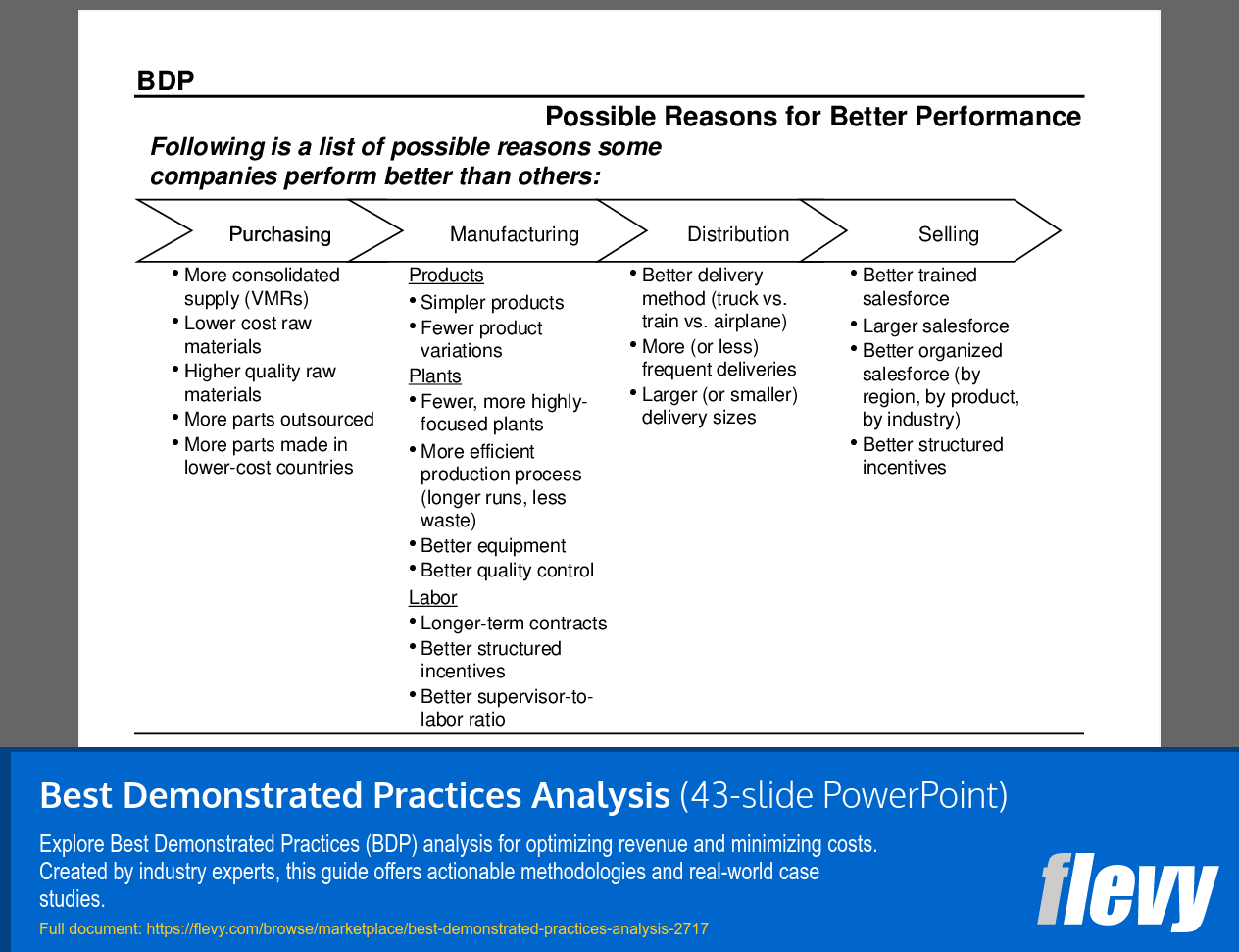
This PPT slide categorizes factors influencing superior performance in 4 business functions: Purchasing, Manufacturing, Distribution, and Selling. In Purchasing, consolidating supply sources and securing lower-cost raw materials enhance cost efficiencies and quality. The Manufacturing section highlights the benefits of simpler products, fewer variations, specialized plants, and efficient production methods to optimize operations. Distribution factors include delivery methods, frequency, and size, impacting logistics strategies, costs, and service levels. The Selling section emphasizes a well-trained salesforce, structured incentives, and tailored sales teams by region and product, indicating that effective sales strategies drive revenue growth.
This PPT slide outlines key drivers of rewinding costs in sticky tape production, categorized into Labor, Raw Materials, and Overhead. Labor costs are influenced by Master roll load/unload, Run time, and Core load/unload, with operational efficiency in moving spools of tape significantly impacting expenses. The Raw Materials section emphasizes quality, highlighting First quality standards and defects such as Tape tears and Adhesive runs, which can increase costs during rewinding. Overhead costs are acknowledged as part of the overall expense structure. The analysis aims to lead to actionable recommendations for optimizing costs in operations.
Source: Best Practices in Best Practices PowerPoint Slides: Best Demonstrated Practices Analysis PowerPoint (PPT) Presentation Slide Deck, Documents & Files
The average daily rate of a McKinsey consultant is $6,625 (not including expenses). The average price of a Flevy document is $65.
Trusted by over 10,000+ Client Organizations
Since 2012, we have provided business templates to over 10,000 businesses and organizations of all sizes, from startups and small businesses to the Fortune 100, in over 130 countries.

"I am extremely grateful for the proactiveness and eagerness to help and I would gladly recommend the Flevy team if you are looking for data and toolkits to help you work through business solutions."
– Trevor Booth, Partner, Fast Forward Consulting
"One of the great discoveries that I have made for my business is the Flevy library of training materials.
As a Lean Transformation Expert, I am always making presentations to clients on a variety of topics: Training, Transformation, Total Productive Maintenance, Culture, Coaching, Tools, Leadership Behavior, etc. Flevy
It is well worth the money to purchase these presentations. Sure, I have the knowledge and information to make my point. It is another thing to create a presentation that captures what I want to say. Flevy has saved me countless hours of preparation time that is much better spent with implementation that will actually save money for my clients.
"
– Ed Kemmerling, Senior Lean Transformation Expert at PMG
"I have used Flevy services for a number of years and have never, ever been disappointed. As a matter of fact, David and his team continue, time after time, to impress me with their willingness to assist and in the real sense of the word. I have concluded in fact
that it is not at all just a repository of documents/resources but, in the way that David and his team manage the firm, it is like dealing with consultants always ready to assist, advise and direct you to what you really need, and they always get it right.
I am an international hospitality accomplished senior executive who has worked and lived during the past 35 years in 23 countries in 5 continents and I can humbly say that I know what customer service is, trust me.
Aside from the great and professional service that Flevy's team provide, their wide variety of material is of utmost great quality, professionally put together and most current.
Well done Flevy, keep up the great work and I look forward to continue working with you in the future and to recommend you to a variety of colleagues around the world.
"
– Roberto Pelliccia, Senior Executive in International Hospitality
"As a small business owner, the resource material available from FlevyPro has proven to be invaluable. The ability to search for material on demand based our project events and client requirements was great for me and proved very beneficial to my clients. Importantly, being able to easily edit and tailor
the material for specific purposes helped us to make presentations, knowledge sharing, and toolkit development, which formed part of the overall program collateral. While FlevyPro contains resource material that any consultancy, project or delivery firm must have, it is an essential part of a small firm or independent consultant's toolbox.
"
– Michael Duff, Managing Director at Change Strategy (UK)
"FlevyPro provides business frameworks from many of the global giants in management consulting that allow you to provide best in class solutions for your clients."
– David Harris, Managing Director at Futures Strategy
"As a young consulting firm, requests for input from clients vary and it's sometimes impossible to provide expert solutions across a broad spectrum of requirements. That was before I discovered Flevy.com.
Through subscription to this invaluable site of a plethora of topics that are key and crucial to consulting, I
have been able to exceed expectations and deliver quality advice and solutions to my clients. The quality and expertise of the authors are exemplary and gives me great confidence to use as part of my service offerings.
I highly recommend this company for any consultant wanting to apply international best practice standards in their service offerings.
"
– Nishi Singh, Strategist and MD at NSP Consultants
"As a niche strategic consulting firm, Flevy and FlevyPro frameworks and documents are an on-going reference to help us structure our findings and recommendations to our clients as well as improve their clarity, strength, and visual power. For us, it is an invaluable resource to increase our impact and value."
– David Coloma, Consulting Area Manager at Cynertia Consulting
"I like your product. I'm frequently designing PowerPoint presentations for my company and your product has given me so many great ideas on the use of charts, layouts, tools, and frameworks. I really think the templates are a valuable asset to the job."
– Roberto Fuentes Martinez, Senior Executive Director at Technology Transformation Advisory
Download our free compilation of 50+ Strategy & Transformation slides and templates. Frameworks include McKinsey 7-S, Balanced Scorecard, Disruptive Innovation, BCG Curve, and many more.