
This professionally designed APQP 3rd Edition slide deck is a strategic overview and management briefing tool developed for senior leaders, department heads, program managers, and quality champions who need to understand and support the latest APQP requirements effectively.

The deck distills and explains the AIAG APQP 3rd Edition (2024) framework in a clear, structured format aligned with best practices in executive communication. It provides a non-technical overview of the 6-phase model, key updates, and leadership responsibilities, enabling your team to align quality strategy with customer and compliance expectations.
Note: This is not a slide version of the APQP 3rd Edition manual. It is not intended as a substitute for a detailed APQP technical course or practitioner certification.
Rather, this deck is ideal for:
✅ Management briefings
✅ Cross-functional awareness sessions
✅ Executive onboarding for APQP
✅ Supplier leadership alignment
✅ Train-the-trainer support for internal rollout
Key Benefits:
1. Summarizes APQP 3rd Edition in a business-focused, decision-ready format.
2. Explains leadership roles, risk-based thinking, and cross-functional collaboration.
3. Highlights real-world implementation elements such as gated reviews, sourcing, and metrics.
4. Designed for engagement, alignment, and informed decision-making—not technical depth.
||||||||||||||||||||||||||||||||||||||||||||||||||||||||||||||||||||||||||||||||||||||||||||||||||||||||||||||||||||||||||||||||||||||||||||||||||||||
This training package includes:
1. APQP 3rd Edition: Leadership Briefing (PowerPoint format, in 16:9 widescreen)
2. APQP 3rd Edition – Process Flow Diagram (PDF format, in color and monochrome, printable in A3 size)
||||||||||||||||||||||||||||||||||||||||||||||||||||||||||||||||||||||||||||||||||||||||||||||||||||||||||||||||||||||||||||||||||||||||||||||||||||||
LEARNING OBJECTIVES
1. APQP Overview
• Understand what APQP is, why it matters, and how it differs from traditional approaches.
• Recognize APQP's role in IATF 16949 and OEM expectations.
2. Key Enhancements in APQP 3rd Edition
• Identify major updates: Phase 0, digital traceability, risk-based thinking, and sustainability.
• Apply new focus areas: metrics, sourcing, change management, lessons learned.
3. Strategic Leadership Role
• Clarify what management must do to support successful APQP deployment.
• Use gates, metrics, and collaboration to ensure quality execution.
4. The 6 Phases of APQP
• Understand the objectives, inputs, outputs, and tools across all six phases.
• Connect core tools (DFMEA, PFMEA, Control Plan, MSA) to the right phases.
CONTENTS
1. APQP Overview
• What is APQP?
• Overview of the APQP Lifecycle
• APQP vs. Traditional Quality
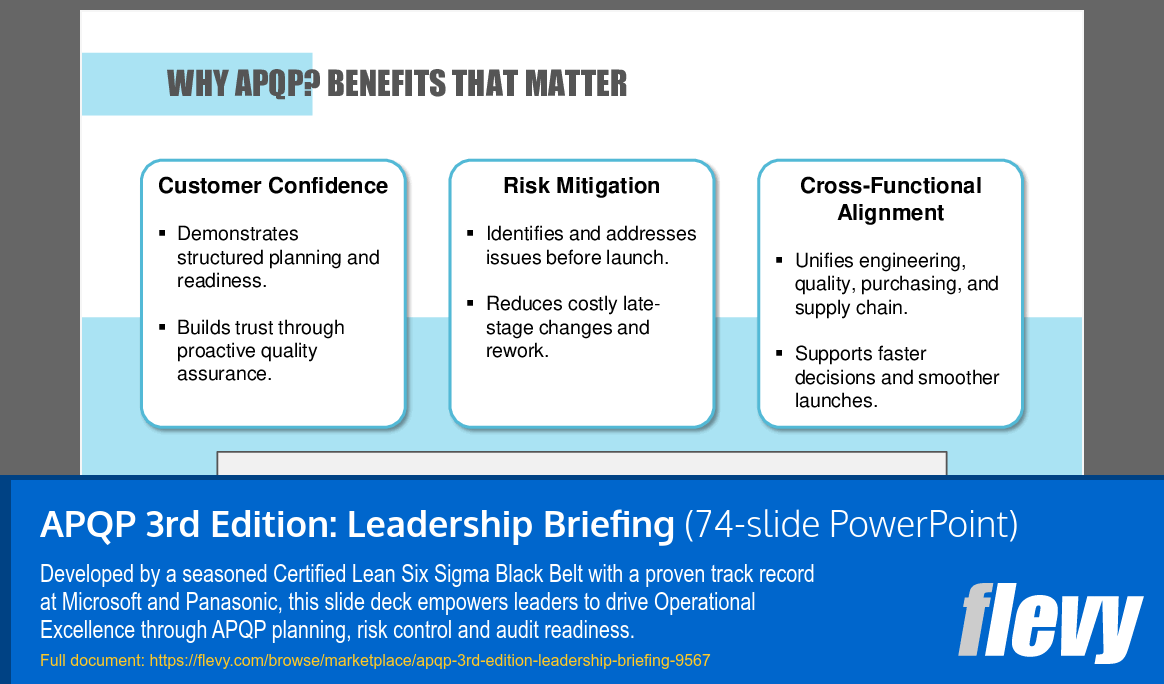
• Benefits of APQP
• IATF / OEM Expectations
• Why the Update?
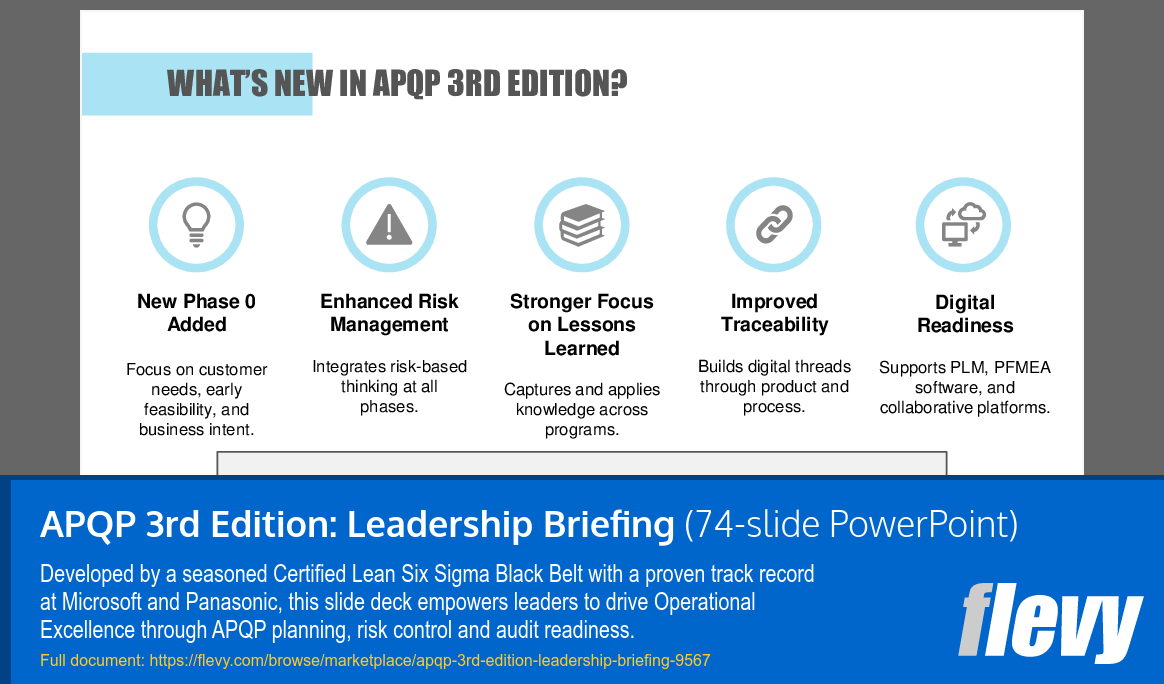
• What's New in 3rd Edition
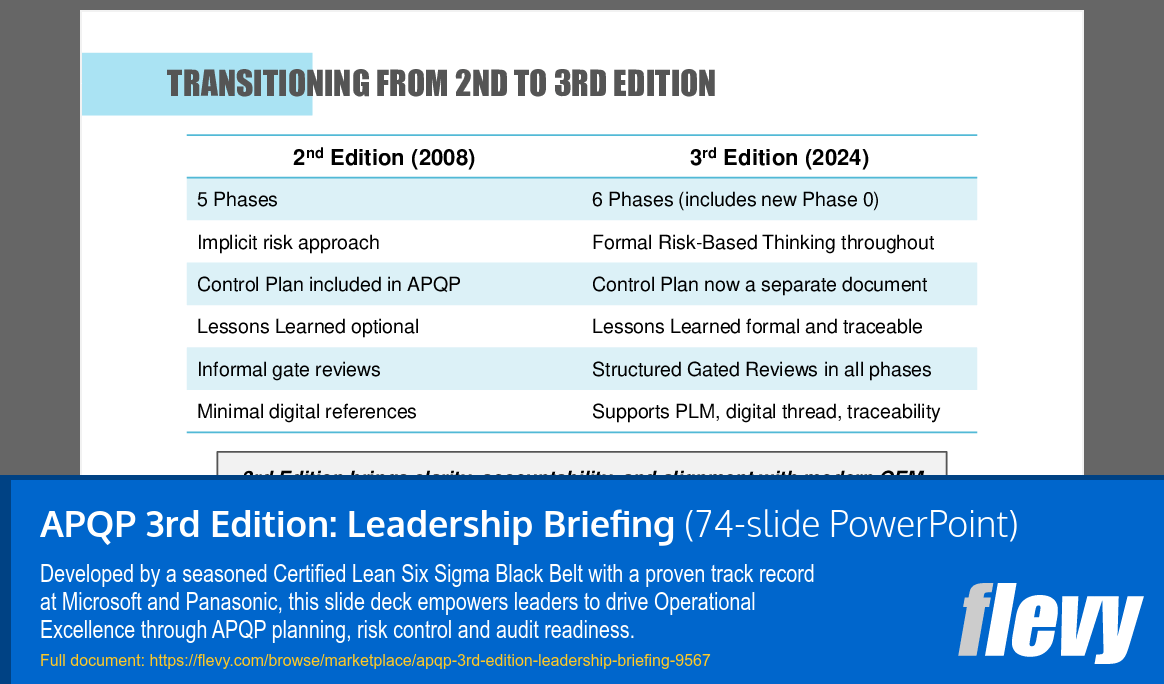
• Transitioning from 2nd to 3rd Edition
2. Key Enhancements in APQP 3rd Edition
• Risk-Based Thinking
• Lessons Learned
• Sustainability
• Digital Traceability
• Gated Reviews
• Standalone Control Plan
• Change Management
• Strategic Sourcing
• APQP in Action: Real-world Success Stories
3. Strategic Leadership Role
• Cross-Functional Collaboration
• What Leaders Must Do
• Metrics for Program Monitoring
• Pitfalls to Avoid
• Gate Reviews and Oversight
4. The 6 Phases of APQP
• APQP 3rd Edition: Process Flow Diagram
• Phase-by-phase Breakdown
• Inputs, Outputs, and Gate Checklists
• Tools by Phase
• Execution Support
5. Case Studies & Audit Readiness
• Case Study 1 – Hewlett-Packard (HP)
• Case Study 2 – Die Casting SME (India)
• Audit Readiness with APQP
• Summary Takeaways
Got a question about the product? Email us at support@flevy.com or ask the author directly by using the "Ask the Author a Question" form. If you cannot view the preview above this document description, go here to view the large preview instead.
Executive Summary
The APQP 3rd Edition: Leadership Briefing presentation equips corporate leaders with essential insights into Advanced Product Quality Planning (APQP). Developed by a seasoned management consultant, this slide deck emphasizes the importance of aligning strategy, risk management, and quality across the product lifecycle. It provides a comprehensive overview of the 6 phases of APQP, highlighting key enhancements in the latest edition, including a stronger focus on risk management and sustainability. Leaders will learn how to effectively engage cross-functional teams to drive operational excellence and ensure successful product launches.
Who This Is For and When to Use
• Corporate executives overseeing product development and quality assurance
• Integration leaders responsible for cross-functional collaboration
• Quality managers implementing APQP methodologies
• Consultants advising organizations on operational excellence
Best-fit moments to use this deck:
• During leadership training sessions focused on quality management
• When initiating new product development projects
• For strategic planning meetings to align teams on APQP processes
• In workshops aimed at enhancing risk management practices
Learning Objectives
• Define the 6 phases of APQP and their deliverables
• Build understanding of the strategic role of leadership in APQP
• Establish clarity on key enhancements in APQP 3rd Edition
• Recognize the importance of cross-functional collaboration
• Apply risk-based thinking throughout the product lifecycle
• Capture and utilize lessons learned for continuous improvement
Table of Contents
• APQP Overview (page 6)
• Key Enhancements in APQP 3rd Edition (page 12)
• Strategic Leadership Role (page 29)
• The 6 Phases of APQP (page 36)
• Case Studies & Audit Readiness (page 67)
Primary Topics Covered
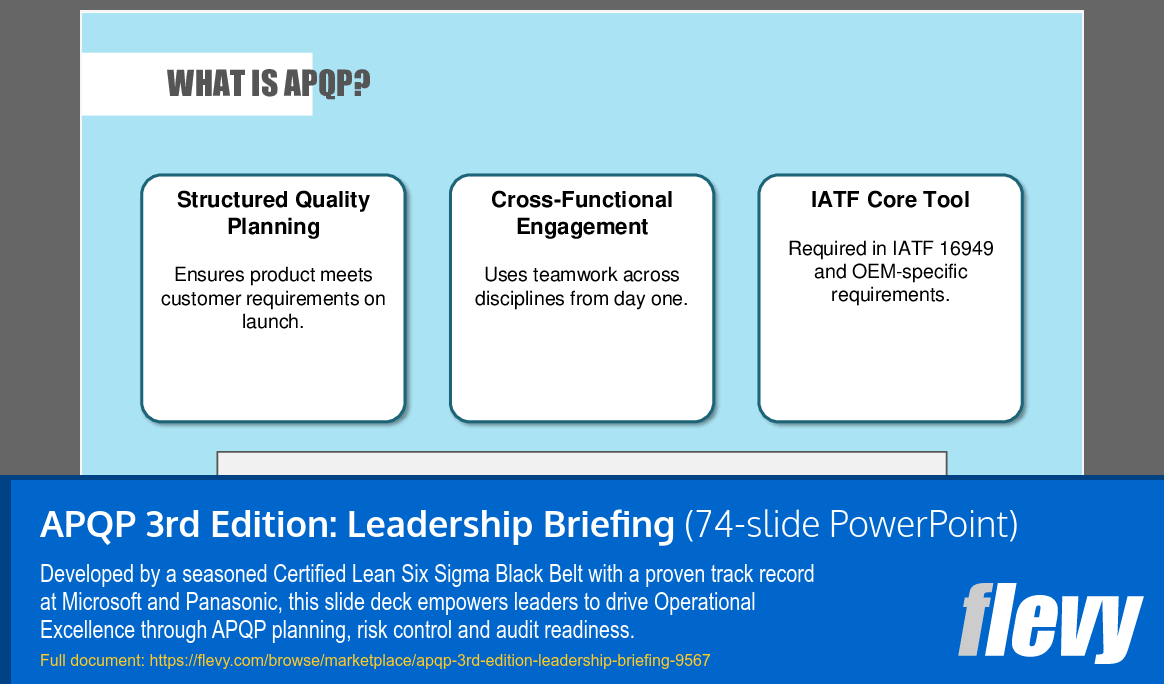
• APQP Overview - An introduction to Advanced Product Quality Planning, emphasizing cross-functional engagement and structured quality planning to meet customer requirements.
• Key Enhancements in APQP 3rd Edition - Highlights the addition of Phase 0, enhanced risk management, and improved traceability to align with modern OEM expectations.
• Strategic Leadership Role - Discusses the importance of leadership in driving cross-functional collaboration and ensuring accountability throughout the APQP process.
• The 6 Phases of APQP - Detailed descriptions of each phase, from capturing customer needs to feedback and continuous improvement.
• Case Studies & Audit Readiness - Real-world examples demonstrating successful APQP implementation and strategies for maintaining audit readiness.
Deliverables, Templates, and Tools
• APQP Phase Checklist for each of the 6 phases
• Risk Management Framework integrated into APQP processes
• Lessons Learned Documentation Template for capturing insights
• Control Plan Template for ongoing quality management
• Cross-Functional Collaboration Guidelines for team engagement
• Audit Readiness Checklist to ensure compliance with APQP standards
Slide Highlights
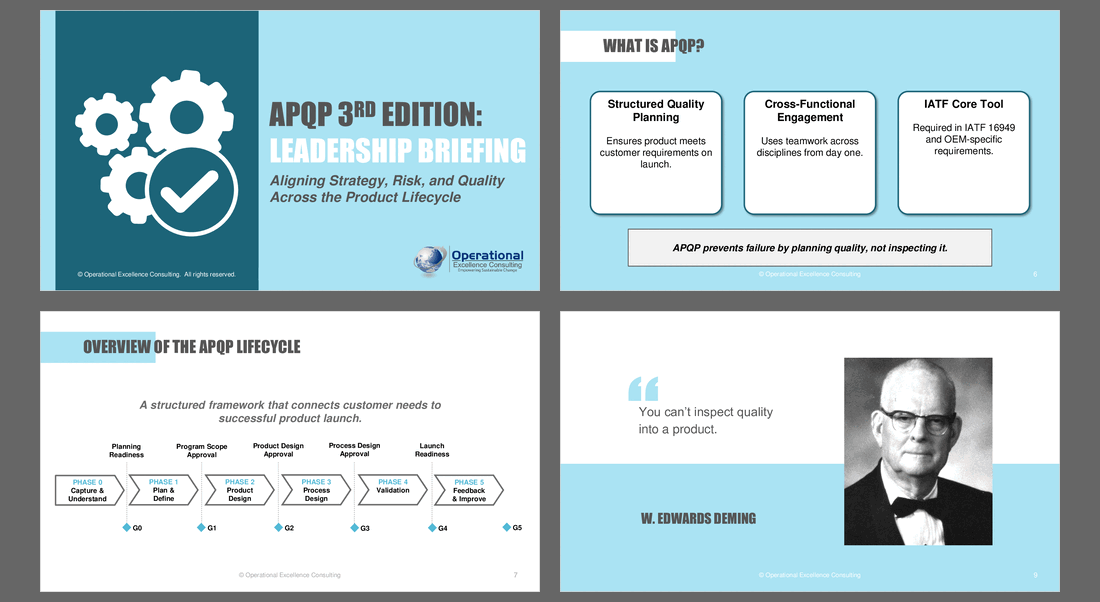
• Overview of the APQP lifecycle, illustrating the structured framework connecting customer needs to product launch
• Comparison of APQP vs. traditional quality approaches, emphasizing proactive prevention over reactive corrections
• Key enhancements in APQP 3rd Edition, including digital readiness and sustainability considerations
• Gated management reviews that enforce accountability and ensure readiness at each phase
• Real-world success stories showcasing the effectiveness of APQP in various organizations
Potential Workshop Agenda
APQP Overview Session (60 minutes)
• Introduce APQP and its importance in product quality
• Discuss the 6 phases of APQP and their deliverables
• Engage in a Q&A session to clarify concepts
Risk Management Workshop (90 minutes)
• Explore risk-based thinking in APQP
• Review case studies highlighting successful risk mitigation
• Develop a risk management plan for a hypothetical project
Leadership Engagement Session (60 minutes)
• Discuss the strategic role of leadership in APQP
• Identify best practices for fostering cross-functional collaboration
• Action planning for implementing APQP in participants' organizations
Customization Guidance
• Tailor the presentation to reflect specific organizational goals and terminology
• Adjust case studies to align with industry-specific challenges and solutions
• Incorporate company-specific metrics and KPIs into the APQP framework
• Modify templates to fit existing project management tools and processes
Secondary Topics Covered
• Digital collaboration tools for enhancing APQP execution
• Sustainability considerations in quality planning
• The role of supplier engagement in the APQP process
• Continuous improvement mechanisms and feedback loops
• Common pitfalls to avoid in APQP implementation
Topic FAQ
Document FAQ
These are questions addressed within this presentation.
What is the significance of Phase 0 in APQP?
Phase 0 focuses on capturing and understanding customer needs, establishing a foundation for successful planning and execution.
How does APQP differ from traditional quality management approaches?
APQP emphasizes proactive planning and cross-functional collaboration, whereas traditional approaches often rely on reactive corrections and siloed efforts.
What are the key enhancements in APQP 3rd Edition?
The 3rd Edition introduces a new Phase 0, enhanced risk management practices, and improved digital traceability to align with modern industry standards.
How can leadership effectively support APQP initiatives?
Leadership can support APQP by setting clear goals, allocating resources, and fostering a culture of collaboration and accountability.
What tools are essential for implementing APQP?
Key tools include DFMEA, PFMEA, Control Plans, and structured templates for documentation and risk management.
How can organizations ensure audit readiness with APQP?
Organizations can ensure audit readiness by maintaining clear documentation, conducting regular reviews, and capturing lessons learned throughout the APQP process.
What role does sustainability play in APQP?
Sustainability is integrated into APQP by reviewing energy, waste, and material use early in the planning process, aligning with corporate environmental goals.
How can lessons learned be effectively captured and utilized?
Lessons learned should be documented systematically and shared across teams to refine future APQP launches and improve overall quality management.
Glossary
• APQP - Advanced Product Quality Planning, a structured approach to quality planning across product lifecycles.
• DFMEA - Design Failure Mode and Effects Analysis, a tool for identifying potential design failures.
• PFMEA - Process Failure Mode and Effects Analysis, a tool for assessing potential failures in manufacturing processes.
• Control Plan - A document outlining the controls necessary to ensure product quality.
• IATF 16949 - An international standard for quality management systems in the automotive industry.
• VOC - Voice of the Customer, a process for capturing customer requirements and feedback.
• Gated Reviews - Structured checkpoints in the APQP process to assess readiness before progressing to the next phase.
• Traceability - The ability to track and document changes and decisions throughout the product lifecycle.
• Sustainability - Practices aimed at minimizing environmental impact and promoting social responsibility.
• Risk Management - The process of identifying, assessing, and mitigating risks throughout the product lifecycle.
• Cross-Functional Collaboration - Teamwork across different departments to achieve common goals.
• Continuous Improvement - Ongoing efforts to enhance products, services, or processes based on feedback and performance data.
• Lessons Learned - Insights gained from past experiences that inform future practices.
• Stakeholder Engagement - Involving all relevant parties in the planning and execution of projects.
• Digital Readiness - The preparedness of an organization to adopt digital tools and processes in quality management.
• Feedback Loops - Mechanisms for capturing and utilizing feedback to improve processes and products.
• Program Metrics - Quantitative measures used to track the performance and success of APQP initiatives.
• Supplier Engagement - Involvement of suppliers in the APQP process to ensure alignment and quality standards.
• Change Management - The process of managing changes in product design or processes to minimize disruption.
Source: Best Practices in Quality Management, APQP PowerPoint Slides: APQP 3rd Edition: Leadership Briefing PowerPoint (PPTX) Presentation Slide Deck, Operational Excellence Consulting
|
Receive our FREE presentation on Operational Excellence
This 50-slide presentation provides a high-level introduction to the 4 Building Blocks of Operational Excellence. Achieving OpEx requires the implementation of a Business Execution System that integrates these 4 building blocks. |