
Align Your Teams to Deliver Outstanding Products with Agile and Design
Build Your Agile Muscles to Create Next-Generation Digital Offerings
Speak the Language: Decode the Buzzwords Around Modern Product Development
AGILE PPT DESCRIPTION
Editor Summary
Agile Product Development Playbook for Executive Leadership is a 53-slide PowerPoint (PPTX) playbook by WallStBizStrategist that provides frameworks and templates to support agile product initiatives across 4 key product-development phases.
Read moreIncludes an agile capability assessment toolkit, sprint retrospective and planning frameworks, user journey mapping templates, prototyping tools, backlog management templates, and a metrics dashboard. Target users include executive leaders, product managers, agile coaches, and cross-functional team members. Used for initiating agile projects, capability assessments, and design-thinking workshops; available on Flevy with immediate digital download.
Use this playbook when an organization is initiating or accelerating agile product development, assessing team readiness for agile transformation, or running workshops to integrate design thinking into delivery processes.
Executive leaders aligning business objectives and user needs by defining a roadmap and governance for product teams.
Product managers prioritizing features and building iterative roadmaps using backlog management templates and MVP thinking.
Agile coaches conducting maturity assessments and running capability-development workshops with the assessment toolkit.
UX/product designers facilitating user-journey mapping and rapid prototyping sessions to gather early feedback.
The four-phase, iterative approach—from concept sprints through support and scaling—reflects standard agile and design-thinking consulting practice focused on iterative loops and capability assessment.
*Why Agile & Design*
Overview of agile principles such as delivering customer value, embracing change, cross-functional collaboration, fast feedback cycles
Summary of design thinking principles – focus on user needs, rapid iterative prototyping, tolerance for failure.
Explanation of why agile and design thinking are complementary approaches for building great products
*How to bring Agile & Design to life*
Forming cross-functional squads with clear roles and responsibilities
Implementing agile ceremonies like sprint planning, standups, reviews, retrospectives,
Integrating design sprints and rapid prototyping into the development lifecycle
Gathering user feedback early and often
Promoting a culture of experimentation and learning
*Agile Capability Development*
Overview of core competencies needed for agile-design excellence at the team and individual level
Maturity model and assessment framework to evaluate current agile-design capabilities
Training guides and resources to level up skills in areas like user research, rapid prototyping, agile engineering practices
*Terms & Definitions*
Glossary of key terminology related to agile, design thinking, and modern product development
Clarification of language used by various roles across product teams, design teams, and engineering teams
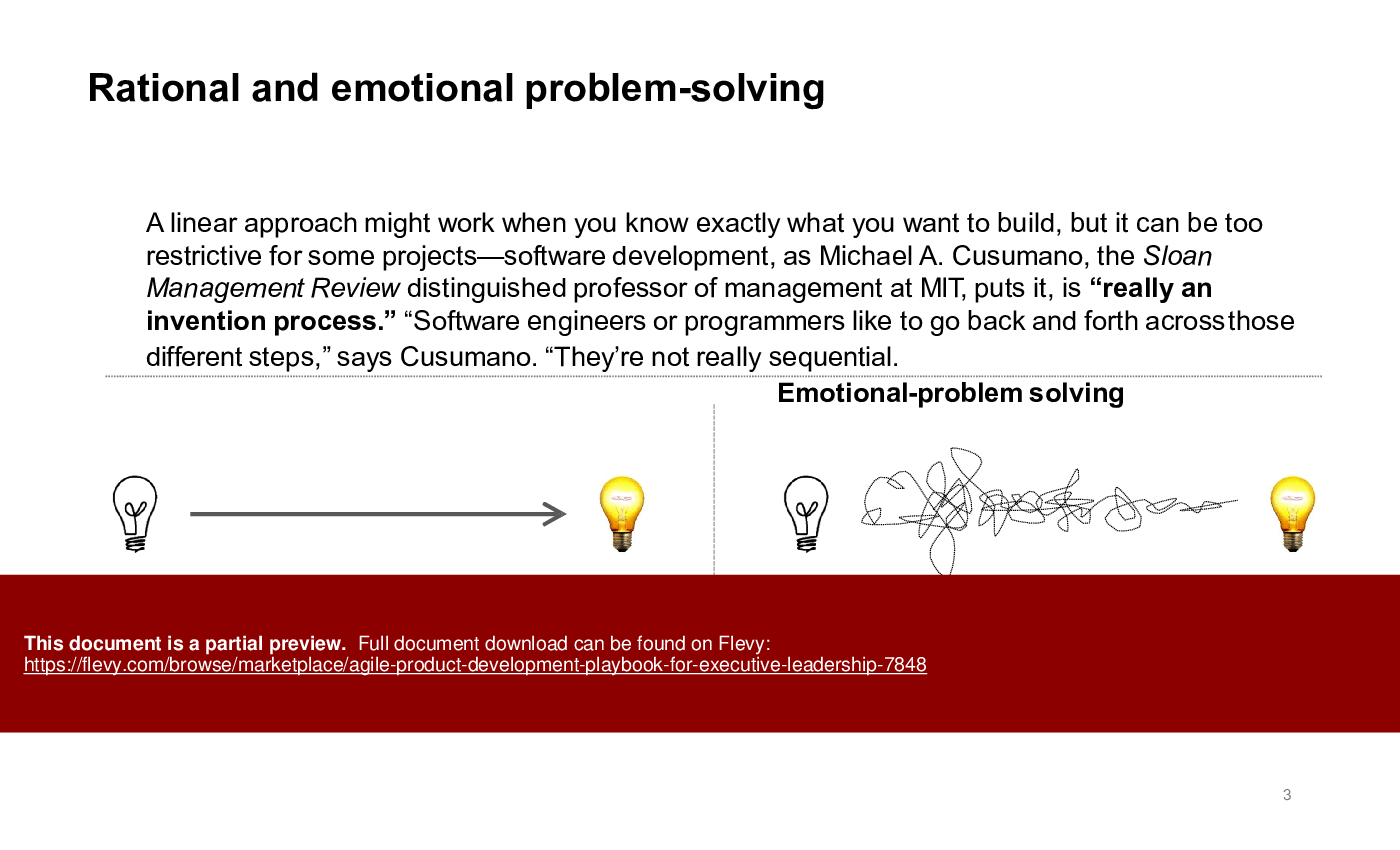
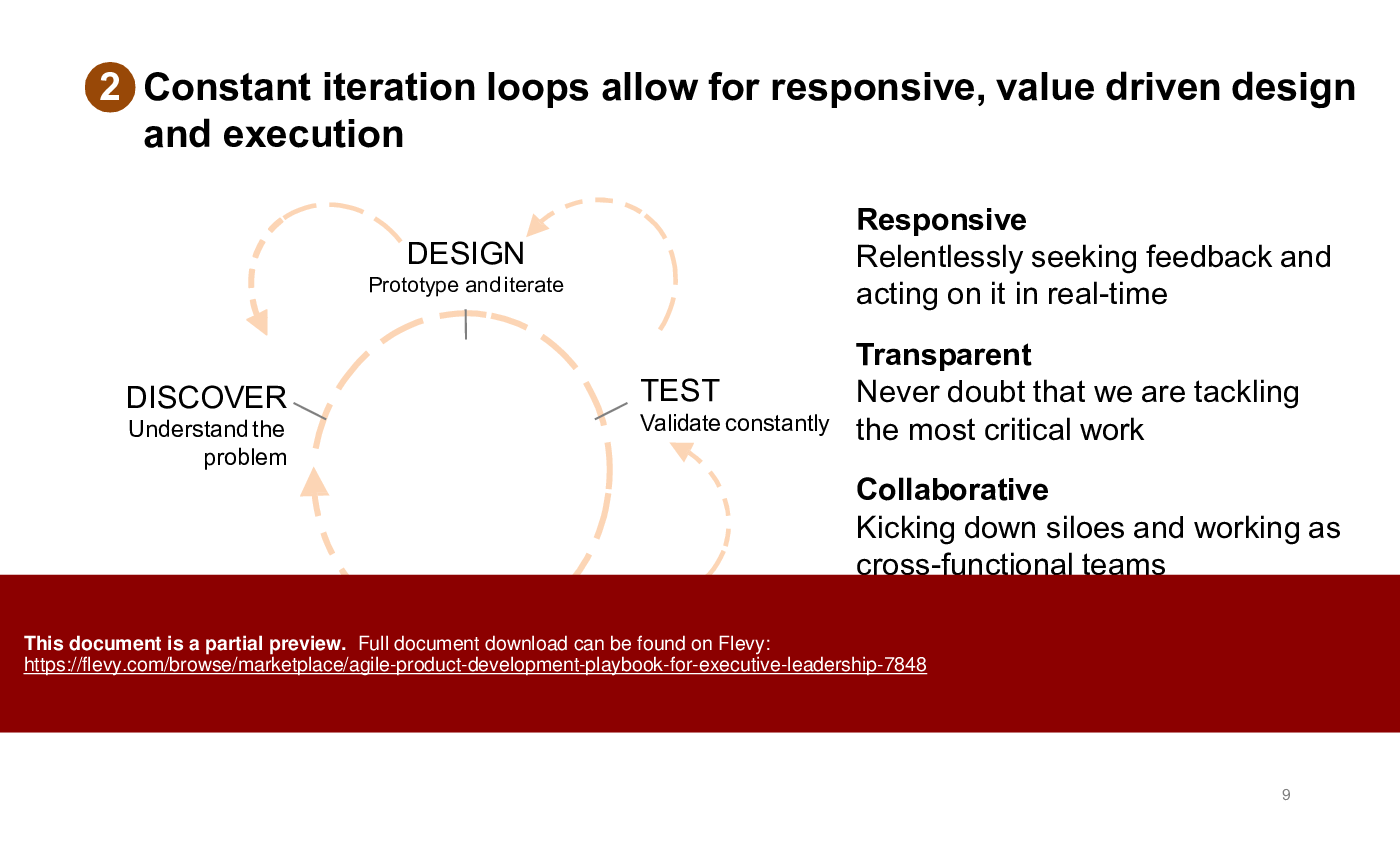
This playbook also delves into the nuanced balance between rational and emotional problem-solving, highlighting the non-linear nature of software development. It emphasizes the importance of iterative loops in design and testing, ensuring responsiveness and value-driven outcomes. The content underscores the pitfalls of traditional waterfall methods, advocating for agile's flexibility to meet rapidly changing customer needs.
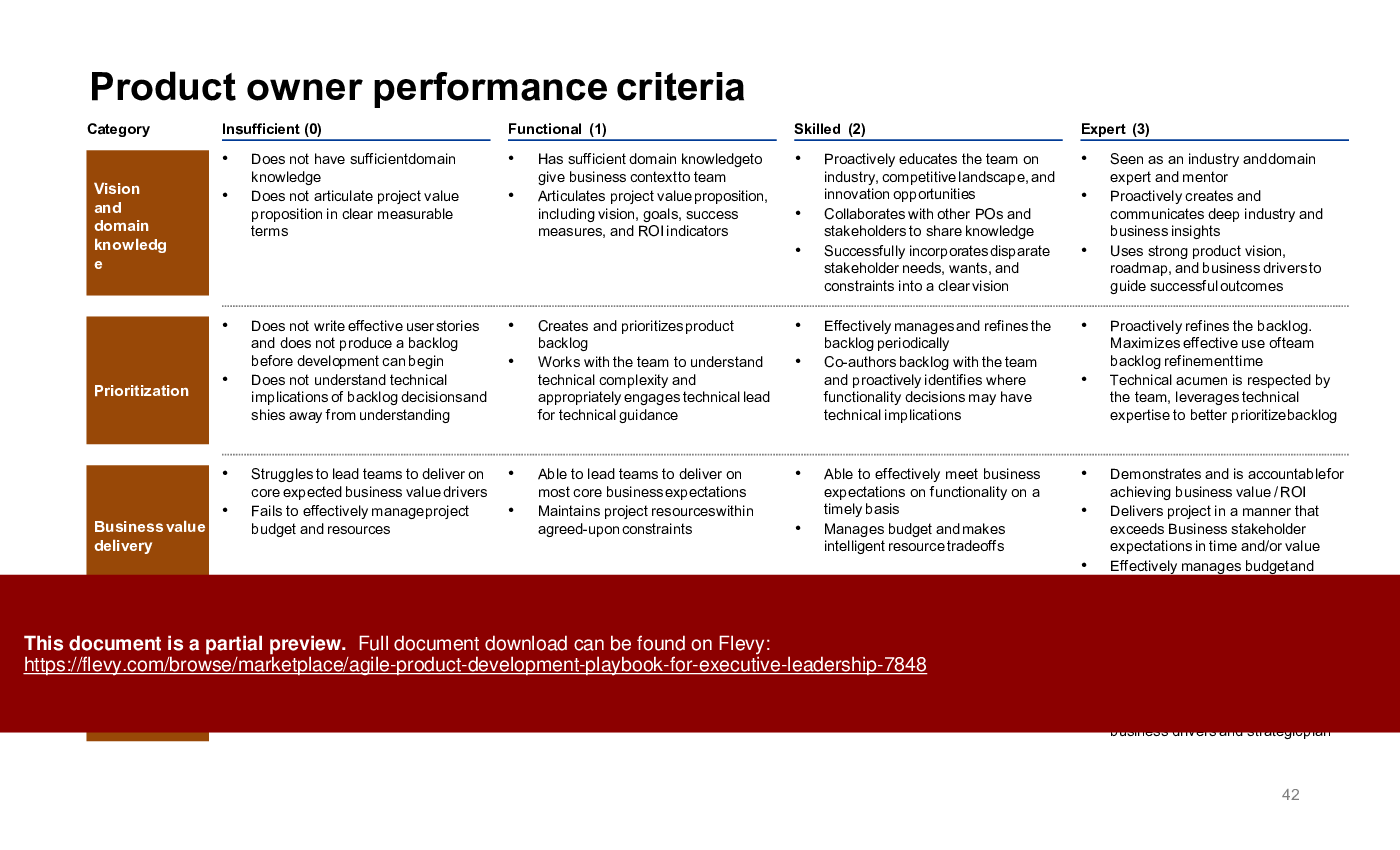
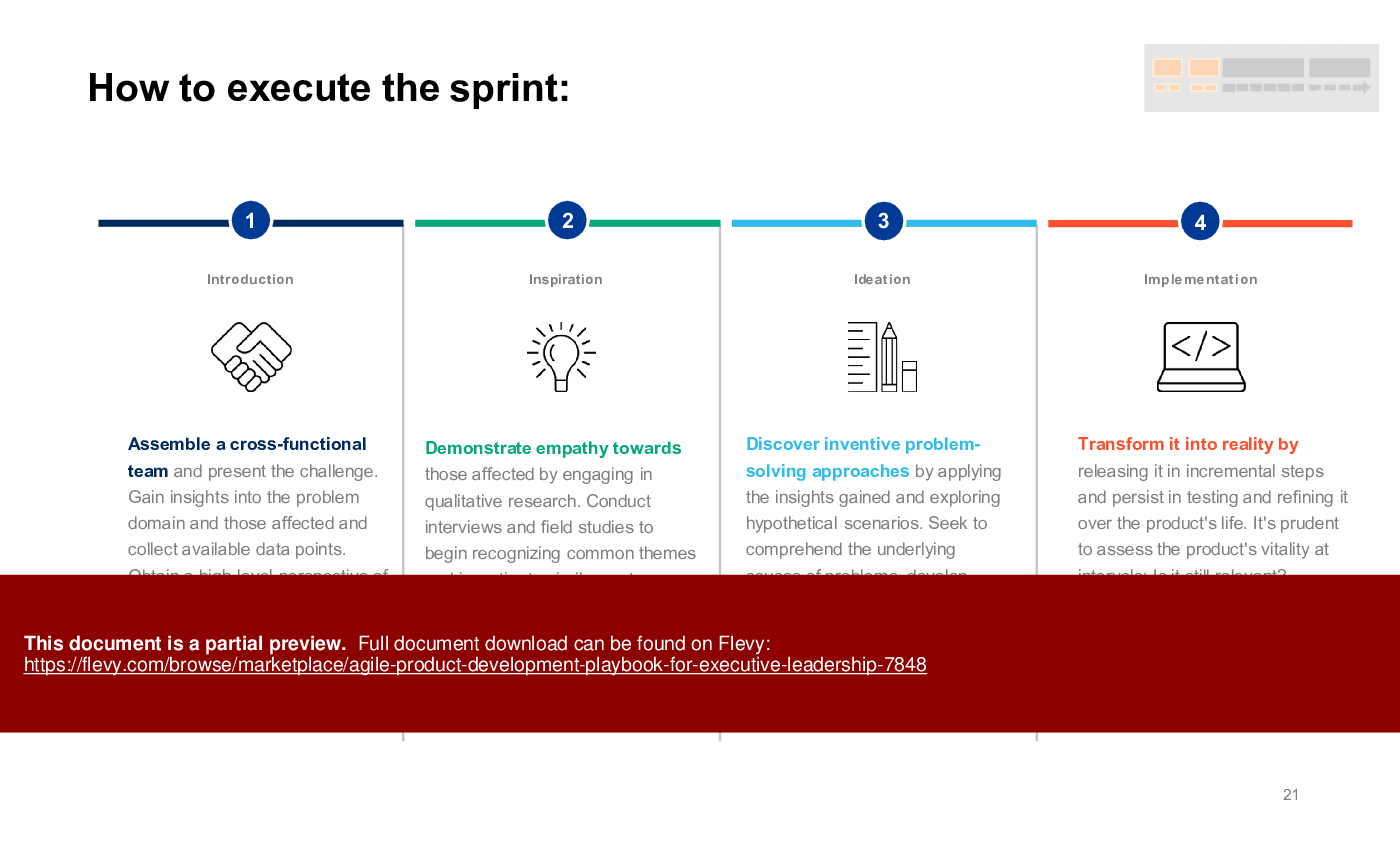
The PPT outlines the four key phases of product development, from concept sprints to support and scaling. It provides actionable insights on executing sprints, assembling cross-functional teams, and leveraging user feedback. The playbook also includes performance criteria for product owners and UX designers, ensuring roles are clearly defined and aligned with agile principles.
Got a question about the product? Email us at support@flevy.com or ask the author directly by using the "Ask the Author a Question" form. If you cannot view the preview above this document description, go here to view the large preview instead.
MARCUS OVERVIEW
This synopsis was written by Marcus [?] based on the analysis of the full 53-slide presentation.
Executive Summary
The Agile Product Development Playbook for Executive Leadership is a consulting-grade resource designed to empower leaders in driving agile initiatives within their organizations. This playbook equips executives with the necessary frameworks and methodologies to enhance product development processes, ensuring alignment between business objectives and user needs. By leveraging agile principles and design thinking, leaders can foster a culture of innovation, collaboration, and responsiveness to market demands. This playbook serves as a comprehensive guide to navigating the complexities of agile product development, enabling teams to deliver value efficiently and effectively.
Who This Is For and When to Use
• Executive leaders overseeing product development initiatives
• Product managers responsible for aligning business and user needs
• Agile coaches facilitating team transitions to agile methodologies
• Cross-functional team members involved in product design and delivery
Best-fit moments to use this deck:
• During the initiation of agile product development projects
• When assessing team capabilities and readiness for agile transformation
• For workshops aimed at integrating design thinking into agile processes
Learning Objectives
• Define the principles of agile and design thinking and their interrelationship
• Build a toolkit for assessing agile capabilities within teams
• Establish a framework for iterative product development and user feedback
• Create a roadmap for implementing agile methodologies in product teams
• Identify key roles and responsibilities in agile product development
• Develop strategies for fostering collaboration and transparency across teams
Table of Contents
• Why Agile & Design (page 1)
• How to Bring Agile & Design to Life (page 2)
• Agile Capability Development (page 3)
• Case Example: Directed Diagnostics for Merchandising (page 4)
• Terms & Definitions (page 5)
Primary Topics Covered
• Agile Principles - Agile focuses on iterative development, allowing teams to adapt to changing requirements and deliver value quickly.
• Design Thinking - A human-centered approach that emphasizes empathy and creativity in solving user problems and enhancing product usability.
• Agile Capability Assessment - Tools and frameworks for evaluating the agile maturity of teams and identifying areas for improvement.
• Iterative Development - The process of developing products in short cycles, enabling rapid feedback and continuous improvement.
• Cross-Functional Collaboration - The importance of diverse team roles in achieving successful product outcomes and fostering innovation.
• User-Centric Focus - Prioritizing user needs and feedback throughout the product development lifecycle to ensure relevance and satisfaction.
Deliverables, Templates, and Tools
• Agile capability assessment toolkit for evaluating team readiness
• Framework for conducting effective sprint retrospectives and planning sessions
• User journey mapping templates to visualize customer interactions
• Prototyping tools for rapid iteration and user feedback
• Backlog management templates for prioritizing features and user stories
• Metrics dashboard for tracking agile performance and product health
Slide Highlights
• Overview of agile principles and their benefits in product development
• Visual representation of the iterative development process and its phases
• Case study of successful agile implementation in merchandising
• Framework for assessing team capabilities and identifying growth areas
• Key roles and responsibilities in agile product teams
Potential Workshop Agenda
Agile Principles Overview (60 minutes)
• Introduce agile principles and design thinking concepts
• Discuss the benefits of integrating agile and design methodologies
• Engage participants in a group discussion on current challenges
Capability Assessment Workshop (90 minutes)
• Guide teams through the agile capability assessment toolkit
• Identify strengths and areas for improvement within teams
• Develop action plans for enhancing agile practices
User-Centric Design Session (60 minutes)
• Explore user journey mapping and its importance in product development
• Conduct hands-on activities to create user personas and scenarios
• Review best practices for gathering user feedback
Customization Guidance
• Tailor the agile capability assessment toolkit to reflect specific team dynamics and organizational goals
• Adjust user journey mapping templates to align with unique customer interactions and touchpoints
• Modify sprint planning and retrospective frameworks to fit the team’s workflow and cadence
Secondary Topics Covered
• The role of servant leadership in agile environments
• Strategies for fostering a culture of continuous improvement
• Techniques for effective backlog management and prioritization
• The impact of cross-functional teams on product success
• Best practices for conducting user research and usability testing
Topic FAQ
What are the typical phases of an agile product development lifecycle?
Many agile playbooks break product development into iterative phases; this playbook outlines 4 key phases spanning concept sprints, iterative development, testing/validation, and support & scaling. The approach emphasizes short cycles, rapid feedback, and staged scaling across 4 key phases.
How does design thinking fit into an agile product process?
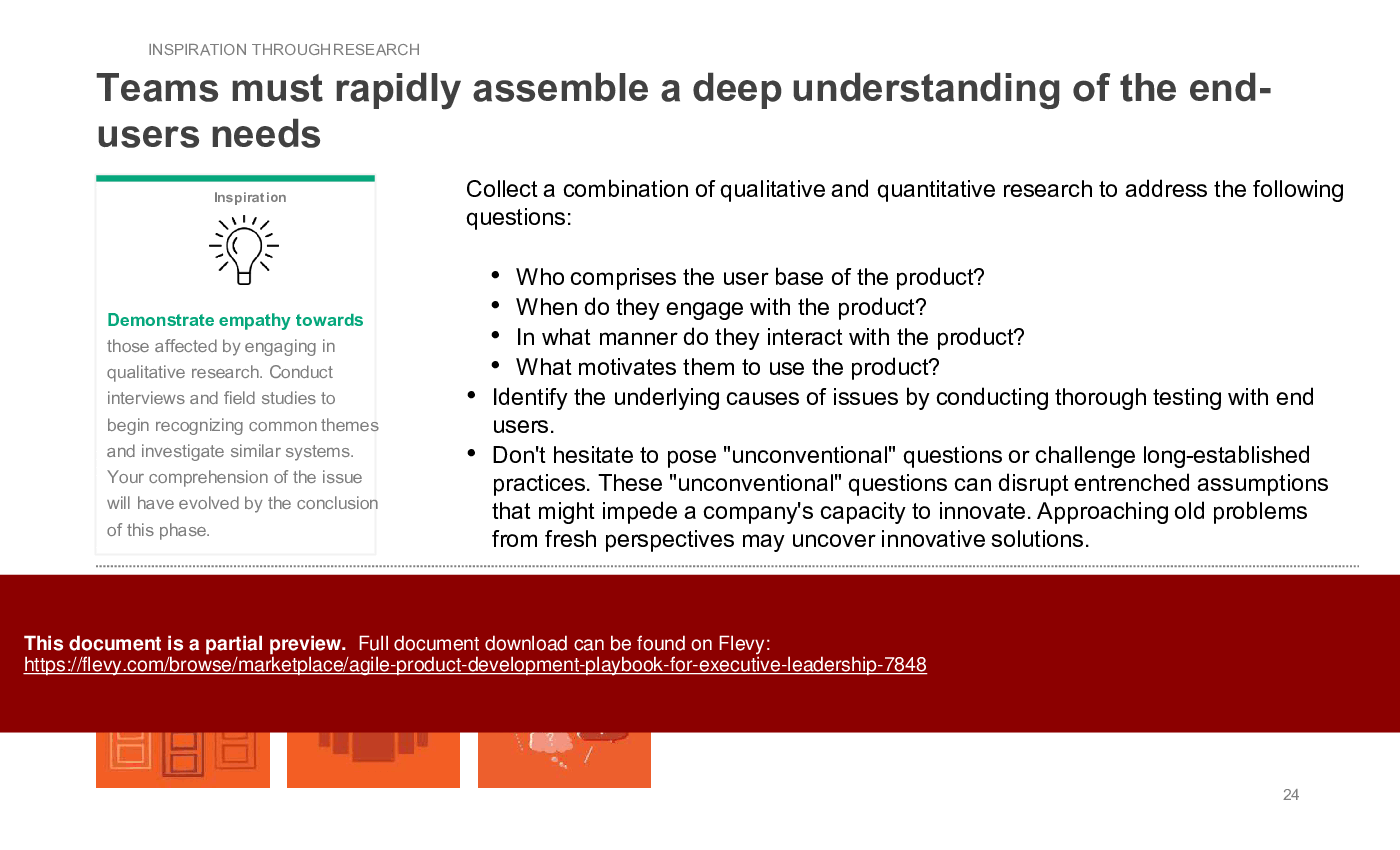
Design thinking brings human-centered research, empathy mapping, rapid prototyping, and tolerance for failure into agile cycles to ensure solutions meet user needs. The combination encourages early user feedback and iterative prototyping to validate assumptions through rapid iterative prototyping.
What is an agile capability assessment and how is it used?
An agile capability assessment evaluates team maturity, core competencies, and growth areas using a maturity model and assessment framework. Organizations run facilitated workshops to identify gaps and build action plans; the playbook includes an agile capability assessment toolkit.
What should I look for when choosing an executive-focused agile playbook?
Look for content that covers core principles, capability assessment tools, practical templates for sprint planning and retrospectives, user-journey mapping, prototyping aids, backlog management, and metrics tracking. A useful playbook includes workshop agendas and templates such as retrospective and backlog templates.
How much time do the recommended workshops usually take and how should I schedule them?
The playbook provides example agendas with durations: a 60-minute Agile Principles Overview, a 90-minute Capability Assessment Workshop, and a 60-minute User-Centric Design Session. These modular sessions can be scheduled across one or multiple days, including a 90-minute capability assessment workshop.
I need to assess my team’s readiness for agile—what practical first step should I take?
Begin with an agile capability assessment workshop using a maturity model to evaluate current skills and behaviors, then identify targeted training and pilot sprints. The playbook provides a guided capability assessment toolkit and training resources to structure that first assessment.
How can executives use an agile playbook to align business objectives and user needs?
Executives can use the playbook’s user-journey mapping, MVP definitions, backlog prioritization templates, and roadmap framework to translate business goals into prioritized, testable product increments and measurable outcomes, culminating in a roadmap for implementing agile methodologies.
Are purchased playbooks and templates worth it versus building internal materials?
Purchased playbooks offer ready-made templates, workshop agendas, assessment frameworks, and role definitions that reduce design time and standardize runbooks. For teams wanting a packaged approach, the playbook delivers those artifacts in a 53-slide PPTX format.
Document FAQ
These are questions addressed within this presentation.
What is the Agile methodology?
Agile is a flexible approach to product development that emphasizes iterative progress, customer collaboration, and responsiveness to change.
How does design thinking complement agile practices?
Design thinking enhances agile by ensuring that user needs are prioritized, fostering creativity, and encouraging collaboration across teams.
What tools are included in the agile capability assessment?
The toolkit includes templates for evaluating team maturity, frameworks for identifying growth areas, and metrics for tracking progress.
How can I implement agile in my organization?
Start by assessing current capabilities, providing training for teams, and gradually integrating agile practices into existing workflows.
What are the key roles in an agile product team?
Key roles include the Product Owner, Scrum Master, Agile Coach, and cross-functional team members such as developers and designers.
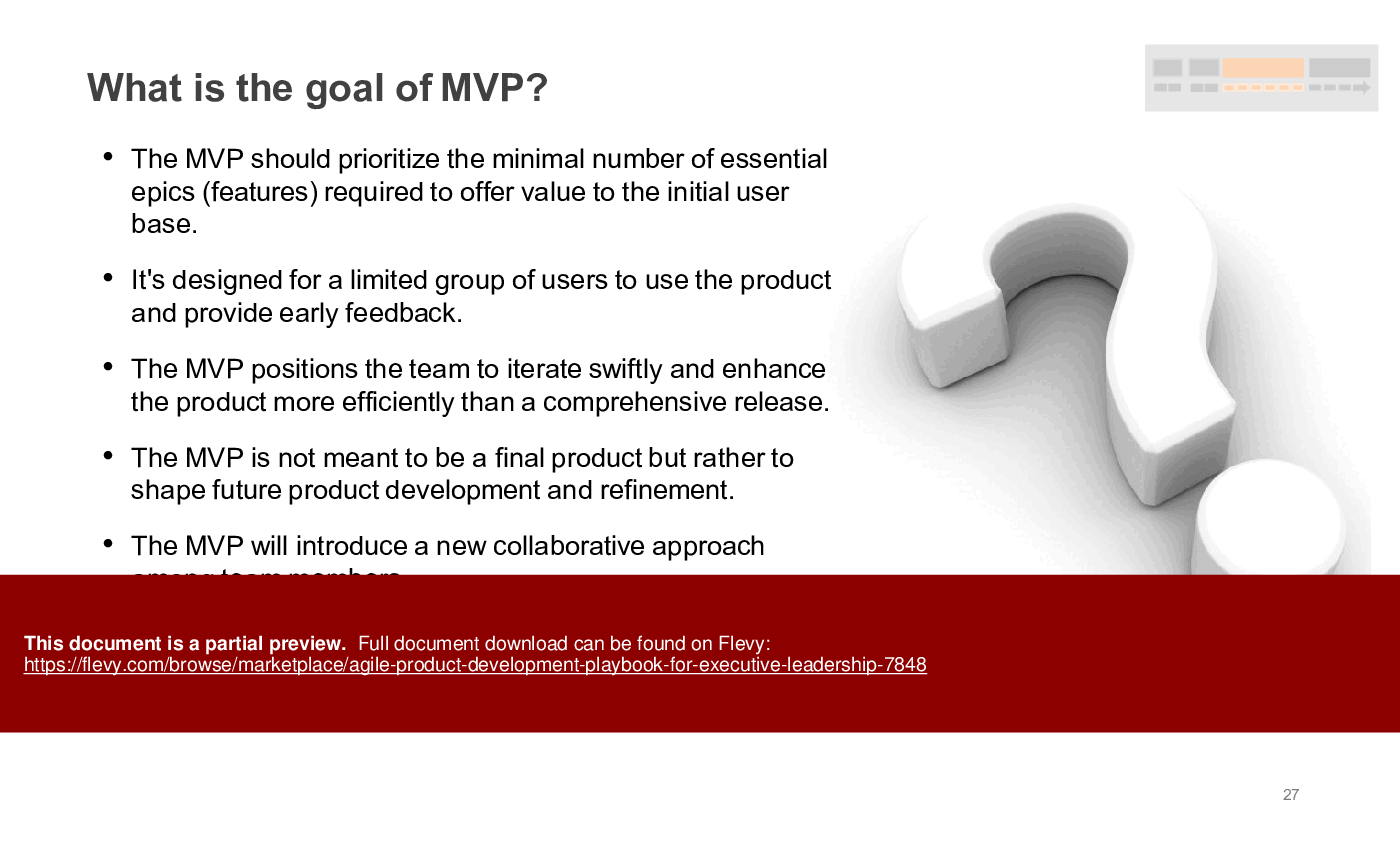
What is a Minimum Viable Product (MVP)?
An MVP is the simplest version of a product that delivers core functionality to users, allowing for early feedback and iterative improvement.
How do I measure the success of agile initiatives?
Success can be measured through metrics such as team velocity, user satisfaction, and the quality of deliverables produced during sprints.
What challenges might I face when transitioning to agile?
Common challenges include resistance to change, lack of understanding of agile principles, and difficulties in team collaboration.
Glossary
• Agile - A methodology focused on iterative development and customer collaboration.
• Design Thinking - A problem-solving approach centered on user needs and empathy.
• MVP (Minimum Viable Product) - The simplest product version that delivers value to users.
• Backlog - A prioritized list of work items needed to complete a product.
• Sprint - A fixed time period during which specific work is completed.
• Scrum Master - The facilitator of the Scrum process, responsible for coaching the team.
• Product Owner - The individual responsible for defining the product vision and managing the backlog.
• User Journey - A visual representation of the steps a user takes when interacting with a product.
• Retrospective - A meeting to reflect on the team's performance and identify areas for improvement.
• Cross-Functional Team - A team composed of members from different functional areas working together on a project.
• Capacity - The amount of work a team can complete in a given time frame.
• Burn-Down Chart - A visual tool for tracking progress against work remaining in a sprint.
• Kanban Board - A tool for visualizing work and optimizing workflow.
• User Story - A short description of a feature from the perspective of the end user.
• Velocity - A measure of how much work a team can complete in a sprint.
• Stakeholders - Individuals with a vested interest in the outcome of a project.
• Servant Leadership - A leadership style that focuses on serving the team and removing obstacles to their success.
• Continuous Integration - An engineering practice that involves frequently integrating code changes into a shared repository.
• Empathy Mapping - A tool used to understand user needs and experiences.
• Feedback Loop - A process for continuously gathering and integrating user feedback into product development.
This PPT slide outlines the roles and responsibilities within a cross-functional team, highlighting the importance of stakeholder representation. The Product Owner defines the vision, goals, and success criteria, ensuring alignment with project objectives. The Scrum Master facilitates the agile process, promoting servant leadership and continuous improvement for team productivity. The Technical Lead oversees technical metrics and the roadmap, aligning technical direction with product goals. The Hands-on Architect articulates non-functional requirements, bridging to the architecture community. The Product Manager prioritizes resources and tools, while the Development Team of 5-9 members delivers the product. The UI/UX Designer integrates design principles to enhance user experience. The Program role facilitates logistics and knowledge sharing, maintaining team cohesion. Each role's distinct contributions are critical for project success in agile product development.
This PPT slide outlines the Agile Sprints framework, highlighting its role in enhancing value, reducing risk, and promoting transparency in product development. Key roles include the Product Owner, Scrum Master, and Development Team, each integral to the sprint process. Agile Sprints consist of iterative cycles, starting with Sprint Planning to define scope and objectives, followed by time-boxed Sprints featuring daily stand-ups for alignment and immediate issue resolution. The "Time-boxed Test/Develop" phase emphasizes iterative testing and development, allowing for adjustments based on feedback. The Sprint Review and Sprint Retrospective assess progress and identify improvement areas. This dynamic Agile methodology fosters continuous improvement and adaptability, essential for effective product development.
This PPT slide outlines critical components for success in agile product development: a foundational idea, team structure, essential supplies, and leadership support. A clear vision is vital for guiding project efforts. The "two pizza" rule suggests teams should be small and cross-disciplinary, with flexibility to include subject matter experts (SMEs) for specific challenges. Essential supplies, including food and water, are crucial for maintaining morale and energy, alongside a comfortable team room that fosters collaboration. Leadership support is necessary for commitment to the agile process and cultural shift, indicating that successful implementation requires engaged leaders. Each component is essential for driving project success.
This PPT slide outlines a decision-making framework for evaluating product development strategies. It prompts users to identify if they are dealing with a new or existing product, guiding subsequent inquiries. For new products, it emphasizes assessing new features and core functionalities, and suggests determining whether a complete revamp or a new approach is necessary. The "ConceptSprint" method is recommended for rapid iteration and concept development. For established products, user-centered design methods are advised to enhance user experience and meet market demands. This structured pathway clarifies whether to innovate or optimize, aiding strategic planning.
This PPT slide outlines servant leadership and its transformative impact on traditional leadership structures. It contrasts the conventional top-down leadership model with the collaborative, team-oriented approach of servant leadership. Traditional leadership activities include coordinating teams, enforcing deadlines, and directing team members, emphasizing control and authority, which can lead to disengagement. In contrast, servant leadership focuses on coaching, empowering teams to coordinate, and fostering investment in performance. Leaders encourage teams to propose solutions, promoting autonomy and accountability. This model enhances team morale and leverages collective intelligence, leading to improved outcomes. Adopting servant leadership can significantly enhance team dynamics and performance, making it a compelling consideration for organizations aiming to improve leadership effectiveness.
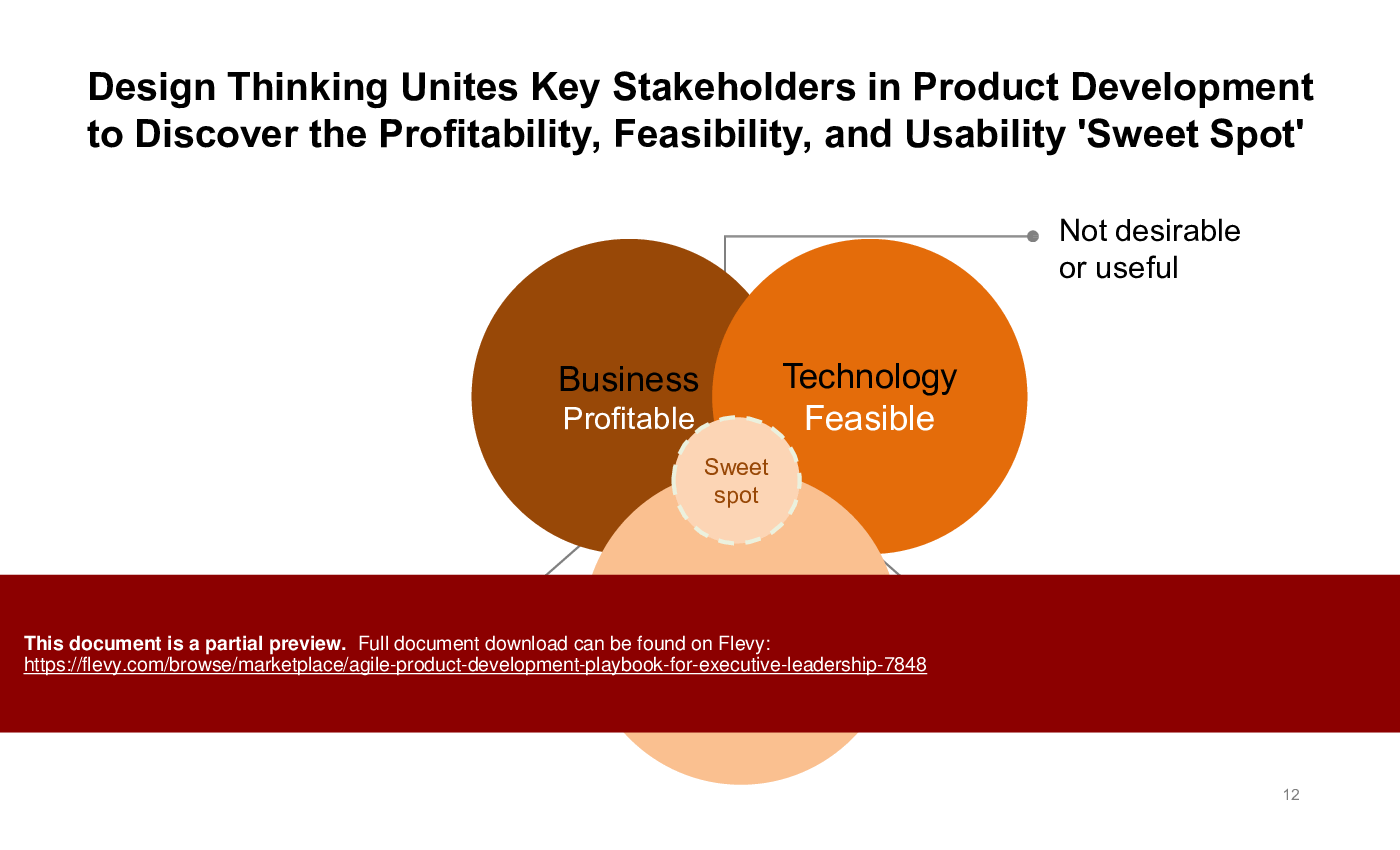
This PPT slide illustrates a product development framework integrating design thinking among stakeholders, represented by a Venn diagram with 3 dimensions: Business Profitability, Technology Feasibility, and User Desirability. The central area, labeled "Sweet Spot," signifies the optimal intersection where a product is profitable, feasible, and meets user needs. Surrounding areas indicate scenarios to avoid, such as products lacking feasibility or user alignment. Successful product development requires collaboration to navigate these dimensions, fostering innovation while minimizing risks. This framework emphasizes balancing profitability, feasibility, and user satisfaction, encouraging a holistic view to enhance successful outcomes and refine product strategies for growth.
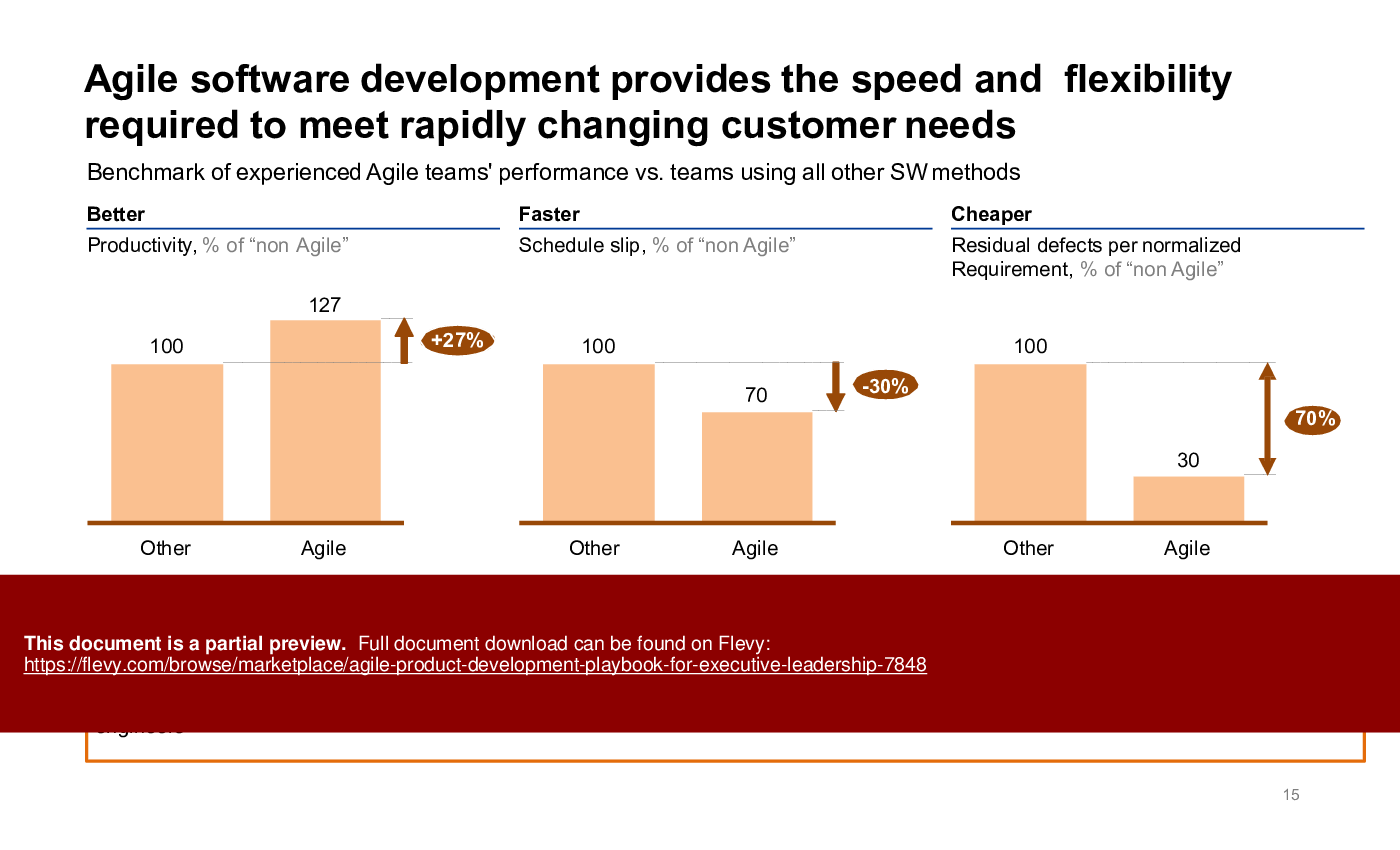
This PPT slide presents a comparative analysis of Agile software development and traditional methodologies, focusing on 3 key performance metrics: productivity, schedule adherence, and defect rates. Agile teams show a 27% increase in productivity, scoring 127 against a baseline of 100, driven by automation and team upskilling. In terms of schedule adherence, Agile teams achieve a 30% improvement with a schedule slip of 70 compared to 100 for traditional methods, highlighting the benefits of iterative cycles and eliminating unnecessary work. For defect rates, Agile teams report a 70% reduction, with a defect rate of 30 versus 100 for non-Agile teams, underscoring the impact of metrics-driven processes on quality. The data supports the transition to Agile methodologies for enhanced productivity, faster delivery, and improved quality.
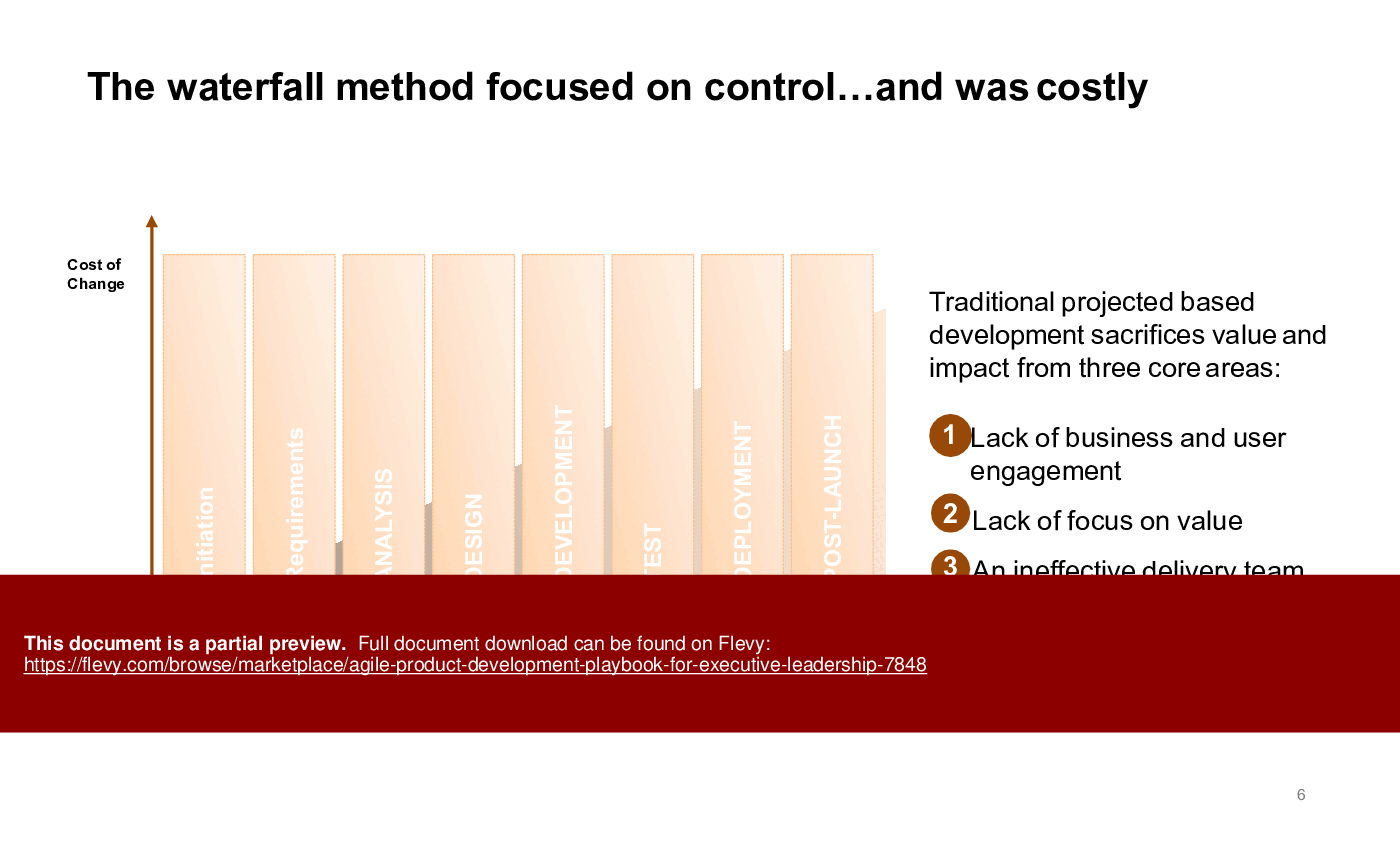
This PPT slide contrasts 2 IT development approaches: the Waterfall method and the Agile framework. The Waterfall model is a linear process with defined stages: Requirements, Design, Development, Testing, and Maintenance, typically spanning 1 to 3 years. It limits business involvement to the initial requirements gathering and testing phases, resulting in slow responses to changing requirements and inflexibility to customer feedback. In contrast, the Agile approach focuses on iterative development and short cycles, incorporating customer input throughout. Key Agile activities include Analysis, Development, Testing, and User Stories, occurring within 1 to 2 weeks. This method emphasizes collaboration between business and IT teams, enabling quicker iterations and a more adaptive response to evolving requirements, ultimately delivering application functionality more efficiently than Waterfall.
This PPT slide analyzes traditional versus modern product development methodologies, focusing on the advantages of Agile development integrated with design thinking. The Waterfall approach is critiqued for its linear, sequential nature, leading to slow development cycles and costly software solutions with poor user adoption. Agile methodology is highlighted for its iterative process, enabling rapid adjustments to evolving user needs and enhancing adaptability. The synergy between Agile and design thinking maximizes effectiveness, balancing stakeholder interests to create functional and profitable solutions. Design-driven companies have outperformed S&P 500 counterparts by 228% over the past decade, attributed to improved customer conversion, retention, and recommendations, emphasizing the value of integrating design thinking into product development.
This PPT slide outlines common root causes of IT project failures and how agile methodologies address these issues. Key problems include lack of business involvement, leading to unclear objectives and prioritization of technology over business value. Ineffective delivery teams, characterized by unclear responsibilities and unreliable plans, and a command-and-control leadership style hinder engagement and performance. Agile solutions involve full-time business representatives in delivery teams for better alignment, regular stakeholder demonstrations to ensure project relevance, and a culture of "failing fast" for quick learning and adaptation. Agile prioritizes stakeholder needs, enhances accountability through small, cross-functional teams, and supports short-time planning and iterations for faster delivery cycles.
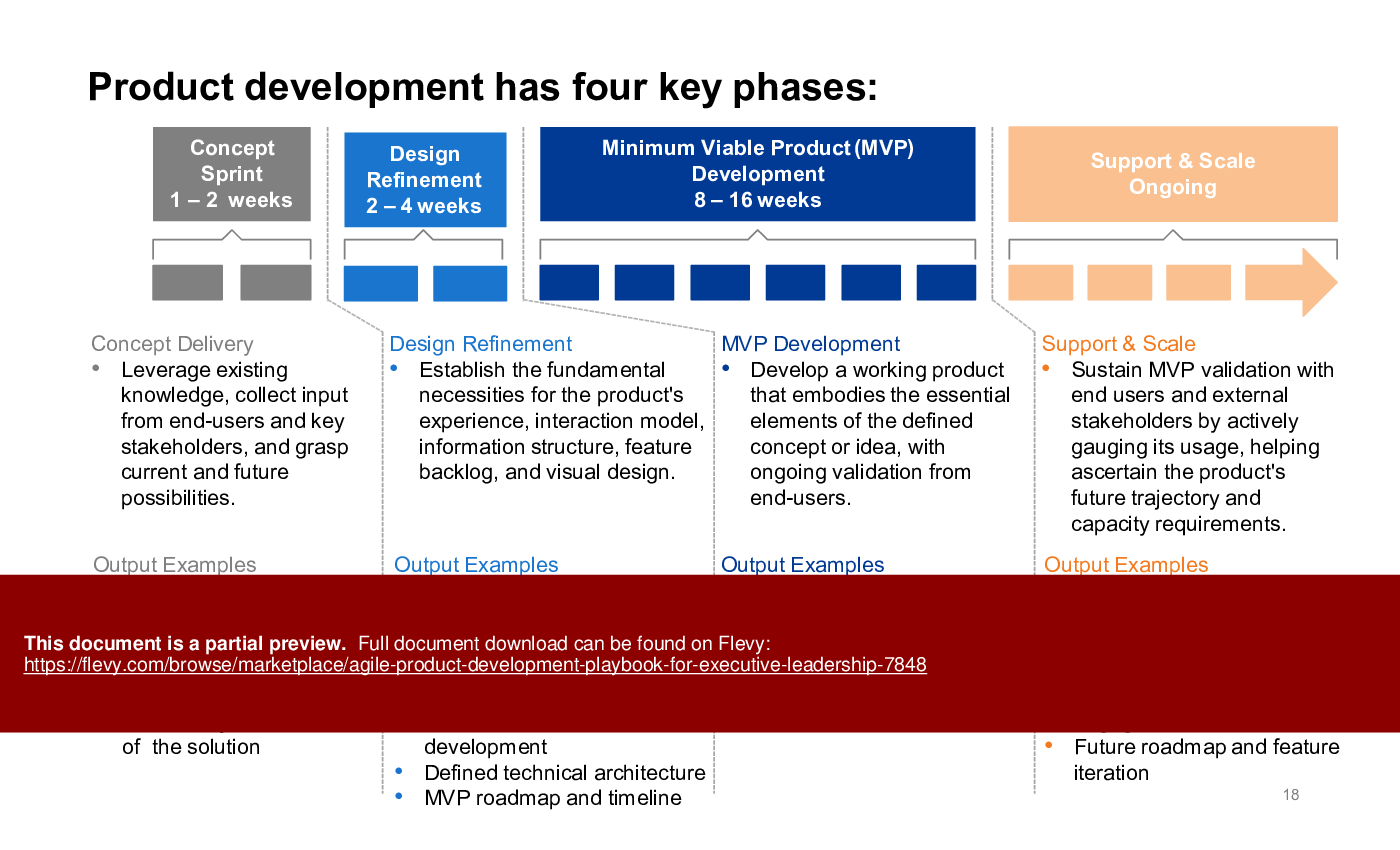
This PPT slide outlines a structured product development approach divided into 4 phases: Concept Sprint, Design Refinement, Minimum Viable Product (MVP) Development, and Support & Scale. The Concept Sprint lasts 1 to 2 weeks, focusing on problem statement clarification, team role definition, and preliminary persona development. The Design Refinement phase, spanning 2 to 4 weeks, establishes fundamental product requirements, including user experience and visual design, resulting in a clickable prototype and essential end-user feedback. The MVP Development phase, lasting 8 to 16 weeks, aims to create a functional product with essential features, incorporating continuous end-user validation. Finally, the ongoing Support & Scale phase sustains validation efforts and assesses future product trajectory, suggesting scaling the MVP and providing user training to enhance adoption rates.
Source: Best Practices in Agile, Product Management PowerPoint Slides: Agile Product Development Playbook for Executive Leadership PowerPoint (PPTX) Presentation Slide Deck, WallStBizStrategist
The average daily rate of a McKinsey consultant is $6,625 (not including expenses). The average price of a Flevy document is $65.
Trusted by over 10,000+ Client Organizations
Since 2012, we have provided business templates to over 10,000 businesses and organizations of all sizes, from startups and small businesses to the Fortune 100, in over 130 countries.
"I am extremely grateful for the proactiveness and eagerness to help and I would gladly recommend the Flevy team if you are looking for data and toolkits to help you work through business solutions."
– Trevor Booth, Partner, Fast Forward Consulting
"As a young consulting firm, requests for input from clients vary and it's sometimes impossible to provide expert solutions across a broad spectrum of requirements. That was before I discovered Flevy.com.
Through subscription to this invaluable site of a plethora of topics that are key and crucial to consulting, I
have been able to exceed expectations and deliver quality advice and solutions to my clients. The quality and expertise of the authors are exemplary and gives me great confidence to use as part of my service offerings.
I highly recommend this company for any consultant wanting to apply international best practice standards in their service offerings.
"
– Nishi Singh, Strategist and MD at NSP Consultants
"Flevy is our 'go to' resource for management material, at an affordable cost. The Flevy library is comprehensive and the content deep, and typically provides a great foundation for us to further develop and tailor our own service offer."
– Chris McCann, Founder at Resilient.World
"As a niche strategic consulting firm, Flevy and FlevyPro frameworks and documents are an on-going reference to help us structure our findings and recommendations to our clients as well as improve their clarity, strength, and visual power. For us, it is an invaluable resource to increase our impact and value."
– David Coloma, Consulting Area Manager at Cynertia Consulting
"Last Sunday morning, I was diligently working on an important presentation for a client and found myself in need of additional content and suitable templates for various types of graphics. Flevy.com proved to be a treasure trove for both content and design at a reasonable price, considering the time I

saved. I encountered a download issue during the ordering process. However, a quick email to Flevy's support team, even on a Sunday (!!!), resulted in assistance within less than an hour, allowing me to download the content I needed. Fantastic job, Flevy! I give 5 stars for both content/price and customer service. Thank you!
"
– M. E., Chief Commercial Officer, International Logistics Service Provider
"I have found Flevy to be an amazing resource and library of useful presentations for lean sigma, change management and so many other topics. This has reduced the time I need to spend on preparing for my performance consultation. The library is easily accessible and updates are regularly provided. A wealth of great information."
– Cynthia Howard RN, PhD, Executive Coach at Ei Leadership
"As a consultant requiring up to date and professional material that will be of value and use to my clients, I find Flevy a very reliable resource.
The variety and quality of material available through Flevy offers a very useful and commanding source for information. Using Flevy saves me time, enhances my expertise and ends up being a good decision."
– Dennis Gershowitz, Principal at DG Associates
"As a small business owner, the resource material available from FlevyPro has proven to be invaluable. The ability to search for material on demand based our project events and client requirements was great for me and proved very beneficial to my clients. Importantly, being able to easily edit and tailor
the material for specific purposes helped us to make presentations, knowledge sharing, and toolkit development, which formed part of the overall program collateral. While FlevyPro contains resource material that any consultancy, project or delivery firm must have, it is an essential part of a small firm or independent consultant's toolbox.
"
– Michael Duff, Managing Director at Change Strategy (UK)
Download our FREE Digital Transformation Templates
Download our free compilation of 50+ Digital Transformation slides and templates. DX concepts covered include Digital Leadership, Digital Maturity, Digital Value Chain, Customer Experience, Customer Journey, RPA, etc.
Download our FREE Digital Transformation Templates
Get Our FREE Product.
Download our free compilation of 50+ Digital Transformation slides and templates. DX concepts covered include Digital Leadership, Digital Maturity, Digital Value Chain, Customer Experience, Customer Journey, RPA, etc.