
This course covers discussions on what is new in IATF 16949:2016 Automotive QMS Standard as compared with ISO/TS 16949:2009 along with new version of ISO 9001 (released in September 2015)
This course also gives an overview of new requirements & its interpretations
The course is useful to understand the high level changes in the Standard to ensure smooth transition
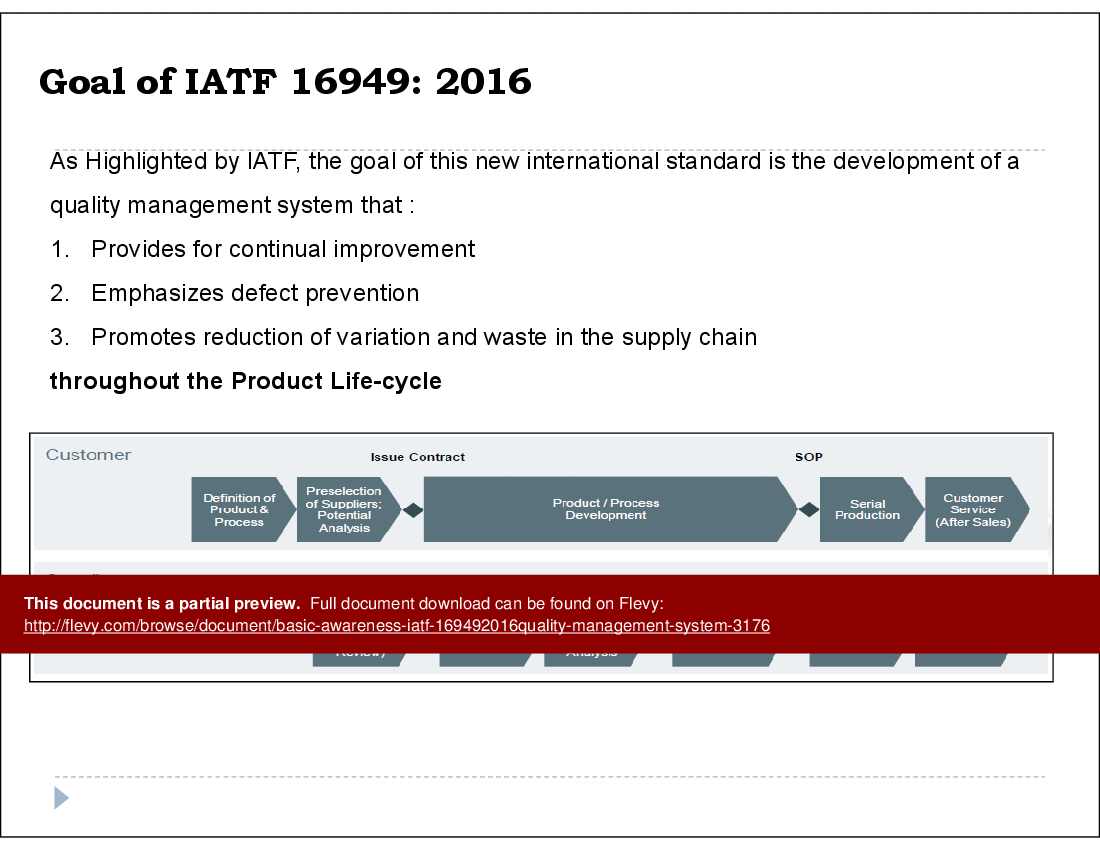
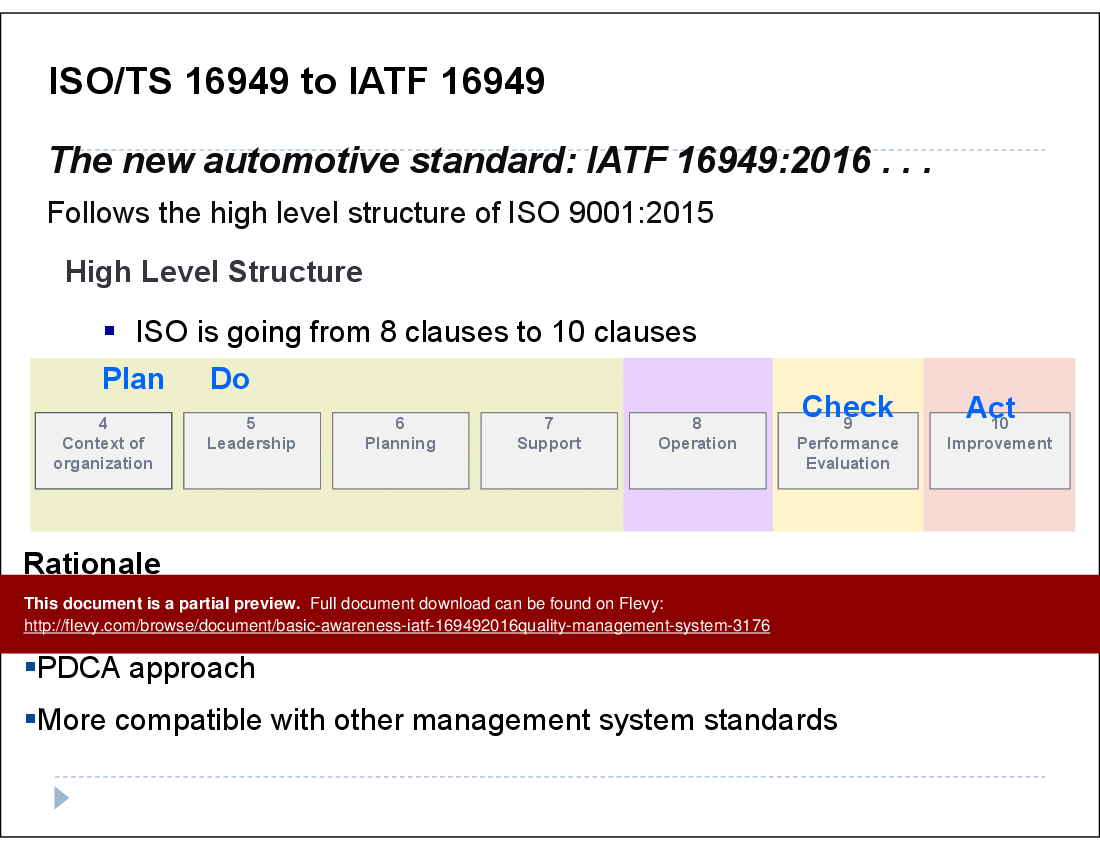
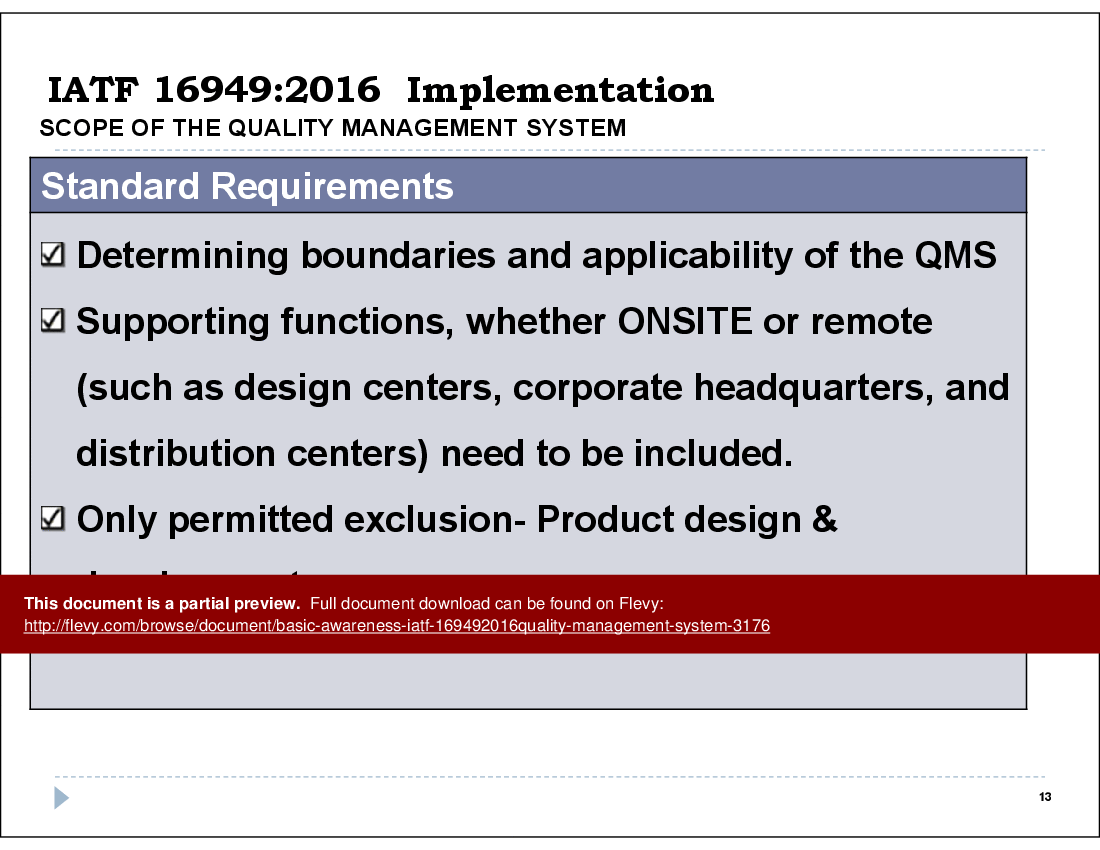
This presentation dives deep into the core objectives of IATF 16949:2016, emphasizing continual improvement, defect prevention, and waste reduction throughout the product lifecycle. It provides a comprehensive look at the transition from ISO/TS 16949 to IATF 16949, highlighting the new high-level structure aligned with ISO 9001:2015. The PPT meticulously outlines the PDCA approach, making it more compatible with other management system standards.
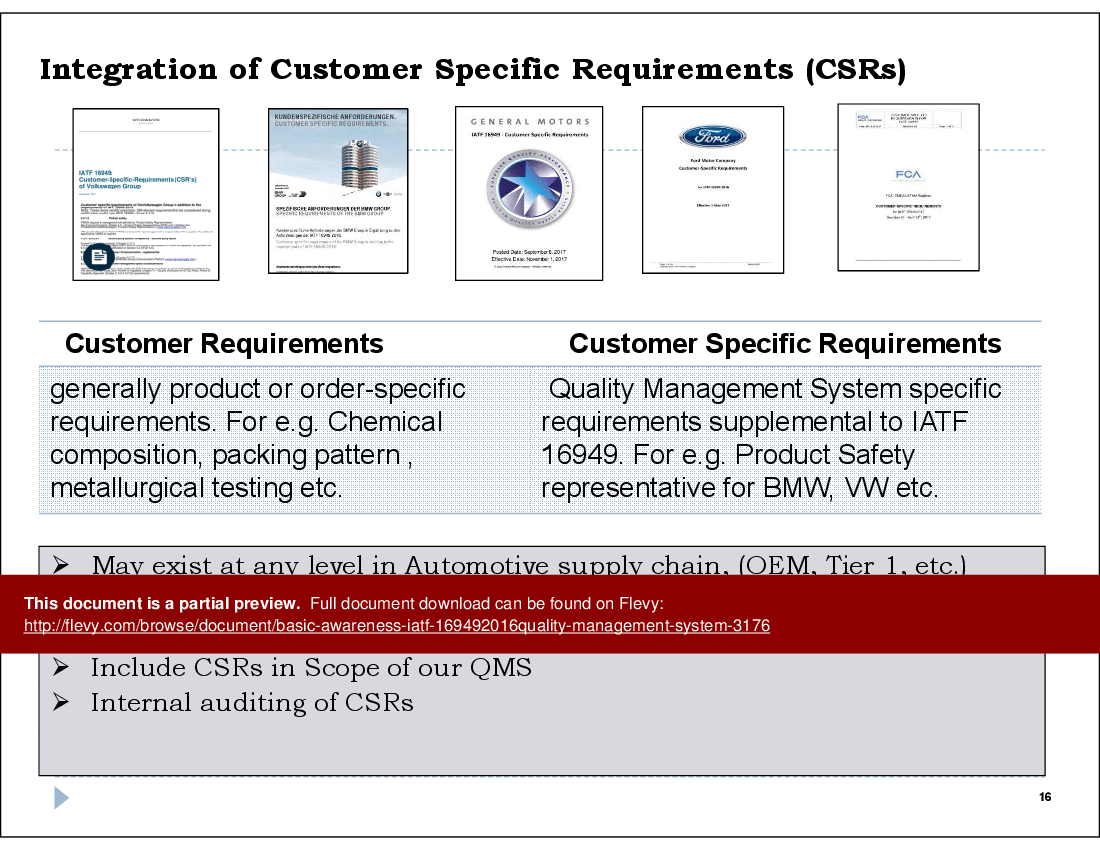
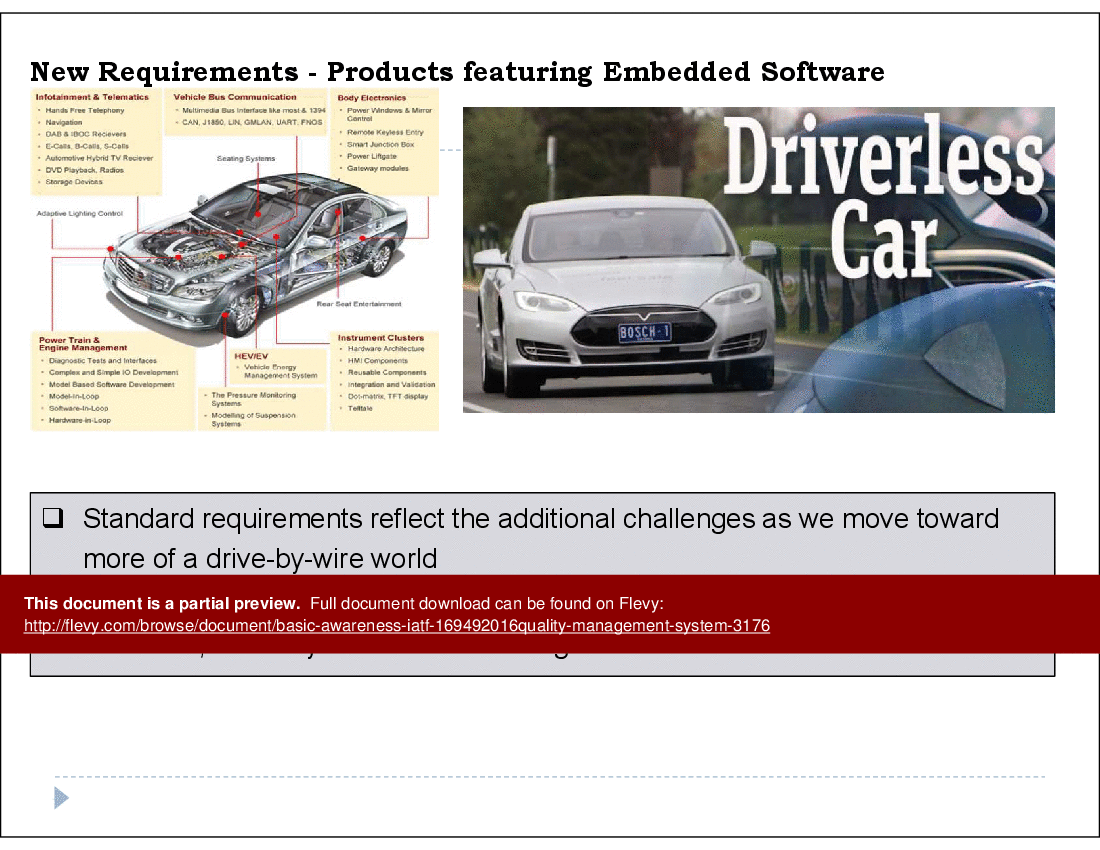
Key insights include the integration of Customer Specific Requirements (CSRs) and how these can be embedded within your Quality Management System. The presentation also addresses the challenges posed by new requirements, especially for products featuring embedded software, reflecting the industry's shift towards a drive-by-wire world. This is crucial for organizations aiming to stay ahead in the rapidly evolving automotive sector.
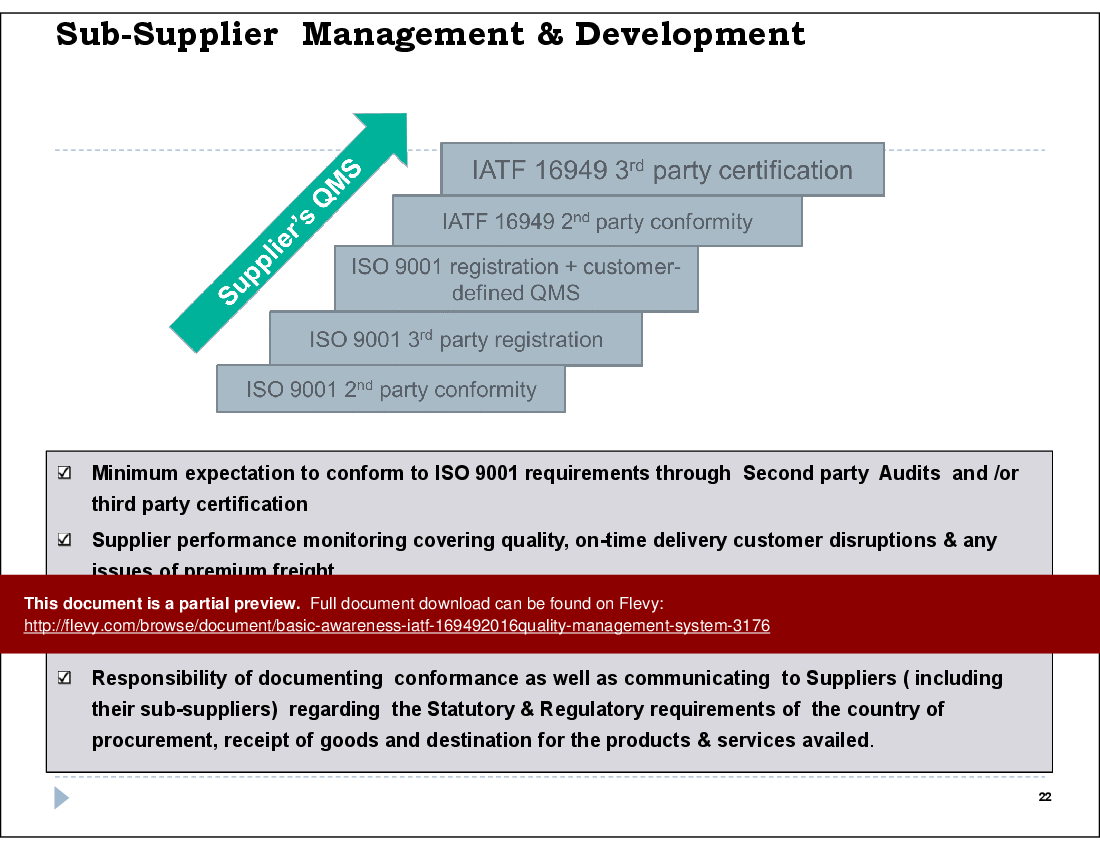
The section on Sub-Supplier Management & Development is particularly valuable, detailing the expectations for ISO 9001 conformance through second and third-party audits. It underscores the importance of supplier performance monitoring and the responsibility of documenting conformance to statutory and regulatory requirements. This ensures that all aspects of the supply chain are managed effectively, minimizing disruptions and maintaining quality standards.
Got a question about the product? Email us at support@flevy.com or ask the author directly by using the "Ask the Author a Question" form. If you cannot view the preview above this document description, go here to view the large preview instead.
Executive Summary
This presentation provides a foundational understanding of the IATF 16949:2016 Quality Management System (QMS) standard, specifically designed for the automotive industry. It outlines the critical requirements and changes from the previous ISO/TS 16949:2009 standard, emphasizing the integration of risk-based thinking and customer-specific requirements. The training equips participants with the knowledge to implement effective QMS practices that enhance product quality and safety, ensuring compliance with global automotive industry standards.
Who This Is For and When to Use
• Quality Assurance Managers in automotive manufacturing
• Compliance Officers responsible for standard adherence
• Supply Chain Managers overseeing supplier quality
• Internal Auditors conducting QMS assessments
Best-fit moments to use this deck:
• During onboarding sessions for new quality management personnel
• In workshops aimed at improving supplier management practices
• When preparing for internal audits or certification assessments
Learning Objectives
• Define the core principles of IATF 16949:2016 and its significance in the automotive industry
• Identify key changes from ISO/TS 16949:2009 to IATF 16949:2016
• Establish a framework for integrating customer-specific requirements into QMS
• Implement risk-based thinking in quality management processes
• Develop strategies for effective supplier management and development
• Create a warranty management process that meets IATF 16949 requirements
Table of Contents
• Objective of the Training (page 3)
• Introduction to IATF 16949 Standard (page 4)
• New & Significantly Modified Requirements (page 14)
• Conclusion (page 24)
Primary Topics Covered
• IATF 16949 Overview - This section introduces the IATF 16949:2016 standard, detailing its alignment with ISO 9001:2015 and its role in the automotive industry.
• Key Changes from ISO/TS 16949:2009 - Highlights significant modifications, including risk-based thinking and enhanced product safety requirements.
• Customer-Specific Requirements (CSRs) - Discusses the integration of CSRs into the QMS, emphasizing their importance across the automotive supply chain.
• Product Safety - Outlines new requirements for managing product safety, addressing current industry challenges.
• Warranty Management Process - Introduces the new warranty management process requirements, focusing on customer-specific needs and validation procedures.
• Sub-Supplier Management - Covers expectations for sub-supplier compliance with ISO 9001 and IATF standards, including auditing and performance monitoring.
Deliverables, Templates, and Tools
• QMS implementation checklist for IATF 16949:2016
• Template for documenting customer-specific requirements
• Risk assessment framework for operational processes
• Warranty management process flowchart
• Supplier performance monitoring template
• Internal audit checklist for IATF compliance
Slide Highlights
• Overview of IATF 16949:2016 and its significance in the automotive sector
• Comparison table illustrating key differences between IATF 16949:2016 and ISO/TS 16949:2009
• Visual representation of the risk-based thinking approach
• Detailed explanation of customer-specific requirements and their integration into QMS
• New product safety requirements addressing industry challenges
Potential Workshop Agenda
Introduction to IATF 16949:2016 (60 minutes)
• Overview of IATF 16949:2016
• Discussion on the importance of quality management in the automotive industry
• Q&A session
Implementation Strategies (90 minutes)
• Identifying key changes from ISO/TS 16949:2009
• Integrating customer-specific requirements into QMS
• Group activity on developing a risk assessment
Supplier Management Best Practices (60 minutes)
• Discussing sub-supplier management and development
• Sharing experiences and challenges in supplier quality assurance
• Wrap-up and feedback session
Customization Guidance
• Adapt the QMS implementation checklist to reflect specific organizational processes and requirements
• Modify customer-specific requirements templates to align with unique client needs
• Incorporate company-specific risk factors into the risk assessment framework
Secondary Topics Covered
• Historical evolution of IATF standards
• Overview of the International Automotive Task Force (IATF)
• Importance of continual improvement in quality management
• Strategies for effective communication with suppliers
Topic FAQ
Document FAQ
These are questions addressed within this presentation.
What is the purpose of IATF 16949:2016?
IATF 16949:2016 aims to enhance quality management systems in the automotive industry, focusing on continual improvement, defect prevention, and waste reduction throughout the product lifecycle.
How does IATF 16949:2016 differ from ISO/TS 16949:2009?
The new standard introduces significant changes, including a shift to risk-based thinking, enhanced product safety requirements, and the integration of customer-specific requirements into the QMS.
Is IATF 16949:2016 certification mandatory?
Yes, certification is mandatory for organizations supplying to automotive industry customers globally to ensure standardized quality management practices.
What are customer-specific requirements (CSRs)?
CSRs are additional quality management system requirements that automotive manufacturers impose on their suppliers, often related to product safety and compliance.
What is the significance of product safety in IATF 16949:2016?
Product safety is critical in the automotive industry, and the standard requires organizations to implement documented processes to manage safety-related products and processes effectively.
How should organizations manage their sub-suppliers?
Organizations must ensure that sub-suppliers conform to ISO 9001 requirements through audits and performance monitoring, addressing quality and delivery issues.
What is the warranty management process requirement?
The warranty management process must integrate customer-specific requirements and procedures to validate "No Trouble Found" scenarios when warranty claims arise.
How can organizations implement risk-based thinking?
Organizations should conduct contingency planning, identify risks at operational levels, and engage process owners in risk mitigation strategies to enhance product safety and quality.
Glossary
• IATF 16949:2016 - Revised Quality Management System standard for the automotive industry.
• ISO 9001:2015 - International standard for quality management systems.
• Customer-Specific Requirements (CSRs) - Additional requirements imposed by automotive manufacturers on suppliers.
• Risk-Based Thinking - An approach to identify and mitigate risks in quality management processes.
• Warranty Management - Process for handling warranty claims and customer-specific requirements related to warranties.
• Sub-Supplier - A supplier that provides goods or services to another supplier.
• Product Safety - Measures and processes to ensure the safety of automotive products.
• Continual Improvement - Ongoing efforts to enhance products, services, or processes.
• Quality Management System (QMS) - A structured system for managing quality in an organization.
• Internal Audit - A systematic examination of a quality system to ensure compliance with standards.
• Supplier Development - Initiatives aimed at improving supplier performance and capabilities.
• Documented Procedures - Formalized processes that organizations must follow to ensure consistency and compliance.
Source: Best Practices in Quality Management, IATF 16949 PowerPoint Slides: Basic Awareness - IATF 16949:2016 Quality Management System PowerPoint (PPTX) Presentation Slide Deck, esivaks2000
|
Receive our FREE presentation on Operational Excellence
This 50-slide presentation provides a high-level introduction to the 4 Building Blocks of Operational Excellence. Achieving OpEx requires the implementation of a Business Execution System that integrates these 4 building blocks. |