
 Click main image to view in full screen. Unlock all 14 preview images:
Port Terminal Operator - Project Finance Model – Excel XLSX
Excel (XLSX)


BENEFITS OF THIS DOWNLOADABLE EXCEL DOCUMENT
- Presents a business scenario of a privately run Port Terminal Operator with an existing terminal for Bulk Cargo and a development of a new terminal for containers
SHIPPING INDUSTRY EXCEL DESCRIPTION
A port operator is a port authority or company that contracts with the port authority to move cargo through a port at a contracted minimum level of productivity. They may be state-owned (particularly for port authorities) or privately run.
The work involves managing the movement of cargo containers between cargo ships, trucks and freight trains and optimizing the flow of goods through customs to minimize the amount of time a ship spends in port.
Maintaining efficiency involves managing and upgrading gantry cranes, berths, waterways, roads, storage facilities, communication equipment, computer systems and dockworkers' union contracts. The port operator also manages paperwork, leases, safety and port security.
This Financial Model presents a business scenario of a privately run Port Terminal Operator with an existing terminal for Bulk Cargo and a development of a new terminal for containers, enabling users to get a solid understanding of the financial feasibility of a Port Terminal Development & Operations project and to evaluate the return to Private Partners.
Model Structure:
Setup Assumptions:
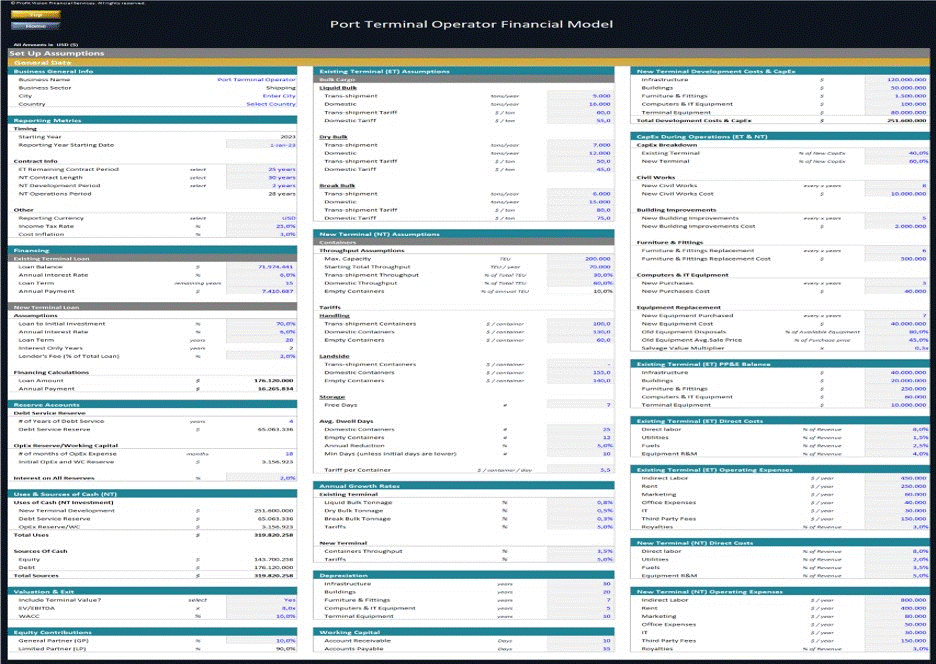
• Contract Timing: Existing Terminal & New Terminal Contract length (up to 30 years), Development & Operations Periods assumptions
• Initial Investment: Development & Construction Costs, Debt & OpEx Reserves, Financing Costs
• Uses & Sources of Cash and Capital Structure Assumptions
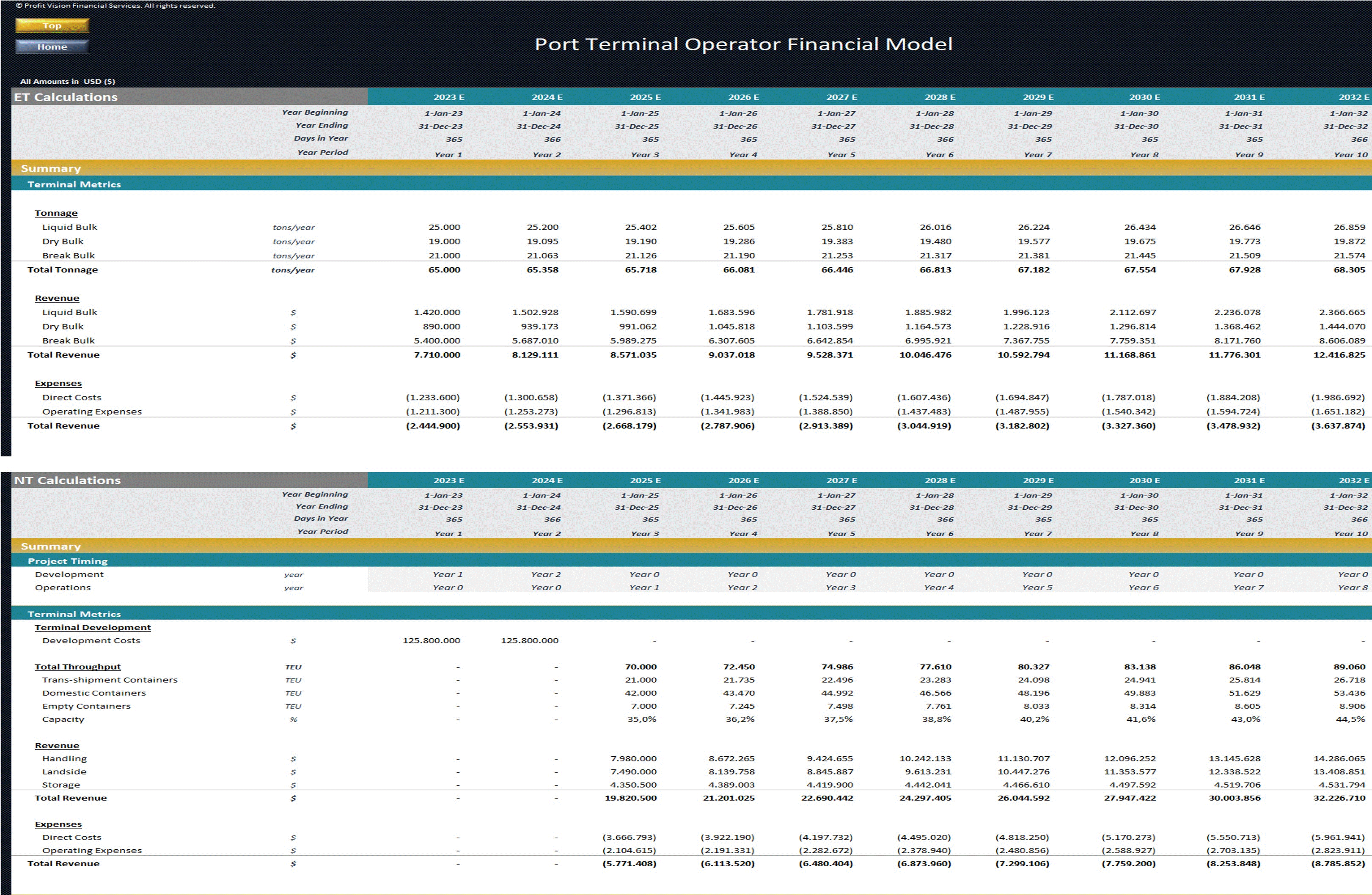
• Existing Terminal Assumptions: Trans-shipment and Domestic Tonnage and Tariffs for Liquid, Dry and Break Bulk Cargo
• New Terminal Assumptions: Trans-shipment and Domestic Containers Throughput (TEU) and Revenue from Handling, Landside and Storage Services
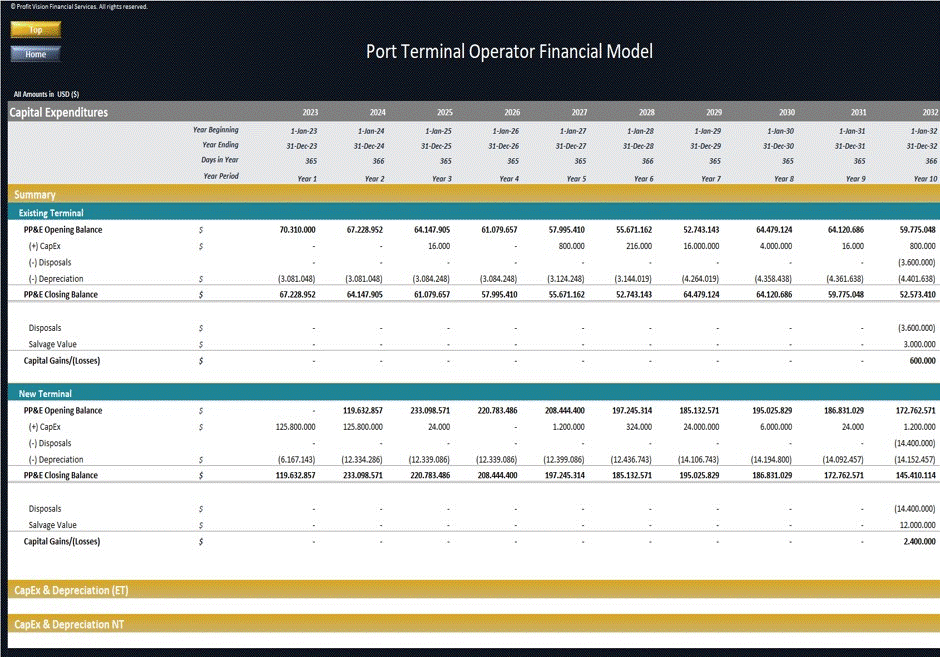
• Annual Operating Expenses per Terminal and Capital Expenditures Assumptions
• Private Partnership Equity Contribution Assumptions (GP & LP)
• Business Valuation Assumptions: Option to include Terminal Value, EV/EBITDA Multiple, WACC
• Other Reporting Assumptions: Income Tax Rate, Working Capital, Annual Growth Rates, etc.
Output Reports:
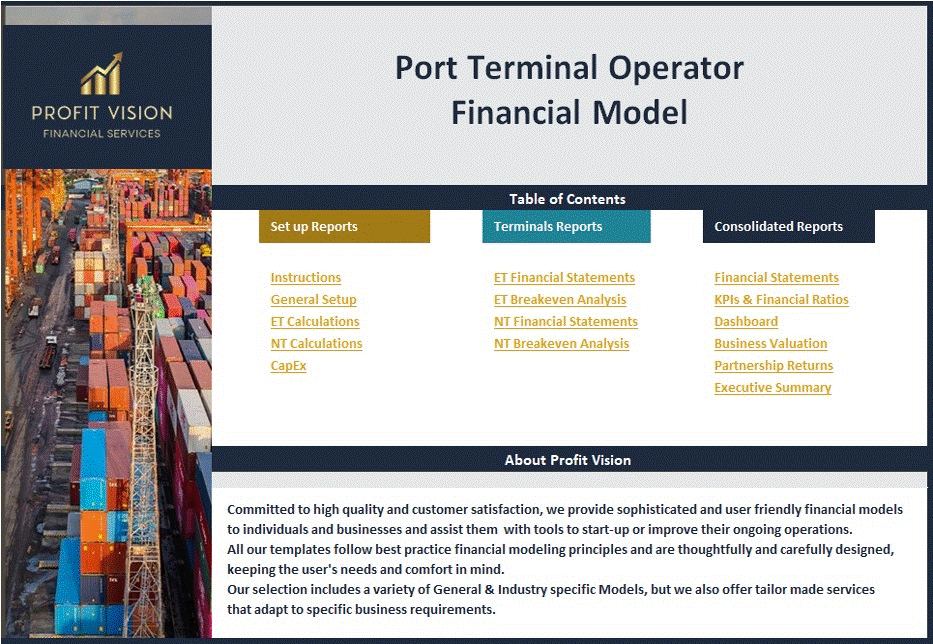
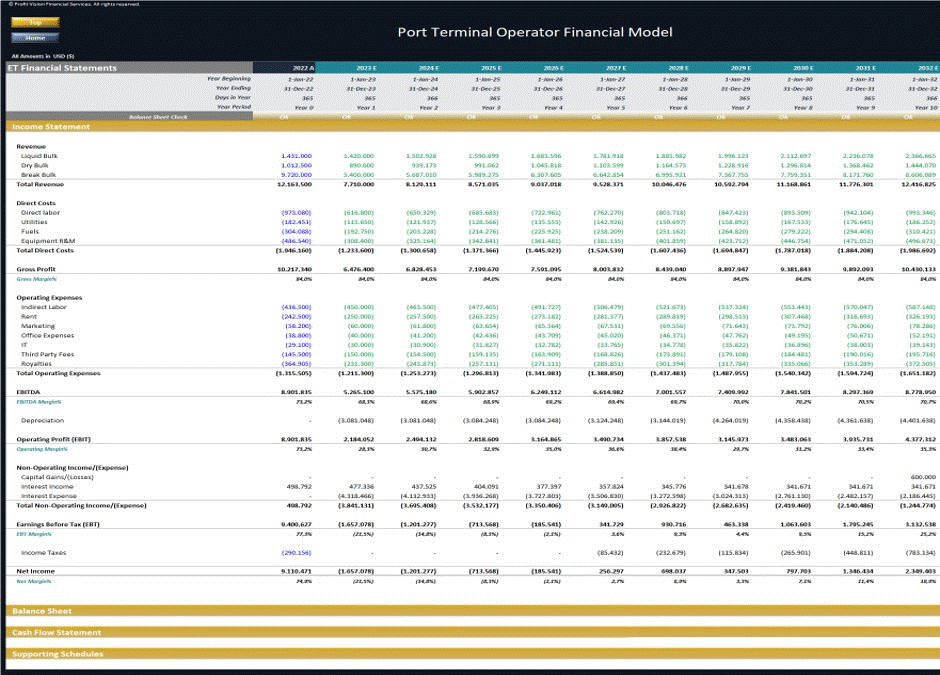
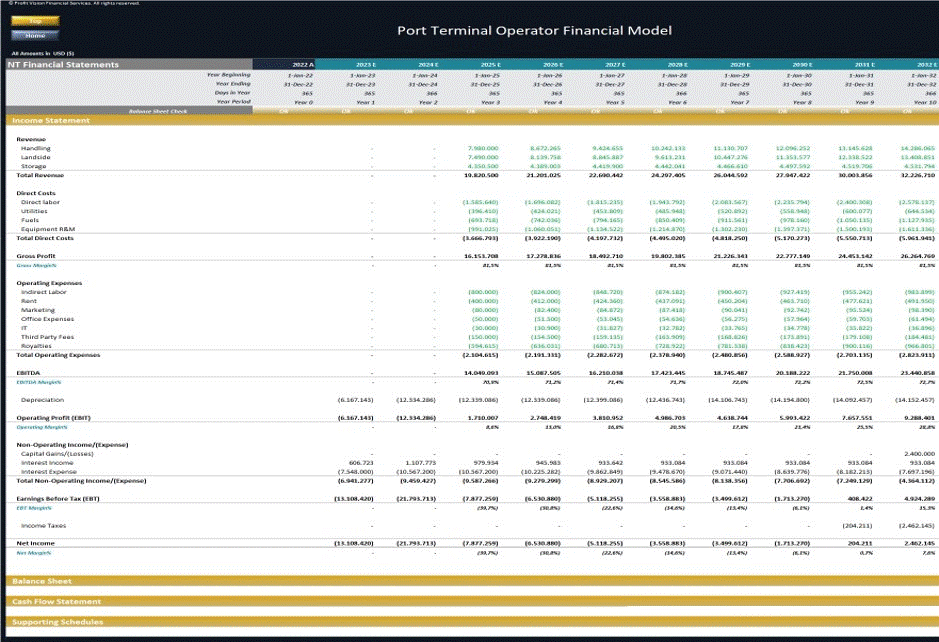
• Dynamic Financial Forecast for Each Terminal (3-Statement Model) incl. supporting schedules for Working Capital, PP&E, Debt & Debt Service, Reserve Accounts, Tax Schedule
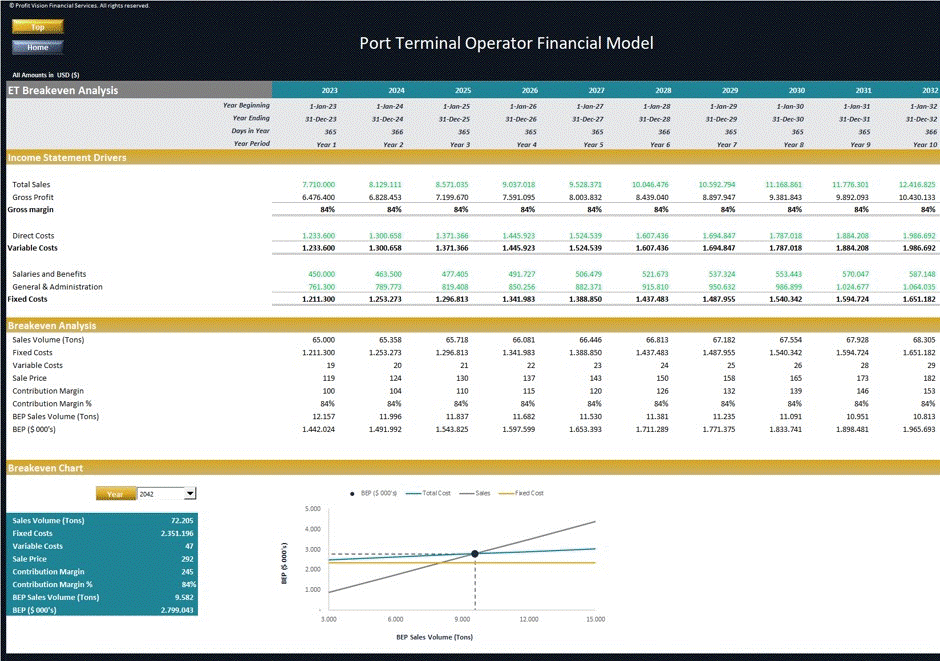
• Breakeven Analysis per Year for each Terminal
• Consolidated Financial Statements presenting Operating results for both Terminals
• Dynamic KPIs and Financial Ratios Dashboard, including Terminals Metrics, Key Financials, and Various Financial Ratios per Year
• Dynamic Performance Dashboard presenting key project's figures using highly-sophisticated Charts & Graphs
• Business Valuation (incl. Enterprise & Equity Value, DCF, Terminal Value, Unlevered & Levered Cash Flow, Project Return Metrics & Sensitivity Analysis)
• Investors Distribution Waterfall
• Project's Executive Summary
Help & Support
Committed to high quality and customer satisfaction, all our templates follow best-practice financial modeling principles and are thoughtfully and carefully designed, keeping the user's needs and comfort in mind.
Whether you have no experience or are well-versed in finance, accounting, and the use of Microsoft Excel, our professional financial models are the right tools to boost your business operations!
If you experience any difficulty while using this template and cannot find the appropriate guidance in the provided instructions, please feel free to contact us for assistance.
If you need a template customized for your business requirements, please e-mail us and explain your specific needs briefly.
This model equips stakeholders with a comprehensive framework for assessing the financial viability of port terminal operations, including detailed revenue projections and expense management strategies. Users can leverage dynamic dashboards and performance metrics to make informed decisions that drive operational efficiency and enhance profitability.
Got a question about the product? Email us at support@flevy.com or ask the author directly by using the "Ask the Author a Question" form. If you cannot view the preview above this document description, go here to view the large preview instead.
TOPIC FAQ
What financial statements are essential in a port terminal project finance model?
A project finance model should include a 3-statement financial forecast (income statement, balance sheet, cash flow) plus supporting schedules for working capital, PP&E, debt and debt service, reserve accounts and tax. These schedules enable consolidated operating results and cash-flow-driven valuation in a 3-statement model.What revenue drivers should I model differently for container versus bulk terminals?
Container terminals typically model throughput in TEU and revenue streams from handling, landside services and storage, while bulk terminals model trans-shipment and domestic tonnage with tariffs for liquid, dry and break-bulk cargo. The distinction affects throughput assumptions and tariff-driven revenue projections.How long should concession or operating contracts be modeled for a terminal project?
Long-term contract timing is a common input in terminal project models; this model supports contract lengths up to 30 years, allowing users to reflect development and operations periods across multi-decade timeframes.What valuation methods are commonly used to value a port terminal project?
Common valuation approaches include discounted cash flow analysis producing enterprise and equity value, terminal value calculations, and multiples such as EV/EBITDA; models typically use WACC and present unlevered and levered cash flows with sensitivity analysis for return metrics.Which performance analyses help assess whether a terminal project is viable?
Key analyses include annual breakeven analysis per terminal, dynamic KPIs and financial ratios, consolidated financial statements, and sensitivity analysis of returns. These outputs help stakeholders judge operational breakpoints and project returns using breakeven and KPI dashboards.What should I look for when choosing a port terminal financial model template?
Prefer templates that include a 3-statement model with working capital, PP&E and debt schedules, explicit throughput and tariff assumptions (TEU and tonnage), valuation modules (DCF, terminal value, EV/EBITDA), breakeven and investor waterfall functionality, plus documentation and support — for example, Flevy’s Port Terminal Operator - Project Finance Model.Which initial investment items are important to include in a terminal development model?
Initial investment inputs should capture development and construction costs, debt and operating expense reserves, financing costs, and uses & sources of cash; these items feed capital structure, reserve accounts and debt service calculations such as development and construction costs and financing reserves.How can I model equity contributions and distributions between GP and LP investors?
Include explicit private partnership equity contribution assumptions for GP and LP and model an investors distribution waterfall to allocate returns; Flevy’s Port Terminal Operator - Project Finance Model contains GP/LP contribution inputs and an Investors Distribution Waterfall output.Source: Best Practices in Shipping Industry, Integrated Financial Model Excel: Port Terminal Operator - Project Finance Model Excel (XLSX) Spreadsheet, Profit Vision
ABOUT THE AUTHOR

Profit Vision provides Consulting & Outsourced Financial Services as well as Financial Planning & Performance analysis to small and mid-size businesses by implementing efficient and effective tools to assist them with start-up business plans or improve their ongoing operations.
Our range of services include Financial & Operational Analysis, Business Planning, Budgeting & Forecasting, Cash Flow
... [read more]
Ask the Author a Question
You must be logged in to contact the author.