
This framework is developed by a team of former McKinsey and Big 4 consultants. The presentation follows the headline-body-bumper slide format used by global consulting firms.
Editor Summary
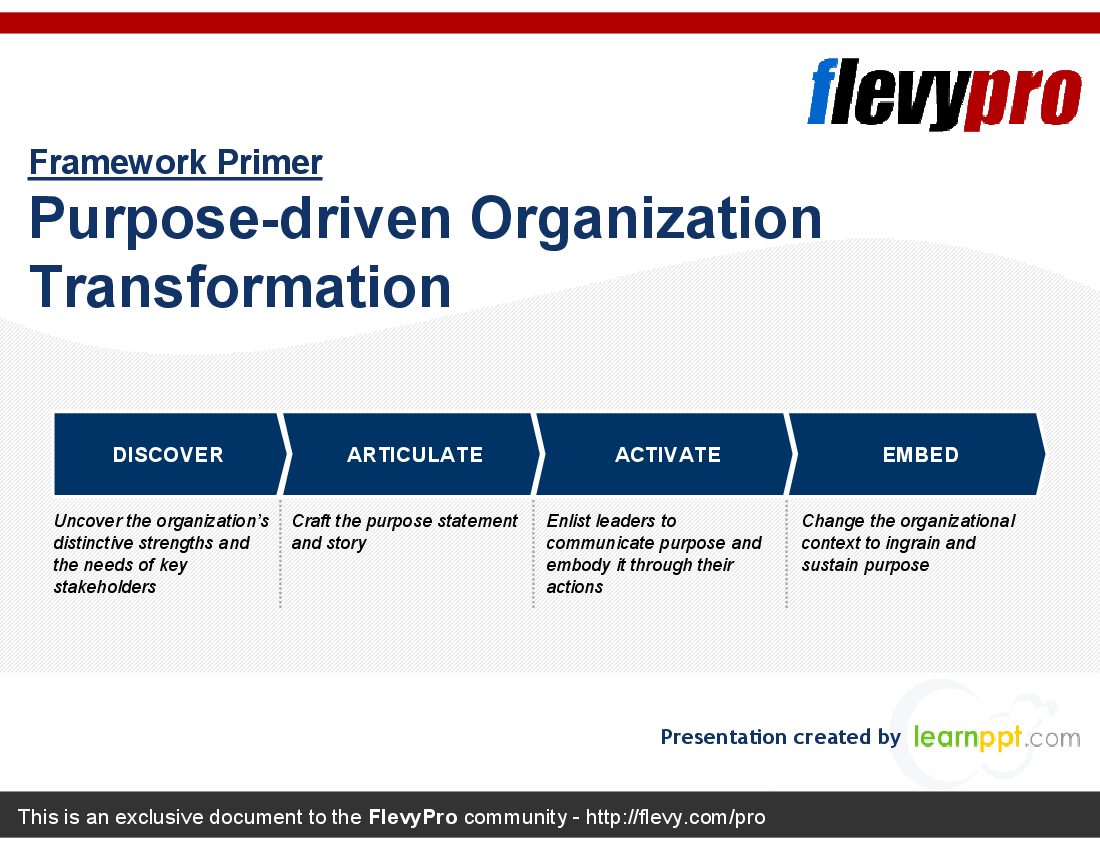
Purpose-driven Organization Transformation is a 20-slide PowerPoint from LearnPPT Consulting that presents a four-phase framework—Discover, Articulate, Activate, Embed—for transitioning organizations into purpose-driven entities.
Read moreThe deck defines Purpose and its 5 properties (Presence, Strength, Alignment, Integration, Advocacy), includes templates (purpose statement, workshop facilitation guides, communication strategy, performance management frameworks, feedback mechanisms), and offers workshop agendas. Target users include corporate executives, change leaders, HR professionals, and consultants; sold as a digital download on Flevy.
Use this deck when an organization needs to define, align, and institutionalize its organizational purpose—during strategic planning, leadership alignment, or culture-change initiatives.
Corporate executives running strategic planning sessions to define or refine a purpose statement aligned with business goals.
Change management leaders facilitating discovery and activation workshops to secure stakeholder buy-in and action plans.
HR professionals integrating purpose into recruitment, development, and performance-management processes using templates.
Consultants designing phase-gated transformation plans and workshop agendas for clients.
The four-phase approach (Discover, Articulate, Activate, Embed) segments work into discrete, consultative stages consistent with structured transformation practice.
Most organizations claim to want and have a Purpose, but they approach their Purpose superficially and thus cannot be considered a Purpose-driven Organization. Even if Purpose is well articulated, it hasn’t been ingrained sustainably within employees' beliefs and behaviors. As a result, organizations do not realize the benefits of owning the benefits associated with a Purpose-driven organization.
This presentation first defines what Purpose actually means. It breaks down Purpose into its 5 core components:
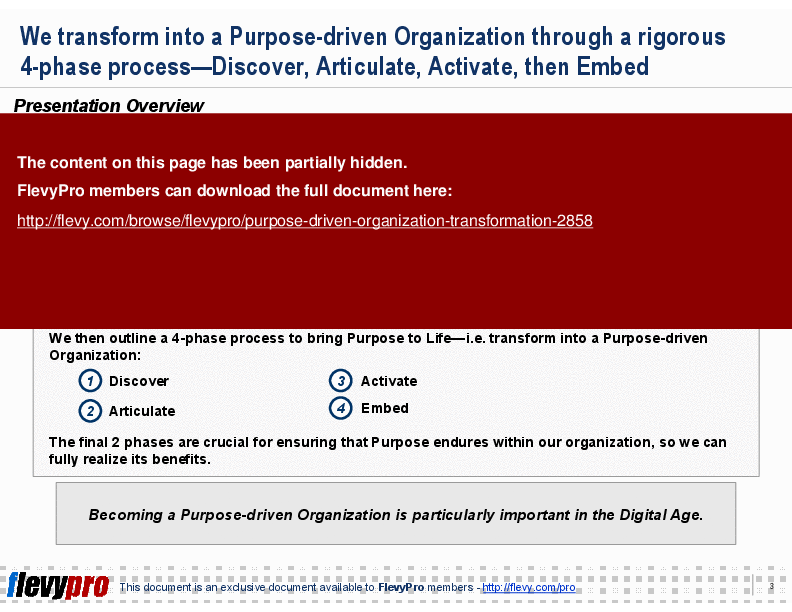
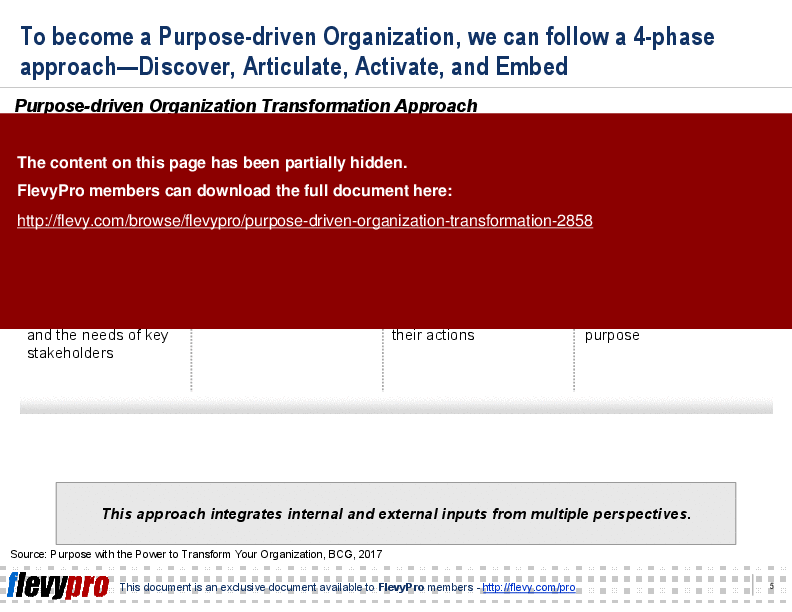
We then outline a 4-phase process to bring Purpose to Life—i.e. transform into a Purpose-driven Organization:
1. Discover
2. Articulate
3. Activate
4. Embed
The final 2 phases are crucial for ensuring that Purpose endures within our organization, so we can fully realize its benefits. Becoming a Purpose-driven Organization is particularly important in the Digital Age.
This deck also includes slides for you to use in your own business presentations.
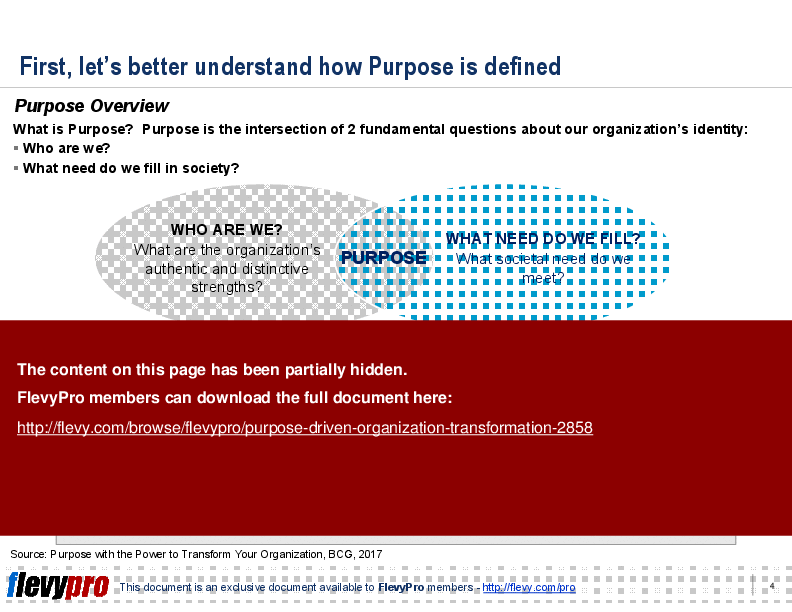
This PPT provides a comprehensive framework for identifying and articulating an organization's Purpose. It delves into the intersection of the organization's identity and societal needs, ensuring a clear, compelling, and inspiring Purpose that resonates with both employees and customers. The framework emphasizes the importance of aligning Purpose with the organization's history, DNA, and decision-making processes.
The presentation also includes actionable templates and key questions to guide organizations through each phase of the transformation. By integrating internal and external inputs, the approach ensures a holistic view of the organization's Purpose. This resource is essential for leaders committed to embedding Purpose deeply within their organizational culture and driving sustainable success.
This synopsis was written by Marcus [?] based on the analysis of the full 20-slide presentation.
Executive Summary
The "Purpose-driven Organization Transformation" presentation provides a structured framework for organizations aiming to transition into purpose-driven entities. Developed by seasoned consultants from top firms, this resource outlines a rigorous four-phase process: Discover, Articulate, Activate, and Embed. By following this framework, organizations can effectively identify their core purpose, communicate it compellingly, and integrate it into their operational fabric. This transformation is essential for fostering a culture that aligns with organizational values and drives sustainable impact.
Who This Is For and When to Use
• Corporate executives seeking to align organizational purpose with strategic goals
• Change management leaders responsible for driving cultural transformation
• HR professionals focused on embedding purpose in recruitment and employee engagement
• Consultants advising organizations on purpose-driven strategies
Best-fit moments to use this deck:
• During strategic planning sessions to define or refine organizational purpose
• In workshops aimed at fostering leadership alignment around purpose
• When developing training programs that incorporate purpose into employee development
Learning Objectives
• Define the concept of organizational purpose and its significance
• Identify the distinctive strengths and societal needs that shape an organization's purpose
• Develop a compelling purpose statement that resonates with stakeholders
• Implement initiatives that activate purpose across all organizational levels
• Embed purpose into organizational processes and culture for lasting impact
• Evaluate the effectiveness of purpose-driven initiatives through stakeholder feedback
Table of Contents
• Overview (page 1)
• Five Properties of Purpose (page 7)
• Purpose-driven Organization Transformation Approach (page 5)
• Templates (page 14)
Primary Topics Covered
• Purpose Definition - Purpose addresses the fundamental "Why?" of an organization, differentiating it from mission and vision.
• Four-Phase Transformation Process - The framework consists of Discover, Articulate, Activate, and Embed, guiding organizations through a structured transformation.
• Five Properties of Purpose - Presence, Strength, Alignment, Integration, and Advocacy are essential for a purpose-driven organization.
• Stakeholder Engagement - Engaging employees and customers in the purpose development process enhances buy-in and advocacy.
• Leadership Role - Leaders are crucial in embodying and communicating purpose throughout the organization.
• Sustaining Purpose - Long-term embedding of purpose requires changes in organizational context, including management systems and culture.
Deliverables, Templates, and Tools
• Purpose statement development template to guide organizations in articulating their unique purpose
• Workshop facilitation guides for engaging stakeholders in the discovery phase
• Communication strategy templates for effectively disseminating purpose across the organization
• Performance management frameworks that align rewards with purpose-driven behaviors
• Feedback mechanisms to assess stakeholder understanding and engagement with purpose
Slide Highlights
• Overview of the four-phase transformation process, visually depicting the steps involved
• Key questions associated with the 5 properties of purpose to guide organizational reflection
• Examples of successful purpose activation initiatives from leading organizations
• Visual representations of the relationship between purpose, culture, and organizational performance
Potential Workshop Agenda
Purpose Discovery Workshop (90 minutes)
• Engage stakeholders in identifying organizational strengths and societal needs
• Facilitate discussions to draft a preliminary purpose statement
• Gather feedback on the purpose statement from participants
Purpose Activation Session (60 minutes)
• Explore initiatives that can activate purpose within the organization
• Assign roles and responsibilities for implementing purpose-driven actions
• Develop a communication plan to share purpose with all stakeholders
Customization Guidance
• Tailor the purpose statement template to reflect the unique identity and values of your organization
• Modify workshop agendas to fit the specific needs and culture of your organization
• Integrate purpose into existing performance management systems to reinforce alignment
Secondary Topics Covered
• The role of organizational culture in supporting purpose-driven initiatives
• Strategies for measuring the impact of purpose on employee engagement and customer loyalty
• Best practices for communicating purpose to diverse stakeholder groups
Topic FAQ
What are the core phases of a purpose-driven organizational transformation?
A common, structured approach breaks transformation into 4 phases: Discover (gathering stakeholder and contextual insights), Articulate (drafting a clear purpose statement), Activate (launching initiatives and communications), and Embed (integrating purpose into systems and culture). This is organized as a four-phase process.
How does organizational purpose differ from mission and vision?
Purpose focuses on the fundamental "Why?" that connects organizational identity and societal needs, distinct from mission (what you do) and vision (where you aspire to be). The framework in the deck further explains Purpose through 5 components: Presence, Strength, Alignment, Integration, and Advocacy.
What should I look for when choosing a purpose-driven toolkit for my organization?
Prioritize materials that support end-to-end work: discovery methods, a purpose-statement template, stakeholder workshop guides, communication strategy templates, and tools to align performance systems. The Purpose-driven Organization Transformation deck explicitly includes a purpose statement template and workshop facilitation guides.
How can purpose be embedded into performance management systems?
Embedding purpose requires updating management systems: include purpose-aligned objectives in evaluations, tie rewards and development programs to purpose-driven behaviors, and integrate purpose into decision processes. The presentation lists performance management frameworks as a deliverable to support this integration.
How should I structure a stakeholder discovery workshop to surface organizational purpose?
A focused agenda engages stakeholders to identify strengths and societal needs, facilitates drafting a preliminary purpose statement, and gathers feedback. The deck offers a Purpose Discovery Workshop agenda that runs about 90 minutes and includes guided activities for drafting and feedback.
What roles should leaders play in activating organizational purpose?
Leaders should model purpose-aligned behaviors, sponsor initiatives, assign roles and responsibilities for activation, and communicate purpose through targeted channels. The Activate phase in the framework concentrates on implementing initiatives, assigning ownership, and developing communication plans.
How can organizations measure the effectiveness of purpose-driven initiatives?
Measurement combines quantitative performance metrics with qualitative stakeholder feedback from employees and customers to assess understanding, engagement, and behavioral change. The resource recommends using stakeholder feedback mechanisms alongside performance metrics as part of evaluation.
How much time and preparation does a basic purpose transformation effort typically require?
Time varies by scope,, but practical entry points include discrete workshops and phased workstreams: a 90-minute Purpose Discovery Workshop and a 60-minute Purpose Activation session are suggested agendas in the deck, supported by templates to accelerate preparation and execution.
Document FAQ
These are questions addressed within this presentation.
What is the significance of a purpose-driven organization?
A purpose-driven organization aligns its operations and culture with a clear sense of purpose, leading to enhanced employee engagement and customer loyalty.
How can we effectively communicate our purpose?
Utilizing storytelling techniques, such as short films or engaging presentations, can help convey your purpose in a way that resonates with stakeholders.
What are the 5 properties of purpose?
The 5 properties are Presence, Strength, Alignment, Integration, and Advocacy, which collectively define a robust organizational purpose.
How do we ensure that purpose is embedded in our culture?
Integrating purpose into management systems, performance evaluations, and employee development programs is essential for embedding it within the organizational culture.
What role do leaders play in activating purpose?
Leaders must model behaviors that reflect the organization's purpose and actively engage in initiatives that promote its visibility and relevance.
How can we assess the effectiveness of our purpose-driven initiatives?
Feedback from employees and customers, along with performance metrics, can provide insights into the impact of purpose on organizational outcomes.
What steps are involved in the discovery phase?
The discovery phase includes gathering insights from employees and customers, exploring organizational history, and identifying societal needs that the organization can address.
How can we align our purpose with strategic goals?
By ensuring that all initiatives and decisions reflect the core purpose, organizations can maintain alignment between purpose and strategic objectives.
Glossary
• Purpose - The fundamental reason for an organization's existence, addressing its "Why?"
• Discover - The initial phase of identifying an organization's purpose through stakeholder engagement.
• Articulate - The phase of developing a clear and compelling purpose statement.
• Activate - The implementation phase where leaders demonstrate and promote purpose-driven behaviors.
• Embed - The process of integrating purpose into organizational culture and systems.
• Advocacy - The support and promotion of the organization's purpose by employees and customers.
• Alignment - Ensuring that organizational decisions and actions reflect the established purpose.
• Integration - The incorporation of purpose into all aspects of organizational operations.
• Strength - The ability of an organization to maintain its purpose in the face of challenges.
• Presence - The visibility and clarity of purpose within the organization.
This PPT slide outlines 5 essential properties of Purpose within an organization: Presence, Strength, Alignment, Integration, and Advocacy. Presence emphasizes the clarity of Purpose for customers and employees, requiring both groups to articulate Purpose beyond products. Strength assesses Purpose's inspirational quality and relevance to societal needs. Alignment examines the resonance of Purpose with the organization's history and management's motivation, highlighting the importance of management engagement in decision-making. Integration focuses on the consistency of decisions with Purpose, questioning commitment even when lucrative opportunities arise. Advocacy evaluates Purpose's impact on employee and customer loyalty, assessing whether it fosters deeper engagement and recommendations. This framework helps organizations critically assess their alignment with Purpose, ensuring it drives decision-making and stakeholder engagement.
A Purpose-driven Organization is defined by 5 core properties: Presence, Advocacy, Strength, Integration, and Alignment, centered around "PURPOSE." Presence requires visibility and engagement in the organization's mission. Advocacy emphasizes employees championing organizational values. Strength reflects the organization's resilience in upholding its purpose during challenges. Integration involves embedding purpose into all functions, ensuring alignment with the overarching mission. Alignment focuses on coherence between organizational goals and employee and customer motivations. This approach cultivates loyalty and love from employees and customers, transcending transactional relationships. Adopting a purpose-driven strategy enhances engagement, loyalty, and sustainable success in a competitive environment.
Source: Best Practices in Corporate Culture, Business Transformation, Purpose PowerPoint Slides: Purpose-driven Organization Transformation PowerPoint (PPT) Presentation Slide Deck, LearnPPT Consulting
This framework is developed by a team of former McKinsey and Big 4 consultants. The presentation follows the headline-body-bumper slide format used by global consulting firms.
For $10.00 more, you can download this document plus 2 more FlevyPro documents. That's just $13 each.
ABOUT FLEVYPRO
This document is part of the FlevyPro Library, a curated knowledge base of documents for our FlevyPro subscribers.

FlevyPro is a subscription service for on-demand business frameworks and analysis tools. FlevyPro subscribers receive access to an exclusive library of curated business documents—business framework primers, presentation templates, Lean Six Sigma tools, and more—among other exclusive benefits.
The average daily rate of a McKinsey consultant is $6,625 (not including expenses). The average price of a Flevy document is $65.
Trusted by over 10,000+ Client Organizations
Since 2012, we have provided business templates to over 10,000 businesses and organizations of all sizes, from startups and small businesses to the Fortune 100, in over 130 countries.
"Last Sunday morning, I was diligently working on an important presentation for a client and found myself in need of additional content and suitable templates for various types of graphics. Flevy.com proved to be a treasure trove for both content and design at a reasonable price, considering the time I
saved. I encountered a download issue during the ordering process. However, a quick email to Flevy's support team, even on a Sunday (!!!), resulted in assistance within less than an hour, allowing me to download the content I needed. Fantastic job, Flevy! I give 5 stars for both content/price and customer service. Thank you!
"
– M. E., Chief Commercial Officer, International Logistics Service Provider
"My FlevyPro subscription provides me with the most popular frameworks and decks in demand in today’s market. They not only augment my existing consulting and coaching offerings and delivery, but also keep me abreast of the latest trends, inspire new products and service offerings for my practice, and educate me
in a fraction of the time and money of other solutions. I strongly recommend FlevyPro to any consultant serious about success.
"
– Bill Branson, Founder at Strategic Business Architects
"As a small business owner, the resource material available from FlevyPro has proven to be invaluable. The ability to search for material on demand based our project events and client requirements was great for me and proved very beneficial to my clients. Importantly, being able to easily edit and tailor
the material for specific purposes helped us to make presentations, knowledge sharing, and toolkit development, which formed part of the overall program collateral. While FlevyPro contains resource material that any consultancy, project or delivery firm must have, it is an essential part of a small firm or independent consultant's toolbox.
"
– Michael Duff, Managing Director at Change Strategy (UK)
"As a niche strategic consulting firm, Flevy and FlevyPro frameworks and documents are an on-going reference to help us structure our findings and recommendations to our clients as well as improve their clarity, strength, and visual power. For us, it is an invaluable resource to increase our impact and value."
– David Coloma, Consulting Area Manager at Cynertia Consulting
"Flevy.com has proven to be an invaluable resource library to our Independent Management Consultancy, supporting and enabling us to better serve our enterprise clients.
The value derived from our [FlevyPro] subscription in terms of the business it has helped to gain far exceeds the investment made, making a subscription a no-brainer for any growing consultancy – or in-house strategy team."
– Dean Carlton, Chief Transformation Officer, Global Village Transformations Pty Ltd.
"Flevy is our 'go to' resource for management material, at an affordable cost. The Flevy library is comprehensive and the content deep, and typically provides a great foundation for us to further develop and tailor our own service offer."
– Chris McCann, Founder at Resilient.World
"One of the great discoveries that I have made for my business is the Flevy library of training materials.
As a Lean Transformation Expert, I am always making presentations to clients on a variety of topics: Training, Transformation, Total Productive Maintenance, Culture, Coaching, Tools, Leadership Behavior, etc. Flevy
It is well worth the money to purchase these presentations. Sure, I have the knowledge and information to make my point. It is another thing to create a presentation that captures what I want to say. Flevy has saved me countless hours of preparation time that is much better spent with implementation that will actually save money for my clients.
"
– Ed Kemmerling, Senior Lean Transformation Expert at PMG
"I have found Flevy to be an amazing resource and library of useful presentations for lean sigma, change management and so many other topics. This has reduced the time I need to spend on preparing for my performance consultation. The library is easily accessible and updates are regularly provided. A wealth of great information."
– Cynthia Howard RN, PhD, Executive Coach at Ei Leadership
Download our free compilation of 50+ Strategy & Transformation slides and templates. Frameworks include McKinsey 7-S, Balanced Scorecard, Disruptive Innovation, BCG Curve, and many more.









