
This framework is developed by a team of former McKinsey and Big 4 consultants. The presentation follows the headline-body-bumper slide format used by global consulting firms.
Explore this IT Integration Framework for Post-Merger Integration, crafted by ex-McKinsey & Big 4 consultants. Optimize synergies and streamline operations. Post-merger Integration (PMI): IT Integration Framework is a 26-slide PPT PowerPoint presentation slide deck (PPT) available for immediate download upon purchase.
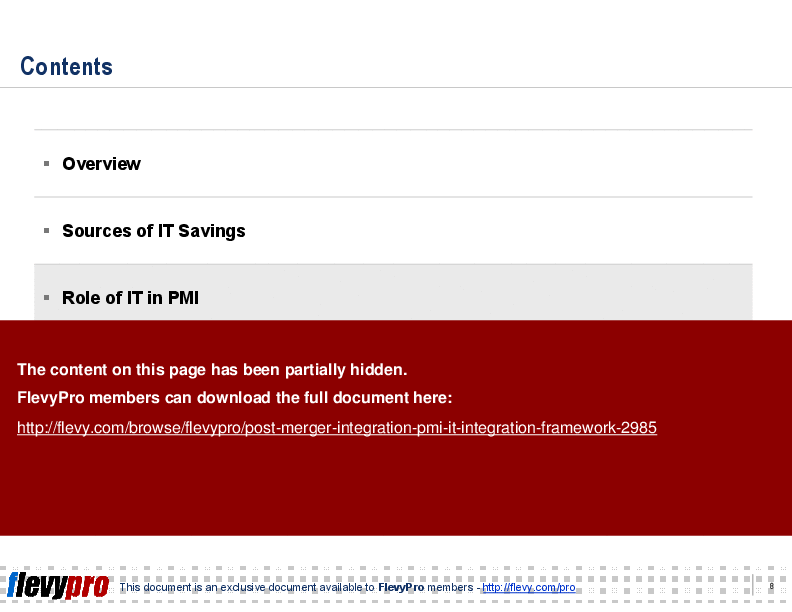
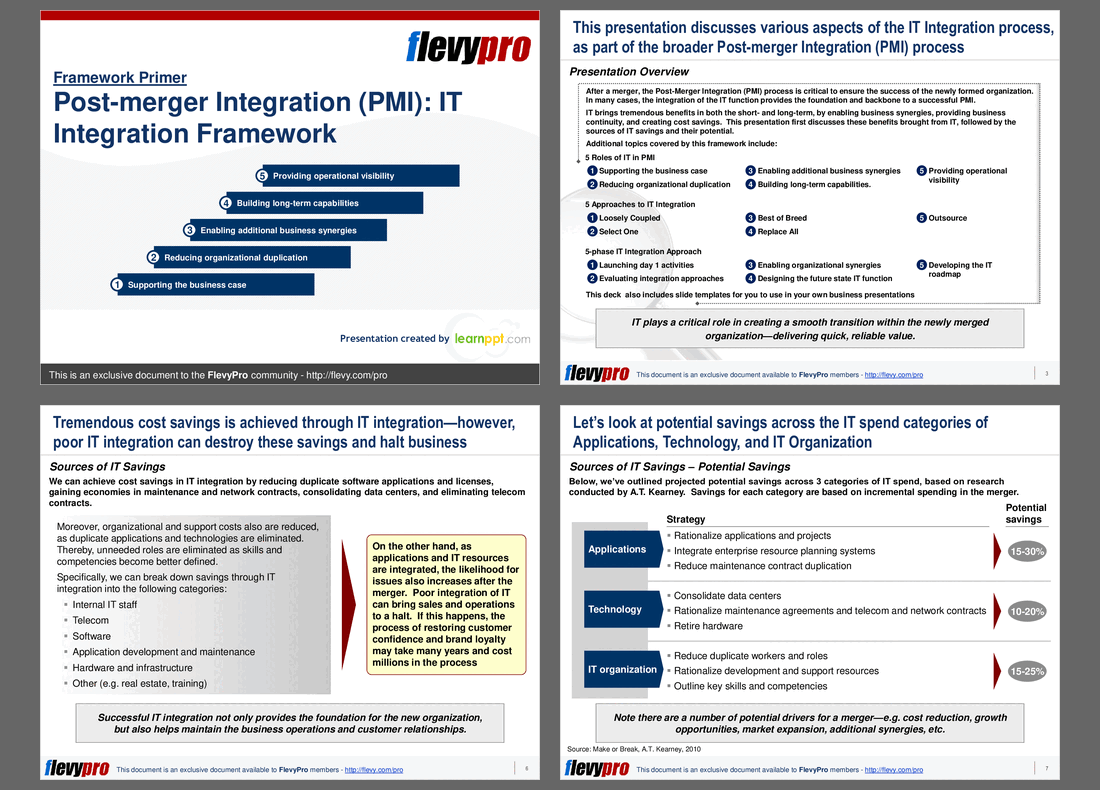
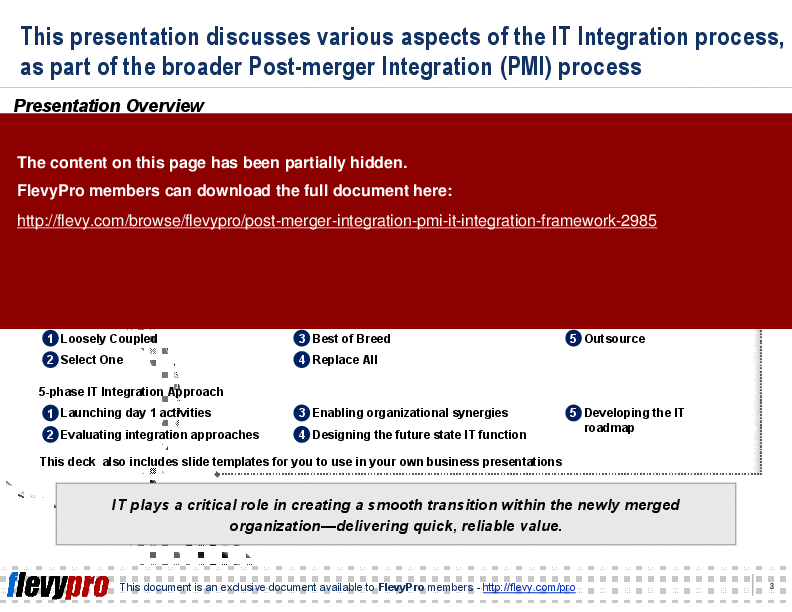
After a merger, the Post-Merger Integration (PMI) process is critical to ensure the success of the newly formed organization. In many cases, the integration of the IT function provides the foundation and backbone to a successful PMI. IT plays a critical role in creating a smooth transition within the newly merged organization—delivering quick, reliable value.
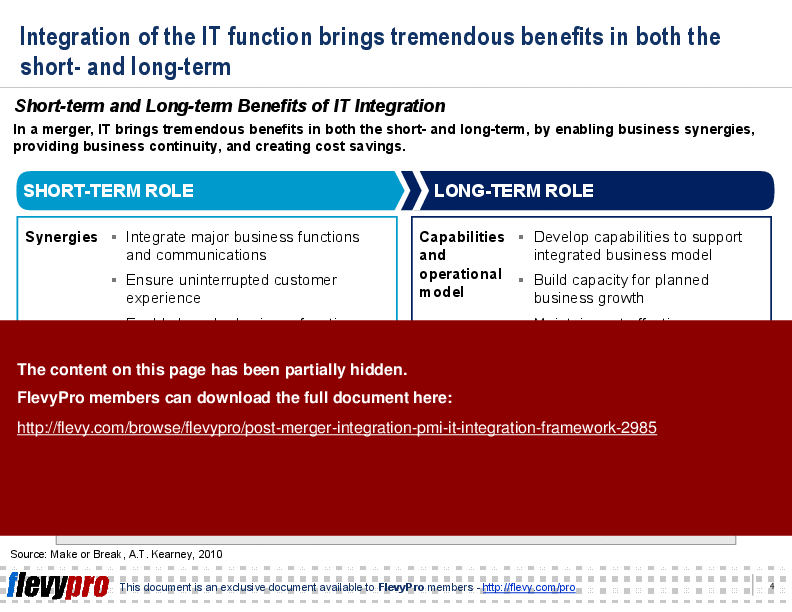
IT brings tremendous benefits in both the short- and long-term, by enabling business synergies, providing business continuity, and creating cost savings. This presentation first discusses these benefits brought from IT, followed by the sources of IT savings and their potential.
Additional topics covered by this framework include:
5 Roles of IT in PMI
1. Supporting the business case.
2. Reducing organizational duplication.
3. Enabling additional business synergies.
4. Building long-term capabilities.
5. Providing operational visibility.
5 Approaches to IT Integration
1. Loosely Coupled
2. Select One
3. Best of Breed
4. Replace All
5. Outsource
5-phase IT Integration Approach
1. Launching day 1 activities.
2. Evaluating integration approaches.
3. Enabling organizational synergies.
4. Designing the future state IT function.
5. Developing the IT roadmap.
This deck also includes slide templates for you to use in your own business presentations.
This comprehensive framework delves into the critical role IT plays in post-merger integration, emphasizing the importance of selecting the right approach for IT integration. It outlines five primary approaches: Loosely Coupled, Select One, Best of Breed, Replace All, and Outsource. Each approach is tailored to different merger scenarios, ensuring that IT systems align with the strategic goals of the newly formed organization. By choosing the appropriate approach, organizations can streamline operations, reduce redundancies, and maximize synergies.
The PPT also provides a detailed five-phase IT integration approach developed by A.T. Kearney. This approach includes launching day 1 activities, evaluating integration approaches, enabling organizational synergies, designing the future state IT function, and developing the IT roadmap. Each phase is designed to mitigate risks, realize cost savings, and reduce the typical turmoil associated with the PMI process. This structured methodology ensures a seamless transition, enabling the new organization to quickly achieve its strategic objectives.
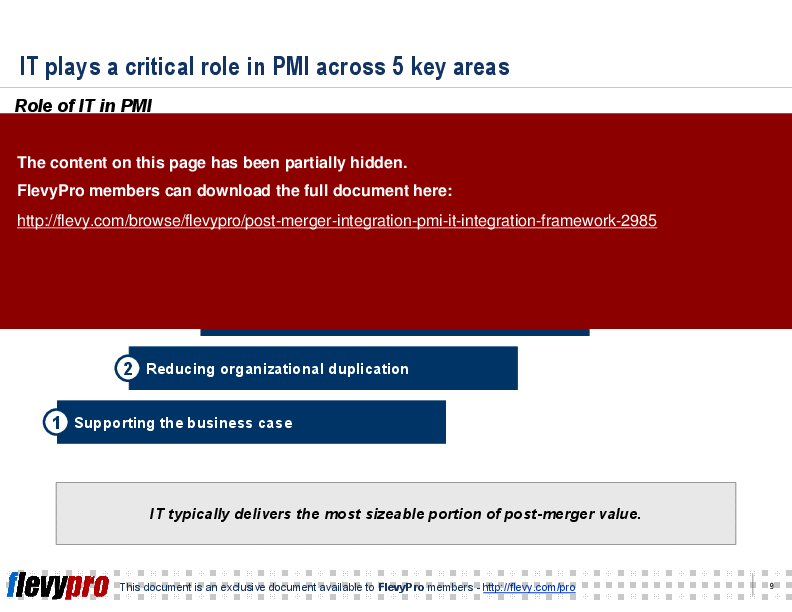
IT plays a crucial role in Post-merger Integration (PMI), impacting 5 key areas. First, "Supporting the business case" emphasizes the need for IT alignment with merger strategic objectives, ensuring technology initiatives contribute to business goals. Second, "Reducing organizational duplication" highlights streamlining IT systems to enhance efficiency and reduce costs during integration. Third, "Enabling additional business synergies" indicates that IT facilitates collaboration and communication, improving operational effectiveness and innovation. Fourth, "Building long-term capabilities" stresses the importance of IT in supporting immediate integration while laying a foundation for future growth. Lastly, "Providing operational visibility" underscores the necessity for transparency through effective IT systems, offering real-time insights for informed decision-making. A robust IT strategy is essential for maximizing value during PMI.
This PPT slide outlines a structured approach to IT integration during a merger, focusing on 3 key phases. The first phase, "Launching day 1 activities," emphasizes minimizing disruptions by evaluating risks and establishing mitigation strategies. It includes assessing immediate IT requirements and taking inventory of current IT systems, which sets the groundwork for the future IT organization and analyzes current costs for potential savings.
The second phase, "Evaluating integration approaches," involves determining the most suitable merger strategy through detailed evaluations of merging IT functions, including mapping applications and infrastructure, while assessing organizational readiness for change.
The final phase, "Enabling organizational synergies," identifies potential risks and explores opportunities within merged IT functions, suggesting that prioritizing IT initiatives should begin before day one to enable synergies. This structured approach mitigates risks and positions the merged entity to realize cost savings and streamline operations effectively.
This PPT slide outlines 5 primary approaches to IT integration: "Outsource," "Loosely Coupled," "Select One," "Best of Breed," and "Replace All."
"Outsource" involves delegating systems to third-party providers while aligning with the architectural direction, allowing organizations to leverage external expertise. "Loosely Coupled" maintains separate systems, facilitating reporting modifications for consolidation while preserving operational independence.
"Select One" entails adopting a single IT model that aligns with the merged entities' business strategy, streamlining operations, but requiring significant system adjustments. "Best of Breed" identifies the most effective setups, prioritizing architectural direction to enhance innovation and efficiency.
"Replace All" advocates for phasing out legacy systems entirely, necessitating substantial investment and change management. The integration approach must align with the merger type and strategic objectives for effective IT integration.
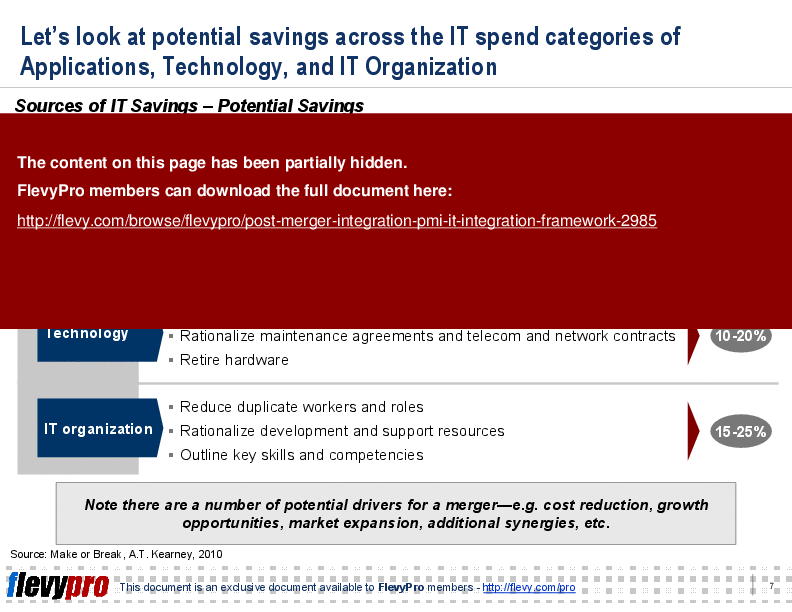
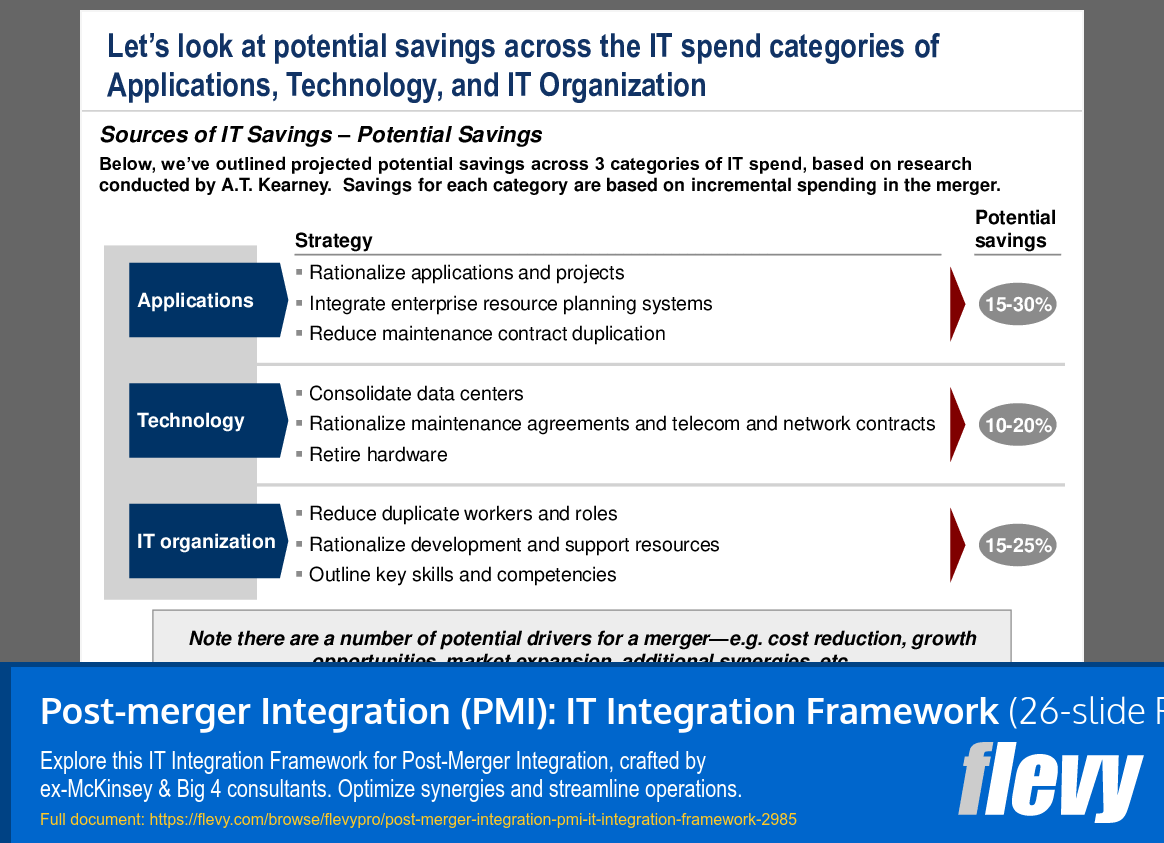
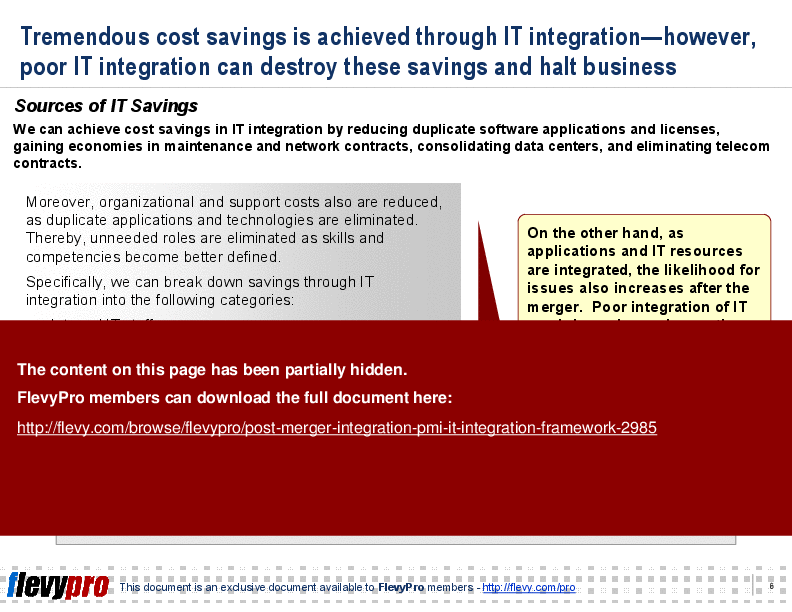
This PPT slide outlines potential savings in IT spending across 3 categories: Applications, Technology, and IT Organization. In Applications, strategies include rationalizing applications, integrating enterprise resource planning systems, and reducing maintenance contract duplication, with savings projected between 15% and 30%. The Technology category focuses on consolidating data centers, rationalizing maintenance agreements, and retiring outdated hardware, expecting savings of 10% to 20%. In the IT Organization section, workforce optimization involves reducing duplicate roles and aligning skills with the new structure, with potential savings of 15% to 25%. These strategies highlight the importance of optimizing IT costs during a merger to enhance efficiency and drive value.
This PPT slide outlines the critical role of IT in post-merger integration (PMI), focusing on 2 primary benefit areas: building long-term capabilities and providing operational visibility. IT is foundational for the merged organization's operational model, enabling support for strategic growth goals after short-term integration tasks. A cost-effective technology infrastructure is essential for successful mergers, prioritizing IT systems that facilitate immediate integration while supporting future scalability. In terms of operational visibility, IT alleviates employee uncertainties during PMI by enhancing communication through robust reporting infrastructures and collaborative tools like social networking platforms and wikis. A well-structured IT framework serves as a strategic asset, aligning IT capabilities with organizational goals to ensure a smooth transition and long-term viability.
Source: Best Practices in Acquisition, IT Strategy, PMI PowerPoint Slides: Post-merger Integration (PMI): IT Integration Framework PowerPoint (PPT) Presentation Slide Deck, LearnPPT Consulting
This framework is developed by a team of former McKinsey and Big 4 consultants. The presentation follows the headline-body-bumper slide format used by global consulting firms.
For $10.00 more, you can download this document plus 2 more FlevyPro documents. That's just $13 each.
ABOUT FLEVYPRO
This document is part of the FlevyPro Library, a curated knowledge base of documents for our FlevyPro subscribers.

FlevyPro is a subscription service for on-demand business frameworks and analysis tools. FlevyPro subscribers receive access to an exclusive library of curated business documents—business framework primers, presentation templates, Lean Six Sigma tools, and more—among other exclusive benefits.
The average daily rate of a McKinsey consultant is $6,625 (not including expenses). The average price of a Flevy document is $65.
Trusted by over 10,000+ Client Organizations
Since 2012, we have provided business templates to over 10,000 businesses and organizations of all sizes, from startups and small businesses to the Fortune 100, in over 130 countries.
"I have used FlevyPro for several business applications. It is a great complement to working with expensive consultants. The quality and effectiveness of the tools are of the highest standards."
– Moritz Bernhoerster, Global Sourcing Director at Fortune 500
"FlevyPro has been a brilliant resource for me, as an independent growth consultant, to access a vast knowledge bank of presentations to support my work with clients. In terms of RoI, the value I received from the very first presentation I downloaded paid for my subscription many times over! The
quality of the decks available allows me to punch way above my weight – it's like having the resources of a Big 4 consultancy at your fingertips at a microscopic fraction of the overhead.
"
– Roderick Cameron, Founding Partner at SGFE Ltd
"As a niche strategic consulting firm, Flevy and FlevyPro frameworks and documents are an on-going reference to help us structure our findings and recommendations to our clients as well as improve their clarity, strength, and visual power. For us, it is an invaluable resource to increase our impact and value."
– David Coloma, Consulting Area Manager at Cynertia Consulting
"As a small business owner, the resource material available from FlevyPro has proven to be invaluable. The ability to search for material on demand based our project events and client requirements was great for me and proved very beneficial to my clients. Importantly, being able to easily edit and tailor
the material for specific purposes helped us to make presentations, knowledge sharing, and toolkit development, which formed part of the overall program collateral. While FlevyPro contains resource material that any consultancy, project or delivery firm must have, it is an essential part of a small firm or independent consultant's toolbox.
"
– Michael Duff, Managing Director at Change Strategy (UK)
"As a consultant requiring up to date and professional material that will be of value and use to my clients, I find Flevy a very reliable resource.
The variety and quality of material available through Flevy offers a very useful and commanding source for information. Using Flevy saves me time, enhances my expertise and ends up being a good decision."
– Dennis Gershowitz, Principal at DG Associates
"I am extremely grateful for the proactiveness and eagerness to help and I would gladly recommend the Flevy team if you are looking for data and toolkits to help you work through business solutions."
– Trevor Booth, Partner, Fast Forward Consulting
"As an Independent Management Consultant, I find Flevy to add great value as a source of best practices, templates and information on new trends. Flevy has matured and the quality and quantity of the library is excellent. Lastly the price charged is reasonable, creating a win-win value for
the customer, Flevy and the various authors. This is truly a service that benefits the consulting industry and associated clients. Thanks for providing this service.
"
– Jim Schoen, Principal at FRC Group
"Flevy is our 'go to' resource for management material, at an affordable cost. The Flevy library is comprehensive and the content deep, and typically provides a great foundation for us to further develop and tailor our own service offer."
Receive our FREE presentation on Operational Excellence
This 50-slide presentation provides a high-level introduction to the 4 Building Blocks of Operational Excellence. Achieving OpEx requires the implementation of a Business Execution System that integrates these 4 building blocks.