
This framework is developed by a team of former McKinsey and Big 4 consultants. The presentation follows the headline-body-bumper slide format used by global consulting firms.
Explore a strategic framework for Sustainable Cost Reduction, crafted by ex-McKinsey and Big 4 consultants. Enhance your organization's efficiency and competitive edge. Sustainable Cost Reduction is a 20-slide PPT PowerPoint presentation slide deck (PPT) available for immediate download upon purchase.
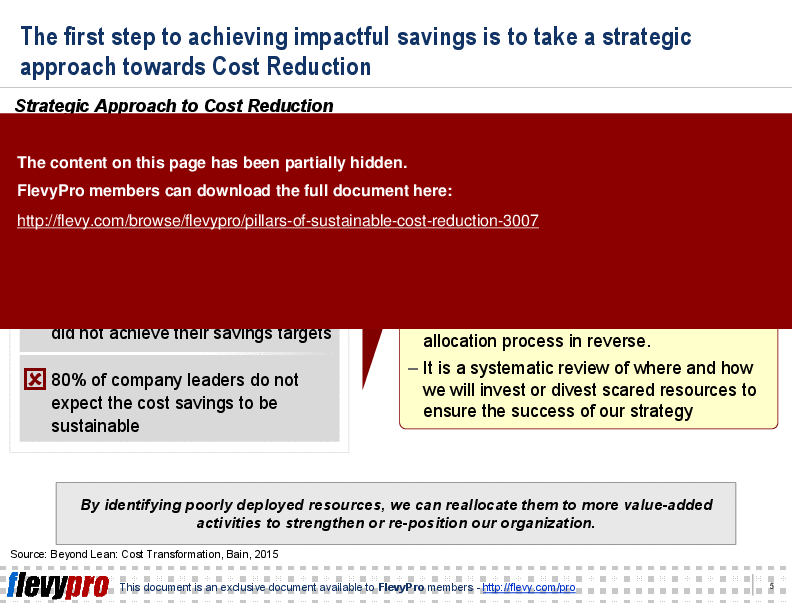
For most organizations, Cost Reduction efforts don't produce meaningful or lasting results. This is because they do not take a strategic approach to Cost Reduction. This framework first clarifies the meaning, rationale, and importance of the strategic approach to Cost Reduction.
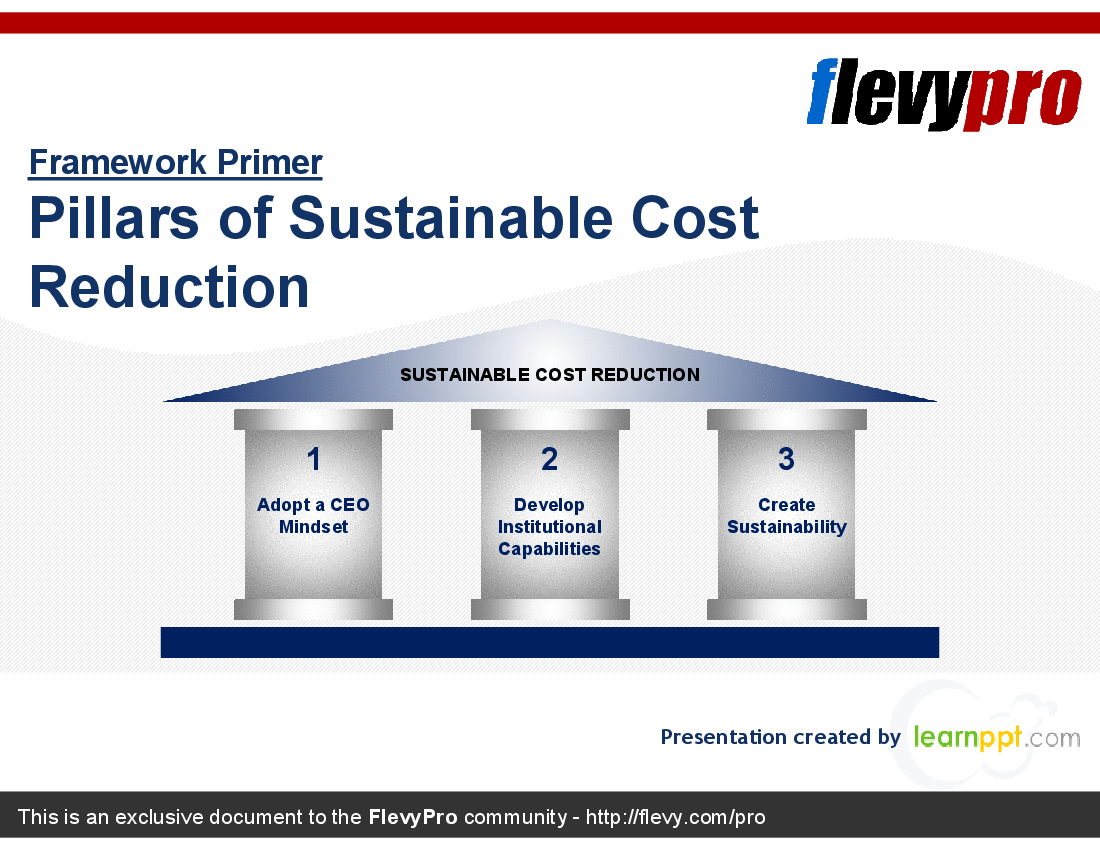
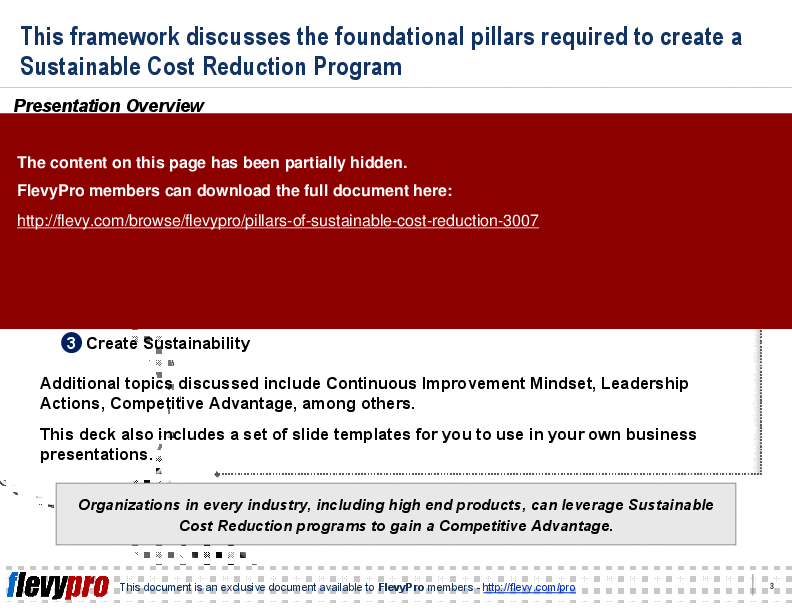
Then, we delve into the 3 pillars to developing a Sustainable Cost Reduction Program:
1. Adopt a CEO Mindset
2. Develop Institutional Capabilities
3. Create Sustainability
Organizations in every industry, including high end products, can leverage Sustainable Cost Reduction programs to gain a Competitive Advantage.
Additional topics discussed include Continuous Improvement Mindset, Leadership Actions, Competitive Advantage, among others.
This deck also includes a set of slide templates for you to use in your own business presentations.
This comprehensive presentation outlines the critical steps necessary for achieving Sustainable Cost Reduction. It emphasizes the importance of adopting a CEO mindset, which involves viewing cost reduction as a strategic initiative rather than a mere operational task. This mindset shift is essential for aligning cost reduction with long-term business goals and ensuring that all team members are equipped with the necessary tools and perspectives.
The PPT also highlights the need to develop institutional capabilities, focusing on cross-functional teams, accountability, and a horizontal view of the organization. These capabilities are crucial for implementing an effective cost reduction program that is both sustainable and impactful. By fostering collaboration and ensuring clear decision rights, organizations can drive meaningful change and maintain cost efficiencies over time.
Creating sustainability is the final pillar, which involves adopting a Continuous Improvement mindset. This approach ensures that cost reduction efforts are not just one-time initiatives, but are ingrained in the organization's culture. By continuously identifying and eliminating inefficiencies, companies can maintain their competitive edge and achieve lasting financial benefits. The presentation includes practical templates and actionable insights, making it a valuable resource for any organization looking to implement a robust cost reduction strategy.
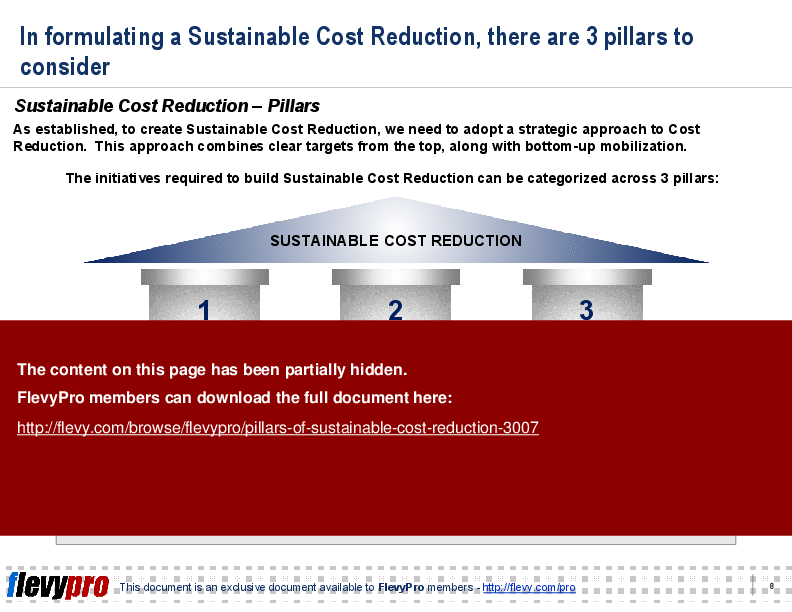
This PPT slide outlines a framework for Sustainable Cost Reduction, emphasizing 3 essential pillars. The first pillar, "Adopt a CEO Mindset," requires leadership to embrace cost reduction initiatives, set clear targets, and foster a culture of efficiency and accountability. The second pillar, "Develop Institutional Capabilities," focuses on building skills and processes to identify and implement cost-saving measures, institutionalizing ongoing cost management practices. The third pillar, "Create Sustainability," stresses the importance of embedding cost-conscious practices into the organizational culture for long-term viability. Bottom-up mobilization empowers employees to contribute insights and energy toward cost-saving initiatives, ensuring lasting results in cost reduction strategies.
This PPT slide assesses the readiness and viability of a Cost Reduction Program through critical questions. The first question evaluates whether the program reinforces a strategic advantage, aligning cost reduction initiatives with organizational goals. The second question addresses leadership structure and the involvement of cross-functional teams, indicating the need for diverse perspectives in cost management. The third question emphasizes integrating cost reduction into regular management discussions, making it a priority at all organizational levels. The fourth question inquires about annual targets for cost reduction within the budgeting process, highlighting the necessity for systematic tracking of efficiency gains. The final question assesses the visibility of the program, stressing a proactive culture of cost reduction among all employees. A negative response to any question may signal potential shortcomings in the program's effectiveness.
This PPT slide analyzes 2 approaches to cost management: the strategic approach and the conventional approach. Organizations identified as "Cost Leaders" achieve significant performance improvements through a strategic framework for cost reduction. A graph shows unit costs over 3 periods: years 0-2, 2-5, and 5-9. The strategic approach, labeled "Winners in good times and bad," exhibits a marked decline in unit costs, while the conventional approach, "The Rest," shows a flat trend, indicating less effective cost management. A bar chart categorizes organizations by return on capital into 5 groups: Weak follower, Follower, Parity, Leader, and Strong leader, with returns ranging from 2% to 18%. This data indicates that a strategic approach enhances capital efficiency and financial performance. Sustained cost reduction focuses on maximizing productivity while minimizing resource expenditure.
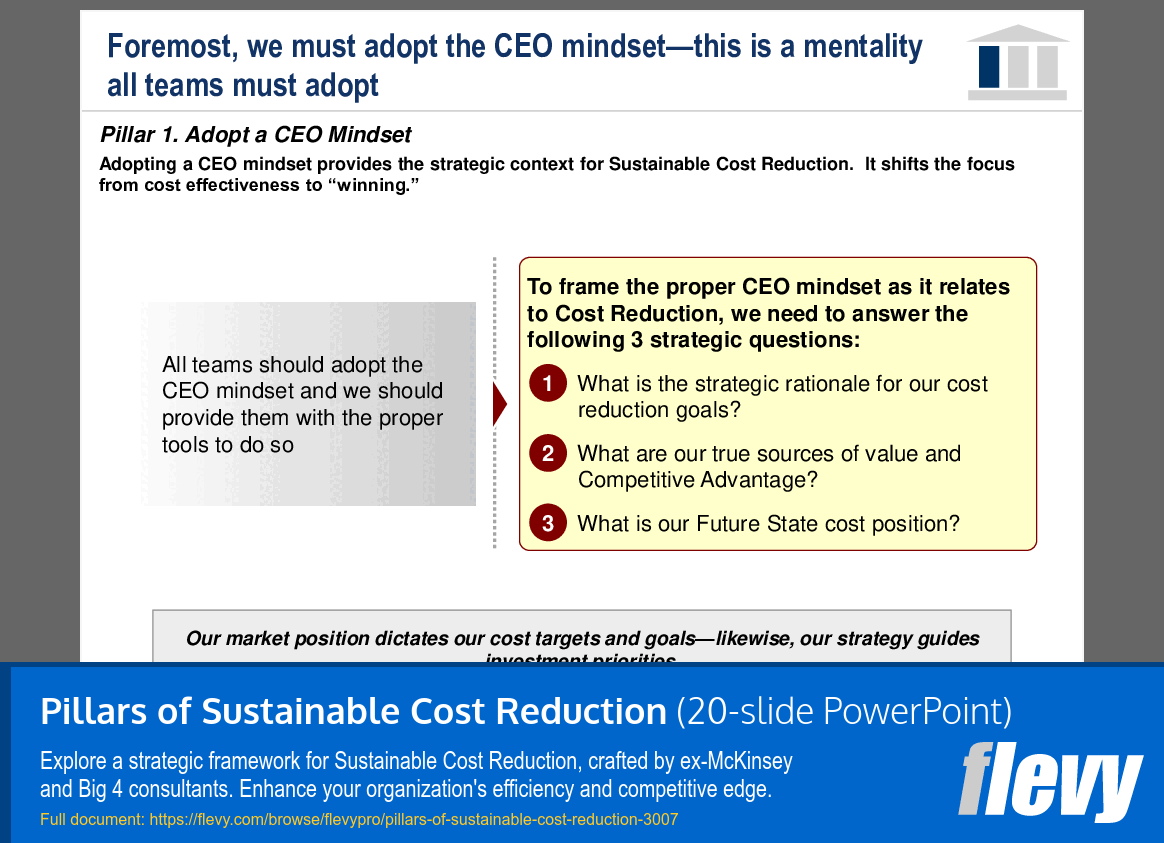
This PPT slide emphasizes the necessity of adopting a CEO mindset for Sustainable Cost Reduction, shifting focus from cost effectiveness to a broader objective of "winning." Organizations must address 3 strategic questions: the rationale behind cost reduction goals, which ensures alignment with long-term vision; identifying true sources of value and competitive edge, encouraging a focus on genuine differentiators; and envisioning the Future State cost position, guiding current decisions and resource allocation. Adopting a CEO mindset is a strategic necessity that equips teams with the tools to align efforts with company objectives.
Sustainable Cost Reduction is essential for organizations to enhance efficiency and resource allocation. Implementing a Sustainable Cost Reduction Program can be challenging, but offers significant rewards, freeing resources and fostering strategic advantages in business operations, talent management, and training. A Continuous Improvement mindset is necessary to achieve and maintain cost reductions over time, as traditional efforts often lead to rising costs without ongoing management. Engaging every employee, from entry-level to C-suite, in a collective responsibility to reduce costs by a target, such as 3% annually, fosters accountability and innovation. Lean Management principles, including Kaizen and DMAIC, provide structured methodologies for instilling Continuous Improvement and enhancing efficiency, reinforcing the goal of sustainable cost reduction.
Source: Best Practices in Cost Reduction, Cost Management PowerPoint Slides: Pillars of Sustainable Cost Reduction PowerPoint (PPT) Presentation Slide Deck, LearnPPT Consulting
This framework is developed by a team of former McKinsey and Big 4 consultants. The presentation follows the headline-body-bumper slide format used by global consulting firms.
For $10.00 more, you can download this document plus 2 more FlevyPro documents. That's just $13 each.
ABOUT FLEVYPRO
This document is part of the FlevyPro Library, a curated knowledge base of documents for our FlevyPro subscribers.
FlevyPro is a subscription service for on-demand business frameworks and analysis tools. FlevyPro subscribers receive access to an exclusive library of curated business documents—business framework primers, presentation templates, Lean Six Sigma tools, and more—among other exclusive benefits.
The average daily rate of a McKinsey consultant is $6,625 (not including expenses). The average price of a Flevy document is $65.
Trusted by over 10,000+ Client Organizations
Since 2012, we have provided business templates to over 10,000 businesses and organizations of all sizes, from startups and small businesses to the Fortune 100, in over 130 countries.
"As a consulting firm, we had been creating subject matter training materials for our people and found the excellent materials on Flevy, which saved us 100's of hours of re-creating what already exists on the Flevy materials we purchased."
– Michael Evans, Managing Director at Newport LLC
"I have used Flevy services for a number of years and have never, ever been disappointed. As a matter of fact, David and his team continue, time after time, to impress me with their willingness to assist and in the real sense of the word. I have concluded in fact
that it is not at all just a repository of documents/resources but, in the way that David and his team manage the firm, it is like dealing with consultants always ready to assist, advise and direct you to what you really need, and they always get it right.
I am an international hospitality accomplished senior executive who has worked and lived during the past 35 years in 23 countries in 5 continents and I can humbly say that I know what customer service is, trust me.
Aside from the great and professional service that Flevy's team provide, their wide variety of material is of utmost great quality, professionally put together and most current.
Well done Flevy, keep up the great work and I look forward to continue working with you in the future and to recommend you to a variety of colleagues around the world.
"
– Roberto Pelliccia, Senior Executive in International Hospitality
"I like your product. I'm frequently designing PowerPoint presentations for my company and your product has given me so many great ideas on the use of charts, layouts, tools, and frameworks. I really think the templates are a valuable asset to the job."
– Roberto Fuentes Martinez, Senior Executive Director at Technology Transformation Advisory
"If you are looking for great resources to save time with your business presentations, Flevy is truly a value-added resource. Flevy has done all the work for you and we will continue to utilize Flevy as a source to extract up-to-date information and data for our virtual and onsite presentations!"
– Debbi Saffo, President at The NiKhar Group
"Flevy is our 'go to' resource for management material, at an affordable cost. The Flevy library is comprehensive and the content deep, and typically provides a great foundation for us to further develop and tailor our own service offer."
– Chris McCann, Founder at Resilient.World
"I am extremely grateful for the proactiveness and eagerness to help and I would gladly recommend the Flevy team if you are looking for data and toolkits to help you work through business solutions."
– Trevor Booth, Partner, Fast Forward Consulting
"Flevy is now a part of my business routine. I visit Flevy at least 3 times each month.
Flevy has become my preferred learning source, because what it provides is practical, current, and useful in this era where the business world is being rewritten.

many challenges and there is the need to make the right decisions in a short time, with so much scattered information, we are fortunate to have Flevy. Flevy investigates, selects, and puts at our disposal the best of the best to help us be successful in our work.
"
– Omar Hernán Montes Parra, CEO at Quantum SFE
"As a small business owner, the resource material available from FlevyPro has proven to be invaluable. The ability to search for material on demand based our project events and client requirements was great for me and proved very beneficial to my clients. Importantly, being able to easily edit and tailor
the material for specific purposes helped us to make presentations, knowledge sharing, and toolkit development, which formed part of the overall program collateral. While FlevyPro contains resource material that any consultancy, project or delivery firm must have, it is an essential part of a small firm or independent consultant's toolbox.
"
– Michael Duff, Managing Director at Change Strategy (UK)
Receive our FREE presentation on Operational Excellence
This 50-slide presentation provides a high-level introduction to the 4 Building Blocks of Operational Excellence. Achieving OpEx requires the implementation of a Business Execution System that integrates these 4 building blocks.