
Value Innovation Strategy (PowerPoint PPTX Slide Deck)
PowerPoint (PPTX) 26 Slides
$29.00
MBB/Big 4 style presentation that provides a visual guide to enabling a value innovation strategy that aims to make the existing competition irrelevant
provides a visual guide to key elements of a value innovation strategy
makes it easier for consultants and professionals to key value innovation strategy concepts in their work
BUSINESS MODEL INNOVATION PPT DESCRIPTION
Editor Summary
26-slide PowerPoint presentation "Value Innovation Strategy" by ILMAM - Strategy & Management Consulting provides a visual, McKinsey/Bain/BCG-style guide to implementing value innovation and Blue Ocean Strategy.
Read moreIncludes 6 core templates/tools such as a Strategy Canvas template, Buyer Utility Map framework, ERRC grid model, Pioneer-Migrator-Settler map, pricing corridor tool, and a Five-step Blue Ocean Shift guide. Targeted at corporate executives, business consultants, strategy teams, and product managers, sold as a digital download on Flevy with immediate digital download.
Use this deck when an organization needs to create uncontested market space or reframe offerings during strategic planning, innovation workshops, product strategy sessions, or stakeholder alignment meetings.
Corporate executives aligning organizational activities and presenting new market opportunities to boards during strategic planning sessions.
Business consultants facilitating workshops to build Strategy Canvases and Buyer Utility Maps for clients.
Strategy teams mapping noncustomers and applying the Six Paths Framework to reconstruct market boundaries.
Product managers applying the ERRC grid and Pioneer-Migrator-Settler map to design differentiated, cost-conscious offerings.
The slide-driven, hypothesis-structured approach (Strategy Canvas, Buyer Utility Map, Five-step Blue Ocean Shift) mirrors problem-structuring practices used at McKinsey, Bain, and BCG.
This document provides a visual guide to to enabling a value innovation strategy that aims to make the existing competition irrelevant. An established value innovation strategy approach is the Blue Ocean Strategy, first introduced by Chan Kim and Renee Mauborgne in 2005.
This document can serve as a useful resource for anyone looking to understand and implement a value innovation strategy, making it easier for consultants and professionals to apply the key concepts listed below in their work.
Contents:
1. Red vs Blue Ocean Strategy
2. Value Innovation
3. Strategy Canvas
4. Buyer Utility Map
5. Three Tiers of Noncustomers
6. Six Paths Framework
7. Four Actions Framework
8. Eliminate-Reduce-Raise-Create (ERRC) Grid
9. Pioneer Migrator Settler Map
10. Price Corridor of the Target Mass
11. Sequence of Creating a Blue Ocean
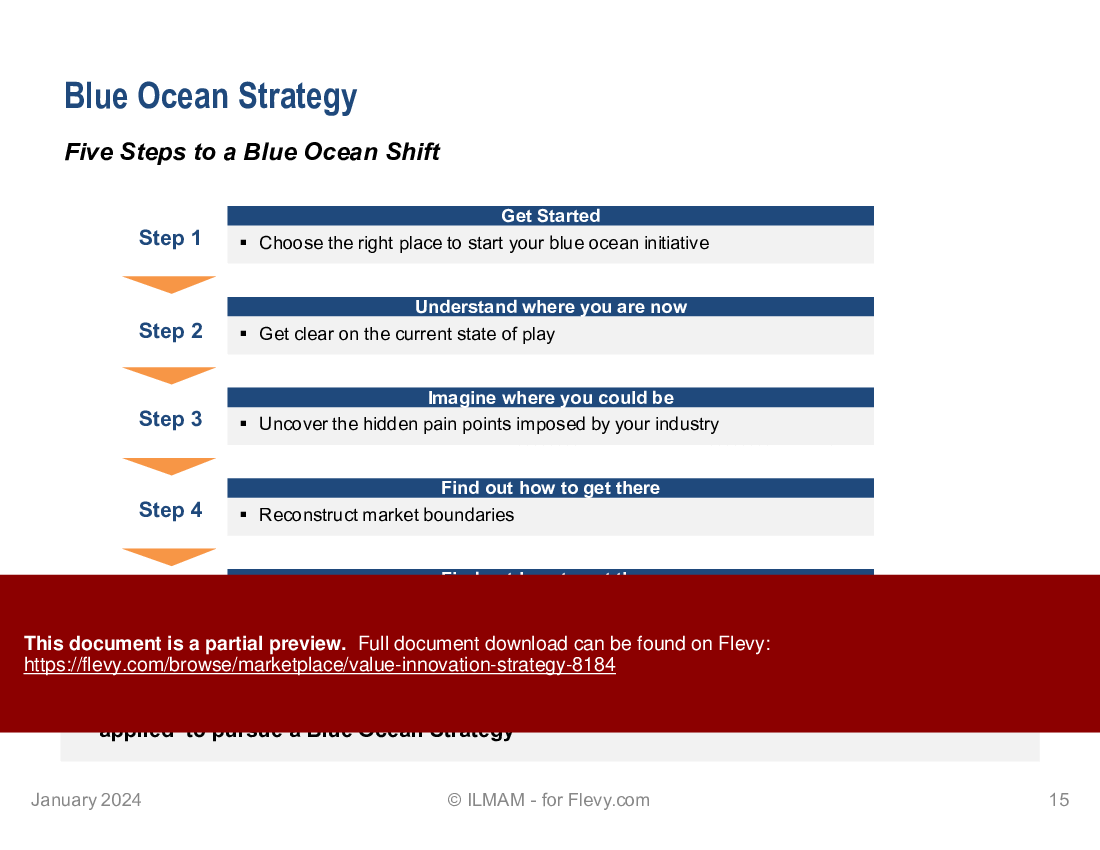
12. Five Steps to a Blue Ocean Shift
13. Three Components of Blue Ocean Shift
14. Three Components of Humanness
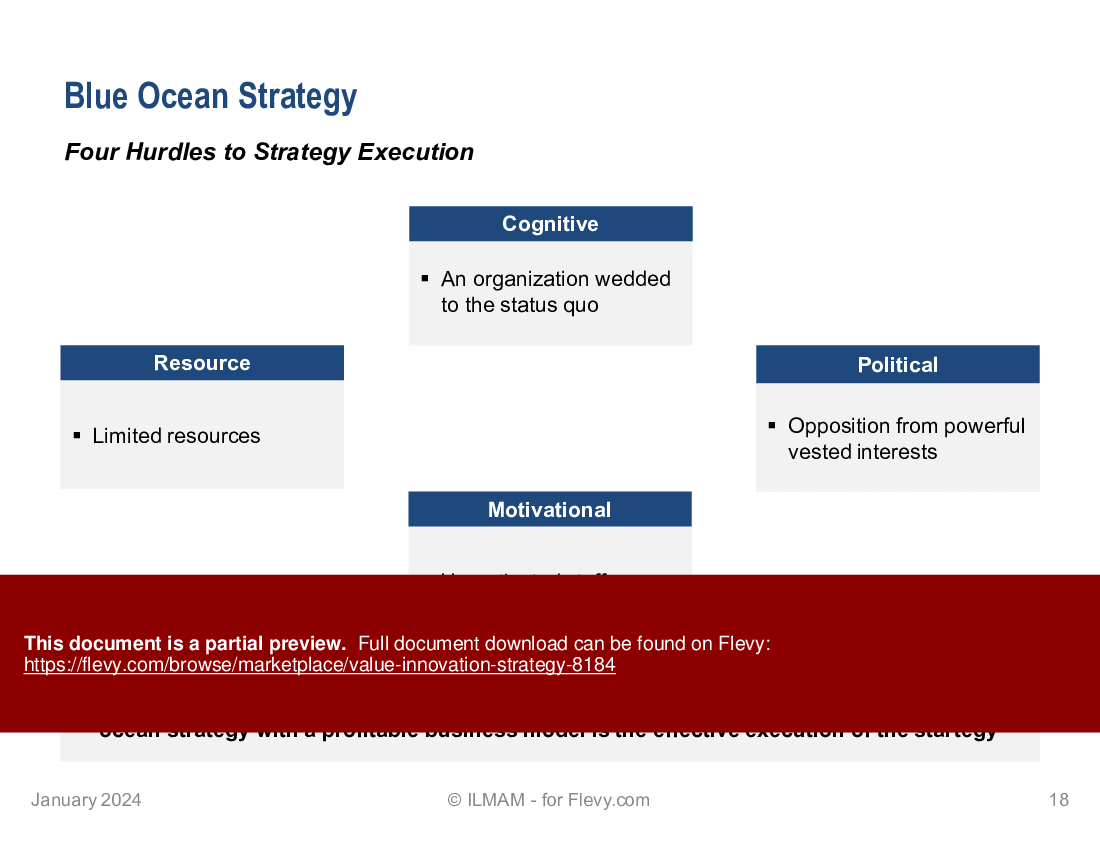
15. Four Hurdles to Strategy Execution
16. Fair Process
17. Tipping Point Leadership
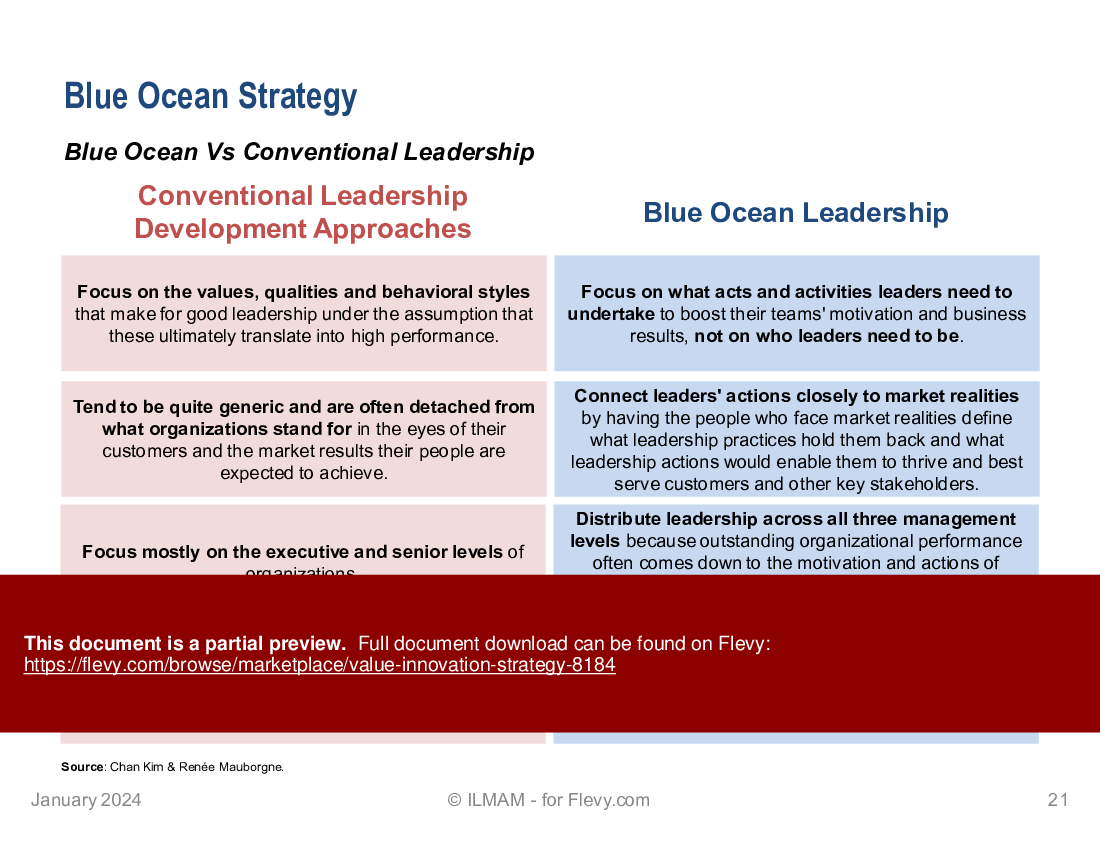
18. Blue Ocean Vs Conventional Leadership
19. Leadership Canvas
20. Blue Ocean Leadership Grid
21. Four-Step Blue Ocean Leadership Process
22. Cost of Disengaged Employees
Got a question about the product? Email us at support@flevy.com or ask the author directly by using the "Ask the Author a Question" form. If you cannot view the preview above this document description, go here to view the large preview instead.
MARCUS OVERVIEW
This synopsis was written by Marcus [?] based on the analysis of the full 26-slide presentation.
Executive Summary
This presentation on Value Innovation Strategy is crafted in a McKinsey, Bain, or BCG-quality style (consulting-grade; not affiliated). It serves as a visual guide for executives and consultants aiming to implement a value innovation strategy that renders existing competition irrelevant. The deck provides actionable frameworks, including Blue Ocean Strategy, to help organizations create uncontested market spaces. Users will be equipped to identify new demand, align activities for differentiation and low cost, and effectively execute their strategies.
Who This Is For and When to Use
• Corporate executives seeking to drive innovation and strategic shifts
• Business consultants advising clients on market positioning and competitive strategies
• Strategy teams responsible for developing and implementing value innovation initiatives
• Product managers aiming to create unique offerings that meet untapped customer needs
Best-fit moments to use this deck:
• During strategic planning sessions focused on market expansion
• When conducting workshops on innovation and competitive differentiation
• In team meetings aimed at aligning organizational activities with strategic goals
• For presentations to stakeholders about new market opportunities
Learning Objectives
• Define the core principles of Blue Ocean Strategy and its application in value innovation
• Build a comprehensive strategy canvas to visualize competitive positioning
• Establish a buyer utility map to identify customer needs and enhance value delivery
• Analyze noncustomers to uncover latent demand and expand market reach
• Apply the Four Actions Framework to restructure customer value elements
• Develop a clear execution plan addressing the hurdles to strategy implementation
Table of Contents
• Red vs Blue Ocean Strategy (page 2)
• Value Innovation (page 3)
• Strategy Canvas (page 4)
• Buyer Utility Map (page 6)
• Three Tiers of Noncustomers (page 7)
• Six Paths Framework (page 8)
• Four Actions Framework (page 10)
• Eliminate-Reduce-Raise-Create Grid (page 11)
• Pioneer Migrator Settler Map (page 12)
• Price Corridor of the Target Mass (page 13)
• Sequence of Creating a Blue Ocean (page 14)
• Five Steps to a Blue Ocean Shift (page 15)
• Three Components of Blue Ocean Shift (page 16)
• Three Components of Humanness (page 17)
• Four Hurdles to Strategy Execution (page 18)
• Fair Process (page 19)
• Tipping Point Leadership (page 20)
• Blue Ocean Vs Conventional Leadership (page 21)
• Leadership Canvas (page 22)
• Blue Ocean Leadership Grid (page 23)
• Four-Step Blue Ocean Leadership Process (page 24)
• Cost of Disengaged Employees (page 25)
Primary Topics Covered
• Red vs Blue Ocean Strategy - Differentiates between competing in existing markets and creating uncontested market spaces, emphasizing the need to make competition irrelevant.
• Value Innovation - Describes the simultaneous pursuit of differentiation and low cost to create added value for both customers and the company.
• Strategy Canvas - A visual tool that illustrates how a company configures its offerings compared to competitors, highlighting strategic positioning.
• Buyer Utility Map - Outlines the levers that can be pulled to deliver exceptional utility to customers across different stages of the buyer experience cycle.
• Three Tiers of Noncustomers - Analyzes potential customers who are currently outside the market, providing insights into latent demand.
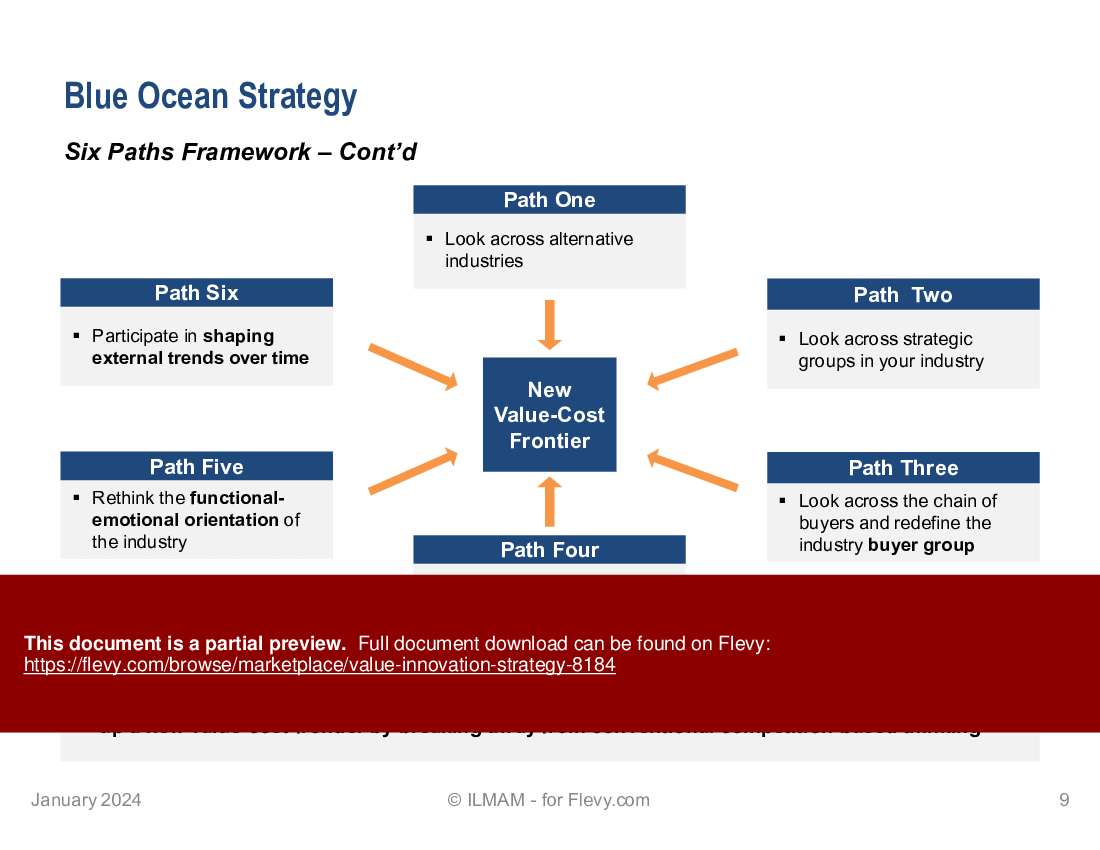
• Six Paths Framework - Offers a systematic approach to reconstruct market boundaries and identify new value-cost frontiers.
Deliverables, Templates, and Tools
• Strategy canvas template for visualizing competitive positioning
• Buyer utility map framework for assessing customer value delivery
• ERRC grid model for restructuring customer value elements
• Pioneer Migrator Settler map for evaluating product/service innovation
• Pricing corridor analysis tool for determining optimal pricing strategies
• Five-step blue ocean shift process guide for implementing strategic initiatives
Slide Highlights
• Visual comparison of Red vs Blue Ocean strategies, clearly outlining strategic differences
• Strategy canvas example featuring Cirque du Soleil, showcasing its unique competitive profile
• Buyer Utility Map illustrating the 6 stages of the buyer experience cycle
• ERRC grid that drives focus on eliminating, reducing, raising, and creating value factors
• Tipping Point Leadership slide emphasizing the importance of focusing on high-impact factors for strategic shifts
Potential Workshop Agenda
Introduction to Value Innovation (30 minutes)
• Overview of Blue Ocean Strategy principles
• Discussion on the importance of value innovation
Strategy Canvas Workshop (60 minutes)
• Participants create a strategy canvas for their organization
• Group feedback on competitive positioning
Hurdles to Strategy Execution Discussion (30 minutes)
• Explore common challenges in executing blue ocean strategies
• Brainstorm solutions to overcome identified hurdles
Customization Guidance
• Tailor the strategy canvas to reflect specific market dynamics and competitive landscapes
• Adjust the buyer utility map to focus on unique customer segments relevant to your organization
• Modify the ERRC grid to align with your company’s strategic goals and operational capabilities
• Incorporate specific case studies or examples relevant to your industry for enhanced engagement
• Update the pricing corridor analysis based on current market conditions and consumer behavior
Secondary Topics Covered
• Fair Process and its role in strategy execution
• Tipping Point Leadership and its impact on organizational change
• Blue Ocean Leadership Grid for assessing leadership effectiveness
• Four-Step Blue Ocean Leadership Process for institutionalizing new practices
• Cost implications of disengaged employees and the benefits of effective leadership
Topic FAQ
What are the core components of Blue Ocean Strategy and value innovation?
Blue Ocean Strategy focuses on creating uncontested market spaces by making competition irrelevant through Value Innovation — pursuing differentiation and low cost simultaneously. Core components covered include the Strategy Canvas, Buyer Utility Map, Three Tiers of Noncustomers, Six Paths Framework, and the ERRC grid, with the Strategy Canvas presented on page 4.
How does a Strategy Canvas help me compare my offerings to competitors?
A Strategy Canvas visually maps how a company configures offering factors versus competitors, highlighting where to raise, reduce, eliminate, or create elements. It helps identify distinctive positioning and gaps in the value-cost frontier and is provided as a Strategy Canvas template in the presentation on page 4.
What is the ERRC grid and how do teams use it in innovation workshops?
The ERRC grid (Eliminate-Reduce-Raise-Create) is a matrix used to restructure customer value elements by identifying which factors to eliminate, reduce, raise, or create. Teams use it to translate strategic choices into concrete offering changes, and the deck includes an ERRC grid model shown on page 11.
How are noncustomers identified using the Three Tiers framework?
The Three Tiers of Noncustomers framework segments potential demand into those on the edge of the market, those who refuse current offerings, and those in distant markets. Analyzing these tiers uncovers latent demand and expansion opportunities; the framework is described on page 7.
What should I look for when buying a Blue Ocean or value innovation toolkit?
Buyers should look for visual tools (Strategy Canvas, Buyer Utility Map), decision frameworks (Six Paths, ERRC grid), execution guidance (Five-step Blue Ocean Shift, hurdles to execution, Fair Process), and usable templates. Verify format and length; Flevy's Value Innovation Strategy is a 26-slide PowerPoint with these templates included.
How should I judge the cost versus value of purchasing a slide-based toolkit instead of hiring consultants?
Assess your budget, timeline, and in-house skills: toolkits provide ready-made frameworks and templates (Strategy Canvas, Buyer Utility Map, ERRC) for internal application, while consultants add bespoke analysis. Compare expected internal effort to the toolkit’s deliverables; Flevy's deck is supplied as a 26-slide PPTX for immediate use.
I want to design a product for underserved customers—what frameworks should I apply first?
Start with the Buyer Utility Map to identify utility levers across the customer experience, then analyze Three Tiers of Noncustomers to find latent demand. Use the ERRC grid and Six Paths Framework to reconfigure value elements and reconstruct market boundaries, beginning with the Buyer Utility Map on page 6.
What governance and leadership tools help ensure execution of a Blue Ocean strategy?
Execution tools include diagnosing Four Hurdles to Strategy Execution, applying Fair Process to engage stakeholders, using Tipping Point Leadership to focus on high-impact factors, and assessing leadership with the Leadership Canvas and Blue Ocean Leadership Grid; these are detailed with practical guidance on page 18.
Document FAQ
These are questions addressed within this presentation.
What is the difference between Red Ocean and Blue Ocean strategies?
Red Ocean strategies focus on competing in existing market spaces, while Blue Ocean strategies aim to create uncontested market spaces, making competition irrelevant.
How can I apply the Value Innovation framework in my organization?
Utilize the frameworks provided in the presentation, such as the Strategy Canvas and Buyer Utility Map, to identify new market opportunities and enhance customer value.
What are the key components of a successful Blue Ocean Shift?
A successful shift requires a blue ocean perspective, market-creating tools, and a humanistic process that inspires engagement and ownership among team members.
How do I identify noncustomers in my market?
Analyze the 3 tiers of noncustomers to uncover potential demand: those on the edge of your market, those who refuse your offerings, and those in distant markets.
What is the purpose of the ERRC grid?
The ERRC grid helps organizations systematically eliminate, reduce, raise, and create factors that unlock new value in the market.
How can I ensure effective execution of my Blue Ocean strategy?
Focus on engaging stakeholders through Fair Process, addressing potential hurdles, and leveraging Tipping Point Leadership to drive change.
What is the significance of the Strategy Canvas?
The Strategy Canvas visually depicts how your offerings compare to competitors, helping to identify areas for differentiation and improvement.
What challenges might I face during strategy execution?
Common challenges include opposition from vested interests, cognitive biases towards the status quo, lack of motivation among staff, and limited resources.
How can I measure the cost of disengaged employees?
Calculate the number of employees, their average salary, and apply a percentage to estimate the potential financial impact of disengagement on your organization.
Glossary
• Blue Ocean Strategy - A strategic approach focused on creating uncontested market spaces.
• Value Innovation - The simultaneous pursuit of differentiation and low cost.
• Strategy Canvas - A visual tool for comparing a company's offerings against competitors.
• Buyer Utility Map - A framework outlining how to enhance customer value across different stages.
• ERRC Grid - A matrix for identifying factors to eliminate, reduce, raise, and create.
• Pioneer Migrator Settler Map - A tool for assessing the innovation level of products/services.
• Price Corridor of the Target Mass - A pricing strategy framework for targeting mass buyers.
• Fair Process - A concept ensuring transparency and engagement in strategic decision-making.
• Tipping Point Leadership - A leadership approach focusing on high-impact areas for change.
• Humanness - The emphasis on engaging individuals in the transformation process.
• Cognitive Hurdles - Mental barriers to change within an organization.
• Motivational Hurdles - Challenges related to employee engagement and motivation.
• Political Hurdles - Resistance from vested interests within the organization.
• Resource Hurdles - Limitations in available resources for executing strategies.
• Leadership Canvas - A framework for assessing and improving leadership effectiveness.
• Blue Ocean Leadership Grid - A tool for formulating effective leadership practices.
• Four-Step Blue Ocean Leadership Process - A structured approach to enhancing leadership capabilities.
• Cost of Disengaged Employees - The financial impact of low employee engagement on organizational performance.
• Three Tiers of Noncustomers - An analysis framework for identifying potential market demand.
• Six Paths Framework - A systematic approach to reconstructing market boundaries for innovation.
This PPT slide presents the "Three Tiers of Noncustomers" model from the Blue Ocean Strategy, categorizing potential market segments into "Soon-to-be," "Refusing," and "Unexplored." The "Current Market" represents existing customers. The "Soon-to-be" tier includes dissatisfied customers likely to leave, while the "Refusing" tier consists of those who consciously avoid engagement due to negative experiences or misalignment with their needs. The "Unexplored" tier includes noncustomers in distant markets who are unaware of your product. Understanding these tiers reveals latent demand and opportunities for market expansion, enabling companies to create innovative strategies that address customer concerns and tap into new revenue streams.
The Four Actions Framework, part of the Blue Ocean Strategy, redefines market boundaries through 4 key actions: Eliminate, Reduce, Raise, and Create. "Eliminate" encourages firms to identify and remove factors that no longer add value, leading to cost savings. "Reduce" focuses on minimizing factors below industry standards, optimizing resource allocation by cutting unnecessary features. "Raise" challenges companies to enhance product quality, customer service, or innovation above industry norms, establishing leadership in these areas. "Create" promotes the development of unique value propositions that attract new customers and open new markets. This framework enables organizations to innovate and differentiate in a competitive landscape, creating a new value curve.
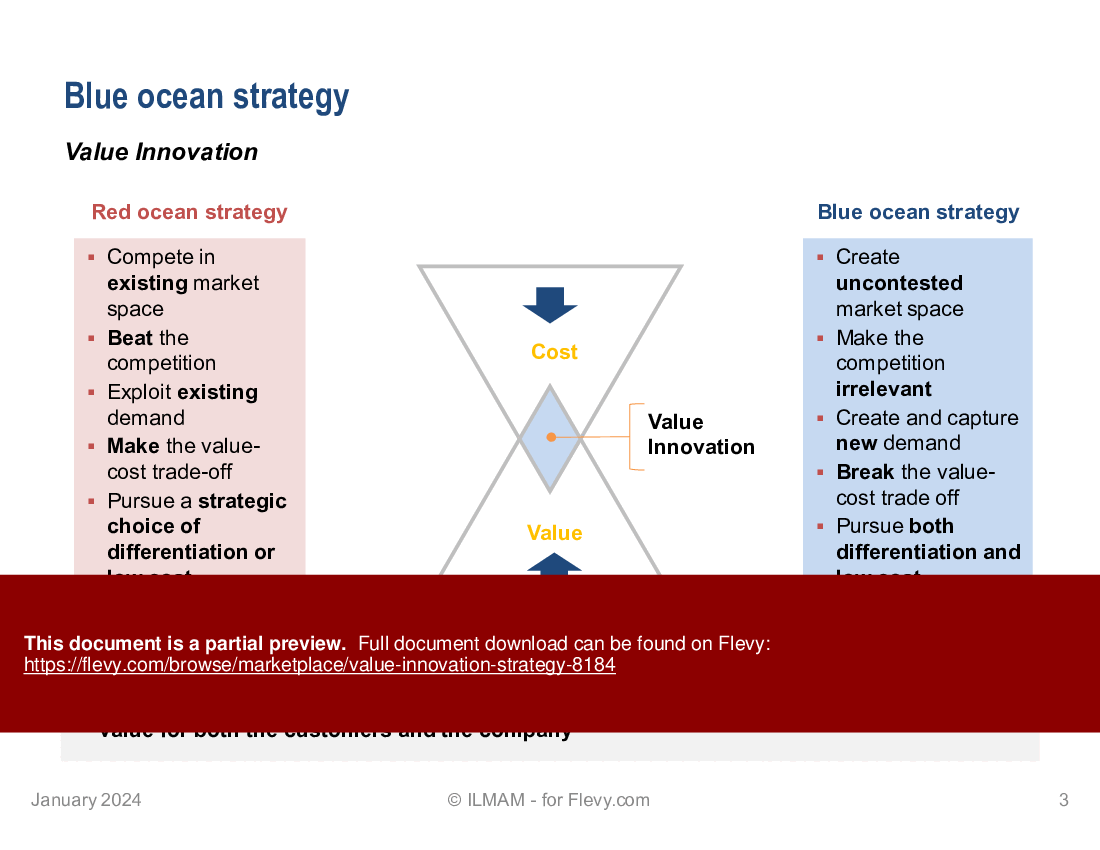
This PPT slide compares 2 strategic approaches: Red Ocean Strategy and Blue Ocean Strategy, focusing on Value Innovation. Red Ocean Strategy emphasizes competition in existing market spaces, requiring firms to choose between differentiation and low cost while managing the trade-off between value and cost. In contrast, Blue Ocean Strategy advocates for creating uncontested market spaces, where competition is irrelevant, and encourages value innovation by capturing new demand. This approach allows firms to pursue both differentiation and low cost simultaneously, enhancing value for customers and organizations. Value Innovation is positioned as essential for sustainable growth and market leadership, with a visual representation reinforcing the dynamics of cost and value.
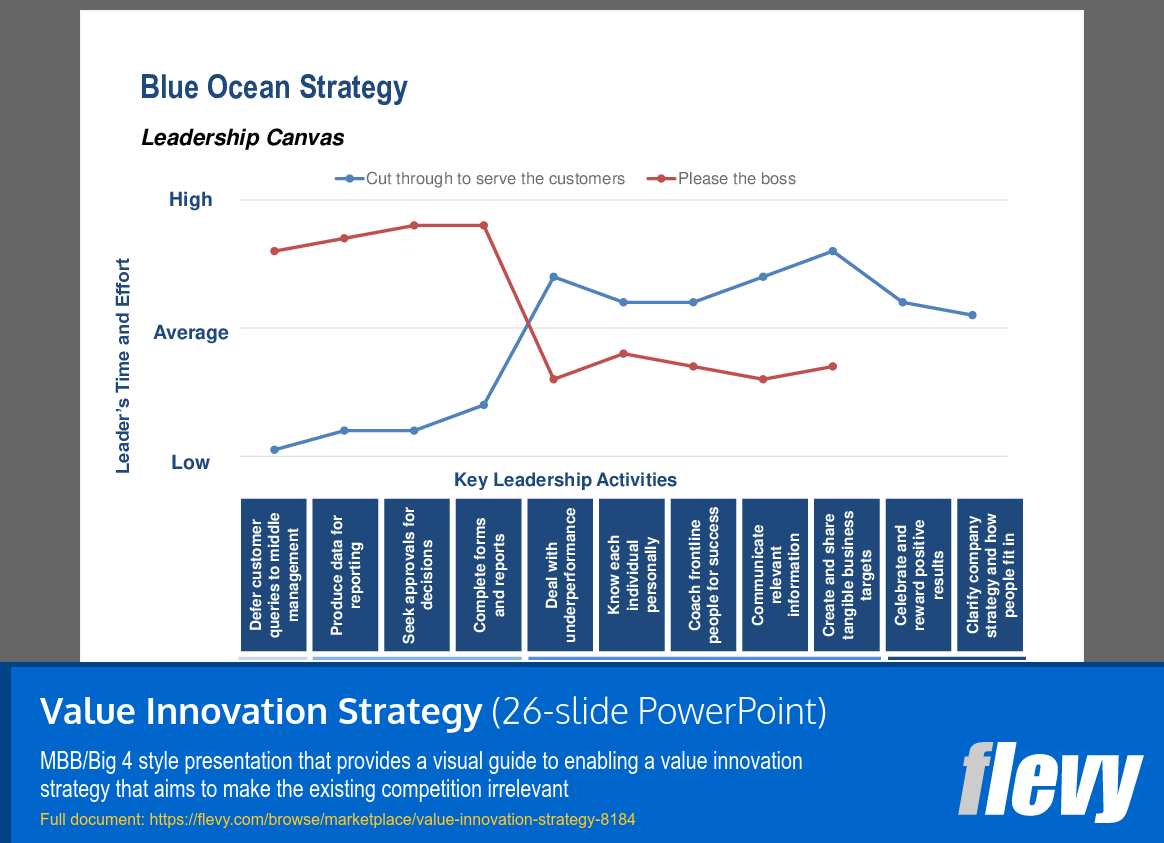
This PPT slide visualizes the "Leadership Canvas" within a Blue Ocean Strategy, contrasting 2 key leadership activities: "Cut through to serve the customers" and "Please the boss." The vertical axis categorizes leaders' time and effort as high, average, or low, while the horizontal axis lists activities such as producing data, seeking approvals, and coaching personnel. The blue line indicates a higher focus on customer service, suggesting effective leaders prioritize customer-centric actions. In contrast, the red line for pleasing superiors fluctuates, indicating inconsistent time allocation. Successful leadership in a Blue Ocean context requires a shift from traditional practices to understanding customer needs and fostering value creation, aligning leadership activities with customer-centric goals for innovative organizational strategies.
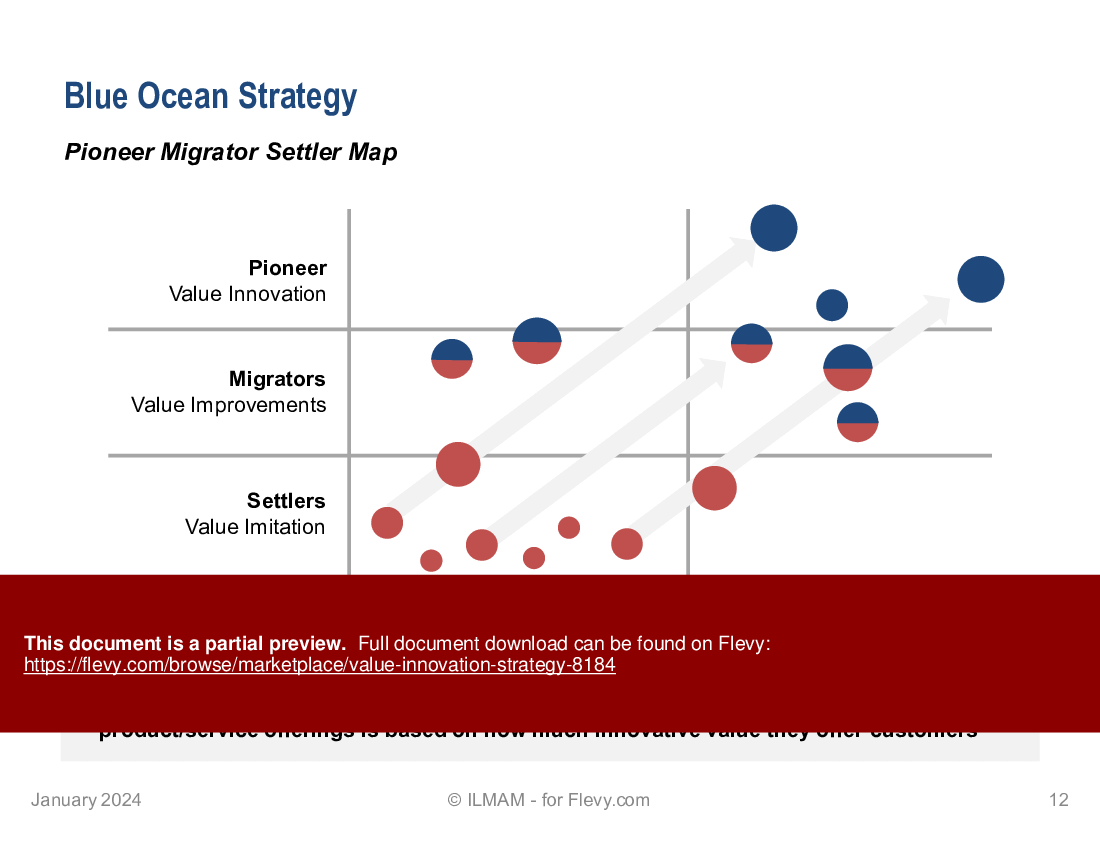
The Pioneer Migrator Settler Map evaluates the innovative value of offerings over time, categorizing them into 3 groups: Pioneers, Migrators, and Settlers. The vertical axis represents value innovation, while the horizontal axis indicates the timeline from 'Today' to 'Tomorrow.' Pioneers signify high value innovation, creating new markets or significantly altering existing ones, attracting early adopters. Migrators represent value improvements, enhancing existing offerings without redefining the market, appealing to a broader audience. Settlers indicate value imitation, replicating existing solutions for a price-sensitive market. The map's arrows suggest potential movement towards greater innovation, providing insights into strategic positioning and growth opportunities. This framework guides decision-making, helping executives prioritize investments in innovation and improvement.
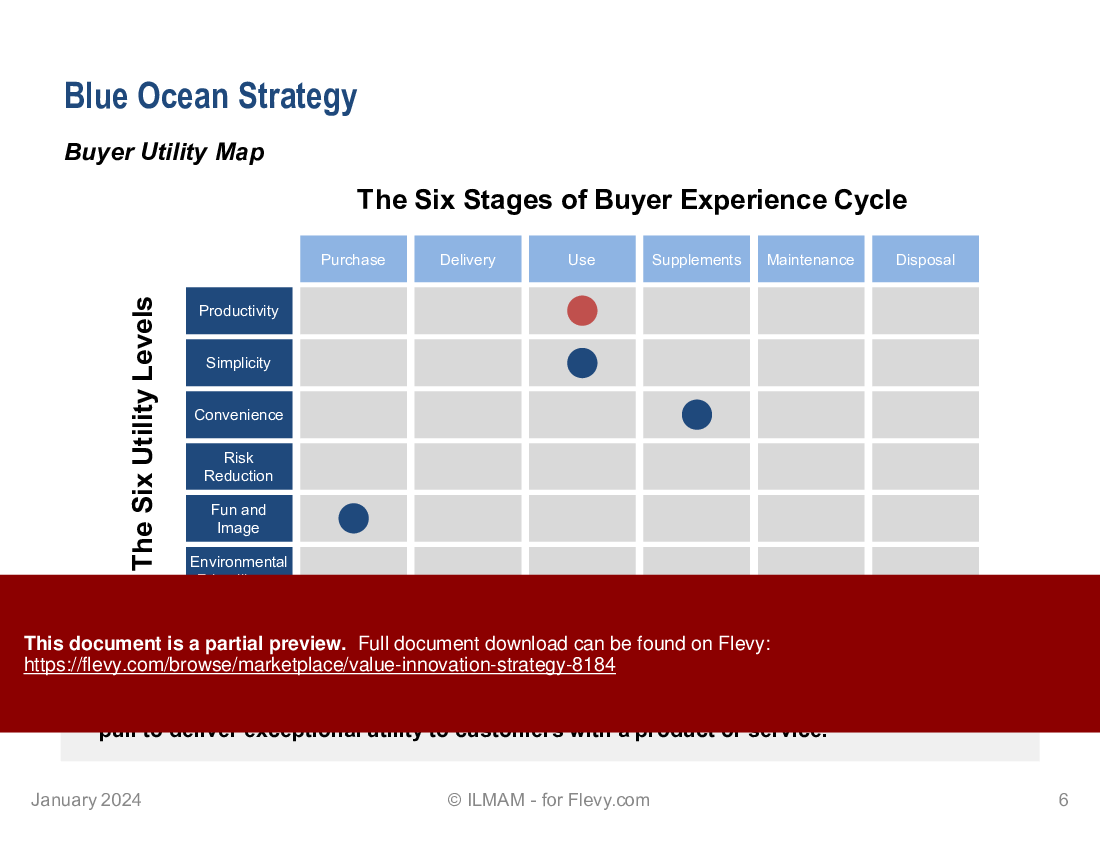
The Buyer Utility Map is a strategic tool for enhancing customer value across the buyer experience cycle. It features 6 utility levels: Productivity, Simplicity, Convenience, Risk Reduction, Fun and Image, and Environmental Friendliness, which address various customer needs. The horizontal axis outlines the 6 stages of the buyer experience cycle: Purchase, Delivery, Use, Supplements, Maintenance, and Disposal. This framework helps organizations identify alignment between offerings and customer utility levels, revealing gaps. Areas marked in red indicate traditional offerings that may lack comprehensive value, while blue circles represent Blue Ocean opportunities for innovation. Leveraging this map enables companies to improve their value proposition by aligning products or services with customer expectations.
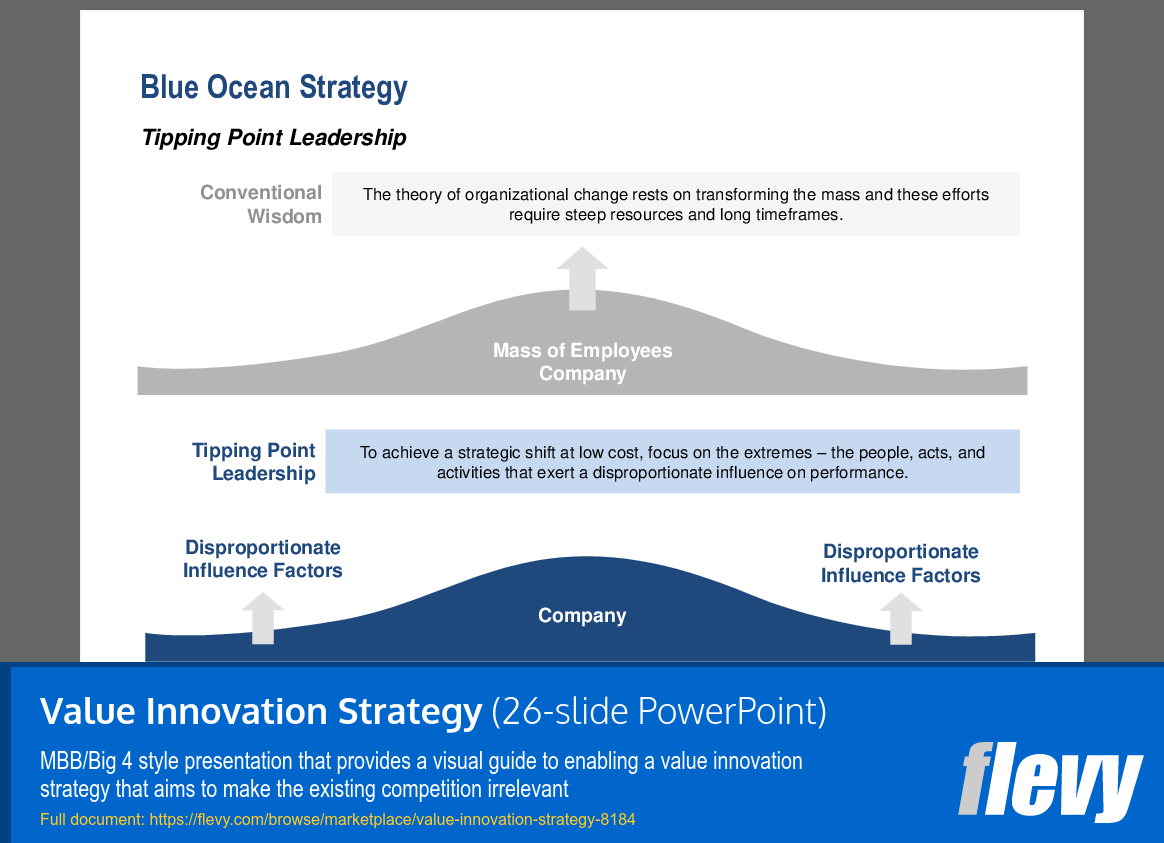
The Tipping Point Leadership model, within the Blue Ocean Strategy framework, challenges conventional wisdom that significant organizational change requires extensive resources and time. Instead, it emphasizes leveraging "Disproportionate Influence Factors" by focusing on key individuals and impactful actions to drive substantial results efficiently. This approach allows organizations to achieve significant change at a lower cost and in a shorter timeframe. The visual representation of this concept illustrates that concentrating on critical factors can lead to effective transformation, encouraging leaders to rethink strategies and mobilize resources for growth and innovation.
Source: Best Practices in Business Model Innovation, Value Innovation PowerPoint Slides: Value Innovation Strategy PowerPoint (PPTX) Presentation Slide Deck, ILMAM - Strategy & Management Consulting
MBB/Big 4 style presentation that provides a visual guide to enabling a value innovation strategy that aims to make the existing competition irrelevant
ILMAM is a strategy and management consulting provider that specializes in:
• Strategic management, including strategic planning and performance management
• Strategy enablers, such as key business processes and governance
Select top quality guides and tools are offered through to enable you to perform work at your company or support your clients effectively and
... [read more] efficiently.
The average daily rate of a McKinsey consultant is $6,625 (not including expenses). The average price of a Flevy document is $65.
Trusted by over 10,000+ Client Organizations
Since 2012, we have provided business templates to over 10,000 businesses and organizations of all sizes, from startups and small businesses to the Fortune 100, in over 130 countries.
"As an Independent Management Consultant, I find Flevy to add great value as a source of best practices, templates and information on new trends. Flevy has matured and the quality and quantity of the library is excellent. Lastly the price charged is reasonable, creating a win-win value for
the customer, Flevy and the various authors. This is truly a service that benefits the consulting industry and associated clients. Thanks for providing this service.
"
– Jim Schoen, Principal at FRC Group
"I have used FlevyPro for several business applications. It is a great complement to working with expensive consultants. The quality and effectiveness of the tools are of the highest standards."
– Moritz Bernhoerster, Global Sourcing Director at Fortune 500
"The wide selection of frameworks is very useful to me as an independent consultant. In fact, it rivals what I had at my disposal at Big 4 Consulting firms in terms of efficacy and organization."
– Julia T., Consulting Firm Owner (Former Manager at Deloitte and Capgemini)
"My FlevyPro subscription provides me with the most popular frameworks and decks in demand in today’s market. They not only augment my existing consulting and coaching offerings and delivery, but also keep me abreast of the latest trends, inspire new products and service offerings for my practice, and educate me
in a fraction of the time and money of other solutions. I strongly recommend FlevyPro to any consultant serious about success.
"
– Bill Branson, Founder at Strategic Business Architects
"FlevyPro provides business frameworks from many of the global giants in management consulting that allow you to provide best in class solutions for your clients."
– David Harris, Managing Director at Futures Strategy

"One of the great discoveries that I have made for my business is the Flevy library of training materials.
As a Lean Transformation Expert, I am always making presentations to clients on a variety of topics: Training, Transformation, Total Productive Maintenance, Culture, Coaching, Tools, Leadership Behavior, etc. Flevy

It is well worth the money to purchase these presentations. Sure, I have the knowledge and information to make my point. It is another thing to create a presentation that captures what I want to say. Flevy has saved me countless hours of preparation time that is much better spent with implementation that will actually save money for my clients.
"
– Ed Kemmerling, Senior Lean Transformation Expert at PMG
"As a consultant requiring up to date and professional material that will be of value and use to my clients, I find Flevy a very reliable resource.
The variety and quality of material available through Flevy offers a very useful and commanding source for information. Using Flevy saves me time, enhances my expertise and ends up being a good decision."
– Dennis Gershowitz, Principal at DG Associates
"As a small business owner, the resource material available from FlevyPro has proven to be invaluable. The ability to search for material on demand based our project events and client requirements was great for me and proved very beneficial to my clients. Importantly, being able to easily edit and tailor
the material for specific purposes helped us to make presentations, knowledge sharing, and toolkit development, which formed part of the overall program collateral. While FlevyPro contains resource material that any consultancy, project or delivery firm must have, it is an essential part of a small firm or independent consultant's toolbox.
"
– Michael Duff, Managing Director at Change Strategy (UK)
Download our free compilation of 50+ Strategy & Transformation slides and templates. Frameworks include McKinsey 7-S, Balanced Scorecard, Disruptive Innovation, BCG Curve, and many more.