
This framework is developed by a team of former McKinsey and Big 4 consultants. The presentation follows the headline-body-bumper slide format used by global consulting firms.
Editor Summary
McKinsey 3 Horizons of Growth is a 31-slide PowerPoint presentation by LearnPPT Consulting that explains the McKinsey 3 Horizons framework and includes slide templates and a 3-step implementation process.
Read moreThe deck defines Horizon 1 (defend and extend core businesses), Horizon 2 (build emerging businesses), and Horizon 3 (create viable options), and explains resource allocation, investment, and management practices needed to run the horizons in parallel. Available on Flevy with immediate digital download.
Use this presentation when an organization must balance sustaining core revenues with creating and scaling new growth options—during maturity planning, innovation portfolio reviews, or strategic planning cycles.
Chief Strategy Officers allocating capital and sequencing investments across core and emerging businesses using horizon distinctions.
Corporate development leads prioritizing portfolio additions and divestments informed by horizon classification.
Innovation or venture teams designing experiments to create and scale options in Horizon 3.
Management consultants building executive roadmaps that link core understanding to market analysis and execution plans.
The 3-step implementation sequence mirrors the stage-based strategic planning approach embodied in McKinsey’s 3 Horizons framework.
Organizations undergo different phases of development. Some reach maturity and then decline over time, whereas others just fade away in the startup phase.
A few organizations, however, evade collapse and maintain Growth for years. They accomplish this by allocating dedicated resources, investment, time, and effort into the creation of unique concepts, testing and nurturing those, and ousting defunct products.
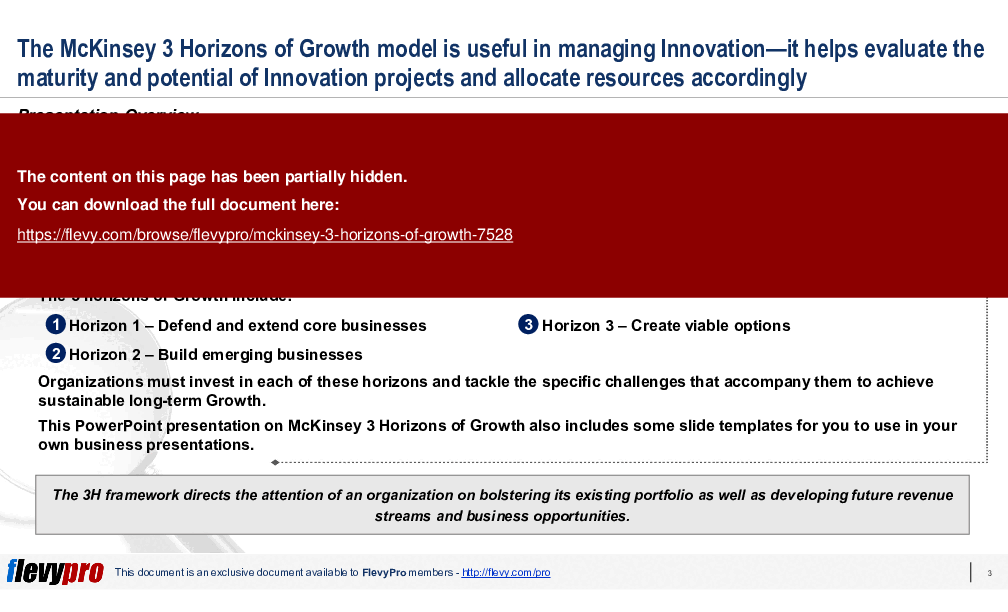
This PowerPoint presentation provides a detailed overview of McKinsey 3 Horizons (3H) of Growth model. This strategic framework outlines 3 different horizons (Innovation categories) that should run in parallel for an organization to be successful.
Organizations must invest in each of these horizons and tackle the specific challenges that accompany them to achieve sustainable long-term Growth. Each horizon is explained in detail in this presentation.
Successful implementation of the McKinsey 3 Horizon model requires a holistic approach. It involves a combination of Strategic Planning, Cultural Transformation, and robust management practices to ensure that an organization effectively balances its Innovation and Growth efforts across the 3 horizons. This deck explains 3-step process to McKinsey 3 Horizons implementation:
1. Develop understanding of the core business.
2. Analyze the environment.
3. Develop and execute plans to create disruptive Value Propositions.
The 3H framework directs the attention of an organization on bolstering its existing portfolio as well as developing future revenue streams and business opportunities. Note that the 3 Horizons framework is not a solution for every situation. Its implementation depends on the organization's industry, objectives, and capabilities.
This PowerPoint presentation on McKinsey 3 Horizons of Growth also includes some slide templates for you to use in your own business presentations.
This presentation not only outlines the McKinsey 3 Horizons of Growth model, but also provides actionable insights on how to effectively implement it within your organization. With practical templates included, you can seamlessly integrate these strategies into your own business practices, ensuring a structured approach to driving innovation and sustainable growth.
What are the 3 horizons of growth in McKinsey's 3 Horizons model?
The model categorizes initiatives into 3 parallel horizons: Horizon 1 — defend and extend core businesses; Horizon 2 — build emerging businesses; Horizon 3 — create viable options. Organizations are advised to invest across all 3 horizons concurrently to sustain long-term growth, covering 3 horizons.
How should an organization allocate resources across the 3 horizons?
The framework recommends allocating dedicated resources, investment, time, and effort to initiatives in each horizon and running them in parallel, while addressing the distinct challenges of each. Effective allocation requires ongoing portfolio review and reallocation across the 3 horizons.
What organizational practices are required to implement the 3 Horizons model effectively?
Implementation requires a combination of strategic planning, cultural transformation, and robust management practices to balance innovation and growth efforts across horizons. Successful adoption depends on aligning governance, incentives, and management routines with these practices.
What is the recommended implementation process for the 3 Horizons framework?
The presentation outlines a 3-step process: 1) develop understanding of the core business, 2) analyze the environment, and 3) develop and execute plans to create disruptive value propositions. This sequence links core assessment to environmental analysis and execution planning.
What should I look for when choosing a 3-Horizons toolkit for my team?
Look for clear definitions of each horizon, guidance on parallel investment and challenges, an implementation process linking diagnosis to execution, and ready-to-use slide templates and materials. Flevy’s McKinsey 3 Horizons of Growth includes slide templates and a documented 3-step implementation process.
How do I know if the 3 Horizons model fits my organization's situation?
The model is context-dependent; its applicability varies by an organization’s industry, objectives, and capabilities. Review whether you need simultaneous focus on core defense, emerging growth, and long-term options before adopting the framework, considering your industry, objectives, and capabilities.
We need to sustain growth while the core business matures—how can the 3 Horizons help?
The 3 Horizons framework directs attention to bolstering the existing portfolio (Horizon 1) while deliberately investing in emerging businesses and long-term options (Horizon 2 and 3), enabling parallel work streams to sustain growth and develop future revenue streams across 3 horizons.
How can I present the 3 Horizons model to executives for a strategic planning session?
Use concise slides that define each horizon, show portfolio allocation, and present the implementation sequence from core assessment to execution. Flevy’s McKinsey 3 Horizons of Growth is a 31-slide PowerPoint that contains explanatory slides and slide templates to support an executive presentation.
The first horizon of growth focuses on short-term growth within a 1-3 year timeframe, emphasizing the maintenance and enhancement of core business operations. Key activities include optimizing margins and profits through improved business processes, sales, marketing, and customer acquisition. Leadership must assess organizational strengths and weaknesses to identify effective value propositions and determine which may need to be retired. The Return on Invested Capital (RoIC) is highlighted as a crucial financial performance metric in this horizon. Business maintainers are responsible for managing and optimizing existing operations, supported by a fully-assembled capability platform. This disciplined approach is essential for defending and extending core business operations while identifying areas for improvement.
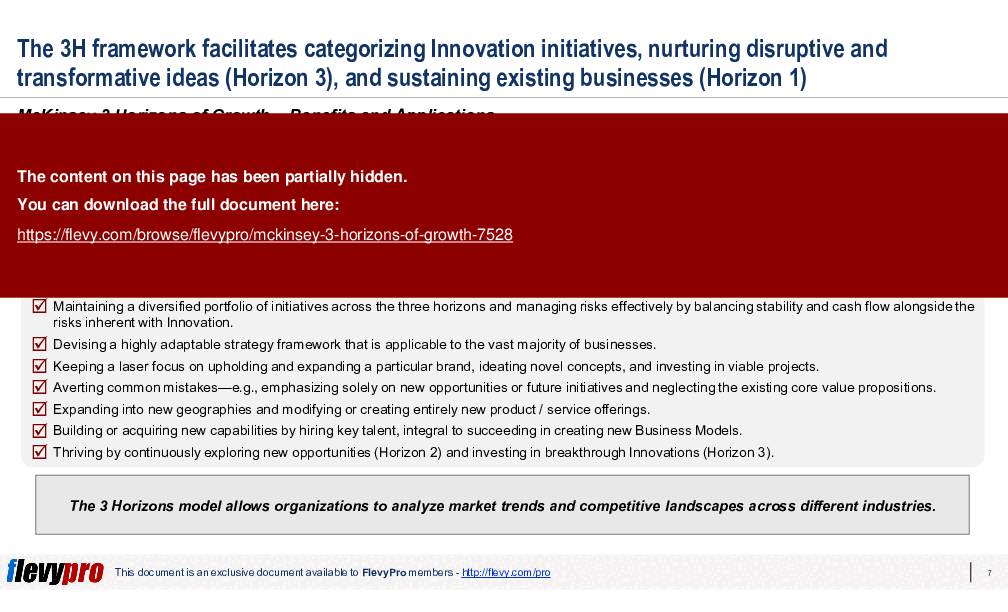
The McKinsey 3 Horizons framework guides strategic planning by balancing innovation and growth across 3 distinct horizons. Successful implementation involves 3 critical steps: first, developing a deep understanding of the core business to identify strengths and weaknesses; second, analyzing the environment to assess external factors and market dynamics that impact operations; and third, creating disruptive value propositions through proactive innovation. The framework's effectiveness depends on the organization's specific context, including industry, objectives, and capabilities, highlighting the need for customization to align with unique organizational needs.
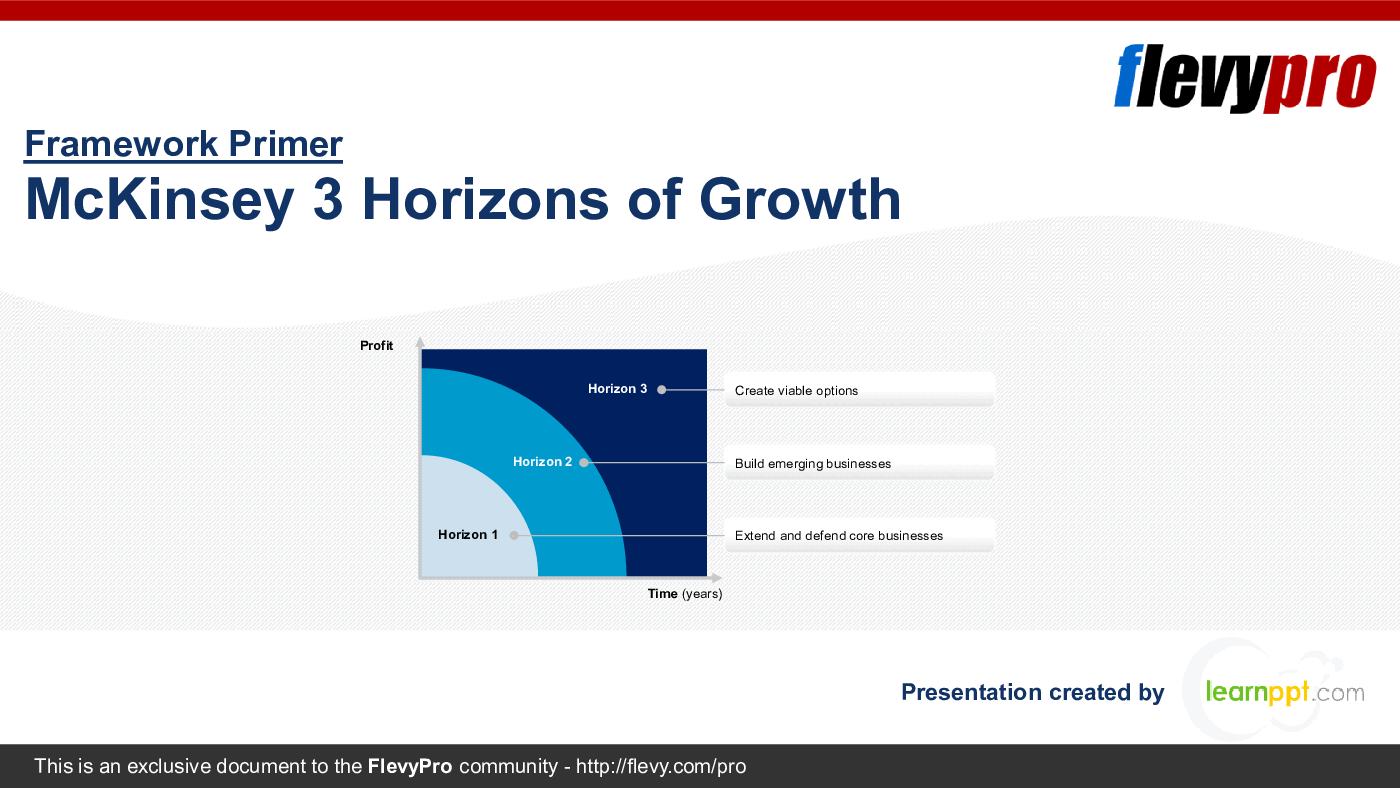
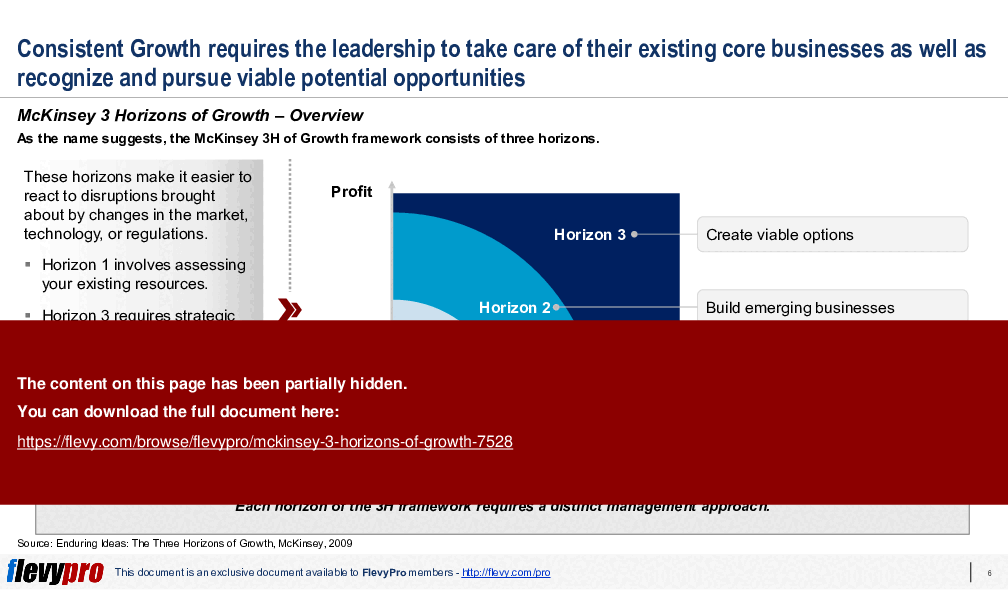
The McKinsey 3 Horizons of Growth framework helps organizations navigate market disruptions and identify growth opportunities. Horizon 1 focuses on optimizing core business operations for immediate profitability and sustaining revenue streams. Horizon 2 emphasizes strategic planning to explore and develop emerging opportunities for long-term growth. Horizon 3 involves tactical decision-making to transition to future growth avenues, encouraging innovation and new business models. The graphic illustrates the relationship between profit and time across these horizons, with distinct management strategies: extending core businesses in Horizon 1, building emerging businesses in Horizon 2, and creating viable options in Horizon 3. This framework guides leaders in prioritizing initiatives that align with long-term vision while addressing immediate operational needs.
The third horizon of growth focuses on long-term strategic initiatives to develop new businesses and revenue streams over 5 to 12 years. Key elements include investments in product development, mergers, and advanced technologies like automation and artificial intelligence. Organizations should pilot new initiatives and allocate discretionary spending towards ventures with significant future returns. The measurement metric is the potential value of these ideas, necessitating a robust evaluation framework. Visionary leadership is essential for proactive and innovative thinking, while the indeterminate capabilities required highlight the need for flexibility and adaptability. This uncertainty fosters creative problem-solving and strategic partnerships, encouraging executives to adopt a long-term perspective in strategic planning for sustainable growth.
Source: Best Practices in Innovation, Growth Strategy PowerPoint Slides: McKinsey 3 Horizons of Growth PowerPoint (PPTX) Presentation Slide Deck, LearnPPT Consulting
This framework is developed by a team of former McKinsey and Big 4 consultants. The presentation follows the headline-body-bumper slide format used by global consulting firms.
For $10.00 more, you can download this document plus 2 more FlevyPro documents. That's just $13 each.
ABOUT FLEVYPRO
This document is part of the FlevyPro Library, a curated knowledge base of documents for our FlevyPro subscribers.
FlevyPro is a subscription service for on-demand business frameworks and analysis tools. FlevyPro subscribers receive access to an exclusive library of curated business documents—business framework primers, presentation templates, Lean Six Sigma tools, and more—among other exclusive benefits.
The average daily rate of a McKinsey consultant is $6,625 (not including expenses). The average price of a Flevy document is $65.
Trusted by over 10,000+ Client Organizations
Since 2012, we have provided business templates to over 10,000 businesses and organizations of all sizes, from startups and small businesses to the Fortune 100, in over 130 countries.
Read Customer Testimonials
"As a niche strategic consulting firm, Flevy and FlevyPro frameworks and documents are an on-going reference to help us structure our findings and recommendations to our clients as well as improve their clarity, strength, and visual power. For us, it is an invaluable resource to increase our impact and value."
– David Coloma, Consulting Area Manager at Cynertia Consulting
"The wide selection of frameworks is very useful to me as an independent consultant. In fact, it rivals what I had at my disposal at Big 4 Consulting firms in terms of efficacy and organization."
– Julia T., Consulting Firm Owner (Former Manager at Deloitte and Capgemini)
"If you are looking for great resources to save time with your business presentations, Flevy is truly a value-added resource. Flevy has done all the work for you and we will continue to utilize Flevy as a source to extract up-to-date information and data for our virtual and onsite presentations!"
– Debbi Saffo, President at The NiKhar Group
"As a consultant requiring up to date and professional material that will be of value and use to my clients, I find Flevy a very reliable resource.
The variety and quality of material available through Flevy offers a very useful and commanding source for information. Using Flevy saves me time, enhances my expertise and ends up being a good decision."
– Dennis Gershowitz, Principal at DG Associates
"My FlevyPro subscription provides me with the most popular frameworks and decks in demand in today’s market. They not only augment my existing consulting and coaching offerings and delivery, but also keep me abreast of the latest trends, inspire new products and service offerings for my practice, and educate me
in a fraction of the time and money of other solutions. I strongly recommend FlevyPro to any consultant serious about success.
"
– Bill Branson, Founder at Strategic Business Architects
"Flevy is now a part of my business routine. I visit Flevy at least 3 times each month.
Flevy has become my preferred learning source, because what it provides is practical, current, and useful in this era where the business world is being rewritten.

many challenges and there is the need to make the right decisions in a short time, with so much scattered information, we are fortunate to have Flevy. Flevy investigates, selects, and puts at our disposal the best of the best to help us be successful in our work.
"
– Omar Hernán Montes Parra, CEO at Quantum SFE
"I have used FlevyPro for several business applications. It is a great complement to working with expensive consultants. The quality and effectiveness of the tools are of the highest standards."
– Moritz Bernhoerster, Global Sourcing Director at Fortune 500
"I have used Flevy services for a number of years and have never, ever been disappointed. As a matter of fact, David and his team continue, time after time, to impress me with their willingness to assist and in the real sense of the word. I have concluded in fact
that it is not at all just a repository of documents/resources but, in the way that David and his team manage the firm, it is like dealing with consultants always ready to assist, advise and direct you to what you really need, and they always get it right.
I am an international hospitality accomplished senior executive who has worked and lived during the past 35 years in 23 countries in 5 continents and I can humbly say that I know what customer service is, trust me.
Aside from the great and professional service that Flevy's team provide, their wide variety of material is of utmost great quality, professionally put together and most current.
Well done Flevy, keep up the great work and I look forward to continue working with you in the future and to recommend you to a variety of colleagues around the world.
"
– Roberto Pelliccia, Senior Executive in International Hospitality
Download our free compilation of 50+ Strategy & Transformation slides and templates. Frameworks include McKinsey 7-S, Balanced Scorecard, Disruptive Innovation, BCG Curve, and many more.