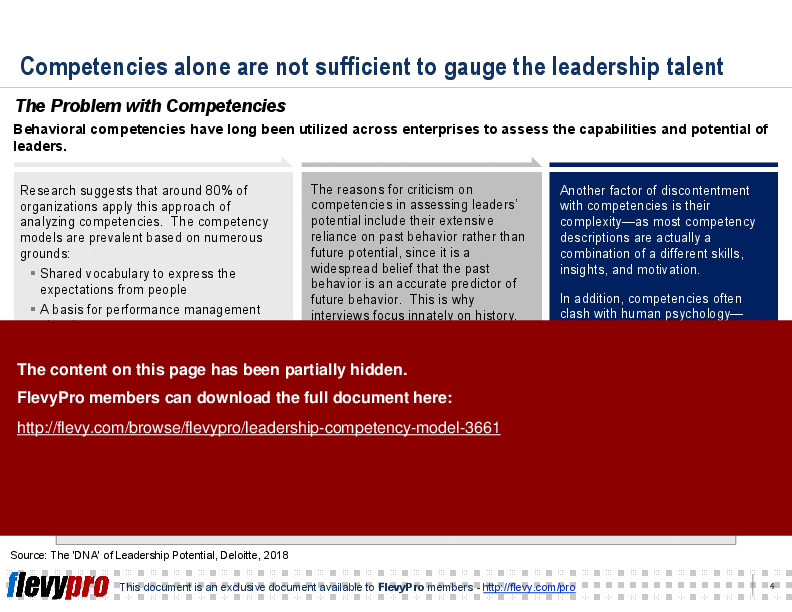

Behavioral competencies have long been utilized across many organizations to assess the competencies and potential of leaders. The competency models are prevalent due to several reasons—shared vocabulary to express the expectations from people, a basis for performance management planning, clarity around the important parameters for promotion, and set a direction for leaders' advancement. However, problems emerge when competencies are taken as the only factor in evaluating the leaders' potential.
The main reasons for criticism and limitations of competency models in assessing leaders' potential include:
1. Their extensive reliance on past behavior rather than future potential where relevant experience is considered a critical element in establishing a leader's competence
2. Complexities in implementation
3. Clash with human psychology.
These limitations and complexities warrant a more robust approach to assess the leadership potential of managers.
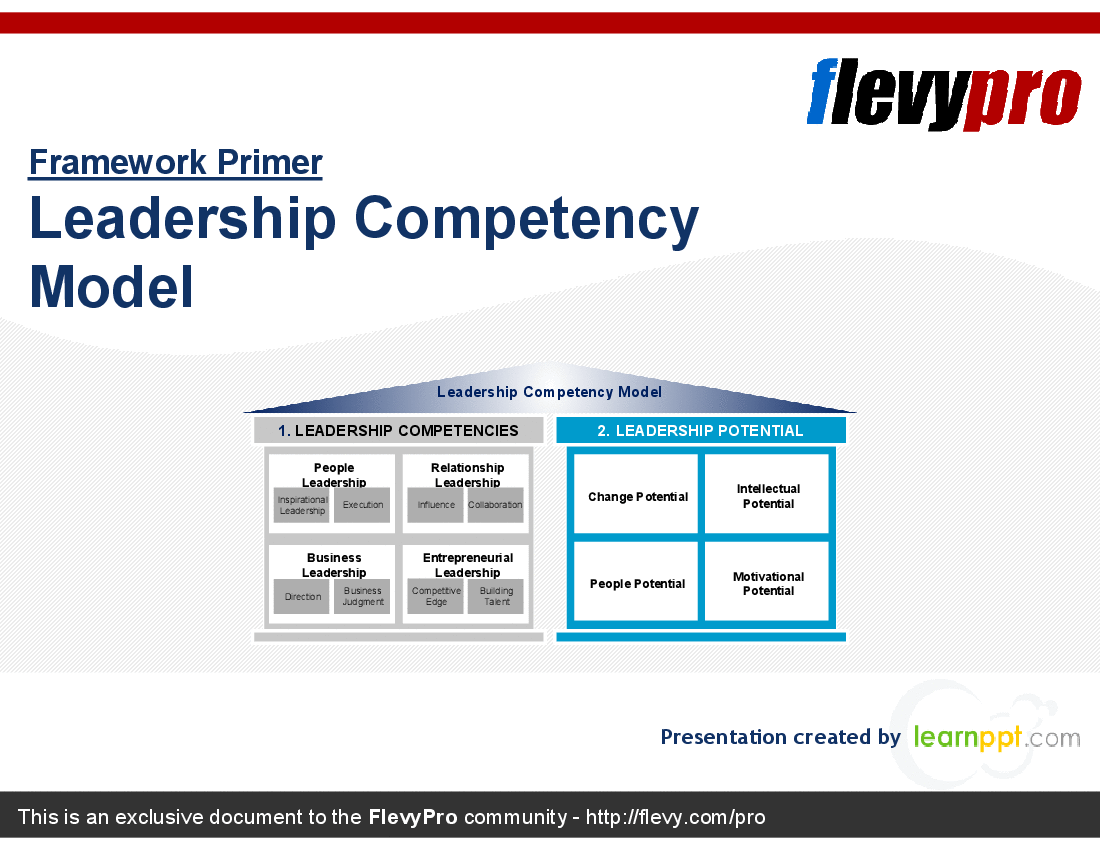
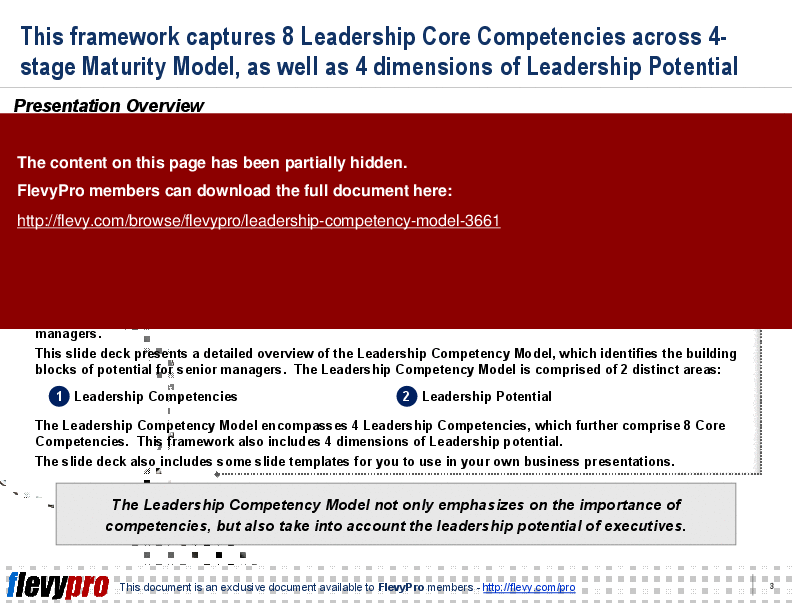
This slide deck presents a detailed overview of the Leadership Competency Model, which identifies the building blocks of potential for senior managers. The Leadership Competency Model is comprised of 2 distinct areas:
1. Leadership Competencies
2. Leadership Potential
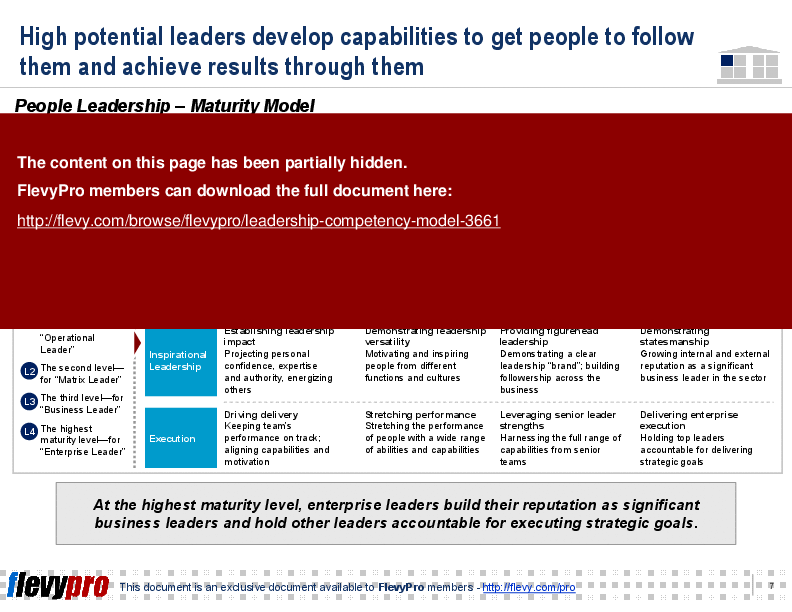
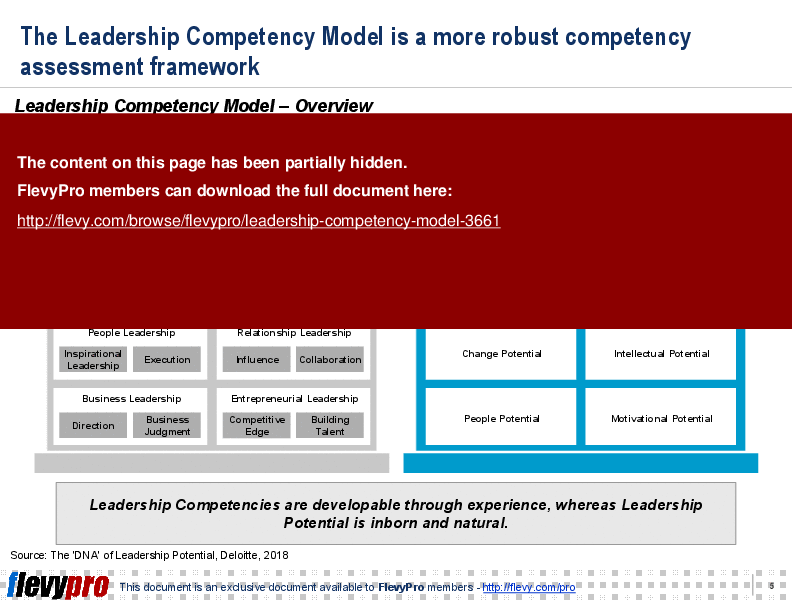
The Leadership Competency Model encompasses 4 Leadership Competencies, which further comprise 8 Core Competencies. Each Core Competency is mapped across a 4-stage Leadership Maturity Model. This framework also includes 4 dimensions of Leadership potential. Each Leadership Potential is also mapped against specific personality dimensions/factors, which can be assessed on a scoring model.
The slide deck also includes some slide templates for you to use in your own business presentations.
This comprehensive PPT delves into the intricacies of leadership competencies and potential, providing a robust framework for evaluating senior managers. It outlines eight core competencies within a four-stage maturity model and integrates four dimensions of leadership potential. The model emphasizes the importance of both developable competencies and inherent leadership potential, offering a balanced approach to leadership assessment. The slide deck includes actionable templates and detailed insights into key leadership practices, making it a valuable resource for executives aiming to refine their leadership development strategies.
Got a question about this document? Email us at flevypro@flevy.com.
Executive Summary
The Leadership Competency Model PPT provides a structured framework for assessing leadership competencies and potential across 4 distinct stages of maturity. This model encompasses eight core competencies essential for effective leadership, including People Leadership, Relationship Leadership, Business Leadership, and Entrepreneurial Leadership. It also evaluates 4 dimensions of Leadership Potential: Change Potential, Intellectual Potential, People Potential, and Motivational Potential. This presentation equips senior managers with tools to assess their leadership capabilities and identify areas for development, ultimately enhancing organizational effectiveness.
Who This Is For and When to Use
• Senior managers seeking to evaluate and enhance their leadership capabilities
• HR professionals involved in leadership development and talent management
• Organizational development teams focused on building leadership pipelines
• Consultants working with organizations on leadership assessment and training
Best-fit moments to use this deck:
• During leadership development workshops to assess current competencies
• In performance reviews to provide a structured evaluation of leadership potential
• When designing training programs aimed at enhancing specific leadership skills
• For strategic planning sessions focused on leadership succession and talent management
Learning Objectives
• Define the core competencies essential for effective leadership.
• Assess individual leadership potential using the Leadership Competency Model.
• Identify strengths and areas for improvement in leadership capabilities.
• Develop actionable plans for enhancing leadership skills across the organization.
• Foster a shared vocabulary around leadership expectations within teams.
• Create frameworks for ongoing leadership assessment and development.
Table of Contents
• Overview (page 3)
• Leadership Competencies (page 4)
• Leadership Potential (page 12)
• Templates (page 17)
Primary Topics Covered
• Leadership Competencies - A framework outlining the essential skills and abilities leaders must develop to be effective in their roles.
• Leadership Potential - An assessment of inherent traits that indicate a leader's capacity for growth and effectiveness.
• Maturity Model - A structured approach to evaluate leadership competencies across 4 levels: Operational Leader, Matrix Leader, Business Leader, and Enterprise Leader.
• Core Competencies - Eight key competencies categorized under People, Relationship, Business, and Entrepreneurial Leadership.
• Assessment Tools - Templates for evaluating leadership competencies and potential, facilitating structured feedback and development.
• Behavioral Insights - Research-backed insights into the psychological factors influencing leadership effectiveness.
Deliverables, Templates, and Tools
• Leadership Competency Assessment Template for evaluating individual competencies.
• Maturity Model Framework outlining the 4 levels of leadership development.
• Leadership Potential Assessment Tool to gauge inherent leadership traits.
• Slide templates for presenting leadership competency evaluations in organizational settings.
• Guidelines for implementing the Leadership Competency Model within teams.
• Action planning templates for developing leadership skills based on assessment outcomes.
Slide Highlights
• Overview of the Leadership Competency Model and its significance in organizational leadership.
• Detailed breakdown of the 4 core leadership competencies and their associated behaviors.
• Maturity model illustrating the progression from Operational to Enterprise Leader.
• Visual representations of the dimensions of Leadership Potential and their implications for leadership development.
• Templates designed for practical use in assessing and developing leadership capabilities.
Potential Workshop Agenda
Introduction to Leadership Competency Model (30 minutes)
• Overview of the model and its importance in leadership development.
• Discussion on the core competencies and their relevance.
Leadership Competency Assessment (60 minutes)
• Participants assess their own competencies using the provided templates.
• Group discussions on findings and insights.
Developing Leadership Potential (60 minutes)
• Exploration of the dimensions of Leadership Potential.
• Action planning for personal and organizational development.
Customization Guidance
• Adapt the competency assessment templates to align with specific organizational values and goals.
• Modify the maturity model descriptions to reflect industry-specific leadership challenges.
• Incorporate organizational case studies to illustrate competencies in action.
• Tailor the presentation slides to fit the audience's familiarity with leadership concepts.
Secondary Topics Covered
• Emotional intelligence and its impact on leadership effectiveness.
• The role of feedback in developing leadership competencies.
• Strategies for fostering a culture of continuous leadership development.
• Best practices for implementing leadership assessments in organizations.
Topic FAQ
Document FAQ
These are questions addressed within this presentation.
What is the Leadership Competency Model?
The Leadership Competency Model is a framework that outlines essential leadership skills and potential, structured across 4 stages of maturity and eight core competencies.
How can this model benefit our organization?
Implementing this model helps organizations assess and develop their leadership talent, ensuring leaders are equipped to meet current and future challenges.
What are the core competencies included in the model?
The model includes competencies in People Leadership, Relationship Leadership, Business Leadership, and Entrepreneurial Leadership, each with specific core competencies.
How do we assess leadership potential?
Leadership potential is assessed through a structured evaluation of inherent traits, using tools provided in the presentation.
Can this model be customized for our specific needs?
Yes, the model and its templates can be tailored to align with your organization's unique leadership development goals and cultural context.
What resources are included in the presentation?
The presentation includes templates for competency assessments, action planning tools, and guidelines for implementing the model in your organization.
How do we implement the Leadership Competency Model?
Implementation involves training sessions, using assessment tools, and integrating the model into existing leadership development programs.
Is there ongoing support available for using this model?
Yes, organizations can access additional resources and support through the FlevyPro community for continued development and application of the model.
Glossary
• Leadership Competencies - Skills and abilities that leaders develop through experience.
• Leadership Potential - Inherent traits that indicate a leader's capacity for growth.
• Maturity Model - Framework for assessing leadership capabilities across different levels.
• Core Competencies - Essential skills categorized under various leadership domains.
• Emotional Intelligence - The ability to understand and manage emotions in oneself and others.
• Assessment Tools - Instruments used to evaluate leadership competencies and potential.
• Action Planning - The process of creating a structured plan for personal and organizational development.
• Feedback Mechanism - Processes for providing constructive feedback to leaders for growth.
• Continuous Development - Ongoing efforts to enhance leadership skills and capabilities.
• Organizational Culture - The shared values and practices within an organization that influence behavior.
• Leadership Pipeline - A framework for identifying and developing future leaders within an organization.
• Competency Framework - A structured approach to defining and assessing competencies.
• Training Program - A structured course designed to enhance specific skills or knowledge areas.
• Succession Planning - The process of identifying and developing new leaders to replace old leaders when they leave or retire.
• Behavioral Insights - Research findings that inform understanding of effective leadership behaviors.
• Team Dynamics - The interactions and relationships between team members that affect performance.
• Strategic Goals - Long-term objectives that guide an organization’s direction and decision-making.
• Performance Management - The process of ensuring that organizational goals are met through effective employee performance.
• Leadership Development - Activities aimed at enhancing the skills and capabilities of leaders.
• Organizational Effectiveness - The ability of an organization to achieve its goals efficiently and effectively.
• Consulting Framework - A structured approach used by consultants to analyze and address client needs.
Source: Best Practices in Leadership, Maturity Model, Core Competences PowerPoint Slides: Leadership Competency Model PowerPoint (PPT) Presentation Slide Deck, LearnPPT Consulting
Did you need more documents?
Consider a FlevyPro subscription from $39/month. View plans here.
For $10.00 more, you can download this document plus 2 more FlevyPro documents. That's just $13 each.
|
Download our FREE Organization, Change, & Culture, Templates
Download our free compilation of 50+ slides and templates on Organizational Design, Change Management, and Corporate Culture. Methodologies include ADKAR, Burke-Litwin Change Model, McKinsey 7-S, Competing Values Framework, etc. |