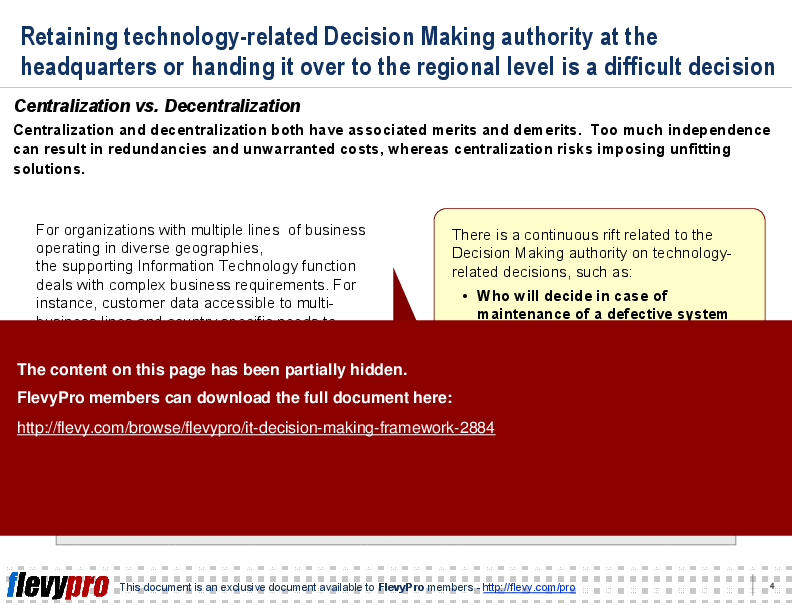

Managing Information Technology of a global organization has its own set of challenges, the foremost being striking an optimal balance between centralized and decentralized decision making. One of the fundamental concerns for the top management of multinational outfits is to finalize what needs to be managed at the local or regional level and which decisions to be made at the global headquarters.
This slide deck talks about the following topics:
• Centralized and Decentralized Decision Making
• The IT Decision Making Framework
• Operating Models (Types, Risks, Benefits, Costs, Deployment Considerations, Applications)
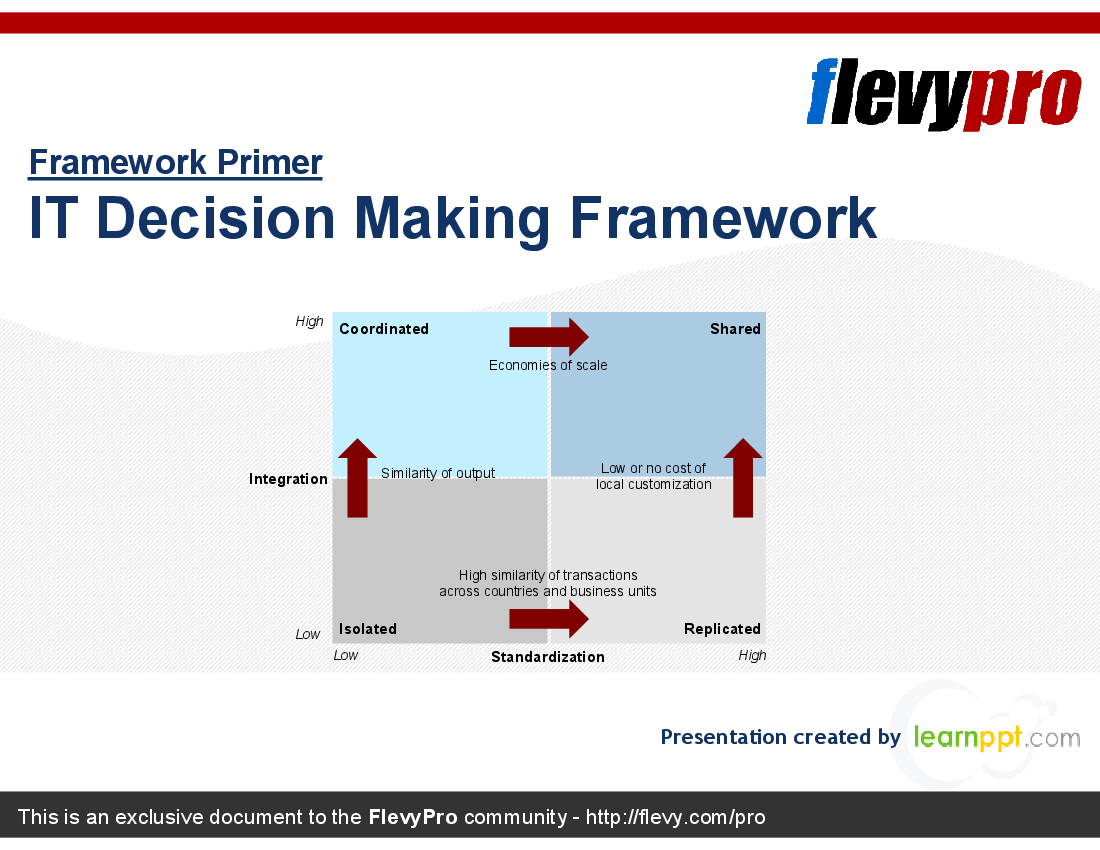
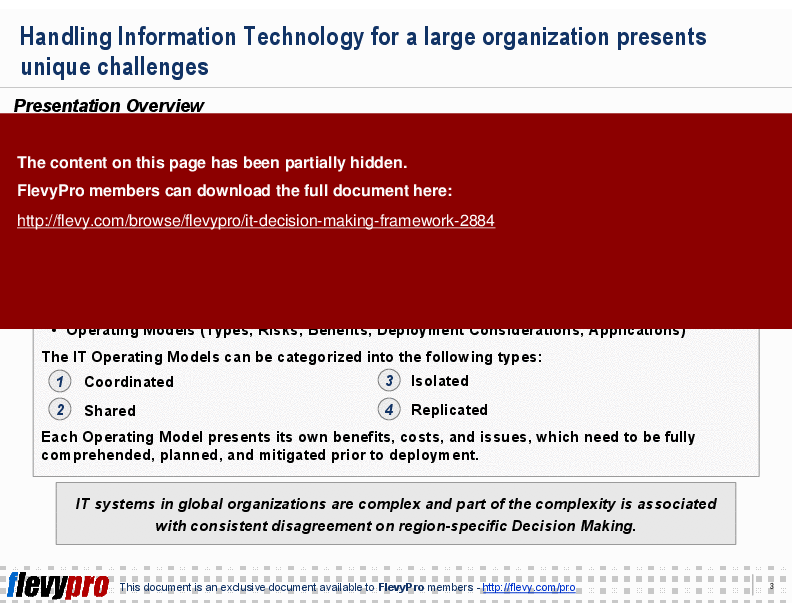
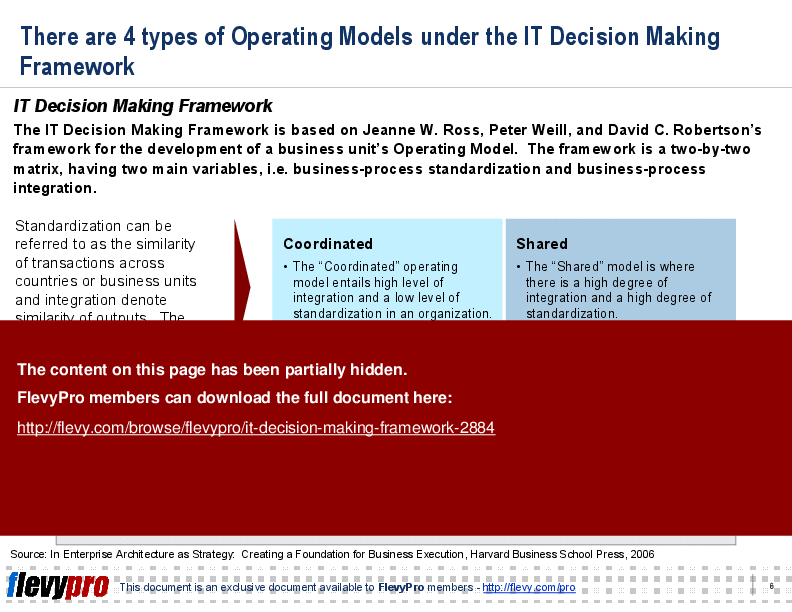
The IT Operating Models can be categorized into the following types:
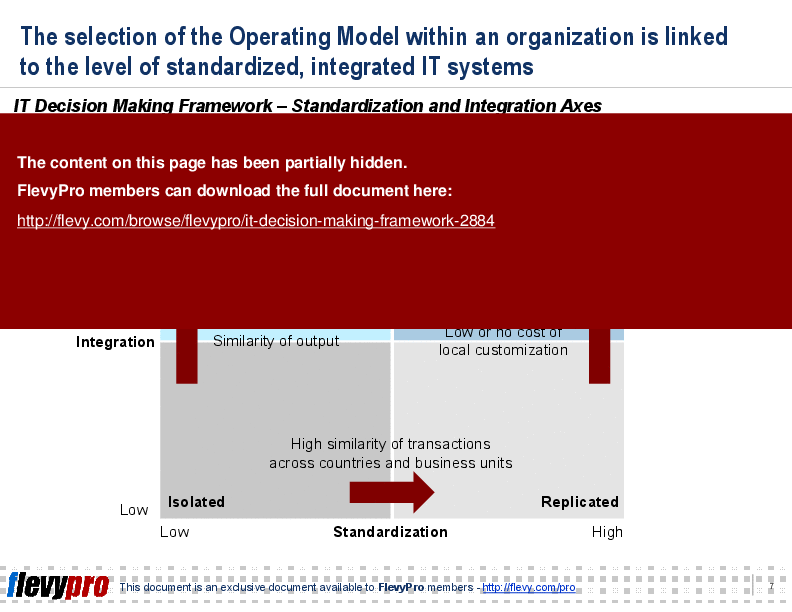
1. Coordinated – entails high level of integration and a low level of standardization in an organization.
2. Shared – where there is a high degree of integration and a high degree of standardization.
3. Isolated – entails low level of integration and low standardization in the organization.
4. Replicated – depicts low level of integration but higher degree of standardization in the organization.
Each Operating Model presents its own benefits, costs, and issues, which need to be fully comprehended, planned, and mitigated prior to deployment. IT systems in global organizations are complex and part of the complexity is associated with consistent disagreement on region-specific Decision Making.
This deck also contains some slide templates for you to use in your own presentations.
The framework emphasizes the criticality of aligning IT decision-making with the organization's overall strategy. It provides a structured approach to evaluate the trade-offs between standardization and integration, ensuring that IT investments deliver maximum value. The PPT includes detailed templates and practical examples to facilitate the implementation of the framework, making it a valuable tool for CIOs and IT leaders. This comprehensive guide is essential for navigating the complexities of IT governance in a global context, helping to streamline processes and enhance operational efficiency.
Got a question about this document? Email us at flevypro@flevy.com.
Executive Summary
The IT Decision Making Framework presentation provides a structured approach for managing IT decisions in large organizations, particularly in balancing centralized and decentralized strategies. Developed by seasoned consultants from McKinsey and Big 4 firms, this framework aids executives in determining which IT decisions should be made at the global headquarters versus local or regional levels. By leveraging this framework, organizations can optimize their IT governance, enhance operational efficiency, and align technology decisions with business objectives.
Who This Is For and When to Use
• CIOs and IT leaders responsible for global IT strategy and governance
• Business unit leaders managing regional IT operations
• Consultants advising on IT governance and decision-making frameworks
• Change management teams overseeing technology transitions
• Project managers involved in IT system implementations
Best-fit moments to use this deck:
• During strategic planning sessions for IT governance
• When evaluating centralized vs. decentralized IT models
• In workshops aimed at aligning IT strategy with business objectives
• For training sessions on IT decision-making best practices
Learning Objectives
• Define the IT Decision Making Framework and its components
• Identify the advantages and disadvantages of centralized and decentralized IT governance
• Analyze the 4 operating models within the framework: Coordinated, Shared, Isolated, and Replicated
• Develop criteria for selecting the appropriate operating model for specific business needs
• Implement governance mechanisms to support the chosen IT operating model
• Evaluate the risks and benefits associated with each operating model
Table of Contents
• Overview (page 3)
• IT Decision Making Framework (page 6)
• Operating Models (page 9)
• Operating Model Deployment and Implementation (page 13)
• Templates (page 17)
Primary Topics Covered
• IT Decision Making Framework - A structured approach for balancing centralized and decentralized IT decisions, guiding organizations in their technology governance.
• Centralized vs. Decentralized Decision Making - An exploration of the merits and drawbacks of each approach, emphasizing the need for a systematic framework.
• Operating Models - Four distinct models (Coordinated, Shared, Isolated, Replicated) that organizations can adopt based on their specific needs and contexts.
• Deployment Considerations - Factors to assess before implementing an operating model, including governance mechanisms and cost-benefit analysis.
• Implementation Strategies - Best practices for deploying the IT Decision Making Framework effectively across various business functions.
• Risk Assessment - Identifying potential risks associated with each operating model and strategies for mitigation.
Deliverables, Templates, and Tools
• IT Decision Making Framework templates for visualizing decision-making processes
• Operating model assessment tools to evaluate suitability for specific contexts
• Governance framework templates to support implementation
• Cost-benefit analysis templates for evaluating operating model choices
• Risk assessment checklists for each operating model
• Implementation planning templates to guide deployment strategies
Slide Highlights
• Overview of the IT Decision Making Framework with a visual matrix
• Comparison of the 4 operating models with clear definitions and examples
• Detailed analysis of the advantages, costs, and risks associated with each operating model
• Deployment factors and prerequisites for selecting an operating model
• Implementation considerations emphasizing stakeholder engagement and governance
Potential Workshop Agenda
Introduction to IT Decision Making Framework (30 minutes)
• Overview of the framework and its importance
• Discussion on centralized vs. decentralized decision making
Operating Models Deep Dive (60 minutes)
• Exploration of the 4 operating models
• Group activity to assess the suitability of each model for participants' organizations
Implementation Strategies (45 minutes)
• Best practices for deploying the framework
• Governance mechanisms to support chosen models
Wrap-Up and Q&A (15 minutes)
• Summary of key takeaways
• Open floor for questions and discussion
Customization Guidance
• Tailor the framework templates to reflect your organization's specific governance structures
• Adjust the operating model assessments based on regional or business unit needs
• Incorporate local regulatory requirements into the decision-making processes
• Update risk assessment tools to align with your organization’s risk appetite
• Modify implementation plans to fit your organization’s culture and operational realities
Secondary Topics Covered
• The role of technology standards in IT governance
• Strategies for managing IT system complexities in multinational organizations
• Best practices for stakeholder engagement in IT decision-making
• Techniques for measuring the effectiveness of IT governance frameworks
• Case studies illustrating successful implementation of the IT Decision Making Framework
Topic FAQ
Document FAQ
These are questions addressed within this presentation.
What is the IT Decision Making Framework?
The IT Decision Making Framework is a structured approach that helps organizations balance centralized and decentralized IT governance, guiding decisions on technology management.
How do I choose the right operating model for my organization?
Evaluate the specific needs of your organization, considering factors like business operations, regulatory requirements, and existing IT systems to determine the most suitable operating model.
What are the risks associated with each operating model?
Each model has unique risks, such as complexity in the Coordinated model or lack of transparency in the Isolated model. A thorough risk assessment should be conducted before implementation.
How can I ensure stakeholder buy-in for the chosen operating model?
Engage stakeholders early in the decision-making process, provide clear communication about the benefits of the chosen model, and involve them in governance planning.
What templates are included in the presentation?
The presentation includes templates for the IT Decision Making Framework, operating model assessments, governance frameworks, and risk assessments.
How can I customize the framework for my organization?
Adapt the templates to reflect your organization's specific governance structures, regional needs, and regulatory requirements.
What are the key benefits of implementing this framework?
Benefits include improved IT governance, enhanced operational efficiency, better alignment of technology decisions with business objectives, and reduced redundancies.
When should I use this framework?
Use this framework during strategic planning sessions, when evaluating IT governance structures, or when implementing new IT systems across multiple regions.
Glossary
• IT Decision Making Framework - A structured approach for managing IT governance in organizations.
• Centralization - A governance model where decision-making authority is held at the headquarters.
• Decentralization - A governance model where decision-making authority is distributed to regional or local units.
• Operating Model - A framework defining how an organization manages its IT functions.
• Coordinated Model - An operating model with high integration and low standardization.
• Shared Model - An operating model with high integration and high standardization.
• Isolated Model - An operating model with low integration and low standardization.
• Replicated Model - An operating model with low integration, but high standardization.
• Governance Mechanisms - Structures and processes that guide decision-making in organizations.
• Cost-Benefit Analysis - A method for evaluating the financial implications of different operating models.
• Risk Assessment - The process of identifying and evaluating potential risks associated with decisions.
• Stakeholder Engagement - The practice of involving individuals or groups who may be affected by or can affect a decision.
Source: Best Practices in IT Strategy, Decision Making PowerPoint Slides: IT Decision Making Framework PowerPoint (PPT) Presentation Slide Deck, LearnPPT Consulting
Did you need more documents?
Consider a FlevyPro subscription from $39/month. View plans here.
For $10.00 more, you can download this document plus 2 more FlevyPro documents. That's just $13 each.
|
Download our FREE Strategy & Transformation Framework Templates
Download our free compilation of 50+ Strategy & Transformation slides and templates. Frameworks include McKinsey 7-S, Balanced Scorecard, Disruptive Innovation, BCG Curve, and many more. |