
 Click main image to view in full screen.
ISO 31000:2018 (Risk Management) Awareness Training (PowerPoint PPTX Slide Deck)
PowerPoint (PPTX) + Excel (XLSX) 61 Slides


BENEFITS OF THIS POWERPOINT DOCUMENT
- Provides the principles and framework to support your organization's risk management strategy.
- Provides a holistic approach to risk management for your organization, programs, projects and process improvement.
- Provides a tool to create awareness on the importance of identifying, monitoring and managing risk.
RISK MANAGEMENT PPT DESCRIPTION
ISO 31000:2018 is an internationally recognized standard that helps organizations implement a robust Risk Management System. Risks can arise from anything that generates uncertainty related to an organization's objectives or deviates from the expected, including opportunities to be gained. In today's world, it is essential to consider risks related to reputation, political changes, climate change impacts, cyber incidents, business interruption, pandemic outbreaks, market developments, and the shortage of skilled workers.
The ISO 31000 standard helps organizations develop a risk management strategy to effectively identify and mitigate risks, thereby increasing the likelihood of achieving their objectives and protecting their assets. Its goal is to create a risk management culture where employees and stakeholders are aware of the importance of monitoring and managing risk.
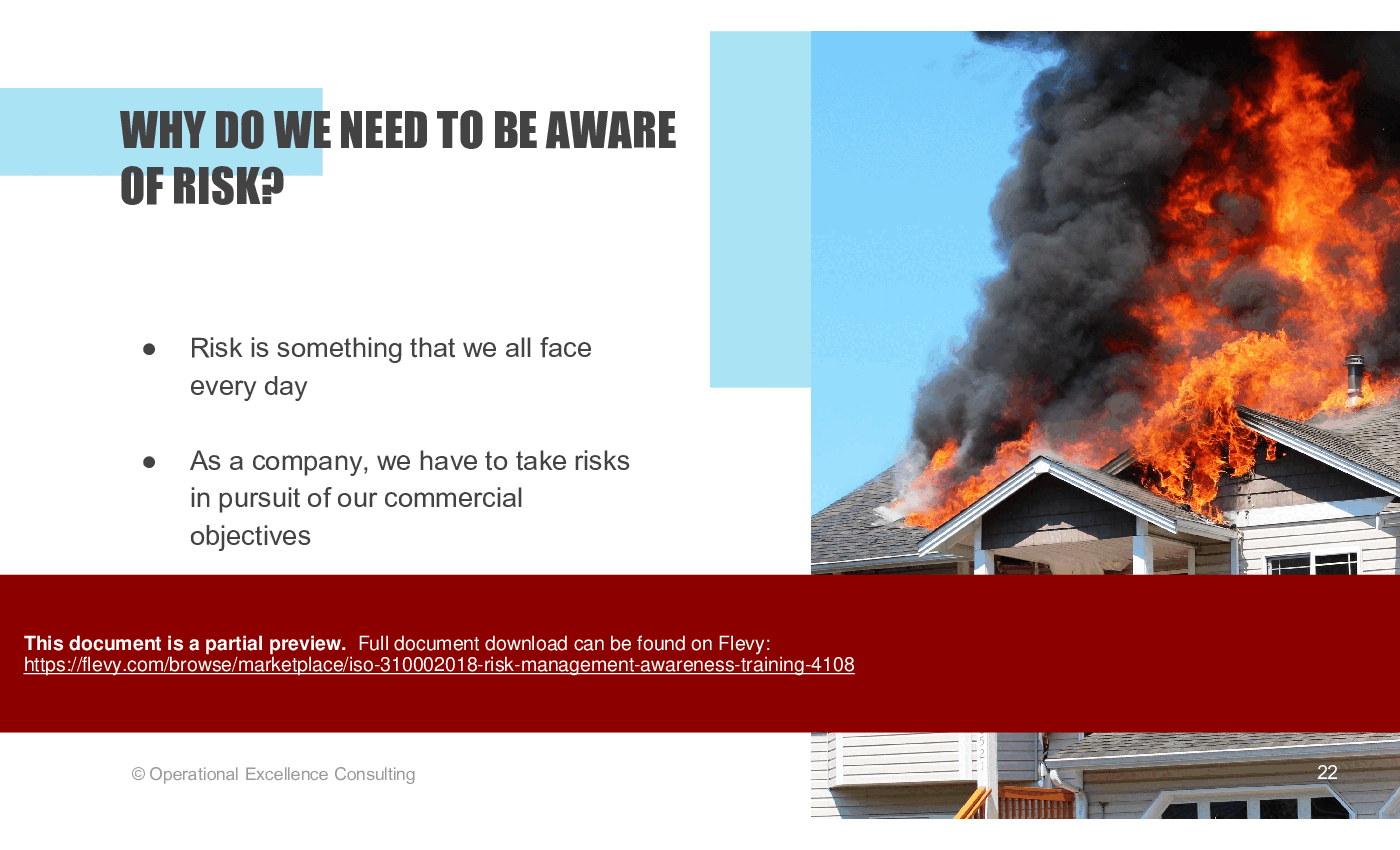
In ISO 31000, "risk" is defined as the effect of uncertainty on objectives. All organizations face risk every day and must take risks to pursue commercial objectives. Therefore, it is essential to raise awareness that everyone must manage risk as part of their working and personal lives.
The ISO 31000 standard consists of three pillars: Principles, Framework, and Process. The principles are required elements of effective and efficient risk management. The framework assists in integrating risk management into the activities and functions of the organization. The process is an integral part of the management, structure, operations, and processes (activities) of the organization.
This ISO 31000 (Risk Management) awareness PPT presentation can be used to brief employees, stakeholders, and project teams, creating awareness of risk management best practices. The presentation can also serve as a useful outline to help organizations create a risk management plan. By implementing the ISO 31000 standard, organizations can enhance their risk management practices, protect their assets, and increase the likelihood of achieving their objectives.
||||||||||||||||||||||||||||||||||||||||||||||||||||||||||||||||||||||||||||||||||||||||||||||||||||||||||||||||||||||||||||||||||||||||||||||||||||||
This training package includes:
1. ISO 31000:2018 (Risk Management) Awareness PPT training presentation (PowerPoint format)
2. Risk Register template (Excel format)
||||||||||||||||||||||||||||||||||||||||||||||||||||||||||||||||||||||||||||||||||||||||||||||||||||||||||||||||||||||||||||||||||||||||||||||||||||||
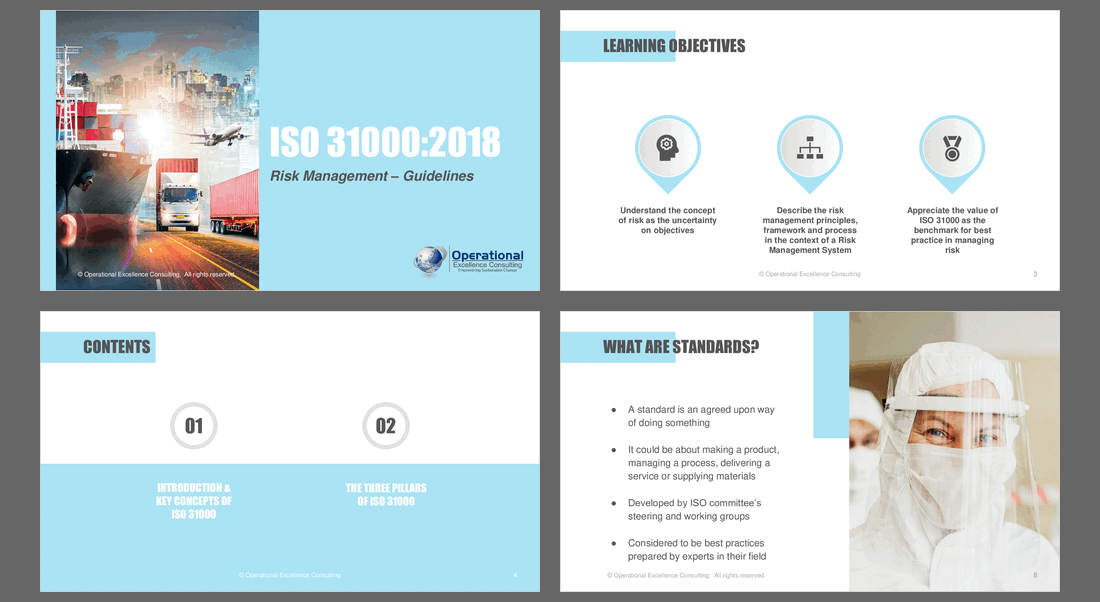
LEARNING OBJECTIVES
1. Understand the concept of risk as the uncertainty on objectives.
2. Understand risk management principles, framework and process in the context of a Risk Management System.
3. Appreciate the value of ISO 31000 as the benchmark for best practice in managing risk.
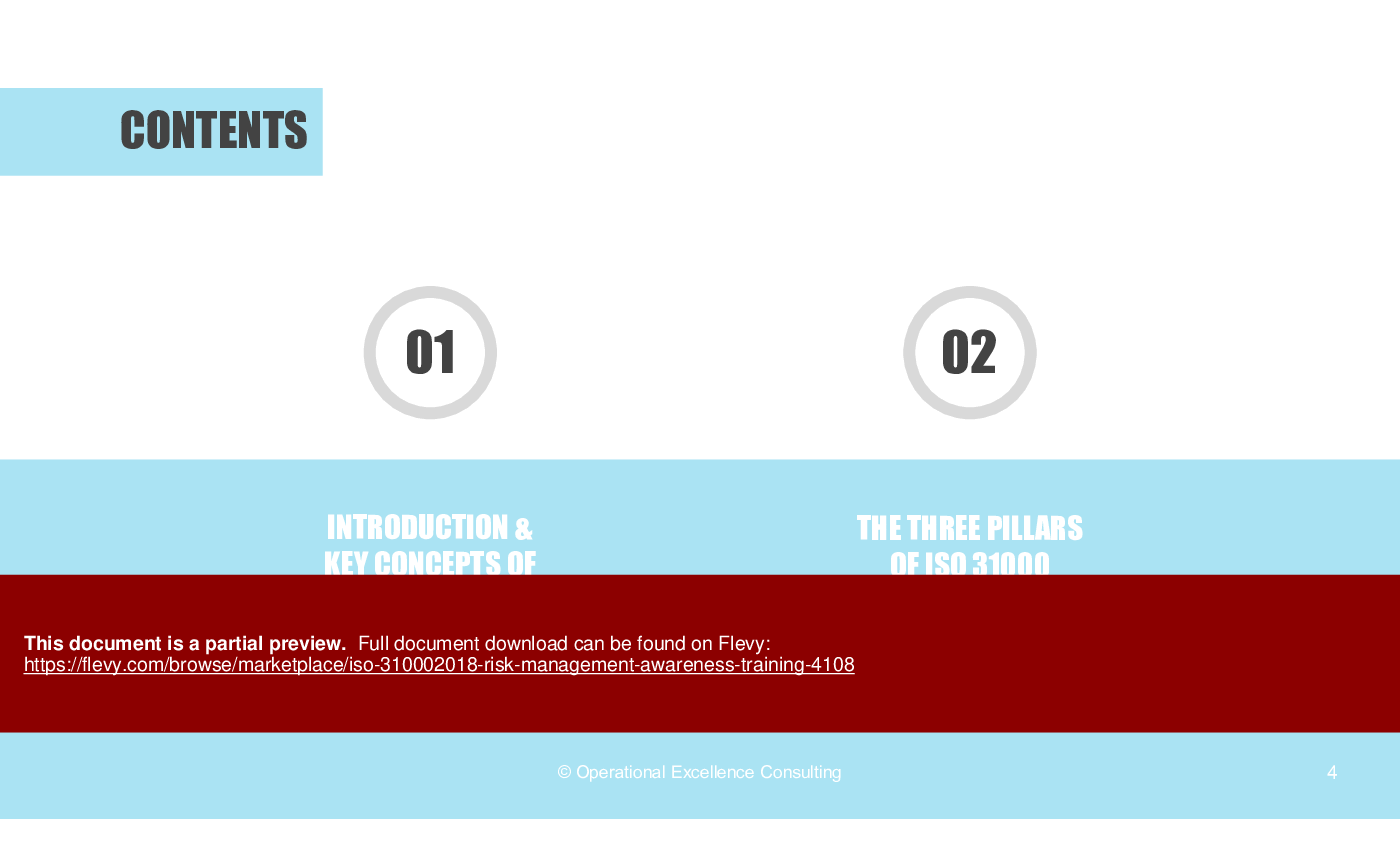
CONTENTS
1. Introduction and Key Concepts of ISO 31000
• About ISO
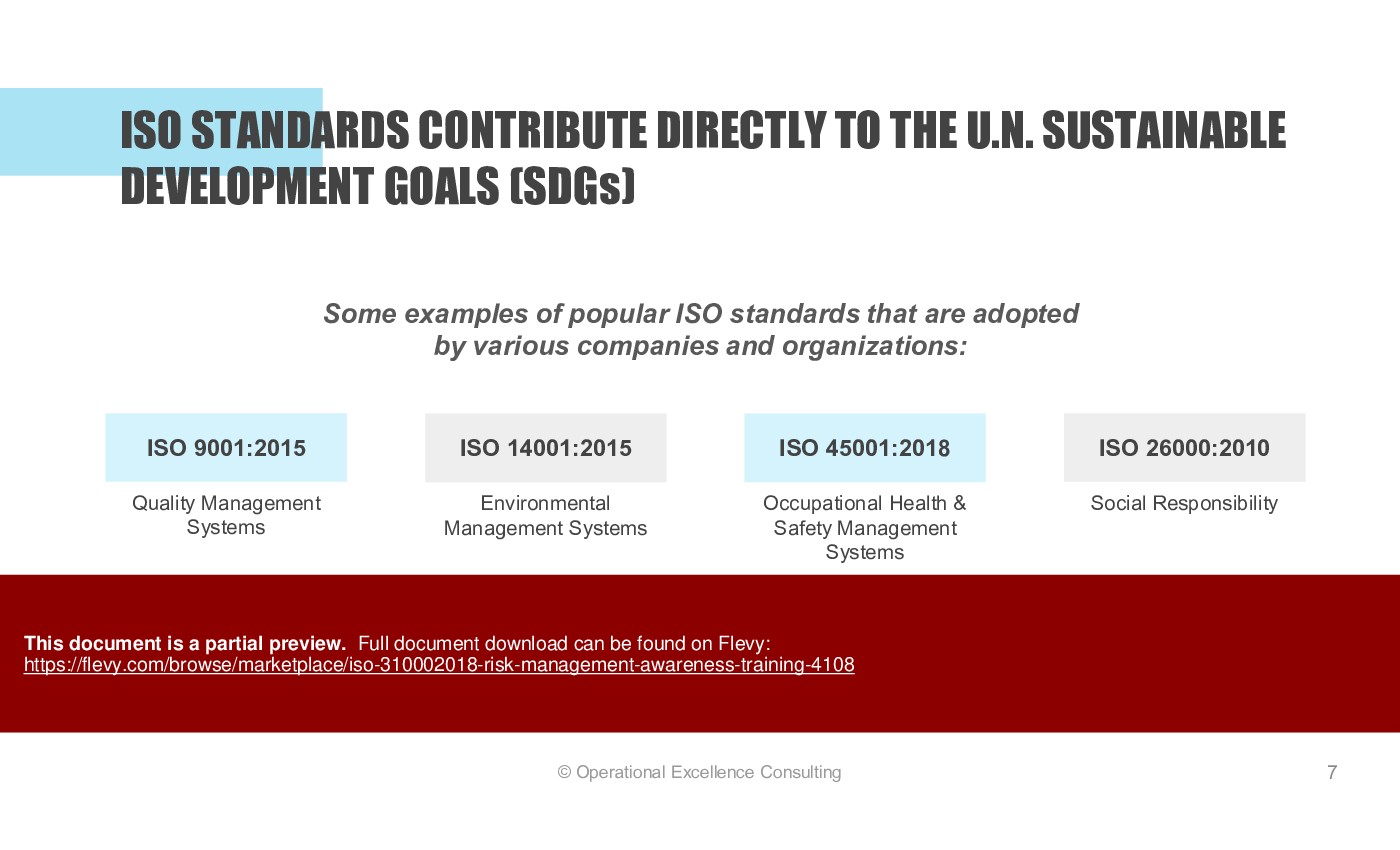
• ISO Standards Contribute Directly to the U.N. Sustainable Development Goals (SDGs)
• What are Standards?
• What Standards are Not
• Why are Standards Important?
• What is an ISO Standard?
• What is ISO 31000?
• The ISO 31000 Family
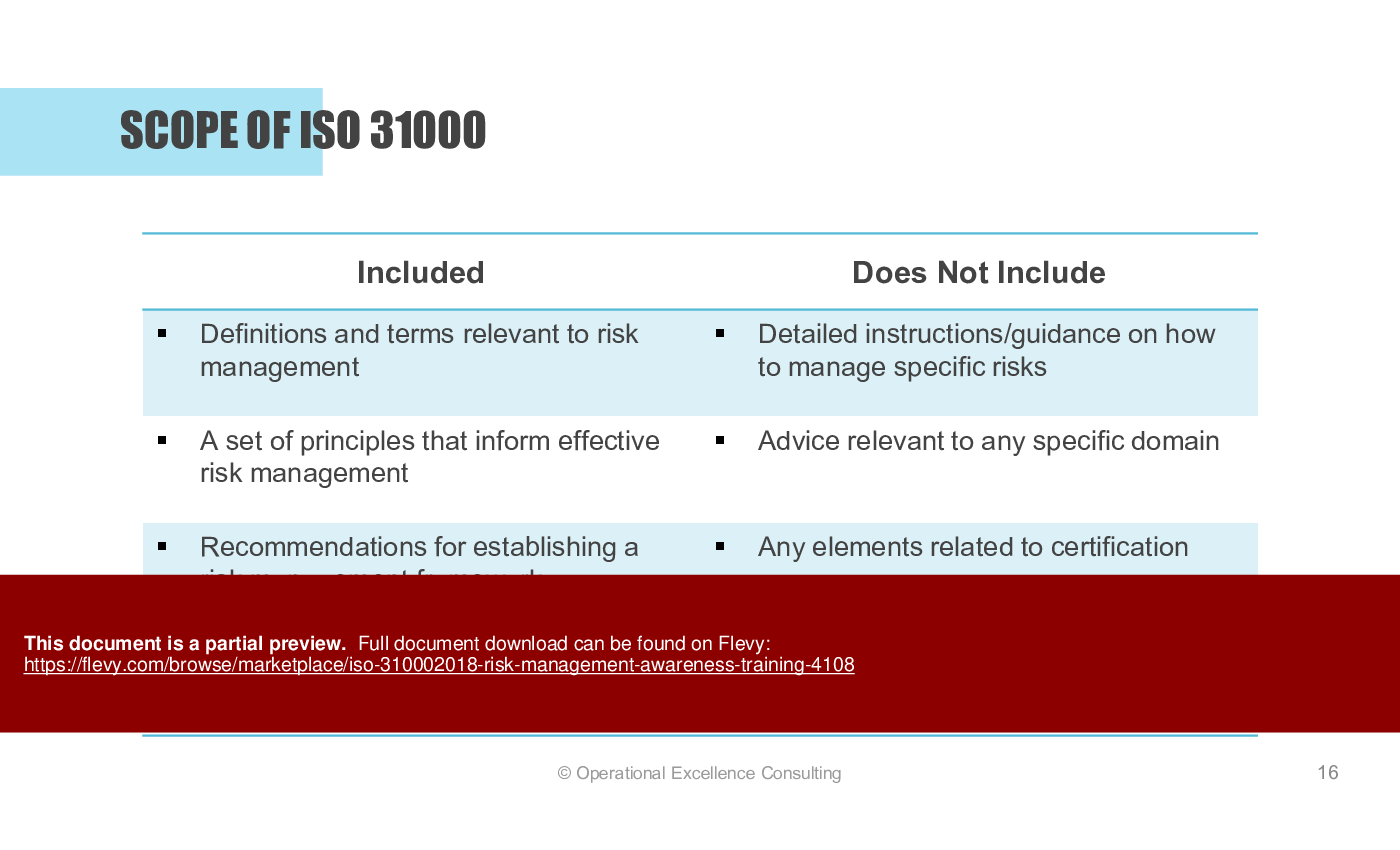
• Scope of ISO 31000
• Key Focus of ISO 31000
• Objectives of ISO 31000
• What is "Risk"?
• Examples of Risks
• Definition of "Risk"
• Why Do We Need to Be Aware of Risk?
• What Do We Know About Risk Management?
• You Manage Risks When You...
• Definition of "Risk Management"
• Benefits of Adopting ISO 31000 Standard
• Why was ISO 31000 Revised?
• What are the Main Differences?
• How do I Apply ISO 31000?
• How do I Get Started?
2. The Three Pillars of ISO 31000
• The Three Pillars of ISO 31000
• Risk Management Principles
• Risk Management Framework
• Components of the Risk Management Framework
• Risk Management Process
• Risk Assessment
• Risk Identification
• Risk Analysis
• Risk Evaluation
• Risk Treatment
• ISO 31000 Key Clause Structure (4-6)
• ISO 31000 and Project Management
• Your Risk Management Checklist
This training package includes detailed explanations of risk identification, analysis, and evaluation processes. It also highlights the importance of integrating risk management into project management to control inherent risks effectively.
Got a question about the product? Email us at support@flevy.com or ask the author directly by using the "Ask the Author a Question" form. If you cannot view the preview above this document description, go here to view the large preview instead.
MARCUS OVERVIEW
This synopsis was written by Marcus [?] based on the analysis of the full 61-slide presentation.
Executive Summary
The ISO 31000:2018 Risk Management Awareness Training presentation is designed to enhance understanding of risk management principles and practices within organizations. Developed by an experienced ISO Management System Lead Auditor, this training equips participants with essential knowledge to identify, assess, and manage risks effectively. The presentation outlines the ISO 31000 framework, emphasizing its relevance across various sectors and its integration into organizational decision-making processes. By utilizing this training, organizations can foster a culture of proactive risk management, ultimately leading to improved operational resilience and strategic success.
Who This Is For and When to Use
• Risk Management Professionals seeking to enhance their knowledge of ISO standards
• Corporate Executives responsible for governance and strategic decision-making
• Compliance Officers tasked with ensuring adherence to risk management frameworks
• Project Managers aiming to integrate risk management into project planning
• HR Leaders focused on cultivating a risk-aware organizational culture
Best-fit moments to use this deck:
• During onboarding sessions for new employees in risk management roles
• As part of continuous professional development programs
• When preparing for ISO certification or audits
• In workshops aimed at improving organizational risk management practices
Learning Objectives
• Understand the concept of risk as uncertainty affecting objectives
• Describe the risk management principles, framework, and process in the context of a Risk Management System
• Appreciate the value of ISO 31000 as a benchmark for best practices in managing risk
• Identify and evaluate risks relevant to organizational objectives
• Develop a risk management culture that engages employees and stakeholders
• Implement effective risk treatment strategies to mitigate identified risks
Table of Contents
• Introduction & Key Concepts of ISO 31000 (page 5)
• The Three Pillars of ISO 31000 (page 31)
• Risk Management Principles (page 34)
• Risk Management Framework (page 36)
• Risk Management Process (page 40)
• Risk Assessment and Treatment (page 42)
• Your Risk Management Checklist (page 56)
Primary Topics Covered
• ISO 31000 Overview - An international standard providing principles and guidelines for risk management applicable across various sectors.
• Risk Management Principles - Eight core principles that underpin effective risk management, emphasizing value creation and protection.
• Risk Management Framework - A structured approach to integrating risk management into organizational activities and functions.
• Risk Management Process - A systematic process that includes risk identification, analysis, evaluation, and treatment.
• Risk Assessment - The process of identifying and evaluating risks to inform decision-making.
• Risk Treatment - Strategies for addressing identified risks, including avoidance, reduction, sharing, or acceptance.
Deliverables, Templates, and Tools
• Risk management framework template for organizational integration
• Risk assessment checklist for identifying and evaluating risks
• Risk treatment plan template for documenting strategies and actions
• Communication plan for engaging stakeholders in risk management
• Training materials for ongoing risk management education
Slide Highlights
• Overview of ISO 31000 and its relevance to various industries
• Visual representation of the 3 pillars of ISO 31000: Principles, Framework, and Process
• Key definitions and concepts related to risk management
• Examples of risks organizations may face, including cyber incidents and economic downturns
• Summary of the benefits of adopting ISO 31000 for proactive risk management
Potential Workshop Agenda
Introduction to ISO 31000 (60 minutes)
• Overview of the ISO 31000 standard and its significance
• Discussion on the importance of risk management in organizations
Risk Assessment Techniques (90 minutes)
• Identifying potential risks and their impacts
• Analyzing and evaluating risks using established criteria
Risk Treatment Strategies (60 minutes)
• Developing effective risk treatment plans
• Engaging stakeholders in the risk management process
Customization Guidance
• Tailor the presentation to reflect specific organizational contexts and objectives
• Incorporate industry-specific examples of risks and risk management practices
• Adjust the risk assessment and treatment templates to align with internal processes
• Update the communication plan to include relevant stakeholders and channels
Secondary Topics Covered
• The role of leadership in fostering a risk management culture
• Integration of ISO 31000 with other ISO standards, such as ISO 9001 and ISO 45001
• The iterative nature of the risk management process and its continuous improvement
FAQ
What is ISO 31000?
ISO 31000 is an international standard that provides principles and guidelines for effective risk management applicable to any organization.
How can ISO 31000 benefit my organization?
Adopting ISO 31000 can enhance decision-making, improve governance, and increase the likelihood of achieving objectives by proactively managing risks.
Is ISO 31000 applicable to all industries?
Yes, ISO 31000 is designed to be applicable across various sectors, regardless of size or type of organization.
What are the key components of the risk management framework?
The framework includes leadership and commitment, integration into governance, and continual improvement processes.
How do I implement a risk management process?
Implement the process by identifying risks, analyzing their impacts, evaluating their significance, and developing treatment strategies.
Can ISO 31000 be used for certification purposes?
ISO 31000 is not intended for certification; it provides guidelines for establishing effective risk management practices.
What are some common risks organizations face?
Common risks include cyber incidents, business interruptions, natural disasters, and regulatory changes.
How often should risk assessments be conducted?
Risk assessments should be conducted regularly and whenever significant changes occur within the organization or its environment.
Glossary
• Risk - The effect of uncertainty on objectives.
• Risk Management - Coordinated activities to direct and control an organization with regard to risk.
• Risk Assessment - The process of identifying, analyzing, and evaluating risks.
• Risk Treatment - The process of selecting and implementing options for addressing risk.
• ISO 31000 - An international standard providing guidelines for risk management.
• Stakeholders - Individuals or groups with an interest in the organization's risk management practices.
• Governance - The framework of rules and practices by which an organization is directed and controlled.
• Continuous Improvement - Ongoing efforts to enhance products, services, or processes.
• Risk Register - A tool for documenting risks, their assessment, and treatment plans.
• Leadership Commitment - The active support and involvement of top management in risk management.
• Integration - The process of incorporating risk management into organizational activities.
• Communication - The exchange of information regarding risks and risk management practices.
• Consultation - Engaging stakeholders in discussions about risk management.
• Monitoring and Review - The ongoing process of assessing the effectiveness of risk management strategies.
• Value Creation - The process of generating benefits through effective risk management.
• Framework - The structured approach to implementing risk management within an organization.
• Principles - The foundational concepts that guide effective risk management practices.
• Process - The series of steps involved in managing risks effectively.
• Context - The internal and external environment in which an organization operates.
• Criteria - The standards used to evaluate risks and determine their significance.
Source: Best Practices in Risk Management, ISO 31000 PowerPoint Slides: ISO 31000:2018 (Risk Management) Awareness Training PowerPoint (PPTX) Presentation Slide Deck, Operational Excellence Consulting
ABOUT THE AUTHOR

Operational Excellence Consulting, founded in 2009 by Allan Ung, draws from extensive experience at Microsoft, IBM, and Underwriters Laboratories (UL). We specialize in strategy deployment, customer experience design, and operational excellence, applying Design Thinking, Lean, and Systems Thinking to maximize customer value and minimize waste.
Our
... [read more]
Ask the Author a Question
You must be logged in to contact the author.