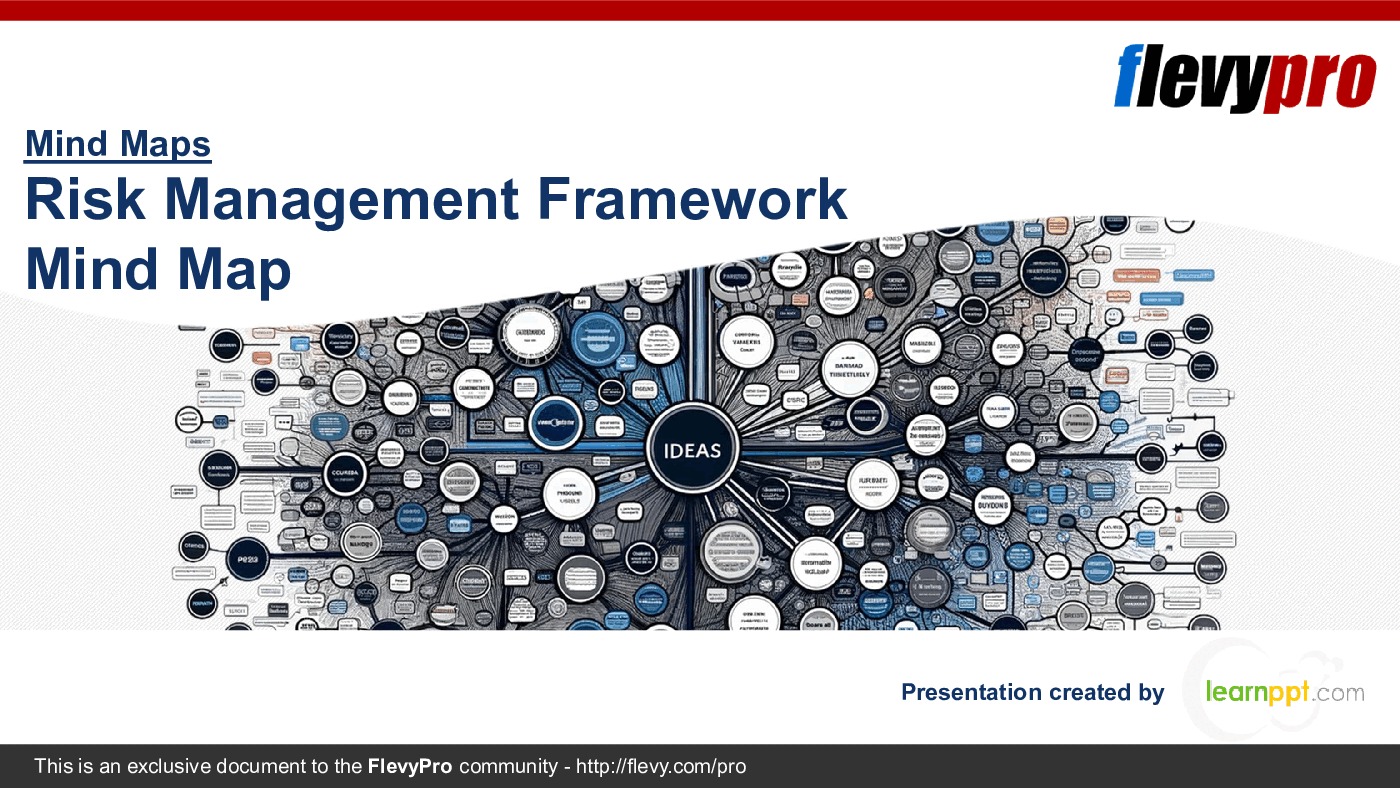
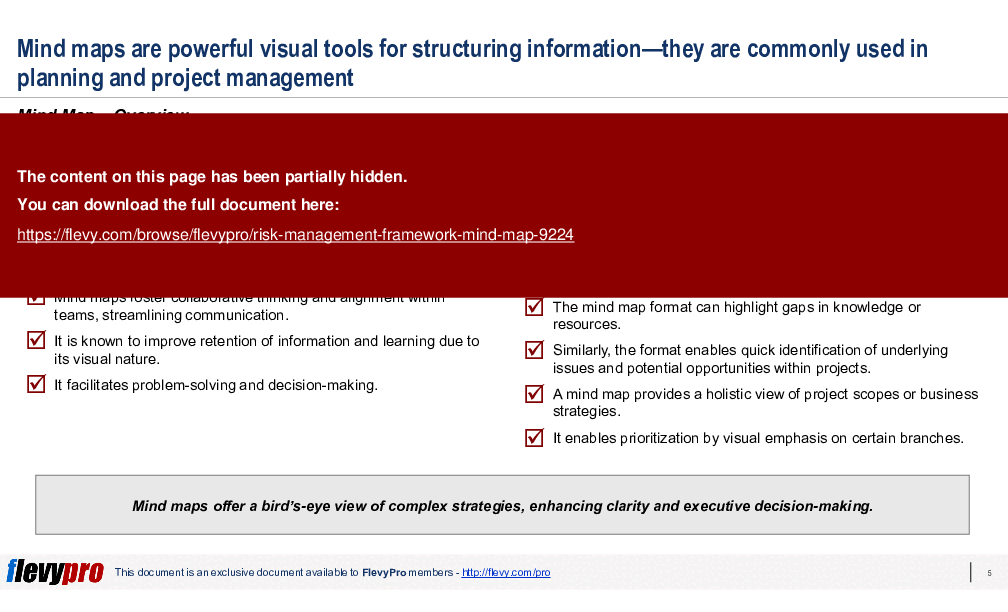

A mind map is a visual diagram that represent ideas, tasks, or other items linked to and arranged around a central key concept. It facilitates structuring information, helping users to better analyze, comprehend, and generate new ideas.
Using the mind map tool also can help reveal numerous potential insights, including:
A mind map identifies relationships and connections between different elements.
The mind map format can highlight gaps in knowledge or resources.
Similarly, the format enables quick identification of underlying issues and potential opportunities within projects.
A mind map provides a holistic view of project scopes or business strategies.
It enables prioritization by visual emphasis on certain branches.
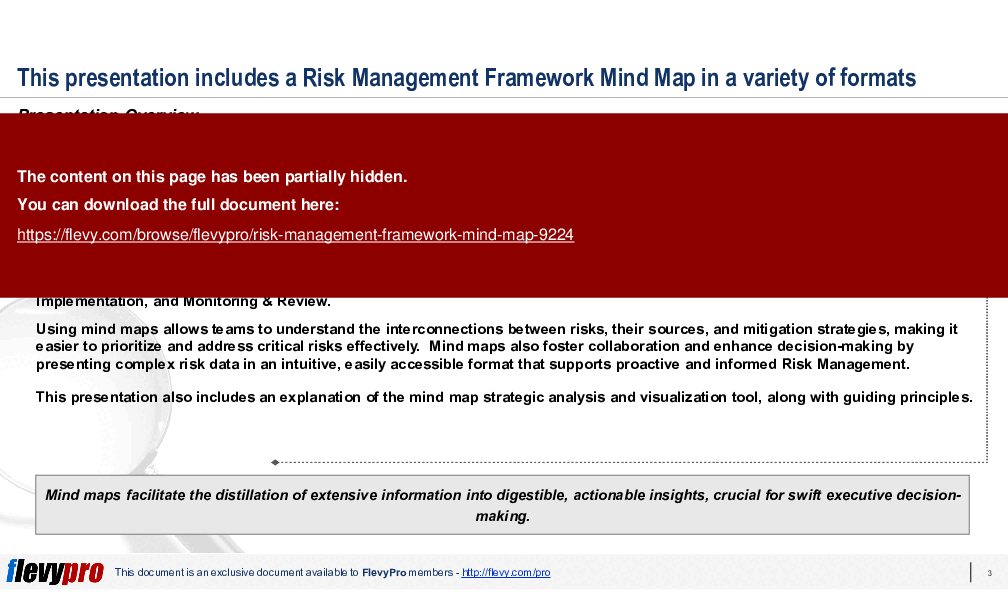
This PowerPoint presentation includes a Risk Management Framework Mind Map in a number of formats for ease of use:
1. Interactive HTML
2. SVG file (for editing)
3. PDF (A3 size)
4. Markdown script (for editing)
The Markdown code allows you to easily modify the mind map in a Markdown editor, which are freely available online.
This mind map breaks down Risk Management into 5 key phases: Risk Identification, Risk Assessment, Risk Mitigation Planning, Implementation, and Monitoring & Review.
Using mind maps allows teams to understand the interconnections between risks, their sources, and mitigation strategies, making it easier to prioritize and address critical risks effectively. Mind maps also foster collaboration and enhance decision-making by presenting complex risk data in an intuitive, easily accessible format that supports proactive and informed Risk Management.
This PowerPoint presentation also includes an explanation of the mind map strategic analysis and visualization tool, along with guiding principles.
Got a question about this document? Email us at flevypro@flevy.com.
Executive Summary
The Risk Management Framework Mind Map is a strategic tool designed to enhance organizational risk management practices. Developed by experienced consultants, this mind map visually represents the critical phases of risk management: Risk Identification, Risk Assessment, Risk Mitigation Planning, Implementation, and Monitoring & Review. By utilizing this framework, teams can effectively analyze risk data, prioritize risks, and foster collaboration, leading to informed decision-making and proactive risk management.
Who This Is For and When to Use
• Corporate executives overseeing risk management strategies
• Project managers responsible for risk assessment and mitigation
• Risk management teams needing a structured approach to identify and address risks
• Consultants advising clients on risk management best practices
Best-fit moments to use this deck:
• During risk assessment workshops to visualize and prioritize risks
• In strategy meetings to align teams on risk management objectives
• For training sessions on risk management methodologies
Learning Objectives
• Define the 5 key phases of the Risk Management Framework
• Build a comprehensive risk management plan using the mind map
• Establish a clear process for risk identification and assessment
• Develop effective risk mitigation strategies tailored to organizational needs
• Implement monitoring and review processes to track risk management effectiveness
• Foster collaboration among stakeholders in the risk management process
Table of Contents
• Overview (page 3)
• Mind Map (page 3)
• Risk Management Framework Mind Map (page 9)
• Slide Design Guide (page 15)
Primary Topics Covered
• Risk Identification - The initial phase focusing on recognizing potential risks and their sources.
• Risk Assessment - Evaluating identified risks to determine their likelihood and impact.
• Risk Mitigation Planning - Developing strategies to minimize or eliminate risks.
• Implementation - Executing the risk management plan, including assigning responsibilities and timelines.
• Monitoring & Review - Ongoing assessment of risk management effectiveness and making necessary adjustments.
Deliverables, Templates, and Tools
• Interactive HTML mind map for dynamic presentations
• SVG file for editable visual representation
• PDF format for easy sharing and printing
• Markdown script for customizable editing
Slide Highlights
• Overview of the Risk Management Framework with clear phase delineation
• Detailed breakdown of risk identification tools and techniques
• Visual representation of risk mitigation strategies and action plans
• Guidelines for effective monitoring and review processes
Potential Workshop Agenda
Risk Identification Session (60 minutes)
• Introduce the concept of risk identification
• Discuss tools and techniques for identifying risks
• Facilitate a brainstorming session to identify organizational risks
Risk Assessment Workshop (90 minutes)
• Review methods for assessing risk likelihood and impact
• Develop a risk prioritization matrix
• Assign responsibilities for risk assessment tasks
Implementation Planning Session (120 minutes)
• Outline action plans for identified risks
• Establish timelines and accountability for risk mitigation
• Discuss communication strategies for stakeholder engagement
Customization Guidance
• Tailor the mind map to reflect specific organizational risks and contexts
• Adjust risk assessment criteria based on industry standards and practices
• Incorporate company-specific terminology and frameworks into the presentation
Secondary Topics Covered
• Risk response strategies including avoidance, reduction, transfer, and acceptance
• Stakeholder engagement in the risk management process
• Tools for tracking and reporting on risk management activities
Topic FAQ
Document FAQ
These are questions addressed within this presentation.
What is a Risk Management Framework Mind Map?
A visual representation that outlines the key phases of risk management, facilitating understanding and collaboration among teams.
How can I customize the mind map for my organization?
You can modify the mind map using the provided SVG or Markdown formats to align with your specific risk management practices.
What are the benefits of using a mind map for risk management?
Mind maps enhance clarity, foster collaboration, and simplify complex risk data, making it easier to prioritize and address critical risks.
Can this framework be used for training purposes?
Yes, the mind map serves as an effective educational tool for training teams on risk management methodologies.
What formats are available for the Risk Management Framework Mind Map?
The mind map is available in interactive HTML, SVG, PDF, and Markdown formats for various use cases.
How does the mind map support decision-making?
By presenting complex risk data in an intuitive format, the mind map aids in informed decision-making and prioritization of risks.
Is there a specific process for implementing the risk management plan?
Yes, the framework outlines steps for assigning responsibilities, establishing timelines, and monitoring progress.
What tools can be used alongside the mind map?
The mind map can be complemented with project management software and risk assessment tools for comprehensive risk management.
Glossary
• Risk Management - The process of identifying, assessing, and mitigating risks.
• Risk Identification - The phase of recognizing potential risks and their sources.
• Risk Assessment - Evaluating the likelihood and impact of identified risks.
• Risk Mitigation - Strategies developed to minimize or eliminate risks.
• Monitoring & Review - Ongoing assessment of risk management effectiveness.
• Stakeholder Engagement - Involving relevant parties in the risk management process.
• Action Plan - A detailed strategy outlining steps to address identified risks.
• Risk Response Strategies - Approaches to manage risks, including avoidance and transfer.
• Progress Tracking - Monitoring the implementation of risk management actions.
• Feedback Mechanisms - Processes for gathering input on risk management effectiveness.
• Incident Reporting - Documenting occurrences of risk events and their impacts.
• Plan Adjustments - Modifications made to the risk management plan based on monitoring results.
• Contingency Planning - Preparing alternative strategies for managing risks.
• Risk Metrics - Measurements used to evaluate risk management performance.
• Residual Risk - The remaining risk after mitigation efforts have been implemented.
• Root Cause Analysis - Identifying underlying reasons for risk occurrences.
• Scenario Testing - Assessing potential risk events through simulation.
• Stakeholder Re-engagement - Revisiting stakeholder input after adjustments.
• Plan Refinement - Improving risk management strategies based on performance evaluations.
Source: Best Practices in Risk Management, Mind Map PowerPoint Slides: Risk Management Framework Mind Map PowerPoint (PPTX) Presentation Slide Deck, LearnPPT Consulting
Did you need more documents?
Consider a FlevyPro subscription from $39/month. View plans here.
For $10.00 more, you can download this document plus 2 more FlevyPro documents. That's just $13 each.
|
Receive our FREE presentation on Operational Excellence
This 50-slide presentation provides a high-level introduction to the 4 Building Blocks of Operational Excellence. Achieving OpEx requires the implementation of a Business Execution System that integrates these 4 building blocks. |