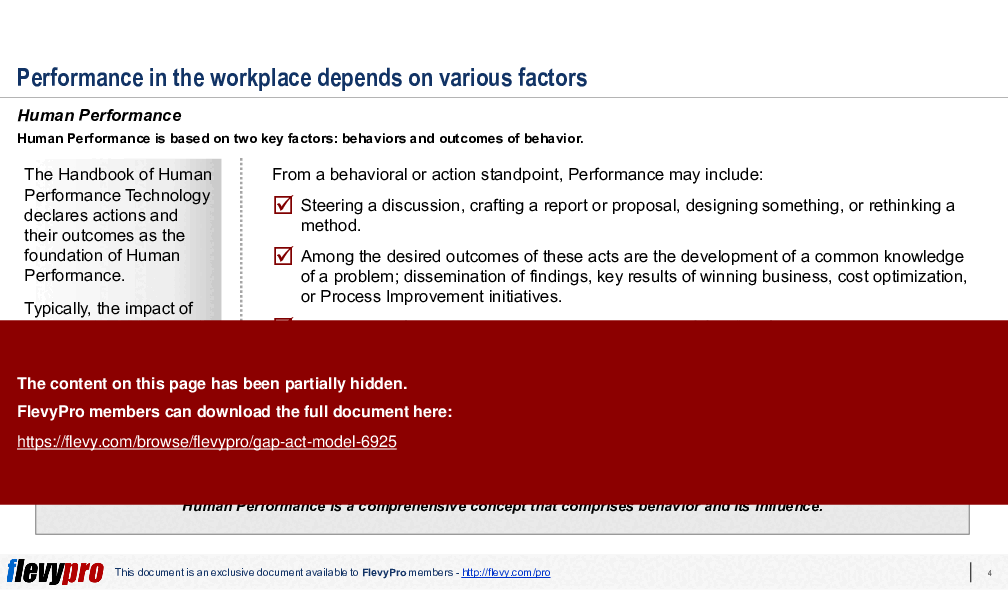

Human Performance is based on 2 key factors:
1. Behaviors
2. Outcomes of Behavior
According to the Handbook of Human Performance Technology, actions and their outcomes are the foundation of Human Performance.
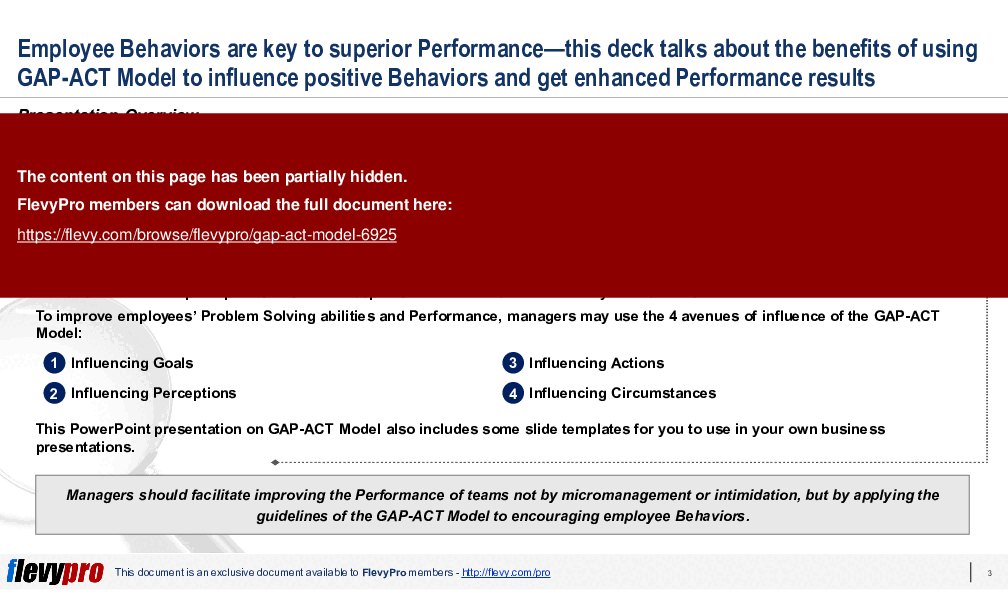
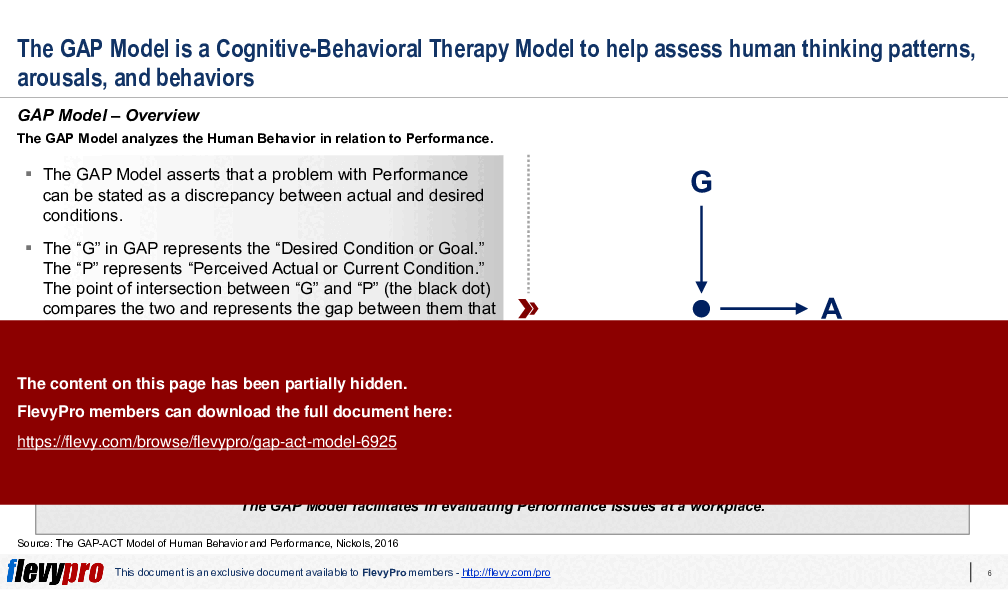
This presentation discusses the GAP-ACT Model in detail. Developed by Keith Stanovich, GAP-ACT Model is a Cognitive-Behavioral Therapy Model to help assess human thinking patterns, arousals, and behaviors in relation to Performance.
The GAP-ACT Model originated from the Perceptual Control Theory, articulated by William T. Powers. The model emphasizes that humans control their perceptions of selected aspects of the world around them by their actions.
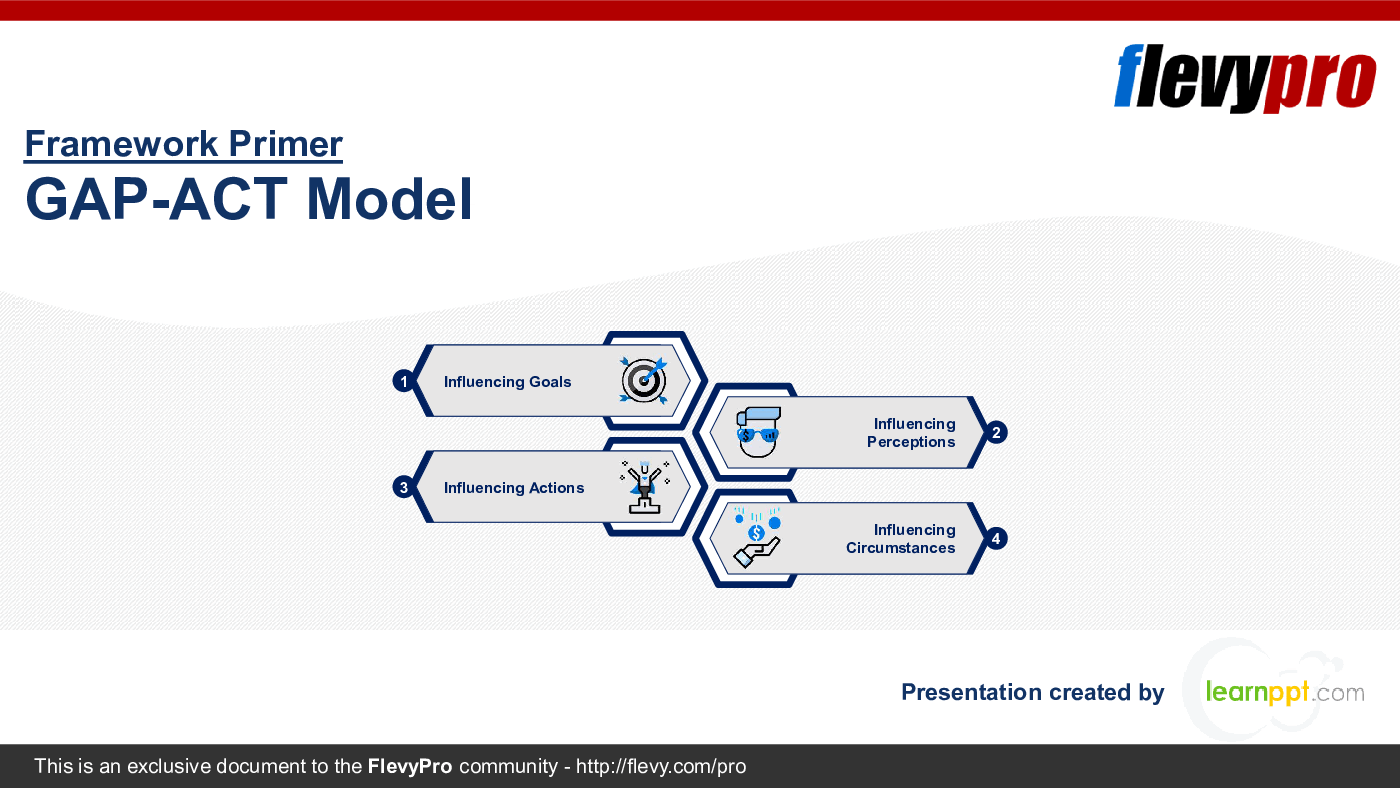
To improve employees' Problem Solving abilities and Performance, managers may use the 4 avenues of influence of the GAP-ACT Model:
1. Influencing Goals – Clear definition of expectations from the team members and supporting them in establishing appropriate Performance targets are ways through which managers can influence the objectives set by their teams.
2. Influencing Perceptions – Managers need to make sure that their teams have an accurate understanding of the Target Variable (T) and it should be regularly monitored, evaluated, and shared with the employees.
3. Influencing Actions – To inspire employees' actions, management can target the individuals' behaviors or focus on the outcomes of their actions.
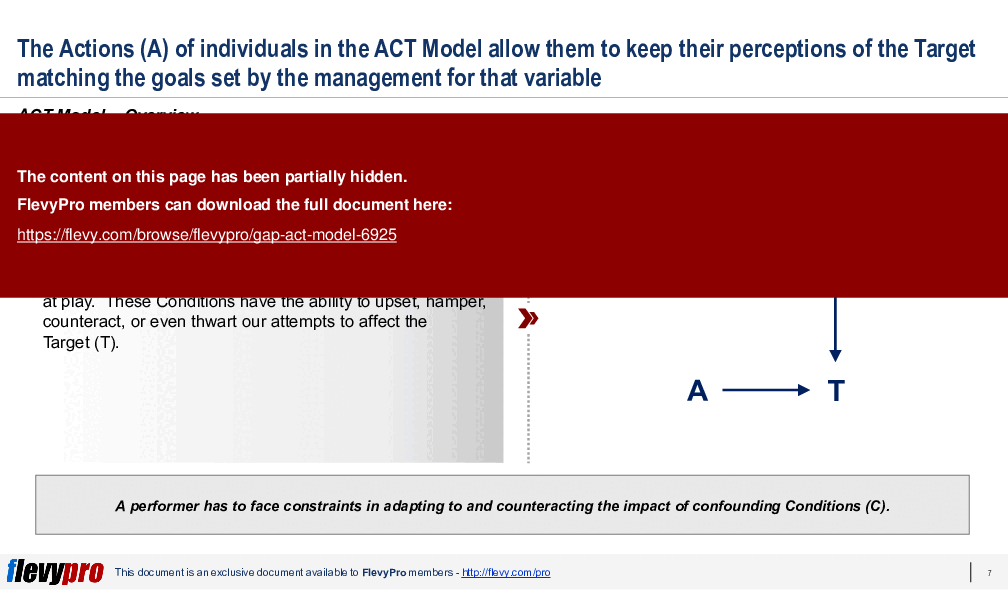
4. Influencing Circumstances – According to the GAP-ACT model, it is not only the individuals' actions but also other Circumstances or Conditions (C) that influence the Targeted Variable (T).
The avenues of influence of the GAP-ACT Model are designed to help individuals think through problems and make rational decisions.
Managers should facilitate improving the Performance of teams not by micromanagement or intimidation, but by applying the guidelines of the GAP-ACT Model to encouraging employee Behaviors.
This PowerPoint presentation on GAP-ACT Model also includes some slide templates for you to use in your own business presentations.
The GAP-ACT Model presentation includes a comprehensive slide design guide and templates to streamline your business presentations. Leverage these resources to enhance your team's understanding and implementation of the model.
Got a question about this document? Email us at flevypro@flevy.com.
Executive Summary
The GAP-ACT Model presentation is designed to enhance human performance by analyzing behavior and outcomes. Developed by Keith Stanovich, this model integrates cognitive-behavioral therapy principles to assess human thinking patterns and actions. It emphasizes the importance of influencing employee behavior through 4 key avenues: goals, perceptions, actions, and circumstances. This presentation equips managers with actionable strategies to foster positive behaviors and improve performance without resorting to micromanagement or intimidation.
Who This Is For and When to Use
• Corporate executives seeking to improve employee performance and engagement
• HR leaders focused on developing effective performance management strategies
• Team leaders responsible for driving behavioral change within their teams
• Consultants aiming to implement the GAP-ACT Model in organizational settings
Best-fit moments to use this deck:
• During performance management training sessions
• When developing team-building workshops focused on behavior change
• In strategic planning meetings to align goals with employee performance
Learning Objectives
• Define the GAP-ACT Model and its relevance to human performance
• Build strategies for influencing employee goals and perceptions
• Establish actionable plans to enhance team performance through behavior analysis
• Identify and mitigate obstacles that hinder employee performance
• Develop frameworks for assessing and improving individual and team actions
• Create a supportive environment that fosters positive behavioral change
Table of Contents
• Overview (page 1)
• GAP Model and ACT Model (page 6)
• GAP-ACT Model (page 9)
• Avenues of Influence (page 11)
• Slide Design Guide & Templates (page 19)
Primary Topics Covered
• GAP Model - Analyzes performance issues as discrepancies between desired and actual conditions, focusing on actions to bridge the gap.
• ACT Model - Emphasizes the role of actions in managing perceptions of targeted variables, acknowledging external circumstances that may affect outcomes.
• GAP-ACT Model - Combines the GAP and ACT models to provide a comprehensive framework for understanding and influencing human behavior in the workplace.
• Avenues of Influence - Outlines 4 key areas where managers can influence employee behavior: goals, perceptions, actions, and circumstances.
• Behavioral Change Strategies - Discusses practical methods for encouraging positive behaviors and enhancing performance without micromanagement.
• Performance Management Tools - Provides templates and guidelines for implementing the GAP-ACT Model in organizational settings.
Deliverables, Templates, and Tools
• GAP-ACT Model framework template for assessing performance
• Avenues of Influence guide for managers to facilitate behavioral change
• Performance assessment tools to evaluate employee actions and outcomes
• Slide templates for presenting the GAP-ACT Model effectively
• Guidelines for developing SMART objectives aligned with organizational goals
• Feedback mechanisms to monitor and adjust employee performance strategies
Slide Highlights
• Overview of the GAP-ACT Model and its components
• Visual representation of the Avenues of Influence
• Practical examples of applying the GAP-ACT Model in real-world scenarios
• Templates for performance assessment and goal-setting
• Guidelines for effective slide design and presentation structure
Potential Workshop Agenda
Introduction to the GAP-ACT Model (30 minutes)
• Overview of the model and its significance
• Discussion on human performance factors
Exploring the Avenues of Influence (60 minutes)
• In-depth analysis of each avenue
• Group activities to identify application strategies
Developing Action Plans (90 minutes)
• Creating SMART objectives for teams
• Role-playing scenarios to practice influencing behaviors
Customization Guidance
• Tailor the GAP-ACT Model framework to fit specific organizational contexts and performance metrics.
• Modify the Avenues of Influence to align with team dynamics and challenges.
• Adjust slide templates to reflect company branding and presentation style.
Secondary Topics Covered
• Cognitive-behavioral therapy principles in workplace settings
• The role of feedback in performance management
• Strategies for overcoming common obstacles to performance
• Techniques for fostering a culture of continuous improvement
Topic FAQ
Document FAQ
These are questions addressed within this presentation.
What is the GAP-ACT Model?
The GAP-ACT Model is a framework that combines the GAP and ACT models to analyze and influence human behavior and performance in organizational settings.
How can managers use the GAP-ACT Model?
Managers can apply the model by focusing on influencing employee goals, perceptions, actions, and circumstances to enhance performance.
What are the 4 avenues of influence?
The 4 avenues are: Influencing Goals, Influencing Perceptions, Influencing Actions, and Influencing Circumstances.
How does the GAP-ACT Model improve performance?
By identifying discrepancies between desired and actual performance, managers can implement targeted actions to bridge these gaps.
Can the model be customized for different organizations?
Yes, the GAP-ACT Model can be tailored to fit the specific needs and contexts of different organizations.
What types of templates are included in the presentation?
The presentation includes templates for the GAP-ACT Model framework, performance assessment tools, and guidelines for effective goal-setting.
How can feedback be integrated into the GAP-ACT Model?
Feedback mechanisms can be established to monitor performance and adjust strategies based on employee actions and outcomes.
Is training required to implement the GAP-ACT Model?
While training can enhance understanding, the model is designed to be accessible for managers and leaders to apply directly.
Glossary
• GAP Model - A framework for analyzing discrepancies between desired and actual performance.
• ACT Model - A model focusing on actions and circumstances affecting targeted variables.
• GAP-ACT Model - A combined framework for understanding and influencing human behavior.
• Avenues of Influence - Key areas where management can impact employee performance.
• SMART Objectives - Specific, Measurable, Achievable, Realistic, and Time-bound goals.
• Cognitive-Behavioral Therapy - A therapeutic approach that influences behavior through cognitive restructuring.
• Performance Assessment - Tools and methods for evaluating employee actions and outcomes.
• Behavioral Change - Strategies aimed at modifying employee actions to improve performance.
• Feedback Mechanism - Processes for providing employees with information on their performance.
• Continuous Improvement - Ongoing efforts to enhance products, services, or processes.
• Performance Management - The systematic process of improving organizational performance.
• Team Dynamics - The behavioral relationships between members of a team.
Source: Best Practices in Performance Management, Behavioral Strategy, Influence PowerPoint Slides: GAP-ACT Model PowerPoint (PPTX) Presentation Slide Deck, LearnPPT Consulting
Did you need more documents?
Consider a FlevyPro subscription from $39/month. View plans here.
For $10.00 more, you can download this document plus 2 more FlevyPro documents. That's just $13 each.
|
Download our FREE Strategy & Transformation Framework Templates
Download our free compilation of 50+ Strategy & Transformation slides and templates. Frameworks include McKinsey 7-S, Balanced Scorecard, Disruptive Innovation, BCG Curve, and many more. |