
This framework is developed by a team of former McKinsey and Big 4 consultants. The presentation follows the headline-body-bumper slide format used by global consulting firms.
Developed by ex-McKinsey & Big 4 consultants, this PPT offers a structured 3-phase approach to crafting a Future of Work Strategy for HR leaders. Future of Work Strategy is a 29-slide PPT PowerPoint presentation slide deck (PPTX) available for immediate download upon purchase.
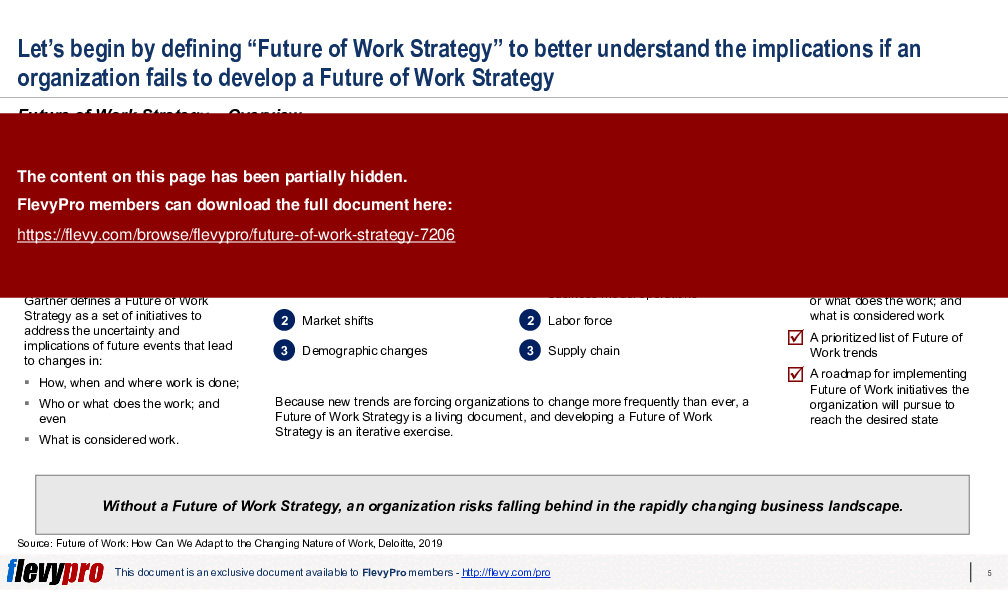
Global consulting firm Deloitte defines a "Future of Work Strategy" as: "a plan or roadmap that outlines an organization's approach to managing the changing nature of work, including trends such as remote work, automation, and new skills requirements."
Many organizations' preparations for the Future of Work are happening in silos of individual business units with more strategically minded leaders. This informal and fragmented approach to the Future of Work raises significant risks, such as conflicting business unit priorities, redundancies in processes and efforts, and misalignment with organizational goals. These risks can have severe cost implications.
A unified Future of Work Strategy can provide a Competitive Advantage, surface innovative ideas, and enhance Employee Engagement. As more organizations invest in planning for the Future of Work, HR leaders must develop a centralized strategy to remain competitive in a disruptive and uncertain environment.
HR leaders struggle to determine the right approach for formalizing the Future of Work at their organizations. Leverage this framework presentation to learn the key principles and the process of establishing a Future of Work Strategy.
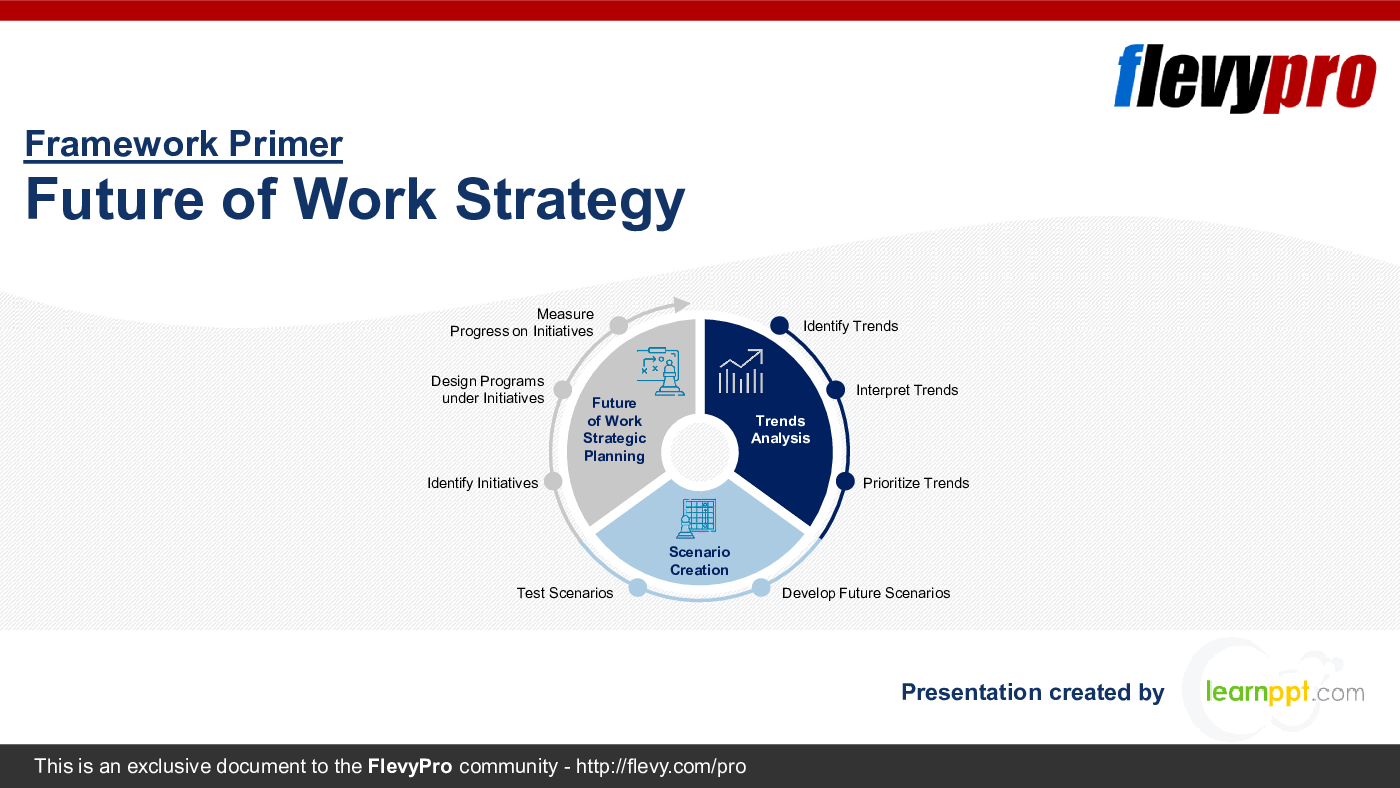
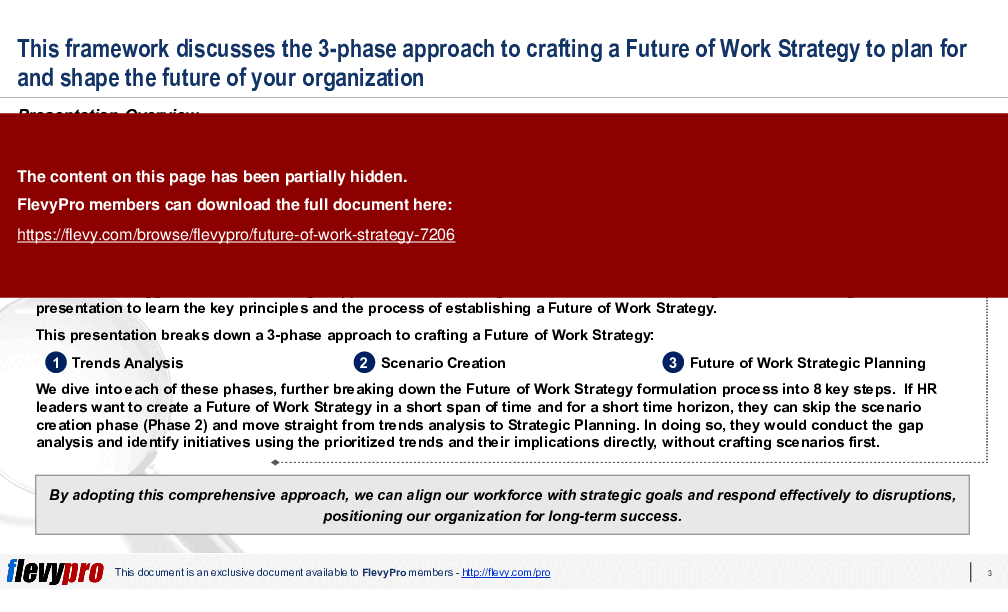
This PowerPoint presentation breaks down a 3-phase approach to crafting a Future of Work Strategy:
1. Trends Analysis
2. Scenario Creation
3. Future of Work Strategic Planning
We dive into each of these phases, further breaking down the Future of Work Strategy formulation process into 8 key steps. By adopting this comprehensive approach, we can align our workforce with strategic goals and respond effectively to disruptions, positioning our organization for long-term success.
If HR leaders want to create a Future of Work Strategy in a short span of time and for a short time horizon, they can skip the scenario creation phase (Phase 2) and move straight from trends analysis to Strategic Planning. In doing so, they would conduct the gap analysis and identify initiatives using the prioritized trends and their implications directly, without crafting scenarios first.
This PowerPoint presentation on Future of Work Strategy also includes slide templates for you to leverage in your own business presentations.
This PPT slide outlines the second phase of developing a Future of Work Strategy, focusing on scenario creation. Organizations must predict and test future business scenarios to adapt to evolving market conditions. The first example involves a retail company creating scenarios around e-commerce growth and changing consumer behaviors, preparing for futures where online shopping dominates or coexists with brick-and-mortar stores. The second example features a healthcare organization considering demographic changes and technological advancements, envisioning a future of personalized healthcare or increased demand for mental health services. Developing future scenarios requires creating plausible narratives based on various assumptions, enhancing strategic planning and organizational responsiveness to unforeseen challenges. Insights from these scenarios inform decision-making and strategic direction.
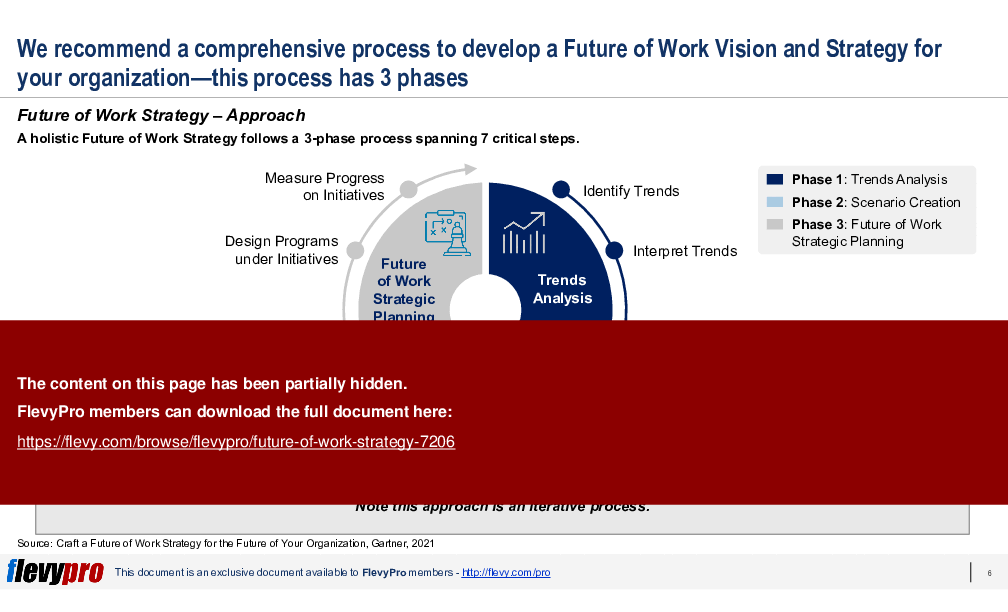
This PPT slide outlines a structured approach for developing a Future of Work Vision and Strategy through a comprehensive three-phase process comprising 7 critical steps. The first phase, Trends Analysis, involves identifying and interpreting trends shaping the work environment, prioritizing them based on their potential impact. The second phase, Scenario Creation, focuses on designing programs under identified initiatives and testing scenarios to understand how trends influence future operations, fostering flexibility and adaptability. The final phase, Future of Work Strategic Planning, consolidates insights from previous phases to measure progress and develop actionable strategies aligned with the organization's vision. This iterative approach emphasizes continuous refinement of strategies in response to emerging trends, ensuring relevance in a rapidly evolving work landscape.
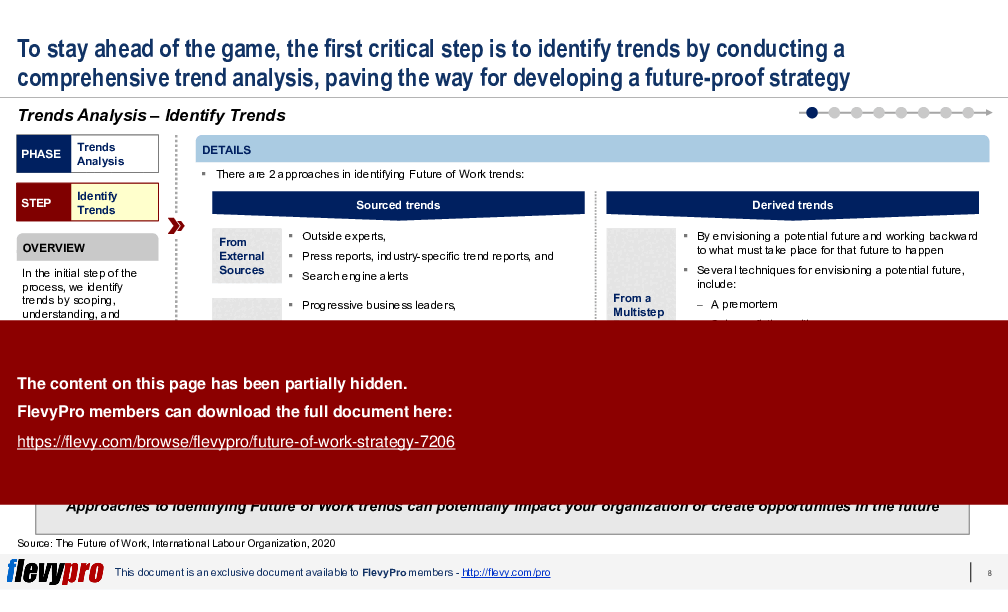
This PPT slide outlines methods for gathering data for trend analysis impacting Future of Work strategies, categorized into external sources, internal sources, and a multistep process. External sources include monitoring industry reports, setting alerts, attending conferences, engaging with experts, and analyzing competitors' actions and cross-industry trends. Internal sources involve reviewing board minutes, analyzing talent analytics for recruitment and retention trends, and conducting employee and customer surveys. The multistep process encourages creative data gathering techniques like premortem analysis and science fiction writing to envision future scenarios. Engaging stakeholders and conducting market research enhances understanding of customer needs and expectations. By leveraging these data sources and methodologies, organizations can better anticipate changes and adapt their strategies.
This PPT slide outlines the final step in the Trends Analysis phase, focusing on prioritizing impactful trends. NASA's three-filter approach evaluates longevity, alignment with talent, and opportunity for evaluation, allowing for trend categorization into themes that support strategic goals, such as "designing for sharing and security." In contrast, John Deere's Megatrend Assessment employs a two-screen filter: an impact screen assessing trends against core business capabilities and an opportunity screen ranking megatrends for resource investment. This structured prioritization aids organizations in aligning resources with critical Future of Work initiatives and broader strategic objectives.
This PPT slide outlines the initial phase of trend analysis, focusing on identifying trends that will shape the future of work. It includes 2 main sections: sourced trends and derived trends. Sourced trends are gathered from external sources such as expert insights, press reports, and industry trend reports, as well as internal sources like talent analytics, board meeting minutes, employee feedback, and customer surveys. Derived trends involve envisioning potential futures and identifying necessary steps, utilizing techniques like premortems to anticipate failures and science fiction writing to explore scenarios. Analyzing competitor behavior and drawing parallels from other industries are also effective strategies for trend derivation. A structured approach to trend analysis supports informed decision-making and strategic planning, helping organizations recognize potential disruptions and opportunities.
Source: Best Practices in Strategic Planning, HR Strategy, Scenario Analysis PowerPoint Slides: Future of Work Strategy PowerPoint (PPTX) Presentation Slide Deck, LearnPPT Consulting
This framework is developed by a team of former McKinsey and Big 4 consultants. The presentation follows the headline-body-bumper slide format used by global consulting firms.
For $10.00 more, you can download this document plus 2 more FlevyPro documents. That's just $13 each.
ABOUT FLEVYPRO
This document is part of the FlevyPro Library, a curated knowledge base of documents for our FlevyPro subscribers.

FlevyPro is a subscription service for on-demand business frameworks and analysis tools. FlevyPro subscribers receive access to an exclusive library of curated business documents—business framework primers, presentation templates, Lean Six Sigma tools, and more—among other exclusive benefits.
The average daily rate of a McKinsey consultant is $6,625 (not including expenses). The average price of a Flevy document is $65.
Trusted by over 10,000+ Client Organizations
Since 2012, we have provided business templates to over 10,000 businesses and organizations of all sizes, from startups and small businesses to the Fortune 100, in over 130 countries.
"I have used FlevyPro for several business applications. It is a great complement to working with expensive consultants. The quality and effectiveness of the tools are of the highest standards."
– Moritz Bernhoerster, Global Sourcing Director at Fortune 500
"I have used Flevy services for a number of years and have never, ever been disappointed. As a matter of fact, David and his team continue, time after time, to impress me with their willingness to assist and in the real sense of the word. I have concluded in fact
that it is not at all just a repository of documents/resources but, in the way that David and his team manage the firm, it is like dealing with consultants always ready to assist, advise and direct you to what you really need, and they always get it right.
I am an international hospitality accomplished senior executive who has worked and lived during the past 35 years in 23 countries in 5 continents and I can humbly say that I know what customer service is, trust me.
Aside from the great and professional service that Flevy's team provide, their wide variety of material is of utmost great quality, professionally put together and most current.
Well done Flevy, keep up the great work and I look forward to continue working with you in the future and to recommend you to a variety of colleagues around the world.
"
– Roberto Pelliccia, Senior Executive in International Hospitality
"As a consultant requiring up to date and professional material that will be of value and use to my clients, I find Flevy a very reliable resource.
The variety and quality of material available through Flevy offers a very useful and commanding source for information. Using Flevy saves me time, enhances my expertise and ends up being a good decision."
– Dennis Gershowitz, Principal at DG Associates
"The wide selection of frameworks is very useful to me as an independent consultant. In fact, it rivals what I had at my disposal at Big 4 Consulting firms in terms of efficacy and organization."
– Julia T., Consulting Firm Owner (Former Manager at Deloitte and Capgemini)
"I am extremely grateful for the proactiveness and eagerness to help and I would gladly recommend the Flevy team if you are looking for data and toolkits to help you work through business solutions."
– Trevor Booth, Partner, Fast Forward Consulting
"I have found Flevy to be an amazing resource and library of useful presentations for lean sigma, change management and so many other topics. This has reduced the time I need to spend on preparing for my performance consultation. The library is easily accessible and updates are regularly provided. A wealth of great information."
– Cynthia Howard RN, PhD, Executive Coach at Ei Leadership
"FlevyPro has been a brilliant resource for me, as an independent growth consultant, to access a vast knowledge bank of presentations to support my work with clients. In terms of RoI, the value I received from the very first presentation I downloaded paid for my subscription many times over! The
quality of the decks available allows me to punch way above my weight – it's like having the resources of a Big 4 consultancy at your fingertips at a microscopic fraction of the overhead.
"
– Roderick Cameron, Founding Partner at SGFE Ltd
"I like your product. I'm frequently designing PowerPoint presentations for my company and your product has given me so many great ideas on the use of charts, layouts, tools, and frameworks. I really think the templates are a valuable asset to the job."
– Roberto Fuentes Martinez, Senior Executive Director at Technology Transformation Advisory
Download our free compilation of 50+ Strategy & Transformation slides and templates. Frameworks include McKinsey 7-S, Balanced Scorecard, Disruptive Innovation, BCG Curve, and many more.