
This framework is developed by a team of former McKinsey and Big 4 consultants. The presentation follows the headline-body-bumper slide format used by global consulting firms.
Discover the Focus-driven Growth framework by ex-McKinsey consultants. Learn 7 steps for strategic execution and metrics to drive sustainable growth. Focus-driven Growth is a 28-slide PPT PowerPoint presentation slide deck (PPTX) available for immediate download upon purchase.
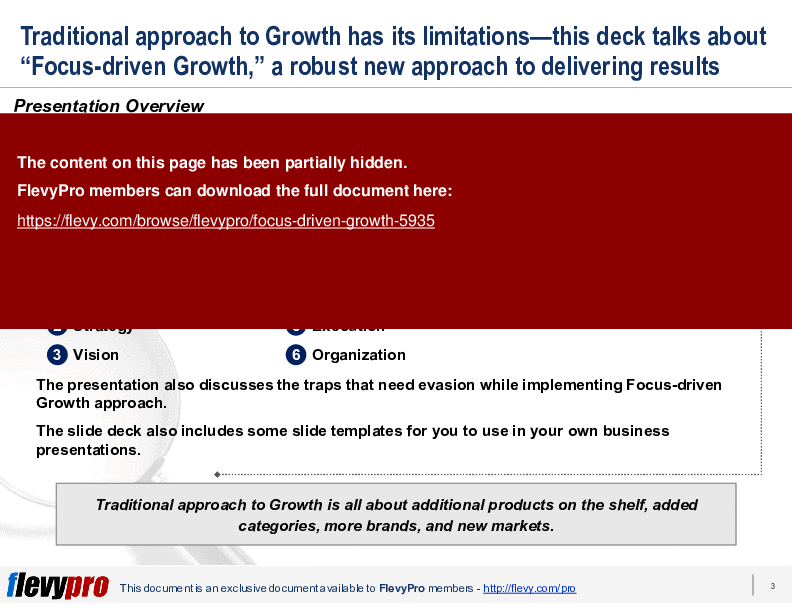
Continuous exceptional Growth through the traditional approach to Organic Growth, at some juncture, begins weakening and does not deliver the results necessary to keep market leadership positions.
Focus-driven Growth approach is an orderly approach that traverses the whole ambit from Strategy and Vision to Execution and Measurement.
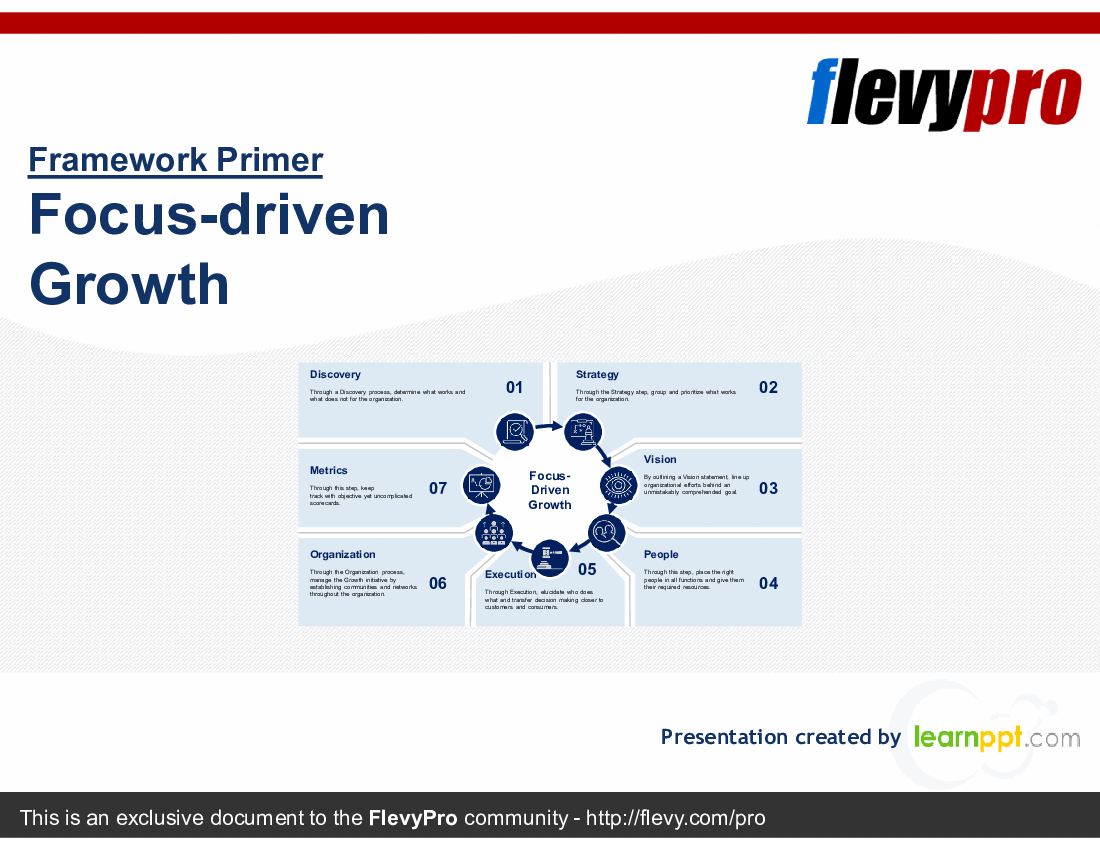
This presentation covers the 7 sequential steps needed to successfully implement a Focus-driven Growth approach to realizing positive results:
The presentation also discusses the traps that need evasion while implementing Focus-driven Growth approach.
The slide deck also includes some slide templates for you to use in your own business presentations.
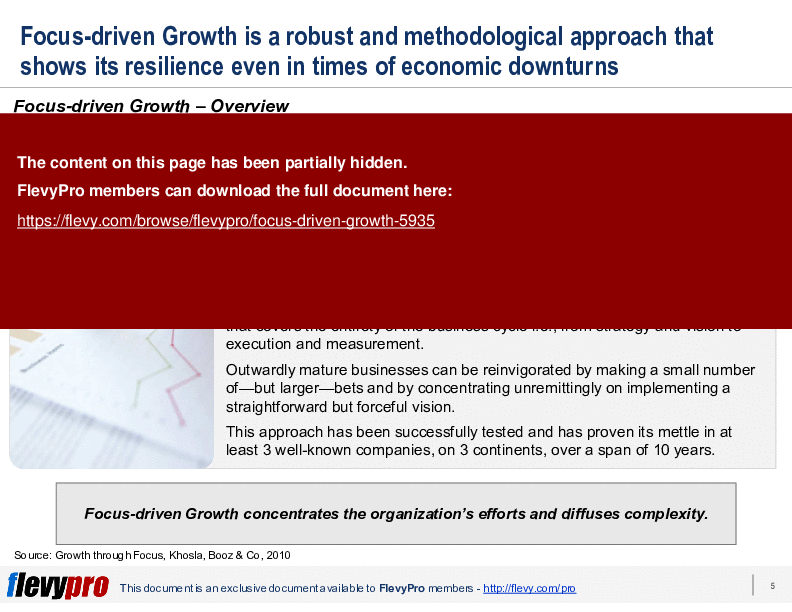
Focus-driven Growth is a robust and methodological approach that shows its resilience even in times of economic downturns. Outwardly mature businesses can be reinvigorated by making a small number of—but larger—bets and by concentrating unremittingly on implementing a straightforward, but forceful vision. This approach has been successfully tested and has proven its mettle in at least 3 well-known companies, on 3 continents, over a span of 10 years.
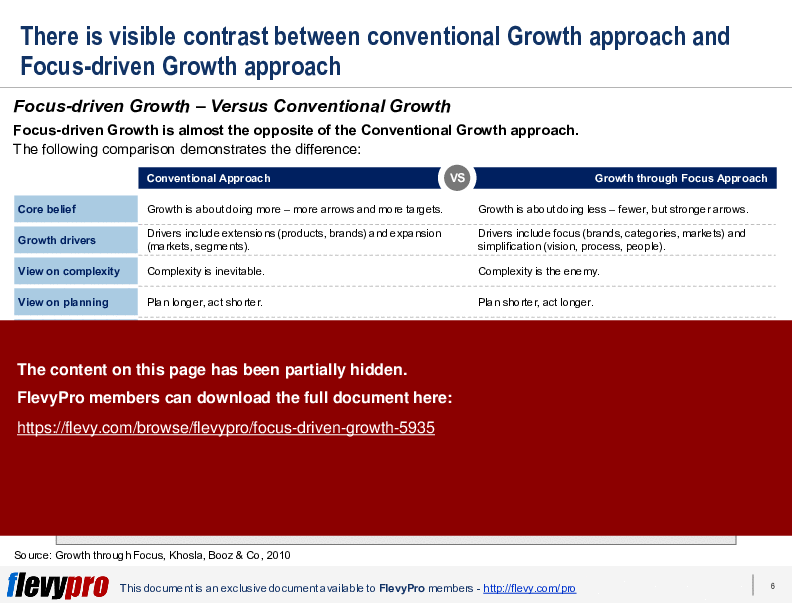
There is a visible contrast between the conventional Growth approach and the Focus-driven Growth approach. Focus-driven Growth is almost the opposite of the Conventional Growth approach. The following comparison demonstrates the difference: Conventional Approach believes growth is about doing more—more arrows and more targets. Growth through Focus Approach believes growth is about doing less—fewer,, but stronger arrows. Conventional Approach drivers include extensions (products, brands) and expansion (markets, segments). Growth through Focus Approach drivers include focus (brands, categories, markets) and simplification (vision, process, people).
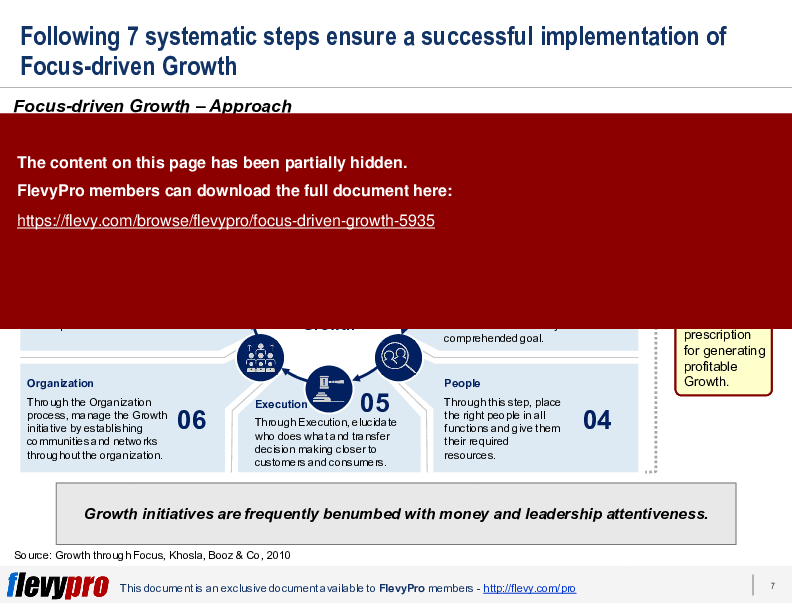
Following 7 systematic steps ensure a successful implementation of Focus-driven Growth. Through the Organization process, manage the Growth initiative by establishing communities and networks throughout the organization. Through Execution, elucidate who does what and transfer decision-making closer to customers and consumers. Through this step, place the right people in all functions and give them their required resources.
This PPT slide outlines a structured approach to implementing Focus-driven Growth through a sequential process of 7 steps. The first step, Discovery, involves assessing effective strategies. The second step, Strategy, focuses on grouping and prioritizing initiatives aligned with organizational goals for effective resource allocation. The third step, Vision, emphasizes creating a clear vision statement to unify efforts. The People step highlights placing the right individuals in roles with necessary resources. Execution clarifies roles and responsibilities, enhancing decision-making proximity to customers. The Organization step involves managing growth initiatives through communities and networks to foster collaboration. Finally, Metrics advises tracking progress with scorecards for objective performance assessment. These steps form a robust framework for driving sustainable growth.
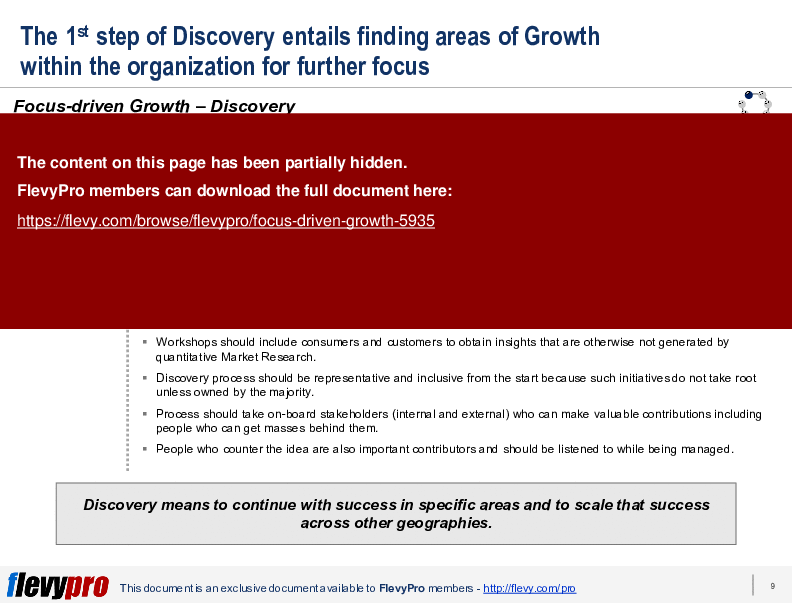
This PPT slide outlines a framework for identifying growth opportunities through leadership engagement in workshops. These workshops focus on excelling business areas, allowing organizations to allocate resources effectively. Identified segments are crucial for growth, as they can be refined and scaled across geographies, enhancing overall performance. The discovery process should center on consumer and customer perspectives to ensure actionable insights. Including both internal stakeholders and external voices is essential for gathering comprehensive insights that traditional market research may overlook. Engaging diverse stakeholders fosters collaboration and innovation, making the discovery phase foundational for sustained success and scalability in various regions.
This PPT slide outlines 5 critical pitfalls to avoid in a Focus-driven Growth initiative. The first trap is neglecting non-core business areas, which can dilute strategic objectives. The second warns against premature scaling, emphasizing the need for a solid foundation before expansion. The third trap involves indiscriminate cost reductions, which can threaten long-term viability and operational effectiveness. The fourth highlights the risk of deviating from the strategic course, as consistency in execution is essential for capturing opportunities. Finally, fostering a positive organizational culture is crucial, as morale significantly impacts growth initiative success. Recognizing these pitfalls enhances the likelihood of achieving desired growth outcomes.
The fifth step of execution in the Focus-driven Growth framework emphasizes clarity and effective decision-making as essential for successful execution. A clear understanding of success, particularly in market performance, is vital. Well-defined roles and responsibilities for team members prevent confusion. Accountability and structured decision-making enhance execution effectiveness, empowering individuals to make customer-centric decisions. This decentralization improves responsiveness. The role of corporate headquarters should shift from operational tasks to strategic functions, focusing on long-term planning and external engagement rather than excessive internal documentation. Meetings should prioritize pre-readings over presentations to maximize efficiency, allowing managers to focus on overarching goals. Successful execution relies on clarity, accountability, and strategic decision-making, driving organizational effectiveness.
This PPT slide outlines critical considerations for scaling operations and implementing cost reductions. It identifies 2 main traps: building scale without addressing essential conditions and making indiscriminate cost cuts. Pursuing growth without ensuring necessary conditions can lead to scaling efforts that fail to achieve success, as a robust business model is vital for sustainable growth. Companies often enact sweeping cost reductions that disproportionately affect people-related costs and brand advertising, which are essential for maintaining competitive advantage. The Focus-driven Growth framework can help organizations achieve cost savings by streamlining management layers, reducing overheads, and divesting from non-core activities, allowing for reinvestment in talent development and positioning for future growth.
This PPT slide compares the conventional growth approach with a focus-driven growth strategy. The conventional view sees growth as an increase in quantity—more products and targets—while the focus-driven perspective prioritizes quality, advocating for fewer initiatives that yield stronger results. Growth drivers differ: the conventional method relies on product extensions and market expansions, whereas the focus-driven approach emphasizes brand focus and process simplification. Complexity is viewed as an obstacle in the focus-driven strategy, promoting operational efficiency. Planning cycles contrast as well, with conventional methods favoring longer periods and focus-driven strategies encouraging shorter, agile cycles. Leadership styles differ, with conventional leaders as visionaries and focus-driven leaders as facilitators, fostering collaboration. Resource management varies, with conventional views treating budgets as constraints, while focus-driven perspectives see resources as limitless. The approach to information processing favors action-oriented strategies over traditional analysis, advocating for dynamic organizational structures.
Source: Best Practices in Growth Strategy, Organizational Focus PowerPoint Slides: Focus-driven Growth PowerPoint (PPTX) Presentation Slide Deck, LearnPPT Consulting
This framework is developed by a team of former McKinsey and Big 4 consultants. The presentation follows the headline-body-bumper slide format used by global consulting firms.
For $10.00 more, you can download this document plus 2 more FlevyPro documents. That's just $13 each.
ABOUT FLEVYPRO
This document is part of the FlevyPro Library, a curated knowledge base of documents for our FlevyPro subscribers.

FlevyPro is a subscription service for on-demand business frameworks and analysis tools. FlevyPro subscribers receive access to an exclusive library of curated business documents—business framework primers, presentation templates, Lean Six Sigma tools, and more—among other exclusive benefits.
The average daily rate of a McKinsey consultant is $6,625 (not including expenses). The average price of a Flevy document is $65.
Trusted by over 10,000+ Client Organizations
Since 2012, we have provided business templates to over 10,000 businesses and organizations of all sizes, from startups and small businesses to the Fortune 100, in over 130 countries.
"I have used FlevyPro for several business applications. It is a great complement to working with expensive consultants. The quality and effectiveness of the tools are of the highest standards."
– Moritz Bernhoerster, Global Sourcing Director at Fortune 500
"I like your product. I'm frequently designing PowerPoint presentations for my company and your product has given me so many great ideas on the use of charts, layouts, tools, and frameworks. I really think the templates are a valuable asset to the job."
– Roberto Fuentes Martinez, Senior Executive Director at Technology Transformation Advisory
"FlevyPro provides business frameworks from many of the global giants in management consulting that allow you to provide best in class solutions for your clients."
– David Harris, Managing Director at Futures Strategy
"Flevy.com has proven to be an invaluable resource library to our Independent Management Consultancy, supporting and enabling us to better serve our enterprise clients.
The value derived from our [FlevyPro] subscription in terms of the business it has helped to gain far exceeds the investment made, making a subscription a no-brainer for any growing consultancy – or in-house strategy team."
– Dean Carlton, Chief Transformation Officer, Global Village Transformations Pty Ltd.
"Flevy is our 'go to' resource for management material, at an affordable cost. The Flevy library is comprehensive and the content deep, and typically provides a great foundation for us to further develop and tailor our own service offer."
– Chris McCann, Founder at Resilient.World
"As an Independent Management Consultant, I find Flevy to add great value as a source of best practices, templates and information on new trends. Flevy has matured and the quality and quantity of the library is excellent. Lastly the price charged is reasonable, creating a win-win value for
the customer, Flevy and the various authors. This is truly a service that benefits the consulting industry and associated clients. Thanks for providing this service.
"
– Jim Schoen, Principal at FRC Group
"[Flevy] produces some great work that has been/continues to be of immense help not only to myself, but as I seek to provide professional services to my clients, it gives me a large "tool box" of resources that are critical to provide them with the quality of service and outcomes they are expecting."
– Royston Knowles, Executive with 50+ Years of Board Level Experience
"As a consulting firm, we had been creating subject matter training materials for our people and found the excellent materials on Flevy, which saved us 100's of hours of re-creating what already exists on the Flevy materials we purchased."
Download our free compilation of 50+ Strategy & Transformation slides and templates. Frameworks include McKinsey 7-S, Balanced Scorecard, Disruptive Innovation, BCG Curve, and many more.