
 Click main image to view in full screen. Unlock all 9 preview images:
Performance Management Maturity Model – PowerPoint PPTX Template
PowerPoint (PPTX) 25 Slides FlevyPro Document


PERFORMANCE MANAGEMENT PPT TEMPLATE DESCRIPTION
The organizational maturity notion signifies the progress of an organization in terms of developing its people, processes, technology, and capability by implementing quality practices. Organizations aiming to achieve the highest maturity levels in performance need to take care of the intricacies involved in deploying a Performance Management System and the relationships it has with the other key organizational activities.
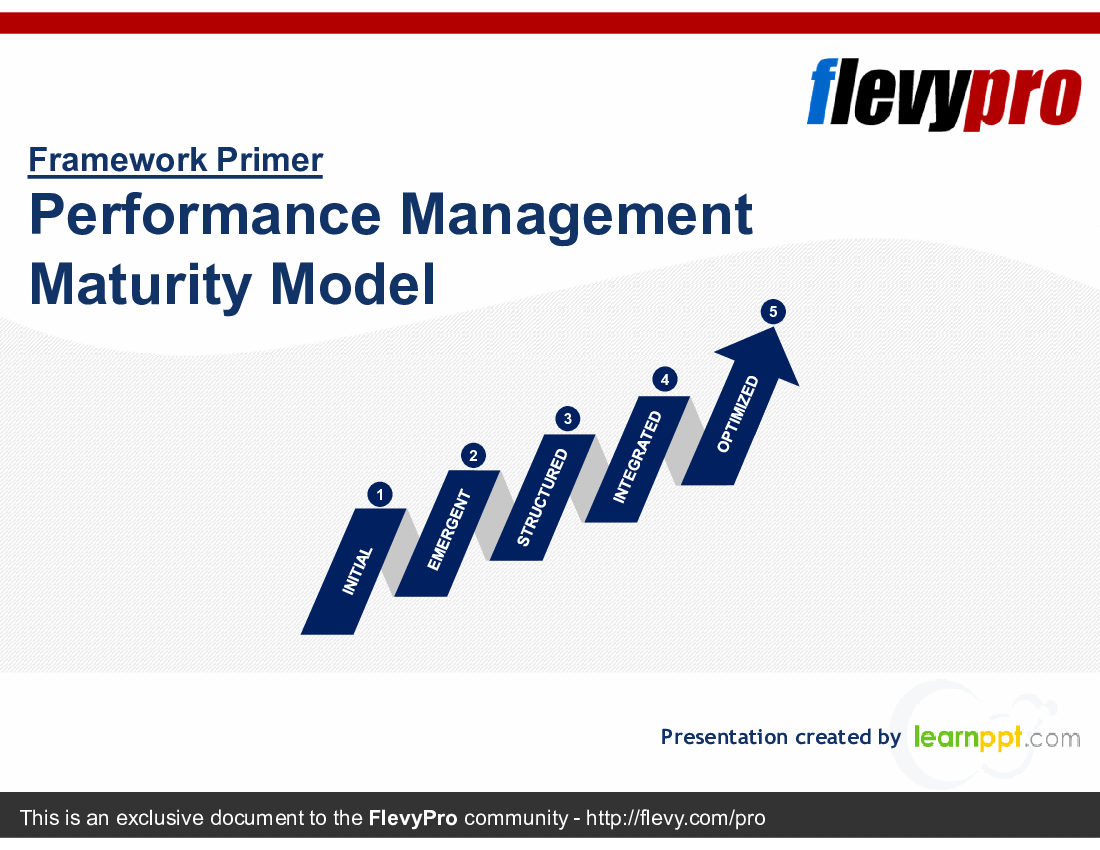
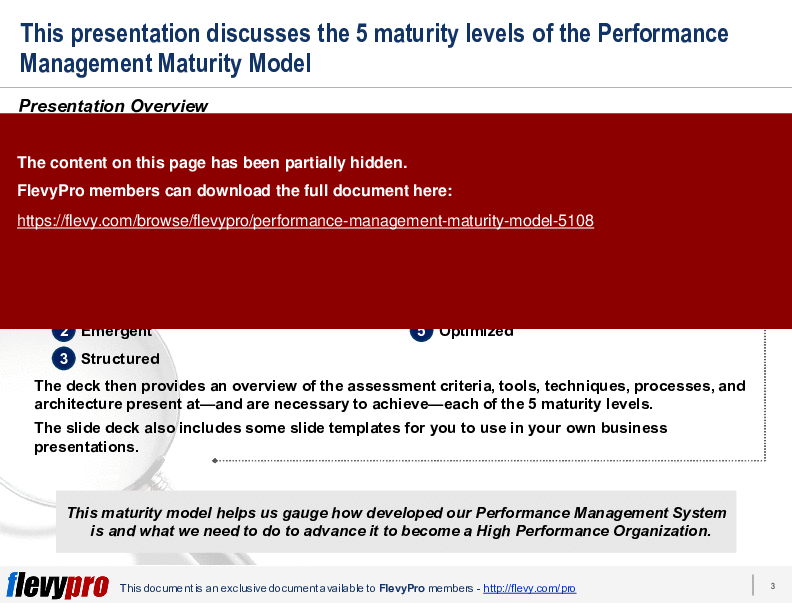
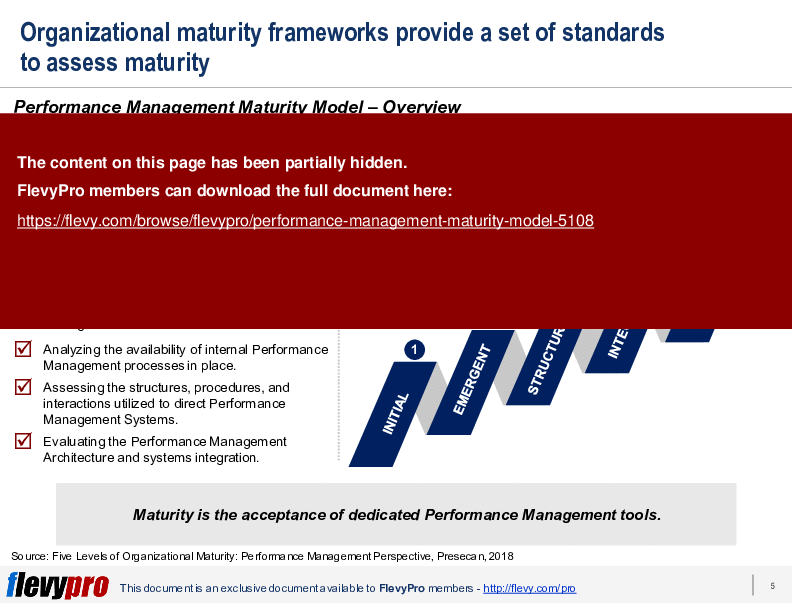
This presentation discusses the 5 levels of progressive growth that are used to assess the Performance Maturity of an organization:
1. Initial
2. Emergent
3. Structured
4. Integrated
5. Optimized
This maturity model helps us gauge how developed our Performance Management System is and what we need to do to advance it to become a High Performance Organization.
The deck then provides an overview of the assessment criteria, tools, techniques, processes, and architecture present at—and are necessary to achieve—each of the 5 maturity levels.
The slide deck also includes some slide templates for you to use in your own business presentations.
The PPT provides a comprehensive framework for evaluating and advancing your organization's performance management capabilities. It outlines the five distinct maturity levels, each with specific characteristics and requirements, enabling you to identify your current state and chart a clear path toward optimization. The model is backed by detailed assessment criteria, tools, and techniques, ensuring you have the necessary resources to implement effective performance management practices.
The presentation also includes practical templates that can be customized for your organization, facilitating the creation of tailored performance management strategies. By leveraging these templates, you can streamline your processes, enhance governance, and achieve better integration across your performance management systems. This resource is essential for any organization committed to continuous improvement and achieving high performance.
Got a question about this document? Email us at flevypro@flevy.com.
PRESENTATION DEEP DIVE ANALYSIS
This deep-dive analysis was generated from the full 25-slide PowerPoint presentation.
Executive Summary
The Performance Management Maturity Model presentation provides a structured framework for assessing and enhancing an organization's performance management capabilities. Developed by former consultants from McKinsey and the Big 4, this model outlines 5 distinct maturity levels: Initial, Emergent, Structured, Integrated, and Optimized. Each level represents a progressive growth path, detailing the necessary tools, processes, governance, architecture, and integration required to advance towards high-performance organizational status. This deck equips executives and consultants with the insights needed to evaluate their current performance management systems and implement strategies for improvement.
Who This Is For and When to Use
• Corporate executives seeking to enhance organizational performance management.
• Integration leaders responsible for aligning performance management with strategic goals.
• Consultants advising organizations on performance optimization and maturity assessments.
• HR leaders focused on employee development and performance measurement.
Best-fit moments to use this deck:
• During strategic planning sessions to align performance management with organizational objectives.
• When assessing current performance management capabilities and identifying gaps.
• In workshops aimed at developing tailored performance management frameworks.
Learning Objectives
• Define the 5 maturity levels of the Performance Management Maturity Model.
• Assess current performance management capabilities against the maturity model.
• Identify key tools and processes necessary for advancing performance maturity.
• Develop a roadmap for implementing performance management improvements.
• Establish governance structures to support effective performance management.
• Create a culture of continuous improvement in performance measurement.
Table of Contents
• Overview (page 3)
• Performance Management Maturity Model (page 5)
• Stages of Performance Management Maturity (page 8)
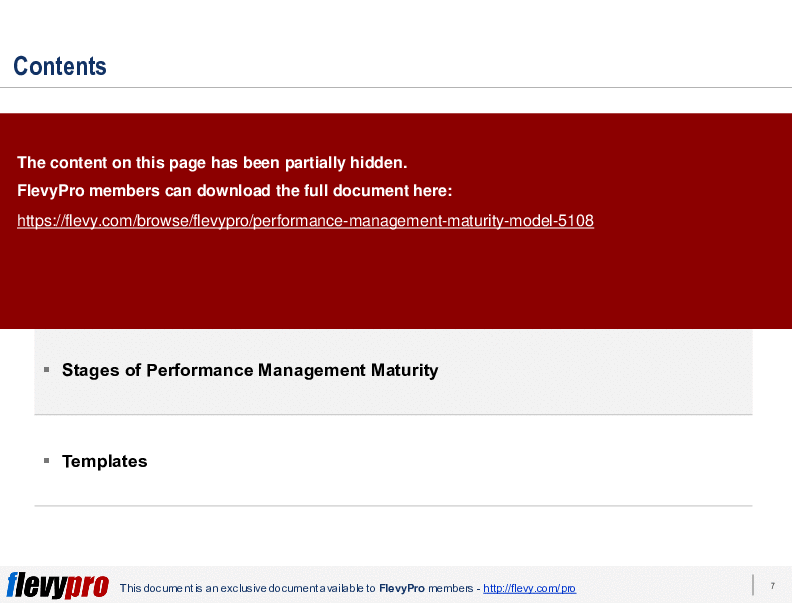
• Templates (page 19)
Primary Topics Covered
• Performance Management Maturity Model - A structured framework that outlines the 5 levels of performance management maturity, guiding organizations in assessing their current capabilities and identifying areas for improvement.
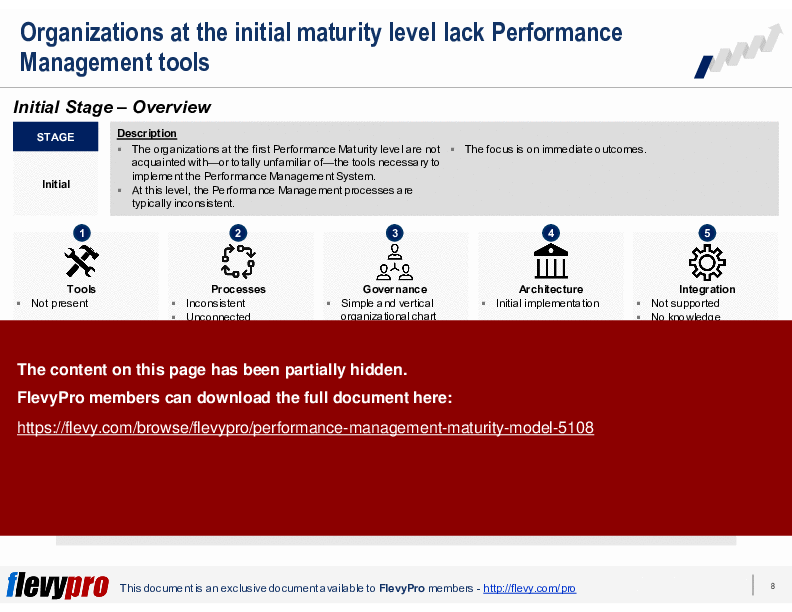
• Stages of Performance Management Maturity - Detailed descriptions of each maturity level, including characteristics and requirements for progression from Initial to Optimized.
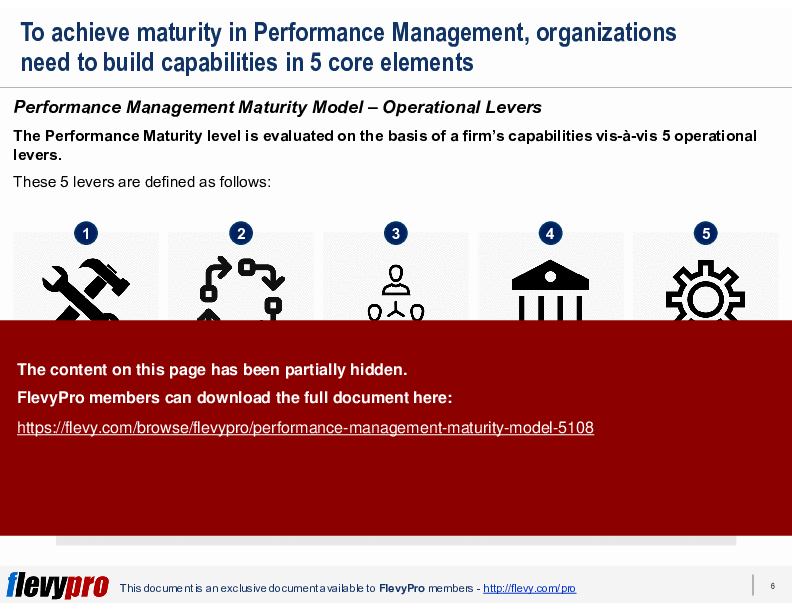
• Operational Levers - Five core elements (Tools, Processes, Governance, Architecture, Integration) that organizations must develop to enhance their performance management systems.
• Assessment Criteria - Tools and techniques for evaluating an organization's performance management maturity and identifying gaps.
• Implementation Strategies - Best practices for deploying performance management systems effectively across the organization.
Deliverables, Templates, and Tools
• Performance Management Maturity Model template for assessing current capabilities.
• Framework for documenting performance management processes and governance structures.
• Standardized templates for KPI documentation and reporting.
• Guidelines for conducting performance evaluations and reviews.
• Tools for visualizing performance data and tracking progress.
Slide Highlights
• Overview of the 5 maturity levels, illustrating the progression from Initial to Optimized.
• Detailed breakdown of the characteristics and requirements at each maturity stage.
• Visual representation of operational levers essential for performance management maturity.
• Examples of assessment criteria and tools for evaluating performance management systems.
Potential Workshop Agenda
Performance Management Assessment Session (90 minutes)
• Review the 5 maturity levels and their implications for performance management.
• Conduct a self-assessment of current performance management capabilities.
• Identify gaps and areas for improvement based on assessment results.
Implementation Strategy Development (60 minutes)
• Discuss best practices for deploying performance management systems.
• Develop a roadmap for enhancing performance management maturity.
• Assign responsibilities for implementing identified strategies.
Customization Guidance
• Tailor the maturity model framework to reflect specific organizational goals and context.
• Adjust performance management templates to align with internal processes and terminology.
• Incorporate organization-specific KPIs into documentation and reporting templates.
Secondary Topics Covered
• The importance of aligning performance management with strategic objectives.
• Techniques for fostering a culture of continuous improvement in performance measurement.
• The role of leadership in driving performance management initiatives.
Topic FAQ
What are the typical maturity levels in a performance management maturity model?
A common maturity model breaks performance management into 5 progressive levels: Initial, Emergent, Structured, Integrated, and Optimized. Each level describes increasing capability across tools, processes, governance, architecture, and integration, allowing organizations to benchmark current state and plan advancement across 5 levels.Which operational levers matter most when improving performance management?
Key operational levers to develop are Tools, Processes, Governance, Architecture, and Integration. Strengthening these elements helps align KPI definition, data flow, review cadences, and decision rights so performance management operates coherently across units; the model explicitly identifies these 5 levers.How do I assess my organization's current performance management maturity?
Use structured assessment criteria and self-assessment tools to map current practices against defined maturity characteristics, identify gaps, and prioritize interventions. Flevy's Performance Management Maturity Model provides a maturity-assessment template and criteria to guide a diagnostic comparison against the 5 maturity levels.What templates are useful for documenting KPIs and reporting across the business?
Standardized KPI documentation templates that capture metric definitions, owners, targets, data sources, and reporting cadence are useful, along with visualization templates for dashboards and scorecards. The product collection includes KPI documentation and reporting templates and visualization tools to support consistent reporting.What should I look for in a performance management maturity toolkit if my team is small and timelines are tight?
For constrained teams, prioritize concise diagnostic tools, customizable templates, clear assessment criteria, and implementation roadmaps you can adapt quickly. Look for slide templates that map gaps to actions and customization guidance; this deck is a 25-slide PowerPoint with templates and tailoring guidance.How long does it take to run a basic performance management assessment workshop?
A focused assessment session can be run in about 90 minutes to review maturity levels and conduct a self-assessment, with a follow-up 60-minute session to draft implementation steps—totaling roughly 150 minutes when both sessions are scheduled back-to-back.I need to align KPIs to strategic objectives across business units—what framework helps with that?
Use a maturity-based framework that links strategy to operational levers (governance, architecture, integration) so KPI ownership, data flows, and review cadences are standardized. Templates for KPI documentation and governance frameworks help operationalize alignment; look for KPI documentation templates to begin.How often should organizations revisit their performance management processes and metrics?
Organizations should periodically revisit performance management whenever strategy, structure, or operating context changes, using formal assessment criteria to measure progress and gaps. Regular reviews anchored to the model's assessment criteria ensure processes and KPIs remain aligned with objectives and improvement goals.Document FAQ
These are questions addressed within this presentation.
What is the Performance Management Maturity Model?
The Performance Management Maturity Model is a framework that outlines 5 levels of maturity in performance management, guiding organizations in assessing and improving their capabilities.
How can this model help my organization?
This model provides a structured approach to evaluate current performance management practices, identify gaps, and implement strategies for improvement.
What are the 5 maturity levels?
The 5 maturity levels are Initial, Emergent, Structured, Integrated, and Optimized, each representing a stage of development in performance management capabilities.
What tools are included in the presentation?
The presentation includes templates for assessing performance management maturity, documenting processes, and reporting KPIs.
How can I tailor the templates for my organization?
You can customize the templates by incorporating your organization’s specific goals, terminology, and performance metrics.
What are the operational levers in the maturity model?
The operational levers are Tools, Processes, Governance, Architecture, and Integration, which organizations must develop to enhance their performance management systems.
How do I assess my organization's current performance management capabilities?
Use the assessment criteria and tools provided in the presentation to evaluate your current capabilities against the maturity model.
What is the significance of KPIs in performance management?
KPIs are critical for measuring performance and aligning individual and organizational goals, serving as benchmarks for success.
How often should performance management processes be reviewed?
Performance management processes should be periodically revisited and improved to ensure alignment with organizational objectives and changing circumstances.
Glossary
• Performance Management - The systematic process of improving organizational performance by developing the performance of individuals and teams.
• Maturity Model - A framework for assessing the maturity of an organization's processes and capabilities.
• KPI (Key Performance Indicator) - A measurable value that demonstrates how effectively an organization is achieving key business objectives.
• Governance - The framework of rules and practices by which an organization ensures accountability, fairness, and transparency in its relationships with stakeholders.
• Integration - The process of aligning and coordinating various components of performance management systems to work together effectively.
• Architecture - The structured framework that defines the organization’s performance management processes and systems.
• Operational Levers - The key elements that organizations must develop to enhance their performance management maturity.
• Continuous Improvement - Ongoing efforts to improve products, services, or processes over time.
• Assessment Criteria - Standards used to evaluate the effectiveness and maturity of performance management practices.
• Performance Evaluation - The process of assessing an employee's performance against established criteria and objectives.
• Stakeholders - Individuals or groups that have an interest in the performance and success of an organization.
• Alignment - The process of ensuring that all aspects of performance management are coordinated and working towards common goals.
PERFORMANCE MANAGEMENT PPT TEMPLATES
Source: Performance Management Maturity Model PowerPoint (PPTX) Presentation Slide Deck, LearnPPT Consulting
Did you need more documents?
Consider a FlevyPro subscription from $39/month. View plans here.
For $10.00 more, you can download this document plus 2 more FlevyPro documents. That's just $13 each.




























