
This framework is developed by a team of former McKinsey and Big 4 consultants. The presentation follows the headline-body-bumper slide format used by global consulting firms.
Explore a comprehensive framework for Next-gen Operating Model Transformation, crafted by ex-McKinsey and Big 4 consultants. Enhance agility and efficiency. Operating Model Transformation is a 26-slide PPT PowerPoint presentation slide deck (PPT) available for immediate download upon purchase.
Lean Management plays a significant role in putting in place processes, capabilities, and tools to improve how businesses operate. But the Digital Age has increased both the opportunities for businesses who know how to react and the difficulty of getting it right.
Tasks performed by humans are now more complex—be it accessing information in multiple formats from multiple sources or responding to changing market and customer dynamics at ever-increasing speed. As increasing number of tasks become automated or taken over by cognitive-intelligence capabilities, organizations need to learn from Lean Management. Like a sprinter who needs all her muscles to be finely tunes and working in concert to reach top speeds, fast moving institutions must have a system to continually synchronize strategies, activities, performance, and health.
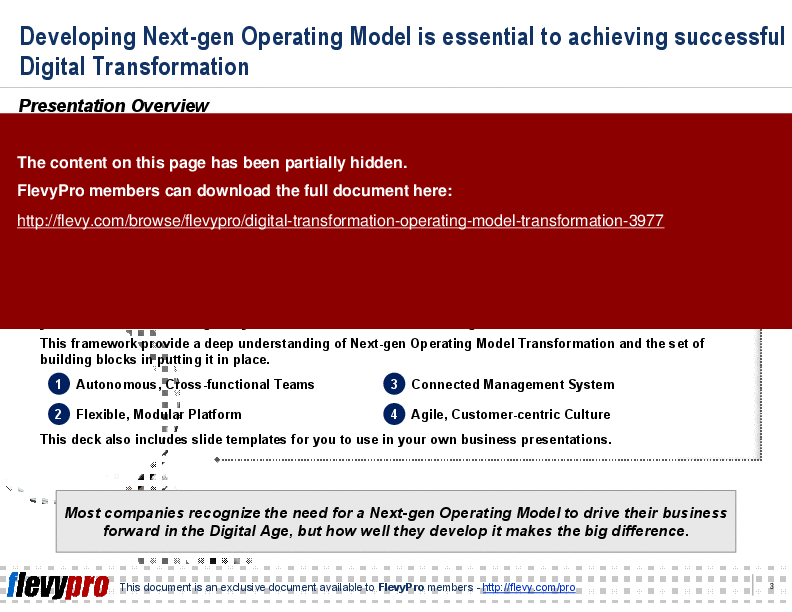
Many organizations understand the need to change how they work and have embarked on numerous initiatives, yet few have been able to get beyond isolated success cases or marginal benefits. In fact, most companies recognize the need for a Next-gen Operating Model to drive their business forward in the Digital Age, but how well they develop it makes the big difference.
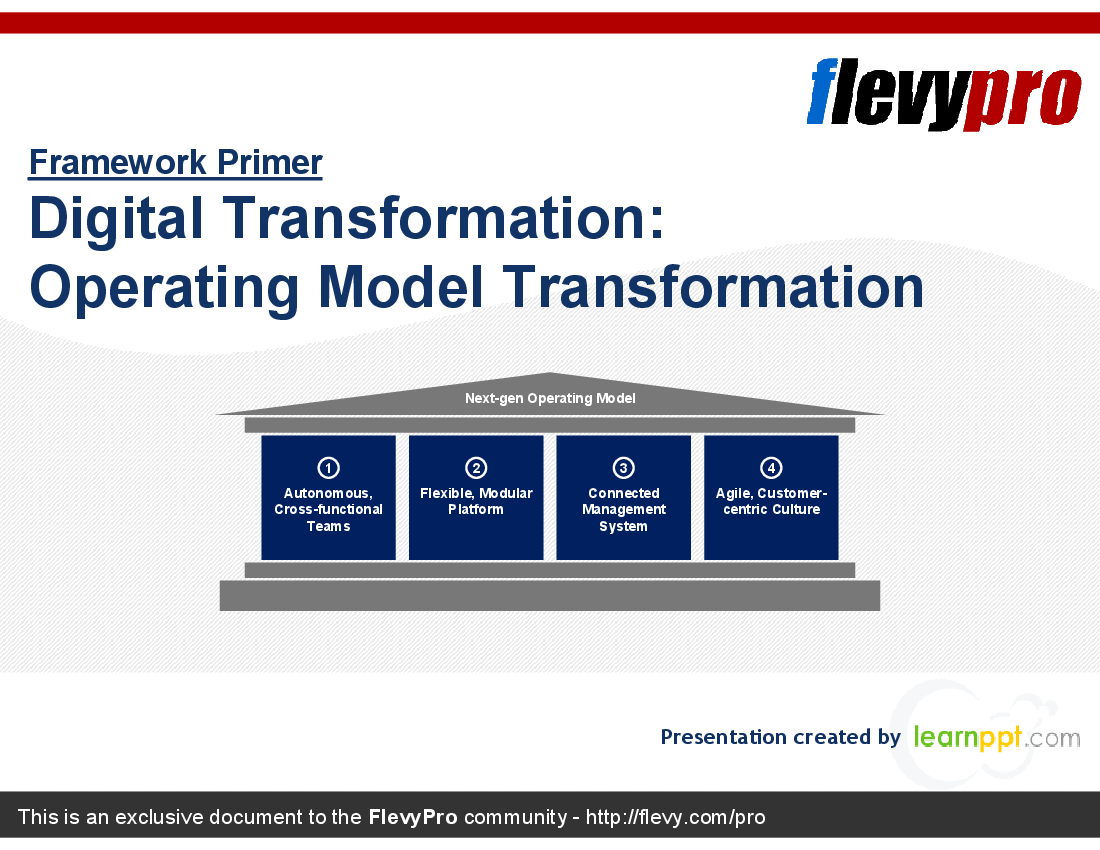
This framework provide a deep understanding of Next-gen Operating Model Transformation and the set of building blocks in putting it in place.
1. Autonomous, Cross-functional Teams
2. Flexible, Modular Platform
3. Connected Management System
4. Agile, Customer-centric Culture
This deck also includes slide templates for you to use in your own business presentations.
This presentation dives deep into the essential pillars of a Next-gen Operating Model, emphasizing the importance of autonomous, cross-functional teams, flexible modular platforms, connected management systems, and an agile, customer-centric culture. It provides actionable insights and practical templates to help organizations drive their digital transformation. The content is designed to guide executives through the complexities of evolving their operating models to stay competitive in the digital landscape.
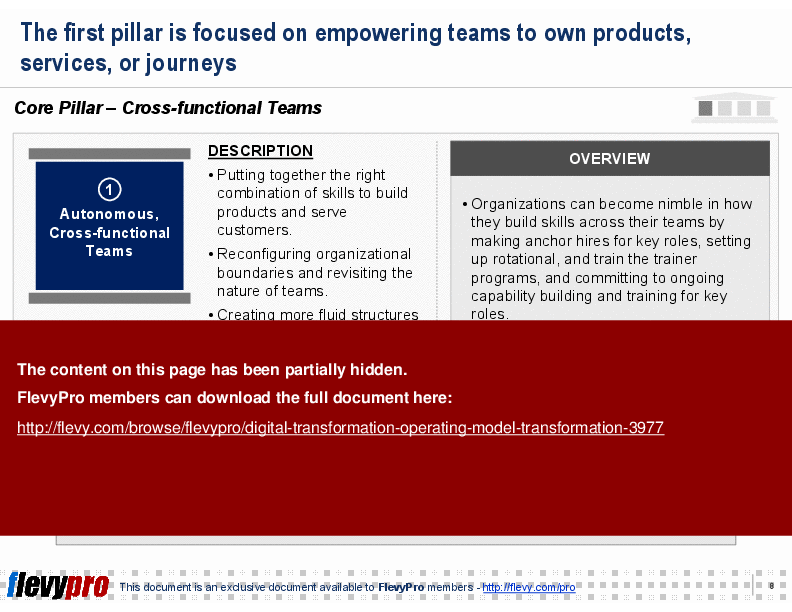
This PPT slide outlines a strategic framework focused on "Autonomous, Cross-functional Teams" to enhance organizational agility. Key strategies include assembling diverse skill sets to effectively address customer needs, reconfiguring team structures for adaptability, and creating flexible operational frameworks to improve responsiveness and collaboration. Organizations can enhance nimbleness by making strategic hires for critical roles, implementing training programs, and embedding subject matter experts within teams to foster collaboration and knowledge sharing. This hands-on approach facilitates the design of tools and technology that improve efficiency. Continuous iteration is essential for successfully implementing cross-functional teams, transforming operational models.
The Digital Factory is a transformative approach for organizations undergoing digital transformation, integrating specialized capability groups focused on advanced technologies like robotics and analytics. It supports specific developmental journeys through collaboration with business and functional partners, fostering a new way of working by embedding developed capabilities into main operations. Organizations committed to transformation, building internal capabilities, and attracting digital talent should consider this model, which addresses inertia within IT departments and accelerates transformation efforts. A European bank exemplifies this by establishing a digital factory on its campus, with modular floors dedicated to different journeys, creating reusable components to enhance efficiency. Continuous monitoring and iteration based on performance metrics and customer feedback are vital for maintaining relevance in a rapidly changing environment.
Agility is a foundational element of a customer-centric culture, extending beyond IT to all organizational functions. It involves learning from customer interactions and taking calculated risks, essential for effective product delivery. Senior leadership plays a critical role in driving this transformation, fostering collaboration across traditional boundaries. Effective team collaboration can significantly reduce time to market and mitigate operational risks, enhancing responsiveness to customer needs and strengthening the operational framework. Rapid iteration and continuous improvement are vital in today’s fast-paced business environment. Cultivating a customer-centric culture requires ongoing commitment from all levels, particularly from senior leaders, to improve agility and customer engagement.
This PPT slide outlines a framework for Operating Model Transformation, focusing on the first 12 months of a digital transformation initiative. It highlights that there is no one-size-fits-all approach, as effectiveness depends on factors like existing capabilities, urgency, leadership commitment, and economic pressures. A circular diagram presents 4 approaches: Innovation Lab, Digital Factory, Business Unit Accelerator, and Enterprise Evolution. The Innovation Lab fosters creativity and experimentation, while the Digital Factory integrates digital tools for operational efficiency. The Business Unit Accelerator tailors initiatives to specific needs, and Enterprise Evolution drives organization-wide transformation. Strong organizational support and leadership alignment are critical for navigating the complexities of digital transformation.
This PPT slide introduces "Enterprise Evolution," a transformative model where organizations reorganize around major initiatives, especially relevant for digital-native enterprises focused on customer-centricity. Key attributes include strong alignment with customer needs, rapid development cycles, and iterative processes for innovation. Management can be structured through a center of excellence or individual business unit leaders, allowing flexibility. The model is most effective with a broad, top-down approach to change and without immediate economic pressures, indicating a need for long-term commitment. An example of a European bank illustrates successful implementation through agile methodologies, fostering cross-functional collaboration and dynamic resource allocation, leading to significant cultural and operational changes for enhanced agility and customer focus.
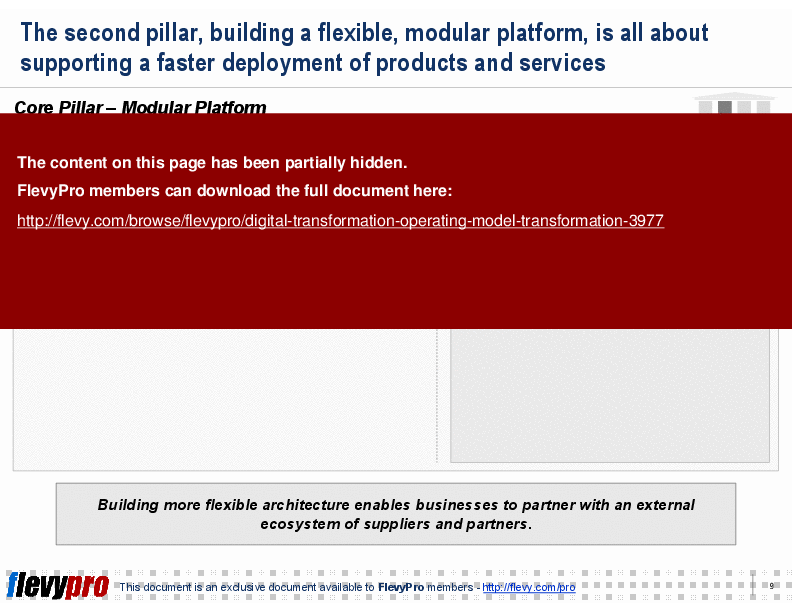
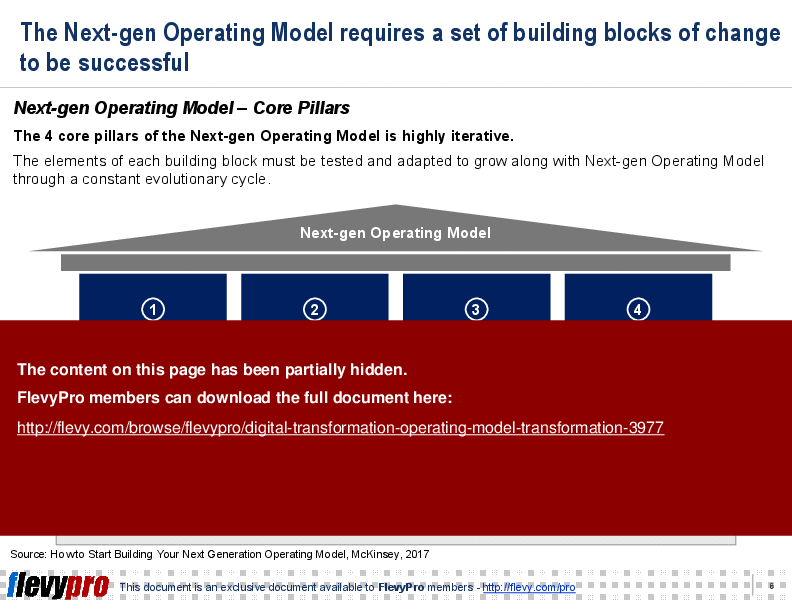
The core pillars for implementing a Next-gen Operating Model include: Autonomous, Cross-functional Teams; Flexible, Modular Platform; Connected Management System; and Agile, Customer-centric Culture. Autonomous, Cross-functional Teams empower independent decision-making and collaboration, enhancing innovation. A Flexible, Modular Platform allows for adaptability and scalability in response to changing business needs. The Connected Management System ensures cohesive communication and alignment across the organization, driving teams toward common objectives. An Agile, Customer-centric Culture prioritizes customer needs, fostering responsiveness to feedback and market demands. Successful implementation relies on leadership to drive change and break down silos, with an iterative approach for ongoing assessment and adaptation in a dynamic business environment.
Source: Best Practices in Digital Transformation, Operating Model PowerPoint Slides: Digital Transformation: Operating Model Transformation PowerPoint (PPT) Presentation Slide Deck, LearnPPT Consulting
This framework is developed by a team of former McKinsey and Big 4 consultants. The presentation follows the headline-body-bumper slide format used by global consulting firms.
For $10.00 more, you can download this document plus 2 more FlevyPro documents. That's just $13 each.
ABOUT FLEVYPRO
This document is part of the FlevyPro Library, a curated knowledge base of documents for our FlevyPro subscribers.

FlevyPro is a subscription service for on-demand business frameworks and analysis tools. FlevyPro subscribers receive access to an exclusive library of curated business documents—business framework primers, presentation templates, Lean Six Sigma tools, and more—among other exclusive benefits.
The average daily rate of a McKinsey consultant is $6,625 (not including expenses). The average price of a Flevy document is $65.
Trusted by over 10,000+ Client Organizations
Since 2012, we have provided business templates to over 10,000 businesses and organizations of all sizes, from startups and small businesses to the Fortune 100, in over 130 countries.
"[Flevy] produces some great work that has been/continues to be of immense help not only to myself, but as I seek to provide professional services to my clients, it gives me a large "tool box" of resources that are critical to provide them with the quality of service and outcomes they are expecting."
– Royston Knowles, Executive with 50+ Years of Board Level Experience
"If you are looking for great resources to save time with your business presentations, Flevy is truly a value-added resource. Flevy has done all the work for you and we will continue to utilize Flevy as a source to extract up-to-date information and data for our virtual and onsite presentations!"
– Debbi Saffo, President at The NiKhar Group
"As a young consulting firm, requests for input from clients vary and it's sometimes impossible to provide expert solutions across a broad spectrum of requirements. That was before I discovered Flevy.com.
Through subscription to this invaluable site of a plethora of topics that are key and crucial to consulting, I
have been able to exceed expectations and deliver quality advice and solutions to my clients. The quality and expertise of the authors are exemplary and gives me great confidence to use as part of my service offerings.
I highly recommend this company for any consultant wanting to apply international best practice standards in their service offerings.
"
– Nishi Singh, Strategist and MD at NSP Consultants
"Flevy.com has proven to be an invaluable resource library to our Independent Management Consultancy, supporting and enabling us to better serve our enterprise clients.
The value derived from our [FlevyPro] subscription in terms of the business it has helped to gain far exceeds the investment made, making a subscription a no-brainer for any growing consultancy – or in-house strategy team."
– Dean Carlton, Chief Transformation Officer, Global Village Transformations Pty Ltd.
"FlevyPro has been a brilliant resource for me, as an independent growth consultant, to access a vast knowledge bank of presentations to support my work with clients. In terms of RoI, the value I received from the very first presentation I downloaded paid for my subscription many times over! The
quality of the decks available allows me to punch way above my weight – it's like having the resources of a Big 4 consultancy at your fingertips at a microscopic fraction of the overhead.
"
– Roderick Cameron, Founding Partner at SGFE Ltd
"As a consultant requiring up to date and professional material that will be of value and use to my clients, I find Flevy a very reliable resource.
The variety and quality of material available through Flevy offers a very useful and commanding source for information. Using Flevy saves me time, enhances my expertise and ends up being a good decision."
– Dennis Gershowitz, Principal at DG Associates
"As a niche strategic consulting firm, Flevy and FlevyPro frameworks and documents are an on-going reference to help us structure our findings and recommendations to our clients as well as improve their clarity, strength, and visual power. For us, it is an invaluable resource to increase our impact and value."
– David Coloma, Consulting Area Manager at Cynertia Consulting
"As a small business owner, the resource material available from FlevyPro has proven to be invaluable. The ability to search for material on demand based our project events and client requirements was great for me and proved very beneficial to my clients. Importantly, being able to easily edit and tailor
the material for specific purposes helped us to make presentations, knowledge sharing, and toolkit development, which formed part of the overall program collateral. While FlevyPro contains resource material that any consultancy, project or delivery firm must have, it is an essential part of a small firm or independent consultant's toolbox.
"
– Michael Duff, Managing Director at Change Strategy (UK)
Download our FREE Digital Transformation Templates
Download our free compilation of 50+ Digital Transformation slides and templates. DX concepts covered include Digital Leadership, Digital Maturity, Digital Value Chain, Customer Experience, Customer Journey, RPA, etc.