
 Click main image to view in full screen. Unlock all 11 preview images:
Digital Transformation: Challenges in Execution – PowerPoint PPTX Template
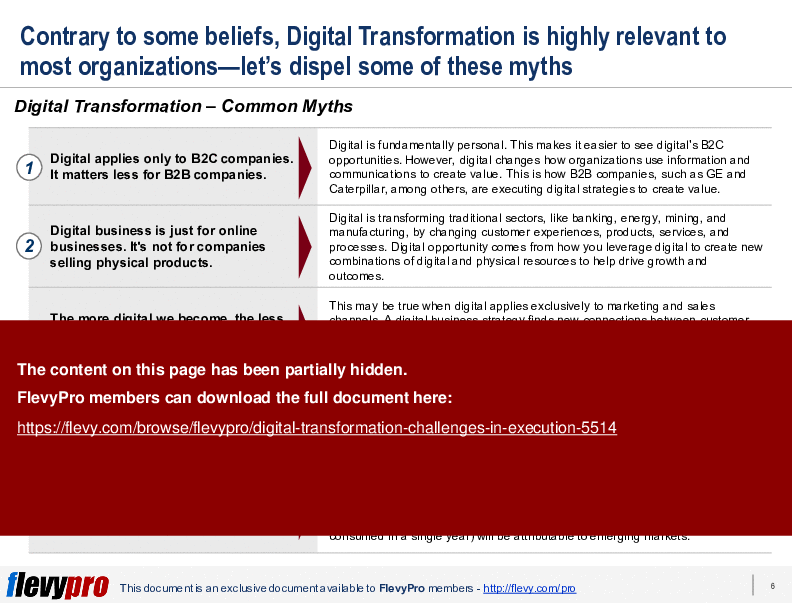
PowerPoint (PPTX) 31 Slides FlevyPro Document


DIGITAL TRANSFORMATION PPT TEMPLATE DESCRIPTION
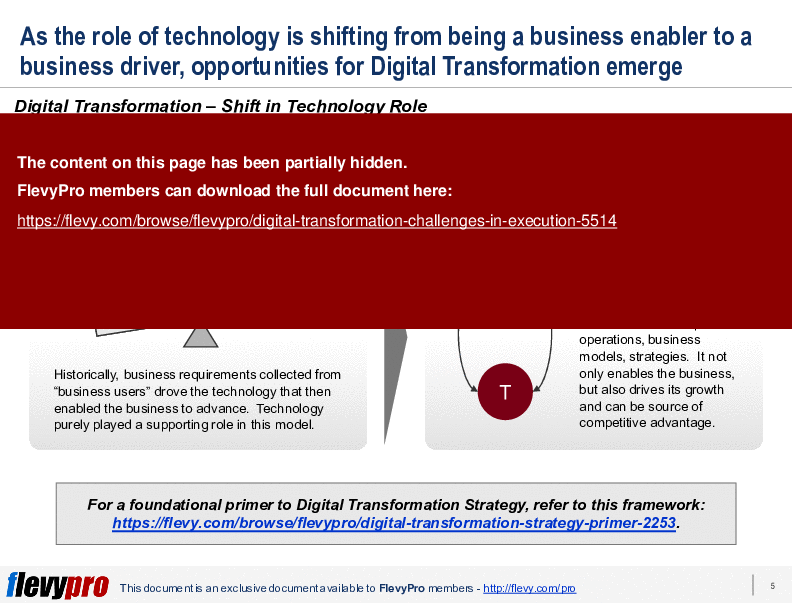
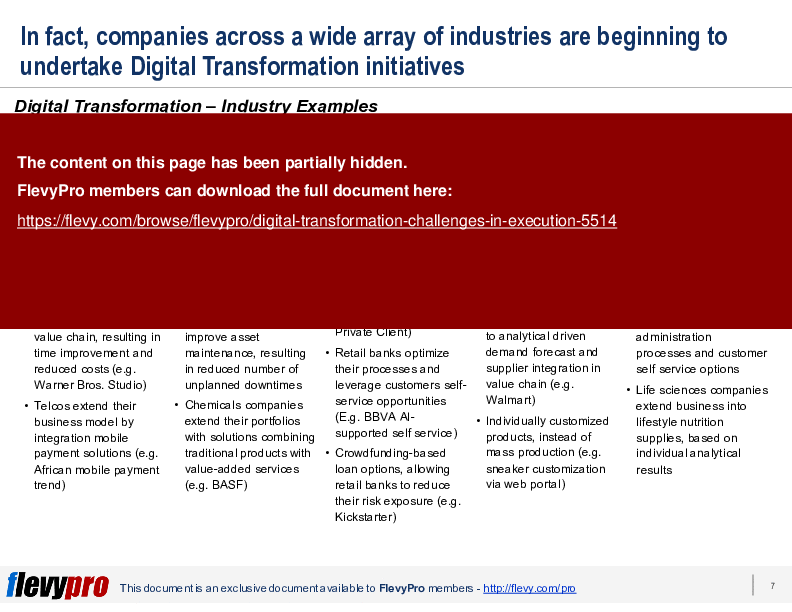
Digital Transformation is now at the forefront of most strategic agendas, as COVID-19 has accelerated the digitization of many industries by a decade or longer. The importance of "going digital" is undisputed.
However, successful and truly disruptive Digital Transformation requires massive efforts to create strategic and organizational capabilities that enable the organization to compete successfully in the Digital Era. These efforts become increasingly complex for larger organizations.
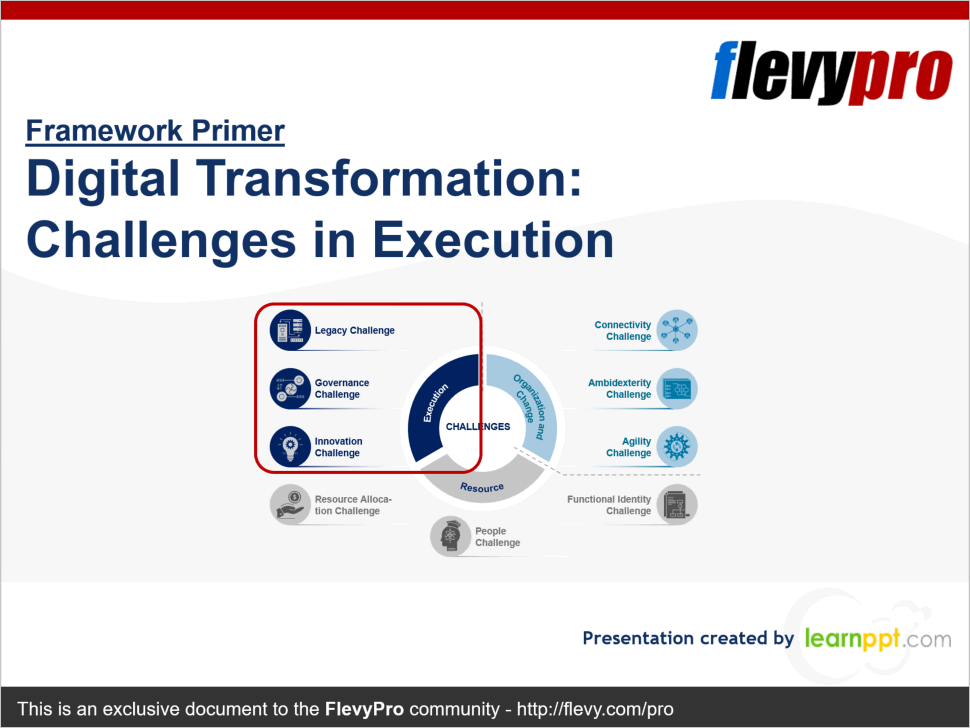
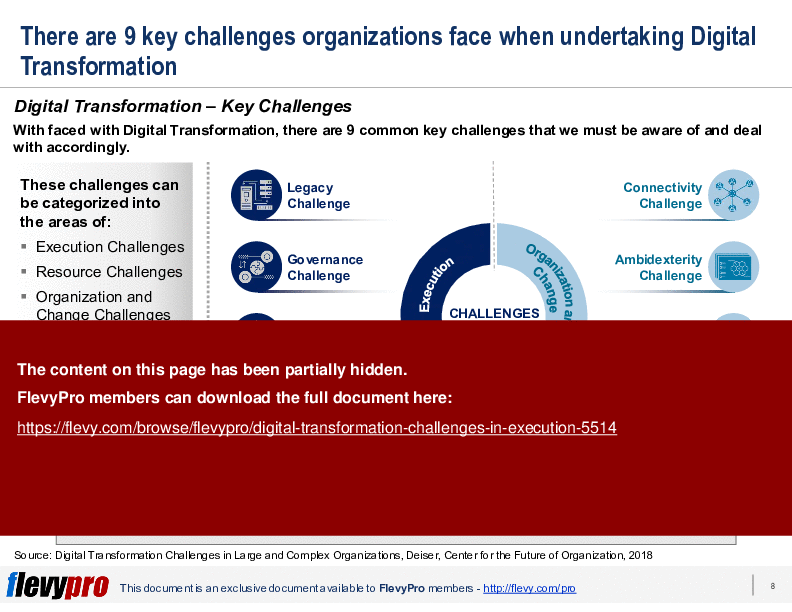
This framework introduces 9 key challenges to large scale Digital Transformation, which can be categorized into 3 areas:
1. Challenges in Execution
2. Challenges in Resources
3. Challenges in Organization and Change
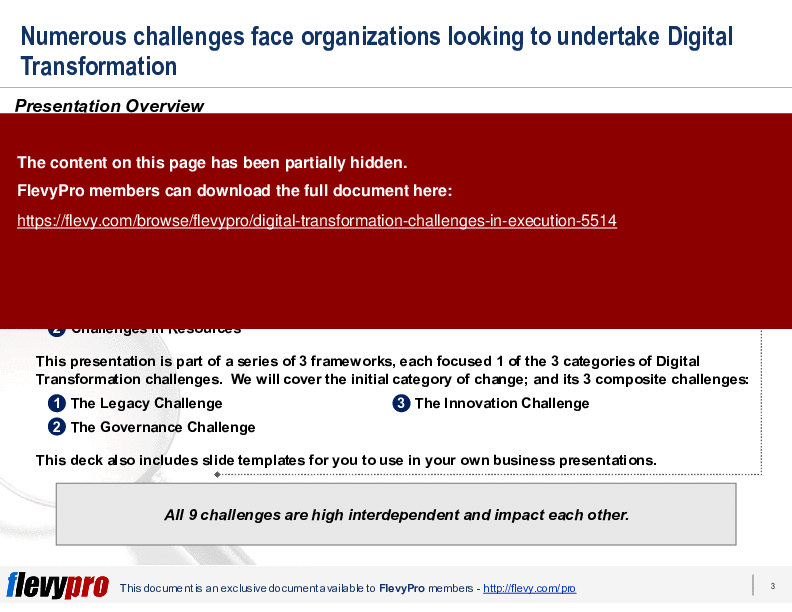
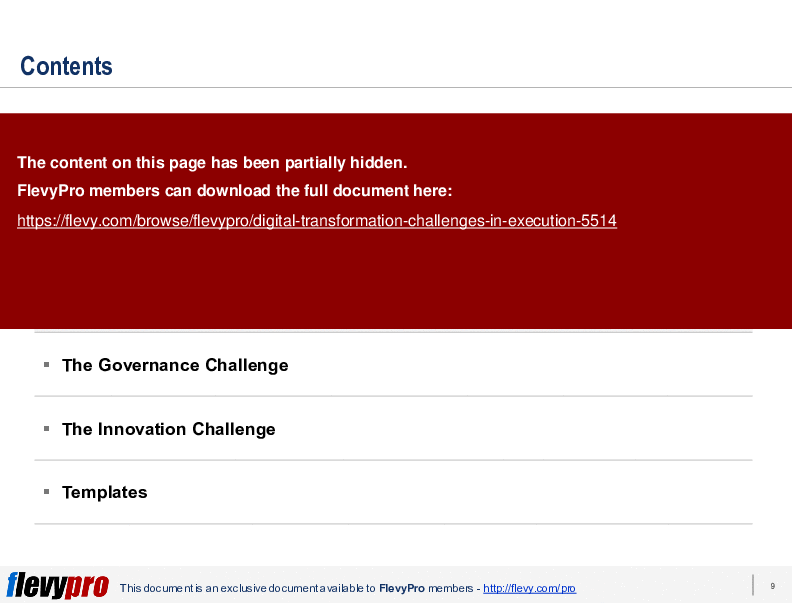
This presentation is part of a series of 3 frameworks, each focused 1 of the 3 categories of Digital Transformation challenges. We will cover the initial category of challenges; and its 3 composite challenges:
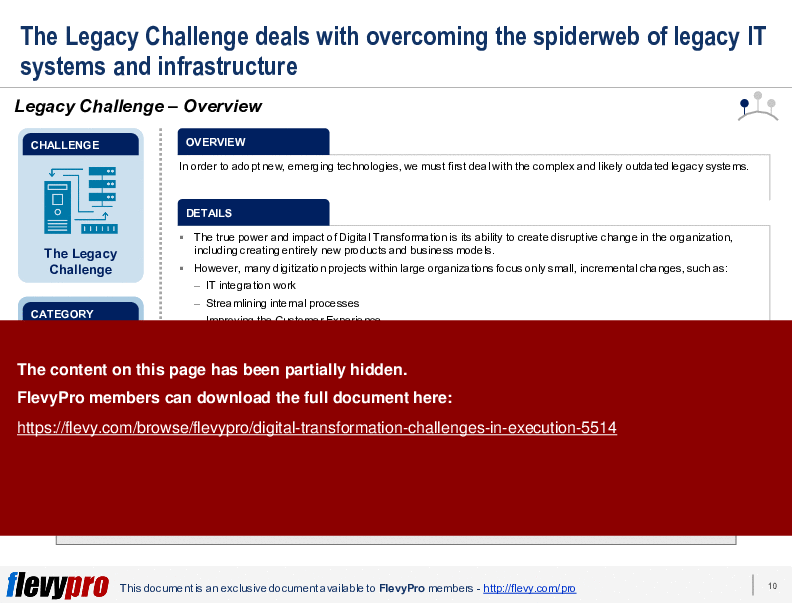
1. The Legacy Challenge
2. The Governance Challenge
3. The Innovation Challenge
This deck also includes slide templates for you to use in your own business presentations.
This PPT delves into the intricate Legacy Challenge, addressing the complexities of outdated IT systems and infrastructure. It emphasizes the necessity of overcoming these legacy systems to adopt new, emerging technologies effectively. The presentation outlines the importance of creating entirely new products and business models, rather than focusing on incremental changes. It also highlights the role of business ecosystems, integrating operations, technology, and people to provide end-to-end solutions.
The Governance Challenge is another critical area covered in this framework. It discusses the importance of establishing proper governance structures to coordinate transformational activities. The role of the Chief Digital Officer (CDO) is explored in depth, emphasizing the need for a multi-functional approach spanning strategy, communication, IT, and operations. The framework also outlines key governance objectives, such as strategic alignment, value delivery, risk management, resource management, and performance management, ensuring a holistic approach to digital governance.
Got a question about this document? Email us at flevypro@flevy.com.
TOPIC FAQ
What are the main execution-related challenges organizations face during digital transformation?
Execution challenges commonly center on legacy IT and infrastructure that hinder new technology adoption, governance gaps that prevent coordinated change, and limited innovation capacity to create new products or business models. A structured view groups these into 3 composite execution challenges: Legacy, Governance, and Innovation, comprising part of 9 key challenges.How should a company approach legacy IT when planning digital initiatives?
Companies should assess the degree to which outdated systems block new capabilities, prioritize replacement or integration paths that enable emerging technology use, and plan product/business-model changes rather than only incremental fixes. The material frames this work under the Legacy Challenge and its implications for infrastructure and capabilities.What governance objectives are important to coordinate a digital transformation program?
Effective governance should pursue strategic alignment, value delivery, risk management, resource management, and performance management, and often requires a multi‑functional leadership role to connect strategy, communication, IT, and operations. These governance objectives are explicitly outlined as central to coordinating transformation.How do business ecosystems affect digital transformation planning?
Business ecosystems require organizations to integrate operations, technology, and people with external partners to deliver end‑to‑end solutions; transformation planning therefore needs to consider partner roles, integration points, and operating-model changes that support ecosystem value creation across operations, technology, and people.What should I look for when choosing a slide-based digital transformation framework?
Look for a framework that diagnoses execution, resource, and organizational challenges; documents governance objectives; addresses legacy and innovation tradeoffs; and provides reusable templates for stakeholder presentations. A useful product will explicitly cover challenge areas and include slide templates, such as the 31-slide deck format.How do slide-based frameworks support internal planning teams on timing and budget decisions?
Slide-based frameworks help teams structure diagnostic work, prioritize challenge areas (legacy, governance, innovation), and align stakeholders,, but they do not prescribe time or budget. They inform planning by exposing the 9 key challenges to scope work and estimate effort based on organizational complexity.I need to restructure IT after pandemic-driven digital shifts — which execution areas should I prioritize?
Prioritize assessing the Legacy Challenge to determine modernization needs, establish governance structures to ensure strategic alignment and resource allocation, and create capacity for the Innovation Challenge to enable new products and business models. These priorities correspond to the 3 execution composite challenges.What role should a Chief Digital Officer play during transformation execution?
A Chief Digital Officer should operate multi‑functionally across strategy, communication, IT, and operations to coordinate transformational activities and ensure governance objectives—strategic alignment, value delivery, risk, resource, and performance management—are met throughout execution.DIGITAL TRANSFORMATION PPT TEMPLATES
Source: Best Practices in Digital Transformation, Innovation Management PowerPoint Slides: Digital Transformation: Challenges in Execution PowerPoint (PPTX) Presentation Slide Deck, LearnPPT Consulting
Did you need more documents?
Consider a FlevyPro subscription from $39/month. View plans here.
For $10.00 more, you can download this document plus 2 more FlevyPro documents. That's just $13 each.




























