
This framework is developed by a team of former McKinsey and Big 4 consultants. The presentation follows the headline-body-bumper slide format used by global consulting firms.
Explore the Capability Maturity Model (CMM) for Enterprise Architecture, crafted by ex-McKinsey and Big 4 consultants. Elevate your EA maturity with this expert PPT. CMM Enterprise Architecture is a 24-slide PPT PowerPoint presentation slide deck (PPT) available for immediate download upon purchase.
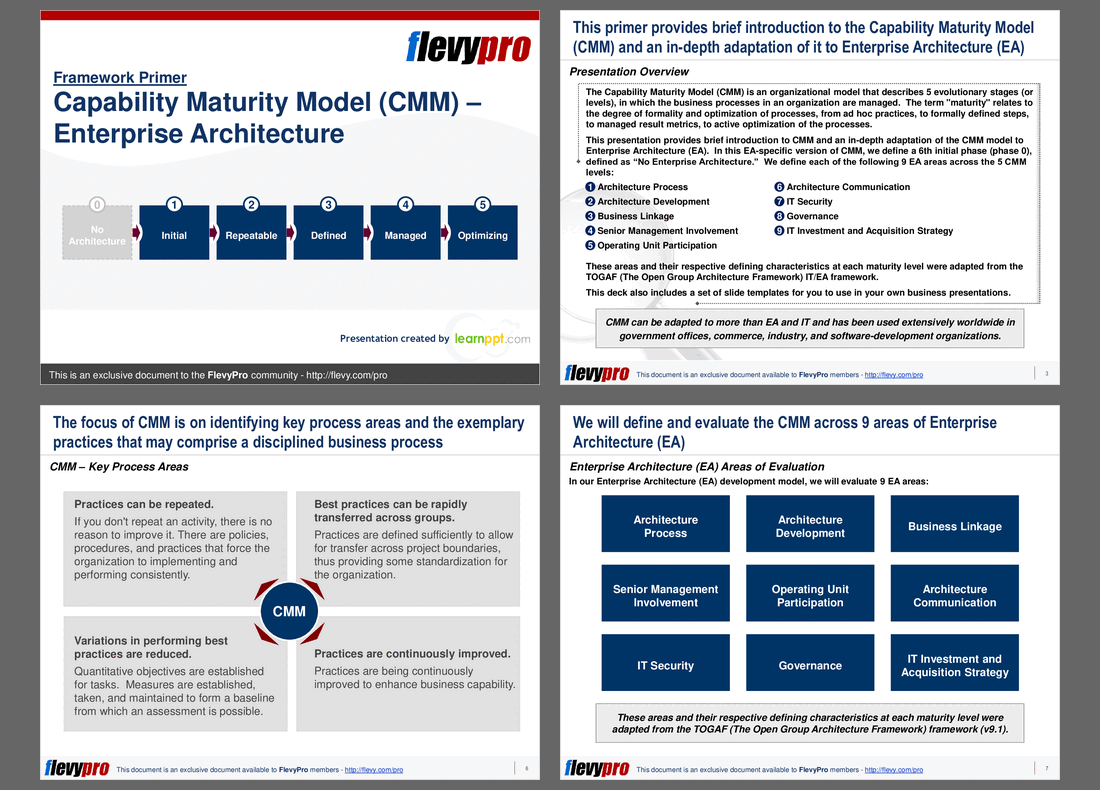
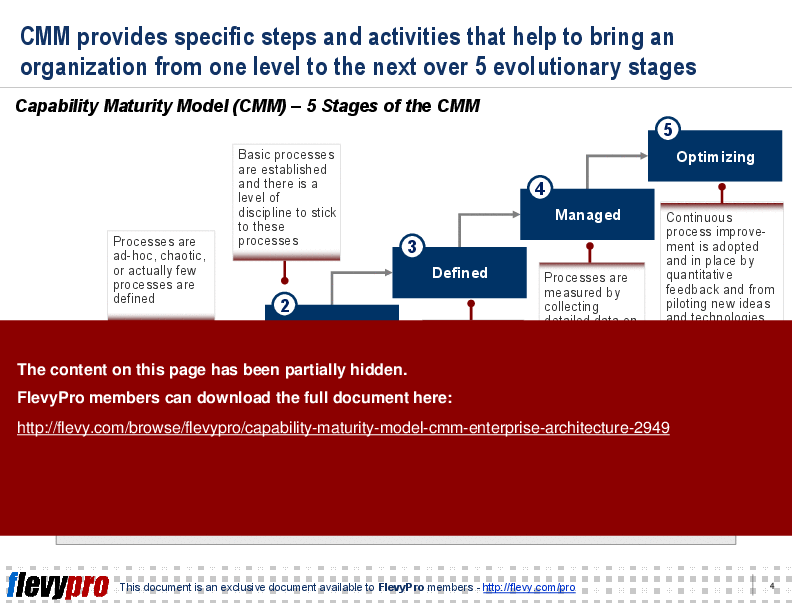
The Capability Maturity Model (CMM) is an organizational model that describes 5 evolutionary stages (or levels), in which the business processes in an organization are managed. The term "maturity" relates to the degree of formality and optimization of processes, from ad hoc practices, to formally defined steps, to managed result metrics, to active optimization of the processes.
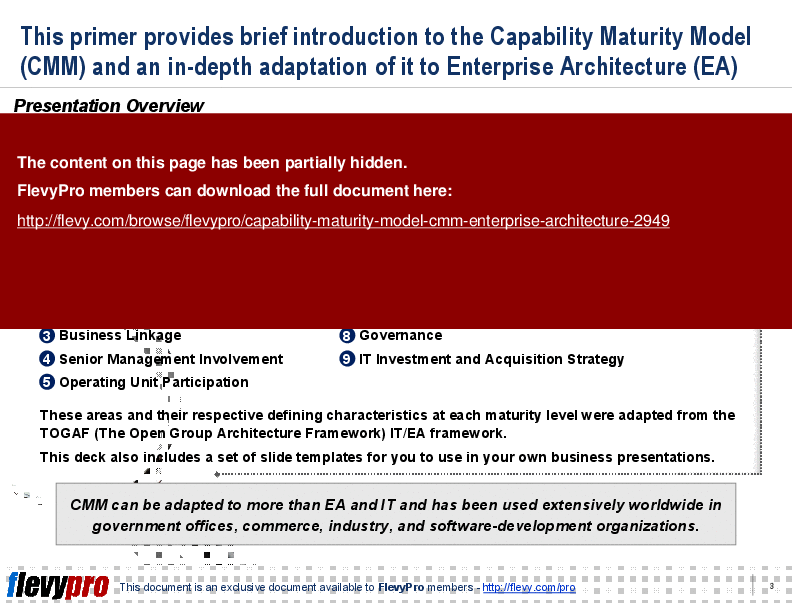
This presentation provides brief introduction to CMM and an in-depth adaptation of the CMM model to Enterprise Architecture (EA). In this EA-specific version of CMM, we define a 6th initial phase (phase 0), defined as "No Enterprise Architecture." We define each of the following 9 EA areas across the 5 CMM levels:
1. Architecture Process
2. Architecture Development
3. Business Linkage
4. Senior Management Involvement
5. Operating Unit Participation
6. Architecture Communication
7. IT Security
8. Governance
9. IT Investment and Acquisition Strategy
These areas and their respective defining characteristics at each maturity level were adapted from the TOGAF (The Open Group Architecture Framework) IT/EA framework. CMM can also be adapted to more than EA and IT and has been used extensively worldwide in government offices, commerce, industry, and software-development organizations.
This deck also includes a set of slide templates for you to use in your own business presentations.
The Capability Maturity Model (CMM) – Enterprise Architecture presentation offers a comprehensive roadmap for organizations aiming to elevate their Enterprise Architecture (EA) maturity. It meticulously outlines the five stages of CMM, from chaotic, ad-hoc processes to a state of continuous improvement and optimization. Each stage is detailed with specific steps and activities, providing a clear path for organizations to follow.
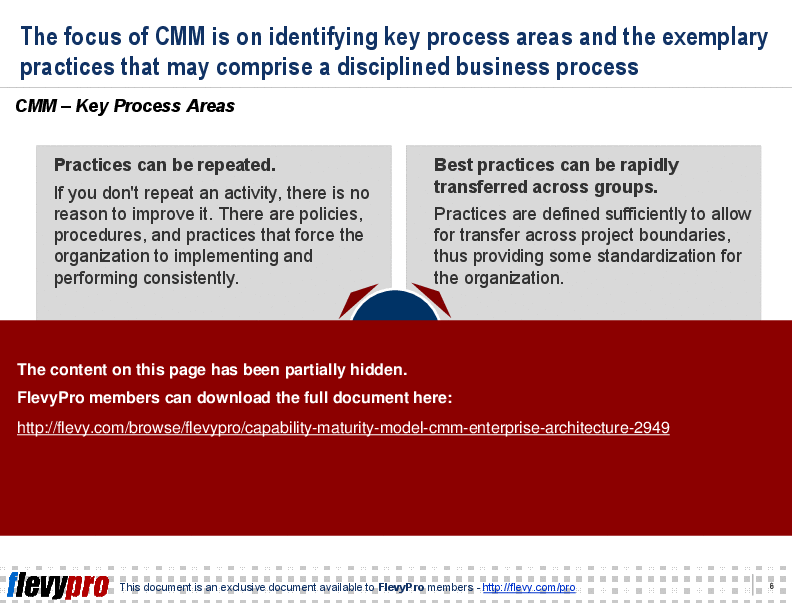
This PPT also delves into the key process areas essential for a disciplined business process. It emphasizes the importance of repeatable practices and the rapid transfer of best practices across groups. The evaluation of EA areas such as IT Security, Governance, and IT Investment Strategy ensures that all facets of the organization's architecture are scrutinized and optimized. This presentation is an invaluable tool for C-level executives seeking to enhance their enterprise's architectural capabilities and achieve operational excellence.
This PPT slide presents a framework for assessing the influence of Enterprise Architecture (EA) on IT Investment and Acquisition Strategy, structured into 5 maturity levels. At the "No Architecture" level, there is no EA consideration in strategic IT acquisition, leading to misalignment with business strategy. The "Initial" stage shows informal strategic planning with minimal adherence to standards, indicating a reactive approach. The "Repeatable" level demonstrates slight improvement with some governance and awareness of structure in IT acquisition. The "Defined" stage establishes an IT acquisition strategy with compliance measures and alignment with EA standards. Finally, the "Managed" level signifies full integration of EA in IT acquisitions, ensuring alignment with EA principles for strategic and efficient investments.
This PPT slide presents a framework for assessing the maturity of an Enterprise Architecture (EA) process, categorized into 5 stages: "No Architecture," "Initial," "Repeatable," "Defined," "Managed," and "Optimizing."
The "No Architecture" stage indicates a complete absence of structured EA processes. The "Initial" stage features fragmented EA processes reliant on individual efforts. In the "Repeatable" stage, organizations develop their EA process with documented roles and responsibilities, often sanctioned by the CIO. The "Defined" stage signifies a well-articulated architecture integrated with IT responsibilities. The "Managed" stage reflects cultural integration of the EA process, with established quality metrics for tracking effectiveness. Finally, the "Optimizing" stage represents a commitment to continuous improvement, ensuring EA processes remain relevant in a dynamic business environment. This maturity model serves as a roadmap for enhancing EA capabilities.
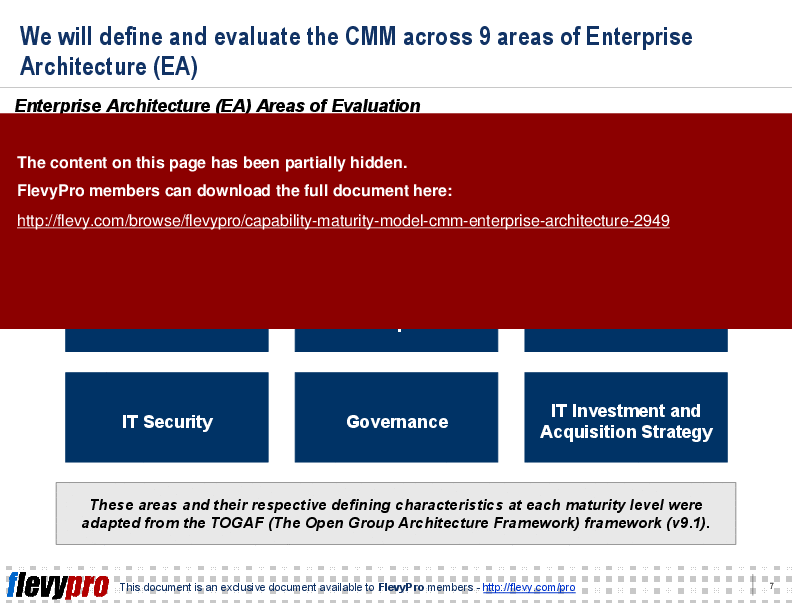
This PPT slide outlines the Capability Maturity Model (CMM) framework for evaluating Enterprise Architecture (EA) maturity. Key areas of evaluation include Architecture Process, Architecture Development, Business Linkage, Senior Management Involvement, Operating Unit Participation, Architecture Communication, IT Security, Governance, and IT Investment and Acquisition Strategy. The Architecture Process and Development focus on methodologies for maintaining architectural frameworks, while Business Linkage ensures alignment of EA with business objectives. Senior Management Involvement and Operating Unit Participation emphasize leadership and collaboration in EA. Architecture Communication is vital for stakeholder buy-in, and IT Security and Governance ensure compliance with regulations. IT Investment and Acquisition Strategy prioritizes technology investments aligned with architectural goals.
This PPT slide presents a framework for assessing participation levels in the Enterprise Architecture (EA) process, outlining 5 stages: "No Architecture," "Initial," "Repeatable," "Defined," "Managed," and "Optimizing." The "No Architecture" stage indicates a lack of engagement, hindering alignment with business objectives. The "Initial" stage shows limited acceptance, where operating units support EA only if it aligns with existing standards. In the "Repeatable" stage, responsibilities for EA are assigned, clarifying the architectural landscape despite challenges in managing diverse technologies. The "Defined" stage marks increased participation, recognizing the benefits of architectural standards. The "Managed" stage reflects full acceptance and active participation, enhancing collaboration. Finally, the "Optimizing" stage emphasizes feedback from all units to drive continuous improvements in the EA process, fostering a cohesive architecture strategy.
Source: Best Practices in Maturity Model, IT Strategy, Enterprise Architecture, Capability Maturity Model PowerPoint Slides: Capability Maturity Model (CMM) - Enterprise Architecture PowerPoint (PPT) Presentation Slide Deck, LearnPPT Consulting
This framework is developed by a team of former McKinsey and Big 4 consultants. The presentation follows the headline-body-bumper slide format used by global consulting firms.
For $10.00 more, you can download this document plus 2 more FlevyPro documents. That's just $13 each.
ABOUT FLEVYPRO
This document is part of the FlevyPro Library, a curated knowledge base of documents for our FlevyPro subscribers.
FlevyPro is a subscription service for on-demand business frameworks and analysis tools. FlevyPro subscribers receive access to an exclusive library of curated business documents—business framework primers, presentation templates, Lean Six Sigma tools, and more—among other exclusive benefits.
The average daily rate of a McKinsey consultant is $6,625 (not including expenses). The average price of a Flevy document is $65.
Trusted by over 10,000+ Client Organizations
Since 2012, we have provided business templates to over 10,000 businesses and organizations of all sizes, from startups and small businesses to the Fortune 100, in over 130 countries.
"FlevyPro has been a brilliant resource for me, as an independent growth consultant, to access a vast knowledge bank of presentations to support my work with clients. In terms of RoI, the value I received from the very first presentation I downloaded paid for my subscription many times over! The
quality of the decks available allows me to punch way above my weight – it's like having the resources of a Big 4 consultancy at your fingertips at a microscopic fraction of the overhead.
"
– Roderick Cameron, Founding Partner at SGFE Ltd
"I am extremely grateful for the proactiveness and eagerness to help and I would gladly recommend the Flevy team if you are looking for data and toolkits to help you work through business solutions."
– Trevor Booth, Partner, Fast Forward Consulting
"One of the great discoveries that I have made for my business is the Flevy library of training materials.
As a Lean Transformation Expert, I am always making presentations to clients on a variety of topics: Training, Transformation, Total Productive Maintenance, Culture, Coaching, Tools, Leadership Behavior, etc. Flevy
It is well worth the money to purchase these presentations. Sure, I have the knowledge and information to make my point. It is another thing to create a presentation that captures what I want to say. Flevy has saved me countless hours of preparation time that is much better spent with implementation that will actually save money for my clients.
"
– Ed Kemmerling, Senior Lean Transformation Expert at PMG
"As a young consulting firm, requests for input from clients vary and it's sometimes impossible to provide expert solutions across a broad spectrum of requirements. That was before I discovered Flevy.com.
Through subscription to this invaluable site of a plethora of topics that are key and crucial to consulting, I
have been able to exceed expectations and deliver quality advice and solutions to my clients. The quality and expertise of the authors are exemplary and gives me great confidence to use as part of my service offerings.
I highly recommend this company for any consultant wanting to apply international best practice standards in their service offerings.
"
– Nishi Singh, Strategist and MD at NSP Consultants
"Flevy is now a part of my business routine. I visit Flevy at least 3 times each month.
Flevy has become my preferred learning source, because what it provides is practical, current, and useful in this era where the business world is being rewritten.

many challenges and there is the need to make the right decisions in a short time, with so much scattered information, we are fortunate to have Flevy. Flevy investigates, selects, and puts at our disposal the best of the best to help us be successful in our work.
"
– Omar Hernán Montes Parra, CEO at Quantum SFE
"The wide selection of frameworks is very useful to me as an independent consultant. In fact, it rivals what I had at my disposal at Big 4 Consulting firms in terms of efficacy and organization."
– Julia T., Consulting Firm Owner (Former Manager at Deloitte and Capgemini)
"If you are looking for great resources to save time with your business presentations, Flevy is truly a value-added resource. Flevy has done all the work for you and we will continue to utilize Flevy as a source to extract up-to-date information and data for our virtual and onsite presentations!"
– Debbi Saffo, President at The NiKhar Group
"As a consulting firm, we had been creating subject matter training materials for our people and found the excellent materials on Flevy, which saved us 100's of hours of re-creating what already exists on the Flevy materials we purchased."
Download our FREE Digital Transformation Templates
Download our free compilation of 50+ Digital Transformation slides and templates. DX concepts covered include Digital Leadership, Digital Maturity, Digital Value Chain, Customer Experience, Customer Journey, RPA, etc.