
This framework is developed by a team of former McKinsey and Big 4 consultants. The presentation follows the headline-body-bumper slide format used by global consulting firms.
Business Process Maturity Model (BPMM) PPTX: Learn key process maturity stages and frameworks. Download this detailed BPMM series slide deck to manage and improve processes. BPMM Series: Managed is a 26-slide PPT PowerPoint presentation slide deck (PPTX) available for immediate download upon purchase.
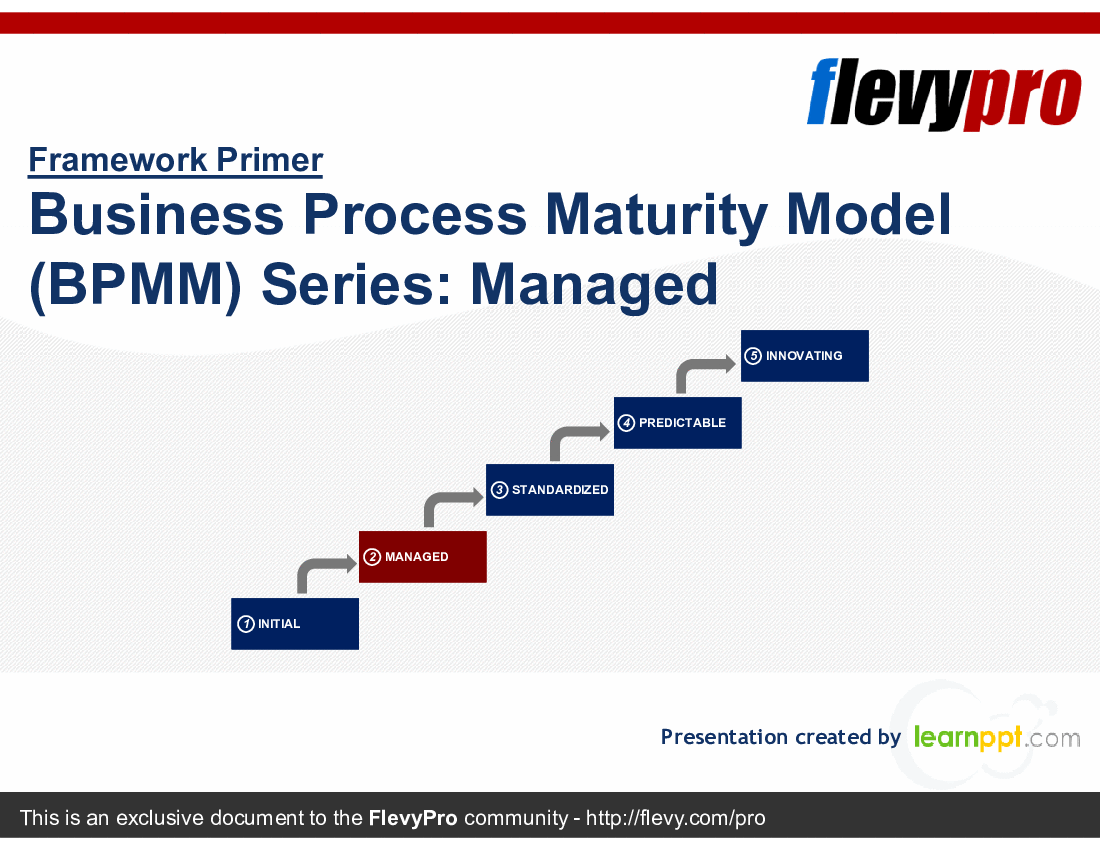
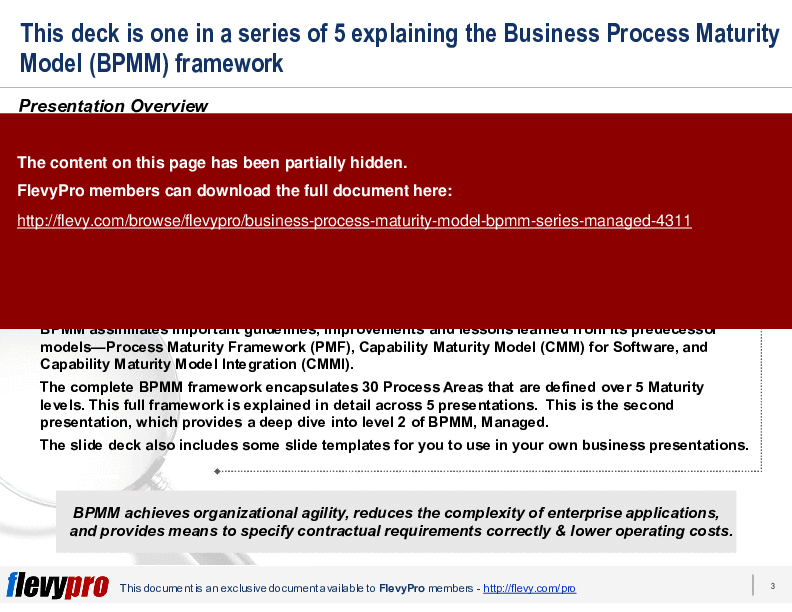
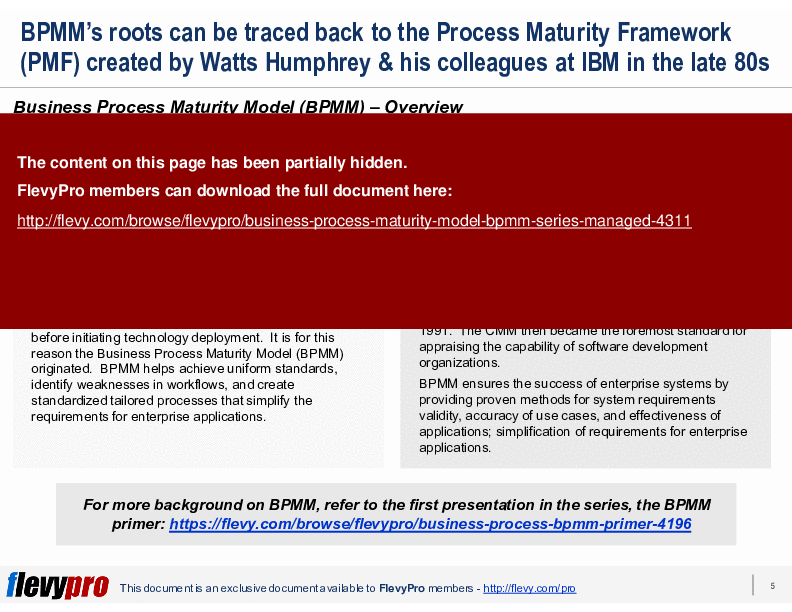
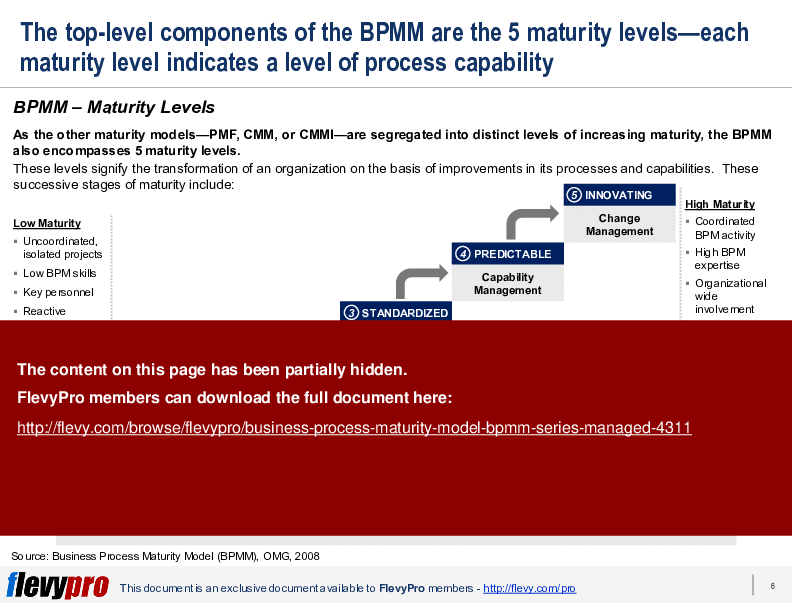
The Business Process Maturity Model (BPMM) captures a 5-level evolutionary improvement path that guides organizations as they move from immature, inconsistent business activities (level 1) to mature, disciplined processes (level 5). BPMM orders these stages so that improvements at each stage provide a foundation on which to build improvements undertaken at the following stage.
Therefore, we can leverage BPMM to provide a roadmap for Continuous Process Improvement. BPMM also helps identify process deficiencies and guides the improvements in logical, incremental steps.
BPMM originally was developed to ensure organizational readiness prior to initiating technology deployment. BPMM helps achieve uniform standards, identify weaknesses in workflows, and create standardized tailored processes that simplify the requirements for enterprise applications. BPMM achieves organizational agility, reduces the complexity of enterprise applications, and provides means to specify contractual requirements correctly and lower operating costs.
BPMM assimilates important guidelines, improvements and lessons learned from its predecessor models—Process Maturity Framework (PMF),
Capability Maturity Model (CMM) for Software, and Capability Maturity Model Integration (CMMI).
The complete BPMM framework encapsulates 30 Process Areas that are defined over 5 Maturity levels. This full framework is explained in detail across 5 presentations. This is the second presentation, which provides a deep dive into level 2 of BPMM, Managed.
The slide deck also includes some slide templates for you to use in your own business presentations.
This presentation delves into the intricacies of Level 2 (Managed) of the BPMM, focusing on establishing a stable work environment within work units. It covers critical process areas such as Work Unit Configuration Management, Sourcing Management, and Process and Product Assurance. The PPT provides actionable insights into defining business goals, creating workflows, and effectively monitoring performance. It also emphasizes the importance of aligning process improvement goals with organizational strategies and ensuring compliance with business rules and procedures. This resource is essential for executives aiming to optimize their process management capabilities and drive systematic improvements.
The "Managed – Work Unit Performance (WUP)" process area focuses on establishing effective work agreements to ensure task acceptance, execution, and measurement for continuous improvement. Key goals include: 1) acceptance of work assignments to define responsibilities, 2) performing work according to established requirements to meet quality standards, and 3) measuring and improving performance to identify enhancement areas. Actionable practices involve planning and accepting assignments, emphasizing coordination for successful completion, and ensuring data integrity for reliability. Regular reporting to management fosters transparency and accountability. This structured approach is essential for organizations aiming to refine operational efficiency and effectiveness.
The Work Unit Planning and Commitment (WUCP) process area focuses on structured planning to achieve work unit objectives. It outlines 3 primary goals: quantitatively estimating work required, securing stakeholder commitment approvals, and documenting execution plans. Key practices include involving workgroups in planning, utilizing lessons learned, and maintaining a clear work breakdown structure for accurate estimations and stakeholder buy-in. Stakeholder engagement is emphasized through workflow descriptions and commitment agreements, ensuring alignment and accountability. Documentation practices such as staffing plans, resource management plans, and data management plans are critical for effective resource organization and decision-making. Work plans form the foundation for execution, monitoring, and corrective actions, enhancing operational efficiency and effectiveness.
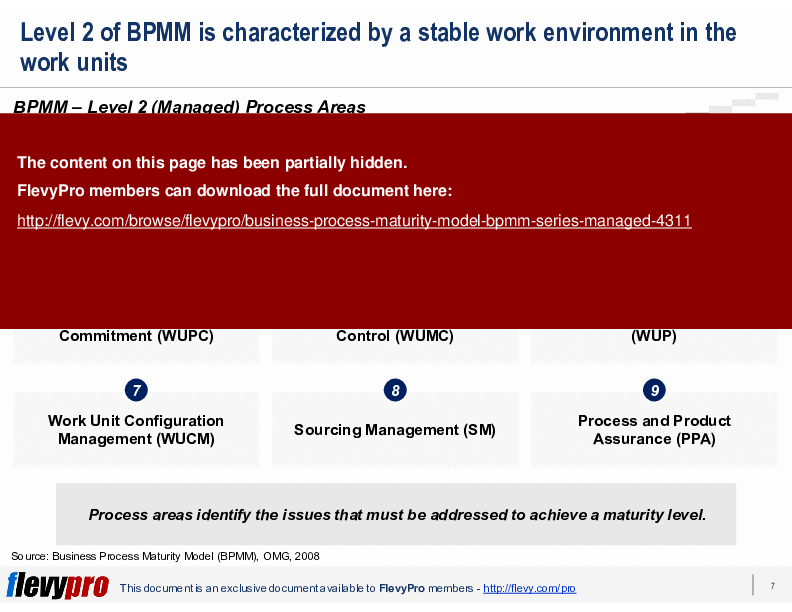
This PPT slide outlines Level 2 of the Business Process Maturity Model (BPMM), known as the Managed stage. Key process areas include Organizational Process Leadership (OPL) for effective process management, Organizational Business Governance (OBG) for aligning processes with objectives and compliance, and Work Unit Requirements Management (WURM) for clear specifications within work units. Work Unit Planning and Commitment (WUPC) and Work Unit Monitoring and Control (WUMC) ensure effective planning and real-time management to meet performance targets. Work Unit Performance (WUP) evaluates efficiency and effectiveness, while Work Unit Configuration Management (WUCM) and Sourcing Management (SM) address resource organization and sourcing. Lastly, Process and Product Assurance (PPA) ensures quality standards are met. These areas are crucial for organizations to advance through maturity levels and drive continuous improvement.
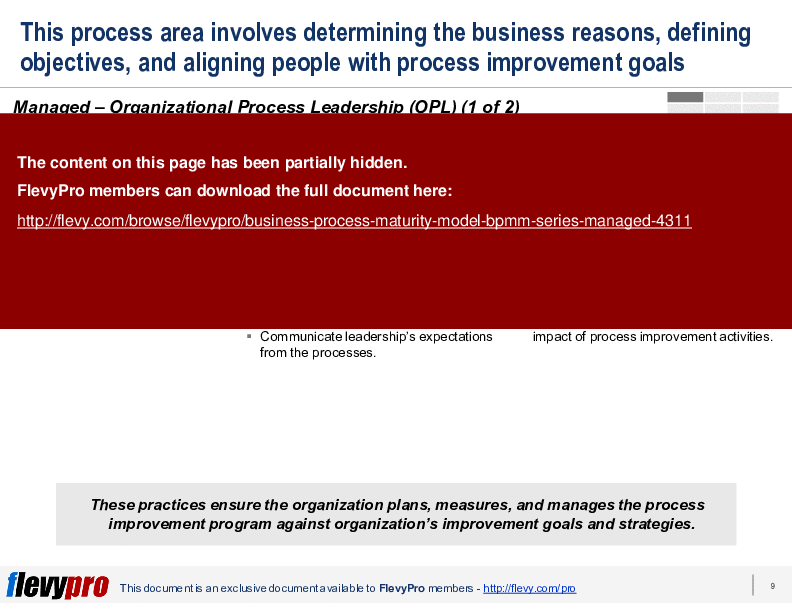
This PPT slide outlines the framework for Organizational Business Governance (OBG) within the Managed process area. It identifies 2 main goals: aligning business activities with strategic objectives and managing workflows effectively. Key actions include defining business objectives, establishing metrics for near-term and long-term goals, and maintaining clear workflow descriptions. Approving work commitments and allocating resources are essential for task execution across units. Regular business performance reviews are necessary to identify corrective actions and ensure alignment with goals. This structured oversight enhances governance practices and drives organizational performance.
This PPT slide focuses on Sourcing Management (SM), specifically managing significant acquisitions from external suppliers. Key goals include approving sourcing agreements and ensuring they are satisfied. Approving agreements involves establishing clear descriptions of sourcing needs and selecting appropriate off-the-shelf products that meet unit criteria. Choosing suppliers that align with work unit requirements is critical. Ensuring satisfaction of sourcing agreements includes resolving planning conflicts and fulfilling acquirer responsibilities to support suppliers. Monitoring supplier performance is essential to meet work unit expectations. Practices outlined provide actionable steps for establishing agreements, managing supplier relationships, and closing agreements once sourcing needs are fulfilled, facilitating effective acquisition strategies.
Source: Best Practices in Maturity Model, Process Improvement, Capability Maturity Model, BPMM PowerPoint Slides: Business Process Maturity Model (BPMM) Series: Managed PowerPoint (PPTX) Presentation Slide Deck, LearnPPT Consulting
This framework is developed by a team of former McKinsey and Big 4 consultants. The presentation follows the headline-body-bumper slide format used by global consulting firms.
For $10.00 more, you can download this document plus 2 more FlevyPro documents. That's just $13 each.
ABOUT FLEVYPRO
This document is part of the FlevyPro Library, a curated knowledge base of documents for our FlevyPro subscribers.
FlevyPro is a subscription service for on-demand business frameworks and analysis tools. FlevyPro subscribers receive access to an exclusive library of curated business documents—business framework primers, presentation templates, Lean Six Sigma tools, and more—among other exclusive benefits.
Since 2012, we have provided business templates to over 10,000 businesses and organizations of all sizes, from startups and small businesses to the Fortune 100, in over 130 countries.
"FlevyPro has been a brilliant resource for me, as an independent growth consultant, to access a vast knowledge bank of presentations to support my work with clients. In terms of RoI, the value I received from the very first presentation I downloaded paid for my subscription many times over! The
quality of the decks available allows me to punch way above my weight – it's like having the resources of a Big 4 consultancy at your fingertips at a microscopic fraction of the overhead.
"
– Roderick Cameron, Founding Partner at SGFE Ltd
"If you are looking for great resources to save time with your business presentations, Flevy is truly a value-added resource. Flevy has done all the work for you and we will continue to utilize Flevy as a source to extract up-to-date information and data for our virtual and onsite presentations!"
– Debbi Saffo, President at The NiKhar Group
"As a small business owner, the resource material available from FlevyPro has proven to be invaluable. The ability to search for material on demand based our project events and client requirements was great for me and proved very beneficial to my clients. Importantly, being able to easily edit and tailor
the material for specific purposes helped us to make presentations, knowledge sharing, and toolkit development, which formed part of the overall program collateral. While FlevyPro contains resource material that any consultancy, project or delivery firm must have, it is an essential part of a small firm or independent consultant's toolbox.
"
– Michael Duff, Managing Director at Change Strategy (UK)
"Flevy is now a part of my business routine. I visit Flevy at least 3 times each month.
Flevy has become my preferred learning source, because what it provides is practical, current, and useful in this era where the business world is being rewritten.

many challenges and there is the need to make the right decisions in a short time, with so much scattered information, we are fortunate to have Flevy. Flevy investigates, selects, and puts at our disposal the best of the best to help us be successful in our work.
"
– Omar Hernán Montes Parra, CEO at Quantum SFE
"As a consultant requiring up to date and professional material that will be of value and use to my clients, I find Flevy a very reliable resource.
The variety and quality of material available through Flevy offers a very useful and commanding source for information. Using Flevy saves me time, enhances my expertise and ends up being a good decision."
– Dennis Gershowitz, Principal at DG Associates
"As a niche strategic consulting firm, Flevy and FlevyPro frameworks and documents are an on-going reference to help us structure our findings and recommendations to our clients as well as improve their clarity, strength, and visual power. For us, it is an invaluable resource to increase our impact and value."
– David Coloma, Consulting Area Manager at Cynertia Consulting
"FlevyPro provides business frameworks from many of the global giants in management consulting that allow you to provide best in class solutions for your clients."
– David Harris, Managing Director at Futures Strategy
"As a young consulting firm, requests for input from clients vary and it's sometimes impossible to provide expert solutions across a broad spectrum of requirements. That was before I discovered Flevy.com.
Through subscription to this invaluable site of a plethora of topics that are key and crucial to consulting, I
have been able to exceed expectations and deliver quality advice and solutions to my clients. The quality and expertise of the authors are exemplary and gives me great confidence to use as part of my service offerings.
I highly recommend this company for any consultant wanting to apply international best practice standards in their service offerings.
"
– Nishi Singh, Strategist and MD at NSP Consultants
Save with Bundles
This document is available as part of the following discounted bundle(s):
Download our free compilation of 50+ slides and templates on Organizational Design, Change Management, and Corporate Culture. Methodologies include ADKAR, Burke-Litwin Change Model, McKinsey 7-S, Competing Values Framework, etc.