
This framework is developed by a team of former McKinsey and Big 4 consultants. The presentation follows the headline-body-bumper slide format used by global consulting firms.
Editor Summary
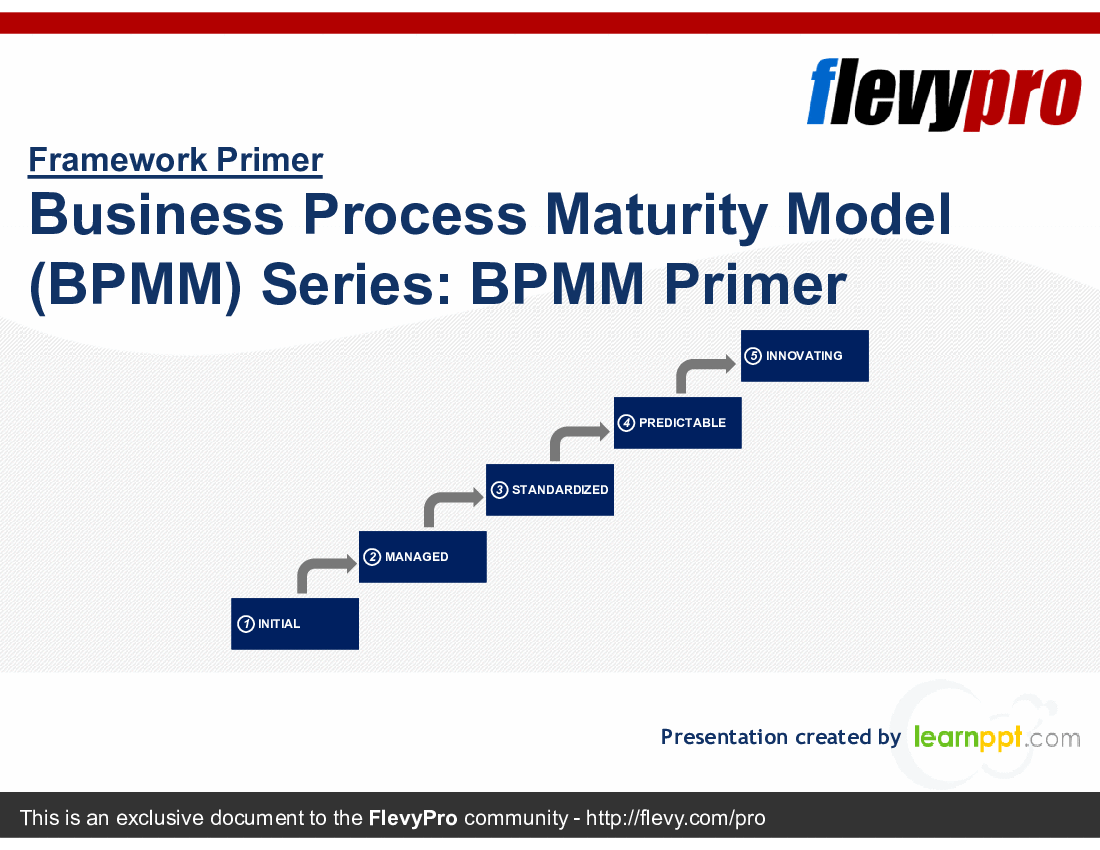
Business Process Maturity Model (BPMM) Series: BPMM Primer is a 23-slide PPTX overview presentation developed by LearnPPT Consulting that introduces a 5-level business process maturity model and the concept of 30 Process Areas defined across those levels.
Read moreThe primer explains BPMM’s use as a roadmap for continuous process improvement, organizational readiness before technology deployment, and simplifying enterprise application requirements. This first presentation in a multi-part series is sold as a digital download on Flevy.
Use this primer when an organization needs a staged roadmap to raise process capability—whether preparing for an ERP rollout, reducing application complexity, or instituting continuous process improvement.
Senior executives assessing organizational readiness and prioritizing process improvements using a 5-level maturity path.
Process improvement leads mapping incremental improvement actions and identifying deficiency areas across 30 Process Areas.
IT project managers validating process standardization to simplify enterprise application requirements before deployment.
Transformation consultants scoping staged initiatives to reduce operating complexity during integration work.
The staged, level-based approach reflects the capability-maturity lineage of PMF, CMM, and CMMI.
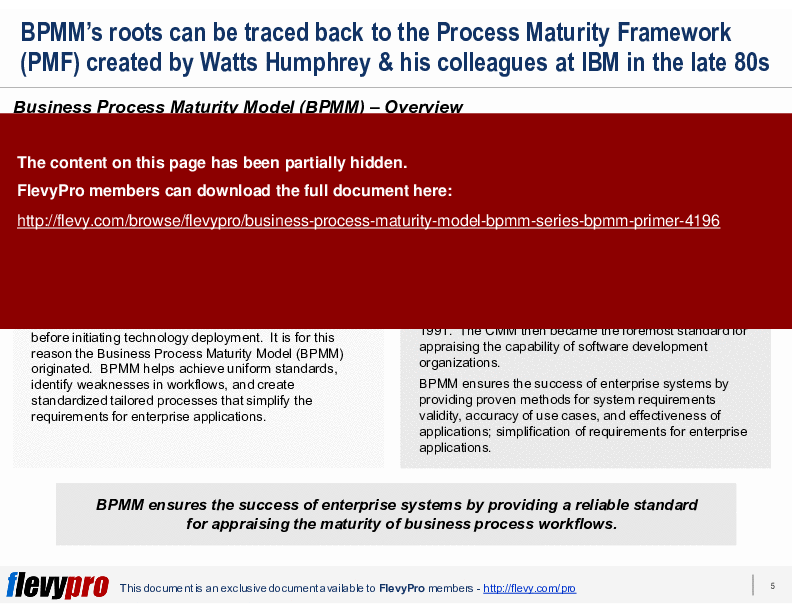
The Business Process Maturity Model (BPMM) captures a 5-level evolutionary improvement path that guides organizations as they move from immature, inconsistent business activities (level 1) to mature, disciplined processes (level 5). BPMM orders these stages so that improvements at each stage provide a foundation on which to build improvements undertaken at the following stage.
Therefore, we can leverage BPMM to provide a roadmap for Continuous Process Improvement. BPMM also helps identify process deficiencies and guides the improvements in logical, incremental steps.
BPMM originally was developed to ensure organizational readiness prior to initiating technology deployment. BPMM helps achieve uniform standards, identify weaknesses in workflows, and create standardized tailored processes that simplify the requirements for enterprise applications. BPMM achieves organizational agility, reduces the complexity of enterprise applications, and provides means to specify contractual requirements correctly and lower operating costs.
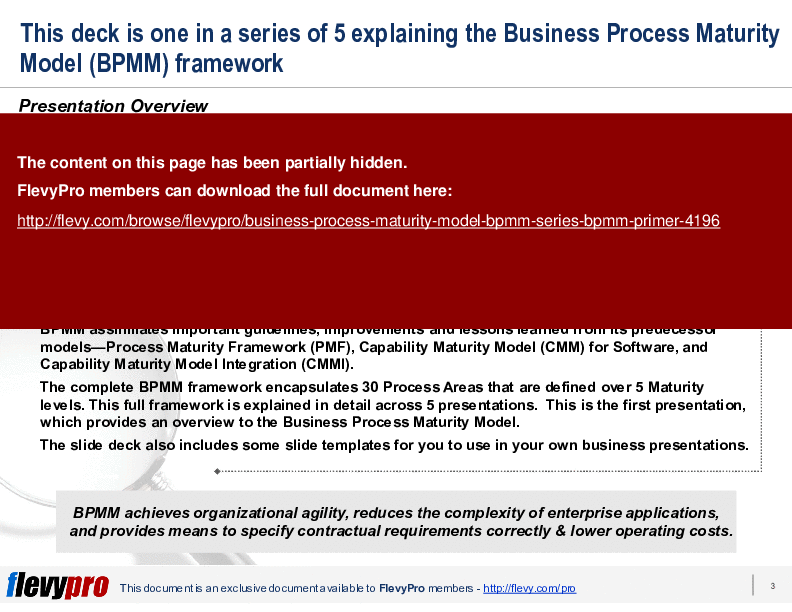
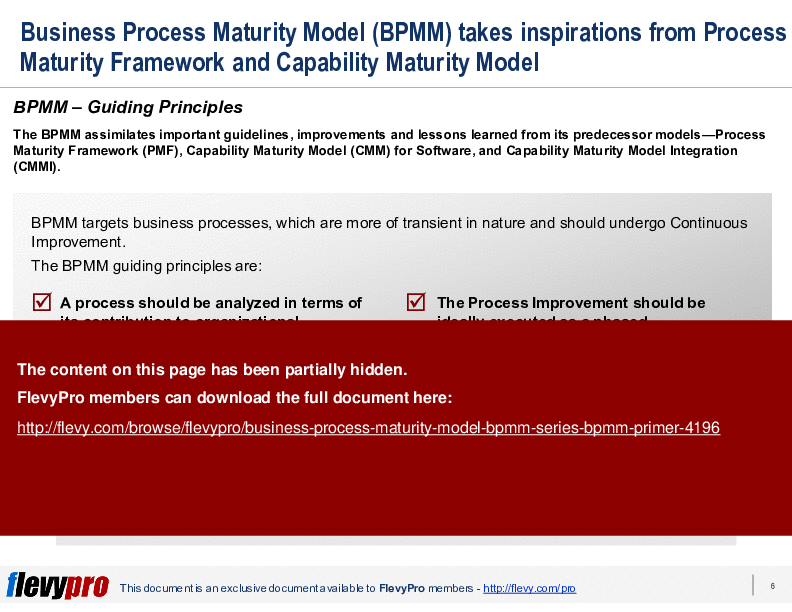
BPMM assimilates important guidelines, improvements and lessons learned from its predecessor models—Process Maturity Framework (PMF), Capability Maturity Model (CMM) for Software, and Capability Maturity Model Integration (CMMI).
The complete BPMM framework encapsulates 30 Process Areas that are defined over 5 Maturity levels. This full framework is explained in detail across 5 presentations. This is the first presentation in the series, which provides an overview to the Business Process Maturity Model.
The slide deck also includes some slide templates for you to use in your own business presentations.
This presentation is a critical resource for executives aiming to streamline their business processes and achieve operational excellence. It provides a structured approach to evaluating and enhancing process maturity, ensuring that your organization can adapt and thrive in a competitive landscape. The included templates offer practical tools for immediate application, allowing you to customize and implement BPMM principles effectively. This PPT is an indispensable guide for those committed to driving continuous improvement and achieving measurable results in process management.
What are the maturity levels defined in the Business Process Maturity Model (BPMM)?
BPMM defines an evolutionary five-level progression from immature, inconsistent business activities at level 1 to mature, disciplined processes at level 5. Each level builds a foundation for the next, enabling incremental improvements across the organization and structuring continuous process improvement into 5 maturity levels.
How does BPMM relate to models like CMM and CMMI?
BPMM assimilates guidelines and lessons from predecessor models such as the Process Maturity Framework (PMF), Capability Maturity Model (CMM) for Software, and Capability Maturity Model Integration (CMMI), adapting staged capability concepts specifically for business process improvement and organizational readiness, reflecting that combined lineage.
What are "Process Areas" in BPMM and how are they organized?
Process Areas in BPMM represent defined domains of process capability and practice that an organization must address to advance maturity. The complete BPMM framework encapsulates 30 Process Areas that are distributed and defined across the model’s 5 maturity levels, with each area supporting incremental improvement.
How can BPMM be used to prepare an organization for enterprise application deployment?
BPMM was originally developed to ensure organizational readiness prior to technology deployment by helping achieve uniform standards, identify workflow weaknesses, and create standardized tailored processes. Those activities simplify enterprise application requirements, reduce application complexity, and support clearer contractual specifications before deployment.
What should I look for when choosing a BPMM presentation or template for internal use?
Buyers should look for clear coverage of the five-level maturity progression, explicit mapping of Process Areas, practical slide templates for internal presentations, and author attribution. For a compact primer, consider materials that present the 5-level model and the 30 Process Areas in a PPTX slide deck such as the 23-slide primer.
How much time and team effort does applying BPMM typically require for an organization?
BPMM organizes improvements into incremental stages, so time and resources vary by organizational scope and starting maturity; the model supports staging work across the 5 maturity levels rather than prescribing a fixed timeline. No specific timelines are provided in the primer, which focuses on the 5-level approach and 30 Process Areas.
We just completed a merger—how can BPMM help with process integration?
BPMM can guide post-merger integration by identifying process deficiencies, standardizing tailored processes across combined units, and sequencing improvements logically and incrementally. Using the model’s staged roadmap helps align and consolidate workflows across the organization via its five-level continuous improvement path.
Can BPMM help reduce operating costs, and if so, how would a CIO apply it before an ERP rollout?
BPMM can support cost reduction by driving uniform standards, revealing workflow inefficiencies, and creating standardized processes that simplify system requirements, thereby lowering implementation complexity and operating costs. CIOs can use the model to verify organizational readiness prior to technology deployment and reduce application complexity.
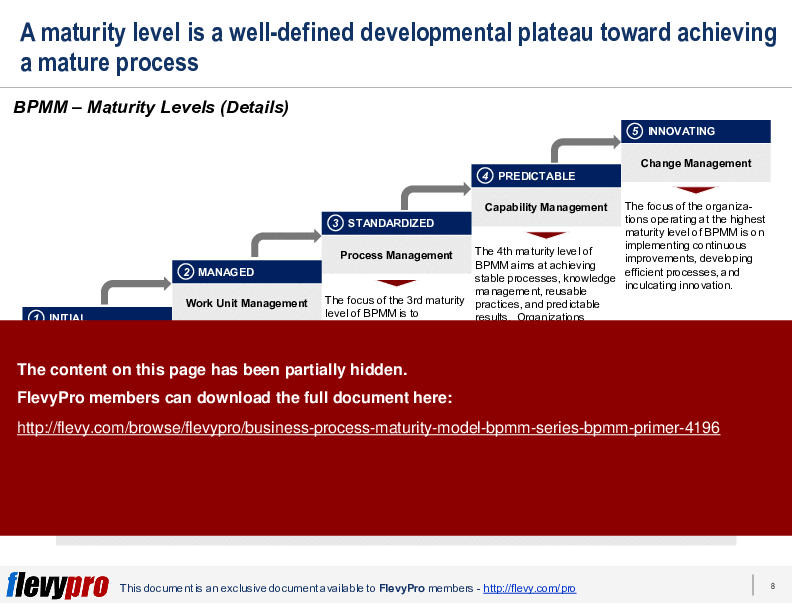
The Business Process Maturity Model (BPMM) outlines 5 maturity levels in process management. The first level, "Initial," features inconsistent management focused on basic operational efficiencies. The second level, "Managed," emphasizes "Work Unit Management," promoting repeatable practices and workforce commitment control. The third level, "Standardized," centers on "Process Management," aiming to standardize processes, measures, and training. The fourth level, "Predictable," involves "Capability Management," achieving stable processes and implementing knowledge management for predictable results. The fifth level, "Innovating," focuses on "Change Management," prioritizing continuous improvement and innovation to develop efficient processes and foster a culture of innovation. This model illustrates a pathway for enhancing process maturity and operational effectiveness.
The Business Process Maturity Model (BPMM) outlines 3 maturity levels: Initial, Managed, and Standardized. At the Initial level, organizations lack formal processes, resulting in a chaotic environment. The Managed level introduces foundational processes that enhance operational efficiency, focusing on key areas like Organizational Process Leadership and Work Unit Requirements Management. The Standardized level further evolves by implementing standardized processes for product and service delivery, emphasizing areas such as Organizational Competency Development and Product and Service Business Management. This model provides a roadmap for organizations to systematically improve process maturity, ensuring consistency and reliability in operations, which can lead to enhanced performance and customer satisfaction.
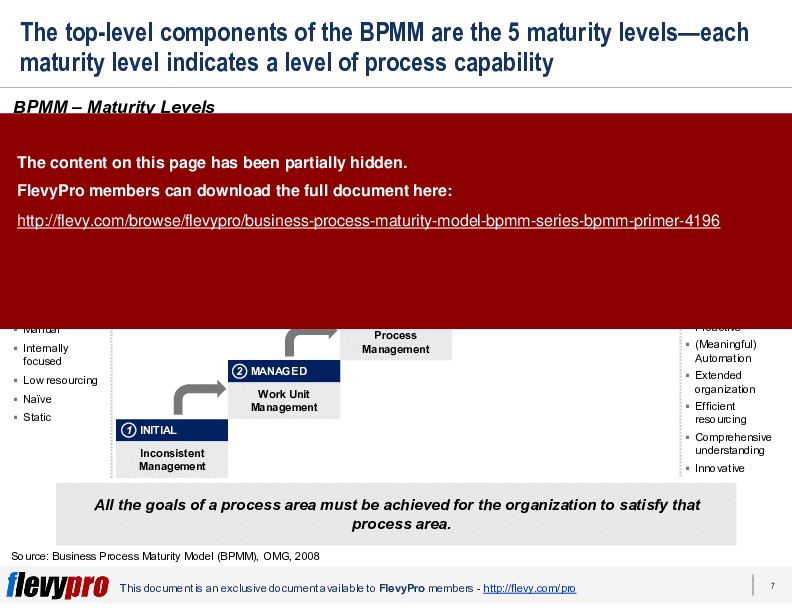
The Business Process Maturity Model (BPMM) outlines 5 maturity levels organizations can achieve in process capabilities: Initial, Managed, Standardized, Predictable, and Innovating. At the "Initial" level, organizations face inconsistent management practices and low BPM skills. The "Managed" level introduces structured processes, while the "Standardized" level prioritizes process management, enhancing consistency and efficiency. The "Predictable" level allows for capability management, enabling organizations to anticipate outcomes. At the "Innovating" level, organizations exhibit high BPM expertise and proactive automation, fostering innovation and efficient resource utilization. Each maturity stage builds on the previous one, requiring foundational improvements in management practices and resource allocation to elevate BPM practices.
This PPT slide outlines 4 types of Business Process Maturity Model (BPMM) conformance appraisals:
1. Starter Appraisal: A cost-effective option that takes a few days, focusing on quantitative data through limited interviews without comprehensive evidence review, suitable for quick assessments.
2. Confirmatory Appraisal: A rigorous appraisal covering all process areas, emphasizing thorough evidence collection and performance evaluation to ensure practices meet their goals, critical for detailed process maturity understanding.
3. Progress Appraisal: Time-intensive, but less exhaustive than the confirmatory type, balancing quantitative data collection with artifact reviews, beneficial for detailed assessments without full commitment.
4. Supplier Appraisal: Focuses on procurement processes, validating contractual commitments and performance levels through quantitative data, essential for organizations reliant on external partnerships.
These appraisals provide a structured framework for evaluating organizational processes at varying depths.
Source: Best Practices in Maturity Model, Process Improvement, Capability Maturity Model, BPMM PowerPoint Slides: Business Process Maturity Model (BPMM) Series: BPMM Primer PowerPoint (PPTX) Presentation Slide Deck, LearnPPT Consulting
This framework is developed by a team of former McKinsey and Big 4 consultants. The presentation follows the headline-body-bumper slide format used by global consulting firms.
For $10.00 more, you can download this document plus 2 more FlevyPro documents. That's just $13 each.
ABOUT FLEVYPRO
This document is part of the FlevyPro Library, a curated knowledge base of documents for our FlevyPro subscribers.

FlevyPro is a subscription service for on-demand business frameworks and analysis tools. FlevyPro subscribers receive access to an exclusive library of curated business documents—business framework primers, presentation templates, Lean Six Sigma tools, and more—among other exclusive benefits.
Since 2012, we have provided business templates to over 10,000 businesses and organizations of all sizes, from startups and small businesses to the Fortune 100, in over 130 countries.
"My FlevyPro subscription provides me with the most popular frameworks and decks in demand in today’s market. They not only augment my existing consulting and coaching offerings and delivery, but also keep me abreast of the latest trends, inspire new products and service offerings for my practice, and educate me
in a fraction of the time and money of other solutions. I strongly recommend FlevyPro to any consultant serious about success.
"
– Bill Branson, Founder at Strategic Business Architects
"As a consultant requiring up to date and professional material that will be of value and use to my clients, I find Flevy a very reliable resource.
The variety and quality of material available through Flevy offers a very useful and commanding source for information. Using Flevy saves me time, enhances my expertise and ends up being a good decision."
– Dennis Gershowitz, Principal at DG Associates
"I like your product. I'm frequently designing PowerPoint presentations for my company and your product has given me so many great ideas on the use of charts, layouts, tools, and frameworks. I really think the templates are a valuable asset to the job."
– Roberto Fuentes Martinez, Senior Executive Director at Technology Transformation Advisory
"Flevy is our 'go to' resource for management material, at an affordable cost. The Flevy library is comprehensive and the content deep, and typically provides a great foundation for us to further develop and tailor our own service offer."
– Chris McCann, Founder at Resilient.World
"I have used Flevy services for a number of years and have never, ever been disappointed. As a matter of fact, David and his team continue, time after time, to impress me with their willingness to assist and in the real sense of the word. I have concluded in fact
that it is not at all just a repository of documents/resources but, in the way that David and his team manage the firm, it is like dealing with consultants always ready to assist, advise and direct you to what you really need, and they always get it right.
I am an international hospitality accomplished senior executive who has worked and lived during the past 35 years in 23 countries in 5 continents and I can humbly say that I know what customer service is, trust me.
Aside from the great and professional service that Flevy's team provide, their wide variety of material is of utmost great quality, professionally put together and most current.
Well done Flevy, keep up the great work and I look forward to continue working with you in the future and to recommend you to a variety of colleagues around the world.
"
– Roberto Pelliccia, Senior Executive in International Hospitality
"As a young consulting firm, requests for input from clients vary and it's sometimes impossible to provide expert solutions across a broad spectrum of requirements. That was before I discovered Flevy.com.
Through subscription to this invaluable site of a plethora of topics that are key and crucial to consulting, I
have been able to exceed expectations and deliver quality advice and solutions to my clients. The quality and expertise of the authors are exemplary and gives me great confidence to use as part of my service offerings.
I highly recommend this company for any consultant wanting to apply international best practice standards in their service offerings.
"
– Nishi Singh, Strategist and MD at NSP Consultants
"I have found Flevy to be an amazing resource and library of useful presentations for lean sigma, change management and so many other topics. This has reduced the time I need to spend on preparing for my performance consultation. The library is easily accessible and updates are regularly provided. A wealth of great information."
– Cynthia Howard RN, PhD, Executive Coach at Ei Leadership
"If you are looking for great resources to save time with your business presentations, Flevy is truly a value-added resource. Flevy has done all the work for you and we will continue to utilize Flevy as a source to extract up-to-date information and data for our virtual and onsite presentations!"
– Debbi Saffo, President at The NiKhar Group
Save with Bundles
This document is available as part of the following discounted bundle(s):
Download our free compilation of 50+ slides and templates on Organizational Design, Change Management, and Corporate Culture. Methodologies include ADKAR, Burke-Litwin Change Model, McKinsey 7-S, Competing Values Framework, etc.