
This framework is developed by a team of former McKinsey and Big 4 consultants. The presentation follows the headline-body-bumper slide format used by global consulting firms.
Business Motivation Model (BMM) PPT: Learn what BMM stands for, its framework, and examples. Download this professional PowerPoint template to guide your strategy. Business Motivation Model (BMM) is a 38-slide PPT PowerPoint presentation slide deck (PPTX) available for immediate download upon purchase.
The Business Motivation Model (BMM) is a comprehensive framework designed to capture and convey the intentions behind business strategies and actions. Developed by the Object Management Group (OMG), BMM provides a structured approach for organizations to articulate their goals, objectives, strategies, and the reasoning behind their decisions.
BMM covers key elements such as business goals, objectives, strategies, and tactics, allowing organizations to align their actions with their overarching mission and vision. By offering a clear and standardized way to document these elements, BMM aids in strategic planning and provides a foundation for consistent decision-making.
This model serves as a bridge between business planning and implementation, ensuring that all stakeholders have a clear understanding of the organization's motivations. BMM offers a structured framework to articulate and align organizational goals and strategies.
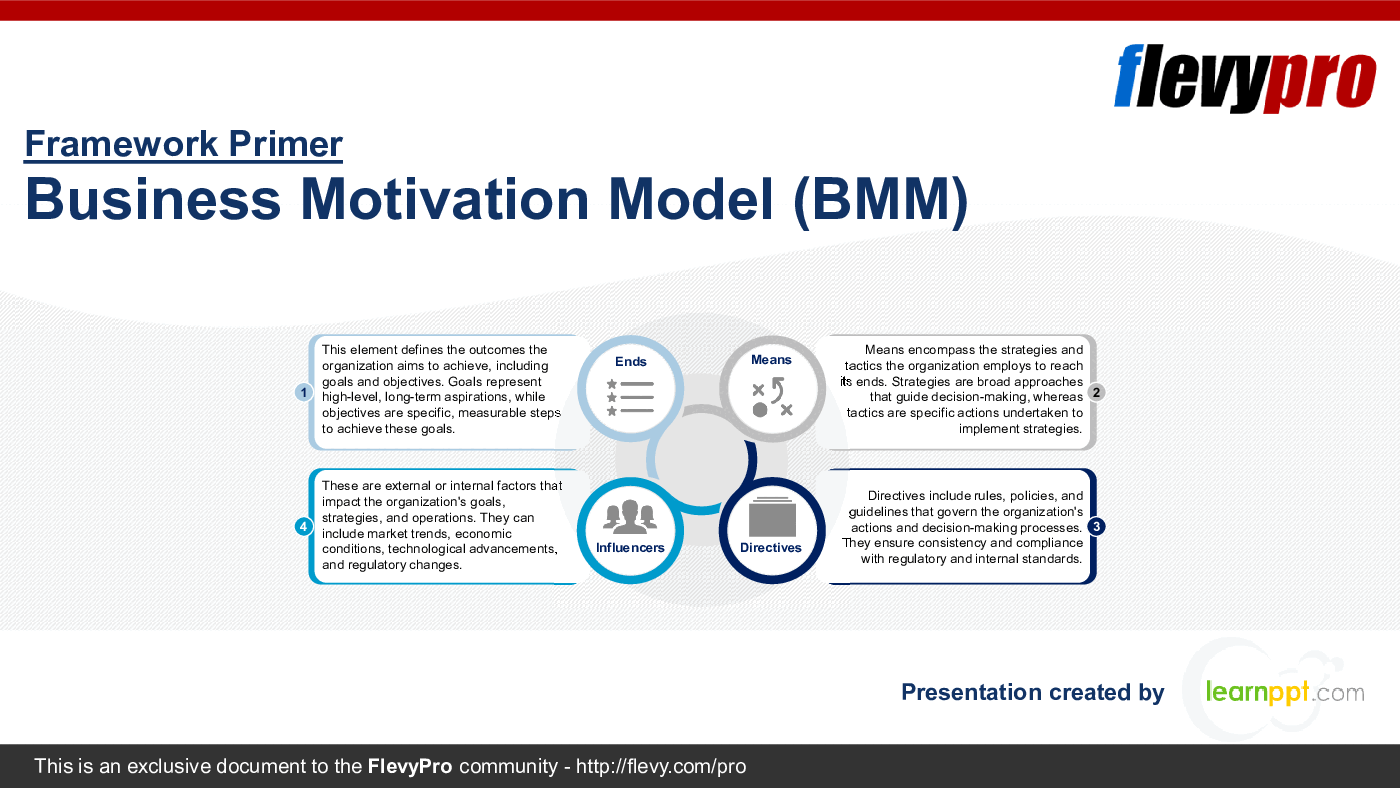
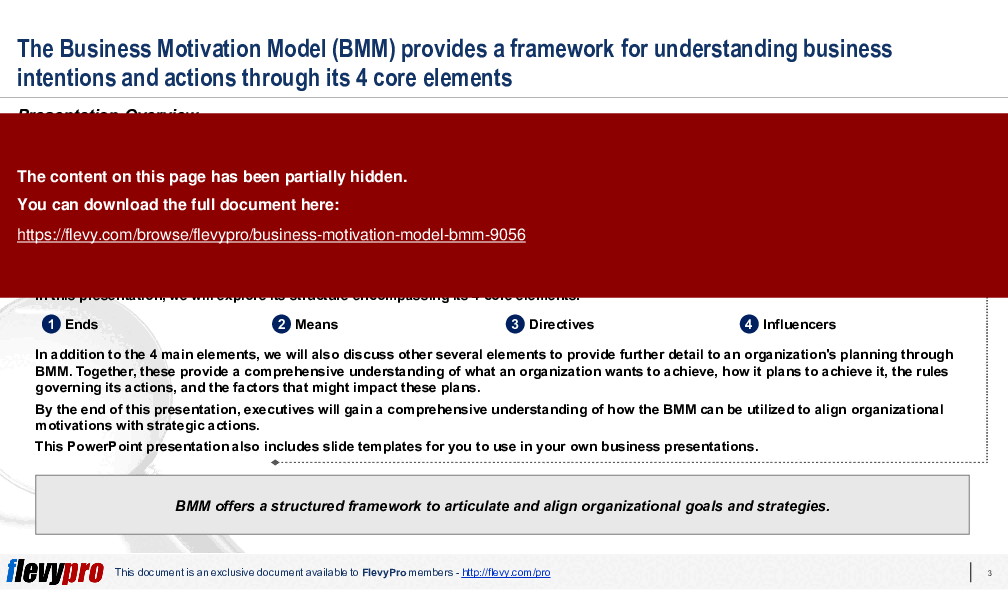
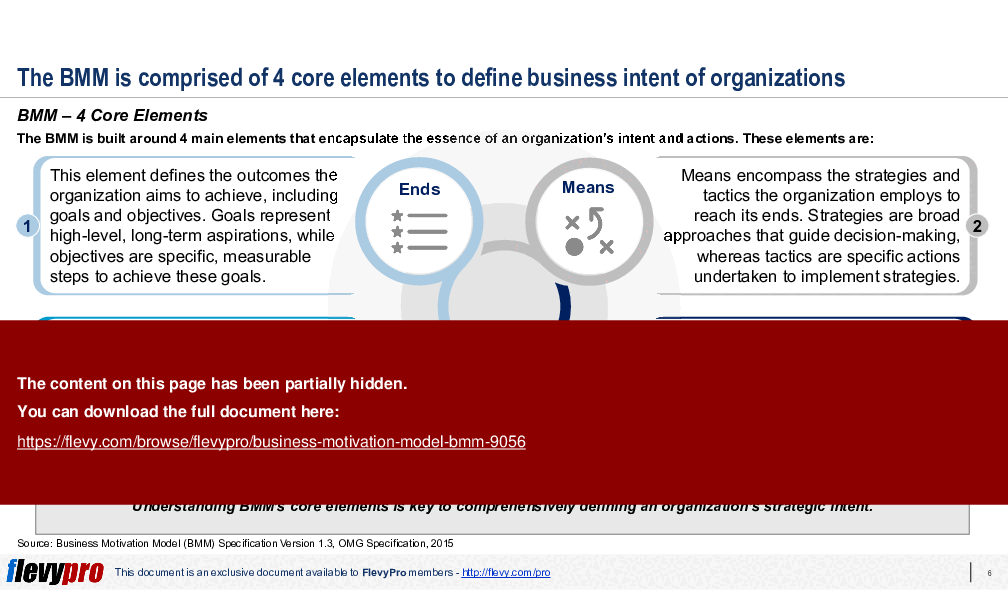
In this Business Motivation Model presentation, we will explore its structure encompassing its 4 core elements:
1. Ends – This element defines the outcomes the organization aims to achieve, including goals and objectives. Goals represent high-level, long-term aspirations, while objectives are specific, measurable steps to achieve these goals.
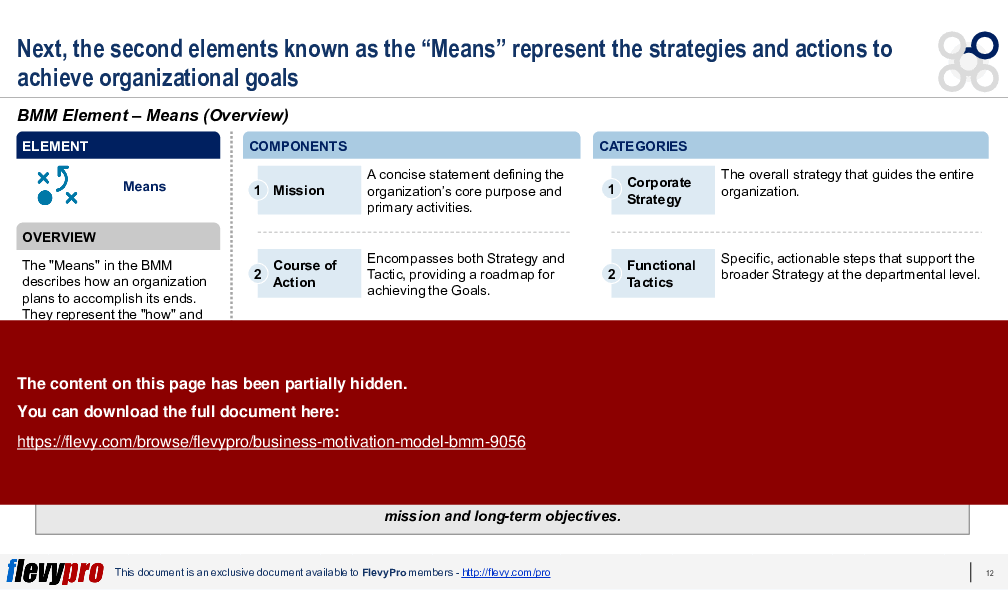
2. Means – Means encompass the strategies and tactics the organization employs to reach its ends. Strategies are broad approaches that guide decision-making, whereas tactics are specific actions undertaken to implement strategies.
3. Directives – Directives include rules, policies, and guidelines that govern the organization's actions and decision-making processes. They ensure consistency and compliance with regulatory and internal standards.
4. Influencers – These are external or internal factors that impact the organization's goals, strategies, and operations. They can include market trends, economic conditions, technological advancements, and regulatory changes.
In addition to the 4 main elements, we will also discuss other several elements to provide further detail to an organization's planning through BMM. Together, these provide a comprehensive understanding of what an organization wants to achieve, how it plans to achieve it, the rules governing its actions, and the factors that might impact these plans.
By the end of this PPT presentation, executives will gain a comprehensive understanding of how the BMM can be utilized to align organizational motivations with strategic actions.
This PowerPoint presentation on BMM also includes slide templates for you to use in your own business presentations.
The Business Motivation Model (BMM) consists of 4 core elements: "Ends," "Means," "Directives," and "Influencers." "Ends" focuses on organizational outcomes, distinguishing between high-level goals and specific measurable objectives essential for resource alignment. "Means" addresses strategies and tactics for achieving these ends, with strategies providing broad frameworks and tactics detailing specific actions. "Directives" include rules and policies that govern decision-making, ensuring compliance and minimizing risks. "Influencers" encompass external and internal factors affecting goals and strategies, such as market trends and regulatory changes. Recognizing these elements enables organizations to align strategic intent with operational execution for long-term success.
This PPT slide visualizes the "Means" element of the Business Motivation Model (BMM), highlighting the importance of a clear "Mission" as the foundation for organizational strategy. The "Course of Action" branches into key components: "Strategy," "Tactic," "Business Rule," and "Business Policy." "Strategy" outlines the high-level approach, while "Tactic" specifies methods for implementation, ensuring alignment with strategic goals. "Directive" serves as a guiding principle, promoting consistency across strategies and tactics. "Business Rule" and "Business Policy" establish operational frameworks for decision-making. Clearly defining these means enhances coordination and efficiency, aligning actions with strategic objectives and facilitating operational effectiveness.
The Business Motivation Model (BMM) framework includes 4 essential methodologies: Strategic Planning, Performance Management, Change Management, and Risk Management.
Strategic Planning defines the organization’s strategy and involves critical decision-making for resource allocation to achieve goals. Performance Management aligns resources and processes with objectives through setting performance standards and measuring outcomes. Change Management addresses the transition of individuals and teams to a desired future state, managing the complexities of change and engaging stakeholders. Risk Management identifies and prioritizes risks, focusing on minimizing adverse events through coordinated efforts.
These methodologies collectively provide a comprehensive toolkit for effective strategic implementation and adaptability in evolving business environments.
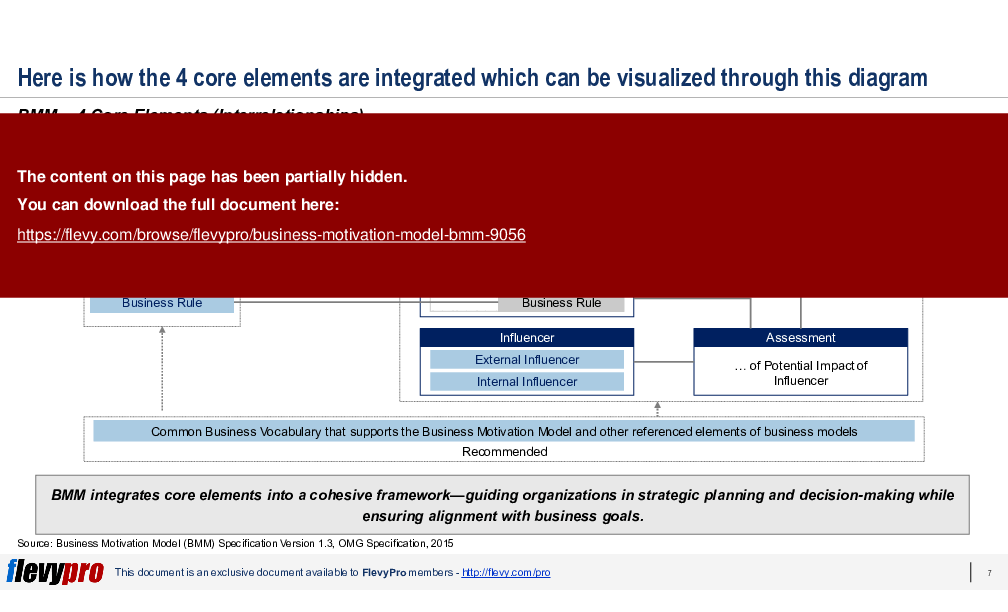
This PPT slide outlines the interrelationships among the 4 core elements of the Business Motivation Model (BMM), categorized into Means and End. The Means section includes Mission, Course of Action, Directive, Strategy, Tactic, Business Policy, and Business Rule, guiding operational frameworks and decision-making. The End section focuses on Vision, Desired Result, Goal, and Objective, illustrating how strategic intentions translate into outcomes. Additionally, the slide introduces External and Internal Influencers, which impact the effectiveness of strategies and policies. A Common Business Vocabulary supports the BMM, ensuring alignment in terminology. Integrating these elements enables organizations to align strategic planning with business goals and assess the influence of various factors on strategies and outcomes.
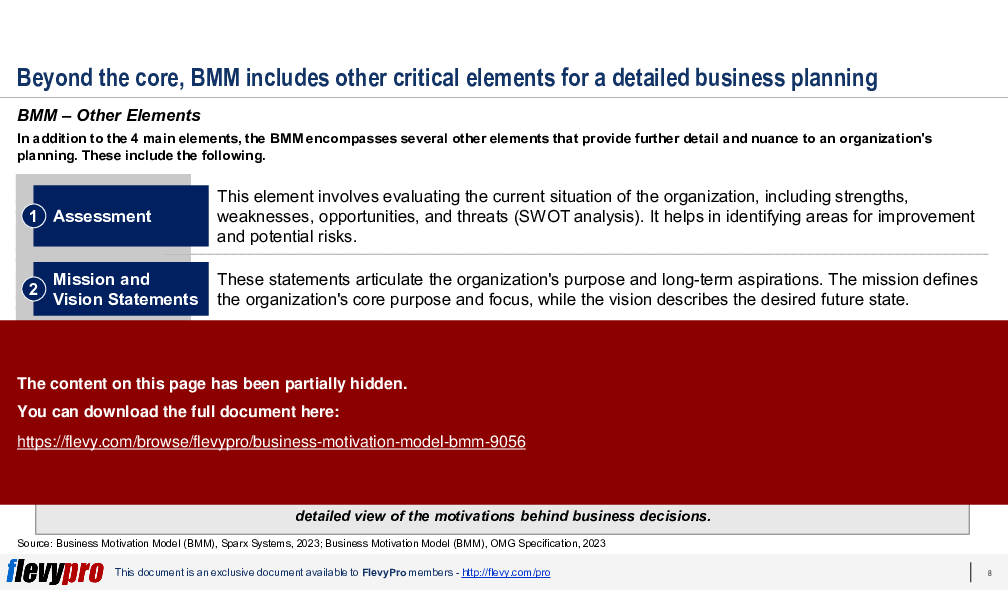
The Business Motivation Model (BMM) includes additional elements that enhance business planning. Assessment involves evaluating the organization's current situation through a SWOT analysis, identifying strengths, weaknesses, opportunities, and threats. Mission and Vision Statements articulate the organization's purpose and long-term aspirations, guiding strategic direction. Business Policies are specific guidelines governing operational procedures and decision-making, ensuring alignment with strategic goals. Rules establish constraints and conditions for organizational operations, derived from policies and foundational for decision-making. These elements deepen the understanding of the strategic framework, offering insights into the motivations behind business decisions.
This PPT slide presents a structured framework of influencers affecting an organization’s strategic direction and performance. The hierarchy begins with the "Organization Unit," a key influencer that sets the context for understanding various layers of influence. The next level, "Organization Category," classifies the influencing organization, essential for contextual analysis. The "Influencing Organization" serves as a source of influence, shaping decisions and strategies. Further, the "Influencer Category" narrows down types of influencers impacting the organization, defined by specific "Influencers" that shape outcomes. Systematically identifying these influencers enables organizations to anticipate challenges and opportunities, facilitating informed strategic planning and adaptability.
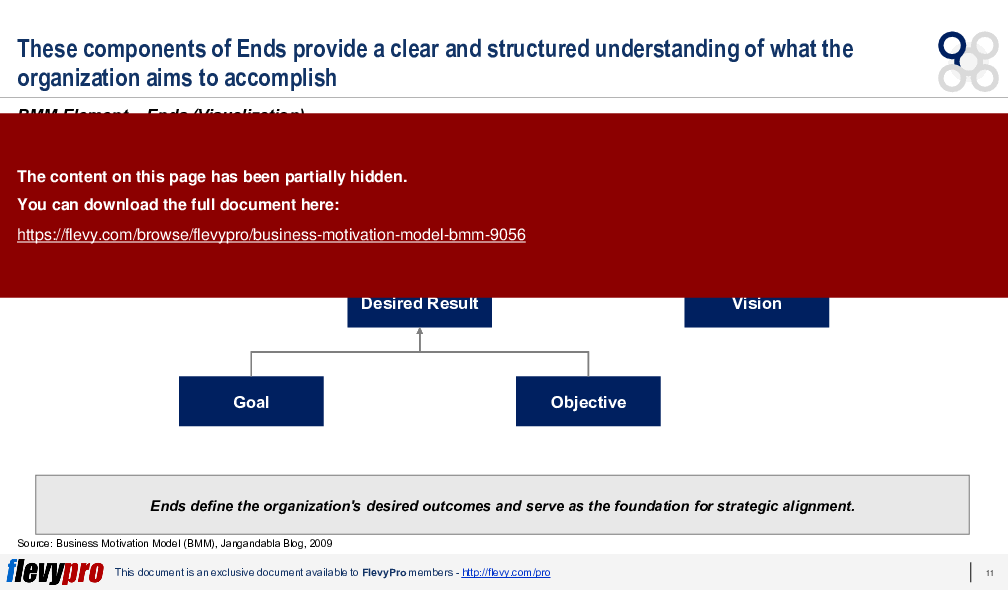
This PPT slide visualizes the "Ends" component of the Business Motivation Model (BMM), outlining essential elements that define organizational aims. At the top is the "End," the ultimate aim, followed by the "Desired Result," which specifies sought outcomes. Three critical components are delineated: "Goal," representing broader aspirations; "Objective," which breaks these into specific, measurable targets; and "Vision," encapsulating the organization's overarching purpose and long-term direction. This structured approach fosters alignment across organizational levels, linking strategic initiatives to desired outcomes. Clarity in defining success enhances decision-making and resource allocation, driving performance and organizational effectiveness in a dynamic business environment.
This PPT slide outlines the implementation of the Business Motivation Model (BMM) at TechStartup Inc., focusing on market expansion in the software development sector. The first section details the defined scope of the BMM, targeting a 20% increase in market share over 2 years and enhanced customer satisfaction through improved product quality and support services. The second section highlights stakeholder engagement, involving the CEO, CTO, product managers, and customer service leaders to integrate diverse perspectives into the BMM development process. This systematic approach aligns strategic goals with operational processes, emphasizing clear objectives and stakeholder involvement in driving organizational success.
Source: Best Practices in Strategy Development, Motivation, Goal Setting PowerPoint Slides: Business Motivation Model (BMM) PowerPoint (PPTX) Presentation Slide Deck, LearnPPT Consulting
This framework is developed by a team of former McKinsey and Big 4 consultants. The presentation follows the headline-body-bumper slide format used by global consulting firms.
For $10.00 more, you can download this document plus 2 more FlevyPro documents. That's just $13 each.
ABOUT FLEVYPRO
This document is part of the FlevyPro Library, a curated knowledge base of documents for our FlevyPro subscribers.

FlevyPro is a subscription service for on-demand business frameworks and analysis tools. FlevyPro subscribers receive access to an exclusive library of curated business documents—business framework primers, presentation templates, Lean Six Sigma tools, and more—among other exclusive benefits.
The average daily rate of a McKinsey consultant is $6,625 (not including expenses). The average price of a Flevy document is $65.
Trusted by over 10,000+ Client Organizations
Since 2012, we have provided business templates to over 10,000 businesses and organizations of all sizes, from startups and small businesses to the Fortune 100, in over 130 countries.
"As a small business owner, the resource material available from FlevyPro has proven to be invaluable. The ability to search for material on demand based our project events and client requirements was great for me and proved very beneficial to my clients. Importantly, being able to easily edit and tailor
the material for specific purposes helped us to make presentations, knowledge sharing, and toolkit development, which formed part of the overall program collateral. While FlevyPro contains resource material that any consultancy, project or delivery firm must have, it is an essential part of a small firm or independent consultant's toolbox.
"
– Michael Duff, Managing Director at Change Strategy (UK)
"I like your product. I'm frequently designing PowerPoint presentations for my company and your product has given me so many great ideas on the use of charts, layouts, tools, and frameworks. I really think the templates are a valuable asset to the job."
– Roberto Fuentes Martinez, Senior Executive Director at Technology Transformation Advisory
"As an Independent Management Consultant, I find Flevy to add great value as a source of best practices, templates and information on new trends. Flevy has matured and the quality and quantity of the library is excellent. Lastly the price charged is reasonable, creating a win-win value for
the customer, Flevy and the various authors. This is truly a service that benefits the consulting industry and associated clients. Thanks for providing this service.
"
– Jim Schoen, Principal at FRC Group
"FlevyPro provides business frameworks from many of the global giants in management consulting that allow you to provide best in class solutions for your clients."
– David Harris, Managing Director at Futures Strategy
"I am extremely grateful for the proactiveness and eagerness to help and I would gladly recommend the Flevy team if you are looking for data and toolkits to help you work through business solutions."
– Trevor Booth, Partner, Fast Forward Consulting
"[Flevy] produces some great work that has been/continues to be of immense help not only to myself, but as I seek to provide professional services to my clients, it gives me a large "tool box" of resources that are critical to provide them with the quality of service and outcomes they are expecting."
– Royston Knowles, Executive with 50+ Years of Board Level Experience
"Flevy.com has proven to be an invaluable resource library to our Independent Management Consultancy, supporting and enabling us to better serve our enterprise clients.
The value derived from our [FlevyPro] subscription in terms of the business it has helped to gain far exceeds the investment made, making a subscription a no-brainer for any growing consultancy – or in-house strategy team."
– Dean Carlton, Chief Transformation Officer, Global Village Transformations Pty Ltd.
"As a consultant requiring up to date and professional material that will be of value and use to my clients, I find Flevy a very reliable resource.
The variety and quality of material available through Flevy offers a very useful and commanding source for information. Using Flevy saves me time, enhances my expertise and ends up being a good decision."
Download our free compilation of 50+ Strategy & Transformation slides and templates. Frameworks include McKinsey 7-S, Balanced Scorecard, Disruptive Innovation, BCG Curve, and many more.