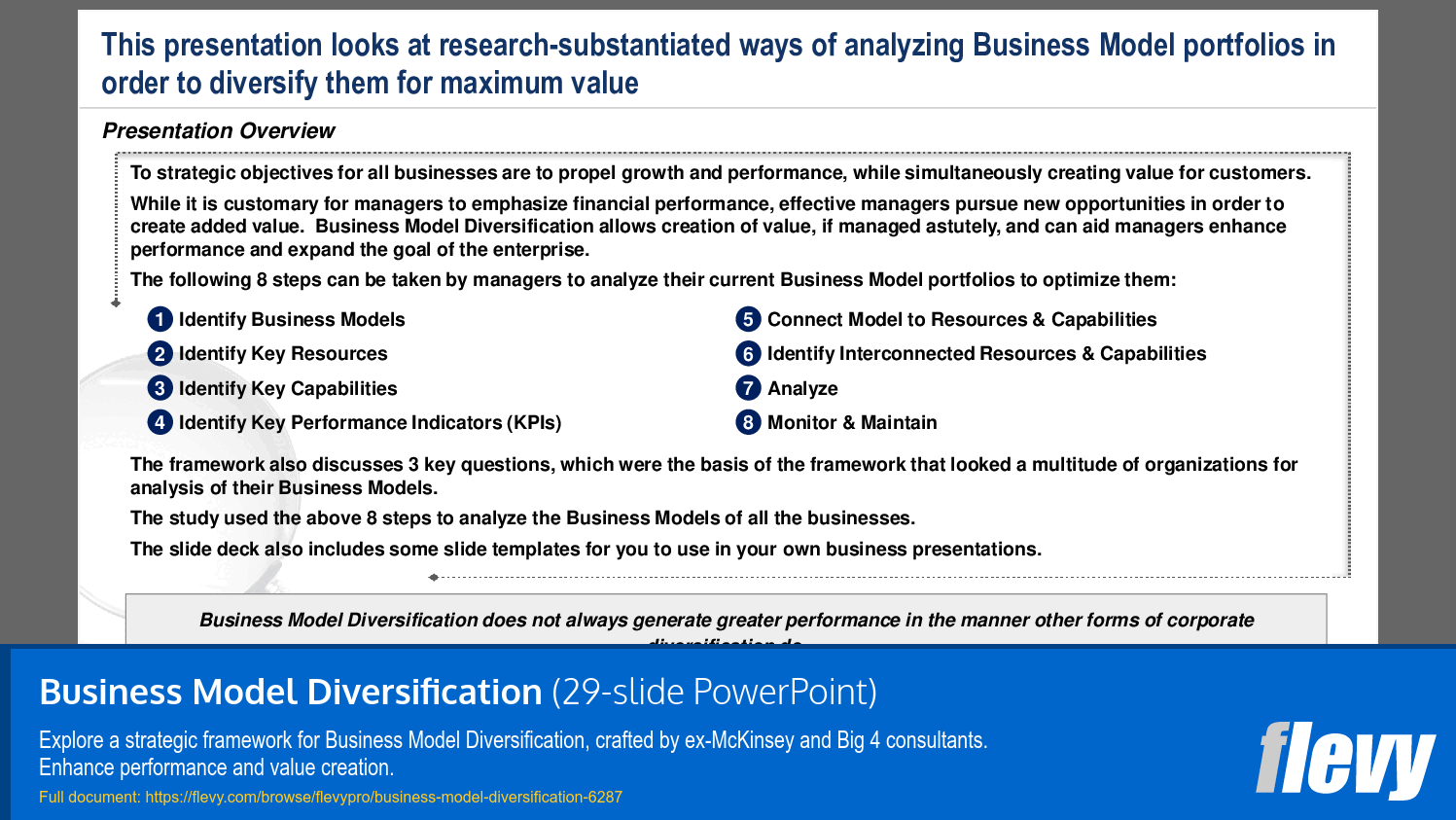

To strategic objectives for all businesses are to propel growth and performance, while simultaneously creating value for customers.
While it is customary for managers to emphasize financial performance, effective managers pursue new opportunities in order to create added value. Business Model Diversification allows creation of value, if managed astutely, and can aid managers enhance performance and expand the goal of the enterprise.
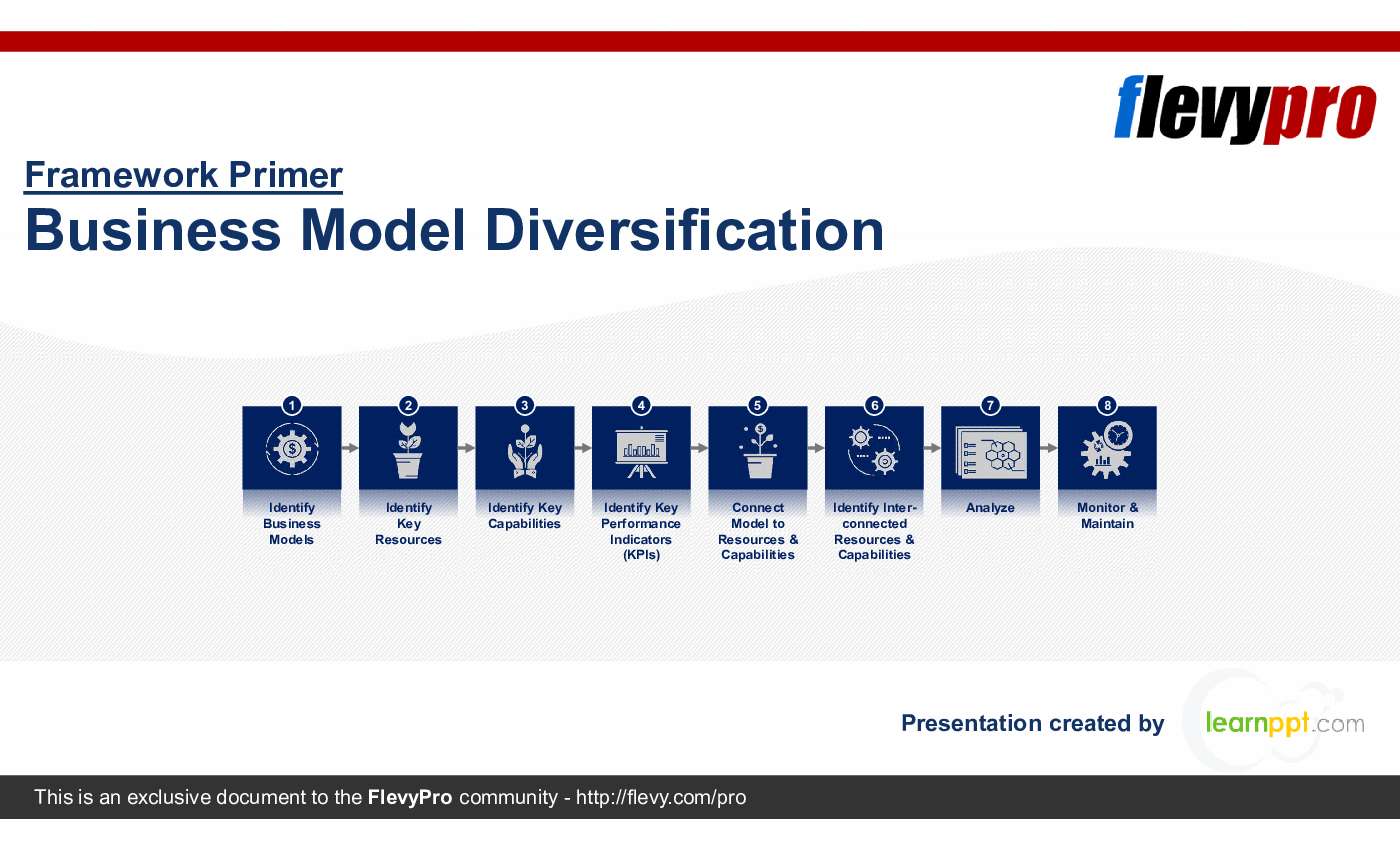
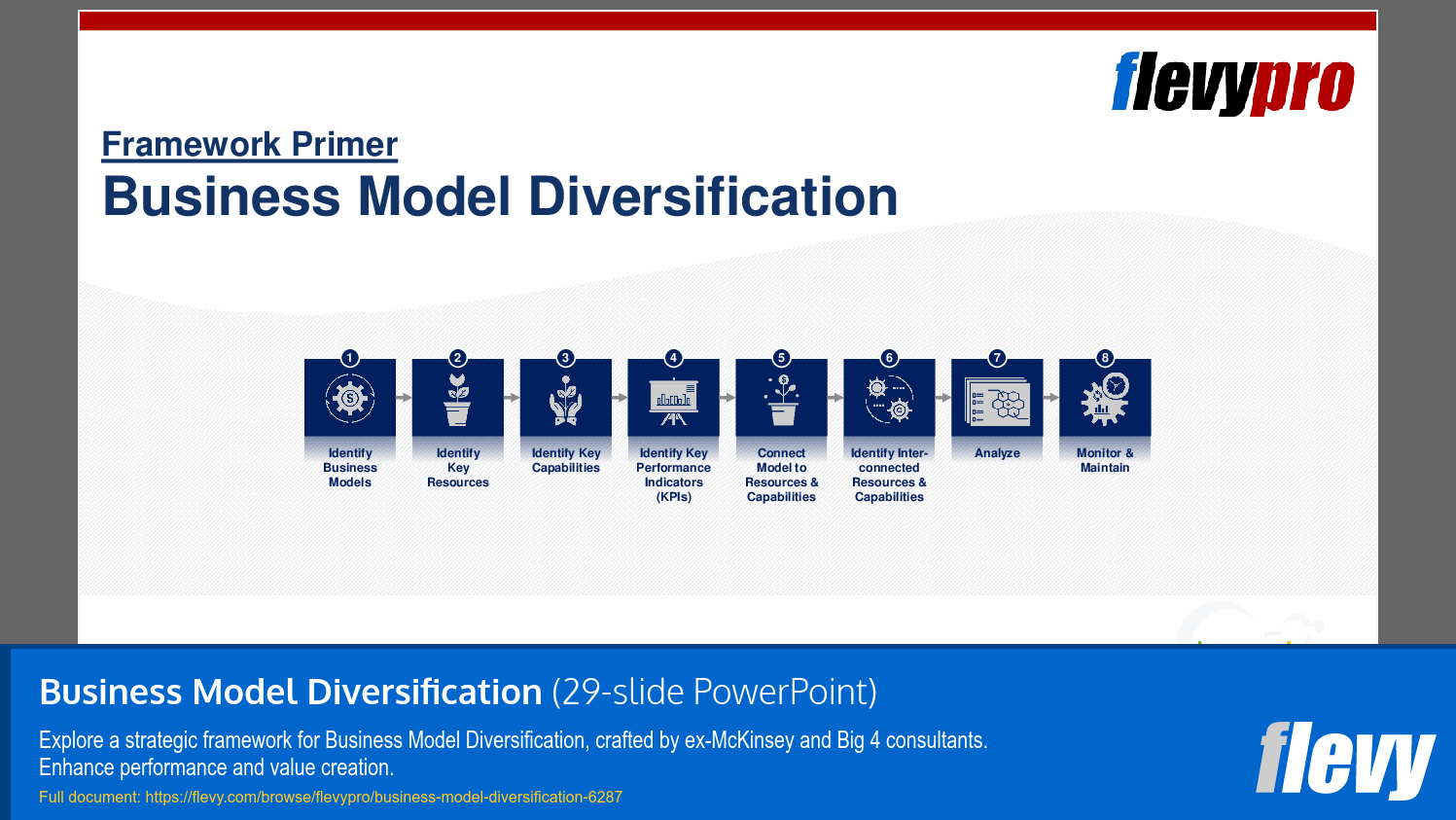
The following 8 steps can be taken by managers to analyze their current Business Model portfolios to optimize them:
1. Identify Business Models
2. Identify Key Resources
3. Identify Key Capabilities
4. Identify Key Performance Indicators (KPIs)
5. Connect Model to Resources & Capabilities
6. Identify Interconnected Resources & Capabilities
7. Analyze
8. Monitor & Maintain
The framework also discusses 3 key questions, which were the basis of the framework that looked a multitude of organizations for analysis of their Business Models.
The study used the above 8 steps to analyze the Business Models of all the businesses.
The slide deck also includes some slide templates for you to use in your own business presentations.
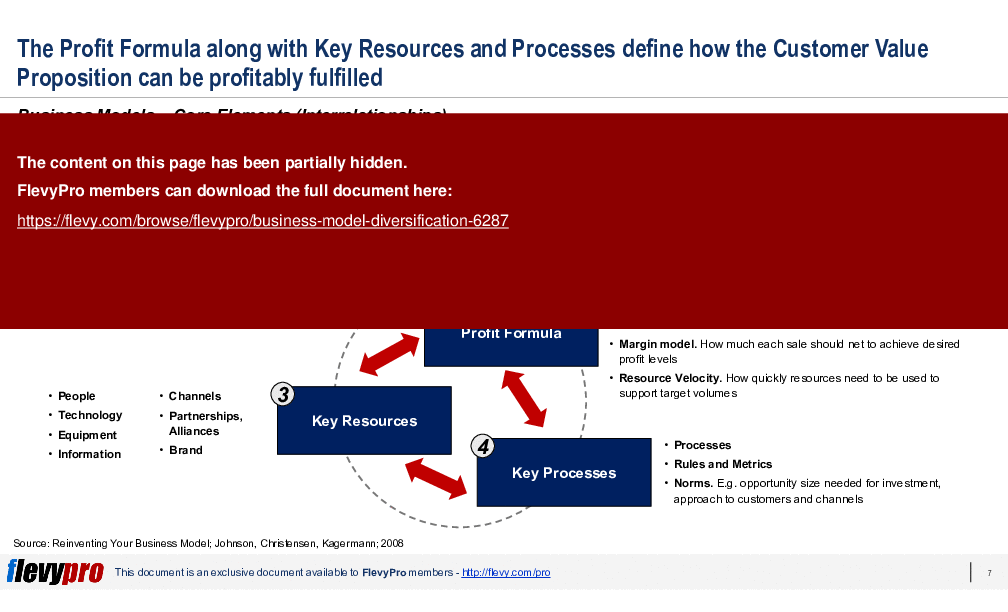
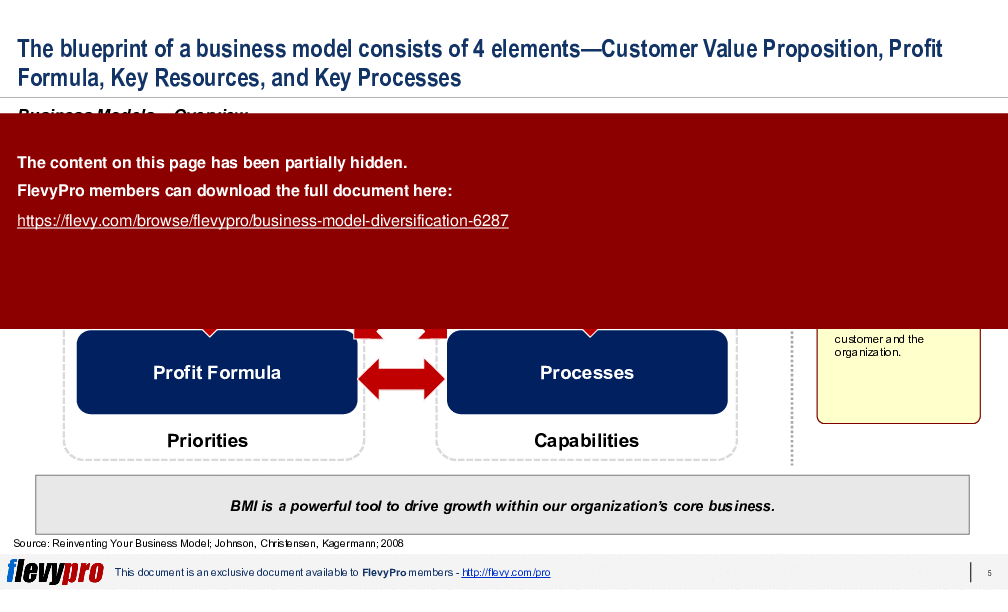
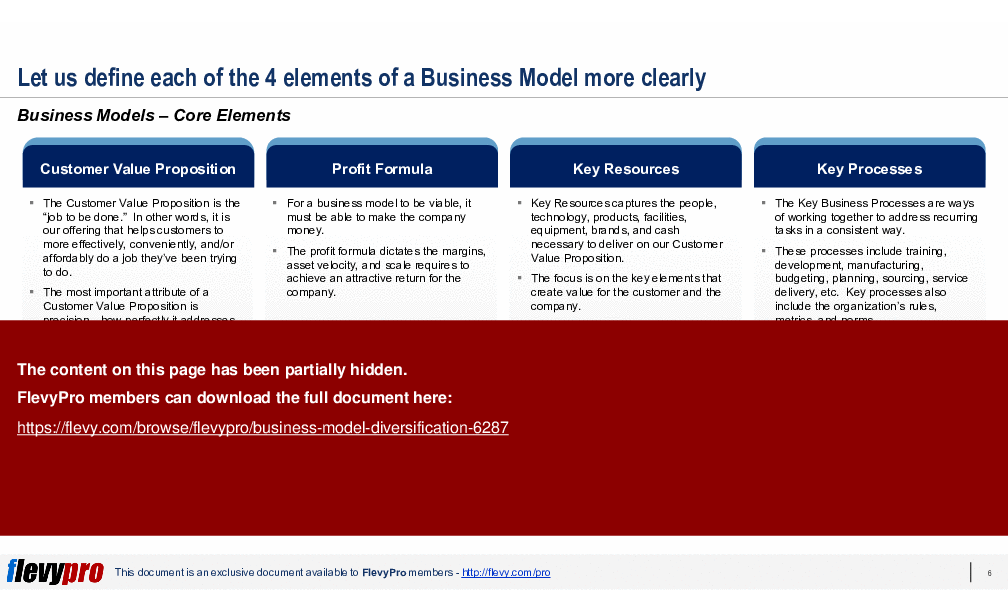
This presentation offers a blueprint for understanding the core elements of a business model: Customer Value Proposition, Profit Formula, Key Resources, and Key Processes. By breaking down these components, managers can pinpoint how to deliver value effectively and ensure profitability. The visual tools included in the deck help map out significant connections among business models, making it easier to identify areas for improvement and growth.
The PPT also delves into the strategic considerations for assessing and optimizing new business models for inclusion in a portfolio. Managers are guided through a structured approach to evaluate potential synergies and resource sharing opportunities. This framework is essential for executives looking to refine their business strategies and achieve sustainable growth.
Got a question about this document? Email us at flevypro@flevy.com.
Executive Summary
The Business Model Diversification presentation provides a strategic framework designed to help organizations analyze and optimize their business model portfolios for enhanced performance and value creation. Developed by experienced consultants from McKinsey and Big 4 firms, this presentation outlines eight actionable steps for effective business model diversification. It emphasizes the importance of aligning business models with organizational resources and capabilities, ensuring that managers can identify growth opportunities and optimize their business strategies effectively.
Who This Is For and When to Use
• Corporate executives seeking to enhance organizational performance through strategic diversification
• Business development leaders focused on identifying new growth opportunities
• Strategy consultants advising clients on optimizing business model portfolios
• Innovation managers looking to leverage multiple business models for competitive advantage
Best-fit moments to use this deck:
• During strategic planning sessions to assess current business model effectiveness
• When exploring opportunities for diversification in response to market changes
• In workshops aimed at aligning resources and capabilities with business model strategies
Learning Objectives
• Define the components of a successful business model and their interrelationships
• Identify key resources and capabilities necessary for effective business model diversification
• Analyze performance indicators to measure the success of diversified business models
• Establish a framework for ongoing monitoring and maintenance of business model portfolios
• Connect business models to organizational resources for optimal value creation
• Develop actionable strategies for leveraging multiple business models to drive growth
Table of Contents
• Overview (page 3)
• Business Models (page 5)
• Business Model Diversification (page 9)
• Business Model Portfolio Analysis (page 15)
• Templates (page 20)
Primary Topics Covered
• Business Model Framework - A detailed overview of the 4 core elements of a business model: Customer Value Proposition, Profit Formula, Key Resources, and Key Processes.
• Business Model Diversification - Strategies for employing multiple business models to enhance value creation and revenue generation.
• Key Questions for Diversification - Framework for assessing considerations, value optimization, and continuous improvement of business model portfolios.
• Eight Steps for Portfolio Analysis - A structured approach to analyze and visualize business model interrelationships and their impact on performance.
• Performance Indicators - Identification of key performance indicators (KPIs) to evaluate the effectiveness of diversified business models.
• Resource and Capability Alignment - Techniques for connecting business models to organizational resources and capabilities for maximum impact.
Deliverables, Templates, and Tools
• Business Model Portfolio Analysis template for visualizing and assessing business models
• Framework for identifying key resources and capabilities across business models
• Performance measurement tools to track KPIs relevant to business model success
• Templates for documenting customer value propositions and profit formulas
• Guidelines for ongoing monitoring and maintenance of diversified business models
• Example frameworks for connecting models to resources and capabilities
Slide Highlights
• Overview of the eight-step process for business model diversification
• Visual mapping tool for analyzing business model interconnections
• Detailed breakdown of the 4 core elements of a business model
• Case studies illustrating successful business model diversification strategies
• Key questions to guide strategic decision-making in business model optimization
Potential Workshop Agenda
Business Model Analysis Session (90 minutes)
• Review current business models and identify areas for diversification
• Discuss key resources and capabilities needed for effective implementation
• Develop a preliminary action plan for optimizing business model portfolios
Performance Metrics Workshop (60 minutes)
• Establish key performance indicators (KPIs) for measuring success
• Identify mechanisms for tracking and reporting on performance metrics
• Discuss strategies for continuous improvement in business model effectiveness
Customization Guidance
• Tailor the framework to reflect specific organizational resources and capabilities
• Adjust performance metrics to align with industry standards and organizational goals
• Incorporate relevant case studies or examples from the organization’s experience
Secondary Topics Covered
• Competitive advantage through business model innovation
• Risk management strategies in business model diversification
• The role of technology in enhancing business model effectiveness
• Best practices for aligning business models with customer needs
Topic FAQ
Document FAQ
These are questions addressed within this presentation.
What is the primary goal of business model diversification?
Business model diversification aims to enhance organizational performance and create additional value through the strategic use of multiple business models.
How can organizations assess their current business model portfolio?
Organizations can assess their portfolio by analyzing the interconnections between business models, resources, and performance metrics.
What are the key elements of a successful business model?
A successful business model comprises a clear customer value proposition, a viable profit formula, essential resources, and effective processes.
How does the framework support ongoing business model optimization?
The framework provides a structured approach for continuous monitoring and analysis, allowing organizations to adapt and refine their business models over time.
What role do KPIs play in business model diversification?
KPIs are critical for measuring the effectiveness of diversified business models and ensuring alignment with strategic objectives.
Can the framework be applied to different industries?
Yes, the framework is designed to be adaptable and can be applied across various industries to enhance business model effectiveness.
How often should organizations review their business model portfolios?
Organizations should regularly review their portfolios, ideally on a quarterly basis, to ensure alignment with market changes and strategic goals.
What challenges might arise during business model diversification?
Challenges may include resource allocation, alignment of capabilities, and ensuring that new models complement existing operations.
Glossary
• Business Model - A system of organizational pursuits to generate and capture value.
• Customer Value Proposition - The offering that addresses customer needs effectively.
• Profit Formula - The financial structure that dictates how a business generates profit.
• Key Resources - Essential assets required to deliver on the customer value proposition.
• Key Processes - The operational methods used to execute business activities consistently.
• Performance Indicators - Metrics used to assess the success of business models.
• Diversification - The strategy of employing multiple business models to enhance value creation.
• Economies of Scope - Cost advantages that arise from utilizing shared resources across multiple business models.
• Synergies - The potential for combined business models to create greater value than operating independently.
• Continuous Improvement - Ongoing efforts to enhance products, services, or processes.
• Resource Allocation - The distribution of resources among various business models.
• Market Adaptation - The process of adjusting business strategies in response to market changes.
• Strategic Planning - The process of defining an organization's direction and making decisions on allocating resources.
• Innovation Management - The discipline of managing processes in innovation.
• Value Creation - The process of generating worth through business activities.
• Business Model Portfolio - A collection of different business models operated by an organization.
• Risk Reduction - Strategies employed to minimize potential losses in business operations.
• Competitive Advantage - The favorable position an organization holds over its competitors.
• Business Model Innovation (BMI) - The process of developing new business models to create value.
• Monitoring and Maintenance - Ongoing evaluation and adjustment of business models to ensure effectiveness.
Source: Best Practices in Business Model Innovation, Business Model PowerPoint Slides: Business Model Diversification PowerPoint (PPTX) Presentation Slide Deck, LearnPPT Consulting
Did you need more documents?
Consider a FlevyPro subscription from $39/month. View plans here.
For $10.00 more, you can download this document plus 2 more FlevyPro documents. That's just $13 each.
|
Download our FREE Strategy & Transformation Framework Templates
Download our free compilation of 50+ Strategy & Transformation slides and templates. Frameworks include McKinsey 7-S, Balanced Scorecard, Disruptive Innovation, BCG Curve, and many more. |