
 Click main image to view in full screen. Unlock all 17 preview images:
Business Continuity Planning - Guide, Process and Tools – PowerPoint PPTX Template
PowerPoint (PPTX) 61 Slides


BENEFITS OF THIS DOWNLOADABLE POWERPOINT DOCUMENT
- Offers guidance for business continuity planning (BCP)
- Includes tools for conducting and presenting the BCP process
COVID-19 PPT TEMPLATE DESCRIPTION
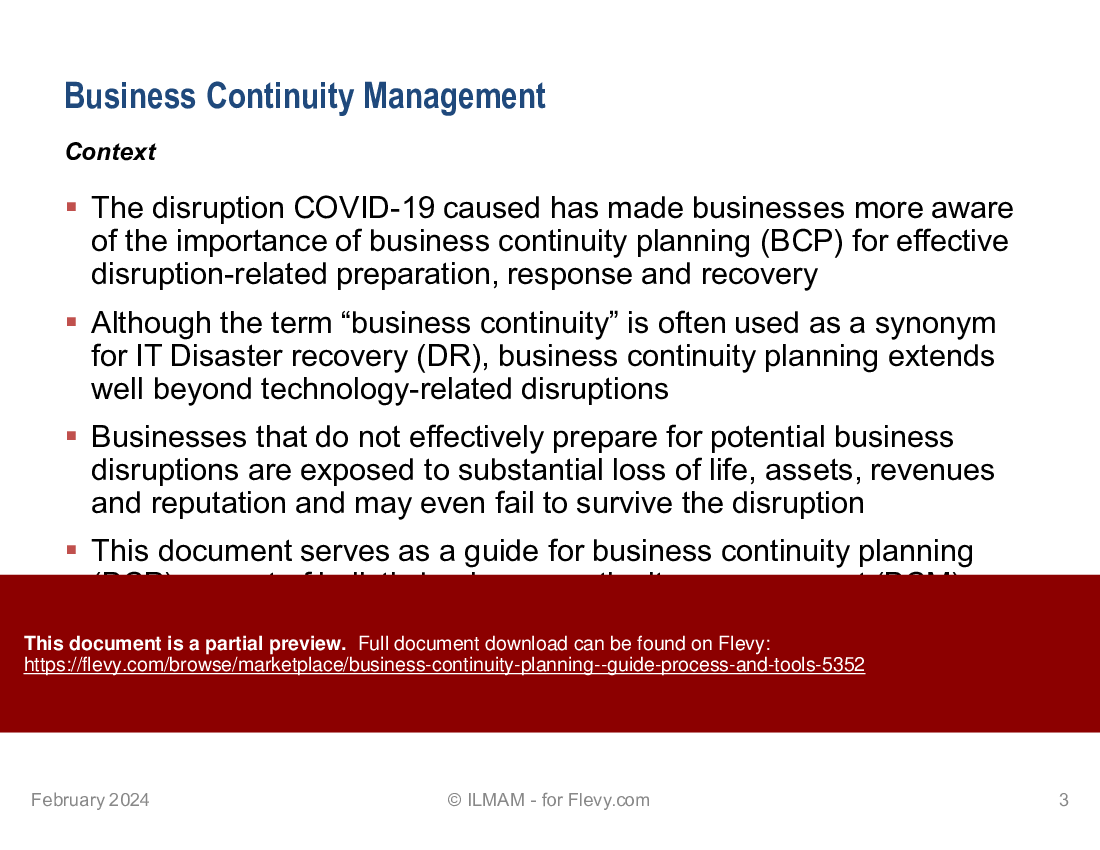
The disruption COVID-19 caused has made businesses more aware of the importance of business continuity planning (BCP) for effective disruption-related preparation, response and recovery.
Although the term "business continuity" is often used as a synonym for IT Disaster recovery (DR), business continuity planning extends well beyond technology-related disruptions.
Businesses that do not effectively prepare for potential business disruptions are exposed to substantial loss of life, assets, revenues and reputation and may even fail to survive the disruption.
This document serves as a guide for business continuity planning (BCP) as part of holistic business continuity management (BCM) program.
Contents
Overview
• Context
• Key definitions
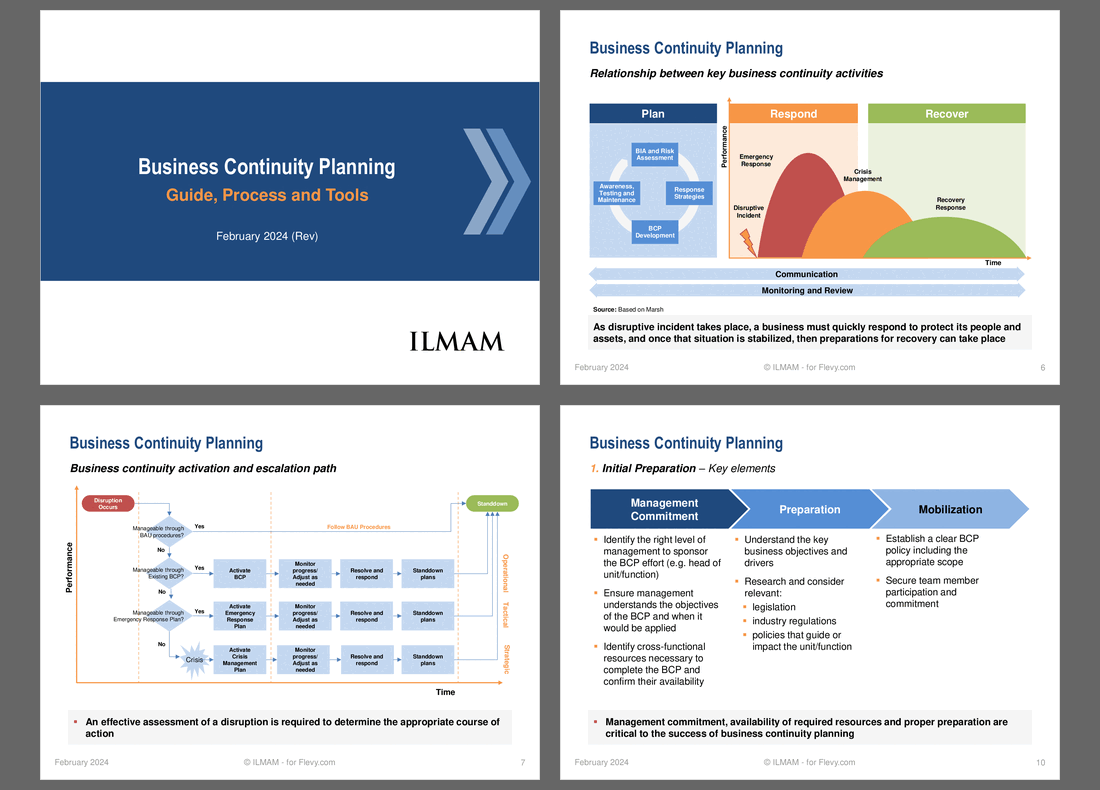
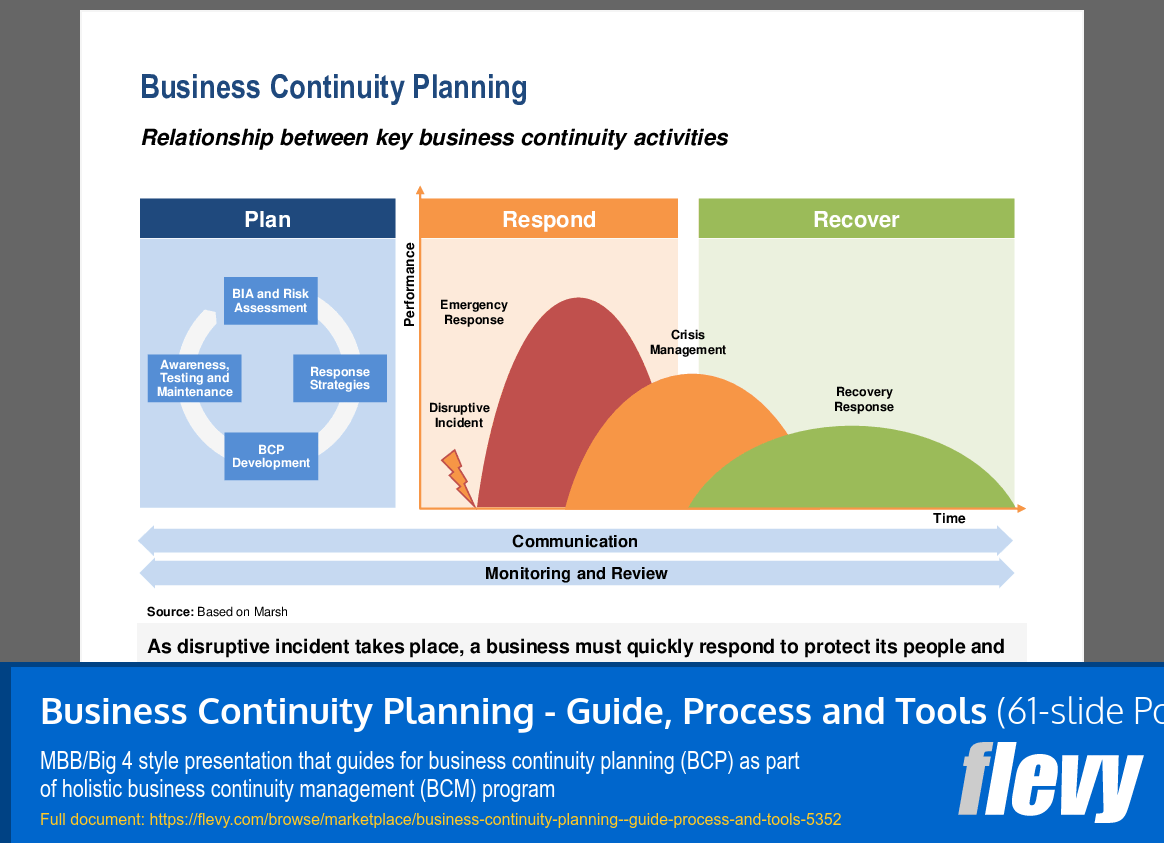
• Relationship between key business continuity activities
• Business continuity activation and escalation path
• Overall business continuity planning process
1. Initial Preparation
• Key elements
• Business continuity policy inputs and output
2. Business Impact Analysis
• Key steps
• Inputs and outputs
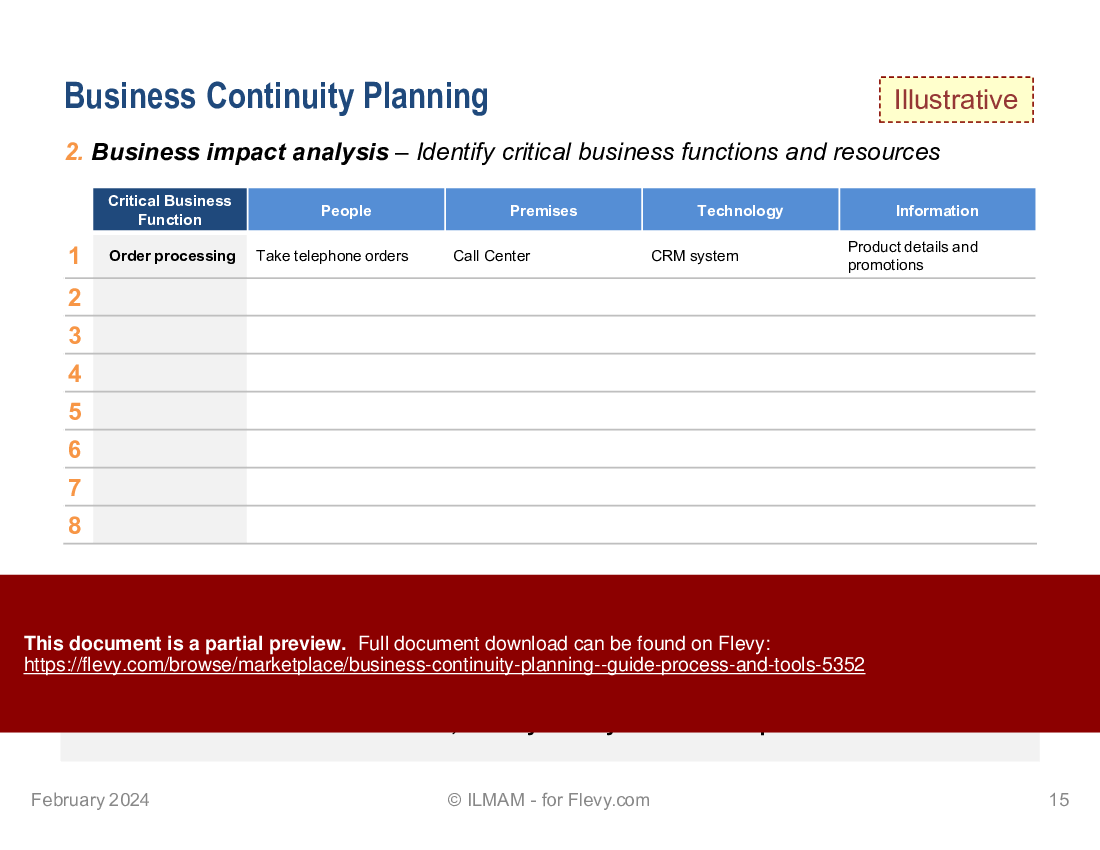
• Identify critical business functions and resources
• Identify critical business functions and dependencies
• Impact of and recovery from a sudden disruption
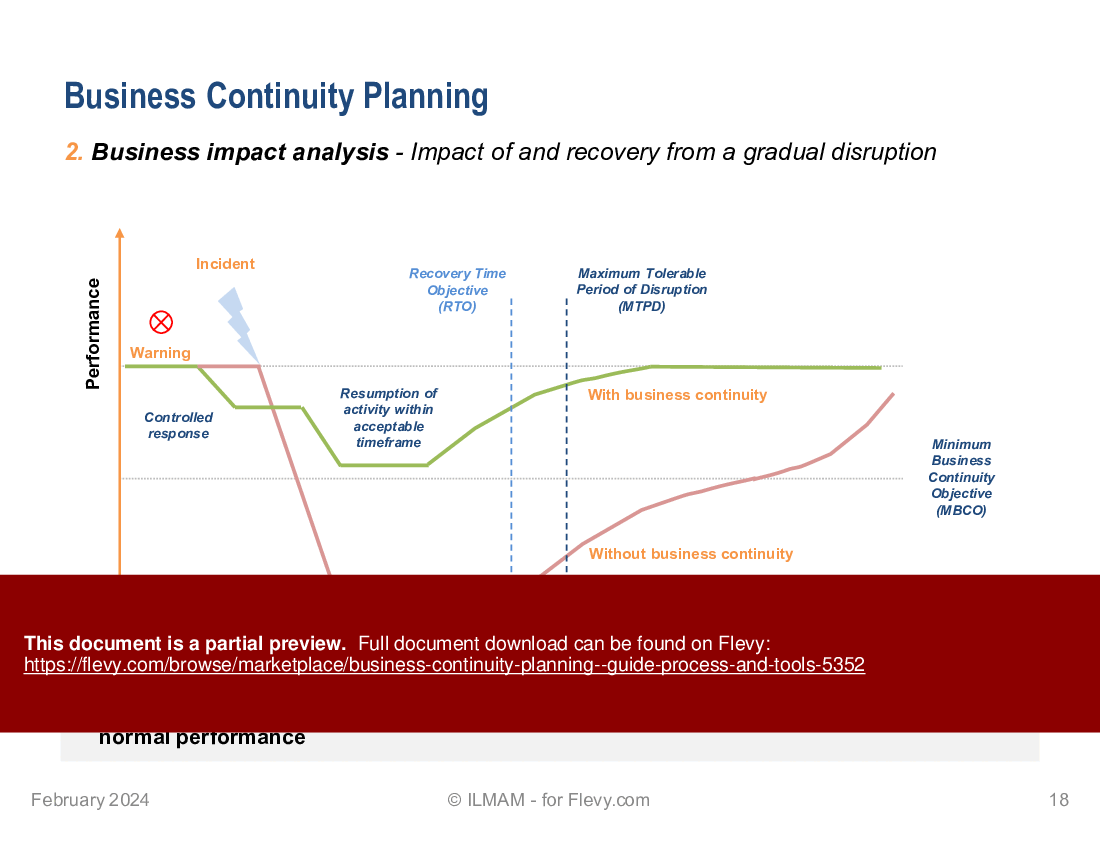
• Impact of and recovery from a gradual disruption
• Identify impact of disruption on critical business functions over time
• Identify impact of disruption on critical business functions at RTO
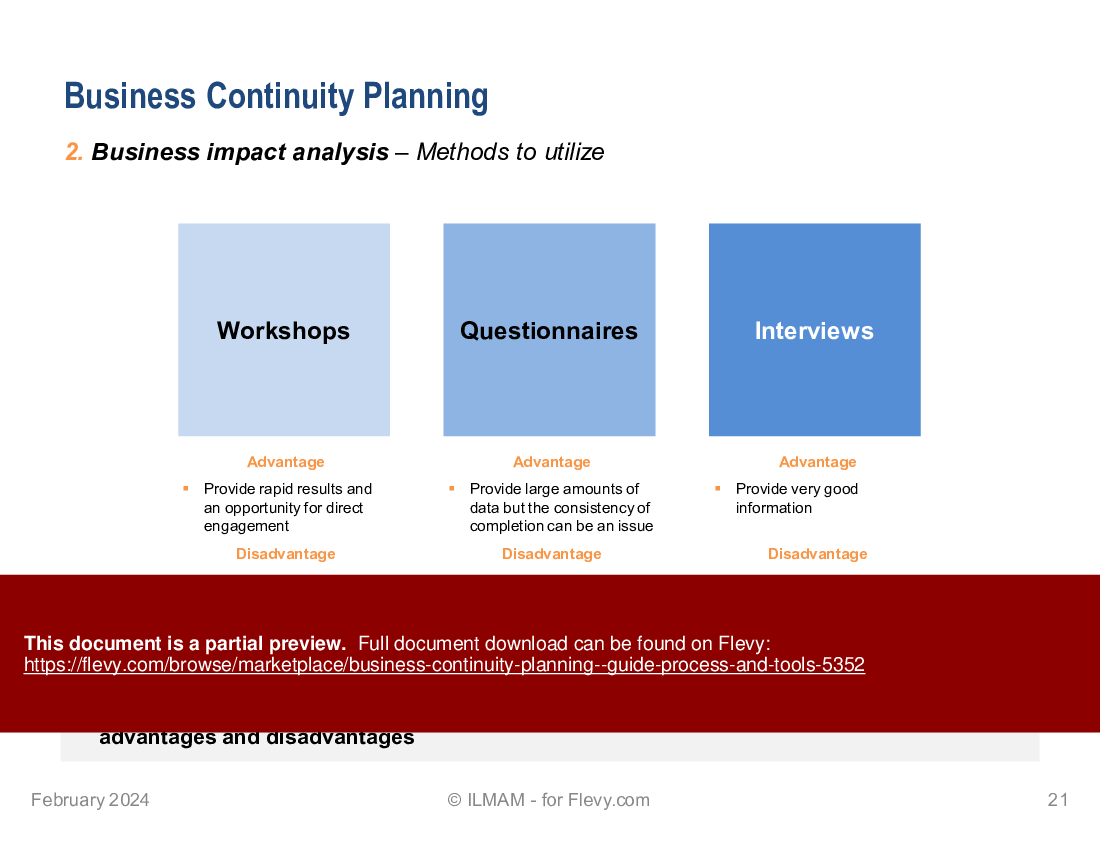
• Methods to utilize
3. Continuity Risk Assessment (CRA)
• High level risk management (RA) process
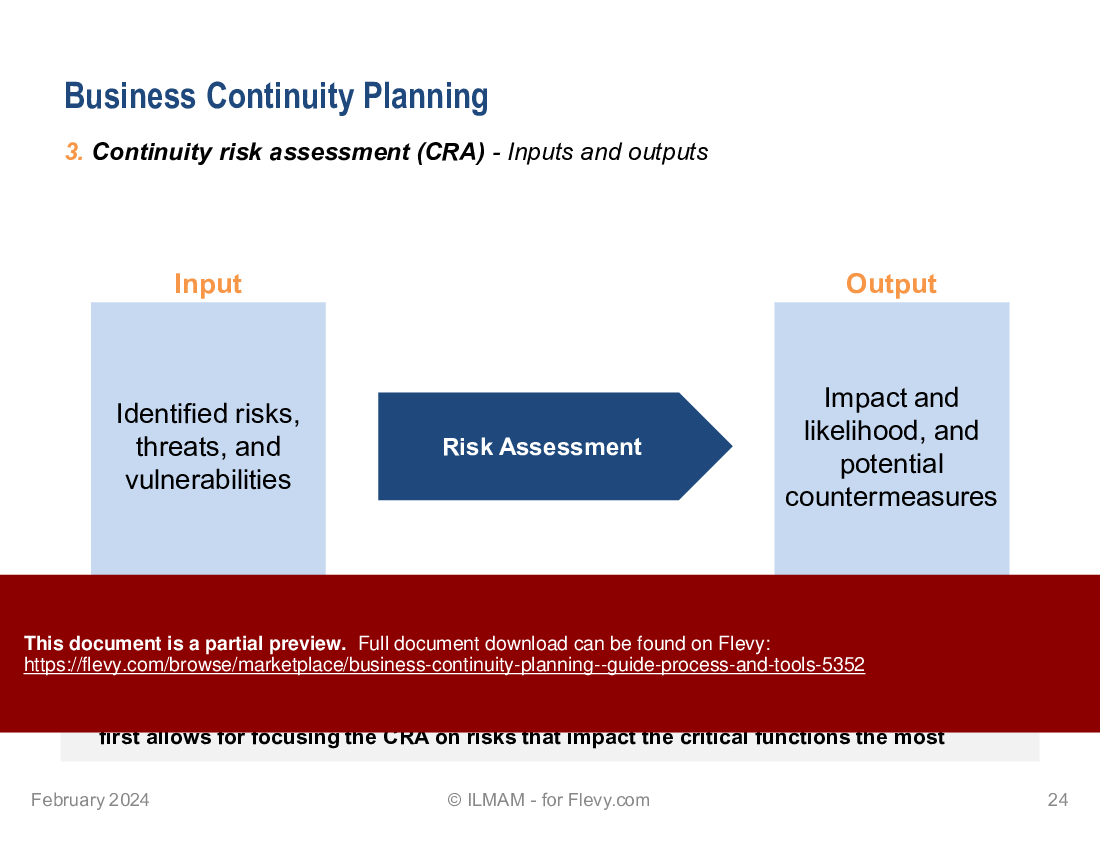
• Inputs and outputs
• Examples of hazards/threats
• High-level process
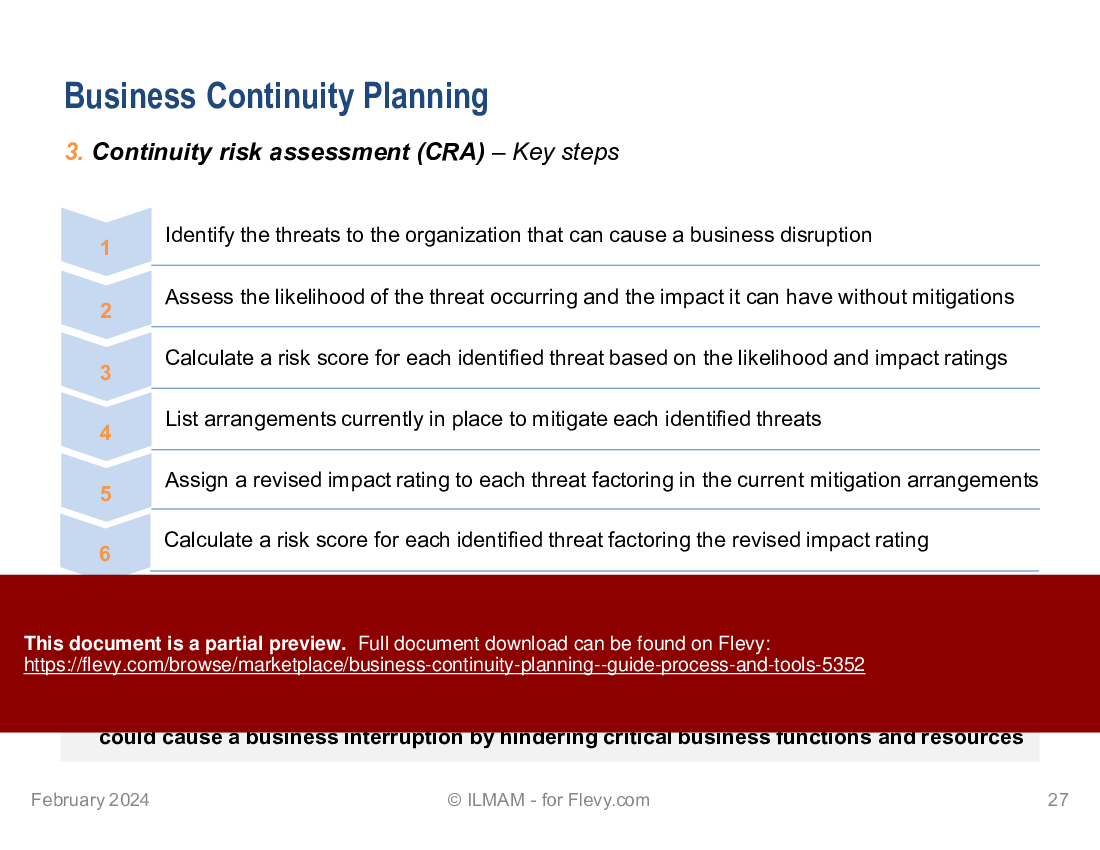
• Key steps
• Threats before existing mitigation
• Threats after existing mitigation
• Risk likelihood versus impact matrix
• Single dimension likelihood criteria example-
• Single dimension impact criteria example
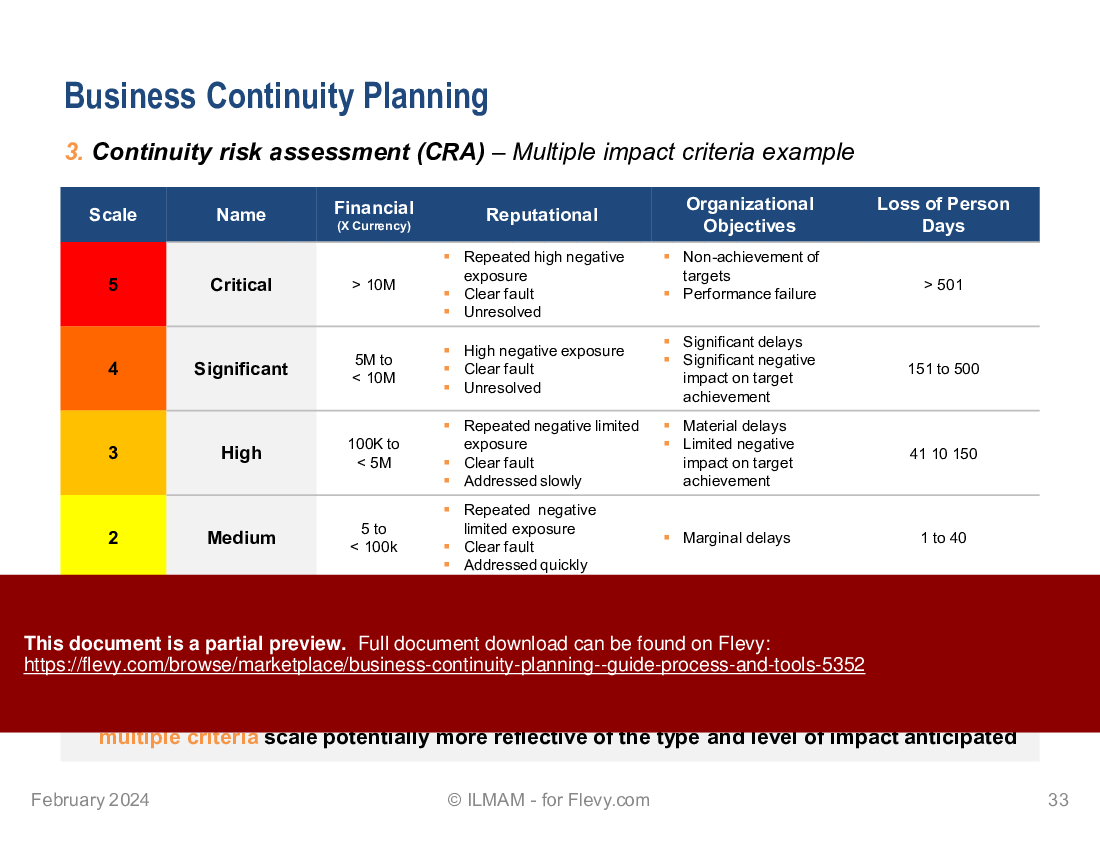
• Multiple impact criteria example
• Risk rating matrix
• Organizational risk tolerance
4. Business Continuity Strategies
• Risk treatment options
• Common strategy types
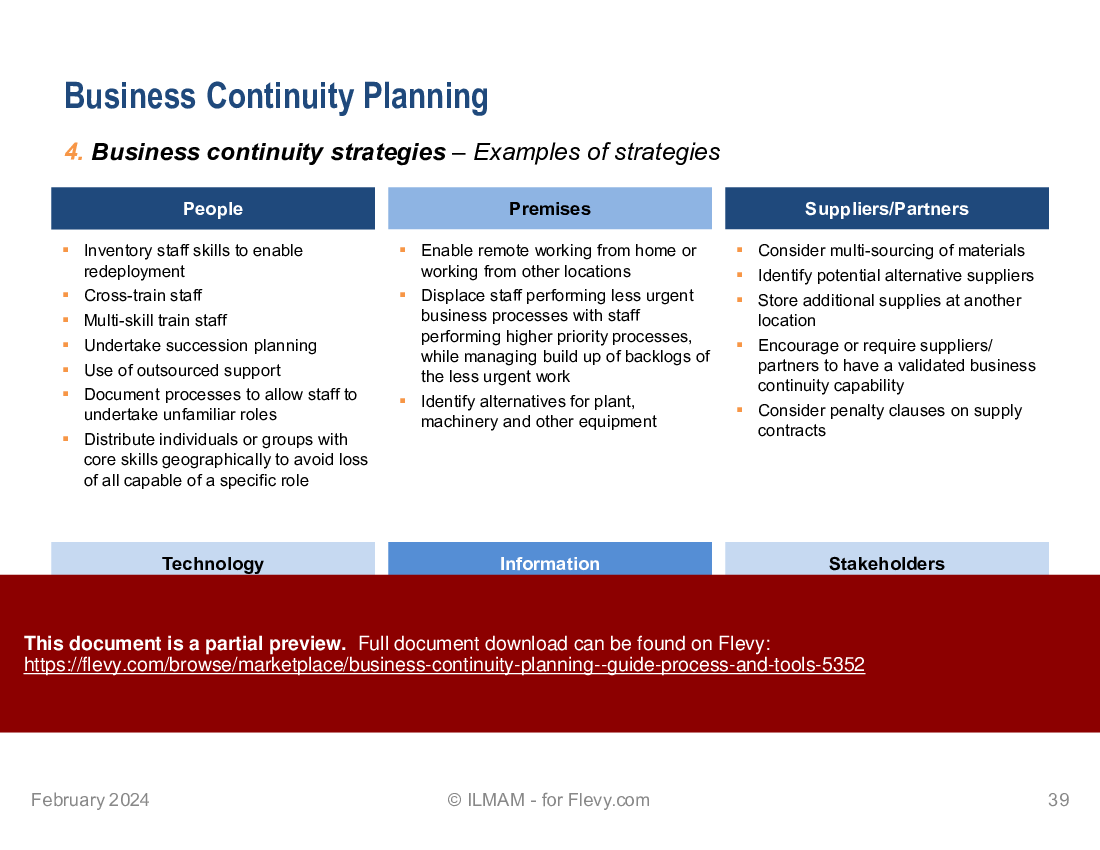
• Examples of strategies
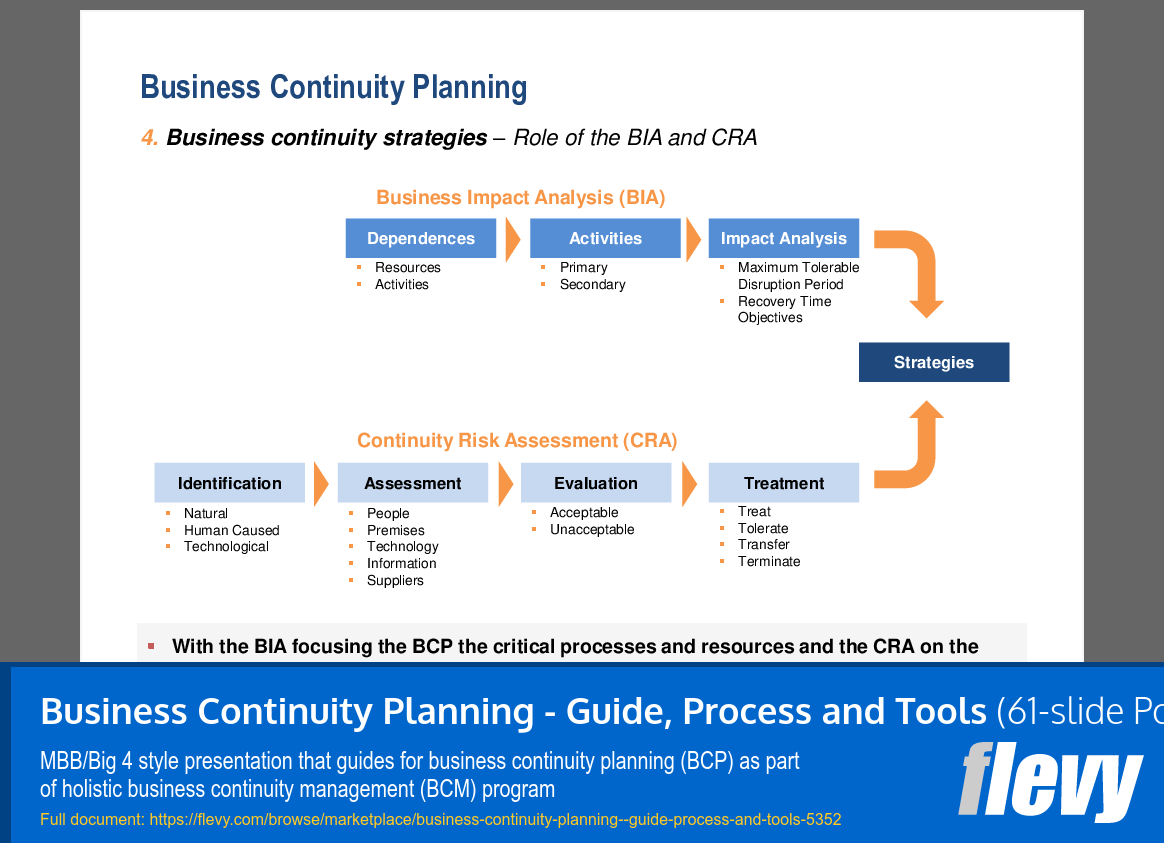
• Role of the BIA and CRA
• Immediate mitigation by critical business function/hazard type
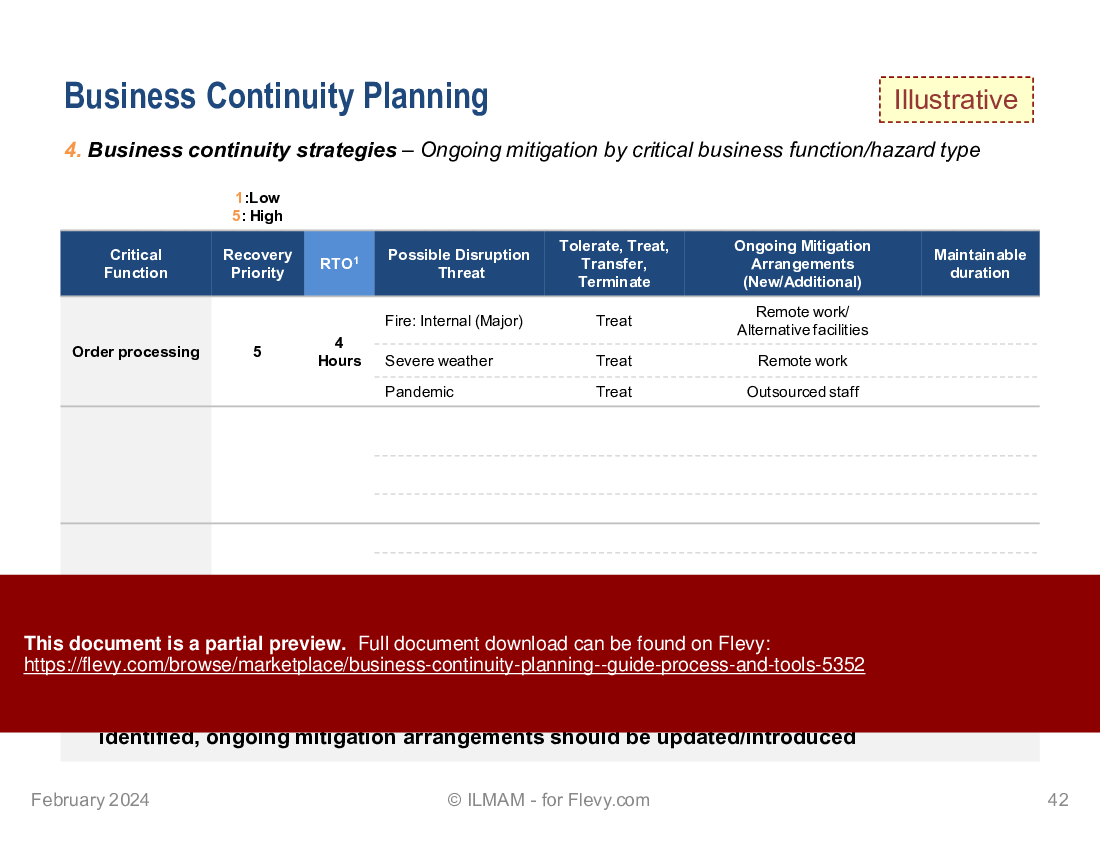
• Ongoing mitigation by critical business function/hazard type
5. Plan development
• Multiple coordinated plans
• Emergency response activities over time
• Common Business continuity plan elements
• Example communications plan
6. Awareness and Training
• Examples of awareness mechanisms
• Training audience and topics
7. Exercising and Testing
• Benefits
• Key steps
• Examples of methods
8. Audit and Review
• Aims
• Examples of types
9. Maintenance
• Aims
• Key steps
This PPT provides a comprehensive roadmap for identifying critical business functions and assessing the impact of disruptions over time. It includes practical tools and methods for conducting risk assessments and developing robust response strategies.
Got a question about the product? Email us at support@flevy.com or ask the author directly by using the "Ask the Author a Question" form. If you cannot view the preview above this document description, go here to view the large preview instead.
PRESENTATION DEEP DIVE ANALYSIS
This deep-dive analysis was generated from the full 61-slide PowerPoint presentation.
Executive Summary
This comprehensive guide on Business Continuity Planning (BCP) is crafted in a McKinsey, Bain, or BCG-quality style (consulting-grade; not affiliated). It serves as a vital resource for organizations aiming to enhance their resilience against disruptions, particularly in light of the COVID-19 pandemic. This document outlines the essential processes, tools, and frameworks necessary for effective business continuity management (BCM). By utilizing this guide, executives and consultants will be equipped to develop robust business continuity plans, conduct thorough risk assessments, and implement effective training and testing strategies.
Who This Is For and When to Use
• Corporate executives responsible for risk management and operational continuity
• Business continuity managers tasked with developing and maintaining BCPs
• Risk assessment teams conducting business impact analyses
• Consultants advising organizations on BCM best practices
Best-fit moments to use this deck:
• During the initial stages of developing a business continuity plan
• When conducting risk assessments and business impact analyses
• For training sessions aimed at improving staff awareness and preparedness
• In preparation for audits and reviews of existing business continuity arrangements
Learning Objectives
• Define business continuity and its importance in organizational resilience
• Build a comprehensive business continuity plan that includes critical functions and recovery strategies
• Establish a robust risk assessment process to identify and prioritize potential disruptions
• Conduct effective business impact analyses to quantify the effects of disruptions
• Implement training and awareness programs to ensure staff preparedness
• Develop and execute testing and exercising plans to validate BCP effectiveness
Table of Contents
• Overview (page 1)
• Initial Preparation (page 10)
• Risk Assessment (page 23)
• Business Impact Analysis (page 13)
• Business Continuity Strategies (page 37)
• Plan Development (page 44)
• Awareness and Training (page 49)
• Exercising and Testing (page 52)
• Audit and Review (page 56)
• Maintenance (page 59)
Primary Topics Covered
• Initial Preparation - Establishing management commitment and securing resources is critical for effective BCP implementation.
• Risk Assessment - Identifying and evaluating risks that could disrupt business operations is essential for informed decision-making.
• Business Impact Analysis - This process focuses on determining the effects of disruptions on critical business functions and resources.
• Business Continuity Strategies - Developing strategies to mitigate, tolerate, transfer, or terminate risks ensures organizational resilience.
• Plan Development - Coordinating multiple plans, including emergency response and crisis management, is vital for comprehensive preparedness.
• Awareness and Training - Raising awareness and training staff on BCP processes enhances overall organizational readiness.
Deliverables, Templates, and Tools
• Business continuity plan template that outlines critical functions and recovery strategies
• Risk assessment framework to identify and evaluate potential disruptions
• Business impact analysis worksheet for quantifying impacts on operations
• Training materials for staff awareness and preparedness initiatives
• Testing and exercising plans to validate the effectiveness of BCPs
• Audit and review checklist to ensure compliance and effectiveness of BCP arrangements
Slide Highlights
• Overview of the business continuity planning process, emphasizing the relationship between planning, response, and recovery.
• Key definitions of business continuity, business continuity management, and associated terms like RTO and MTPD.
• Visual representation of the business impact analysis process, illustrating critical functions and dependencies.
• Risk assessment matrix showcasing likelihood versus impact ratings for prioritizing risks.
• Comprehensive plan development slide detailing the elements of an effective business continuity plan.
Potential Workshop Agenda
Business Continuity Planning Overview (60 minutes)
• Introduce the importance of BCP and its components
• Discuss the roles and responsibilities of key stakeholders
• Review the business continuity planning process
Risk Assessment and Business Impact Analysis (90 minutes)
• Identify potential risks and their impacts on critical functions
• Conduct a group exercise to evaluate risks and develop mitigation strategies
• Present findings and discuss next steps
Training and Awareness Session (60 minutes)
• Review training objectives and key concepts of BCP
• Conduct interactive discussions on staff roles during disruptions
• Develop a plan for ongoing training and awareness initiatives
Customization Guidance
• Tailor the business continuity plan template to reflect organizational structure and specific operational needs.
• Adjust risk assessment criteria based on industry-specific threats and vulnerabilities.
• Incorporate organizational terminology and frameworks into training materials for consistency.
Secondary Topics Covered
• Crisis management planning and its role in business continuity
• Emergency response protocols and their integration into BCP
• The importance of stakeholder communication during disruptions
• Continuous improvement processes for BCP maintenance and updates
Topic FAQ
What are the common phases of a business continuity planning program?
A typical BCM/BCP program follows a sequence of activities: Initial Preparation, Business Impact Analysis (BIA), Continuity Risk Assessment (CRA), Business Continuity Strategies, Plan Development, Awareness and Training, Exercising and Testing, Audit and Review, and Maintenance. The sequence is presented across nine sections in the product materials.How do you perform a business impact analysis to set RTO and MTPD?
A BIA identifies critical business functions, dependencies, and the impact of disruptions over time to determine recovery priorities. It quantifies effects at specified recovery times and helps set Recovery Time Objective (RTO) and Maximum Tolerable Period of Disruption (MTPD) using a structured worksheet, such as the included BIA worksheet.What components should I expect in a practical BCP toolkit I can buy?
Practical toolkits typically include a business continuity plan template, risk assessment framework, business impact analysis worksheet, training materials, testing and exercising plans, and an audit/review checklist. Business Continuity Planning - Guide, Process and Tools lists all these deliverables and customization guidance.How should a risk assessment matrix be used to prioritize business continuity actions?
Use a likelihood-versus-impact matrix to rate threats before and after existing mitigations, apply consistent likelihood and impact criteria, and derive risk ratings against organizational risk tolerance. This informs treatment options and prioritizes mitigation actions using the CRA and risk rating matrix provided in the methodology.I need materials to run a BCP tabletop exercise—what should they include?
Tabletop exercises should include scenarios, role descriptions, expected actions, escalation paths, and debrief templates to capture lessons learned. The deck supplies exercising and testing plans with example methods and key steps to design desk checks, simulations, and end-to-end rehearsals in a structured exercise plan.How often should business continuity plans be reviewed and updated?
BCPs should be reviewed regularly and after significant organizational changes or incidents to maintain relevance and effectiveness. Reviews are part of Audit and Review and Maintenance activities, which the guide treats as recurring steps in the lifecycle and documents in its audit checklist.What should I look for when choosing a BCP template for my industry?
Choose a template that can be tailored to your organizational structure, captures critical functions and recovery strategies, supports industry-specific threat criteria, and integrates emergency response and crisis management plans. Business Continuity Planning - Guide, Process and Tools explicitly offers customization guidance and a plan template.How can I demonstrate the value of buying BCP templates and tools to leadership?
Demonstrate value by showing reduced time to document plans, clearer recovery priorities from a BIA, standardized risk ratings, and ready-made exercise and audit materials that support preparedness. The materials in the deck map directly to those outcomes via a BIA worksheet, CRA framework, and audit checklist.Document FAQ
These are questions addressed within this presentation.
What is the purpose of a Business Continuity Plan (BCP)?
A BCP outlines documented procedures to ensure the organization can respond, recover, and restore operations following a disruption.
How often should a BCP be reviewed and updated?
BCPs should be reviewed regularly, particularly after significant changes in the organization or following an incident, to ensure relevance and effectiveness.
What is a Business Impact Analysis (BIA)?
A BIA identifies critical business functions and assesses the impact of disruptions on these functions, helping prioritize recovery efforts.
What are the key components of a risk assessment?
A risk assessment identifies potential threats, evaluates their likelihood and impact, and determines mitigation strategies to manage these risks.
How can organizations ensure staff are prepared for disruptions?
Regular training and awareness programs, along with exercises and testing of BCPs, help ensure staff understand their roles and responsibilities during disruptions.
What is the role of management in business continuity planning?
Management commitment is crucial for securing resources, establishing policies, and fostering a culture of preparedness within the organization.
What types of exercises can be conducted to test a BCP?
Exercises can include desk checks, simulations, and end-to-end rehearsals to validate the effectiveness of the BCP and identify areas for improvement.
How do organizations measure the effectiveness of their BCP?
Effectiveness can be measured through audits, performance appraisals, and feedback from exercises and real incidents to identify strengths and areas for improvement.
Glossary
• Business Continuity (BC) - The capability of an organization to continue delivering products or services during disruptions.
• Business Continuity Plan (BCP) - Documented procedures guiding an organization in responding to and recovering from disruptions.
• Business Continuity Management (BCM) - The process of implementing and maintaining business continuity within an organization.
• Maximum Tolerable Period of Disruption (MTPD) - The maximum time an organization can tolerate a disruption before unacceptable impacts occur.
• Recovery Time Objective (RTO) - The target time set for the recovery of critical functions after a disruption.
• Recovery Point Objective (RPO) - The point in time to which data must be restored to enable normal operations after a disruption.
• Crisis Management Plan - A plan that outlines procedures for managing a crisis to maintain confidence in the organization.
• Emergency Response Plan - Procedures focused on protecting lives and property during an incident.
• Training and Awareness - Programs designed to educate staff on business continuity processes and their roles in ensuring organizational resilience.
• Audit and Review - Processes to verify the effectiveness of BCP arrangements and identify areas for improvement.
• Testing and Exercising - Activities conducted to validate the effectiveness of BCPs through simulations and practical applications.
• Stakeholder Communication - Strategies for informing and coordinating with stakeholders during disruptions.
• Mitigation Strategies - Actions taken to reduce the likelihood or impact of identified risks.
• Incident Response - The immediate actions taken to address a disruption and stabilize the situation.
• Continuous Improvement - Ongoing efforts to enhance BCP effectiveness based on lessons learned and changing circumstances.
COVID-19 PPT TEMPLATES
Source: Best Practices in COVID-19, BCP PowerPoint Slides: Business Continuity Planning - Guide, Process and Tools PowerPoint (PPTX) Presentation Slide Deck, ILMAM - Strategy & Management Consulting




























