
Benchmarking for Superior Performance   241-slide PPT PowerPoint presentation slide deck (PPTX)
$79.00

Benchmarking for Superior Performance (241-slide PPT PowerPoint presentation slide deck (PPTX)) Preview Image
Log in to unlock full preview.
Benchmarking for Superior Performance (241-slide PPT PowerPoint presentation slide deck (PPTX)) Preview Image
Arrow   Click main image to view in full screen.

Benchmarking for Superior Performance (PowerPoint PPTX Slide Deck)

PowerPoint (PPTX) 241 Slides

Top 1,000 Best Practice $79.00
Developed by a Management Consultant (ex-Microsoft and IBM), this presentation unlocks the potential of Benchmarking for transformative change and operational excellence.
Add to Cart


Immediate download
Fully editable PowerPoint
Free lifetime updates

BENEFITS OF THIS POWERPOINT DOCUMENT

  1. Provides a framework for benchmarking based on the world-renowned Xerox benchmarking methodology.
  2. Provides guidelines on the benchmarking roles and responsibilities.
  3. Provides guidelines on the benchmarking etiquette and how to conduct a proper site visit.

PERFORMANCE MANAGEMENT PPT DESCRIPTION

Editor Summary Benchmarking for Superior Performance is a 241-slide PowerPoint presentation by Operational Excellence Consulting and a management consultant (ex-Microsoft and IBM) that teaches the Xerox Benchmarking model and provides practical templates. Read more

Benchmarking is the pursuit of superior company performance through best practices. It involves setting operational targets based on industry best practices. Traditional target-setting methods have left some companies vulnerable to global competition. Japanese philosophy of "dantotsu" (striving to be the best of the best) embodies the essence of gaining a competitive edge.

Benchmarking is globally embraced for achieving operational excellence. It's a structured, proactive process leading to superior performance and competitive advantage. It involves comparing one's function to others and adopting best practices for profitability, high inventory turnover, and asset returns.

Benchmarking is positive and proactive, aiding in goal setting based on the best practices of the industry. It differs from traditional methods, aiming for constant improvement.

This presentation is based on Robert C. Camp's Xerox Benchmarking Process model. It covers benchmarking benefits, types, identifying targets, and project execution steps, including site visits, etiquette, and success factors.

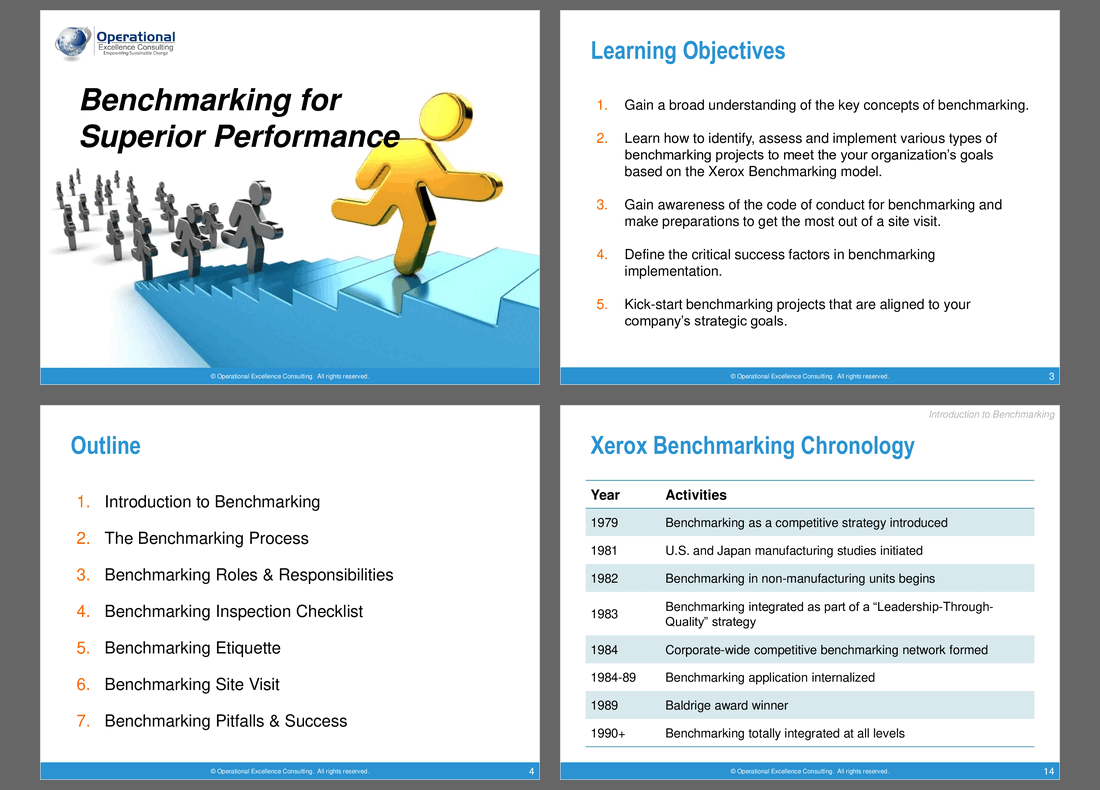
LEARNING OBJECTIVES

1. Gain a broad understanding of the key concepts of benchmarking.
2. Learn how to identify, assess and implement various types of benchmarking projects to meet the your organization's goals based on the Xerox Benchmarking model.
3. Gain awareness of the code of conduct for benchmarking and make preparations to get the most out of a site visit.
4. Define the critical success factors in benchmarking implementation.
5. Kick-start benchmarking projects that are aligned to your company's strategic goals.

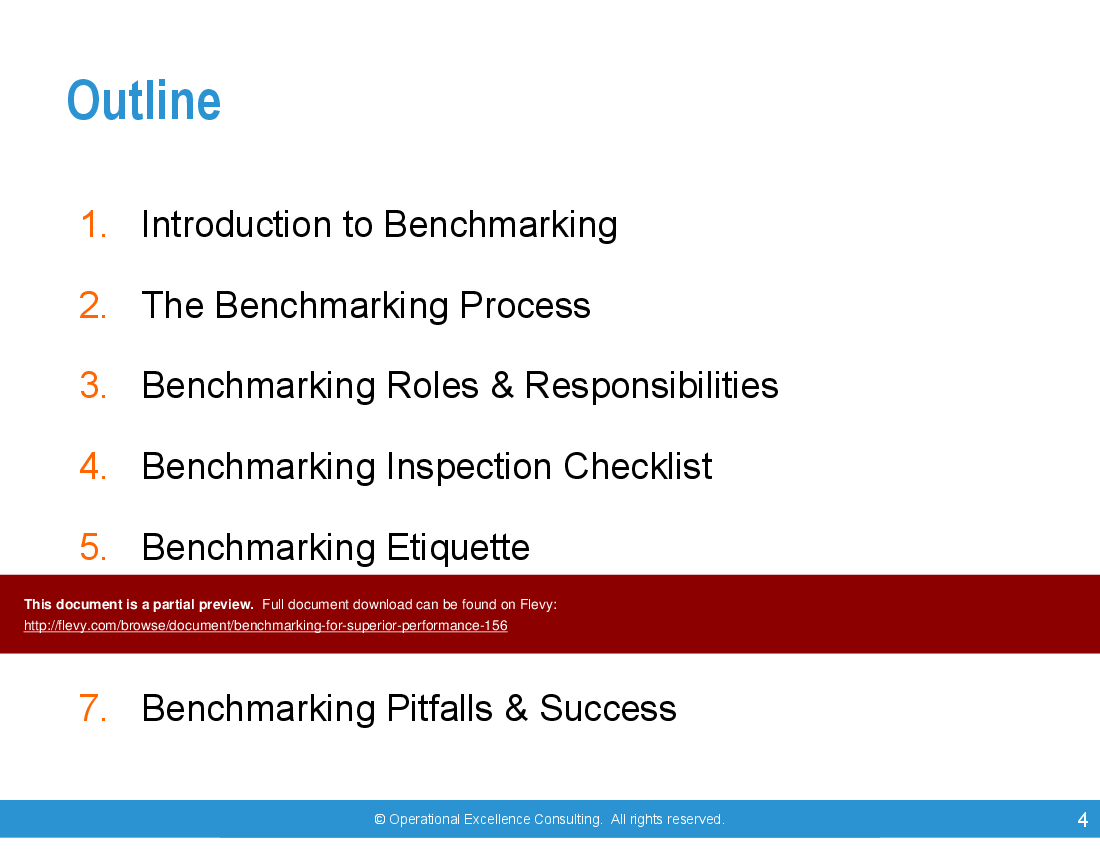
CONTENTS

1. Introduction to Benchmarking
2. The Four-phase, Ten-step Xerox Benchmarking Process
•  Step 1: What to benchmark?
•  Step 2: Whom to benchmark?
•  Step 3: Data collection
•  Step 4: Determine current performance "gap"
•  Step 5: Project future performance levels
•  Step 6: Communicate findings and gain acceptance
•  Step 7: Establish goals
•  Step 8: Develop action plans
•  Step 9: Implement actions and monitor progress
•  Step 10: Re-calibrate benchmarks
3. Benchmarking Roles and Responsibilities
4. Benchmarking Inspection Checklist (Toll-gate Review)
5. Benchmarking Etiquette
6. Benchmarking Site Visit
7. Benchmarking Pitfalls and Success

The document also provides a comprehensive checklist for benchmarking inspections and highlights common pitfalls to avoid. It emphasizes the importance of aligning benchmarking projects with strategic business goals for maximum impact.

Got a question about the product? Email us at support@flevy.com or ask the author directly by using the "Ask the Author a Question" form. If you cannot view the preview above this document description, go here to view the large preview instead.

MARCUS OVERVIEW

This synopsis was written by Marcus [?] based on the analysis of the full 241-slide presentation.


Executive Summary
The "Benchmarking for Superior Performance" presentation is a comprehensive training tool designed to enhance understanding and implementation of benchmarking practices within organizations. Developed by Operational Excellence Consulting, this presentation guides users through the benchmarking process, emphasizing its importance in achieving operational excellence and continuous improvement. By utilizing the Xerox Benchmarking model, users will learn to identify performance gaps, set functional goals, and implement best practices that align with their strategic objectives. This presentation equips organizations with the knowledge to analyze, compare, and improve their business performance effectively.

Who This Is For and When to Use
•  Corporate executives seeking to enhance operational performance
•  Management consultants facilitating benchmarking initiatives
•  Process owners responsible for continuous improvement
•  Quality assurance teams aiming to implement best practices

Best-fit moments to use this deck:
•  During strategic planning sessions to align benchmarking with business objectives
•  When initiating new benchmarking projects to establish a clear framework
•  For training sessions aimed at improving team understanding of benchmarking processes

Learning Objectives
•  Gain a broad understanding of the key concepts of benchmarking
•  Identify, assess, and implement various types of benchmarking projects
•  Understand the code of conduct for effective benchmarking
•  Define critical success factors in benchmarking implementation
•  Kick-start benchmarking projects aligned with strategic goals

Table of Contents
•  Introduction to Benchmarking (page 3)
•  The Benchmarking Process (page 51)
•  Benchmarking Roles & Responsibilities (page 198)
•  Benchmarking Inspection Checklist (page 205)
•  Benchmarking Etiquette (page 212)
•  Benchmarking Site Visit (page 223)
•  Benchmarking Pitfalls & Success (page 230)

Primary Topics Covered
•  Benchmarking Definition - Benchmarking is the continuous process of measuring products, services, and practices against industry leaders to achieve superior performance.
•  Benchmarking Process - The structured approach includes planning, analysis, integration, and action phases to ensure effective benchmarking.
•  Data Collection Methods - Various methods for gathering benchmarking data, including surveys, site visits, and interviews, are outlined for effective analysis.
•  Performance Gap Analysis - Techniques for identifying and evaluating performance gaps between current practices and industry benchmarks.
•  Functional Goals Establishment - Guidance on converting benchmarking findings into actionable functional goals for improvement.
•  Communication of Findings - Strategies for effectively communicating benchmarking results to gain acceptance and commitment from stakeholders.

Deliverables, Templates, and Tools
•  Benchmarking project charter template for defining objectives and scope
•  Data collection instrument template for gathering benchmarking information
•  Performance gap analysis framework to evaluate current versus benchmarked performance
•  Action plan template for implementing best practices identified through benchmarking
•  Communication plan template for sharing findings with stakeholders

Slide Highlights
•  Overview of the benchmarking process with clear phases and steps
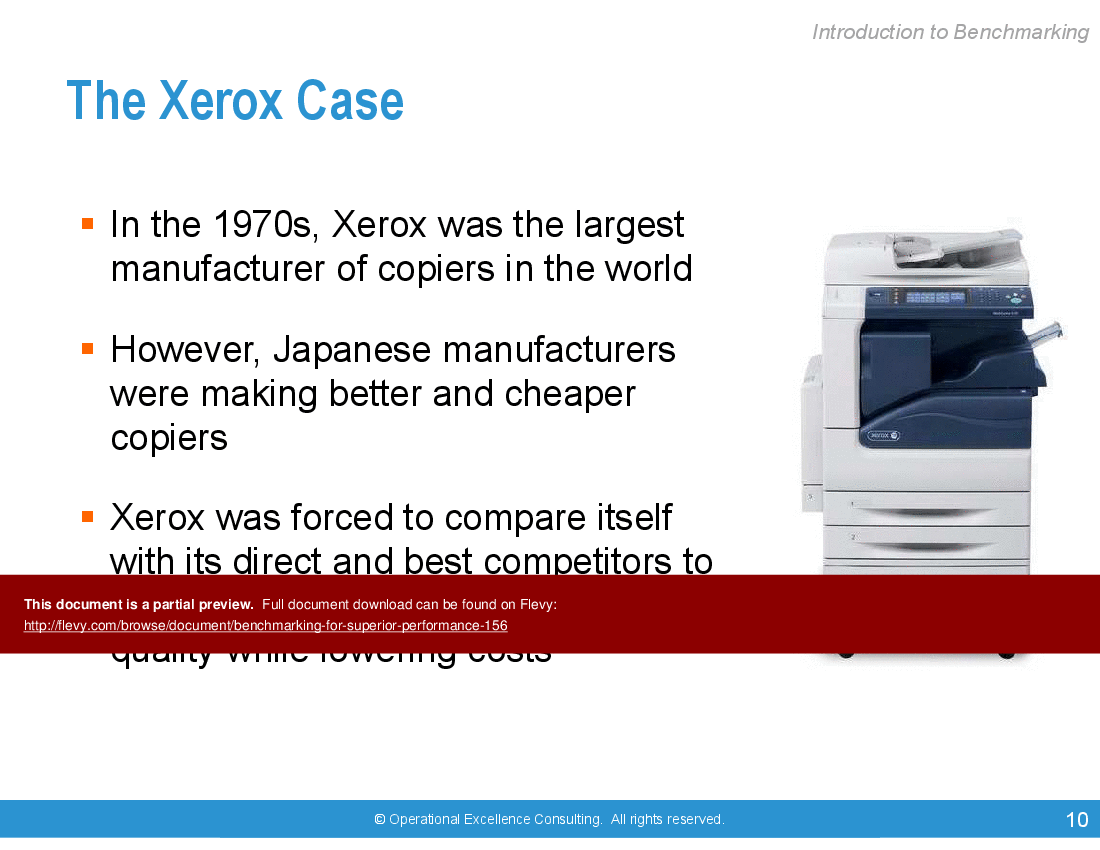
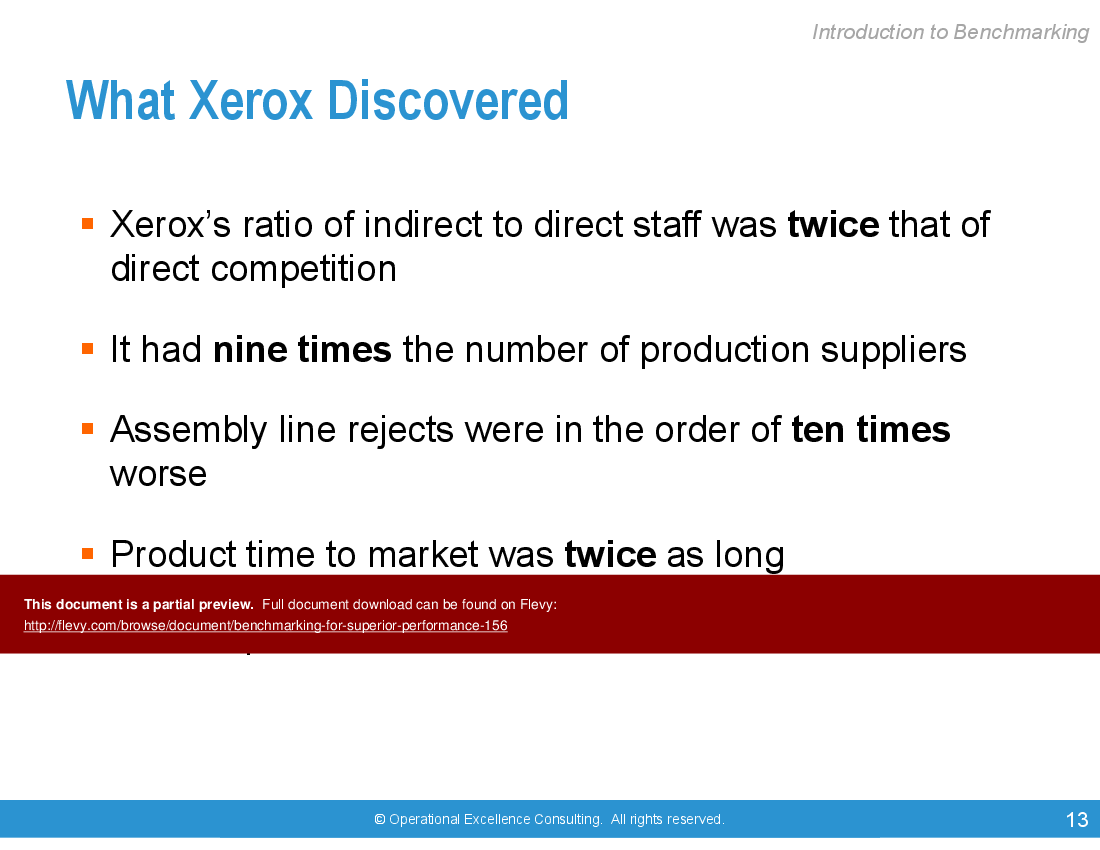
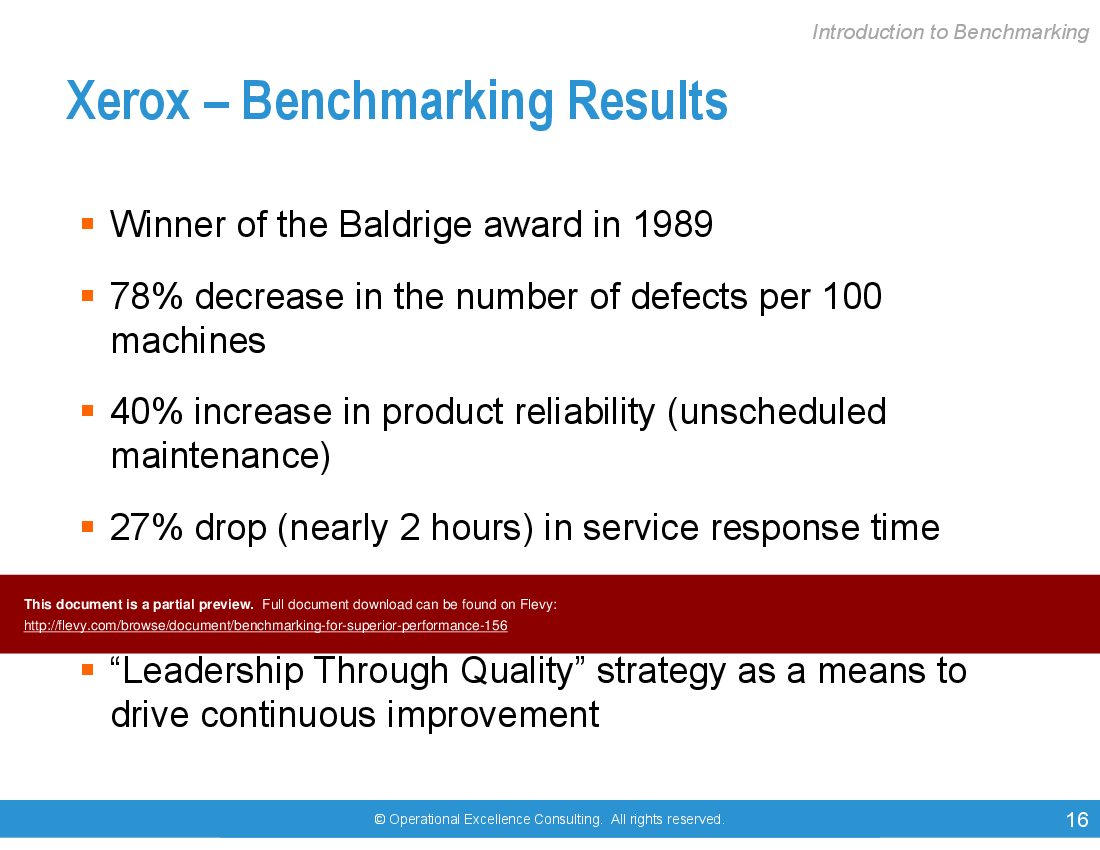
•  Case study of Xerox's benchmarking success and its impact on performance
•  Visual representation of performance gaps and future projections using charts
•  Checklist for conducting effective benchmarking studies and site visits
•  Guidelines for maintaining ethical standards in benchmarking practices

Potential Workshop Agenda
Introduction to Benchmarking (30 minutes)
•  Discuss key concepts and importance of benchmarking
•  Review the Xerox Benchmarking model

Benchmarking Process Overview (45 minutes)
•  Walk through the phases of benchmarking
•  Identify key roles and responsibilities in the benchmarking process

Data Collection and Analysis (60 minutes)
•  Explore methods for effective data collection
•  Conduct a performance gap analysis exercise

Establishing Functional Goals (30 minutes)
•  Define how to translate findings into actionable goals
•  Develop a communication plan for stakeholder engagement

Customization Guidance
•  Tailor the benchmarking project charter to align with specific organizational goals
•  Adapt data collection instruments to fit the unique context of your industry
•  Modify action plans to reflect the resources and timelines available within your organization

Secondary Topics Covered
•  Ethical considerations in benchmarking practices
•  The role of management in supporting benchmarking initiatives
•  Common pitfalls to avoid in benchmarking projects
•  Strategies for sustaining improvements post-benchmarking

Topic FAQ

What are the core steps in the Xerox benchmarking process covered by this topic?

The Xerox Benchmarking approach uses a four-phase, ten-step process: choose what to benchmark; select whom to benchmark; collect data; determine current performance gaps; project future performance; communicate findings; establish goals; develop action plans; implement and monitor; and re-calibrate benchmarks, a four-phase, ten-step Xerox Benchmarking Process.

How is performance gap analysis performed in benchmarking?

Performance gap analysis compares current performance to benchmarked standards to quantify differences, then projects future performance levels and prioritizes improvement opportunities. The methodology in the deck supports this with a dedicated performance gap analysis framework to evaluate current versus benchmarked performance.

What data collection methods are typically used in benchmarking projects?

Common benchmarking data collection methods described include surveys, site visits, and interviews for gathering qualitative and quantitative information, supported by a data collection instrument template in the materials that standardizes information capture across benchmarking partners.

What should I look for when buying a benchmarking toolkit or template pack?

Buyers should look for a documented benchmarking methodology, templates for project charters and data collection, tools for gap analysis, implementation aids such as action-plan and communication-plan templates, and guidance on site visits and etiquette. Benchmarking for Superior Performance includes a project charter, data-collection instrument, gap-analysis framework, and action-plan template.

How do I select appropriate benchmarking partners?

Select benchmarking partners with comparable characteristics to ensure relevance—match on industry, size, and relevant performance metrics to obtain actionable comparisons; the product guidance specifically notes comparability in size, industry, and performance metrics.

What topics should a benchmarking training session cover for my team?

Effective training should cover key benchmarking concepts, types of benchmarking projects, the code of conduct and site-visit etiquette, data-collection methods, performance gap analysis techniques, and how to convert findings into functional goals and action plans; Benchmarking for Superior Performance includes these topics and a site visit checklist.

After identifying gaps, how do I turn benchmarking findings into implementable goals and actions?

Convert findings by communicating results to stakeholders, establishing measurable functional goals, developing action plans, assigning roles and responsibilities, and monitoring implementation; the presentation provides a communication plan template and an action plan template to support these steps.

Are purchased benchmarking templates worth the cost compared with building tools in-house?

The value of purchased templates depends on whether they shorten setup and align projects to strategic goals; pre-built materials can provide standardized charters, data-collection instruments, and gap-analysis frameworks that accelerate project start-up, such as the project charter template included in the materials.

Document FAQ
These are questions addressed within this presentation.

What is benchmarking?
Benchmarking is the process of identifying, sharing, and implementing best practices to achieve superior performance compared to industry leaders.

How do I select benchmarking partners?
Choose partners based on comparability in size, industry, and performance metrics to ensure relevant and actionable insights.

What are the key steps in the benchmarking process?
The key steps include identifying what to benchmark, selecting comparative companies, collecting data, analyzing performance gaps, and implementing findings.

How can I ensure successful implementation of benchmarking findings?
Engage stakeholders early, communicate findings effectively, and establish clear functional goals linked to the organization's mission.

What should I avoid in benchmarking?
Avoid confusing benchmarking with market research, selecting overly broad topics, and neglecting to establish a baseline for comparison.

How often should I recalibrate benchmarks?
Critical benchmarks should be recalibrated annually, while others can be reviewed every 3 years, depending on industry dynamics.

What is the role of management in benchmarking?
Management must support the benchmarking effort by providing resources, removing barriers, and ensuring alignment with strategic objectives.

What are common pitfalls in benchmarking?
Common pitfalls include misalignment with strategic goals, lack of stakeholder engagement, and failure to establish measurable objectives.

Glossary
•  Benchmark - A standard of excellence for comparison in business processes.
•  Benchmarking Gap - The performance difference between an organization and its benchmark.
•  Best Practice - A method that has consistently shown superior results compared to other approaches.
•  Performance Gap - The difference between current performance and the benchmarked standard.
•  Functional Goals - Specific objectives derived from benchmarking findings to guide improvement efforts.
•  Data Collection Instrument - Tools used to gather benchmarking data, such as surveys or questionnaires.
•  Action Plan - A detailed outline of steps to implement best practices identified through benchmarking.
•  Stakeholder Engagement - The process of involving individuals or groups who have an interest in the benchmarking outcomes.
•  Continuous Improvement - Ongoing efforts to enhance products, services, or processes.
•  Ethical Standards - Guidelines that govern the conduct of benchmarking activities to ensure fairness and integrity.
•  Site Visit - An on-site observation of best practices at a benchmarking partner's location.
•  Communication Plan - A strategy for sharing benchmarking results with stakeholders to gain acceptance and commitment.
•  Re-calibration - The process of reviewing and updating benchmarks to ensure they remain relevant and achievable.
•  Xerox Benchmarking Model - A framework developed by Xerox to guide effective benchmarking practices.
•  Performance Metrics - Quantitative measures used to assess the effectiveness of business processes.
•  Management Support - The commitment and involvement of leadership in the benchmarking process.
•  Training - Instruction provided to teams on benchmarking methodologies and practices.
•  Operational Excellence - A philosophy of leadership, teamwork, and problem-solving that results in continuous improvement throughout the organization.
•  Best-in-Class - The highest standard of performance in a specific industry or sector.
•  Customer Satisfaction - A measure of how products or services meet or exceed customer expectations.

Source: Best Practices in Performance Management, Benchmarking PowerPoint Slides: Benchmarking for Superior Performance PowerPoint (PPTX) Presentation Slide Deck, Operational Excellence Consulting


$79.00
Developed by a Management Consultant (ex-Microsoft and IBM), this presentation unlocks the potential of Benchmarking for transformative change and operational excellence.
Add to Cart
  

ABOUT THE AUTHOR

Author image
Additional documents from author: 257
Terms of usage (for all documents from this author)

Operational Excellence Consulting, founded in 2009 by Allan Ung, draws from extensive experience at Microsoft, IBM, and Underwriters Laboratories (UL). We specialize in strategy deployment, customer experience design, and operational excellence, applying Design Thinking, Lean, and Systems Thinking to maximize customer value and minimize waste.

Our ... [read more]

Ask the Author a Question

You must be logged in to contact the author.

Click here to log in Click here register

Did you know?
The average daily rate of a McKinsey consultant is $6,625 (not including expenses). The average price of a Flevy document is $65.
Need KPIs or benchmarks? Explore KPI Depot to access the most comprehensive database of KPI data, organized by function and industry.


Trusted by over 10,000+ Client Organizations
Since 2012, we have provided business templates to over 10,000 businesses and organizations of all sizes, from startups and small businesses to the Fortune 100, in over 130 countries.
AT&T GE Cisco Intel IBM Coke Dell Toyota HP Nike Samsung Microsoft Astrazeneca JP Morgan KPMG Walgreens Walmart 3M Kaiser Oracle SAP Google E&Y Volvo Bosch Merck Fedex Shell Amgen Eli Lilly Roche AIG Abbott Amazon PwC T-Mobile Broadcom Bayer Pearson Titleist ConEd Pfizer NTT Data Schwab


Read Customer Testimonials

 
"FlevyPro provides business frameworks from many of the global giants in management consulting that allow you to provide best in class solutions for your clients."

– David Harris, Managing Director at Futures Strategy
 
"I am extremely grateful for the proactiveness and eagerness to help and I would gladly recommend the Flevy team if you are looking for data and toolkits to help you work through business solutions."

– Trevor Booth, Partner, Fast Forward Consulting
 
"Flevy.com has proven to be an invaluable resource library to our Independent Management Consultancy, supporting and enabling us to better serve our enterprise clients.

The value derived from our [FlevyPro] subscription in terms of the business it has helped to gain far exceeds the investment made, making a subscription a no-brainer for any growing consultancy – or in-house strategy team."

– Dean Carlton, Chief Transformation Officer, Global Village Transformations Pty Ltd.
 
"I have used FlevyPro for several business applications. It is a great complement to working with expensive consultants. The quality and effectiveness of the tools are of the highest standards."

– Moritz Bernhoerster, Global Sourcing Director at Fortune 500
 
"Flevy is now a part of my business routine. I visit Flevy at least 3 times each month.

Flevy has become my preferred learning source, because what it provides is practical, current, and useful in this era where the business world is being rewritten.

In today's environment where there are so "

– Omar Hernán Montes Parra, CEO at Quantum SFE
 
"As a niche strategic consulting firm, Flevy and FlevyPro frameworks and documents are an on-going reference to help us structure our findings and recommendations to our clients as well as improve their clarity, strength, and visual power. For us, it is an invaluable resource to increase our impact and value."

– David Coloma, Consulting Area Manager at Cynertia Consulting
 
"Flevy is our 'go to' resource for management material, at an affordable cost. The Flevy library is comprehensive and the content deep, and typically provides a great foundation for us to further develop and tailor our own service offer."

– Chris McCann, Founder at Resilient.World
 
"As an Independent Management Consultant, I find Flevy to add great value as a source of best practices, templates and information on new trends. Flevy has matured and the quality and quantity of the library is excellent. Lastly the price charged is reasonable, creating a win-win value for "

– Jim Schoen, Principal at FRC Group


Customers Also Bought These Documents


Customers Also Like These Documents

Explore Templates on Related Management Topics


Your Recently Viewed Documents
Download our FREE Strategy & Transformation Framework Templates

Download our free compilation of 50+ Strategy & Transformation slides and templates. Frameworks include McKinsey 7-S, Balanced Scorecard, Disruptive Innovation, BCG Curve, and many more.