
This framework is developed by a team of former McKinsey and Big 4 consultants. The presentation follows the headline-body-bumper slide format used by global consulting firms.
Editor Summary
22-slide PowerPoint presentation by LearnPPT Consulting that explains and differentiates 3 types of strategy: General Strategy, Corporate Strategy, and Competitive Strategy.
Read moreThe deck covers distinctions between strategy and tactics, factors influencing strategic decisions, key diagnostic questions for each strategy type, guidance on evolving strategies over time, and includes reusable slide templates. Intended for senior leaders and executives to refine strategic thinking and decision-making; sold as a digital download on Flevy with immediate digital download.
Use this presentation when leaders need to clarify what “strategy” means across organizational levels — for example during strategic planning, board discussions, or leadership alignment exercises.
CEOs and executive teams aligning organizational direction by distinguishing General, Corporate, and Competitive Strategy for decision-making.
Heads of Strategy structuring executive workshops to surface key questions and factors influencing strategy.
Business unit leaders translating strategic distinctions into unit-level priorities and review agendas.
Consultants preparing client briefings that highlight strategy-versus-tactics debates and evolution over time.
The deck’s explicit separation of 3 strategy types and use of diagnostic questions reflects a decomposition-based, hypothesis-driven approach commonly used in strategy consulting.
Strategy and execution are the 2 critical elements that drive any business. However, many leaders struggle even with defining—let alone devising and executing—a robust Strategy. Many of those who are responsible to deal with it fall short of describing how they typically employ it.
This failure takes its roots from the fact that there is no clear path associated with Strategy. This presentation provides a detailed overview of the 3 distinct types of Strategy:
1. General Strategy
2. Corporate Strategy
3. Competitive Strategy
Senior leaders should clarify their understanding of the concept of Strategy and draw attention to the importance of distinguishing between the 3 types of strategies.
Additional topics discussed in this presentation include striking differences between Strategy and tactics, key questions associated with the 3 types of strategies, factors influencing Strategy, and more.
The slide deck also includes some slide templates for you to use in your own business presentations.
This presentation delves into the nuances of General Strategy, Corporate Strategy, and Competitive Strategy, providing a comprehensive framework for senior leaders. It emphasizes the importance of making informed decisions to navigate unforeseen challenges and achieve organizational objectives. The deck outlines how to evolve strategies over time, ensuring they remain relevant and effective in a dynamic business environment.
Executives will find actionable insights on differentiating between strategy and tactics, understanding the factors influencing strategic decisions, and leveraging key questions to refine their strategic approach. The presentation also includes practical templates, enabling leaders to apply these concepts directly to their business scenarios. This resource is essential for those looking to enhance their strategic planning and execution capabilities.
What are the main types of strategy senior leaders should distinguish?
The primary distinctions emphasized are General Strategy, Corporate Strategy, and Competitive Strategy. The presentation frames these 3 types so leaders can clarify which level they are addressing and apply the right questions and decisions to each of the 3 strategy categories.
How is strategy different from tactics in practical leadership discussions?
The presentation highlights the striking differences between strategy and tactics without prescribing one definition; it shows why leaders must separate directional choices from short-term actions and suggests discussion topics to avoid conflating them within planning sessions, all presented in a 22-slide deck.
Which factors typically influence strategic decisions according to common frameworks?
The deck notes that multiple factors influence strategy and directs leaders to diagnostic questions for each type, helping identify relevant influences during planning. Those factors are discussed alongside the key questions associated with the 3 types of strategy.
What should I look for when choosing a strategy presentation or template for leadership use?
Look for clear distinctions between strategy levels, inclusion of diagnostic questions, and reusable slide templates to support executive discussions. The Flevy's 3 Distinctions of Strategy slide deck specifically provides those elements and includes slide templates for reuse.
How can I judge the value of buying a ready-made strategy slide deck versus building one internally?
Assess whether a ready-made deck offers the specific conceptual distinctions and reusable templates you need to save internal time on framing discussions. Flevy's 3 Distinctions of Strategy supplies a packaged set of slides and templates across a 22-slide PowerPoint.
After a merger, should leaders focus on corporate strategy or competitive strategy first?
The presentation advises clarifying which level of strategy is at issue—Corporate Strategy for portfolio and structural choices versus Competitive Strategy for market positioning—and using targeted questions for each. It provides guidance to frame Corporate and Competitive Strategy decisions.
What guidance exists for evolving a strategy so it remains relevant over time?
The slide deck outlines how to evolve strategies over time and recommends periodic review to address unforeseen challenges and maintain alignment with objectives; these concepts are presented across the deck to support iterative strategic updates in practice.
What key questions should I ask when defining corporate strategy in leadership workshops?
The presentation includes sets of key questions associated with each strategy type to help leaders probe corporate-level choices. It directs workshop facilitators to question lists tailored to Corporate Strategy as part of the overall three-type framework.
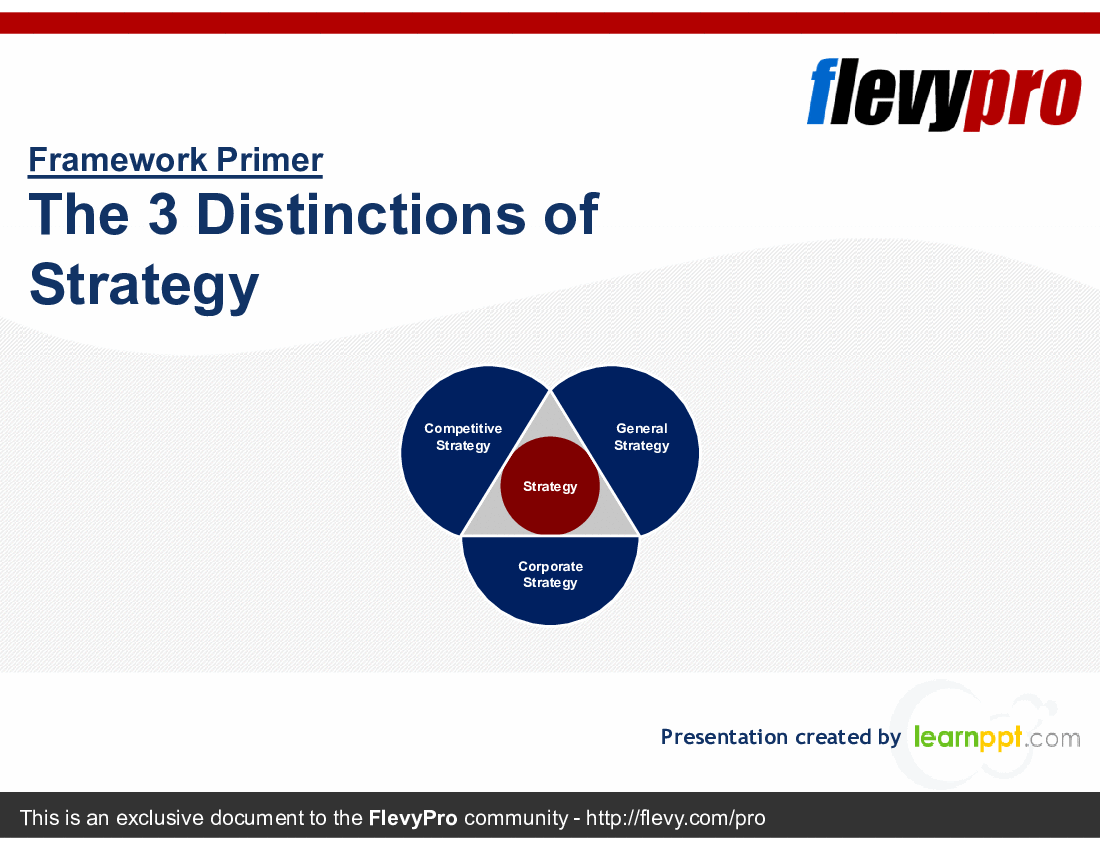
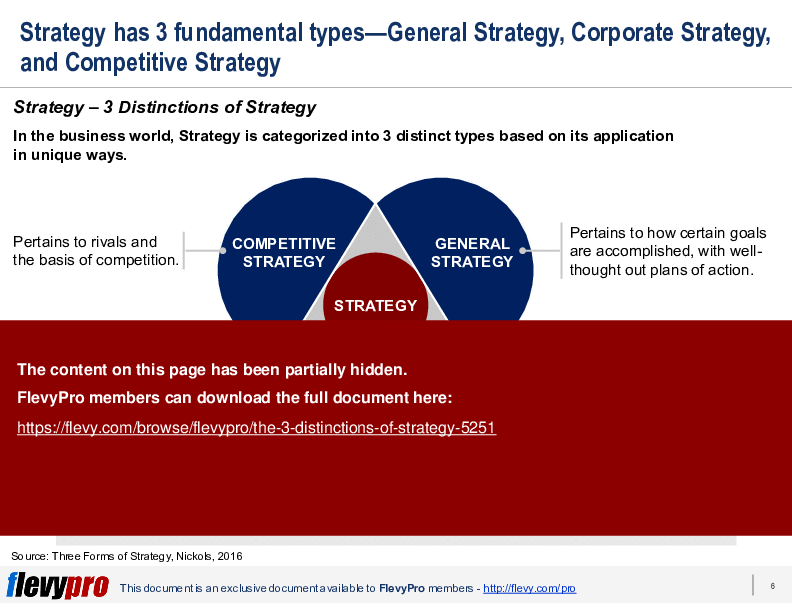
This PPT slide categorizes strategy into 3 types: Competitive Strategy, General Strategy, and Corporate Strategy, illustrated in a Venn diagram to show their interconnections. Competitive Strategy focuses on positioning against rivals to gain market advantage, essential for differentiation and superior performance. General Strategy outlines methods for achieving specific organizational goals, ensuring alignment with overarching objectives and effective resource allocation. Corporate Strategy addresses broader decisions regarding market entry, resource distribution across business units, and overall organizational direction, vital for coherence and long-term sustainability. The central concept of "Strategy" highlights the interconnectedness of these types, enabling tailored strategic initiatives that align with organizational goals and market realities.
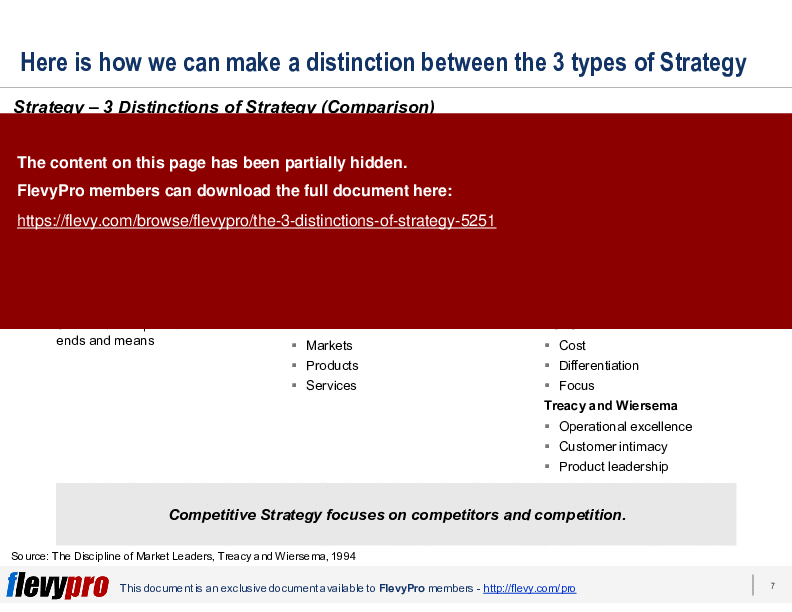
This PPT slide outlines 3 strategic categories: General Strategy, Corporate Strategy, and Competitive Strategy. General Strategy focuses on "Courses of Action," emphasizing the alignment of objectives with resources and actions. Corporate Strategy involves "Choices and Commitments," highlighting critical decisions regarding business direction, market positioning, and product portfolio. Competitive Strategy centers on "Competitors and Competition," referencing frameworks by Michael Porter, which include cost leadership, differentiation, and focus, as well as Treacy & Wiersema's emphasis on operational excellence, customer intimacy, and product leadership. These distinctions enhance strategic thinking and execution within organizations.
This PPT slide outlines critical questions for senior management in formulating General Strategy, divided into Vision Related and General Strategy Related sections. The Vision Related section poses 4 questions to clarify the organization's core identity, purpose, and future aspirations. The General Strategy Related section presents 5 questions focusing on operational strategy formulation, including the organization's overarching purpose, current strategy clarity, specific strategies for desired outcomes, resource assessment, and constraints on strategic actions. This framework aligns vision with actionable strategies, enhancing informed decision-making and driving organizational goals.
This PPT slide distinguishes between Corporate Strategy and Competitive Strategy. Corporate Strategy classifies markets and businesses, setting the foundation for a company’s mission and vision, guiding overall direction and alignment across business units. Competitive Strategy focuses on positioning against rivals, identifying reasons for market competition based on organizational strengths and weaknesses. It relies on competitive environment analysis, understanding competencies that provide an advantage or present challenges. The slide references Michael Porter’s Five Forces framework—threat of new entrants, threat of substitutes, bargaining power of suppliers, bargaining power of buyers, and rivalry among existing firms—essential for analyzing competitive dynamics and strategic decision-making. Corporate and Competitive Strategies serve different purposes, but are interrelated in shaping a company’s strategic approach.
Source: Best Practices in Strategy Development PowerPoint Slides: 3 Distinctions of Strategy PowerPoint (PPTX) Presentation Slide Deck, LearnPPT Consulting
This framework is developed by a team of former McKinsey and Big 4 consultants. The presentation follows the headline-body-bumper slide format used by global consulting firms.
For $10.00 more, you can download this document plus 2 more FlevyPro documents. That's just $13 each.
ABOUT FLEVYPRO
This document is part of the FlevyPro Library, a curated knowledge base of documents for our FlevyPro subscribers.
FlevyPro is a subscription service for on-demand business frameworks and analysis tools. FlevyPro subscribers receive access to an exclusive library of curated business documents—business framework primers, presentation templates, Lean Six Sigma tools, and more—among other exclusive benefits.
The average daily rate of a McKinsey consultant is $6,625 (not including expenses). The average price of a Flevy document is $65.
Trusted by over 10,000+ Client Organizations
Since 2012, we have provided business templates to over 10,000 businesses and organizations of all sizes, from startups and small businesses to the Fortune 100, in over 130 countries.
"As a small business owner, the resource material available from FlevyPro has proven to be invaluable. The ability to search for material on demand based our project events and client requirements was great for me and proved very beneficial to my clients. Importantly, being able to easily edit and tailor
the material for specific purposes helped us to make presentations, knowledge sharing, and toolkit development, which formed part of the overall program collateral. While FlevyPro contains resource material that any consultancy, project or delivery firm must have, it is an essential part of a small firm or independent consultant's toolbox.
"
– Michael Duff, Managing Director at Change Strategy (UK)
"As a consultant requiring up to date and professional material that will be of value and use to my clients, I find Flevy a very reliable resource.
The variety and quality of material available through Flevy offers a very useful and commanding source for information. Using Flevy saves me time, enhances my expertise and ends up being a good decision."
– Dennis Gershowitz, Principal at DG Associates
"One of the great discoveries that I have made for my business is the Flevy library of training materials.
As a Lean Transformation Expert, I am always making presentations to clients on a variety of topics: Training, Transformation, Total Productive Maintenance, Culture, Coaching, Tools, Leadership Behavior, etc. Flevy
It is well worth the money to purchase these presentations. Sure, I have the knowledge and information to make my point. It is another thing to create a presentation that captures what I want to say. Flevy has saved me countless hours of preparation time that is much better spent with implementation that will actually save money for my clients.
"
– Ed Kemmerling, Senior Lean Transformation Expert at PMG
"As an Independent Management Consultant, I find Flevy to add great value as a source of best practices, templates and information on new trends. Flevy has matured and the quality and quantity of the library is excellent. Lastly the price charged is reasonable, creating a win-win value for
the customer, Flevy and the various authors. This is truly a service that benefits the consulting industry and associated clients. Thanks for providing this service.
"
– Jim Schoen, Principal at FRC Group
"I have found Flevy to be an amazing resource and library of useful presentations for lean sigma, change management and so many other topics. This has reduced the time I need to spend on preparing for my performance consultation. The library is easily accessible and updates are regularly provided. A wealth of great information."
– Cynthia Howard RN, PhD, Executive Coach at Ei Leadership
"The wide selection of frameworks is very useful to me as an independent consultant. In fact, it rivals what I had at my disposal at Big 4 Consulting firms in terms of efficacy and organization."
– Julia T., Consulting Firm Owner (Former Manager at Deloitte and Capgemini)
"Flevy is now a part of my business routine. I visit Flevy at least 3 times each month.
Flevy has become my preferred learning source, because what it provides is practical, current, and useful in this era where the business world is being rewritten.

many challenges and there is the need to make the right decisions in a short time, with so much scattered information, we are fortunate to have Flevy. Flevy investigates, selects, and puts at our disposal the best of the best to help us be successful in our work.
"
– Omar Hernán Montes Parra, CEO at Quantum SFE
"[Flevy] produces some great work that has been/continues to be of immense help not only to myself, but as I seek to provide professional services to my clients, it gives me a large "tool box" of resources that are critical to provide them with the quality of service and outcomes they are expecting."
– Royston Knowles, Executive with 50+ Years of Board Level Experience
Download our free compilation of 50+ Strategy & Transformation slides and templates. Frameworks include McKinsey 7-S, Balanced Scorecard, Disruptive Innovation, BCG Curve, and many more.