
This framework is developed by a team of former McKinsey and Big 4 consultants. The presentation follows the headline-body-bumper slide format used by global consulting firms.
Explore 10 key principles of Cost Transformation, crafted by ex-McKinsey & Big 4 consultants. Gain insights for strategic cost rationalization and sustainable value. Cost Transformation Principles is a 32-slide PPT PowerPoint presentation slide deck (PPTX) available for immediate download upon purchase.
Cost Transformation are a reality that every organization has to face, several times, in its period of existence.
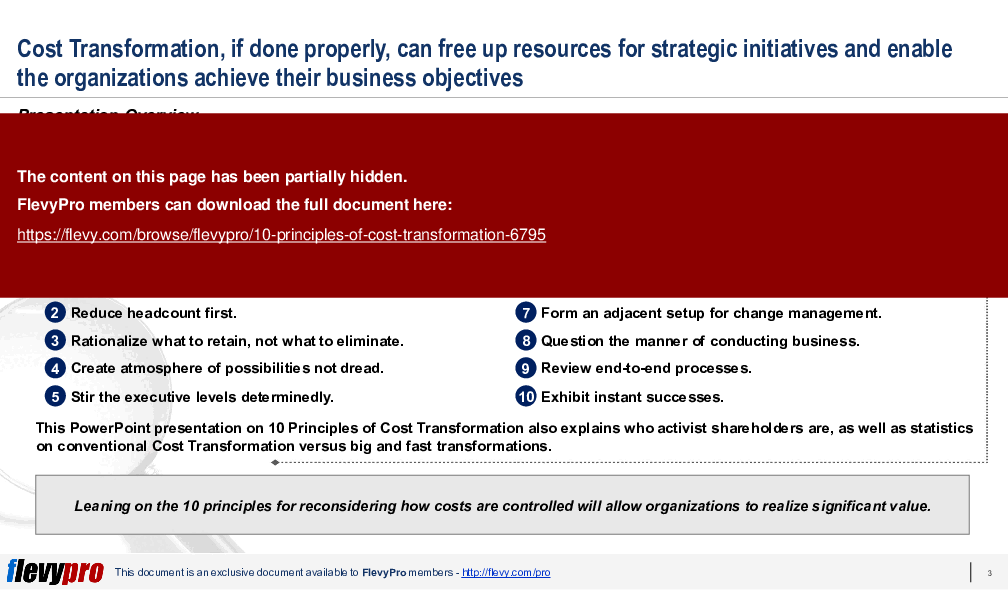
Proper and enduring Cost Transformation provides an opportunity to reformulate an organization's complete course. Cost Transformation, if done properly, can free up resources for strategic initiatives and enable the organizations achieve their business objectives. It may result in divestiture of established businesses, even profitable ones, if they do not match the strategy or the organization's most distinctive capabilities.
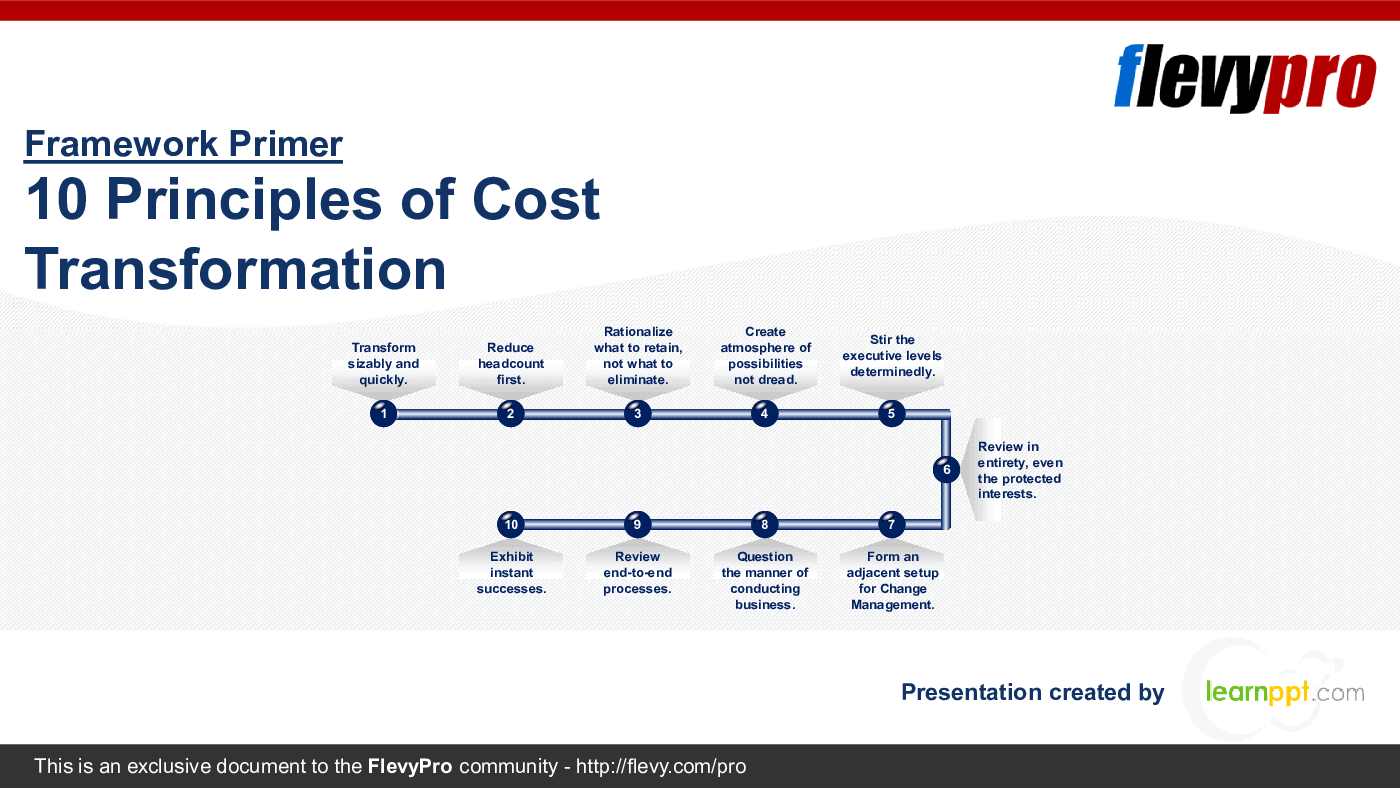
This presentation explains 10 key principles for Cost Transformations, which can serve as a guiding beacon for companies in their strategic cost rationalization endeavors. The first 5 principles manifest the intensified agenda of activist shareholders. The latter 5 principles are focused on Strategic Cost Reduction and Rationalization—the fundamental principles around which any Cost Transformation Program should be structured.
Leaning on these 10 principles for reconsidering how costs are controlled will allow organizations to realize significant value.
Additional topics discussed include a comparison between "slow and steady" (i.e. the conventional approach to Cost Reduction) and "big and fast," the 4 cost expenditure categories, the 3 core spend categories, among other topics.
This PowerPoint presentation on 10 Principles of Cost Transformation also explains who activist shareholders are, as well as statistics on conventional Cost Transformation versus big and fast transformations. It also includes PowerPoint slide templates for you to use in your own business presentations.
This PPT delves into the strategic imperatives of cost transformation, emphasizing the necessity of swift and substantial changes. It provides a granular analysis of headcount reduction, rationalization of retained elements, and fostering an environment of possibilities rather than fear. The presentation also underscores the importance of executive alignment and immediate success demonstrations to build momentum. With detailed templates and actionable insights, this resource equips leaders with the tools to drive impactful and sustainable cost transformations, ensuring alignment with overarching business strategies.
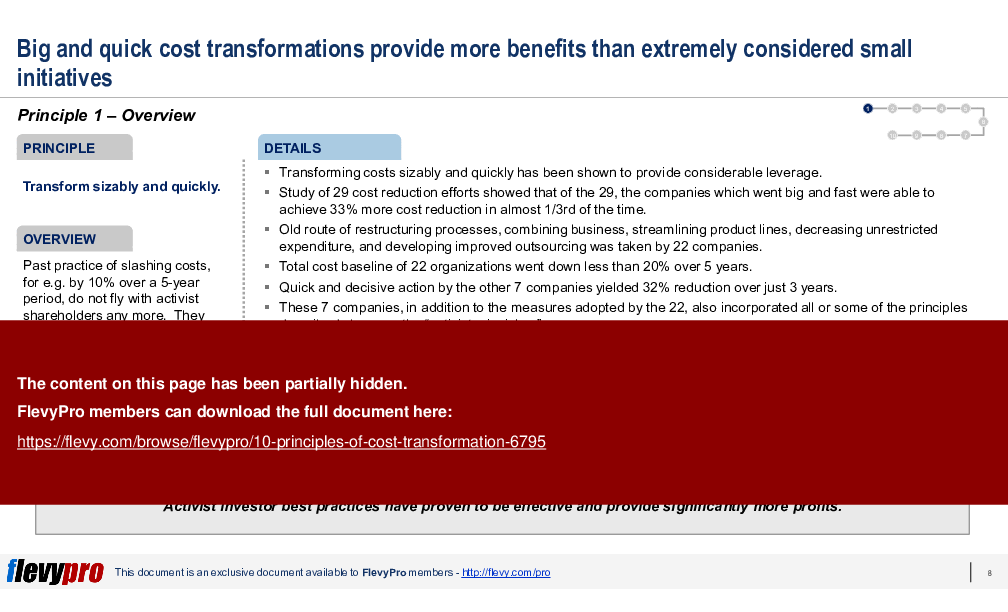
This PPT slide advocates for aggressive cost transformation over traditional incremental cost-cutting methods. A study of 29 cost reduction initiatives reveals that companies implementing bold changes achieved a 33% cost reduction in one-third of the time compared to conservative approaches. Specifically, 7 companies reduced costs by 32% in 3 years, while 22 others saw less than 20% reduction over 5 years. The concept of "activist principles" is introduced, highlighting strategies that support ambitious targets without compromising core strengths. Executives are urged to identify the right customer segments, appropriate products and services, and necessary capabilities. It warns against funding misaligned expenses, promoting streamlined operations that enhance financial performance.
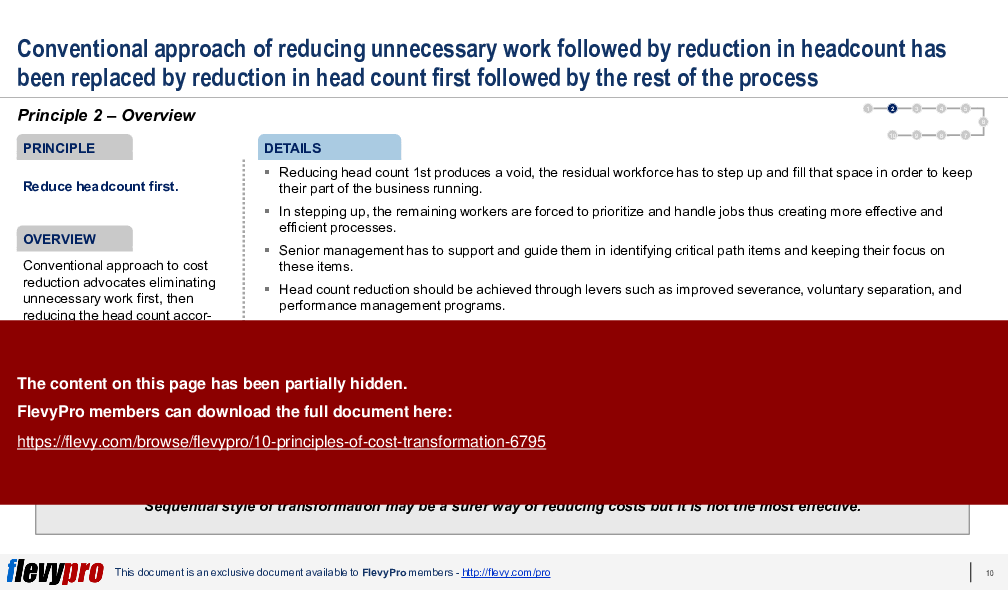
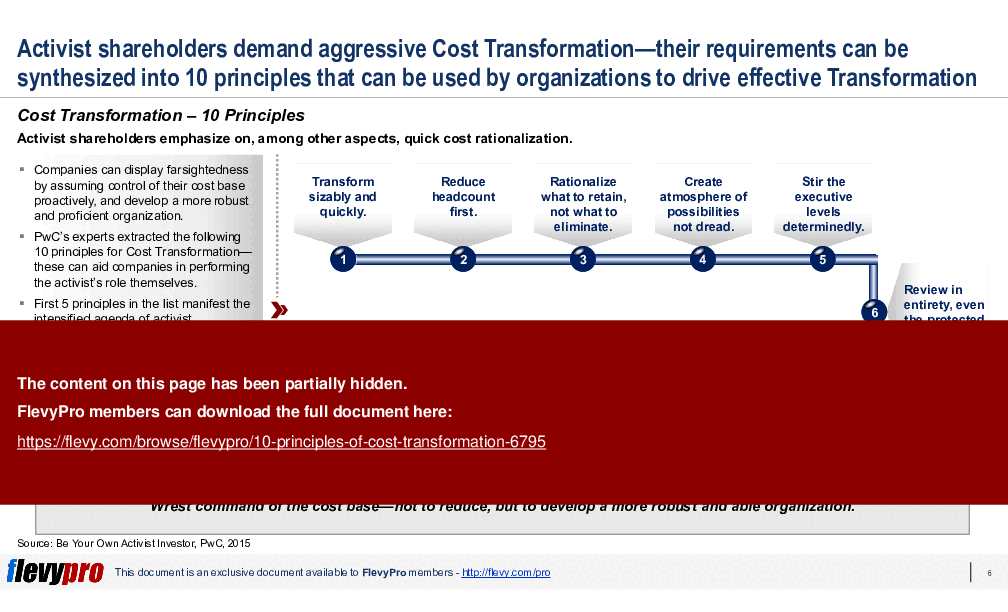
This PPT slide outlines ten principles of cost transformation, emphasizing proactive adaptation to pressures from activist shareholders. Companies can enhance resilience by controlling cost structures, utilizing PwC's framework to fulfill shareholder roles. The first 5 principles address immediate demands, advocating for swift changes such as reducing headcount, rationalizing resources, and fostering an innovative environment. Engaging executive leadership is crucial in the transformation process. The latter 5 principles focus on strategic cost reduction and rationalization, recommending a comprehensive review of processes and questioning existing practices. Establishing a change management framework and demonstrating quick wins are essential for building momentum in broader initiatives. This structured approach balances immediate actions with long-term strategic planning for effective cost management.
This PPT slide outlines Principle 10 of a cost transformation framework, highlighting the importance of showcasing quick wins to build confidence in the transformation process. Quick wins can be achieved with minimal transition costs, demonstrating immediate value. Recognizing these successes accelerates momentum and allows for strategic resource reallocation. Three core areas for quick wins include:
1. Discretionary Spending: Enforcing spending policies to eliminate non-essential expenses and adhere to cost-cutting measures aligned with strategic goals.
2. External Spending: Proactive negotiation with suppliers for better terms and discounts, leading to significant savings.
3. Management Hierarchy: Assessing and restructuring management layers to streamline positions and expand spans of control, enhancing efficiency and reducing overhead.
This strategy fosters a culture of accountability and efficiency while implementing cost-saving measures.
This PPT slide outlines the sixth principle of cost transformation, emphasizing a comprehensive review of all projects, including "sacred cows" favored by executives. Evaluating high-priority projects alongside others fosters unity among executives, essential for the long-term sustainability of cost savings. Active participation from top management in this evaluation ensures all projects meet established criteria. Both symbolic and tangible changes are necessary for cultural shifts within the organization. Cost reduction efforts often fall short, making assertive stretch targets vital to inspire innovation and push managers beyond comfort zones. Cost reduction amounts should be realistic yet significant, facilitating reinvestment opportunities and creating a buffer against savings erosion. True transformation requires a holistic approach aligned with common organizational goals.
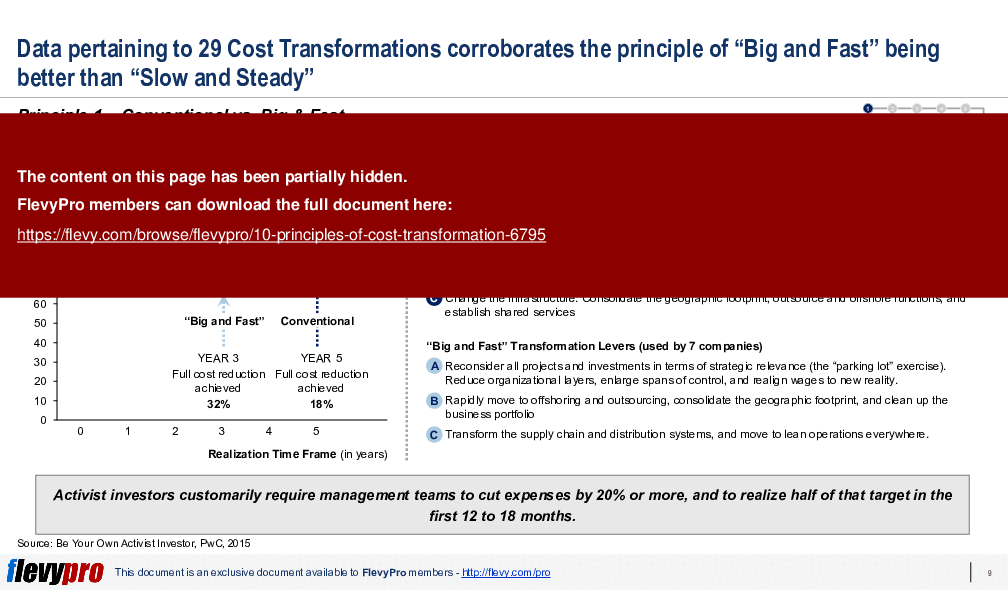
This PPT slide analyzes 2 approaches to cost transformation: "Conventional" and "Big & Fast." The "Big & Fast" approach yields greater cost savings, achieving a 32% reduction by Year 3, compared to 18% by Year 5 for the conventional method. Key transformation levers for the conventional method include discretionary spending cuts, process redesigns, and organizational changes. In contrast, the "Big & Fast" strategy emphasizes radical project reassessment, rapid outsourcing, and comprehensive supply chain overhauls. Organizations aiming to optimize costs should prioritize impactful changes over numerous small adjustments, advocating for a more aggressive stance on cost transformation to drive efficiency and financial results.
Principle 8 of the cost transformation framework emphasizes that questioning costs alone is insufficient; a thorough examination of business operations is essential. Key areas for scrutiny include operations, administration, and product/service delivery. Engaging a diverse cross-section of staff is crucial to identify potential improvements, as senior management may overlook critical areas. Preserving key business capabilities is vital, as arbitrary cost reductions can weaken strengths. Targeted improvements should enhance overall output rather than lead to indiscriminate cuts. Certain enterprises and products may require reassessment if they do not align with strategic objectives or provide adequate margins. The goal is to restructure operations for efficiency while reducing costs, necessitating a comprehensive understanding of the business model and a commitment to continuous improvement. An open-door policy encourages collective input in the transformation process.
This PPT slide presents a framework for evaluating organizational expenditures as strategic investments rather than mere cost-cutting. The "parking lot" technique assesses each expenditure's necessity, encouraging leaders to evaluate costs in relation to competitive positioning over the next 3 to 5 years. Expenditures are categorized into 4 groups: Unique Abilities, Table Stakes, Lights-on Expenses, and Non-essentials. Unique Abilities are critical for maintaining a competitive edge and warrant significant investment. Table Stakes are necessary costs to remain viable, while Lights-on Expenses cover basic operational costs. Non-essentials can be eliminated without affecting core operations. This structured approach helps identify cost reduction opportunities while ensuring effective resource allocation aligned with strategic goals for long-term success.
Source: Best Practices in Cost Reduction, Cost Management PowerPoint Slides: 10 Principles of Cost Transformation PowerPoint (PPTX) Presentation Slide Deck, LearnPPT Consulting
This framework is developed by a team of former McKinsey and Big 4 consultants. The presentation follows the headline-body-bumper slide format used by global consulting firms.
For $10.00 more, you can download this document plus 2 more FlevyPro documents. That's just $13 each.
ABOUT FLEVYPRO
This document is part of the FlevyPro Library, a curated knowledge base of documents for our FlevyPro subscribers.

FlevyPro is a subscription service for on-demand business frameworks and analysis tools. FlevyPro subscribers receive access to an exclusive library of curated business documents—business framework primers, presentation templates, Lean Six Sigma tools, and more—among other exclusive benefits.
The average daily rate of a McKinsey consultant is $6,625 (not including expenses). The average price of a Flevy document is $65.
Trusted by over 10,000+ Client Organizations
Since 2012, we have provided business templates to over 10,000 businesses and organizations of all sizes, from startups and small businesses to the Fortune 100, in over 130 countries.
"I have used FlevyPro for several business applications. It is a great complement to working with expensive consultants. The quality and effectiveness of the tools are of the highest standards."
– Moritz Bernhoerster, Global Sourcing Director at Fortune 500
"I am extremely grateful for the proactiveness and eagerness to help and I would gladly recommend the Flevy team if you are looking for data and toolkits to help you work through business solutions."
– Trevor Booth, Partner, Fast Forward Consulting
"As a niche strategic consulting firm, Flevy and FlevyPro frameworks and documents are an on-going reference to help us structure our findings and recommendations to our clients as well as improve their clarity, strength, and visual power. For us, it is an invaluable resource to increase our impact and value."
– David Coloma, Consulting Area Manager at Cynertia Consulting
"[Flevy] produces some great work that has been/continues to be of immense help not only to myself, but as I seek to provide professional services to my clients, it gives me a large "tool box" of resources that are critical to provide them with the quality of service and outcomes they are expecting."
– Royston Knowles, Executive with 50+ Years of Board Level Experience
"FlevyPro provides business frameworks from many of the global giants in management consulting that allow you to provide best in class solutions for your clients."
– David Harris, Managing Director at Futures Strategy
"As a consulting firm, we had been creating subject matter training materials for our people and found the excellent materials on Flevy, which saved us 100's of hours of re-creating what already exists on the Flevy materials we purchased."
– Michael Evans, Managing Director at Newport LLC
"I like your product. I'm frequently designing PowerPoint presentations for my company and your product has given me so many great ideas on the use of charts, layouts, tools, and frameworks. I really think the templates are a valuable asset to the job."
– Roberto Fuentes Martinez, Senior Executive Director at Technology Transformation Advisory
"Flevy.com has proven to be an invaluable resource library to our Independent Management Consultancy, supporting and enabling us to better serve our enterprise clients.
The value derived from our [FlevyPro] subscription in terms of the business it has helped to gain far exceeds the investment made, making a subscription a no-brainer for any growing consultancy – or in-house strategy team."
– Dean Carlton, Chief Transformation Officer, Global Village Transformations Pty Ltd.
Receive our FREE presentation on Operational Excellence
This 50-slide presentation provides a high-level introduction to the 4 Building Blocks of Operational Excellence. Achieving OpEx requires the implementation of a Business Execution System that integrates these 4 building blocks.