
This is a 1 day presentation on Lean with over 100 slides, It also provides some self-assessment tools which can be used for group discussions.

Define Vision & Mission
What & Why of Operational Excellence
Intro 2 Lean-MBA
Vision and Mission
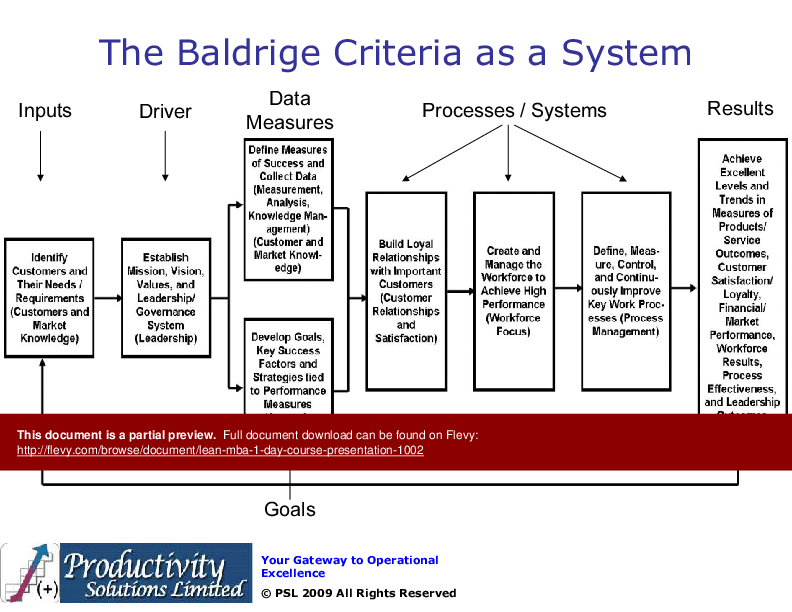
The Baldrige model
The Foundation (Constancy of purpose, Kano Model, Balanced Scorecard)
Intro to World-Class Practices TOC, TQM, TWI, SS
A Brief on Lean Tools
Lean Roadmap to Success
Also included with this document is a bonus zip of 41 Lean documents (includes templates, case studies, articles, posters, charts, and more).
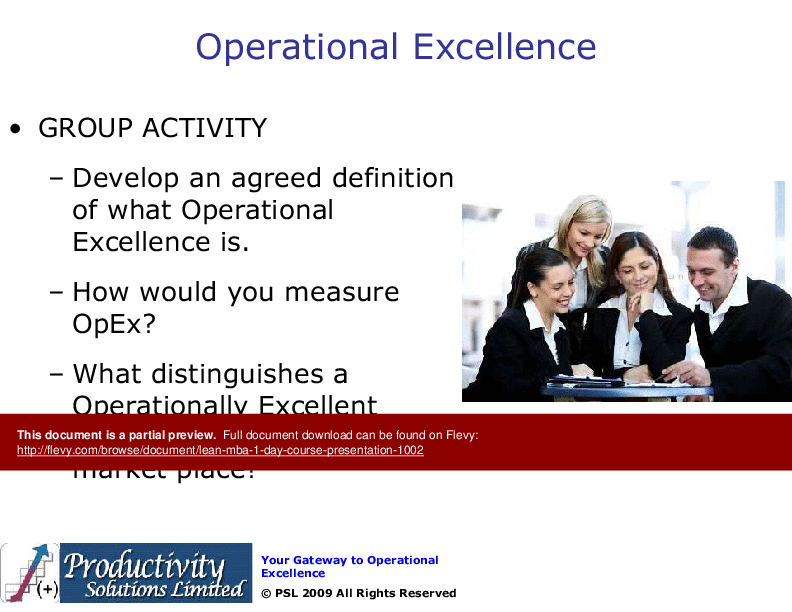
The Lean MBA (1-Day Course) dives deep into the core principles of Lean methodology, emphasizing the importance of operational excellence. The course includes interactive group activities designed to foster a comprehensive understanding of what operational excellence entails, how to measure it, and the distinguishing factors of an operationally excellent organization. Participants will engage in defining these concepts, ensuring a robust grasp of the material.
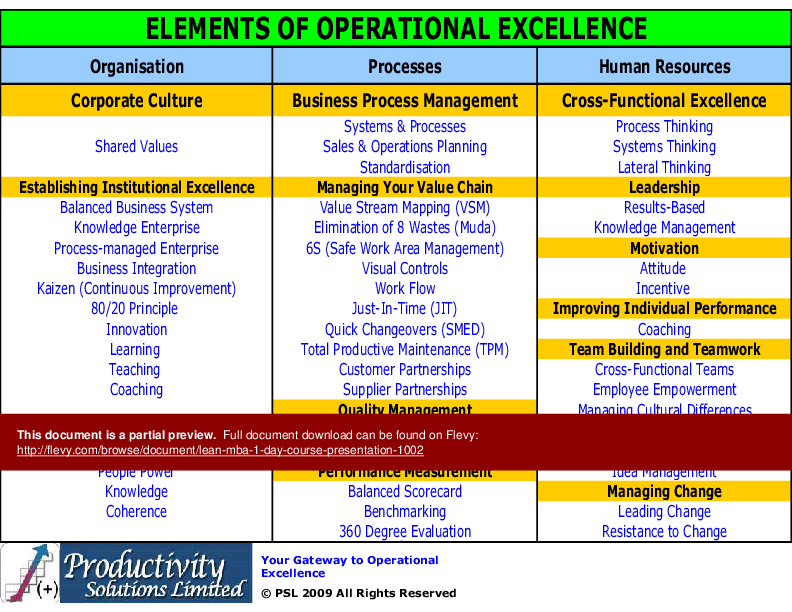
The course meticulously covers the elements of operational excellence, breaking it down into organizational culture, business process management, and human resources. It provides detailed insights into managing your value chain with tools like Value Stream Mapping (VSM), Just-In-Time (JIT), and Total Productive Maintenance (TPM). The human resources section focuses on cross-functional excellence, leadership, and motivation, ensuring a holistic approach to continuous improvement.
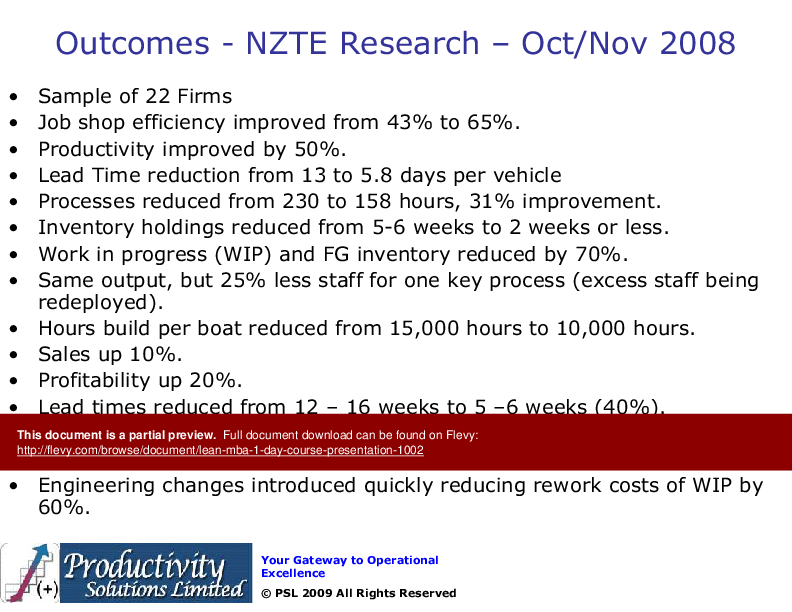
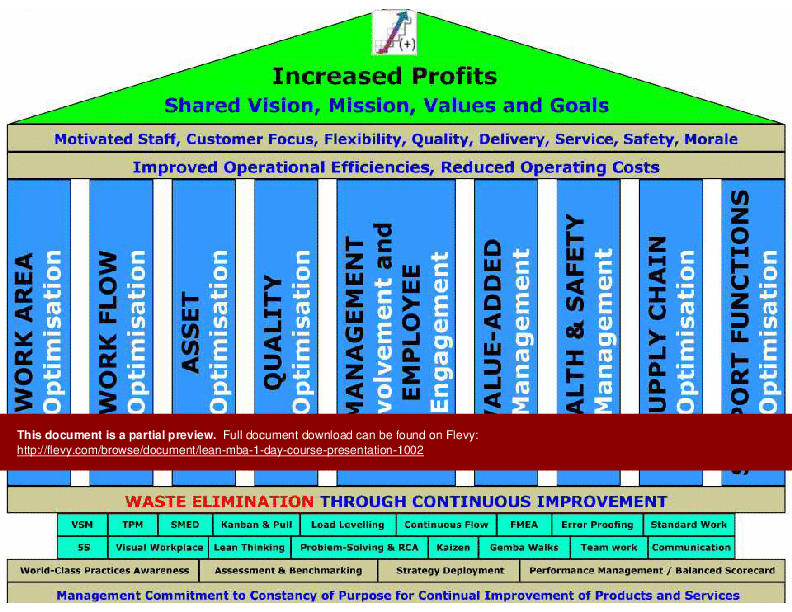
Real-world case studies, such as the NZTE Research outcomes, illustrate the tangible benefits of Lean implementation. These include significant improvements in job shop efficiency, productivity, lead times, and profitability. The document also highlights the importance of shared vision, mission, values, and goals in driving increased profits and operational efficiencies. This practical approach ensures that participants can directly apply Lean principles to achieve measurable results in their organizations.
Got a question about the product? Email us at support@flevy.com or ask the author directly by using the "Ask the Author a Question" form. If you cannot view the preview above this document description, go here to view the large preview instead.
Executive Summary
The Lean MBA (1-Day Course) presentation is designed to equip corporate leaders and teams with the essential tools and frameworks for achieving Operational Excellence. Developed by Vishnu Rayapeddi, a seasoned expert with over 22 years in manufacturing and supply chain, this course integrates best-in-class practices such as Lean, Six Sigma, Total Quality Management (TQM), and the Theory of Constraints (TOC). Participants will gain actionable insights into defining their vision and mission, understanding operational excellence, and implementing effective Lean tools to drive continuous improvement and sustainable results.
Who This Is For and When to Use
• Corporate executives and senior management teams focused on operational efficiency
• Lean practitioners and continuous improvement teams looking to enhance their skills
• Supply chain and operations leaders responsible for process optimization
• Human resources professionals aiming to foster a culture of excellence
Best-fit moments to use this deck:
• During strategic planning sessions to align operational goals with corporate vision
• As part of training initiatives for teams embarking on Lean transformations
• When assessing current operational practices and identifying areas for improvement
Learning Objectives
• Define Operational Excellence and its significance in competitive markets
• Build a comprehensive Lean roadmap that aligns with organizational goals
• Establish a culture of continuous improvement across all levels of the organization
• Identify and eliminate waste using Lean tools and methodologies
• Implement the Balanced Scorecard to measure performance effectively
• Develop actionable strategies for sustaining operational gains over time
Table of Contents
• Introduction to Lean MBA (page 3)
• Understanding Operational Excellence (page 5)
• Key Lean Tools and Techniques (page 10)
• The Baldrige Framework (page 15)
• Theory of Constraints Overview (page 20)
• Total Quality Management Principles (page 25)
• Case Studies and Real-World Applications (page 30)
• Workshop Activities and Group Discussions (page 35)
Primary Topics Covered
• Operational Excellence - A strategic approach that focuses on delivering superior value to customers while minimizing waste and maximizing efficiency.
• Lean Tools - Techniques such as 5S, Value Stream Mapping, and Kanban that facilitate waste reduction and process improvement.
• Balanced Scorecard - A performance management tool that aligns business activities to the vision and strategy of the organization.
• Theory of Constraints - A methodology for identifying and managing bottlenecks that hinder organizational performance.
• Total Quality Management (TQM) - An organization-wide approach to continuous improvement in quality, involving all employees.
• Case Studies - Real-world examples demonstrating the successful implementation of Lean principles in various industries.
Deliverables, Templates, and Tools
• Lean Roadmap template for planning and executing Lean initiatives
• Balanced Scorecard framework for tracking performance metrics
• Value Stream Mapping tool for visualizing and improving processes
• 5S implementation checklist for workplace organization
• Case study examples showcasing successful Lean transformations
• Training materials for conducting workshops and group activities
Slide Highlights
• Overview of the Lean MBA framework and its components
• Visual representation of the Baldrige criteria for performance excellence
• Case study results demonstrating significant improvements in efficiency and productivity
• Step-by-step guide to implementing Lean tools in daily operations
• Group activity prompts for engaging participants in defining Operational Excellence
Potential Workshop Agenda
Introduction to Lean MBA (30 minutes)
• Overview of Lean principles and objectives
• Discussion on the importance of Operational Excellence
Lean Tools and Techniques (60 minutes)
• Detailed exploration of key Lean methodologies
• Interactive session on applying Lean tools in real-world scenarios
Case Studies and Applications (45 minutes)
• Presentation of successful Lean implementations
• Group discussion on lessons learned and best practices
Action Planning and Wrap-Up (30 minutes)
• Development of individual action plans for implementing Lean strategies
• Q&A session to address participant inquiries
Customization Guidance
• Tailor the presentation to reflect specific industry challenges and opportunities
• Incorporate organizational terminology and metrics for relevance
• Adjust case studies to align with the audience's experience and expectations
Secondary Topics Covered
• Employee engagement strategies for fostering a culture of excellence
• Change management principles for successful Lean implementation
• Techniques for measuring and sustaining operational improvements
• Integration of Lean practices across non-manufacturing functions
FAQ
What is Operational Excellence?
Operational Excellence refers to the execution of the business strategy more consistently and reliably than the competition, resulting in higher customer satisfaction and improved financial performance.
How can Lean tools benefit my organization?
Lean tools help identify and eliminate waste, streamline processes, and improve overall efficiency, leading to cost savings and enhanced customer satisfaction.
What is the Baldrige Framework?
The Baldrige Framework is a set of criteria for performance excellence that helps organizations assess their processes and results in key areas such as leadership, strategy, and customer focus.
How do I implement a Lean transformation?
Start by assessing current processes, engaging leadership, training employees, and applying Lean tools to critical areas. Continuous improvement should be a core focus throughout the transformation.
What are the key components of TQM?
Total Quality Management involves a commitment to quality at all levels of the organization, continuous improvement, and a focus on meeting customer needs.
How can I measure the success of Lean initiatives?
Success can be measured through performance metrics such as cycle time, quality rates, customer satisfaction scores, and financial performance indicators.
What role does employee engagement play in Lean?
Employee engagement is crucial for Lean success as it fosters a culture of continuous improvement and empowers staff to contribute to process enhancements.
What is the Theory of Constraints?
The Theory of Constraints is a management philosophy that focuses on identifying and addressing the most significant limiting factor (constraint) that hinders an organization's performance.
Glossary
• Lean - A systematic approach to identifying and eliminating waste in processes.
• Operational Excellence - A philosophy that emphasizes continuous improvement and effective management of operations.
• Balanced Scorecard - A strategic planning and management system used to align business activities to the vision and strategy of the organization.
• Total Quality Management (TQM) - An organization-wide approach to continuous improvement in quality.
• Value Stream Mapping - A Lean tool used to visualize and analyze the flow of materials and information.
• Kanban - A scheduling system for Lean and Just-In-Time (JIT) production.
• 5S - A methodology for organizing and managing the workspace efficiently.
• Theory of Constraints (TOC) - A management philosophy focused on identifying and managing constraints to improve performance.
• Continuous Improvement - Ongoing efforts to improve products, services, or processes.
• Kaizen - A Japanese term meaning "change for better," referring to activities that continuously improve all functions.
• Gemba - The place where value is created, often referring to the shop floor in manufacturing.
• DMAIC - A data-driven improvement cycle used for optimizing and stabilizing business processes.
• Poka-Yoke - A Japanese term for "mistake-proofing," aimed at preventing errors in manufacturing processes.
• Just-In-Time (JIT) - An inventory strategy that aligns production with demand to minimize waste.
• OEE (Overall Equipment Effectiveness) - A measure of how well a manufacturing operation is utilized compared to its full potential.
• Cross-Functional Teams - Groups composed of members from different departments working towards a common goal.
• Standard Work - A detailed description of the best practices for performing a task.
• Employee Empowerment - Encouraging employees to take initiative and make decisions in their work.
• Visual Management - A communication strategy that uses visual signals to convey information about performance and processes.
Source: Best Practices in Lean PowerPoint Slides: Lean MBA (1-Day Course) PowerPoint (PPT) Presentation Slide Deck, OpEx Academy NZ
|
Receive our FREE presentation on Operational Excellence
This 50-slide presentation provides a high-level introduction to the 4 Building Blocks of Operational Excellence. Achieving OpEx requires the implementation of a Business Execution System that integrates these 4 building blocks. |