
Employee Performance Guide   32-slide PPT PowerPoint presentation slide deck (PPTX)
$20.00

Employee Performance Guide (32-slide PPT PowerPoint presentation slide deck (PPTX)) Preview Image
Log in to unlock full preview.
Employee Performance Guide (32-slide PPT PowerPoint presentation slide deck (PPTX)) Preview Image
Arrow   Click main image to view in full screen.

Employee Performance Guide (PowerPoint PPTX Slide Deck)

PowerPoint (PPTX) 32 Slides

Top 500 Best Practice $20.00

Add to Cart


Immediate download
Fully editable PowerPoint
Free lifetime updates

PERFORMANCE MANAGEMENT PPT DESCRIPTION

Editor Summary The Employee Performance Guide is a 32-slide PowerPoint (PPTX) by Pontifica that provides a structured performance-management framework for small- and mid-sized firms, covering objective setting, ongoing monitoring and feedback, self-appraisal, and year-end evaluation. Read more

This guide is a basic introduction to performance management, the process, setting objectives, providing feedback, the performance discussion between manager and employee. It is geared to small and mid-sized companies who want to provide a process that is clear and easy to use for managers.

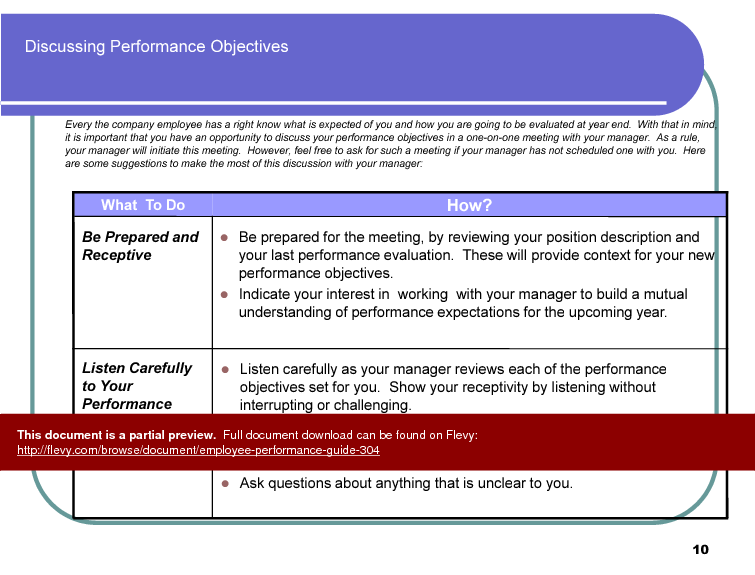
This guide delves into the intricacies of setting and discussing performance objectives, providing a clear roadmap for both managers and employees. It emphasizes the importance of being prepared and receptive during performance discussions, ensuring that employees understand their roles and expectations. The document also highlights the significance of listening carefully and asking pertinent questions to clarify any uncertainties.

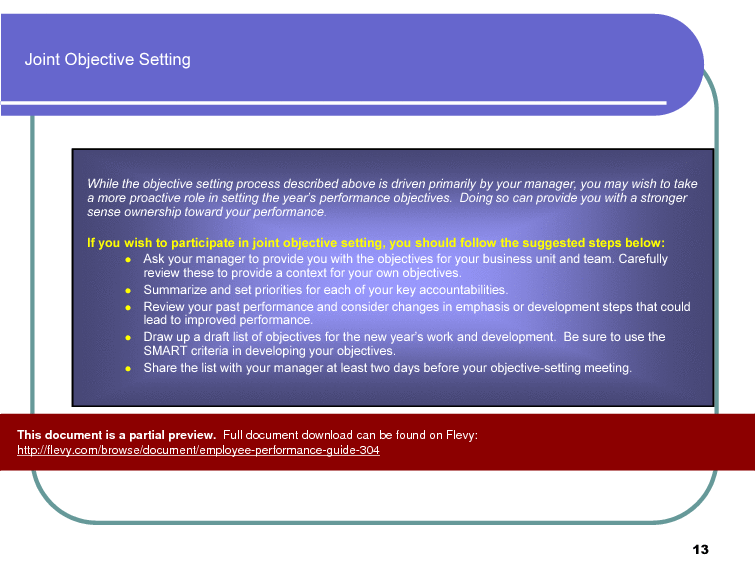
The guide includes a section on joint objective setting, encouraging employees to take a proactive role in their performance management. By participating in this process, employees can gain a stronger sense of ownership over their performance outcomes. The steps outlined for joint objective setting are designed to foster collaboration and ensure that performance objectives are aligned with both individual and organizational goals.

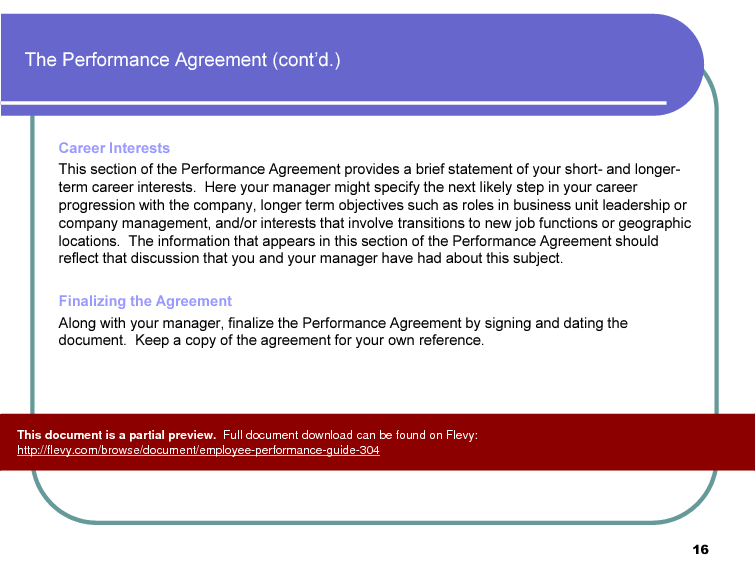
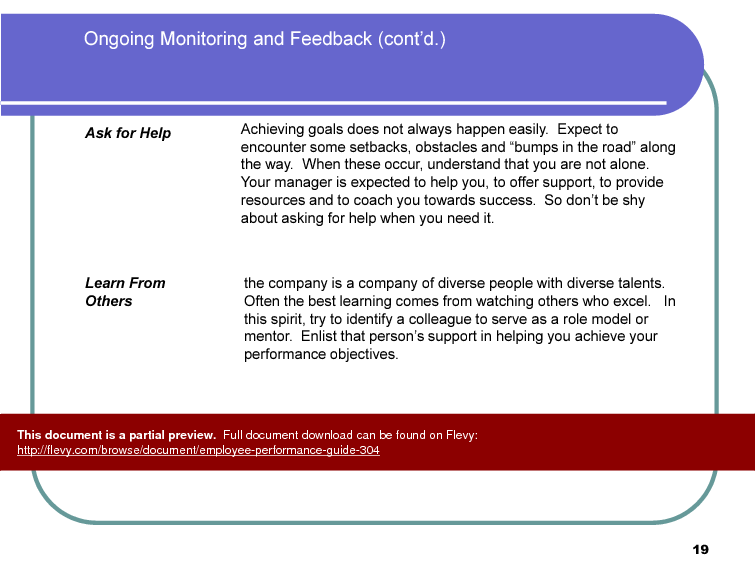
Additionally, the guide covers the finalization of the performance agreement, including career interests and the importance of ongoing monitoring and feedback. It provides practical advice on how to handle setbacks and leverage the diverse talents within the organization to achieve performance objectives. This comprehensive approach ensures that performance management is a continuous, dynamic process that drives both individual and organizational success.

Got a question about the product? Email us at support@flevy.com or ask the author directly by using the "Ask the Author a Question" form. If you cannot view the preview above this document description, go here to view the large preview instead.

MARCUS OVERVIEW

This synopsis was written by Marcus [?] based on the analysis of the full 32-slide presentation.


Executive Summary
The Employee Performance Guide is a structured resource designed to enhance performance management practices within small to mid-sized firms. This guide outlines a comprehensive framework for establishing performance objectives, ongoing monitoring, and feedback mechanisms. It empowers employees to take an active role in their performance management process, fostering a culture of continuous improvement and accountability. By utilizing this guide, organizations can ensure alignment between individual contributions and broader company goals, ultimately driving productivity and employee engagement.

Who This Is For and When to Use

•  HR professionals responsible for implementing performance management systems
•  Managers seeking to enhance team performance through structured feedback
•  Employees aiming to understand their roles in the performance management cycle
•  Organizational leaders focused on aligning individual performance with business objectives

Best-fit moments to use this deck:
•  During annual performance reviews to guide discussions and evaluations
•  When setting performance objectives at the beginning of a review period
•  For ongoing feedback sessions to track progress against established goals

Learning Objectives

•  Define the performance management cycle and its key phases
•  Establish SMART performance objectives in collaboration with management
•  Monitor progress and solicit feedback effectively throughout the year
•  Complete a self-appraisal that accurately reflects individual contributions
•  Prepare for and engage in performance review meetings with clarity
•  Identify developmental objectives to enhance professional growth

Table of Contents

•  Introduction (page 3)
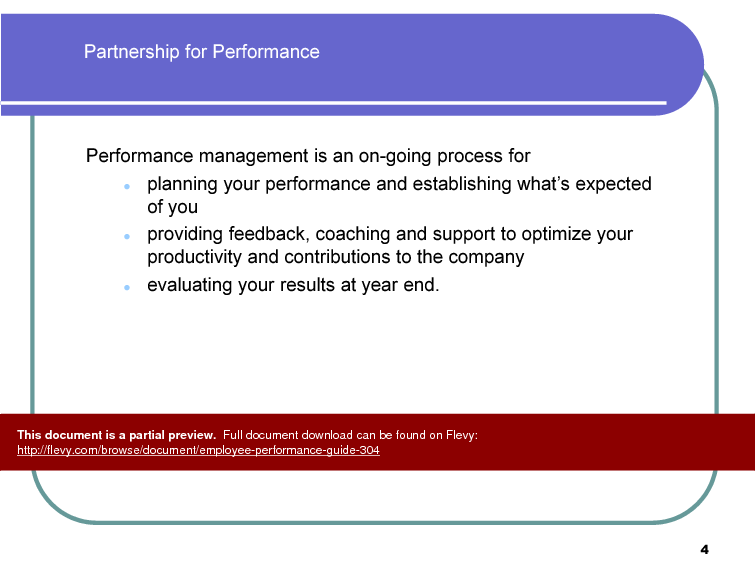
•  Partnership for Performance (page 4)
•  Performance Management Cycle (page 5)
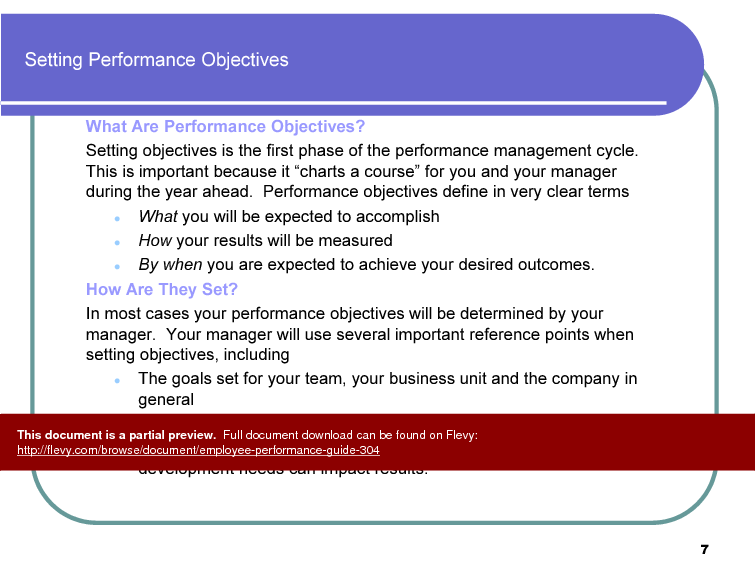
•  Setting Performance Objectives (page 7)
•  Discussing Performance Objectives (page 10)
•  Joint Objective Setting (page 13)
•  The Performance Agreement (page 14)
•  On-Going Monitoring and Feedback (page 17)
•  Year-End Performance Evaluation (page 20)
•  Completing the Self-Appraisal (page 21)
•  The Performance Review Meeting (page 27)
•  Final Thoughts (page 32)

Primary Topics Covered

•  Performance Management Cycle - This cycle includes setting performance objectives, monitoring progress, and participating in year-end evaluations, ensuring a structured approach to employee performance.
•  Setting Performance Objectives - Employees collaborate with managers to define clear, measurable objectives that guide performance throughout the year.
•  SMART Objectives - Objectives should be Specific, Measurable, Achievable, Relevant, and Timely, providing a clear framework for performance expectations.
•  Performance Agreement - This document formalizes the agreed-upon objectives and expectations between employees and managers, serving as a reference throughout the performance period.
•  Ongoing Monitoring and Feedback - Continuous communication and feedback are emphasized to help employees stay aligned with their objectives and address challenges proactively.
•  Self-Appraisal Process - Employees assess their performance against set objectives, providing a basis for discussion during performance reviews.

Deliverables, Templates, and Tools

•  Performance Agreement template for documenting objectives and expectations
•  Self-Appraisal form for evaluating personal contributions and competencies
•  Feedback solicitation framework to encourage ongoing communication
•  Performance review meeting agenda template to structure discussions
•  SMART objectives checklist to guide the objective-setting process
•  Developmental objectives planning tool for identifying growth opportunities

Slide Highlights

•  Overview of the Performance Management Cycle illustrating key phases
•  SMART Objectives framework detailing criteria for effective goal-setting
•  Sample Performance Agreement showcasing the structure and components
•  Color-coded rating scale for self-appraisal assessments
•  Guidelines for conducting effective performance review meetings

Potential Workshop Agenda

Performance Management Overview Session (60 minutes)
•  Introduce the performance management cycle and its importance
•  Discuss the roles of employees and managers in the process
•  Review the tools and templates available for effective implementation

Objective Setting Workshop (90 minutes)
•  Guide participants in drafting SMART objectives
•  Facilitate discussions on aligning individual objectives with team goals
•  Share best practices for documenting objectives in the Performance Agreement

Feedback and Monitoring Session (60 minutes)
•  Explore strategies for soliciting and providing feedback
•  Discuss the importance of ongoing communication in performance management
•  Role-play scenarios for effective feedback conversations

Customization Guidance

•  Adapt the Performance Agreement template to reflect specific departmental goals and metrics
•  Modify the self-appraisal form to align with organizational competencies and values
•  Incorporate company-specific examples in training sessions to enhance relevance

Secondary Topics Covered

•  Importance of communication in the performance management process
•  Techniques for effective goal alignment across teams
•  Strategies for addressing performance challenges proactively
•  Role of developmental objectives in career advancement
•  Best practices for conducting performance review meetings

Topic FAQ

What are the core phases of a basic performance management cycle?

A basic performance management cycle includes collaboratively setting objectives, ongoing monitoring and feedback, employee self-appraisal, and a year-end performance evaluation. Joint objective setting and a documented Performance Agreement help maintain alignment and provide a reference throughout the period, as shown in the Performance Management Cycle and Performance Agreement.

How do I write SMART performance objectives that are useful in reviews?

SMART objectives are Specific, Measurable, Achievable, Relevant, and Timely; write clear deliverables, define metrics, set realistic targets, and add deadlines. Collaborate with the manager to ensure relevance to team goals and document the result in an agreed Performance Agreement; use a SMART objectives checklist to validate each objective.

What should be included in a Performance Agreement between an employee and manager?

A Performance Agreement should document agreed objectives, success metrics, timelines, role expectations, monitoring cadence, and any career interests or development goals. It serves as the reference for progress discussions and year-end evaluation; many organizations capture these elements in a dedicated Performance Agreement template.

How do I choose a simple performance management toolkit for a small company on a tight timeline?

Look for a clear, stepwise process, ready-to-use templates (Performance Agreement, Self-Appraisal), feedback frameworks, a meeting agenda, and guidance on customization for departments. Materials that include facilitator notes or workshop agendas speed roll-out; a compact 32-slide PPTX plus templates such as a Self-Appraisal form is often practical.

Are paid performance-management templates worth the cost for an HR department?

Paid templates can save implementation time, standardize evaluations, and provide ready agendas and checklists for training sessions. For small teams, they reduce design effort and provide customization guidance and tools like a Performance review meeting agenda template to accelerate roll-out and consistency.

How should a manager prepare employees for a year-end review if they haven't tracked progress all year?

Ask employees to complete a self-appraisal against current objectives, gather any ad hoc feedback, and jointly reconfirm expectations in a Performance Agreement going forward. Use the appraisal to structure the discussion, agree remedial monitoring steps, and create development actions documented in the Self-Appraisal form.

What is the recommended frequency for performance check-ins between manager and employee?

Regular check-ins are recommended to maintain alignment and address issues promptly; the guide advises scheduling meetings monthly or quarterly to monitor progress and provide feedback, using the ongoing monitoring and feedback practices described in the Performance Management Cycle.

What makes a useful self-appraisal and how should employees document achievements?

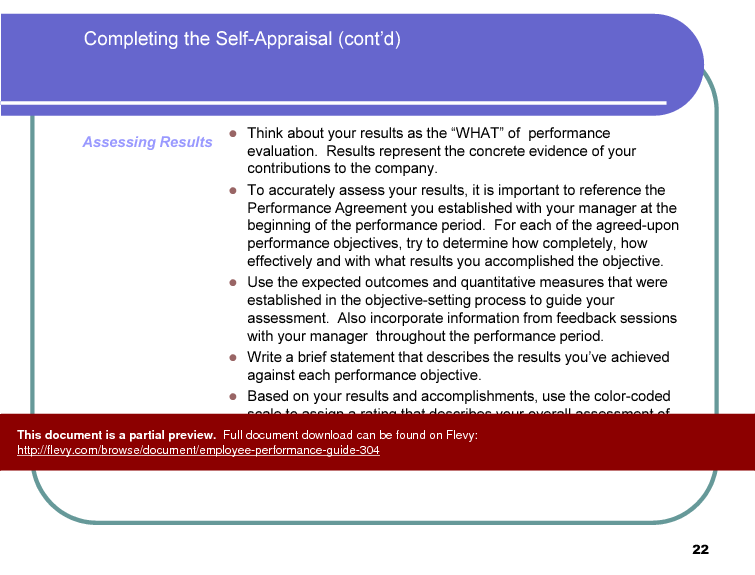
A useful self-appraisal assesses achievements against agreed objectives, cites evidence and outcomes, references feedback received, and includes development needs. Using a structured Self-Appraisal form and a color-coded rating scale helps standardize assessment and prepares a clear basis for the performance review meeting.

Document FAQ
These are questions addressed within this presentation.


What is the purpose of the Performance Agreement?
The Performance Agreement documents the objectives and expectations set between an employee and their manager, serving as a reference throughout the performance period.

How do I set SMART objectives?
SMART objectives are Specific, Measurable, Achievable, Relevant, and Timely, ensuring clarity and focus in performance expectations.

What should I include in my self-appraisal?
Your self-appraisal should assess your achievements against performance objectives, using evidence from your Performance Agreement and feedback received throughout the year.

How can I effectively solicit feedback?
Ask for feedback regularly, listen actively, and seek clarification on any points that are unclear to ensure you understand the input provided.

What are the key components of the performance review meeting?
The meeting should cover performance results, competencies, development needs, and future goals, allowing for a comprehensive evaluation of performance.

How often should I meet with my manager to discuss progress?
Regular check-ins are recommended, ideally scheduled monthly or quarterly, to ensure ongoing alignment and address any challenges promptly.

What if I disagree with my manager’s assessment during the performance review?
Prepare specific examples to support your perspective and discuss your points calmly and professionally during the review meeting.

How can I identify developmental objectives?
Reflect on your performance and seek input from your manager to identify areas for improvement and opportunities for skill enhancement.

Glossary

•  Performance Management Cycle - The ongoing process of setting objectives, monitoring progress, and evaluating performance.
•  SMART Objectives - A framework for setting clear and achievable performance goals.
•  Performance Agreement - A document outlining agreed-upon objectives and expectations between an employee and manager.
•  Self-Appraisal - An employee's assessment of their performance against established objectives.
•  Feedback - Information provided regarding performance to support improvement and development.
•  Competencies - Behavioral characteristics that contribute to effective performance.
•  Developmental Objectives - Goals focused on improving skills and competencies for career advancement.
•  Performance Review Meeting - A formal discussion between an employee and manager to evaluate performance and set future goals.
•  Ongoing Monitoring - The continuous process of tracking progress against performance objectives.
•  Joint Objective Setting - A collaborative approach to defining performance objectives between employees and managers.
•  Color-Coded Rating Scale - A standardized method for assessing performance levels in self-appraisals.
•  Communication - The exchange of information between employees and managers regarding performance expectations and feedback.

Source: Best Practices in Performance Management, Employee Engagement, Feedback PowerPoint Slides: Employee Performance Guide PowerPoint (PPTX) Presentation Slide Deck, Pontifica


$20.00

Add to Cart
  

ABOUT THE AUTHOR

Author: Pontifica

Ask the Author a Question

You must be logged in to contact the author.

Click here to log in Click here register

Did you know?
The average daily rate of a McKinsey consultant is $6,625 (not including expenses). The average price of a Flevy document is $65.
Need KPIs or benchmarks? Explore KPI Depot to access the most comprehensive database of KPI data, organized by function and industry.


Trusted by over 10,000+ Client Organizations
Since 2012, we have provided business templates to over 10,000 businesses and organizations of all sizes, from startups and small businesses to the Fortune 100, in over 130 countries.
AT&T GE Cisco Intel IBM Coke Dell Toyota HP Nike Samsung Microsoft Astrazeneca JP Morgan KPMG Walgreens Walmart 3M Kaiser Oracle SAP Google E&Y Volvo Bosch Merck Fedex Shell Amgen Eli Lilly Roche AIG Abbott Amazon PwC T-Mobile Broadcom Bayer Pearson Titleist ConEd Pfizer NTT Data Schwab



Read Customer Testimonials

 
"Last Sunday morning, I was diligently working on an important presentation for a client and found myself in need of additional content and suitable templates for various types of graphics. Flevy.com proved to be a treasure trove for both content and design at a reasonable price, considering the time I "

– M. E., Chief Commercial Officer, International Logistics Service Provider
 
"[Flevy] produces some great work that has been/continues to be of immense help not only to myself, but as I seek to provide professional services to my clients, it gives me a large "tool box" of resources that are critical to provide them with the quality of service and outcomes they are expecting."

– Royston Knowles, Executive with 50+ Years of Board Level Experience
 
"As a young consulting firm, requests for input from clients vary and it's sometimes impossible to provide expert solutions across a broad spectrum of requirements. That was before I discovered Flevy.com.

Through subscription to this invaluable site of a plethora of topics that are key and crucial to consulting, I "

– Nishi Singh, Strategist and MD at NSP Consultants
 
"FlevyPro provides business frameworks from many of the global giants in management consulting that allow you to provide best in class solutions for your clients."

– David Harris, Managing Director at Futures Strategy
 
"As a small business owner, the resource material available from FlevyPro has proven to be invaluable. The ability to search for material on demand based our project events and client requirements was great for me and proved very beneficial to my clients. Importantly, being able to easily edit and tailor "

– Michael Duff, Managing Director at Change Strategy (UK)
 
"I have found Flevy to be an amazing resource and library of useful presentations for lean sigma, change management and so many other topics. This has reduced the time I need to spend on preparing for my performance consultation. The library is easily accessible and updates are regularly provided. A wealth of great information."

– Cynthia Howard RN, PhD, Executive Coach at Ei Leadership
 
"I like your product. I'm frequently designing PowerPoint presentations for my company and your product has given me so many great ideas on the use of charts, layouts, tools, and frameworks. I really think the templates are a valuable asset to the job."

– Roberto Fuentes Martinez, Senior Executive Director at Technology Transformation Advisory
 
"One of the great discoveries that I have made for my business is the Flevy library of training materials.

As a Lean Transformation Expert, I am always making presentations to clients on a variety of topics: Training, Transformation, Total Productive Maintenance, Culture, Coaching, Tools, Leadership Behavior, etc. Flevy "

– Ed Kemmerling, Senior Lean Transformation Expert at PMG


Customers Also Bought These Documents


Customers Also Like These Documents

Explore Templates on Related Management Topics


Your Recently Viewed Documents
Download our FREE Strategy & Transformation Framework Templates

Download our free compilation of 50+ Strategy & Transformation slides and templates. Frameworks include McKinsey 7-S, Balanced Scorecard, Disruptive Innovation, BCG Curve, and many more.









