A3 and PDCA Problem Solving   19-slide PPT PowerPoint presentation slide deck (PPTX)
$35.00

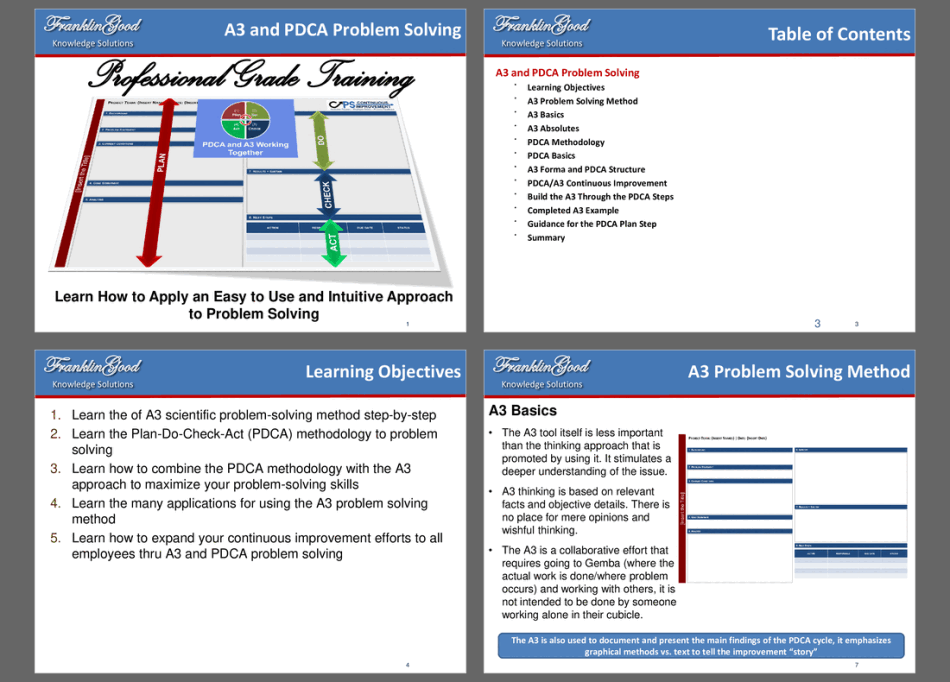
A3 and PDCA Problem Solving (19-slide PPT PowerPoint presentation slide deck (PPTX)) Preview Image
Flevy is the marketplace for business best practices.
A3 and PDCA Problem Solving (19-slide PPT PowerPoint presentation slide deck (PPTX)) Preview Image
Arrow   Click main image to view in full screen.

A3 and PDCA Problem Solving (PowerPoint PPTX Slide Deck)

PowerPoint (PPTX) + PowerPoint (PPTX) 19 Slides

Top 1,000 Best Practice $35.00

Add to Cart


Immediate download
Fully editable PowerPoint
Free lifetime updates

BENEFITS OF THIS POWERPOINT DOCUMENT

  1. Learn step-by-step the A3 and PDCA problem-solving methods
  2. Combining A3 and PDCA greatly enhances problem-solving capability across the enterprise
  3. Expand problem-solving significantly by engaging more employees via the approaches in this course

A3 PPT DESCRIPTION

Editor Summary A3 and PDCA Problem Solving is a 19-slide PowerPoint training (PPTX with supplemental PPTX) by FranklinGood that teaches the A3 scientific problem-solving method integrated with the Plan-Do-Check-Act (PDCA) cycle. Read more

A3 and PDCA Problem Solving Overview

A3 problem solving creates a standardized approach to problem-solving that is simple to use and learn, yet it uses "scientific" approaches versus opinions and anecdotes for problem-solving. A3 problem solving can be used every day by everyone in the organization. It is also very effective for solving problems that do not require the power and dedication of LSS projects or Kaizen techniques to solve. PDCA involves a method of planning, doing, checking, and taking actions. This course uniquely combines these two methods to be synergistic. In fact, combining the power of these two methods together in one course has proven to be the most effective way to learn these two problem-solving methods.

What This Course Provides

This 19-page course provides learners with a thorough understanding of the terminology and methodology associated with A3 and PDCA problem-solving. It is presented in FranklinGood's comprehensive and highly visual learning format. This course will help learners organize their thoughts, approaches, and methods for solving a vast variety of problems. Learners will be guided step-by-step through each of the 8 steps in the A3 while simultaneously using PDCA methods. Learners will be able to organize their approaches and simplify their efforts to create easy-to-communicate solutions. Examples and detailed steps are included. Also, a blank, user fillable A3 form is included. This course can set an organization on an effective problem-solving method that every employee can participate in.

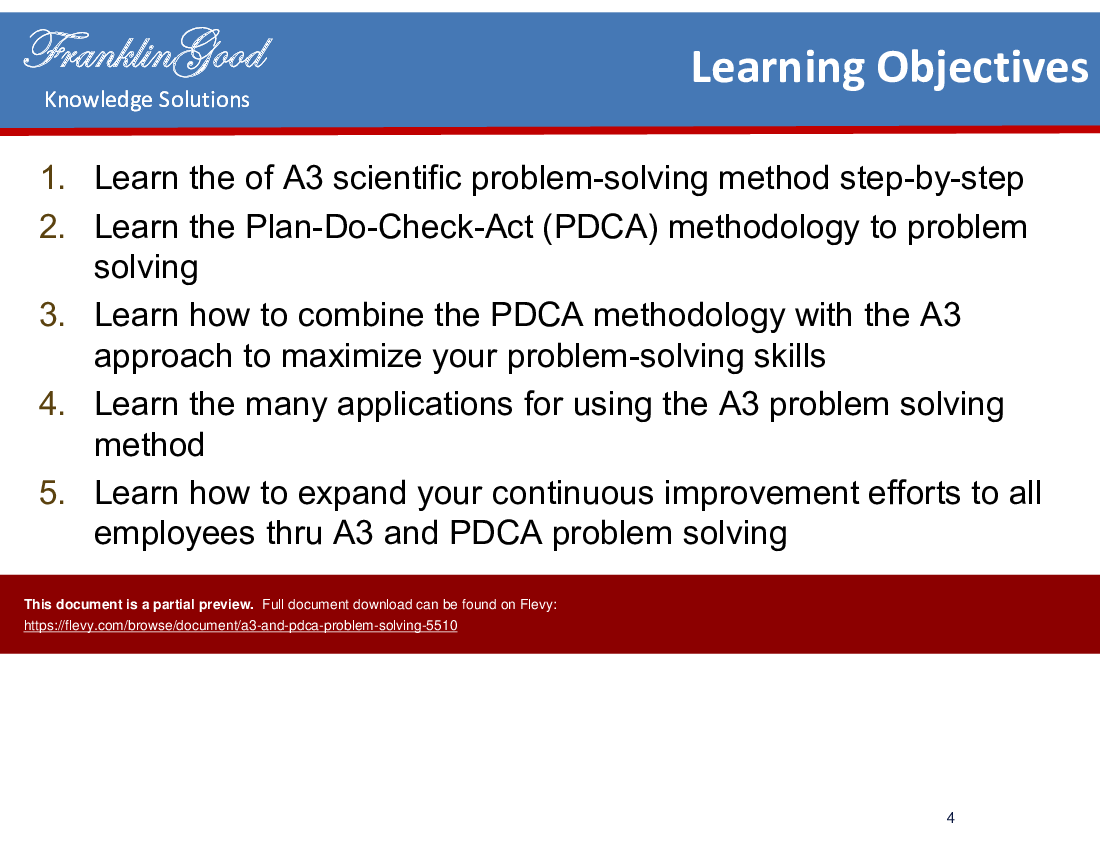
Learning Objectives

•  Learn the A3 scientific problem-solving method step-by-step.
•  Learn the Plan-Do-Check-Act (PDCA) methodology to problem-solving.
•  Learn how to combine the PDCA methodology with the A3 approach to maximize your problem-solving skills.
•  Learn the many applications for using the A3 problem-solving method.
•  Learn how to expand your continuous improvement efforts to all employees thru A3 and PDCA problem-solving.

Our approach to A3 and PDCA enhances the learner's knowledge of both of these methods while learning how to use them together. Problem-solving and solutioning is greatly enhanced. These approaches can be standardized across the enterprise to create an effective continuous improvement effort, possibly filling a gap in capability.
When employees learn the A3 and PDCA problem-solving method, some very important things tend to occur:
•  A common base of knowledge and understanding is quickly developed.
•  Every employee can become a contributor/problem solver.
•  The format and methods of the A3/PDCA approach makes communication about problem-solving/solutioning clear and easily understandable.
•  Consensus is reached with less conflict.
•  Action and results are more easily obtained due to the interactions, team effort and common understanding.

Train the Trainer Services
Train the Trainer services can be conducted via virtual or on-site for this course. Please request details and pricing by emailing your request to: .
Extended Benefits from this Course

Got a question about the product? Email us at support@flevy.com or ask the author directly by using the "Ask the Author a Question" form. If you cannot view the preview above this document description, go here to view the large preview instead.

MARCUS OVERVIEW

This synopsis was written by Marcus [?] based on the analysis of the full 19-slide presentation.


Executive Summary
The A3 and PDCA Problem Solving presentation provides a structured, scientific approach to problem-solving, integrating the A3 method and the Plan-Do-Check-Act (PDCA) cycle. This training is designed for professionals seeking to enhance their problem-solving capabilities and foster a culture of continuous improvement within their organizations. By utilizing the A3 framework, participants will learn to effectively analyze problems, identify root causes, and implement sustainable solutions. This presentation empowers teams to document their findings, track progress, and ensure that improvements are maintained over time.

Who This Is For and When to Use

•  Process Improvement Leaders looking to enhance team capabilities
•  Quality Assurance Teams focused on systematic problem-solving
•  Project Managers responsible for driving continuous improvement initiatives
•  Operations Managers aiming to optimize processes and reduce waste

Best-fit moments to use this deck:
•  During training sessions for new team members on problem-solving methodologies
•  In workshops aimed at identifying and resolving specific operational issues
•  When implementing continuous improvement initiatives across departments

Learning Objectives

•  Learn the A3 scientific problem-solving method step-by-step
•  Understand the Plan-Do-Check-Act (PDCA) methodology for effective problem-solving
•  Combine the PDCA methodology with the A3 approach to maximize problem-solving skills
•  Explore various applications for using the A3 problem-solving method
•  Expand continuous improvement efforts to all employees through A3 and PDCA problem-solving

Table of Contents

•  Learning Objectives (page 4)
•  A3 Problem Solving Method (page 5)
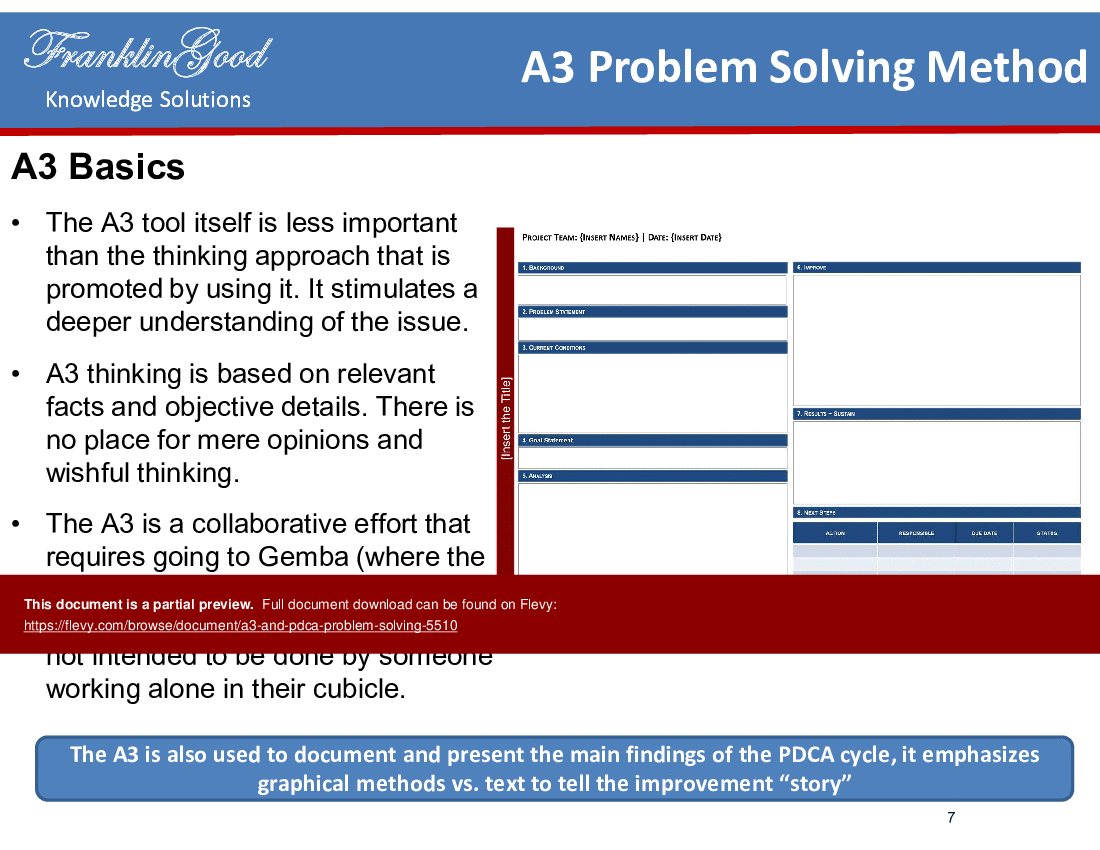
•  A3 Basics (page 5)
•  A3 Absolutes (page 8)
•  PDCA Methodology (page 9)
•  PDCA Basics (page 9)
•  A3 Form and PDCA Structure (page 12)
•  PDCA/A3 Continuous Improvement (page 10)
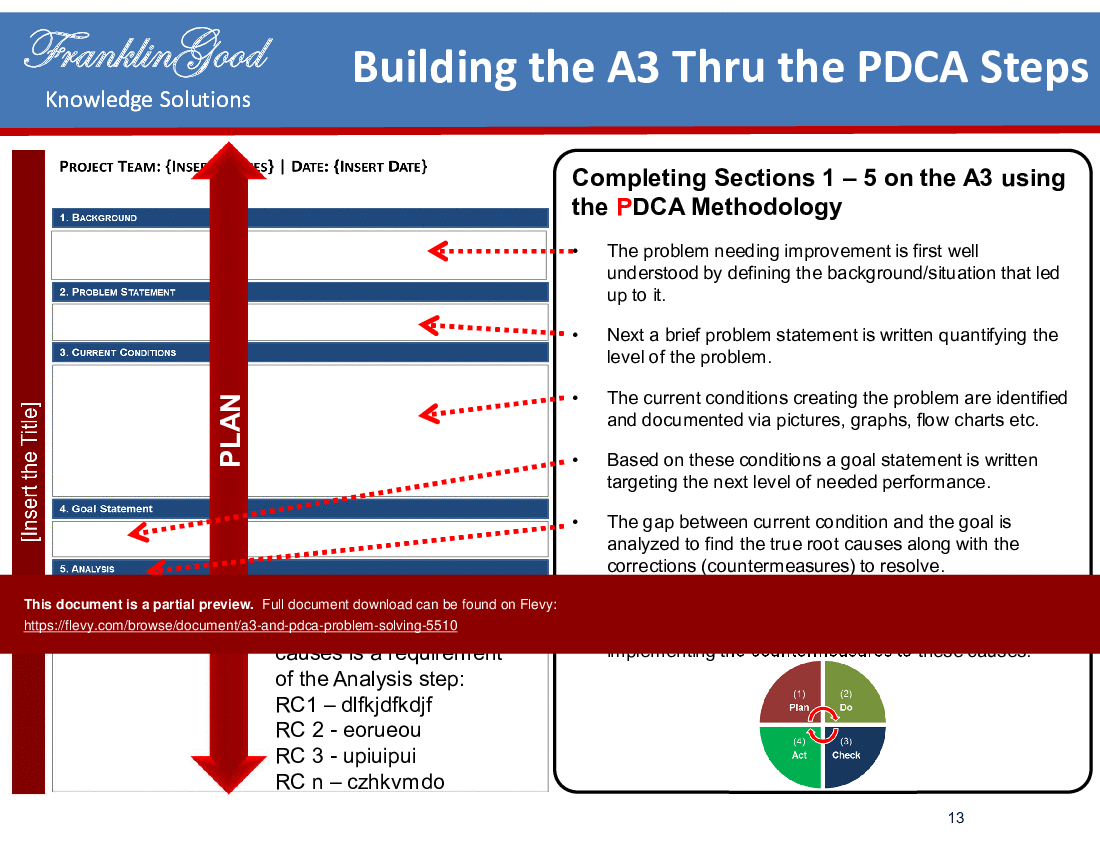
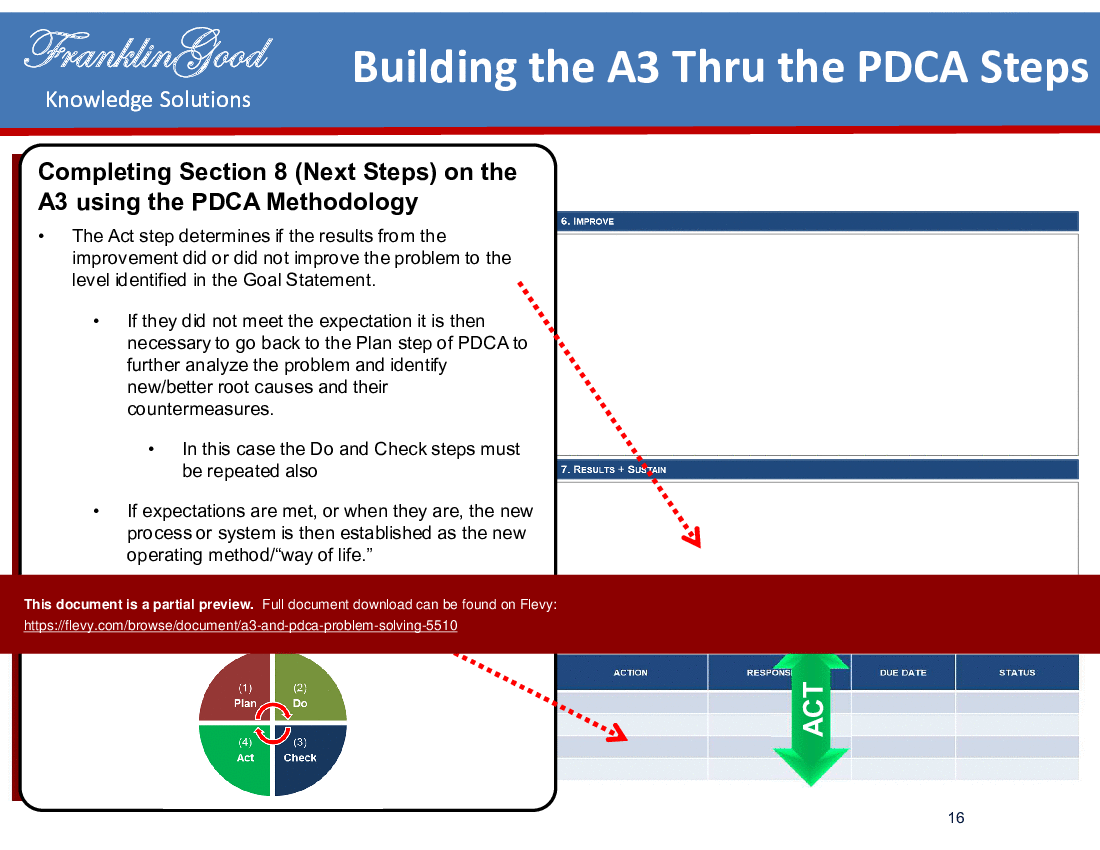
•  Build the A3 Through the PDCA Steps (page 13)
•  Completed A3 Example (page 17)
•  Guidance for the PDCA Plan Step (page 18)
•  Summary (page 19)

Primary Topics Covered

•  A3 Problem Solving Method - A structured approach that enhances problem-solving capabilities through scientific thinking and data analysis.
•  A3 Basics - An introduction to the A3 method, emphasizing its iterative nature and the importance of collaboration and data-driven decision-making.
•  A3 Absolutes - Key principles that guide effective A3 problem-solving, including the use of data, graphical representation, and clear goal statements.
•  PDCA Methodology - An overview of the Plan-Do-Check-Act cycle, a foundational framework for continuous improvement.
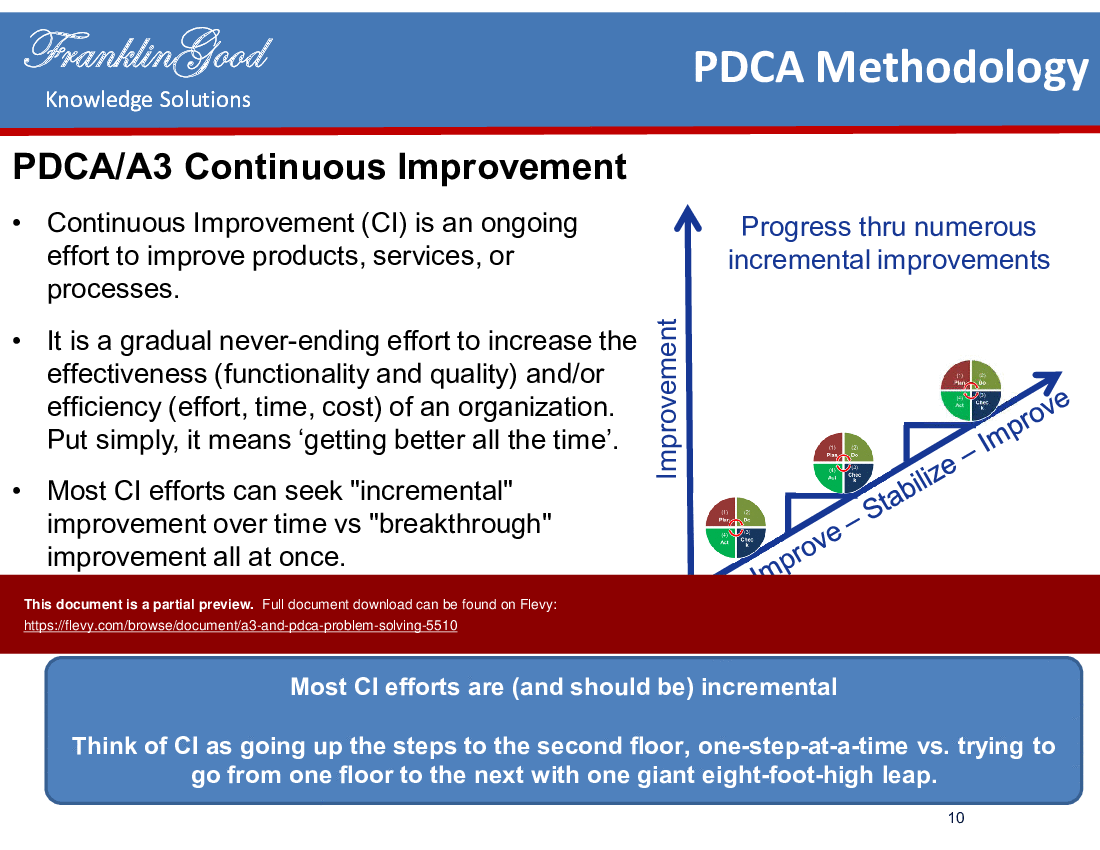
•  Continuous Improvement - The ongoing effort to enhance processes, products, and services through incremental improvements.
•  A3 Form Structure - Detailed breakdown of the A3 document, outlining sections for problem background, analysis, and action plans.

Deliverables, Templates, and Tools

•  A3 problem-solving template for documenting issues and solutions
•  PDCA cycle framework for tracking progress and outcomes
•  Example A3 documents illustrating completed problem-solving cases
•  Graphical tools for data representation and analysis
•  Guidelines for conducting effective root cause analysis
•  Control plans for sustaining improvements over time

Slide Highlights

•  Overview of the A3 problem-solving method and its benefits
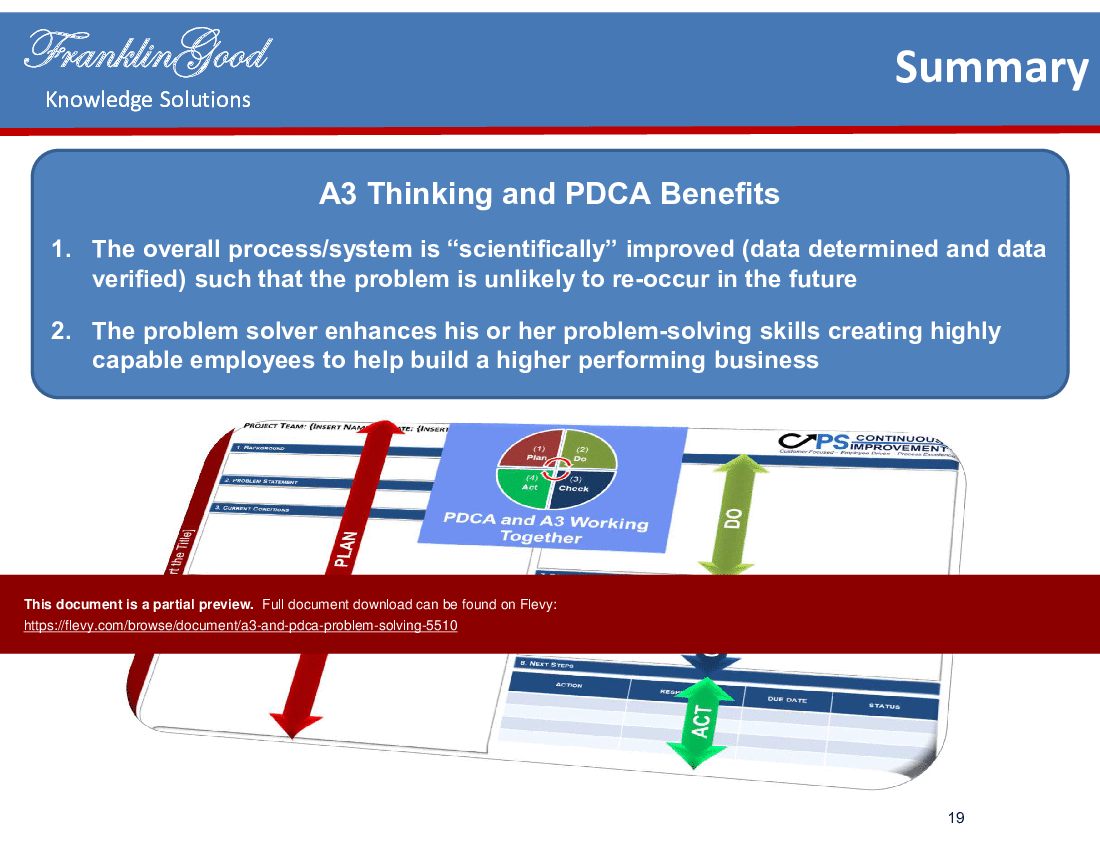
•  Visual representation of the PDCA cycle and its application in A3
•  Examples of successful A3 implementations and their outcomes
•  Key principles of effective problem-solving illustrated through graphics
•  Step-by-step guidance on building an A3 document

Potential Workshop Agenda

Introduction to A3 and PDCA (30 minutes)
•  Overview of A3 and PDCA methodologies
•  Discussion on the importance of structured problem-solving

Hands-On A3 Development (90 minutes)
•  Participants work in teams to create an A3 document based on a real-world problem
•  Guided facilitation to ensure understanding of each A3 section

Review and Feedback Session (30 minutes)
•  Teams present their A3 documents
•  Peer feedback and discussion on improvement opportunities

Customization Guidance

•  Tailor the A3 template to fit specific organizational needs and terminology
•  Adjust the PDCA cycle steps to align with existing processes and frameworks
•  Incorporate relevant data and examples from your organization into the training materials

Secondary Topics Covered

•  Root cause analysis techniques and tools
•  Effective data collection and analysis methods
•  Strategies for fostering a culture of continuous improvement
•  Collaboration techniques for team-based problem-solving
•  Importance of visual management in tracking progress

Topic FAQ

What are the core steps of the A3 problem-solving method?

The A3 method guides teams through a structured problem statement, background, analysis, countermeasures, and action planning, organized into an 8-step sequence. The A3 is typically documented on a single sheet to force clarity and concise communication, represented in the course as an 8-step A3 form.

How does the PDCA cycle support A3 problem solving in practice?

PDCA provides the iterative Plan-Do-Check-Act loop used to test and refine countermeasures documented on an A3. The course maps PDCA steps to building an A3 so teams plan, implement, evaluate, and adjust actions within the A3 structure, ending with iterative PDCA cycles.

What root-cause analysis tools are commonly used with A3 and PDCA?

Common tools include fishbone (cause-and-effect) diagrams, 5 Whys analysis, and cause-and-effect matrices to move from symptoms to underlying causes. The training includes guidance on these techniques and their application within an A3, such as fishbone and 5 Whys.

What types of problems are best suited to A3 and PDCA approaches?

A3 and PDCA work well for everyday operational issues and problems that need systematic, data-driven analysis, but do not require full Lean Six Sigma or large Kaizen projects. The materials emphasize using A3/PDCA for a wide range of process problems and incremental improvements.

How should I choose an A3/PDCA training deck if I have a small budget?

Prioritize decks that include a user-fillable A3 template, example completed A3s, clear PDCA mapping, and an instructor agenda to reduce prep time. Flevy's A3 and PDCA Problem Solving supplies a 19-slide course, blank A3 form, and example A3 documents to support low-prep training.

What is a realistic timeline and workshop structure for teaching A3 and PDCA?

A typical workshop in the materials runs about 150 minutes: a 30-minute introduction, a 90-minute hands-on A3 development session, and a 30-minute review and feedback session, enabling teams to draft and present A3s within a single half-day workshop.

After implementing solutions, what controls help sustain improvements made via A3?

Implement a control plan with defined monitoring metrics, regular PDCA review cycles, and documented ownership for each countermeasure. The course includes templates and guidance for creating control plans and monitoring mechanisms to sustain improvements via a control plan.

How can I scale A3 and PDCA so all employees contribute to continuous improvement?

Standardize an A3 form, provide step-by-step training, supply example A3s and templates, and adapt terminology to your organization so employees can use the same format. The course includes a blank fillable A3 form and examples to support enterprise-wide adoption using a standardized A3 form.

Document FAQ
These are questions addressed within this presentation.


What is the A3 problem-solving method?
The A3 problem-solving method is a structured approach that utilizes scientific thinking to analyze problems, identify root causes, and implement effective solutions, all documented on an A3-sized sheet.

How does the PDCA cycle integrate with A3?
The PDCA cycle provides a framework for continuous improvement, guiding teams through the steps of planning, executing, checking results, and acting on findings, which complements the A3 problem-solving approach.

What are the key benefits of using A3 and PDCA together?
Combining A3 and PDCA enhances problem-solving capabilities, promotes data-driven decision-making, and fosters a culture of continuous improvement across the organization.

Can this training be customized for specific industries?
Yes, the A3 and PDCA methodologies can be tailored to fit the unique needs and challenges of various industries, ensuring relevance and applicability.

How can I ensure sustainability of improvements made through A3?
Implement control plans and mechanisms to monitor progress and maintain improvements, ensuring that changes become part of the organization’s standard operating procedures.

What tools are recommended for root cause analysis?
Common tools include fishbone diagrams, 5 Whys analysis, and cause-and-effect matrices, which help teams identify underlying issues contributing to problems.

How do I engage my team in the A3 process?
Encourage collaboration and open communication, involve team members in data collection and analysis, and provide training on A3 principles to foster ownership of the process.

What types of problems are best suited for A3 and PDCA?
A3 and PDCA are effective for a wide range of problems, particularly those that require systematic analysis and collaborative solutions in operational processes.

Glossary

•  A3 - A structured problem-solving approach documented on an 11” x 17” sheet.
•  PDCA - Plan-Do-Check-Act; a continuous improvement methodology.
•  Gemba - The place where work is done; critical for understanding problems.
•  Root Cause Analysis - A method for identifying the underlying causes of problems.
•  Continuous Improvement - Ongoing efforts to enhance processes, products, or services.
•  Countermeasure - Actions taken to address identified root causes.
•  Goal Statement - A clear articulation of desired outcomes and performance levels.
•  Control Plan - A strategy for monitoring and sustaining improvements over time.
•  Data Analysis - The process of inspecting and interpreting data to inform decisions.
•  Collaboration - Working together to achieve common goals in problem-solving.
•  Visual Management - Using visual tools to track progress and communicate information.
•  Incremental Improvement - Gradual enhancements made over time rather than radical changes.
•  Process Mapping - A visual representation of the steps involved in a process.
•  Kaizen - A Japanese term meaning "continuous improvement."
•  Quality Assurance - Systematic processes to ensure product or service quality.
•  Stakeholder Engagement - Involving relevant parties in the problem-solving process.
•  Performance Metrics - Standards used to measure the effectiveness of improvements.
•  Training Needs Assessment - Identifying gaps in skills and knowledge for effective training.
•  Action Plan - A detailed outline of steps to be taken to achieve specific goals.
•  Feedback Loop - A process for receiving and incorporating input on performance.

Source: Best Practices in A3, PDCA PowerPoint Slides: A3 and PDCA Problem Solving PowerPoint (PPTX) Presentation Slide Deck, FranklinGood


$35.00

Add to Cart
  

ABOUT THE AUTHOR

Author: FranklinGood
Additional documents from author: 18

Don Redinius, CEO of FranklinGood, is a globally recognized expert in business and personal performance improvement with a broad base of knowledge, extensive experience and he is an excellent teacher. He has over thirty years of business experience. More than twenty-five years of executive management experience at the VP, Senior VP, President, and CEO level, is a certified Six Sigma Master Black ... [read more]

Ask the Author a Question

You must be logged in to contact the author.

Click here to log in Click here register

Did you know?
The average daily rate of a McKinsey consultant is $6,625 (not including expenses). The average price of a Flevy document is $65.


Trusted by over 10,000+ Client Organizations
Since 2012, we have provided business templates to over 10,000 businesses and organizations of all sizes, from startups and small businesses to the Fortune 100, in over 130 countries.
AT&T GE Cisco Intel IBM Coke Dell Toyota HP Nike Samsung Microsoft Astrazeneca JP Morgan KPMG Walgreens Walmart 3M Kaiser Oracle SAP Google E&Y Volvo Bosch Merck Fedex Shell Amgen Eli Lilly Roche AIG Abbott Amazon PwC T-Mobile Broadcom Bayer Pearson Titleist ConEd Pfizer NTT Data Schwab


Read Customer Testimonials

 
"One of the great discoveries that I have made for my business is the Flevy library of training materials.

As a Lean Transformation Expert, I am always making presentations to clients on a variety of topics: Training, Transformation, Total Productive Maintenance, Culture, Coaching, Tools, Leadership Behavior, etc. Flevy "

– Ed Kemmerling, Senior Lean Transformation Expert at PMG
 
"I like your product. I'm frequently designing PowerPoint presentations for my company and your product has given me so many great ideas on the use of charts, layouts, tools, and frameworks. I really think the templates are a valuable asset to the job."

– Roberto Fuentes Martinez, Senior Executive Director at Technology Transformation Advisory
 
"My FlevyPro subscription provides me with the most popular frameworks and decks in demand in today’s market. They not only augment my existing consulting and coaching offerings and delivery, but also keep me abreast of the latest trends, inspire new products and service offerings for my practice, and educate me "

– Bill Branson, Founder at Strategic Business Architects
 
"As a consultant requiring up to date and professional material that will be of value and use to my clients, I find Flevy a very reliable resource.

The variety and quality of material available through Flevy offers a very useful and commanding source for information. Using Flevy saves me time, enhances my expertise and ends up being a good decision."

– Dennis Gershowitz, Principal at DG Associates
 
"As a consulting firm, we had been creating subject matter training materials for our people and found the excellent materials on Flevy, which saved us 100's of hours of re-creating what already exists on the Flevy materials we purchased."

– Michael Evans, Managing Director at Newport LLC
 
"As a young consulting firm, requests for input from clients vary and it's sometimes impossible to provide expert solutions across a broad spectrum of requirements. That was before I discovered Flevy.com.

Through subscription to this invaluable site of a plethora of topics that are key and crucial to consulting, I "

– Nishi Singh, Strategist and MD at NSP Consultants
 
"Flevy is our 'go to' resource for management material, at an affordable cost. The Flevy library is comprehensive and the content deep, and typically provides a great foundation for us to further develop and tailor our own service offer."

– Chris McCann, Founder at Resilient.World
 
"I have found Flevy to be an amazing resource and library of useful presentations for lean sigma, change management and so many other topics. This has reduced the time I need to spend on preparing for my performance consultation. The library is easily accessible and updates are regularly provided. A wealth of great information."

– Cynthia Howard RN, PhD, Executive Coach at Ei Leadership


Customers Also Bought These Documents


Customers Also Like These Documents

Explore Templates on Related Management Topics


Your Recently Viewed Documents
Document Bundle
$229.00 Bundle of 5 Documents
Receive our FREE presentation on Operational Excellence

This 50-slide presentation provides a high-level introduction to the 4 Building Blocks of Operational Excellence. Achieving OpEx requires the implementation of a Business Execution System that integrates these 4 building blocks.