
Editor Summary
Structured Communication, Presentation Development, and Storyboarding is a 40-slide PowerPoint presentation by Process Consulting that teaches structured communication using the Pyramid Principle and MECE framework.
Read moreIncludes deliverables and templates such as a storyboard template, message template, pyramid structure outline, visual guidelines, Brown Paper technique, and standard formats. Target users include corporate executives, integration leaders, consultants, and project managers. Used for high-stakes board presentations, client engagements, and communication workshops; sold as a digital download on Flevy with immediate digital download.
Use this presentation when you must turn complex analysis into clear conclusions and recommendations for high-stakes audiences — for example, board meetings, client proposals, integration stakeholder updates, or team communication workshops.
Corporate executives preparing a board briefing that summarizes strategic options and recommended decisions.
Integration leaders mapping stakeholder communication plans and sequencing messages across phases.
Consultants constructing client decks that organize arguments logically and persuasively.
Project managers translating technical progress and risks into concise executive-level slides.
The approach centers on the Pyramid Principle and MECE framework, reflecting structured communication techniques emphasized in McKinsey, Bain, and BCG-style consulting.
This presentation talks to the topics of structure communication, presentation development, and storyboarding. These topics related to formulating a cohesive, powerful business presentation.
This document dives deep into the essential elements of structured communication, ensuring your message is clear and impactful. It emphasizes the importance of defining your objective, whether to inform or persuade, and tailors your approach accordingly. The presentation guides you in crafting a narrative that your audience can easily follow, using storyboarding techniques to map out your key messages and supporting data.
The Brown Paper technique is highlighted as a powerful tool for visualizing your storyboard, helping you organize your content logically and coherently. This method ensures that each section of your presentation is aligned with your overall objective, making it easier for your audience to grasp complex information. The document also covers the Pyramid Principle, a proven approach to structuring information that enhances comprehension and retention.
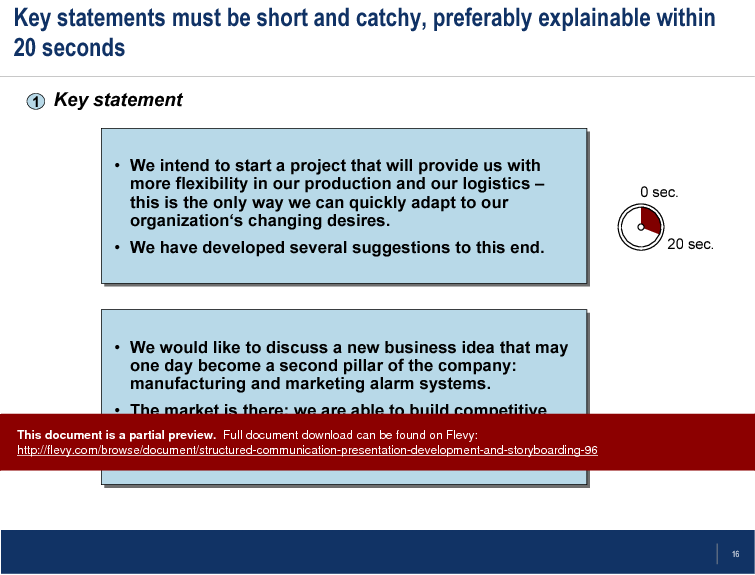
Key statements are another focus, with guidelines on making them short, catchy, and easily explainable within 20 seconds. This ensures your audience quickly understands the main points, keeping their attention and interest. The MECE principle is applied to systematically structure problems, ensuring that all statements are mutually exclusive and collectively exhaustive, leaving no gaps in your argument.
Standard formats are recommended for their practical advantages, providing a ready-made framework that promotes writing and production efficiencies. This consistency helps your audience know where to look for specific types of information, enhancing their overall experience. The document also emphasizes the power of graphics in presentations, advocating for simpler visuals that convey both numerical and visual messages effectively.
Got a question about the product? Email us at support@flevy.com or ask the author directly by using the "Ask the Author a Question" form. If you cannot view the preview above this document description, go here to view the large preview instead.
MARCUS OVERVIEW
This synopsis was written by Marcus [?] based on the analysis of the full 40-slide presentation.
Executive Summary
This presentation on Structured Communication, Presentation Development, and Storyboarding is crafted to elevate your presentation skills to a McKinsey, Bain, or BCG-quality standard (consulting-grade; not affiliated). It provides a systematic approach to distilling complex information into clear conclusions and actionable recommendations. By employing the Pyramid Principle and MECE framework, this guide enables users to effectively communicate their messages, ensuring that presentations are not only informative, but also persuasive and engaging.
Who This Is For and When to Use
• Corporate executives tasked with delivering strategic presentations
• Integration leaders responsible for stakeholder communication
• Consultants aiming to enhance client presentations
• Project managers needing to convey complex project details clearly
Best-fit moments to use this deck:
• During the development of high-stakes presentations for board meetings
• When preparing for client engagements that require clarity and persuasion
• In workshops focused on improving team communication strategies
Learning Objectives
• Define the core principles of effective communication in presentations
• Build a structured storyboard to guide presentation development
• Establish a clear communication strategy tailored to audience needs
• Apply the Pyramid Principle to organize information logically
• Create compelling visuals that enhance data presentation
• Utilize the MECE framework to ensure clarity and completeness in arguments
Table of Contents
• Communication Strategy (page 2)
• Storyboarding (page 5)
• Five Principles of Document Writing (page 6)
• The Pyramid Principle (page 12)
• Structuring Your Presentation (page 22)
• Presenting Data (page 31)
Primary Topics Covered
• Communication Strategy - Focuses on the importance of clarity in conveying conclusions and recommendations derived from various analyses.
• Storyboarding - Emphasizes the need for early planning to visualize and organize presentation content effectively.
• Five Principles of Document Writing - Outlines essential principles such as writing for the audience and maintaining simplicity.
• The Pyramid Principle - Introduces a structured approach to presenting information hierarchically for better comprehension.
• Structuring Your Presentation - Details the horizontal and vertical logic required to create coherent presentations.
• Presenting Data - Discusses best practices for presenting data visually to enhance understanding and retention.
Deliverables, Templates, and Tools
• Storyboard template for organizing presentation content
• Message template to clarify communication objectives and key messages
• Pyramid structure outline for logically arranging arguments
• Visual guidelines for effective data presentation
• Brown Paper technique for visualizing story flow
• Standard formats for consistency across presentations
Slide Highlights
• Introduction slide emphasizing the importance of clarity in communication
• Storyboarding slide illustrating the process of organizing ideas
• Pyramid Principle slide demonstrating the hierarchical structure of arguments
• Data presentation slide showcasing effective use of visuals
• Five principles slide summarizing key document writing strategies
Potential Workshop Agenda
Introduction to Structured Communication (60 minutes)
• Overview of communication strategy and its importance
• Discuss the role of storyboarding in presentation development
Pyramid Principle Application (90 minutes)
• Explore the Pyramid Principle and its practical applications
• Hands-on activity to create a pyramid structure for a sample presentation
Data Presentation Techniques (60 minutes)
• Review best practices for presenting data visually
• Group exercise to redesign a data-heavy slide for clarity
Customization Guidance
• Tailor the storyboard template to fit specific project needs and audience preferences
• Adjust the message template to align with organizational terminology and objectives
• Incorporate company branding into presentation formats for consistency
Secondary Topics Covered
• Importance of audience analysis in communication
• Techniques for engaging the audience during presentations
• Strategies for handling questions and feedback effectively
• Best practices for follow-up communication post-presentation
Topic FAQ
What is the Pyramid Principle and how does it structure a presentation?
The Pyramid Principle is a hierarchical method for organizing information so conclusions and supporting arguments are presented logically, improving comprehension and retention. It helps users lead with the key message and group supporting points beneath it, as shown in the product's Pyramid Principle slide and pyramid structure outline.
How does the MECE framework prevent gaps or overlaps in an argument?
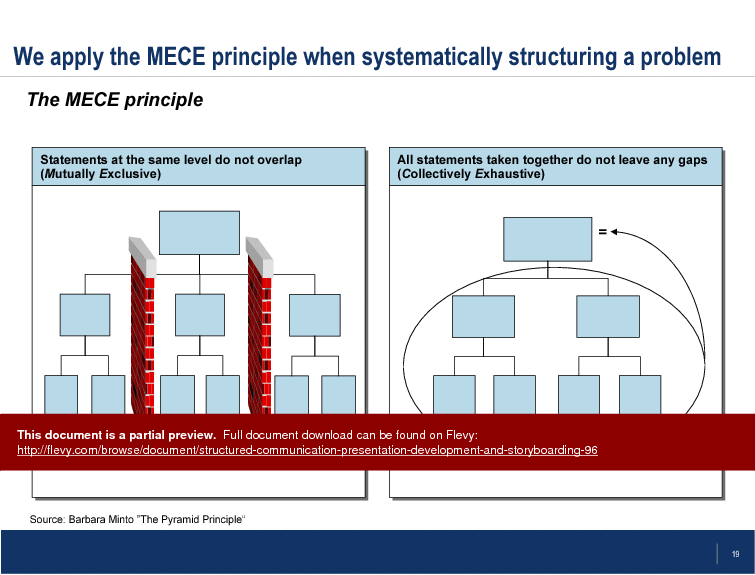
MECE stands for mutually exclusive, collectively exhaustive; it guides users to split issues so items do not overlap and all relevant areas are covered. Applying MECE helps ensure completeness and clarity when structuring problems, a concept reinforced in the presentation's explanation of the MECE principle.
What is storyboarding and why should teams use it before slide production?
Storyboarding is the visual planning of a presentation’s flow to ensure ideas are organized before formal slide development. It helps teams check coherence and narrative sequencing early, often using the Brown Paper technique and the provided storyboard template to map story flow and alignment.
What should I look for in a structured communication template for high-stakes presentations?
Seek templates that combine a clear message template, a storyboard template, a pyramid structure outline, and visual guidelines so you can define objectives, sequence arguments, and present data consistently. The Flevy product Structured Communication, Presentation Development, and Storyboarding includes each of those templates.
How can I judge the cost versus value of buying presentation templates and frameworks?
Evaluate templates by estimated time savings, consistency benefits, and production efficiency; templates that provide standard formats and reusable message/storyboard structures tend to reduce drafting time and rework. The presentation explicitly cites standard formats and templates as means to achieve writing and production efficiencies.
I need to present complex project findings to a board — which framework will make recommendations clear?
Start by clarifying the communication objective, then apply the Pyramid Principle to lead with conclusions and group supporting arguments, use MECE to structure issues, and employ simple visuals for key numbers. The product’s guidance centers on the Pyramid Principle and message template to support that workflow.
What techniques make data-heavy slides easier to understand for executives?
Use simple, clean tables, highlight key numbers, and select appropriate graphics that convey the message visually rather than cluttering slides. The presentation’s Presenting Data section and visual guidelines recommend these practices and include example slides demonstrating effective visuals.
Can a workshop help my team adopt structured communication methods, and what might it include?
Yes; the presentation contains a sample workshop agenda with timed modules to teach and practice structured communication, including a 60-minute introduction, a 90-minute Pyramid Principle application with hands-on activities, and a 60-minute data presentation exercise.
Document FAQ
These are questions addressed within this presentation.
What is the Pyramid Principle?
The Pyramid Principle is a structured approach to presenting information hierarchically, allowing for better comprehension and retention of key messages.
How can storyboarding improve my presentations?
Storyboarding helps visualize the flow of information, ensuring that ideas are organized logically and communicated effectively.
What are the 5 principles of document writing?
The 5 principles include writing for your audience, keeping it simple, supporting assertions with facts, using active voice, and telling a good story.
Why is it important to clarify the communication objective?
Clarifying the objective ensures that the presentation is focused, whether the goal is to inform, persuade, or provoke action.
How can I effectively present data?
Use simple and clean tables, highlight key numbers, and choose appropriate graphics to convey your message clearly.
What role does audience analysis play in communication?
Understanding your audience allows you to tailor your message and presentation style to meet their needs and expectations.
How can I ensure my presentation is persuasive?
Incorporate compelling arguments, support them with data, and engage the audience through storytelling techniques.
What is the Brown Paper technique?
The Brown Paper technique is a visual method for sketching out story flow and verifying the coherence of your presentation.
Glossary
• Communication Strategy - A plan for effectively conveying messages to an audience.
• Storyboarding - The process of organizing ideas visually before developing a presentation.
• Pyramid Principle - A method for structuring information hierarchically for clarity.
• MECE Principle - A framework ensuring that statements are mutually exclusive and collectively exhaustive.
• Visual Guidelines - Best practices for presenting data and information visually.
• Message Template - A structured format for clarifying communication objectives.
• Brown Paper Technique - A visual approach to planning and verifying presentation flow.
• Active Voice - A writing style that emphasizes directness and clarity by using active verbs.
• Document Writing Principles - Key strategies for effective written communication.
• Data Presentation - Techniques for displaying data in a clear and impactful manner.
• Engagement Techniques - Strategies for maintaining audience interest during presentations.

• Follow-up Communication - The process of engaging with the audience after the presentation to reinforce messages.
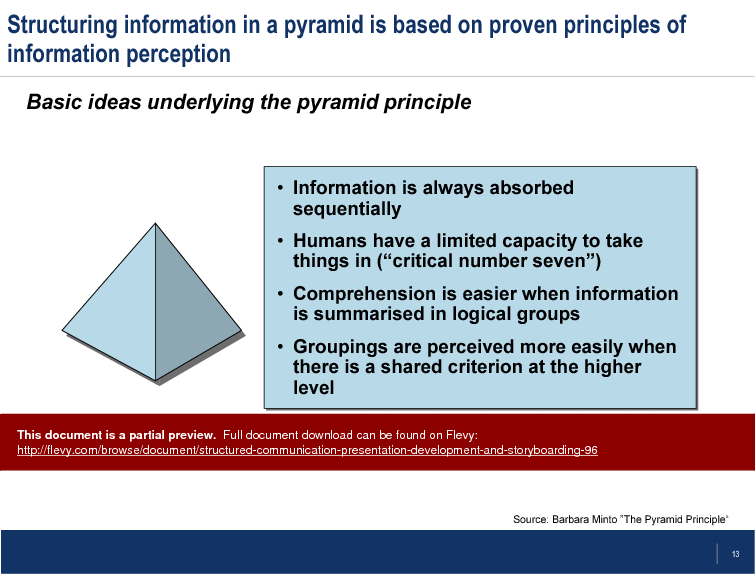
This PPT slide outlines the structural elements of a pyramid, highlighting 3 key components: the key statement, vertical relationships, and horizontal relationships. The key statement serves as the foundation, supported by arguments that adhere to the MECE principle for clarity and logical flow. Vertical relationships represent a dialogue between questions and answers, enhancing audience engagement and message delivery. Horizontal relationships focus on building lines of argumentation, crucial for developing a coherent narrative that supports the key statement. The visual representation emphasizes that effective communication relies on a structured approach, making this slide a valuable resource for enhancing presentation skills and impactful communication strategies.
This PPT slide outlines a structured approach to presentations, emphasizing horizontal and vertical logic. It includes an "Introduction" that defines the meeting's purpose and agenda, followed by systematic sections like "Section 1" and "Section 2." Each section conveys a narrative, categorizing findings into industry, customer insights, costs, and capabilities for focused discussions. The inclusion of "Conclusions" and "Recommendations" highlights actionable insights. Next steps are crucial for maintaining momentum post-presentation, serving as a bridge to future actions. Appendices provide additional details, ensuring the main presentation remains concise while allowing for deeper exploration. This guide enhances coherence and engagement, making complex information more relatable and memorable.
This PPT slide illustrates a funnel model for synthesizing complex information into actionable insights. Key data sources include Financial Analysis, Focus Groups, Market Research, Competitor Benchmarking, and Industry Trends, which inform the analysis and enhance understanding of market landscape and organizational positioning. The progression from findings to conclusions and recommendations is highlighted, with findings representing specific observations, such as market share stability, and conclusions indicating challenges like growth through market share acquisition. Recommendations suggest strategic actions, such as targeting underserved market segments to drive growth. Clarity and focus in presentations are emphasized to distill extensive data into impactful insights that guide decision-making and enhance strategic alignment among stakeholders.
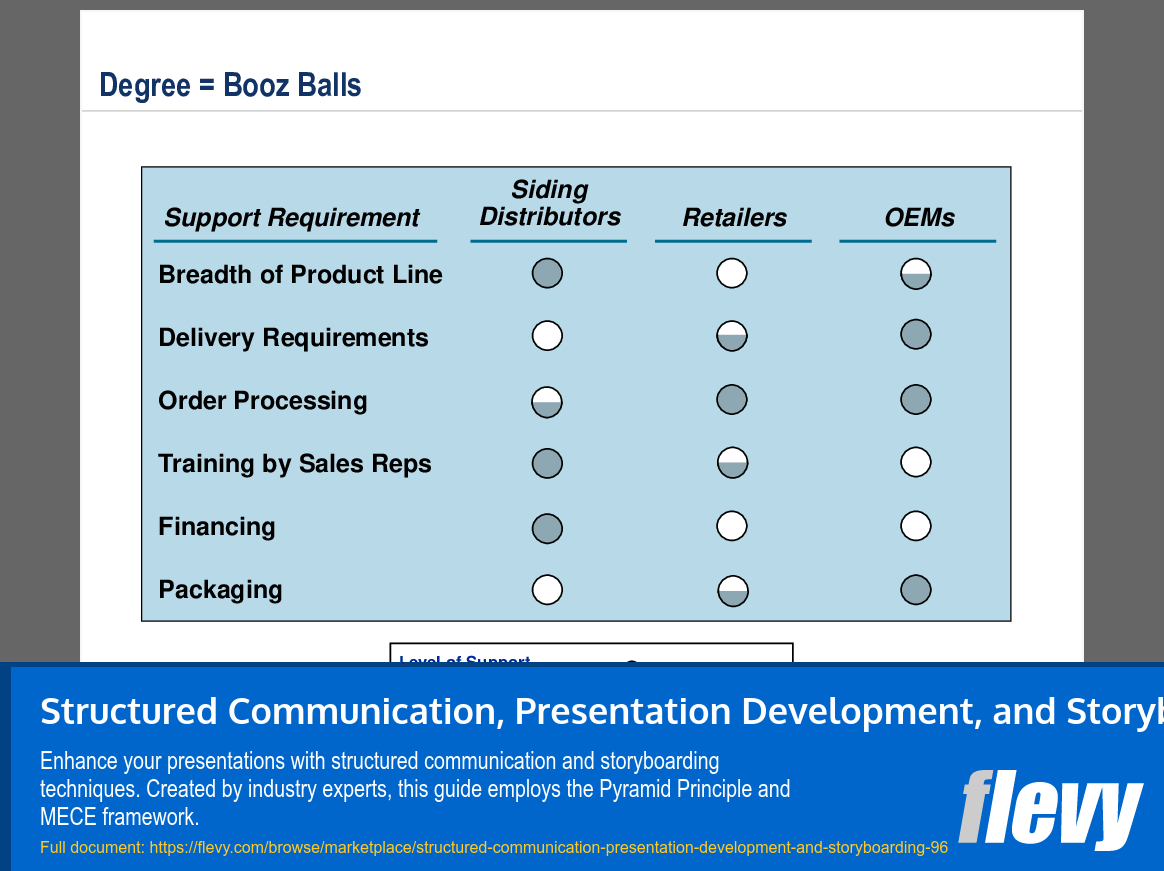
This PPT slide categorizes support requirements across distribution channels for a product, focusing on siding distributors, retailers, and OEMs. Key support areas include breadth of product line, delivery requirements, order processing, training by sales reps, financing, and packaging. Siding distributors and OEMs require a moderate breadth of product line, while retailers focus on a narrower selection. Delivery requirements are critical, with siding distributors needing significant support due to complex logistics. Order processing also shows siding distributors requiring more support, indicating higher transaction volumes. Training by sales reps is essential for siding distributors, reflecting their need for in-depth product knowledge. Financing and packaging requirements vary across channels, highlighting differing strategies in these areas. This framework aids in resource allocation and channel management decisions.
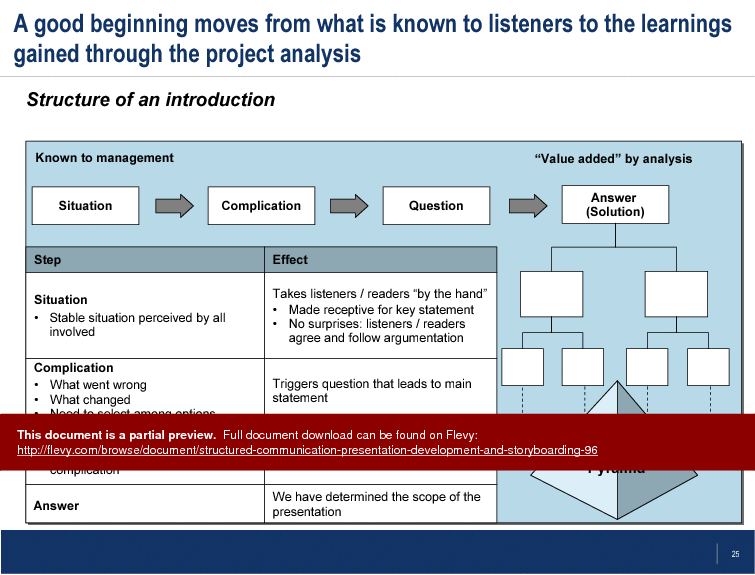
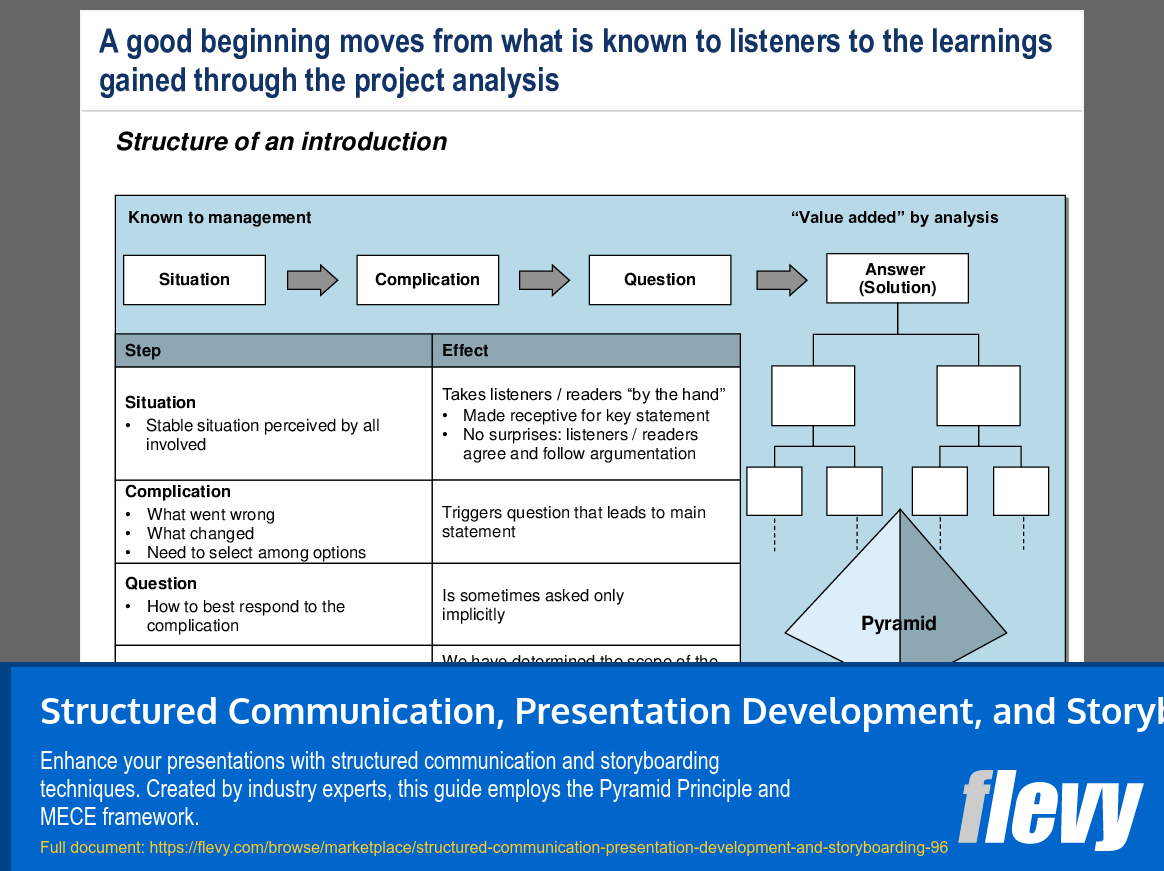
This PPT slide outlines a structured framework for effective business communication, transitioning from 'Situation' to 'Complication,' 'Question,' and 'Answer.' The 'Situation' establishes a stable scenario recognized by stakeholders, aligning the audience for key messages. The 'Complication' introduces challenges, triggering curiosity about potential issues and options. The 'Question' invites the audience to consider solutions to these complications, guiding the discussion toward conclusions. Finally, the 'Value added' by the analysis leads to actionable insights and strategies in the 'Answer' phase. The pyramid structure visually reinforces clarity and organization in presenting complex information.
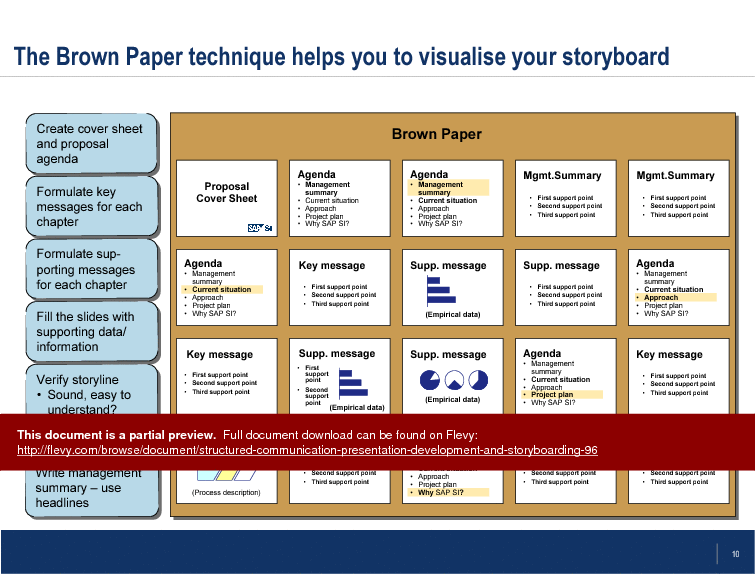
The Brown Paper technique is a structured approach for visualizing storyboards in presentations. Key steps include creating a cover sheet and agenda, which establish a foundation for the proposal. Formulating key messages for each chapter is essential for maintaining focus and clarity, supported by additional information or data. The template layout features agenda items, key messages, and supporting messages, guiding content structure. Topics covered include management summaries, current situations, approaches, project plans, and solution rationale. The MECE principle (Mutually Exclusive, Collectively Exhaustive) ensures coherence and completeness in the storyline. The final step is writing a succinct management summary, encapsulating the presentation effectively.
This PPT slide outlines 3 frameworks for structuring arguments: "Chronological," "Based on structure/category," and "Based on relevance/significance." The "Chronological" framework emphasizes a sequential approach, breaking down processes into 3 steps for clear visualization, ideal for timelines. The "Based on structure/category" framework organizes information by dividing a whole into its components, exemplified by business units (BU A, BU B, BU C), enhancing clarity in complex subjects. The "Based on relevance/significance" framework categorizes findings by their impact, distinguishing between transformative findings, those interesting for project extensions, and less important insights, encouraging presenters to tailor messages to audience relevance.
This PPT slide illustrates a violation of the MECE principle ("Mutually Exclusive, Collectively Exhaustive") in a logic tree. The top node, "The world’s population," divides into "People > 180 cm" and "People ? 180 cm,", but subsequent subdivisions create ambiguity. For example, "People > 180 cm" includes "Blue-eyed" and "Blonde," while "People ? 180 cm" includes "College graduates" and "Physicists," leading to overlaps where individuals fit multiple categories. Effective logic trees require distinct categorization without overlap to maintain clarity and utility in analysis. This example underscores the importance of rigorous categorization in strategic planning and problem-solving to avoid confusion and ensure comprehensive coverage of relevant aspects.
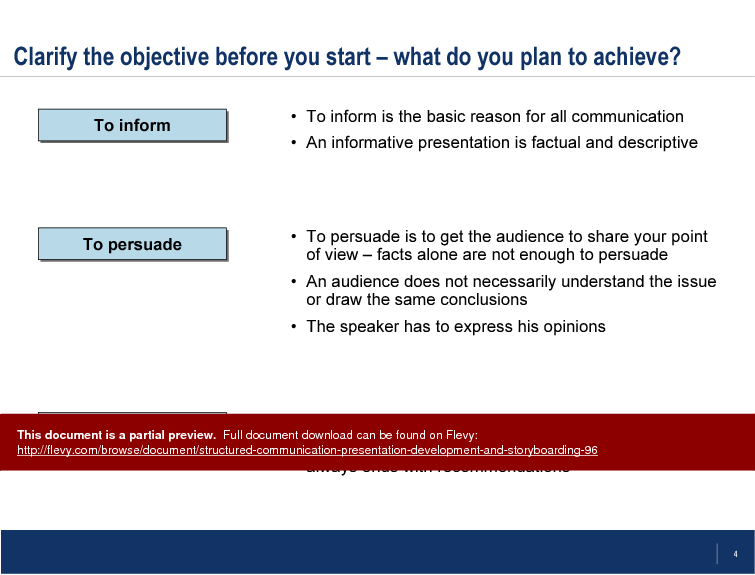
This PPT slide defines 3 primary communication objectives: to inform, to persuade, and to provoke action. "To inform" serves as the foundational objective, focusing on delivering factual and descriptive content to establish a baseline understanding among the audience. "To persuade" emphasizes the need for engaging the audience beyond mere facts, requiring clear articulation of opinions to influence perspectives. "To provoke action" represents the highest aim, necessitating prior informing and persuading to inspire specific steps based on shared insights. These objectives guide professionals in enhancing communication strategies for impactful presentations and improved audience engagement.
Source: Best Practices in Presentation Development, Pyramid Principle, MECE PowerPoint Slides: Structured Communication, Presentation Development, and Storyboarding PowerPoint (PPT) Presentation Slide Deck, Process Consulting
Process Consulting specializes in consulting training presentations focused on core consulting skills, from structured problem solving to presentation development to process mapping. Our materials are based on the frameworks utilized by global consulting firms.
The firm is managed by a seasoned professional with over 15 years of experience at Capgemini and Deloitte, followed by a decade
... [read more] of industry experience.
The firm's commitment to excellence is rooted in its manager's rich experience, where they honed skills in process improvement, stakeholder collaboration, and high-impact communication. This expertise enables Process Consulting to create resources that are not only theoretically robust, but also practically applicable, making them a trusted resource for consultants worldwide.
The average daily rate of a McKinsey consultant is $6,625 (not including expenses). The average price of a Flevy document is $65.
Trusted by over 10,000+ Client Organizations
Since 2012, we have provided business templates to over 10,000 businesses and organizations of all sizes, from startups and small businesses to the Fortune 100, in over 130 countries.
"Last Sunday morning, I was diligently working on an important presentation for a client and found myself in need of additional content and suitable templates for various types of graphics. Flevy.com proved to be a treasure trove for both content and design at a reasonable price, considering the time I
saved. I encountered a download issue during the ordering process. However, a quick email to Flevy's support team, even on a Sunday (!!!), resulted in assistance within less than an hour, allowing me to download the content I needed. Fantastic job, Flevy! I give 5 stars for both content/price and customer service. Thank you!
"
– M. E., Chief Commercial Officer, International Logistics Service Provider
"[Flevy] produces some great work that has been/continues to be of immense help not only to myself, but as I seek to provide professional services to my clients, it gives me a large "tool box" of resources that are critical to provide them with the quality of service and outcomes they are expecting."
– Royston Knowles, Executive with 50+ Years of Board Level Experience
"As a small business owner, the resource material available from FlevyPro has proven to be invaluable. The ability to search for material on demand based our project events and client requirements was great for me and proved very beneficial to my clients. Importantly, being able to easily edit and tailor
the material for specific purposes helped us to make presentations, knowledge sharing, and toolkit development, which formed part of the overall program collateral. While FlevyPro contains resource material that any consultancy, project or delivery firm must have, it is an essential part of a small firm or independent consultant's toolbox.
"
– Michael Duff, Managing Director at Change Strategy (UK)
"As a young consulting firm, requests for input from clients vary and it's sometimes impossible to provide expert solutions across a broad spectrum of requirements. That was before I discovered Flevy.com.
Through subscription to this invaluable site of a plethora of topics that are key and crucial to consulting, I
have been able to exceed expectations and deliver quality advice and solutions to my clients. The quality and expertise of the authors are exemplary and gives me great confidence to use as part of my service offerings.
I highly recommend this company for any consultant wanting to apply international best practice standards in their service offerings.
"
– Nishi Singh, Strategist and MD at NSP Consultants
"Flevy is now a part of my business routine. I visit Flevy at least 3 times each month.
Flevy has become my preferred learning source, because what it provides is practical, current, and useful in this era where the business world is being rewritten.
many challenges and there is the need to make the right decisions in a short time, with so much scattered information, we are fortunate to have Flevy. Flevy investigates, selects, and puts at our disposal the best of the best to help us be successful in our work.
"
– Omar Hernán Montes Parra, CEO at Quantum SFE
"I have found Flevy to be an amazing resource and library of useful presentations for lean sigma, change management and so many other topics. This has reduced the time I need to spend on preparing for my performance consultation. The library is easily accessible and updates are regularly provided. A wealth of great information."
– Cynthia Howard RN, PhD, Executive Coach at Ei Leadership
"My FlevyPro subscription provides me with the most popular frameworks and decks in demand in today’s market. They not only augment my existing consulting and coaching offerings and delivery, but also keep me abreast of the latest trends, inspire new products and service offerings for my practice, and educate me
in a fraction of the time and money of other solutions. I strongly recommend FlevyPro to any consultant serious about success.
"
– Bill Branson, Founder at Strategic Business Architects
"As a consultant requiring up to date and professional material that will be of value and use to my clients, I find Flevy a very reliable resource.
The variety and quality of material available through Flevy offers a very useful and commanding source for information. Using Flevy saves me time, enhances my expertise and ends up being a good decision."
Receive our FREE whitepaper on the Top 101 Consulting Frameworks
Download our 200+ page guide summarizing the Top 101 Management Consulting Frameworks. Each framework provides a structured approach to analyzing and solving a common business problem.