Editor Summary
The Strategic Principle Framework is a 22-slide PowerPoint presentation co-authored by HBR contributor Orit Gadiesh that outlines a method for translating corporate strategy into memorable, actionable phrases to guide decentralized decision-making.
Read moreThe deck includes a four-step process for constructing principles, the 80-100 Rule, a checklist for testing principles, templates, implementation guidelines, and company examples. Target users include corporate executives, integration leaders, consultants, and change teams; sold as a digital download on Flevy with immediate digital download.
Use this framework when an organization must align frontline decision-making with corporate strategy amid decentralization, rapid growth, technological disruption, or institutional turmoil.
Corporate executives translating top-level strategy into concise decision rules for frontline managers during strategic planning sessions.
Integration leaders designing decision boundaries and rollout plans while managing rapid growth or post-merger alignment.
Consultants formalizing principles, testing them against trade-offs, and documenting implementation criteria for clients.
Change management teams drafting communication and adoption plans during technology-driven change.
The four-step, test-and-implement orientation follows the HBR approach of concise, testable principles with strong implementation emphasis.
Strategic principles allow organizations to make decentralized decisions while maintaining cohesive strategic action. This document explains the strategic principle framework, including examples, defining attributes, relevant crucial situations, and an approach to strategic principle development.
This document is based on the HBR article, "Transforming Corner-Office Strategy into Frontline Action," co-authored by Orit Gadiesh and James Gilbert. This article is on the list of "HBR's Must-Reads on Strategy."
Intro to the article:
Southwest Airlines keeps soaring. Its stock price rose a compounded 21,000% between 1972 and 1992 and leapt 300% between 1995 and 2000.
Why does Southwest succeed while so many other airlines fail? Because it sticks to its powerful strategic principle: "Meet customers' short-haul travel needs at fares competitive with the cost of automobile travel." This pithy, memorable, action-oriented phrase distills Southwest's unique strategy and communicates it throughout the company.
An effective strategic principle lets a company simultaneously:
*maintain strategic focus,
*empower workers to innovate and take risks,
*seize fleeting opportunities,
*create products and services that meet subtle shifts in customers' needs.
In today's rapidly changing world, companies must integrate decentralized decision making with coherent, strategic action. A well-crafted, skillfully implemented strategic principle lets them strike that delicate balance.
The framework outlined in this document is designed to help organizations navigate crucial situations such as decentralization, rapid growth, technological change, and institutional turmoil. It emphasizes the importance of a strategic principle in maintaining consistency and coherence across the organization, even in the face of uncertainty and rapid change. By distilling strategy into a clear, actionable principle, companies can ensure that all levels of the organization are aligned and capable of making decisions that support the overall strategic direction. This approach not only enhances strategic focus, but also empowers employees to act decisively and innovatively.
Got a question about the product? Email us at support@flevy.com or ask the author directly by using the "Ask the Author a Question" form. If you cannot view the preview above this document description, go here to view the large preview instead.
MARCUS OVERVIEW
This synopsis was written by Marcus [?] based on the analysis of the full 22-slide presentation.
Executive Summary
The Strategic Principle Framework, co-authored by HBR's Orit Gadiesh, provides a structured approach for organizations to empower decentralized decision-making while ensuring cohesive strategic action. This consulting-grade presentation outlines the significance of strategic principles, which serve as memorable phrases that encapsulate corporate strategies, enabling frontline employees to make informed decisions. By employing this framework, organizations can effectively balance flexibility and strategic coherence, driving consistent action across all levels.
Who This Is For and When to Use
• Corporate executives seeking to align decentralized teams with overarching strategic goals
• Integration leaders managing rapid growth or organizational change
• Consultants advising on strategic implementation and operational coherence
• Change management teams navigating technological disruptions
Best-fit moments to use this deck:
• During strategic planning sessions to define or refine organizational principles
• When facing rapid growth to maintain clarity and direction
• In times of institutional turmoil to ensure continuity and focus
Learning Objectives
• Define what constitutes a strategic principle and its role in organizational strategy
• Build a framework for developing effective strategic principles
• Establish criteria for testing the effectiveness of strategic principles
• Identify crucial situations where strategic principles are essential
• Analyze examples of successful strategic principles from leading companies
• Develop actionable steps for implementing strategic principles within teams
Table of Contents
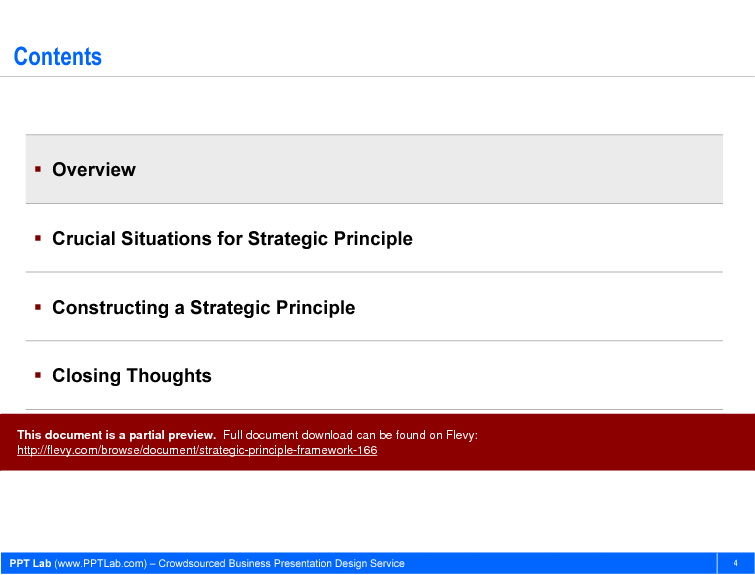
• Overview (page 4)
• Crucial Situations for Strategic Principle (page 9)
• Constructing a Strategic Principle (page 15)
• Closing Thoughts (page 19)
Primary Topics Covered
• Strategic Principle Definition - A strategic principle is a concise, actionable phrase that encapsulates a company's core strategy, guiding decentralized decision-making while ensuring alignment.
• Importance of Strategic Principles - These principles enable organizations to maintain strategic coherence while allowing flexibility in decision-making, essential for navigating complex environments.
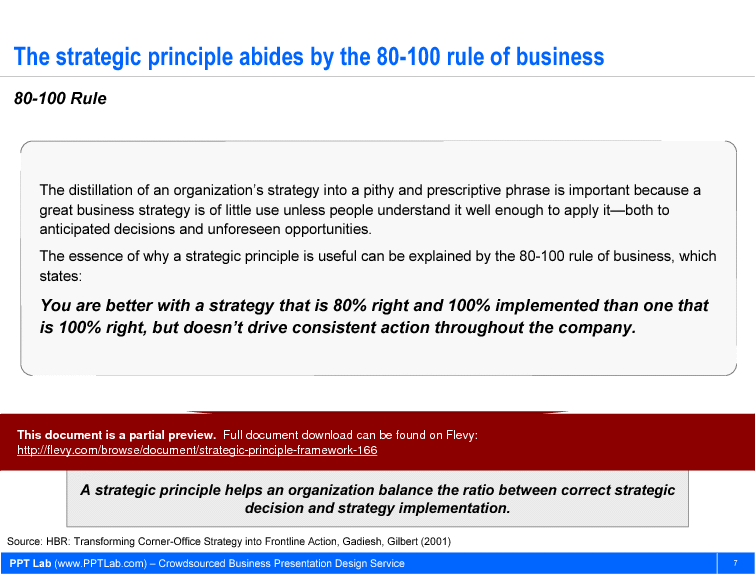
• 80-100 Rule - This rule emphasizes that a strategy should be 80% correct and 100% implemented to drive consistent action across the organization.
• Defining Attributes - Effective strategic principles force trade-offs, test strategic soundness, and set boundaries for employee decision-making while allowing room for experimentation.
• Crucial Situations - Identifies 4 key scenarios—decentralization, rapid growth, technological change, and institutional turmoil—where strategic principles are vital for success.
• Constructing a Strategic Principle - Outlines a four-step process to develop a strategic principle that captures a company's unique value proposition and competitive differentiation.
Deliverables, Templates, and Tools
• Framework for developing strategic principles tailored to organizational needs
• Checklist for testing the effectiveness of strategic principles
• Examples of strategic principles from leading companies for reference
• Guidelines for implementing strategic principles across teams
• Templates for documenting and communicating strategic principles
Slide Highlights
• Overview of the Strategic Principle Framework and its significance
• Examples of successful strategic principles from companies like Dell and Southwest Airlines
• The 80-100 Rule slide illustrating the importance of implementation over perfection
• Defining attributes of effective strategic principles
• Four crucial situations where strategic principles are essential for organizational success
Potential Workshop Agenda
Strategic Principle Development Session (90 minutes)
• Discuss the importance of strategic principles in organizational strategy
• Brainstorm potential strategic principles relevant to the organization
• Develop a draft strategic principle and gather feedback
Implementation Planning Session (60 minutes)
• Review the constructed strategic principle and its alignment with corporate goals
• Identify key stakeholders for implementation and assign responsibilities
• Establish a timeline for communicating and operationalizing the strategic principle
Customization Guidance
• Tailor the strategic principle to reflect the unique values and mission of your organization
• Adjust examples and case studies to align with industry-specific challenges and opportunities
• Incorporate organizational terminology and metrics to enhance relatability and clarity
Secondary Topics Covered
• Differences between strategic principles and mission statements
• The role of strategic principles in navigating institutional changes
• The impact of technological advancements on strategic decision-making
• Strategies for revisiting and updating strategic principles regularly
Topic FAQ
What exactly is a strategic principle and how does it help frontline employees make decisions?
A strategic principle is a concise, actionable phrase that encapsulates a company’s core strategy and provides clear boundaries for employee choice. It helps frontline workers act without constant escalation by forcing trade-offs, testing strategic soundness, and providing communicative power, described in the framework as a concise, actionable phrase.
What is the 80-100 Rule and why does it matter for strategy implementation?
The 80-100 Rule states a strategy should be roughly 80% correct, but 100% implemented, prioritizing consistent execution over chasing perfection. The rule emphasizes implementation fidelity to drive coherent action across the organization and is presented in the deck as the 80% correct and 100% implemented guideline.
How do you construct an effective strategic principle according to the framework?
The framework prescribes a four-step process: summarize differentiation, test for enduring nature, assess communicative power, and verify actionability so the principle guides decisions and trade-offs. The methodology ends with templates and a checklist to validate a principle’s soundness in a structured four-step process.
What should I look for when choosing a toolkit to develop strategic principles?
Seek a toolkit that defines strategic principles, provides a construction process, includes testing criteria, offers examples and templates, and supplies implementation guidance. The Strategic Principle Framework on Flevy includes these elements: framework, checklist, examples, templates, and implementation guidelines.
How long does it typically take to develop and plan implementation of a strategic principle in a workshop setting?
The product suggests a two-part workshop: a 90-minute Strategic Principle Development Session for brainstorming and drafting, followed by a 60-minute Implementation Planning Session to align stakeholders and timelines, totaling suggested sessions of 90 minutes and 60 minutes.
How should I evaluate the cost versus value of buying strategic-principle templates or slide decks?
Assess whether the materials accelerate translation of strategy into frontline action, provide test criteria, and include implementation tools you lack internally. Value is demonstrated by enabling adoption and testing—look for included assets such as a checklist for testing effectiveness and templates for communication.
I need to align teams after a merger—will a strategic principle approach help and what situations does it address?
Yes; strategic principles create clear decision boundaries to maintain coherence during integration. The framework targets 4 crucial situations where principles are essential: decentralization, rapid growth, technological change, and institutional turmoil, making it relevant for post-merger alignment in rapid-growth contexts.
How often should organizations review or update their strategic principles?
The guidance recommends regular reviews—ideally quarterly—and formal updates annually or whenever significant market or organizational shifts occur, ensuring principles remain actionable and relevant with a quarterly review cadence and annual updates.
Document FAQ
These are questions addressed within this presentation.
What is a strategic principle?
A strategic principle is a concise, actionable phrase that encapsulates a company's core strategy, guiding decentralized decision-making while ensuring alignment.
How does a strategic principle differ from a mission statement?
A mission statement informs a company's culture, while a strategic principle drives strategy and enables frontline workers to act quickly with explicit guidance.
Why is the 80-100 rule important?
This rule emphasizes that a strategy should be 80% correct and 100% implemented to ensure consistent action across the organization, rather than aiming for a perfect strategy that is not executed.
What are the defining attributes of an effective strategic principle?
An effective strategic principle forces trade-offs, tests strategic soundness, and sets boundaries for decision-making while allowing room for experimentation.
In what situations are strategic principles crucial?
Strategic principles are essential during decentralization, rapid growth, technological change, and institutional turmoil to maintain strategic coherence.
How can organizations construct a strategic principle?
The process involves summarizing differentiation, testing for enduring nature, communicative power, and actionability to ensure the principle effectively guides decision-making.
How often should a strategic principle be revisited?
Strategic principles should be reviewed regularly, ideally every quarter, and updated annually or when significant market shifts occur.
What are some examples of successful strategic principles?
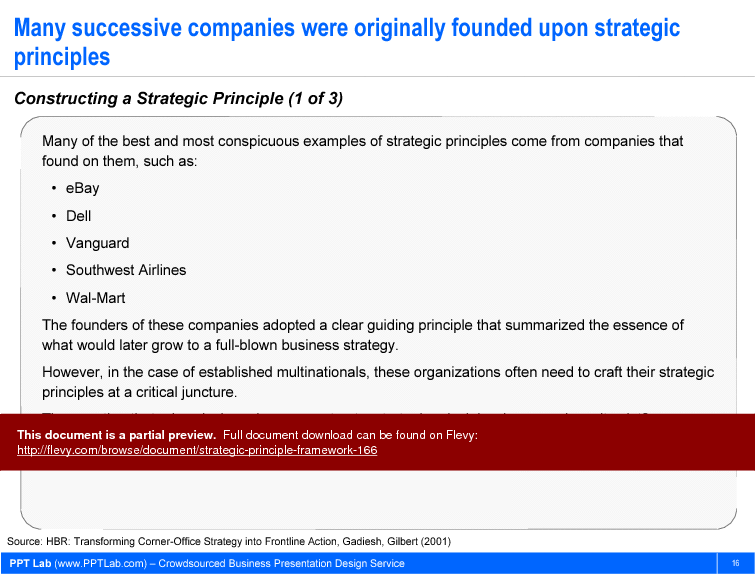
Examples include Dell's "Be direct," eBay's "Focus on trading communities," and Southwest Airlines' "Meet customers’ short-haul travel needs at fares competitive with the cost of automobile travel."
What role does a strategic principle play during institutional turmoil?
A strategic principle provides continuity and focus during leadership transitions or organizational changes, allowing teams to maintain strategic objectives without distraction.
Glossary
• Strategic Principle - A concise phrase that encapsulates a company's core strategy, guiding decentralized decision-making.
• Decentralization - The distribution of decision-making authority across various levels of an organization.
• Rapid Growth - A period of significant expansion that may challenge existing operational structures.
• Technological Change - The impact of new technologies on business operations and strategy.
• Institutional Turmoil - Organizational instability often due to leadership changes or political dynamics.
• 80-100 Rule - The principle that emphasizes the importance of implementation over perfect strategy.
• Defining Attributes - Characteristics that make a strategic principle effective, including trade-offs and soundness testing.
• Mission Statement - A statement that defines an organization's purpose and culture.
• Actionability - The ability of a strategic principle to guide immediate decision-making.
• Communicative Power - The clarity and memorability of a strategic principle.
• Differentiation - The unique value proposition that sets a company apart from competitors.
• Review Cycle - The frequency at which a strategic principle should be evaluated and updated.
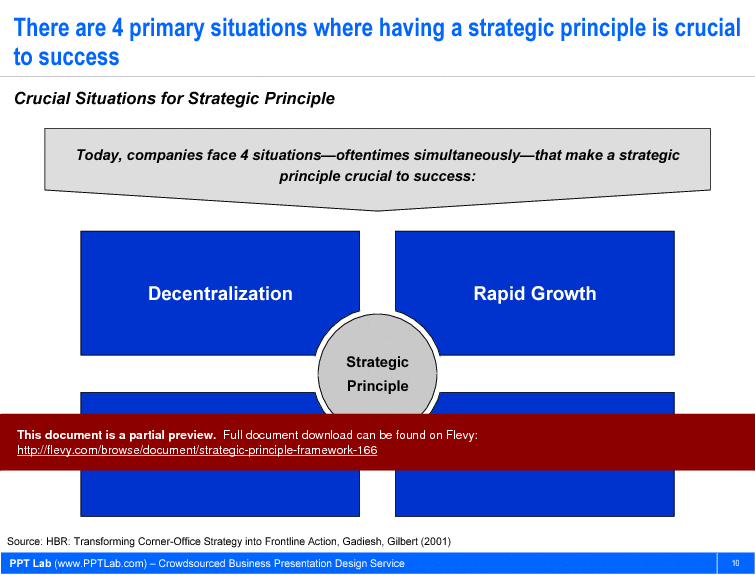
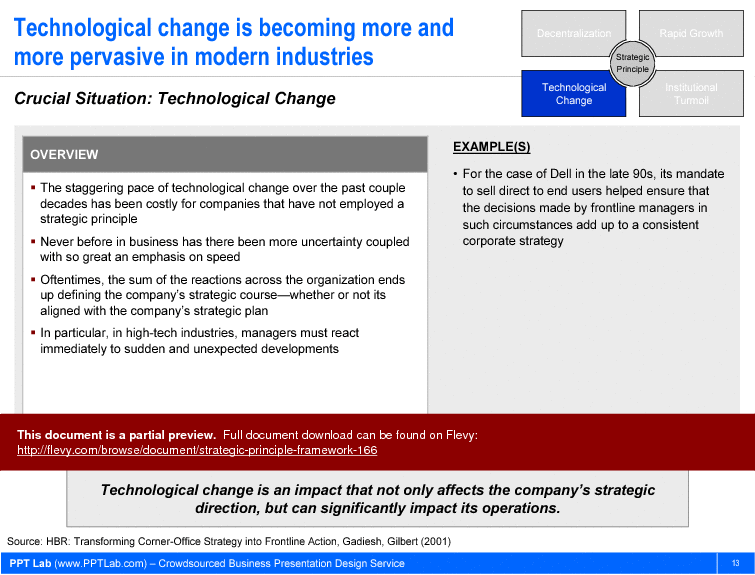
This PPT slide outlines 4 critical situations requiring a strategic principle for organizational success: Decentralization, Rapid Growth, Technological Change, and Institutional Turmoil. Decentralization can lead to misalignment among divisions, making a guiding principle essential for coherence. Rapid growth introduces complexity and risks diluting core objectives; a well-defined principle helps prioritize initiatives and resources. Technological change demands quick adaptation; a strategic principle aids in evaluating technology investments against goals. Institutional turmoil, from internal conflicts or external pressures, destabilizes organizations; a guiding principle provides clarity and direction during uncertainty.
This PPT slide outlines a four-step process for constructing a strategic principle. The first step, "Summarize Differentiation," requires management to clearly articulate the company's unique resource allocation for value creation, distilling this into a concise phrase. The second step, "Test for Enduring Nature," evaluates whether the strategic principle reflects a long-term vision and captures the company's core identity and competitive differentiation. The "Test for Communicative Power" assesses the clarity and memorability of the principle, suggesting it should be suitable for public display, similar to Wal-Mart's values. Finally, the "Test for Actionability" examines the principle's ability to guide decision-making, enforce trade-offs, and delineate operational boundaries while promoting employee autonomy.
This PPT slide presents an analogy between strategic principles and genetic codes, emphasizing the need to identify unique traits that differentiate a company from its competitors. The visual of a DNA structure reinforces that a strategic principle encapsulates a company's marketplace identity. The challenge of pinpointing these characteristics is likened to identifying the 2% of DNA that distinguishes humans from primates, illustrating the complexity of defining uniqueness. Additionally, the 0.1% of DNA that differentiates individuals highlights that even small distinctions can significantly impact a company's value proposition. This calls for a deep exploration of corporate identity to leverage unique attributes for strategic positioning.
An effective strategic principle guides resource allocation, including capital, time, and labor. Key attributes include making trade-offs between competing resource demands, ensuring resources are directed towards impactful initiatives aligned with organizational goals. Additionally, effective strategic principles test the soundness of actions against the strategic framework, promoting disciplined decision-making that aligns with objectives. Finally, setting clear boundaries empowers employees to innovate within defined limits, fostering experimentation that leads to effective outcomes. This structured approach enhances resource allocation and decision-making processes, creating a coherent strategy that aligns with business goals.
Technological change poses significant challenges for modern businesses, particularly in high-tech sectors. Companies without a strategic framework struggle to adapt to rapid advancements and unprecedented uncertainty. Collective organizational reactions can influence strategic direction, highlighting the need for clear strategic principles to guide decision-making. For example, Dell's direct-to-consumer sales strategy in the late 1990s ensured alignment between frontline decisions and corporate strategy. This case illustrates how well-defined strategic principles facilitate coherent decision-making amidst rapid change. Executives must prioritize establishing these principles to navigate the complexities of technological evolution and maintain strategic coherence across the organization.
Source: Best Practices in Mission, Vision, Values PowerPoint Slides: Strategic Principle Framework PowerPoint (PPT) Presentation Slide Deck, PPT Lab
PPT Lab is a presentation design firm specializing in business frameworks and PowerPoint templates. Our team is comprised of ex-consultants from McKinsey, E&Y, Bearing Point, and boutique consulting firms. We have worked with hundreds of clients globally, ranging from mid-size manufacturing companies to global Fortune 500 conglomerates.
All of our documents are of the
... [read more] same quality produced by top-tier consulting firms and utilize the Consulting Presentation Framework.
The average daily rate of a McKinsey consultant is $6,625 (not including expenses). The average price of a Flevy document is $65.
Trusted by over 10,000+ Client Organizations
Since 2012, we have provided business templates to over 10,000 businesses and organizations of all sizes, from startups and small businesses to the Fortune 100, in over 130 countries.
"As an Independent Management Consultant, I find Flevy to add great value as a source of best practices, templates and information on new trends. Flevy has matured and the quality and quantity of the library is excellent. Lastly the price charged is reasonable, creating a win-win value for
the customer, Flevy and the various authors. This is truly a service that benefits the consulting industry and associated clients. Thanks for providing this service.
"
– Jim Schoen, Principal at FRC Group
"As a young consulting firm, requests for input from clients vary and it's sometimes impossible to provide expert solutions across a broad spectrum of requirements. That was before I discovered Flevy.com.
Through subscription to this invaluable site of a plethora of topics that are key and crucial to consulting, I
have been able to exceed expectations and deliver quality advice and solutions to my clients. The quality and expertise of the authors are exemplary and gives me great confidence to use as part of my service offerings.
I highly recommend this company for any consultant wanting to apply international best practice standards in their service offerings.
"
– Nishi Singh, Strategist and MD at NSP Consultants
"FlevyPro has been a brilliant resource for me, as an independent growth consultant, to access a vast knowledge bank of presentations to support my work with clients. In terms of RoI, the value I received from the very first presentation I downloaded paid for my subscription many times over! The
quality of the decks available allows me to punch way above my weight – it's like having the resources of a Big 4 consultancy at your fingertips at a microscopic fraction of the overhead.
"
– Roderick Cameron, Founding Partner at SGFE Ltd
"The wide selection of frameworks is very useful to me as an independent consultant. In fact, it rivals what I had at my disposal at Big 4 Consulting firms in terms of efficacy and organization."
– Julia T., Consulting Firm Owner (Former Manager at Deloitte and Capgemini)
"Flevy is now a part of my business routine. I visit Flevy at least 3 times each month.
Flevy has become my preferred learning source, because what it provides is practical, current, and useful in this era where the business world is being rewritten.
many challenges and there is the need to make the right decisions in a short time, with so much scattered information, we are fortunate to have Flevy. Flevy investigates, selects, and puts at our disposal the best of the best to help us be successful in our work.
"
– Omar Hernán Montes Parra, CEO at Quantum SFE
"Flevy is our 'go to' resource for management material, at an affordable cost. The Flevy library is comprehensive and the content deep, and typically provides a great foundation for us to further develop and tailor our own service offer."
– Chris McCann, Founder at Resilient.World
"FlevyPro provides business frameworks from many of the global giants in management consulting that allow you to provide best in class solutions for your clients."
– David Harris, Managing Director at Futures Strategy
"[Flevy] produces some great work that has been/continues to be of immense help not only to myself, but as I seek to provide professional services to my clients, it gives me a large "tool box" of resources that are critical to provide them with the quality of service and outcomes they are expecting."
– Royston Knowles, Executive with 50+ Years of Board Level Experience
Download our free compilation of 50+ Strategy & Transformation slides and templates. Frameworks include McKinsey 7-S, Balanced Scorecard, Disruptive Innovation, BCG Curve, and many more.










