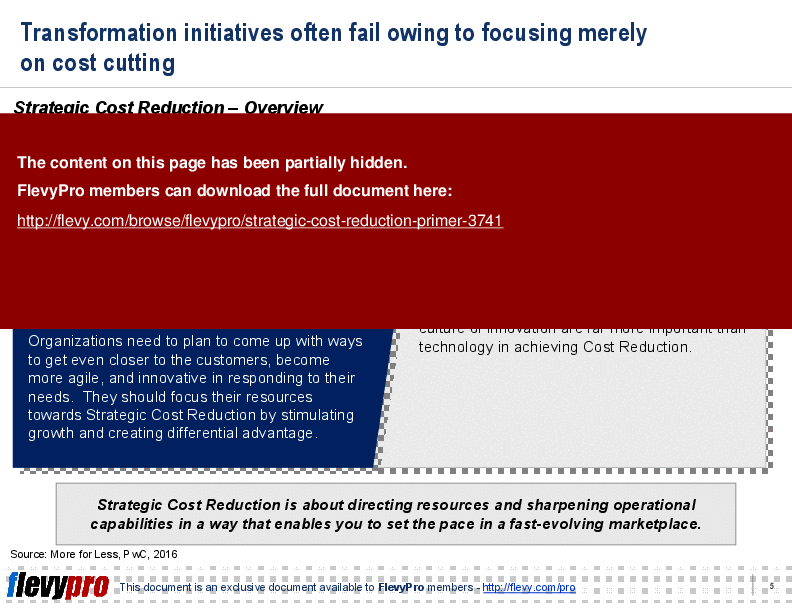
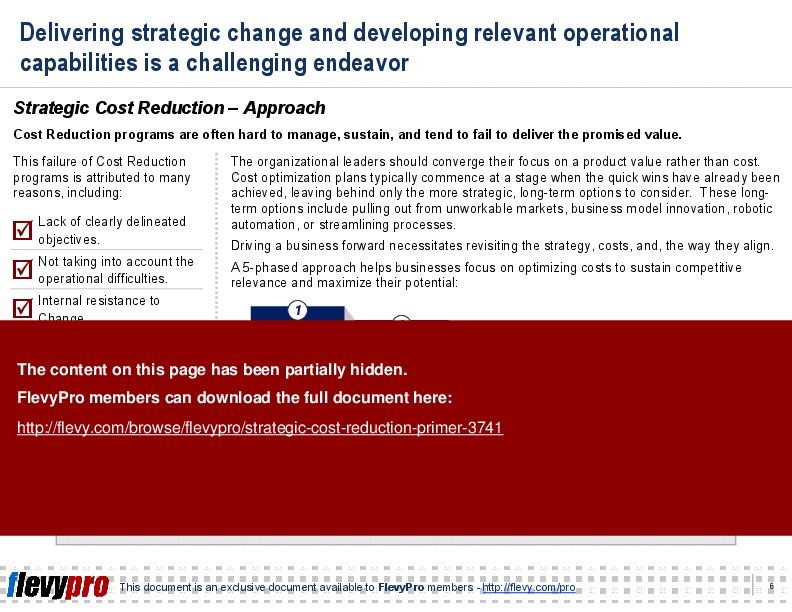

Cost Optimization Programs are often hard to manage, sustain, and tend to fail to deliver the promised value. This failure is attributed to many reasons—including lack of clearly delineated objectives, not taking into account the operational difficulties, internal resistance to change, trying to cut corners from everywhere rather than planning optimal utilization of resources; lack of direction, accountability, and management agreement.
Disruption offers new opportunities for innovation, eliminating complexities, transforming the strategy and cost disciplines, and streamlining operational capabilities.
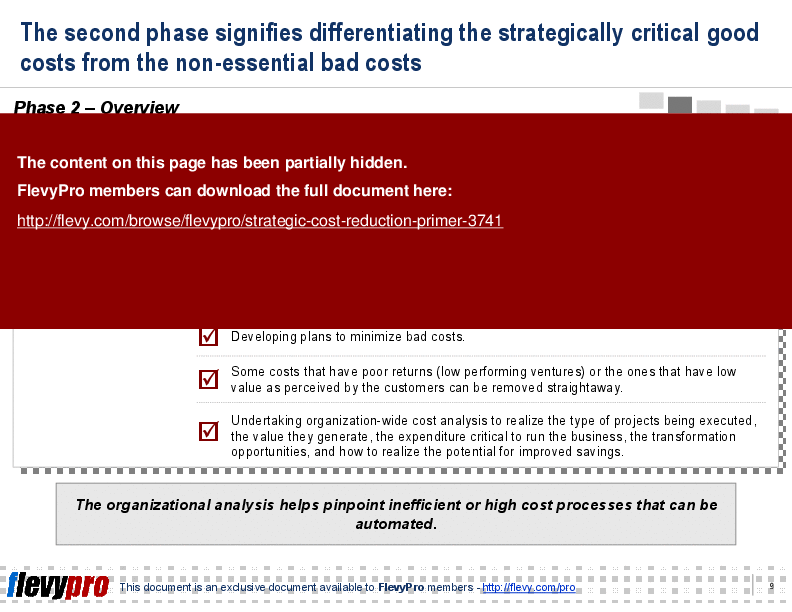
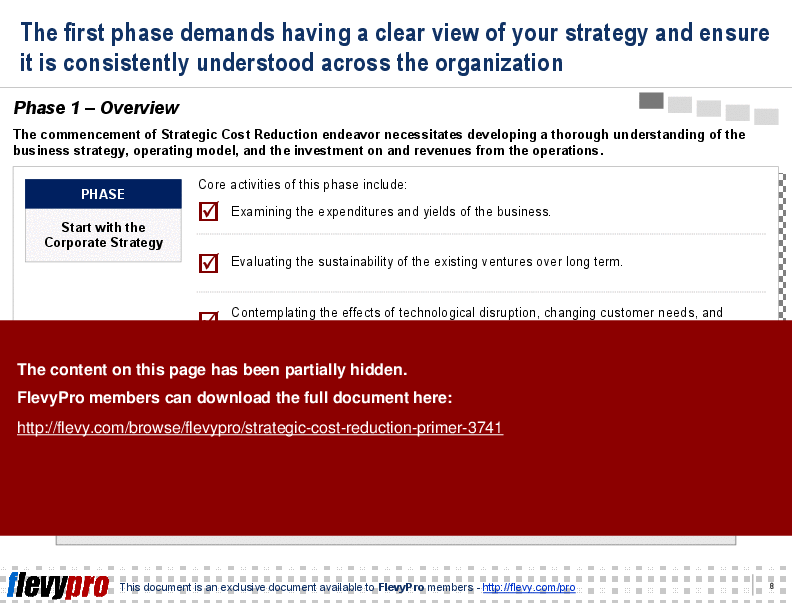
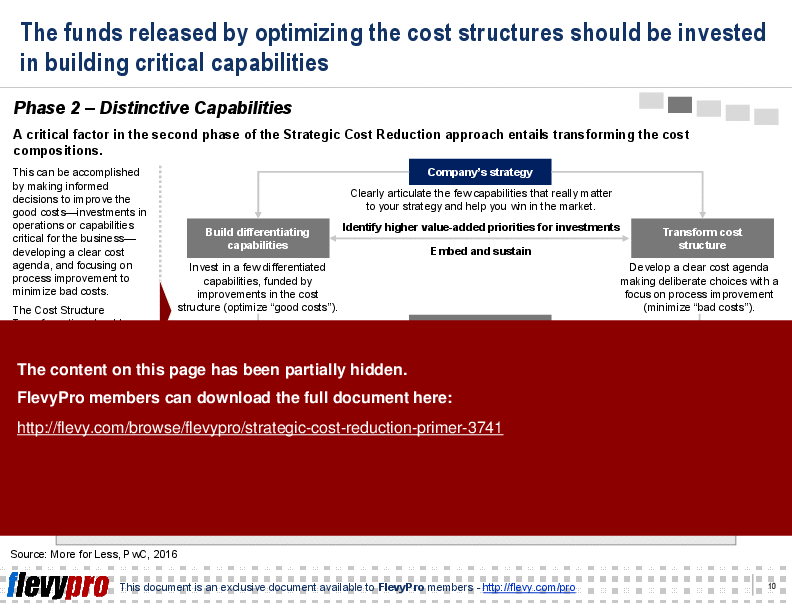
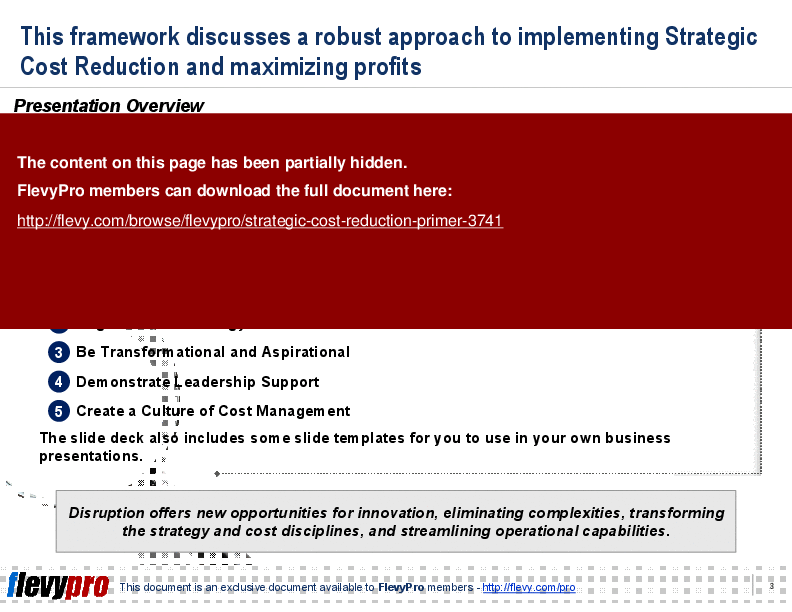
This presentation talks about a 5-phased approach that helps businesses focus on optimizing costs to sustain competitive relevance and exploit their full potential. The phases include:
1. Start with the Corporate Strategy
2. Align Costs with Strategy
3. Be Transformational and Aspirational
4. Demonstrate Leadership Support
5. Create a Culture of Cost Management
The slide deck also includes some slide templates for you to use in your own business presentations.
This PPT provides a comprehensive framework for implementing strategic cost reduction and maximizing profits. It emphasizes the importance of aligning costs with corporate strategy and creating a culture of cost management. The presentation includes detailed phases and actionable steps, making it a practical guide for executives aiming to drive cost efficiency and sustain competitive advantage.
The slide deck also offers templates to facilitate the application of the framework in your own business context. These templates are designed to help you systematically approach cost reduction, ensuring that all critical aspects are covered. This resource is essential for leaders looking to streamline operations and achieve significant cost savings.
Got a question about this document? Email us at flevypro@flevy.com.
Executive Summary
The Strategic Cost Reduction Primer is a comprehensive presentation designed to equip organizations with a robust framework for optimizing costs while aligning with corporate strategy. Developed by former consultants from McKinsey and the Big 4, this presentation outlines a five-phased approach to cost reduction that emphasizes sustainable practices and operational efficiency. By following this structured methodology, executives can identify opportunities for cost savings, enhance resource allocation, and foster a culture of continuous improvement, ultimately driving profitability and competitive advantage.
Who This Is For and When to Use
• Corporate executives responsible for strategic planning and financial oversight
• Integration leaders managing cost optimization initiatives
• Consultants advising on operational efficiency and cost management
• Finance teams tasked with budget management and cost analysis
• Change management professionals implementing transformation strategies
Best-fit moments to use this deck:
• During strategic planning sessions to align cost management with corporate objectives
• When initiating cost reduction programs to ensure a structured approach
• In workshops focused on operational efficiency and resource allocation
• For training sessions aimed at embedding a culture of cost management within the organization
Learning Objectives
• Define the 5 phases of Strategic Cost Reduction and their significance
• Identify and assess opportunities for cost optimization across the organization
• Develop a clear cost agenda that aligns with corporate strategy
• Create actionable plans for implementing cost reduction initiatives
• Foster a culture of continuous improvement and accountability in cost management
• Evaluate the impact of cost reduction efforts on overall business performance
Table of Contents
• Overview (page 3)
• Strategic Cost Reduction (page 5)
• Phases of Strategic Cost Reduction (page 6)
• Strategic Cost Reduction Implementation (page 17)
• Templates (page 19)
Primary Topics Covered
• Overview of Strategic Cost Reduction - Discusses the importance of aligning cost reduction efforts with corporate strategy and the challenges organizations face in managing these initiatives.
• Phases of Strategic Cost Reduction - Outlines a five-phased approach: starting with corporate strategy, aligning costs, being transformational, demonstrating leadership support, and creating a culture of cost management.
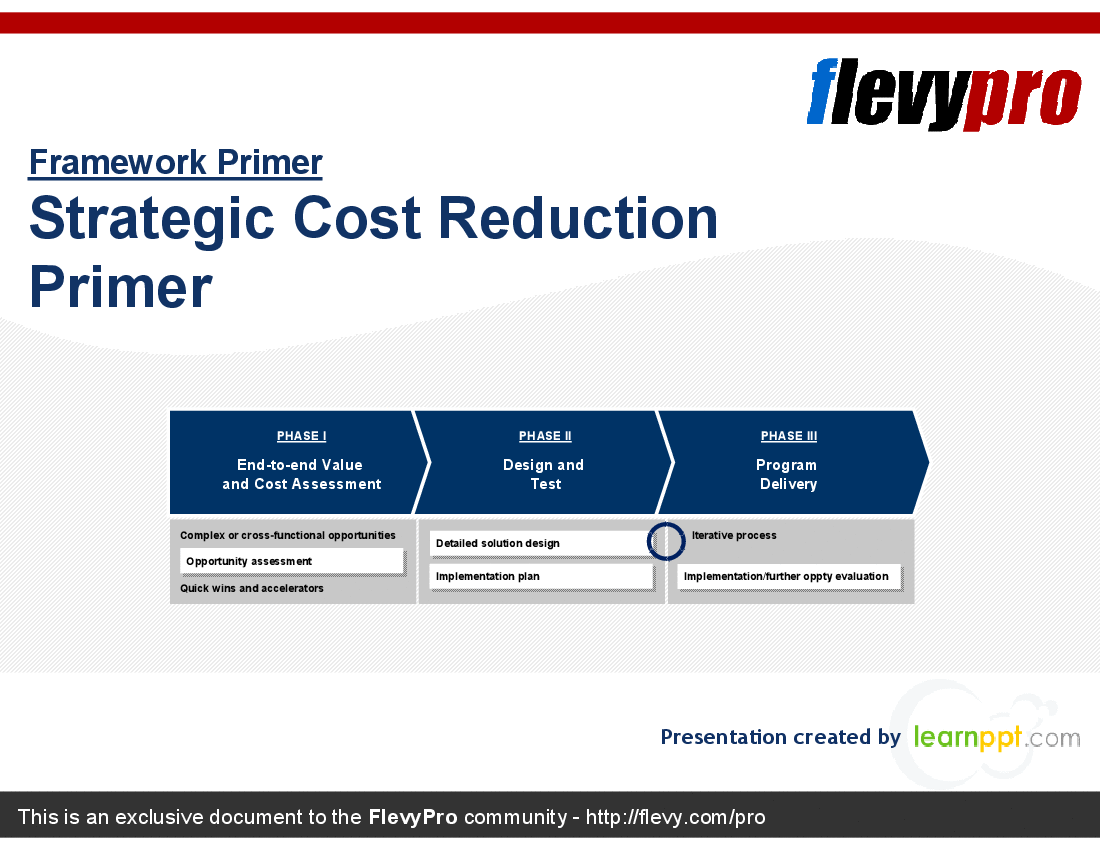
• Implementation of Strategic Cost Reduction - Details a structured approach to implementing cost reduction initiatives, including end-to-end value assessment, design and testing, and program delivery.
• Cost Analysis - Highlights the need for thorough cost analysis to differentiate between good and bad costs, enabling informed decision-making.
• Leadership Support - Emphasizes the role of leadership in driving cost reduction initiatives and fostering a culture of accountability.
• Cultural Transformation - Discusses the importance of embedding a culture of cost management within the organization to sustain long-term benefits.
Deliverables, Templates, and Tools
• Cost assessment template for evaluating expenditures and identifying opportunities
• Implementation plan template for tracking progress and responsibilities
• Cost analysis framework to differentiate between good and bad costs
• Leadership engagement plan to ensure top management support
• Cultural transformation toolkit for embedding cost management practices
• Presentation slides for communicating cost reduction strategies to stakeholders
Slide Highlights
• Overview slide detailing the 5 phases of Strategic Cost Reduction
• Cost analysis framework illustrating the differentiation of good vs. bad costs
• Leadership support slide emphasizing the importance of executive engagement
• Cultural transformation slide outlining steps to embed cost management in the organization
• Implementation roadmap highlighting key milestones and responsibilities
Potential Workshop Agenda
Strategic Cost Reduction Overview (60 minutes)
• Introduce the 5 phases of Strategic Cost Reduction
• Discuss the importance of aligning costs with corporate strategy
• Identify key opportunities for cost optimization
Cost Analysis and Implementation Planning (90 minutes)
• Conduct a detailed cost analysis using provided templates
• Develop an implementation plan with clear roles and responsibilities
• Establish metrics for tracking progress and success
Cultural Transformation Session (60 minutes)
• Explore strategies for embedding a culture of cost management
• Discuss leadership roles in driving change
• Develop action items for fostering accountability across teams
Customization Guidance
• Tailor the cost assessment template to reflect specific organizational expenditures and priorities
• Modify the implementation plan to align with your organization’s unique structure and governance
• Adjust the cultural transformation toolkit to fit the existing organizational culture and values
• Incorporate specific metrics and KPIs relevant to your industry and operational goals
Secondary Topics Covered
• Digital transformation as a catalyst for cost reduction
• The role of technology in enhancing operational efficiency
• Strategies for managing internal resistance to change
• Best practices for sustaining cost reduction efforts over time
• Case studies illustrating successful cost reduction initiatives
Topic FAQ
Document FAQ
These are questions addressed within this presentation.
What is Strategic Cost Reduction?
Strategic Cost Reduction is a structured approach to optimizing costs while aligning with corporate strategy, focusing on sustainable practices and operational efficiency.
How can this framework help my organization?
This framework provides a comprehensive methodology for identifying cost-saving opportunities, enhancing resource allocation, and fostering a culture of continuous improvement.
What are the 5 phases of Strategic Cost Reduction?
The 5 phases are: Start with the Corporate Strategy, Align Costs to Strategy, Be Transformational and Aspirational, Demonstrate Leadership Support, and Create a Culture of Cost Management.
How do I implement the cost reduction initiatives?
Implementation involves conducting a thorough cost assessment, designing solutions, executing plans, and continuously monitoring progress to ensure effectiveness.
What tools are included in this presentation?
The presentation includes templates for cost assessment, implementation planning, and cultural transformation, as well as frameworks for cost analysis.
How can I ensure leadership support for cost reduction initiatives?
Engage leadership early in the process, communicate the strategic importance of cost reduction, and establish governance mechanisms to ensure accountability.
What metrics should I track during implementation?
Key metrics may include cost savings achieved, operational efficiency improvements, and employee engagement levels related to cost management initiatives.
How can I foster a culture of cost management?
Incentivize employees for identifying cost-saving opportunities, recognize achievements, and provide training on best practices for cost management.
Glossary
• Strategic Cost Reduction - A structured approach to optimizing costs while aligning with corporate strategy.
• Good Costs - Expenditures that contribute positively to business value and customer satisfaction.
• Bad Costs - Avoidable expenditures that do not provide sufficient value or return on investment.
• Cost Analysis - The process of evaluating costs to differentiate between good and bad costs.
• Implementation Plan - A detailed roadmap for executing cost reduction initiatives, including roles and responsibilities.
• Cultural Transformation - The process of embedding a culture of cost management within an organization.
• Leadership Support - The active engagement and commitment of senior leaders in driving cost reduction initiatives.
• Digital Transformation - The integration of digital technology into all areas of a business, fundamentally changing how it operates and delivers value to customers.
• Continuous Improvement - Ongoing efforts to enhance products, services, or processes over time.
• Governance Mechanisms - Structures and processes that ensure accountability and oversight in executing cost reduction initiatives.
• KPI (Key Performance Indicator) - A measurable value that demonstrates how effectively an organization is achieving key business objectives.
• Stakeholders - Individuals or groups with an interest in the outcome of a project or initiative, including employees, customers, and investors.
• Operational Efficiency - The ability to deliver products or services in the most cost-effective manner without compromising quality.
• Resource Allocation - The process of assigning and managing assets in a way that supports an organization's strategic goals.
• Change Management - The approach to transitioning individuals, teams, and organizations to a desired future state.
• Quick Wins - Immediate, low-effort initiatives that can yield significant benefits in the short term.
• Long-term Strategy - A plan that outlines an organization's goals and the actions needed to achieve them over an extended period.
• Value Proposition - The promise of value to be delivered to customers, highlighting the benefits of a product or service.
• Stakeholder Engagement - The process of involving individuals or groups that have an interest in the outcome of a project or initiative.
Source: Best Practices in Cost Reduction, Cost Management PowerPoint Slides: Strategic Cost Reduction Primer PowerPoint (PPT) Presentation Slide Deck, LearnPPT Consulting
Did you need more documents?
Consider a FlevyPro subscription from $39/month. View plans here.
For $10.00 more, you can download this document plus 2 more FlevyPro documents. That's just $13 each.
|
Receive our FREE presentation on Operational Excellence
This 50-slide presentation provides a high-level introduction to the 4 Building Blocks of Operational Excellence. Achieving OpEx requires the implementation of a Business Execution System that integrates these 4 building blocks. |