
Process Communication Model (PCM): Personality Types   23-slide PPT PowerPoint presentation slide deck (PPTX)
$29.00

Process Communication Model (PCM): Personality Types (23-slide PPT PowerPoint presentation slide deck (PPTX)) Preview Image
Log in to unlock full preview.
Process Communication Model (PCM): Personality Types (23-slide PPT PowerPoint presentation slide deck (PPTX)) Preview Image
Arrow   Click main image to view in full screen.

Process Communication Model (PCM): Personality Types (PowerPoint PPTX Slide Deck)

PowerPoint (PPTX) 23 Slides FlevyPro Document

Top 1,000 Best Practice $29.00
FlevyPro price: FREE (included in subscription)
This framework is developed by a team of former McKinsey and Big 4 consultants. The presentation follows the headline-body-bumper slide format used by global consulting firms.
Add to Cart


Immediate download
Free lifetime updates

COMMUNICATIONS STRATEGY PPT DESCRIPTION

Editor Summary 23-slide PowerPoint presentation mapping the Process Communication Model (PCM) framework developed by Taibi Kahler, outlining 6 personality types: Harmonizer, Rebel, Thinker, Persister, Imaginer, and Promoter. Read more

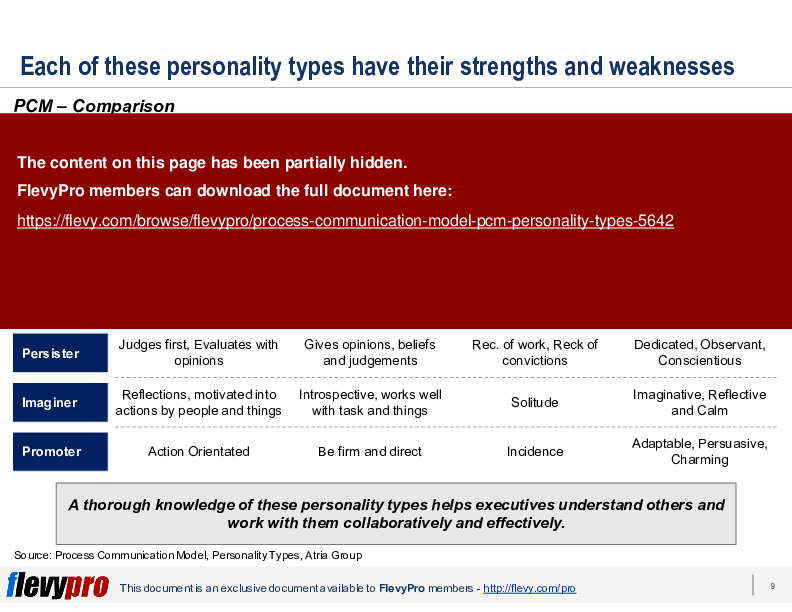
Process Communication Model (PCM) is a useful tool for communicating with customers, colleagues, acquaintances, and others.

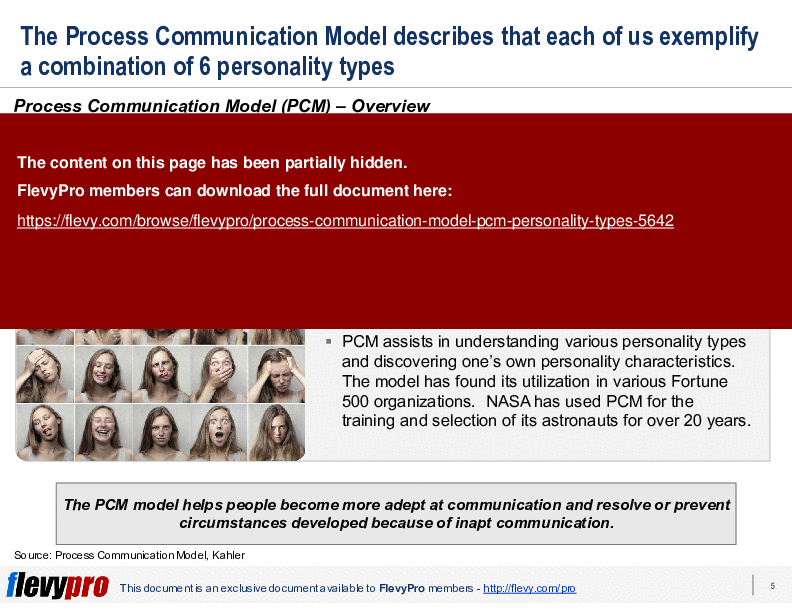
The model was developed by Taibi Kahler in the 1970s. PCM is a prominent psychometric tool for team and individual development. The PCM model describes the reasons (and ways) for communication between people, and is of great assistance to people in improving their communication and influencing others.

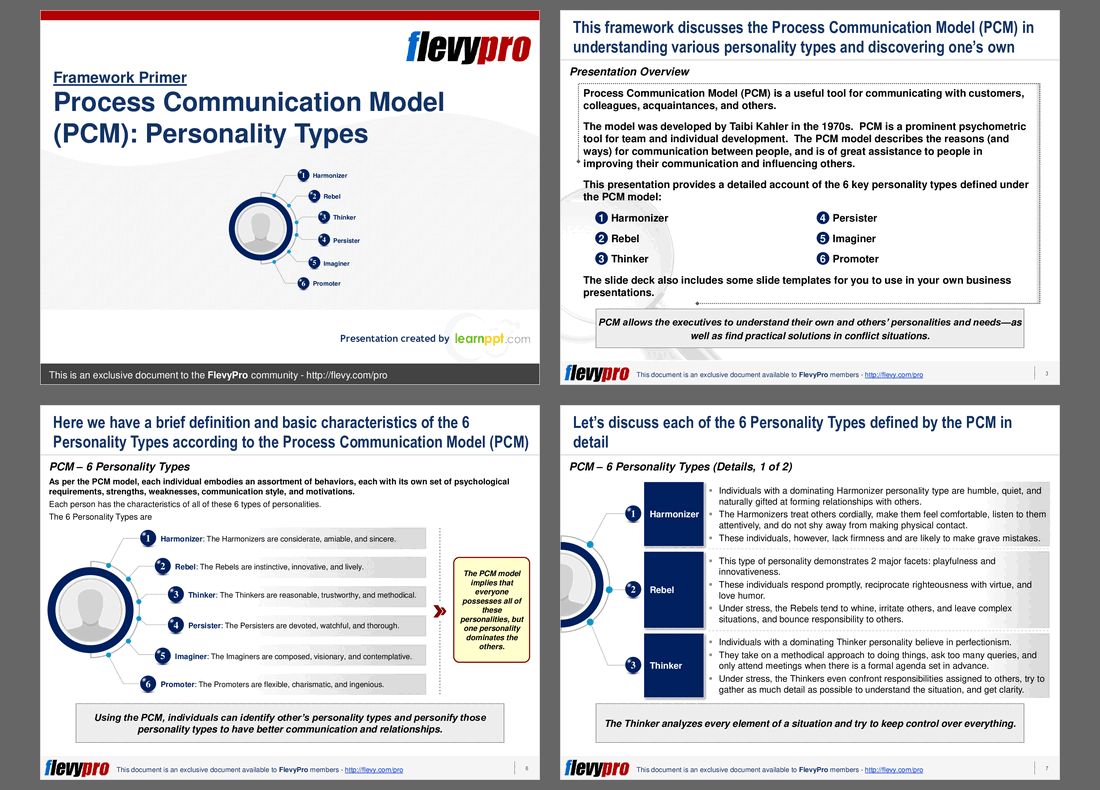
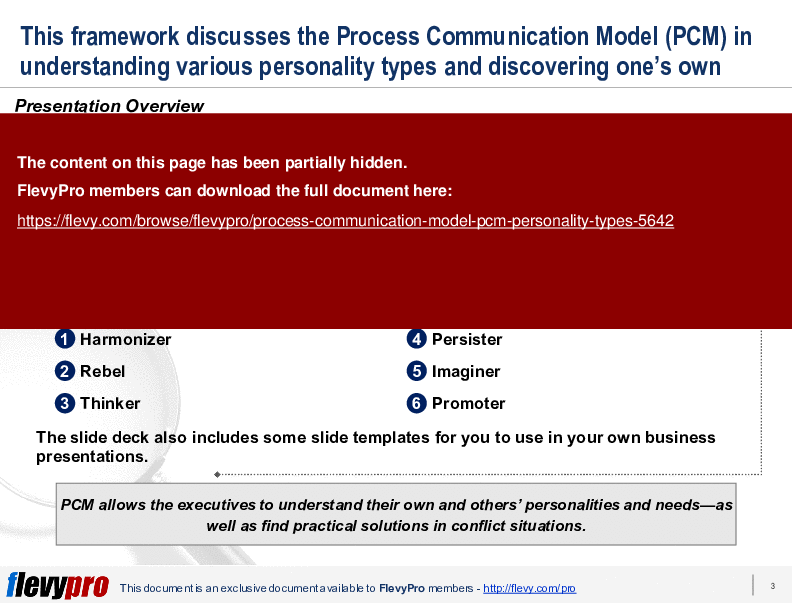
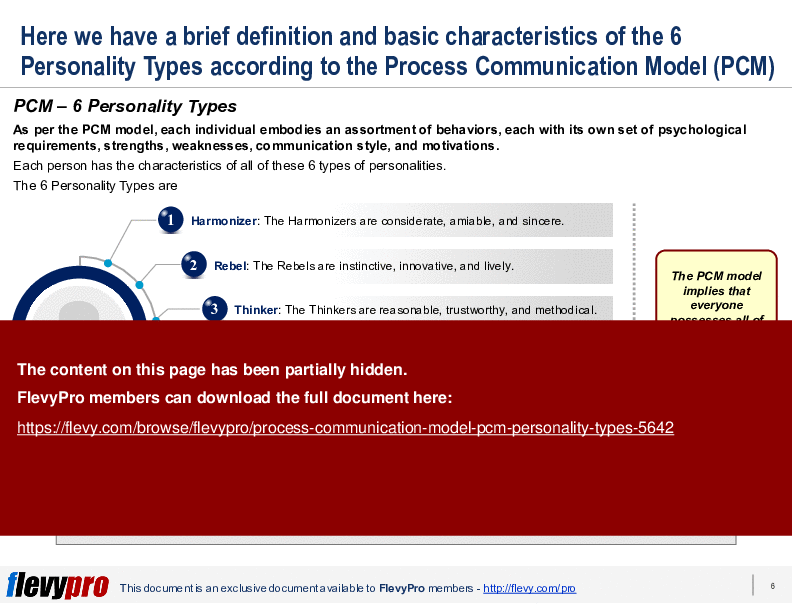
This presentation provides a detailed account of the 6 key personality types defined under the PCM model:

1. Harmonizer
2. Rebel
3. Thinker
4. Persister
5. Imaginer
6. Promoter

PCM allows the executives to understand their own and others' personalities and needs—as well as find practical solutions in conflict situations.

The slide deck also includes some slide templates for you to use in your own business presentations.

The Process Communication Model (PCM) framework is designed to help leaders and teams decode the complexities of human interactions. It provides a comprehensive understanding of six distinct personality types, each with unique communication styles and motivational factors. This model is not just theoretical; it has been implemented by NASA for astronaut training and selection for over two decades, showcasing its practical utility in high-stakes environments.

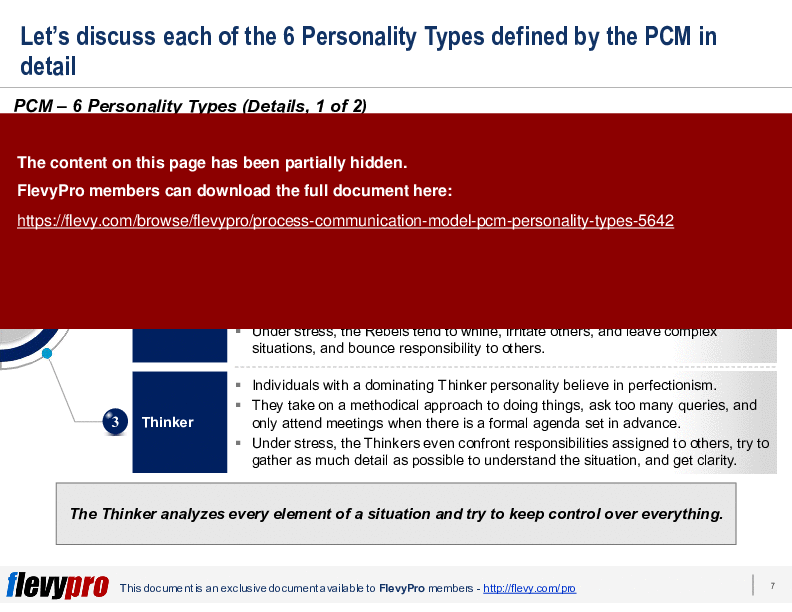
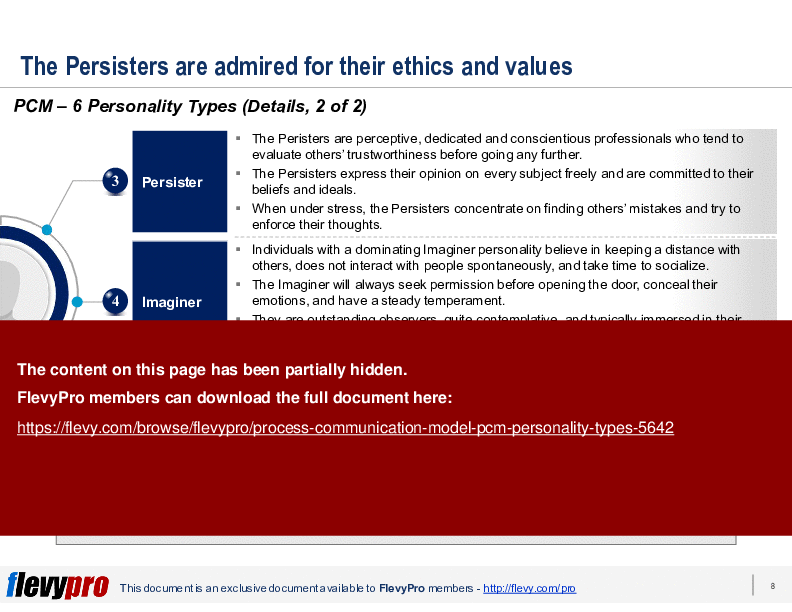
This presentation delves into the core attributes of each personality type, offering insights into their strengths, weaknesses, and stress behaviors. For instance, Harmonizers are considerate and amiable, but may become unassertive under pressure. Rebels are innovative and lively, but can become impulsive. Thinkers are methodical and trustworthy, yet they might overanalyze and struggle with delegation under stress. These detailed profiles enable executives to tailor their communication strategies effectively.

The slide deck also includes customizable templates that can be seamlessly integrated into your own presentations. These templates are designed to visually represent the PCM framework, making it easier to convey complex concepts to your team or stakeholders. By leveraging these tools, you can foster a more cohesive and understanding work environment, ultimately driving better collaboration and productivity.

Got a question about this document? Email us at flevypro@flevy.com.

MARCUS OVERVIEW

This synopsis was written by Marcus [?] based on the analysis of the full 23-slide presentation.


Executive Summary
The Process Communication Model (PCM) presentation provides a structured approach to understanding personality types to enhance communication and teamwork. Developed by Taibi Kahler, this model identifies 6 distinct personality types—Harmonizer, Rebel, Thinker, Promoter, Imaginer, and Persister—each with unique characteristics and communication styles. This PowerPoint template equips executives and teams with insights to improve interpersonal dynamics, resolve conflicts, and foster collaboration. By utilizing the PCM framework, users can effectively tailor their communication strategies to meet the needs of diverse personality types, ultimately driving better outcomes in both professional and personal interactions.

Who This Is For and When to Use
•  Corporate executives seeking to enhance team dynamics and communication.
•  HR professionals involved in training and development initiatives.
•  Team leaders aiming to improve collaboration and conflict resolution.
•  Consultants focused on organizational development and team effectiveness.

Best-fit moments to use this deck:
•  During team-building workshops to foster understanding of diverse communication styles.
•  In training sessions aimed at improving interpersonal skills among employees.
•  When addressing communication challenges within teams or departments.

Learning Objectives
•  Define the 6 personality types within the Process Communication Model.
•  Identify individual personality traits and their impact on communication.
•  Develop strategies to tailor communication based on personality types.
•  Enhance conflict resolution skills by understanding different perspectives.
•  Foster a collaborative environment through effective interpersonal communication.
•  Apply PCM insights to real-world scenarios for improved teamwork.

Table of Contents
•  Overview (page 3)
•  Process Communication Model (PCM) (page 5)
•  Personality Types (page 6)
•  Templates (page 18)

Primary Topics Covered
•  Overview of PCM - The PCM framework provides a comprehensive understanding of personality types and their influence on communication.
•  Personality Types - The 6 personality types—Harmonizer, Rebel, Thinker, Promoter, Imaginer, and Persister—are defined and characterized.
•  Communication Strategies - Techniques for adapting communication styles to suit different personality types are discussed.
•  Conflict Resolution - Insights into resolving conflicts through understanding personality dynamics.
•  Team Collaboration - Strategies for leveraging personality types to enhance teamwork and collaboration.
•  Templates for Application - Practical templates for implementing PCM insights in business settings.

Deliverables, Templates, and Tools
•  Personality type assessment template for identifying team members' dominant traits.
•  Communication strategy framework to tailor messages based on personality types.
•  Conflict resolution guide outlining steps to address interpersonal challenges.
•  Team collaboration checklist to enhance group dynamics using PCM principles.
•  Presentation slides for training sessions on PCM and personality types.
•  Feedback forms to evaluate the effectiveness of PCM training sessions.

Slide Highlights
•  Overview slide detailing the PCM framework and its applications.
•  Personality types slide illustrating the characteristics of each type.
•  Comparison slide summarizing strengths and weaknesses of the 6 personality types.
•  Communication strategies slide providing actionable tips for effective interactions.
•  Conflict resolution slide outlining key steps to address misunderstandings.

Potential Workshop Agenda
Introduction to PCM (30 minutes)
•  Overview of the Process Communication Model and its relevance.
•  Discussion on the importance of understanding personality types.

Personality Types Deep Dive (60 minutes)
•  Detailed exploration of each personality type and their characteristics.
•  Group activities to identify personality types within the team.

Communication Strategies (45 minutes)
•  Techniques for adapting communication based on personality types.
•  Role-playing exercises to practice tailored communication.

Conflict Resolution Techniques (30 minutes)
•  Strategies for resolving conflicts using PCM insights.
•  Group discussions on real-world scenarios and solutions.

Customization Guidance
•  Adjust the presentation content to reflect specific organizational culture and values.
•  Incorporate case studies or examples relevant to the audience's industry.
•  Modify templates to align with internal branding and communication standards.

Secondary Topics Covered
•  The role of emotional intelligence in effective communication.
•  Strategies for fostering a culture of open communication within teams.
•  The impact of personality types on leadership styles.
•  Techniques for assessing team dynamics and improving collaboration.
•  The importance of feedback in enhancing communication effectiveness.

Topic FAQ

What are the 6 personality types in the Process Communication Model?

The Process Communication Model identifies 6 distinct personality types: Harmonizer, Rebel, Thinker, Persister, Imaginer, and Promoter. Each type has characteristic communication preferences, strengths, and stress behaviors; the model groups interpersonal dynamics around these 6 archetypes, totaling 6 types.

How does PCM explain stress behaviors and communication breakdowns?

PCM maps each personality type to typical stress responses and preferred channels of communication, enabling users to recognize when interactions are likely to escalate and to adjust messaging accordingly. The framework links stress behaviors to tailored communication strategies across the 6 personality profiles.

Who developed PCM and when was it created?

The Process Communication Model was developed by Taibi Kahler in the 1970s and has been used as a psychometric and communication tool since then. It has notable practical application history, including use in NASA’s astronaut training and selection programs beginning decades ago in the late 20th century.

What tools are commonly included in PCM training materials?

PCM training materials typically include a personality type assessment template, a communication strategy framework for each type, a conflict resolution guide, a team collaboration checklist, presentation slides for workshops, and feedback forms to evaluate training effectiveness, including the personality type assessment template.

What should I look for when buying a PCM slide deck for team training?

Prioritize decks that clearly define the 6 PCM types, provide a personality assessment, include communication strategy and conflict-resolution templates, and offer customizable slides for workshops. Flevy’s Process Communication Model (PCM): Personality Types explicitly lists these deliverables, including the assessment template.

Are PCM templates worth purchasing for corporate training given budget constraints?

If you need ready-to-use materials that reduce prep time, PCM templates provide structured assessment, communication frameworks, role-play slides, and feedback forms that can be customized to your organization. Flevy’s Process Communication Model (PCM): Personality Types bundles these assets, including presentation slides and templates.

How can I use PCM to resolve recurring team conflicts?

Use a personality assessment to identify dominant types, then apply the communication strategy framework and conflict resolution guide to reframe messages and mediate disputes. Practical steps include role-playing exercises and facilitator-led discussions using the conflict resolution guide and workshop slides provided in the deck.

Can PCM be applied in remote teams and virtual workshops?

Yes; PCM principles apply to virtual communication by helping participants recognize personality-driven preferences and adjust remote interaction styles. Use the included presentation slides, assessment template, and communication strategy framework to structure virtual workshops and follow-up feedback collection using feedback forms.

Document FAQ
These are questions addressed within this presentation.

What is the Process Communication Model (PCM)?
PCM is a framework that categorizes individuals into 6 personality types to improve communication and teamwork.

How can PCM help in conflict resolution?
By understanding the different personality types, individuals can tailor their communication strategies to address conflicts more effectively.

What are the 6 personality types in PCM?
The 6 types are Harmonizer, Rebel, Thinker, Promoter, Imaginer, and Persister, each with unique traits and communication styles.

Can PCM be applied in remote teams?
Yes, PCM can be utilized in remote settings to enhance virtual communication and collaboration among team members.

How do I identify my personality type?
Utilize the personality type assessment template provided in the presentation to determine your dominant traits.

Is PCM applicable in personal relationships?
Absolutely, PCM can enhance communication and understanding in personal relationships as well as professional settings.

What resources are included in the presentation?
The presentation includes templates, communication strategies, and conflict resolution guides tailored to PCM.

How can I customize the PCM training for my organization?
Tailor the content, examples, and templates to reflect your organization's culture, values, and specific communication challenges.

Glossary
•  Process Communication Model (PCM) - A framework for understanding personality types to improve communication.
•  Personality Type - A classification of individuals based on their traits and communication styles.
•  Harmonizer - A personality type characterized by compassion and relationship-building.
•  Rebel - A personality type known for creativity and spontaneity.
•  Thinker - A personality type that values logic and organization.
•  Promoter - A personality type recognized for adaptability and persuasion.
•  Imaginer - A personality type that values introspection and creativity.
•  Persister - A personality type focused on values and commitment.
•  Conflict Resolution - The process of resolving a dispute or disagreement.
•  Communication Strategy - A plan for effectively conveying messages to different audiences.
•  Team Dynamics - The behavioral relationships between members of a team.
•  Emotional Intelligence - The ability to recognize and manage one’s own emotions and the emotions of others.
•  Feedback - Information provided regarding performance or behavior, used for improvement.

COMMUNICATIONS STRATEGY PPT SLIDES

Understanding the Imaginer Personality Type

Understanding the Six Personality Types in PCM

Understanding Personality Types for Enhanced Team Dynamics

Understanding the Harmonizer Personality Type

Source: Best Practices in Corporate Communications, Personality Types PowerPoint Slides: Process Communication Model (PCM): Personality Types PowerPoint (PPTX) Presentation Slide Deck, LearnPPT Consulting


$29.00
FlevyPro price: FREE (included in subscription)
This framework is developed by a team of former McKinsey and Big 4 consultants. The presentation follows the headline-body-bumper slide format used by global consulting firms.
Add to Cart
  

Did you need more documents?

Consider a FlevyPro subscription from $39/month. View plans here.

For $10.00 more, you can download this document plus 2 more FlevyPro documents. That's just $13 each.

ABOUT FLEVYPRO

This document is part of the FlevyPro Library, a curated knowledge base of documents for our FlevyPro subscribers.

FlevyPro is a subscription service for on-demand business frameworks and analysis tools. FlevyPro subscribers receive access to an exclusive library of curated business documents—business framework primers, presentation templates, Lean Six Sigma tools, and more—among other exclusive benefits.

Click here to learn more about FlevyPro and its benefits.

Did you know?
The average daily rate of a McKinsey consultant is $6,625 (not including expenses). The average price of a Flevy document is $65.


Trusted by over 10,000+ Client Organizations
Since 2012, we have provided business templates to over 10,000 businesses and organizations of all sizes, from startups and small businesses to the Fortune 100, in over 130 countries.
AT&T GE Cisco Intel IBM Coke Dell Toyota HP Nike Samsung Microsoft Astrazeneca JP Morgan KPMG Walgreens Walmart 3M Kaiser Oracle SAP Google E&Y Volvo Bosch Merck Fedex Shell Amgen Eli Lilly Roche AIG Abbott Amazon PwC T-Mobile Broadcom Bayer Pearson Titleist ConEd Pfizer NTT Data Schwab


Read Customer Testimonials

 
"I have used FlevyPro for several business applications. It is a great complement to working with expensive consultants. The quality and effectiveness of the tools are of the highest standards."

– Moritz Bernhoerster, Global Sourcing Director at Fortune 500
 
"As a young consulting firm, requests for input from clients vary and it's sometimes impossible to provide expert solutions across a broad spectrum of requirements. That was before I discovered Flevy.com.

Through subscription to this invaluable site of a plethora of topics that are key and crucial to consulting, I "

– Nishi Singh, Strategist and MD at NSP Consultants
 
"Flevy.com has proven to be an invaluable resource library to our Independent Management Consultancy, supporting and enabling us to better serve our enterprise clients.

The value derived from our [FlevyPro] subscription in terms of the business it has helped to gain far exceeds the investment made, making a subscription a no-brainer for any growing consultancy – or in-house strategy team."

– Dean Carlton, Chief Transformation Officer, Global Village Transformations Pty Ltd.
 
"Flevy is our 'go to' resource for management material, at an affordable cost. The Flevy library is comprehensive and the content deep, and typically provides a great foundation for us to further develop and tailor our own service offer."

– Chris McCann, Founder at Resilient.World
 
"The wide selection of frameworks is very useful to me as an independent consultant. In fact, it rivals what I had at my disposal at Big 4 Consulting firms in terms of efficacy and organization."

– Julia T., Consulting Firm Owner (Former Manager at Deloitte and Capgemini)
 
"I have used Flevy services for a number of years and have never, ever been disappointed. As a matter of fact, David and his team continue, time after time, to impress me with their willingness to assist and in the real sense of the word. I have concluded in fact "

– Roberto Pelliccia, Senior Executive in International Hospitality
 
"FlevyPro provides business frameworks from many of the global giants in management consulting that allow you to provide best in class solutions for your clients."

– David Harris, Managing Director at Futures Strategy
 
"One of the great discoveries that I have made for my business is the Flevy library of training materials.

As a Lean Transformation Expert, I am always making presentations to clients on a variety of topics: Training, Transformation, Total Productive Maintenance, Culture, Coaching, Tools, Leadership Behavior, etc. Flevy "

– Ed Kemmerling, Senior Lean Transformation Expert at PMG


Customers Also Bought These Documents


Customers Also Like These Documents

Explore Templates on Related Management Topics


Your Recently Viewed Documents
Download our FREE Organization, Change, & Culture, Templates

Download our free compilation of 50+ slides and templates on Organizational Design, Change Management, and Corporate Culture. Methodologies include ADKAR, Burke-Litwin Change Model, McKinsey 7-S, Competing Values Framework, etc.