
Governments worldwide are under increasing pressure to deliver better services with fewer resources. Lean Government adapts proven Lean principles from the Toyota Production System (TPS) to the public sector, helping agencies reduce waste, streamline operations, and enhance citizen satisfaction.
This comprehensive Lean Government training presentation equips public sector professionals with the knowledge and tools needed to identify inefficiencies, improve workflows, and create more value for citizens—all while working within budget and regulatory constraints.
This deck is specifically tailored for government leaders, policymakers, and public sector employees who are looking to:
✅ Improve service efficiency while reducing costs and delays
✅ Cut through bureaucracy and administrative inefficiencies
✅ Enhance citizen satisfaction by delivering faster, value-driven services
✅ Build a culture of continuous improvement in government operations
Lean Government has already been successfully implemented in agencies worldwide, from city governments to national healthcare systems, proving its adaptability and effectiveness.
||||||||||||||||||||||||||||||||||||||||||||||||||||||||||||||||||||||||||||||||||||||||||||||||||||||||||||||||||||||||||||||||||||||||||||||||||||||
This training package includes:
1. Lean Government PPT training presentation (PowerPoint format)
2. Lean poster (PDF format, in color and monochrome, printable in A3 size)
3. Eight Wastes of Lean poster (PDF format, in color and monochrome, printable in A3 size)
||||||||||||||||||||||||||||||||||||||||||||||||||||||||||||||||||||||||||||||||||||||||||||||||||||||||||||||||||||||||||||||||||||||||||||||||||||||
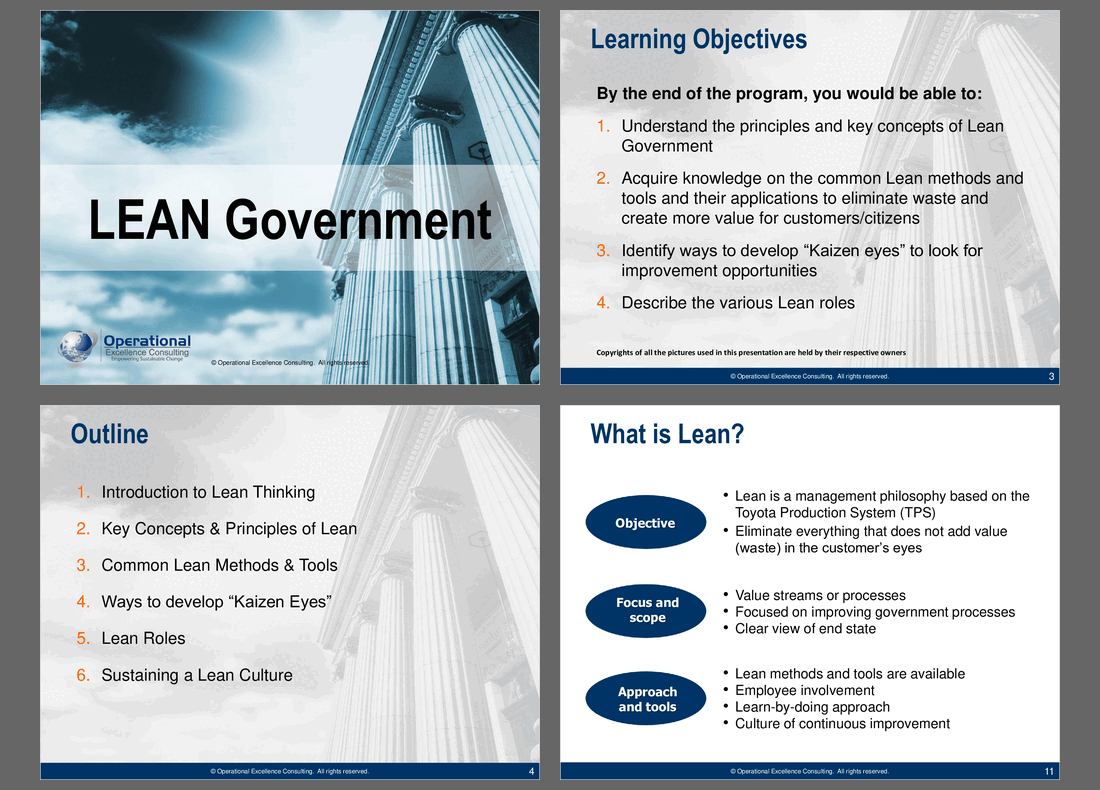
LEARNING OBJECTIVES
1. Understand the principles and key concepts of Lean Government.
2. Acquire knowledge on the key Lean methods and tools and their applications to eliminate waste and create increased value for customers/citizens.
3. Identify ways to develop Kaizen eyes to look for improvement opportunities.
4. Describe the various Lean roles.
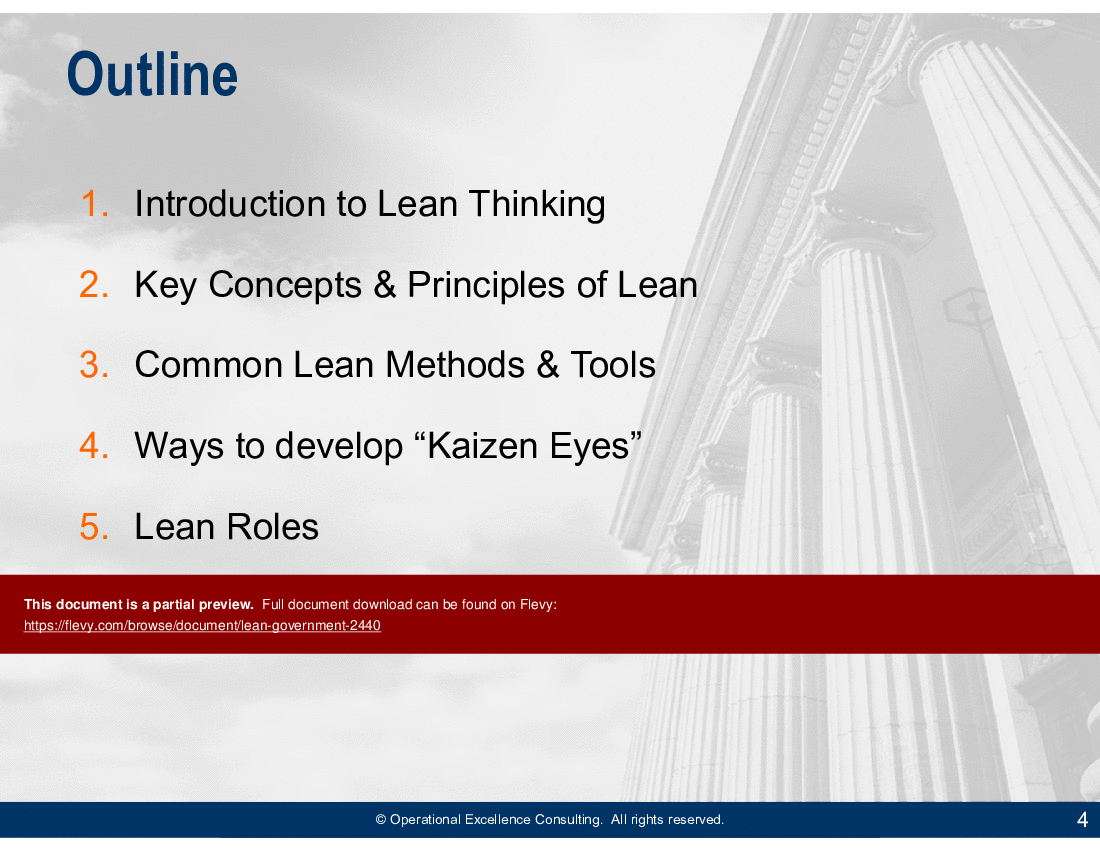
CONTENTS
1. Introduction to Lean Thinking
• Why Lean government?
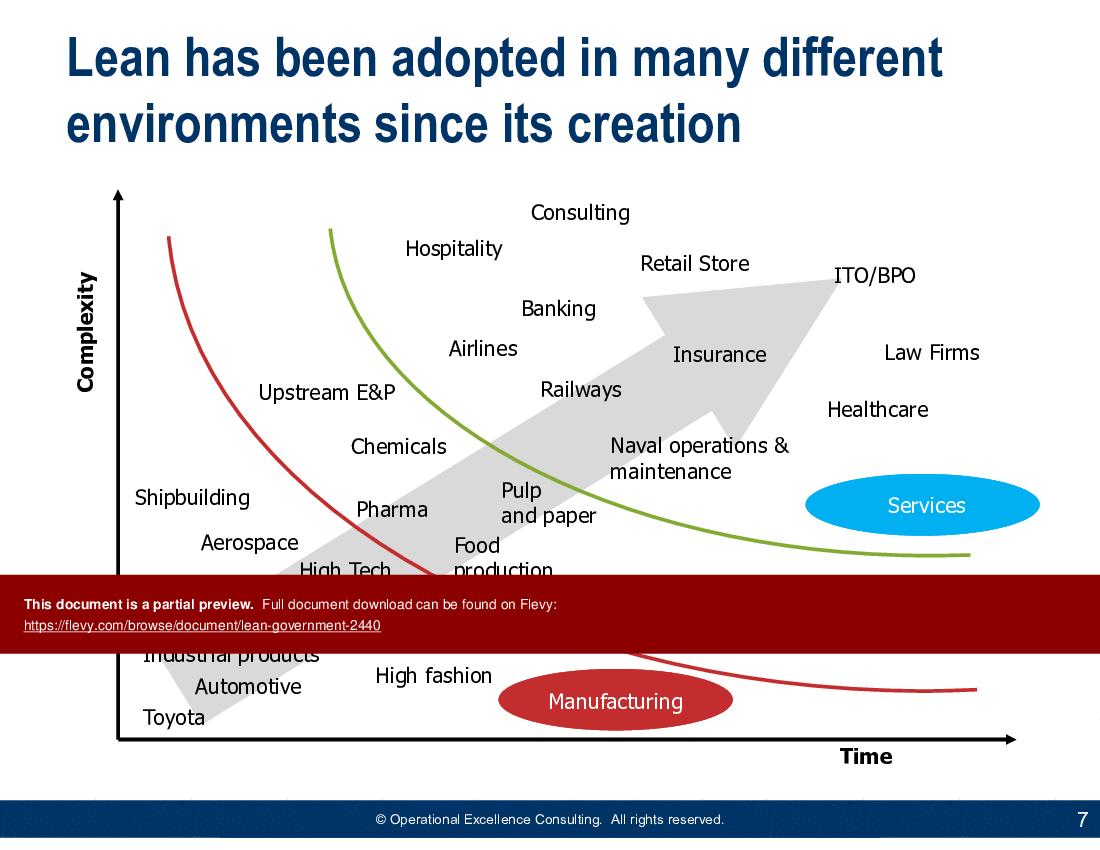
• Lean adoption in various environments
• Lean applications in service environments
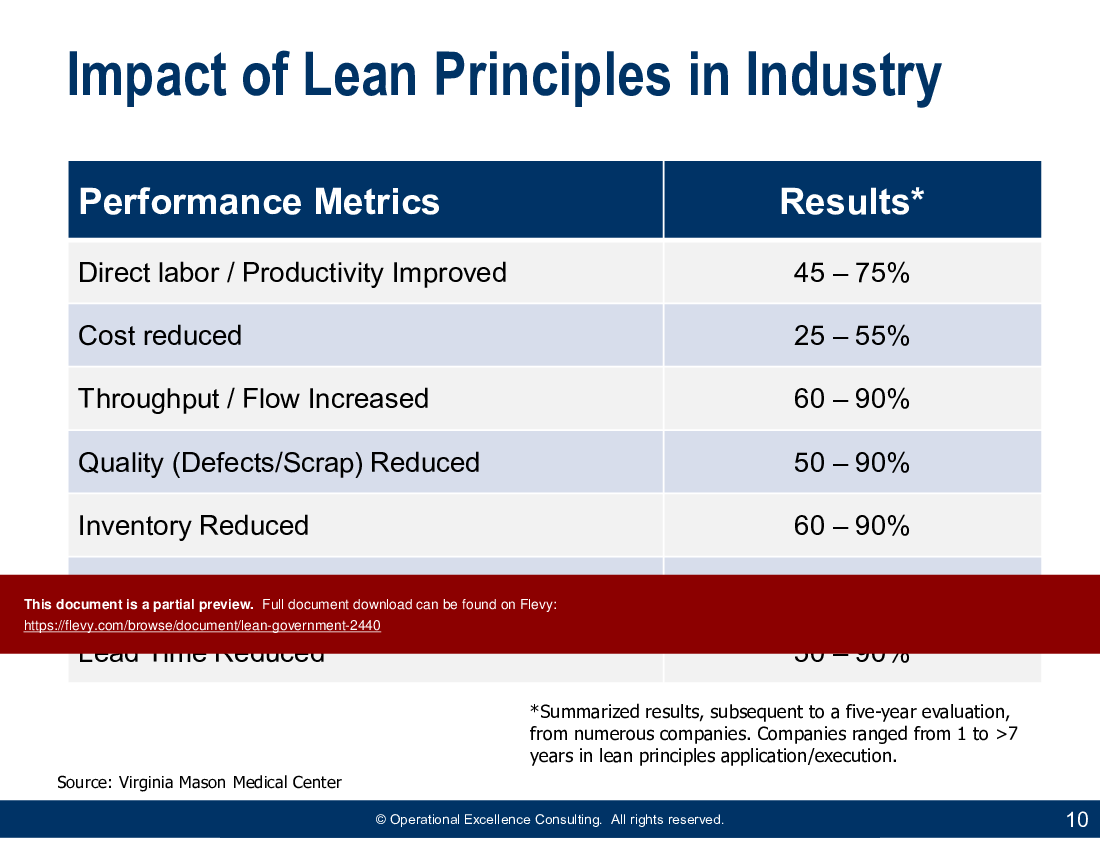
• Impact of Lean principles in industry
• What is Lean?
• Lean principles
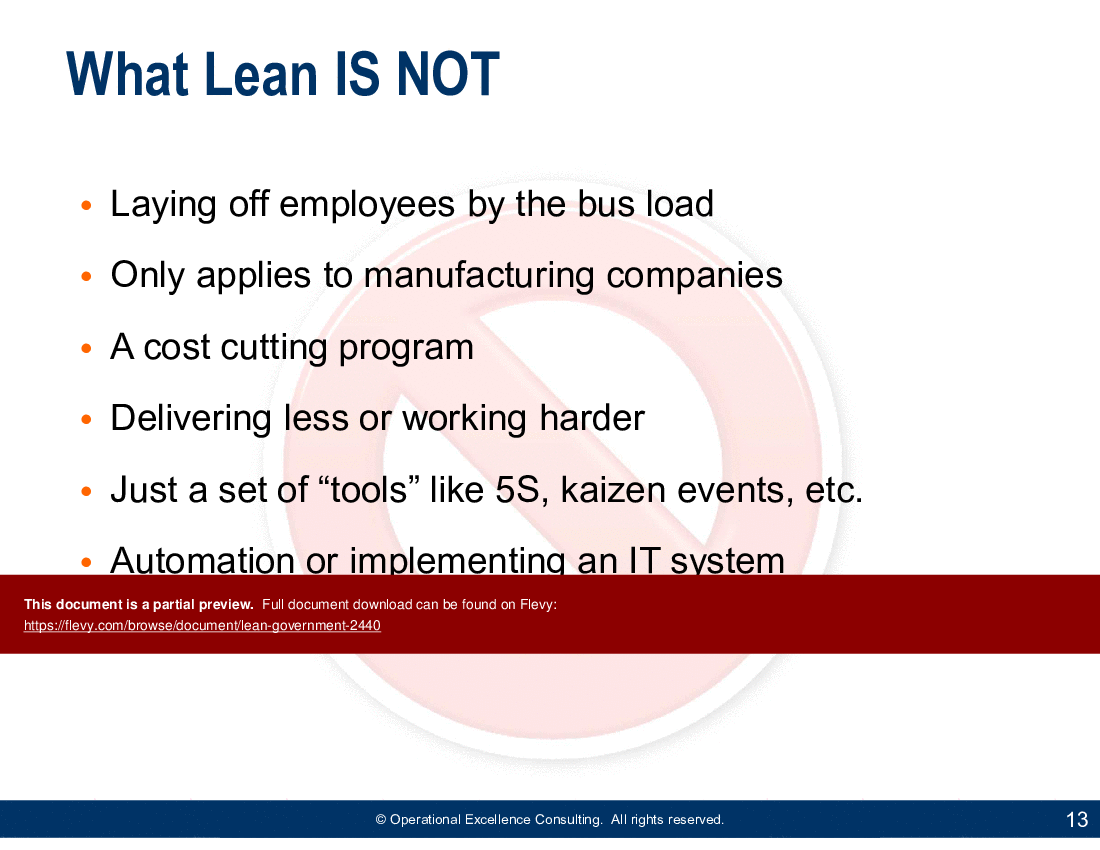
• What Lean is not
• How does Lean relate to the public sector?
• Lean facilitates a culture change
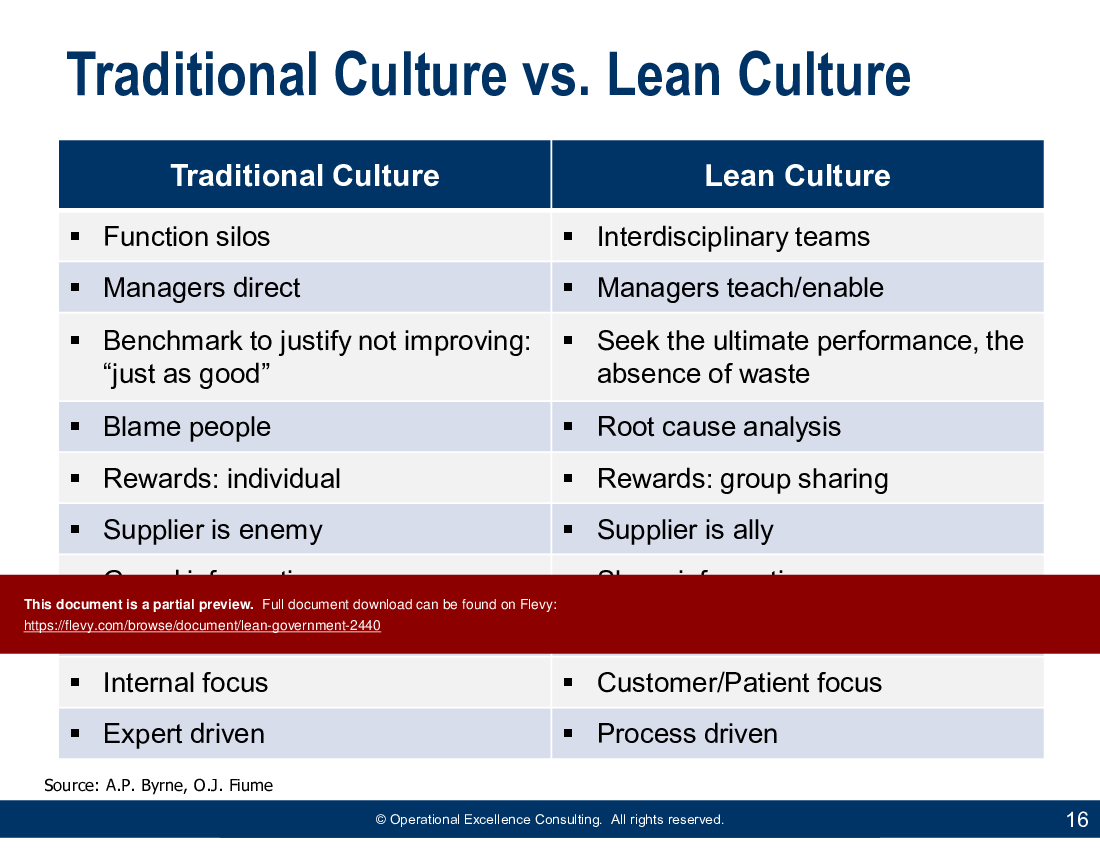
• Traditional culture vs. Lean culture
• Lean management framework
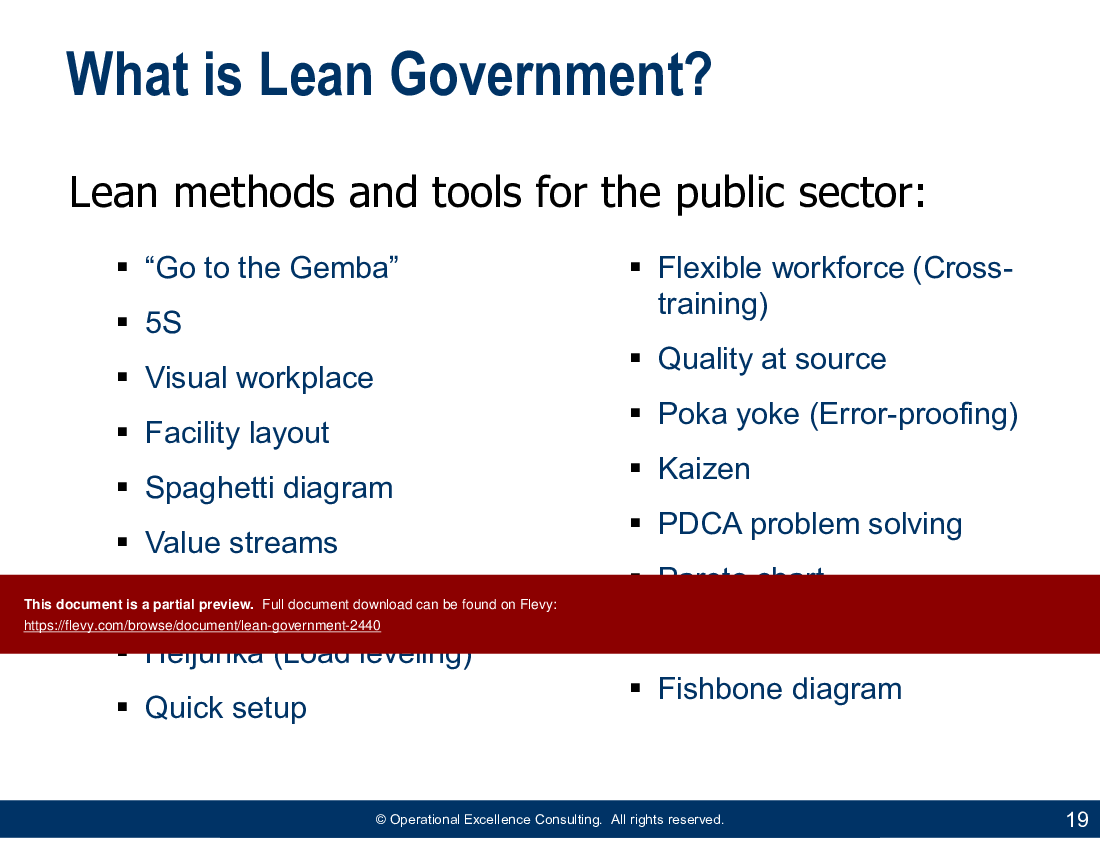
• What is Lean government?
• Benefits of Lean government
2. Key Concepts of Lean Thinking
• Methods to increase productivity
• Who are the customers of public services?
• The "customers" of public services
• Portrait of a citizen
• Critical quality parameters regardless of the citizen's role
• Eight types of waste in the public sector
• Examples of value-added activities in the public sector
• Examples of waste in service environments
• Lean emphasis
• Lean thinking philosophy
3. Common Lean Methods and Tools
• Muda, Mura and Muri
• Gemba framework
• 5S principles
• Visual management
• Office layout
• Spaghetti diagram
• Value stream mapping
• Standard work
• Heijunka (Load leveling)
• Fexible workforce
• Quality at source
• Poka yoke (error-proofing)
• Kaizen
• PDCA problem solving
• Pareto chart
• 5 whys
• Cause and effect diagram
4. Ways to develop "Kaizen Eyes"
• What are "Kaizen eyes"?
• Ways to develop "Kaizen eyes"
5. Lean Roles
• Lean steering committee
• Lean deployment leader
• Lean champions
• Lean process owner
• Lean coach
• Team leader
• Team members
6. Sustaining a Lean Culture
• Challenges of Lean government
• Sustaining a Lean culture
• Lessons from other adopters
Got a question about the product? Email us at support@flevy.com or ask the author directly by using the "Ask the Author a Question" form. If you cannot view the preview above this document description, go here to view the large preview instead.
Executive Summary
The Lean Government presentation is a strategic framework designed to enhance operational efficiency within public sector organizations. Developed by a Certified Lean Six Sigma Black Belt with extensive experience at Microsoft, IBM, and Panasonic, this presentation provides actionable insights into applying Lean methodologies to improve service delivery, reduce waste, and optimize resource utilization. By leveraging Lean principles, government agencies can meet rising citizen expectations and effectively manage taxpayer resources, ultimately leading to enhanced public service quality.
Who This Is For and When to Use
• Public sector executives seeking to improve operational efficiency
• Government agency leaders responsible for service delivery
• Change management teams focused on cultural transformation
• Lean practitioners and consultants working within public services
Best-fit moments to use this deck:
• During strategic planning sessions aimed at operational excellence
• When initiating Lean transformation projects within government agencies
• As a training resource for teams adopting Lean methodologies
Learning Objectives
• Understand the principles and key concepts of Lean Government
• Acquire knowledge on common Lean methods and tools to eliminate waste
• Identify opportunities for continuous improvement through “Kaizen eyes”
• Describe various Lean roles and their responsibilities in public sector contexts
Table of Contents
• Introduction to Lean Thinking (page 1)
• Key Concepts & Principles of Lean (page 2)
• Common Lean Methods & Tools (page 3)
• Ways to Develop “Kaizen Eyes” (page 4)
• Lean Roles (page 5)
• Sustaining a Lean Culture (page 6)
Primary Topics Covered
• Lean Principles - Focus on eliminating waste and enhancing value in public services through continuous improvement.
• Value Stream Mapping - Visualize processes to identify waste and streamline operations in government functions.
• 5S Methodology - Organize and maintain a clean workspace to facilitate efficiency and productivity.
• Kaizen Events - Implement rapid, focused improvement initiatives to address specific operational challenges.
• Poka Yoke - Utilize error-proofing techniques to prevent mistakes and enhance service quality.
• Visual Management - Employ visual signals to communicate performance metrics and operational standards effectively.
Deliverables, Templates, and Tools
• Value stream mapping templates for process visualization
• 5S implementation checklists for workspace organization
• Kaizen event planning templates for structured improvement initiatives
• Poka Yoke examples for error-proofing processes
• Visual management boards for tracking performance metrics
Slide Highlights
• Overview of Lean principles and their application in government
• Case studies demonstrating Lean success in public sector environments
• Visual aids illustrating the impact of Lean methodologies on service delivery
• Practical examples of waste reduction strategies in government operations
Potential Workshop Agenda
Introduction to Lean Government (30 minutes)
• Overview of Lean principles and their relevance to public services
• Discussion on the importance of operational excellence in government
Lean Tools and Techniques (60 minutes)
• Detailed exploration of 5S, Value Stream Mapping, and Poka Yoke
• Group activities to practice Lean tools in real-world scenarios
Kaizen and Continuous Improvement (45 minutes)
• Introduction to Kaizen principles and event planning
• Brainstorming session on improvement opportunities within participants' organizations
Customization Guidance
• Tailor the presentation to reflect specific public sector challenges and goals
• Incorporate local case studies and examples relevant to the audience
• Adjust terminology and frameworks to align with organizational culture and practices
Secondary Topics Covered
• The role of leadership in sustaining a Lean culture
• Strategies for overcoming resistance to change in public sector environments
• Metrics for measuring Lean success in government operations
FAQ
What is Lean Government?
Lean Government refers to the application of Lean principles to improve efficiency and effectiveness in public sector operations, focusing on waste reduction and value creation for citizens.
How can Lean methods improve public services?
Lean methods streamline processes, enhance service quality, and reduce costs by eliminating non-value-added activities, ultimately leading to better outcomes for citizens.
What are “Kaizen eyes”?
“Kaizen eyes” refer to the ability to identify opportunities for continuous improvement within processes, fostering a culture of ongoing enhancement.
What tools are included in the Lean Government framework?
The framework includes tools such as Value Stream Mapping, 5S, Poka Yoke, and visual management techniques to facilitate Lean implementation.
How can we sustain a Lean culture in government?
Sustaining a Lean culture requires ongoing leadership commitment, employee engagement, regular training, and the establishment of metrics to measure progress.
What are the common challenges in implementing Lean in government?
Challenges include resistance to change, complexity of public services, and the need for leadership commitment to drive cultural transformation.
How can Lean principles be customized for different government agencies?
Lean principles can be tailored by aligning them with specific agency goals, operational challenges, and the unique needs of the communities served.
What is the role of leadership in Lean Government?
Leadership plays a crucial role in setting the vision for Lean initiatives, providing resources, and fostering an environment that encourages continuous improvement.
Glossary
• Lean - A management philosophy focused on value creation and waste elimination.
• Kaizen - Continuous improvement involving all employees in identifying and implementing enhancements.
• 5S - A workplace organization method that stands for Sort, Set in Order, Shine, Standardize, and Sustain.
• Value Stream Mapping - A visual tool used to analyze and improve the flow of materials and information in a process.
• Poka Yoke - Error-proofing techniques designed to prevent mistakes in processes.
• Visual Management - The use of visual signals to communicate performance and operational standards.
• Gemba - The place where work is done; emphasizes observing processes in their actual environment.
• Muda - Waste; any activity that does not add value to the customer.
• Jidoka - Automation with a human touch; the ability to stop a process to fix problems.

• Heijunka - Load leveling; balancing the workload to avoid overburdening employees.
• Standard Work - Documented procedures that define the best practices for performing tasks.
• Continuous Improvement - Ongoing efforts to enhance products, services, or processes.
• Process Owner - An individual responsible for maintaining and improving a specific process.
• Lean Champion - A leader who advocates for Lean practices within an organization.
• Lean Coach - An expert who trains and mentors others in Lean methodologies.
• Lean Team Leader - A person responsible for leading Lean projects and initiatives.
• Lean Deployment Leader - An individual overseeing the implementation of Lean practices across an organization.
Source: Best Practices in Government PowerPoint Slides: Lean Government PowerPoint (PPTX) Presentation Slide Deck, Operational Excellence Consulting
|
Receive our FREE Primer on Lean Management
This 32-page presentation from Operational Excellence Consulting explains the Lean Management philosophy, based on the Toyota Production System (TPS). Learn to eliminate waste. |