
A major reason for employees leaving their workplaces is their bosses. To succeed in today's fiercely competitive market, organizations need to invest in developing their leadership in such a way that they further develop their teams by training them on the desired competencies, create a sense of engagement in their people, and effectively manage conflict between them.
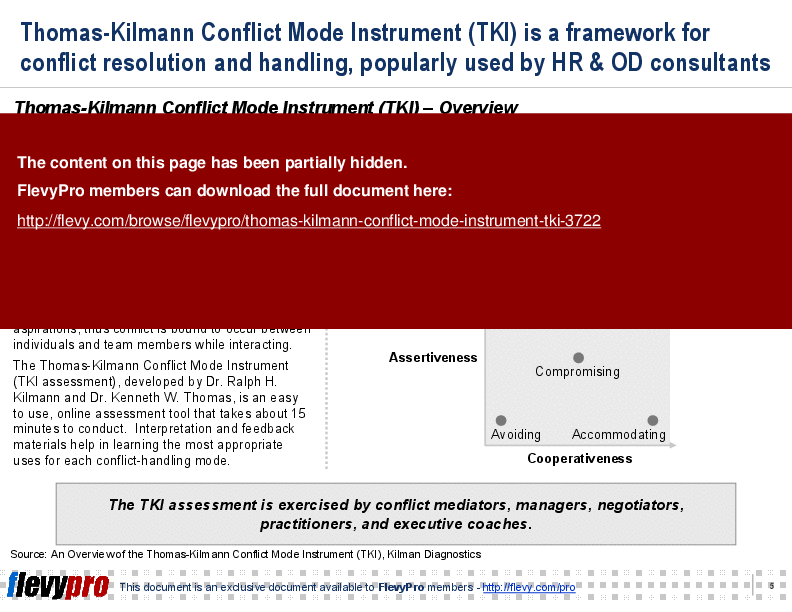
A big challenge for leaders is getting their employees to believe in the organizational vision. No two personalities have the same viewpoints and aspirations, thus conflict is bound to occur between individuals and team members while interacting.
This presentation talks about the Thomas-Kilmann Conflict Mode Instrument (TKI), which is an easy to use framework for managing and resolving conflicts.
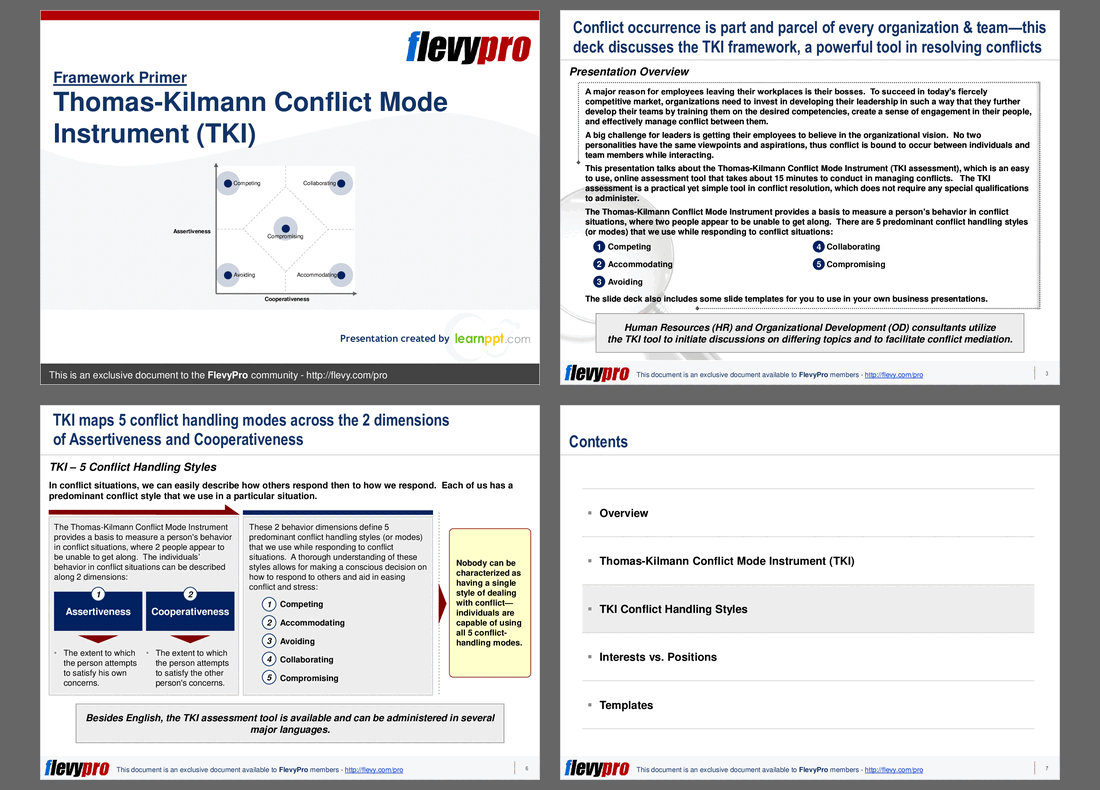
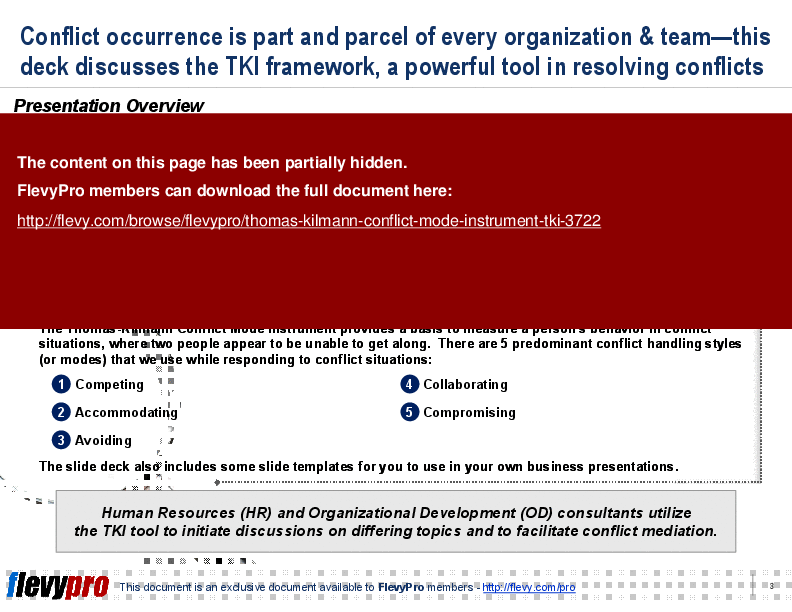
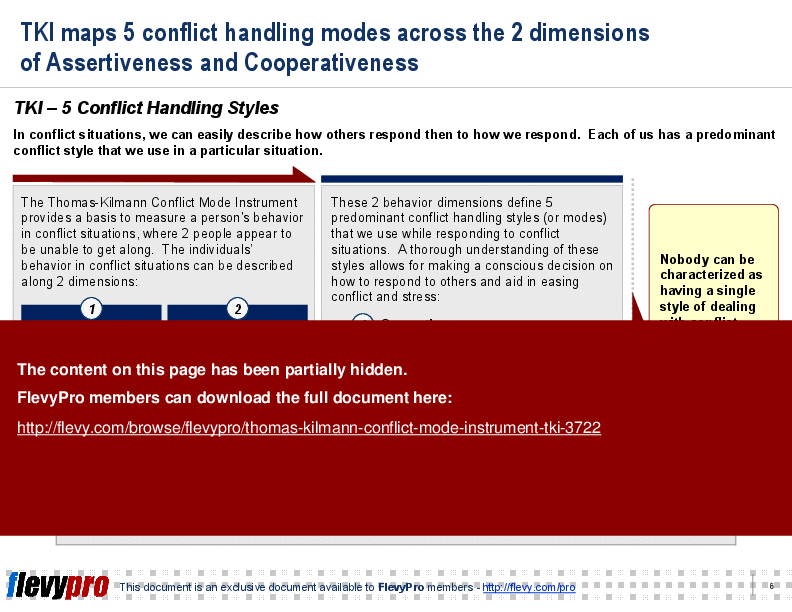
The Thomas-Kilmann Conflict Mode Instrument provides a basis to measure a person's behavior in conflict situations, where two people appear to be unable to get along. There are 5 predominant conflict handling styles (or modes) that we use while responding to conflict situations:
1. Competing
2. Accommodating
3. Avoiding
4. Collaborating
5. Compromising
Human Resources (HR) and Organizational Development (OD) consultants often utilize the TKI tool to initiate discussions on differing topics and to facilitate conflict mediation.
The slide deck also includes some slide templates for you to use in your own business presentations.
The TKI framework is essential for leaders aiming to understand and navigate the complexities of workplace conflict. This presentation offers a deep dive into the five conflict-handling modes, providing actionable insights and practical templates. The tool is invaluable for HR and OD professionals to foster productive discussions and mediate conflicts effectively. The comprehensive slide deck equips you with the knowledge to assess and apply the most suitable conflict resolution strategies, ensuring a harmonious and efficient organizational environment.
Got a question about this document? Email us at flevypro@flevy.com.
Executive Summary
The Thomas-Kilmann Conflict Mode Instrument (TKI) presentation is a strategic resource designed to enhance conflict resolution skills within organizations. Developed by Dr. Ralph H. Kilmann and Dr. Kenneth W. Thomas, this framework categorizes conflict handling into 5 distinct styles: Competing, Accommodating, Avoiding, Collaborating, and Compromising. The TKI assessment is a user-friendly online tool that takes approximately 15 minutes to complete, providing insights into individual conflict behaviors. This presentation equips HR and OD professionals with the necessary tools to facilitate discussions on conflict management, ultimately fostering a more cohesive workplace environment.
Who This Is For and When to Use
• HR professionals focused on employee engagement and conflict resolution
• Organizational Development consultants facilitating team dynamics
• Managers aiming to improve leadership effectiveness and team collaboration
• Executive coaches working with clients on interpersonal skills
Best-fit moments to use this deck:
• During leadership training sessions to enhance conflict management skills
• In team-building workshops to address and resolve interpersonal conflicts
• When implementing new organizational changes that may lead to conflict
Learning Objectives
• Define the 5 conflict handling styles and their implications in workplace scenarios
• Assess individual conflict styles using the TKI assessment tool
• Develop strategies to effectively manage conflict based on situational needs
• Enhance communication skills to facilitate open discussions about conflict
• Foster a collaborative environment that encourages constructive conflict resolution
• Identify personal and team dynamics that influence conflict behaviors
Table of Contents
• Overview (page 3)
• Thomas-Kilmann Conflict Mode Instrument (TKI) (page 5)
• TKI Conflict Handling Styles (page 6)
• Interests vs. Positions (page 14)
• Templates (page 17)
Primary Topics Covered
• Overview of TKI - The TKI framework provides a structured approach to understanding and managing conflict in organizational settings.
• Conflict Handling Styles - The 5 styles of conflict resolution are Competing, Accommodating, Avoiding, Collaborating, and Compromising, each with unique characteristics and applications.
• Interests vs. Positions - Differentiating between positions (what people want) and interests (why they want it) is crucial for effective conflict resolution.
• Assessment Tool - The TKI assessment is a practical tool for measuring individual conflict styles, facilitating personal development in conflict management.
• Facilitation Techniques - Strategies for HR and OD professionals to initiate discussions and mediate conflicts effectively.
• Cultural Considerations - The TKI assessment can be administered in multiple languages, making it versatile for diverse organizational cultures.
Deliverables, Templates, and Tools
• TKI assessment tool for measuring individual conflict styles
• Presentation templates for facilitating conflict resolution discussions
• Worksheets for identifying interests versus positions in conflict scenarios
• Guides for interpreting TKI assessment results and providing feedback
• Case studies illustrating the application of TKI in real-world situations
• Action plans for implementing conflict resolution strategies in teams
Slide Highlights
• Visual representation of the TKI conflict handling styles matrix
• Overview slide detailing the importance of conflict resolution in organizations
• Case study examples demonstrating effective conflict resolution using TKI
• Templates for conducting TKI assessments and interpreting results
• Summary of key takeaways for HR and OD professionals
Potential Workshop Agenda
Introduction to TKI (30 minutes)
• Overview of the TKI framework and its relevance
• Discussion on the importance of conflict resolution in the workplace
Understanding Conflict Styles (60 minutes)
• Interactive session on identifying personal conflict styles
• Group activities to explore the implications of different styles
Applying TKI in Real Scenarios (90 minutes)
• Case studies for group analysis and discussion
• Role-playing exercises to practice conflict resolution techniques
Customization Guidance
• Adapt the TKI assessment tool to align with organizational culture and language preferences
• Modify templates to reflect specific team dynamics and conflict scenarios
• Incorporate organizational values and goals into conflict resolution discussions
Secondary Topics Covered
• The role of emotional intelligence in conflict management
• Strategies for fostering a culture of open communication
• Techniques for building trust among team members
• The impact of leadership styles on conflict resolution
• Best practices for conducting effective conflict resolution workshops
Topic FAQ
Document FAQ
These are questions addressed within this presentation.
What is the TKI assessment?
The TKI assessment is an online tool that measures an individual's conflict handling style, providing insights into their behavior in conflict situations.
How long does it take to complete the TKI assessment?
The assessment typically takes about 15 minutes to complete.
Can the TKI assessment be used in multiple languages?
Yes, the TKI assessment is available in several major languages, making it suitable for diverse teams.
What are the 5 conflict handling styles in TKI?
The 5 styles are Competing, Accommodating, Avoiding, Collaborating, and Compromising, each with distinct characteristics and applications.
How can I facilitate a discussion on conflict resolution using TKI?
Utilize the provided templates and case studies to guide discussions, encouraging participants to share their experiences and insights.
What are the benefits of understanding conflict handling styles?
Understanding these styles enhances communication, promotes collaboration, and improves overall team dynamics.
How can organizations implement TKI effectively?
Organizations can integrate TKI into training programs, leadership development initiatives, and team-building workshops.
Is prior training required to administer the TKI assessment?
No special qualifications are needed to administer the TKI assessment, making it accessible for HR and OD professionals.
Glossary
• Assertiveness - The extent to which a person attempts to satisfy their own concerns.
• Cooperativeness - The extent to which a person attempts to satisfy the other person's concerns.
• Competing - A conflict handling style characterized by assertiveness and uncooperativeness.
• Accommodating - A style where individuals neglect their own concerns to satisfy others.
• Avoiding - A style that involves ignoring or discounting conflict.
• Collaborating - A cooperative style focused on finding mutually beneficial solutions.
• Compromising - A style that seeks to find a middle ground between conflicting parties.
• Interests - The underlying needs or motivations behind a person's position.
• Positions - The specific demands or solutions that individuals express in a conflict.
• Conflict Resolution - The process of resolving a dispute or conflict effectively.
• HR (Human Resources) - The department responsible for managing employee relations and organizational culture.
• OD (Organizational Development) - A field focused on improving organizations through change management and development strategies.
Source: Best Practices in Conflict Management, Personality Types PowerPoint Slides: Thomas-Kilmann Conflict Mode Instrument (TKI) PowerPoint (PPT) Presentation Slide Deck, LearnPPT Consulting
Did you need more documents?
Consider a FlevyPro subscription from $39/month. View plans here.
For $10.00 more, you can download this document plus 2 more FlevyPro documents. That's just $13 each.
|
Download our FREE Organization, Change, & Culture, Templates
Download our free compilation of 50+ slides and templates on Organizational Design, Change Management, and Corporate Culture. Methodologies include ADKAR, Burke-Litwin Change Model, McKinsey 7-S, Competing Values Framework, etc. |